Garden Tools
AEG Earth Auger Review: Cordless Hole Digging That Actually Holds Up
A hands-on look at AEG's cordless earth auger: three speeds, a 250mm auger bit, and enough torque for clay, with a few quirks worth knowing first.
Introduction
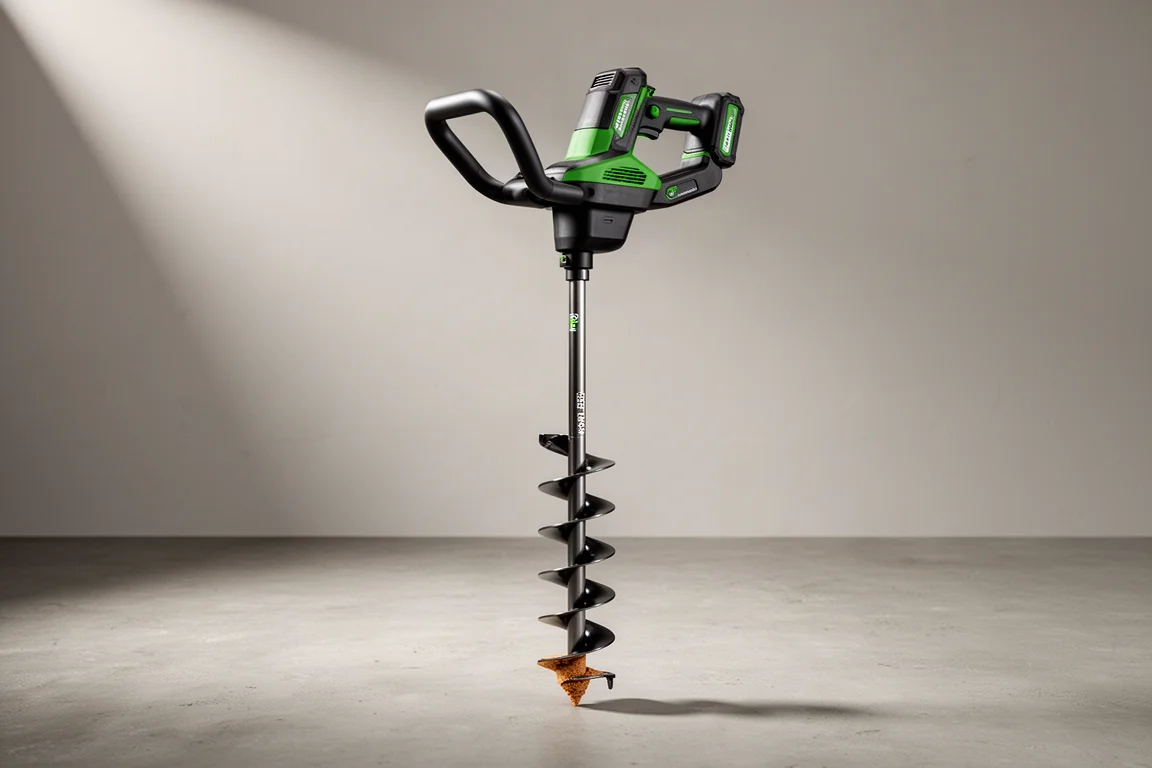
Planting a few trees or putting up a short run of fence usually means digging holes by hand, and that is where a cordless earth auger earns its keep. The AEG earth auger is a two-handled post hole tool driven by 4Ah batteries, and it turns out to be surprisingly capable in real ground, including heavy clay. This review covers what is in the kit, how it digs, how far the batteries go, and the quirks you should know before buying.
Out of the Box: Assembly and Kit Contents
The kit arrives requiring some assembly: the handle area needs to be put together with four screws on each side, then you secure the cable and you are essentially ready to go. The package includes two 4Ah batteries, and curiously, two separate single chargers rather than one dual charger, which feels like a cost-cutting decision rather than a convenience.
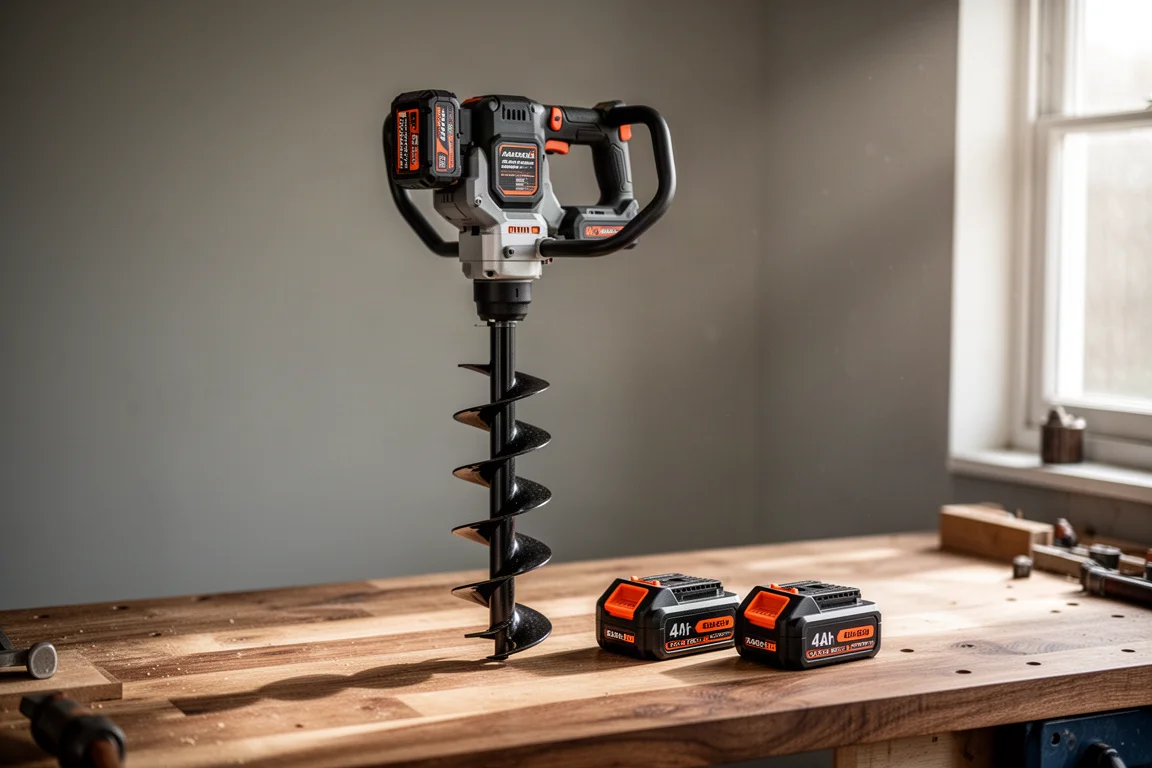
One thoughtful touch is the wobbly joint inserted between the handle unit and the auger shaft. Its job is to save your wrists and arms when the bit spins up or catches, and given how much this tool can kick, it is more than a gimmick.
Controls and Specs
The control set is simple and practical. You get three speeds selected by a button: speed 1 at 100 RPM, speed 2 at 150 RPM, and speed 3 at 200 RPM. A status light warns of a jam or overload, there is a forward and reverse switch, a safety trigger on the side, and the main trigger to drive the tool.
The included auger bit is 250mm (10 inches) with a pin at the top to hold it in place and a 19 to 20mm hole that fits the tool’s shaft, which is a fairly standard size, so replacement and smaller bits are easy to find. The bit has a couple of cutting blades at the bottom and a corkscrew to pull it into the ground.
How It Performs in Real Soil
On the first hole, thick kikuyu grass caused the overload protection to cut out repeatedly. When the blades catch on anything, you hear clicking and the tool shuts off until you release the trigger and restart. The grass matters more than you might expect: when a mat of it wraps over the teeth, the blades simply cannot cut. Cutting a small hole out with a spade first, or digging a square starter hole, solves most of that.
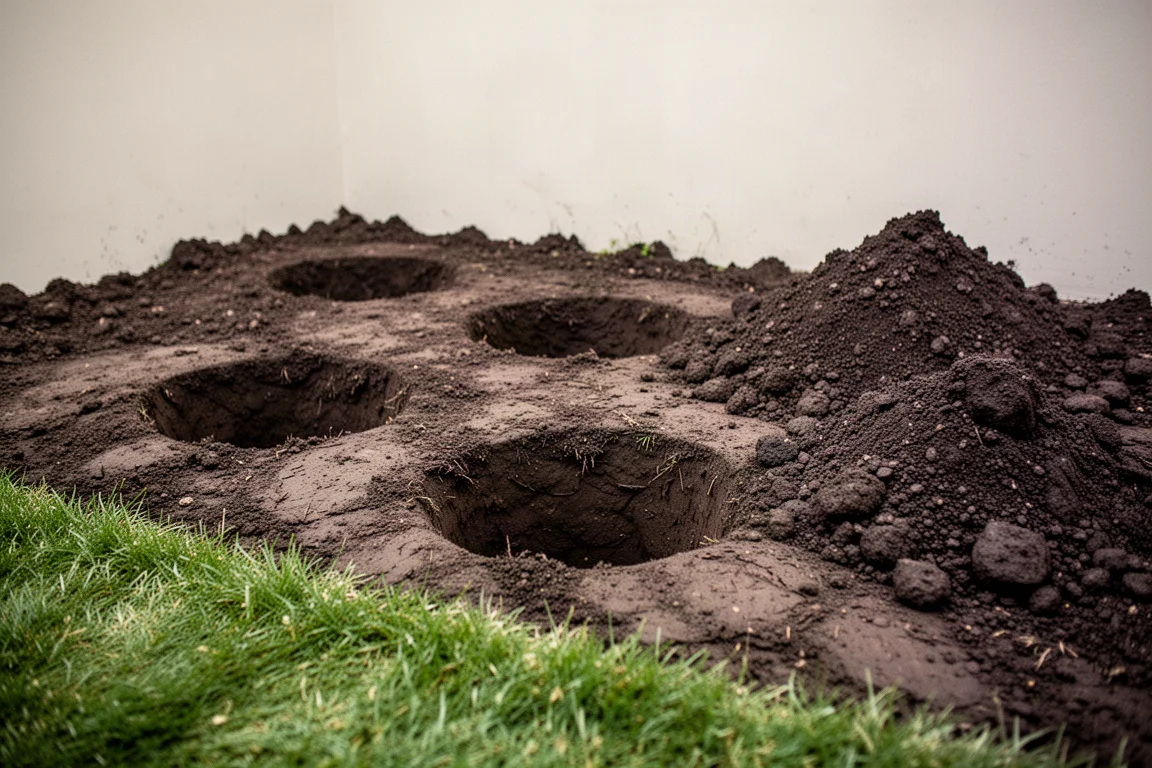
Once into heavy clay, the auger struggled audibly but kept going, and it reached around 600 to 650mm, roughly two feet, which is enough for planting a tree. There is real torque in this machine. On the 250mm bit it will walk itself around if you are not braced, and it caught a leg more than once during testing. A slightly wider handle would give a better grip and reduce twisting.
The tool also took on a cheap 300mm (one foot) auger bit with badly angled cutting blades, and did far better than expected with it, digging a big enough hole in clay once the loose spoil was cleared. With a quality 200mm double-spiral bit, the difference was dramatic: good auger bits fire the dirt up and out the top, letting you go straight down in one pass without stopping to clear the hole. The lesson mirrors any drill: the tool is only as good as the bit you put on it.
Battery Life and Hole Count
Over a testing session, the tally came to twelve holes of various sizes, including two at 250mm, one at 100mm, one at 300mm, and two at 200mm, ending with both batteries around halfway down. Counting only the holes dug with the 250mm bit, roughly ten holes per pair of 4Ah batteries is a realistic expectation.
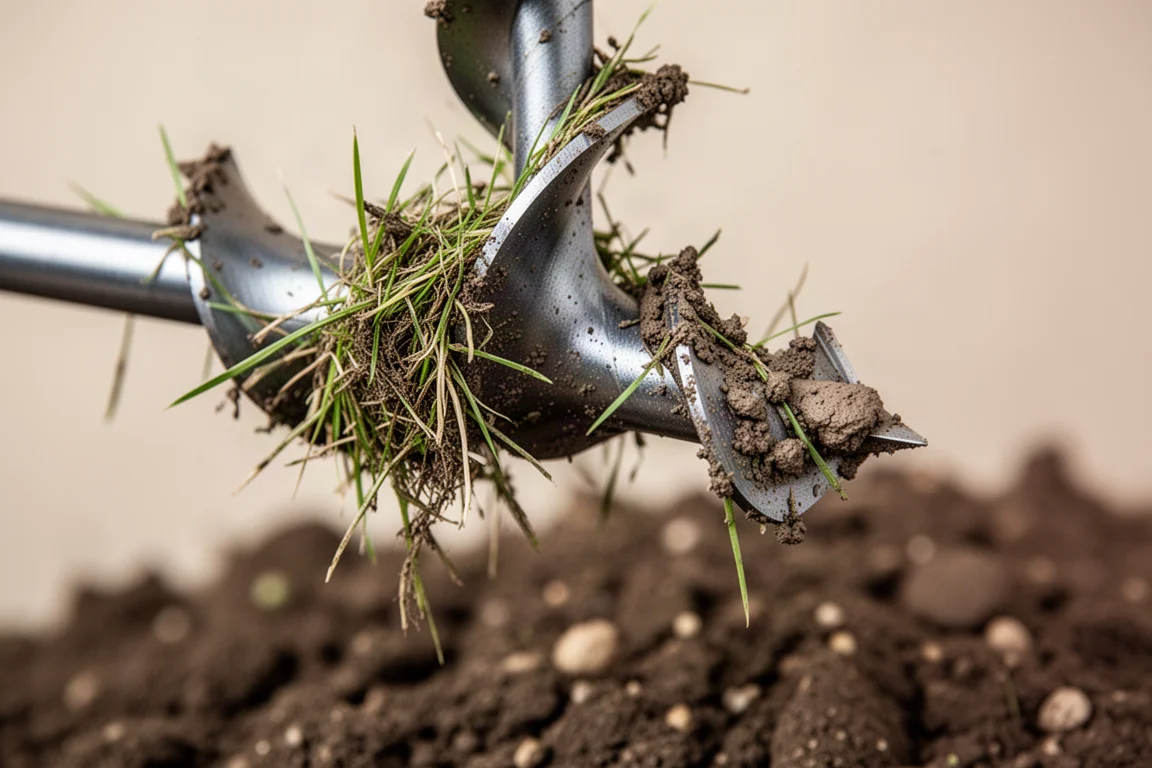
Soil makes a big difference. In nice sandy loam you might get around 50% more holes; in hard, rocky ground with lots of stopping and starting, expect closer to eight. For putting up a short length of fence or planting a few trees, that is no bother at all. Even pushing the tool to its limit by trying to stall it, it kept turning; the machine cut out far more often from catching on a leg than from genuine overload.
Practical Digging Tips Before You Buy
A few techniques make this tool much easier to live with. First, cut a square hole with a spade to start the auger: no grass matting around the blades, and an easier start. Second, clean the blades whenever digging slows down; grass wrapped over the teeth means the bit is just pushing dirt through dirt instead of cutting it.

Third, think about the hole shape if you are planting trees. Roots planted into a round hole in hard soil tend to circle around and effectively strangle the tree, leaving weak support roots. A square hole forces roots to hit a corner and keep growing straight outward, giving better anchorage and better drainage in heavy rain.
Conclusion
The AEG earth auger is a genuinely useful tool for anyone planting trees or setting posts on a small scale. It has plenty of torque, sensible overload protection, a standard 250mm bit that swaps easily for other sizes, and enough battery endurance for a solid morning of digging. Its weaknesses are manageable: expect the odd kick when the bit catches, keep the blades clean of grass, and invest in a quality double-spiral auger bit rather than the cheapest one on the shelf. Do that, and it will dig holes all day without complaint.
Product link
View more details for AEG Earth Auger
This product is mentioned in the review. Check the specifications, options, and compatibility before buying.
View more details for AEG Earth AugerFurther reading
Related Reviews
Garden Tools
Bibury Folding Trimming Multi-Tool Review: Shears, Saw, and Blade in One
An inexpensive folding trimming multi-tool with shears, a surprisingly capable saw, and a blade we would not rely on. Here is how it held up on real overgrown branches.
Garden Tools
4 Garden Power Tools Worth a Look: Ryobi Patio Cleaners and DeWalt XR Garden Tools
Two Ryobi patio cleaners and two DeWalt XR garden tools put through real springtime work, with honest strengths and trade-offs for each.
Garden Tools
AEG ALP18 Pruning Shears Review: A Cordless Pruner With Real Muscle
The AEG ALP18 cordless pruning shears cut up to 30mm soft wood, keep operation easy on the hands, and add more torque than rival pruners, with a few quirks to know first.