3D Printing Materials
Advanced 3D Printing Filaments: 15 Functional Materials Beyond PLA and PETG
Explore over 15 specialized 3D printing filaments with unique properties, from flexible PEBA Air to extreme-temperature PPS-CF. Learn what each material excels at and how to print it successfully.
Introduction
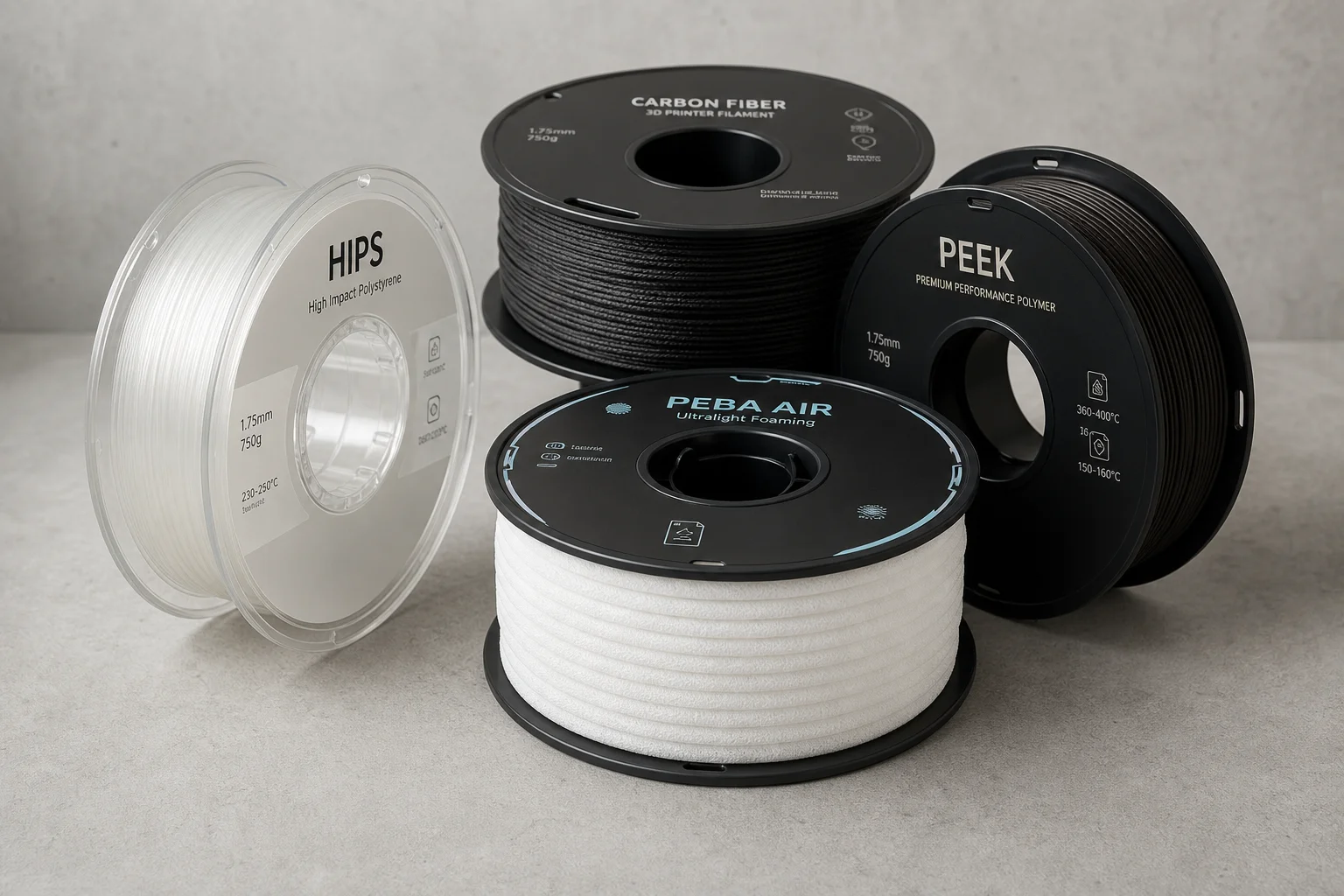
If you have been printing primarily in PLA, PETG, and the occasional TPU, you are missing out on a rapidly expanding world of specialized filaments. Over the past year, manufacturers have released more than 15 new and functional material types, each designed to solve specific engineering challenges that standard filaments cannot address. This guide covers the most practical and accessible of these advanced materials, explaining what each one excels at, how to print it, and which projects benefit most from its unique properties.
HIPS: High Impact Polystyrene
HIPS occupies an unusual position in the filament landscape. It shares the impact resistance and chemical durability of ABS or ASA but produces significantly fewer fumes, making it suitable for printers without extensive ventilation. The material resists a broad range of alkalis, alcohols, acids, oils, and greases, and it offers exceptional dielectric strength, meaning it withstands electrical breakdown without failure.
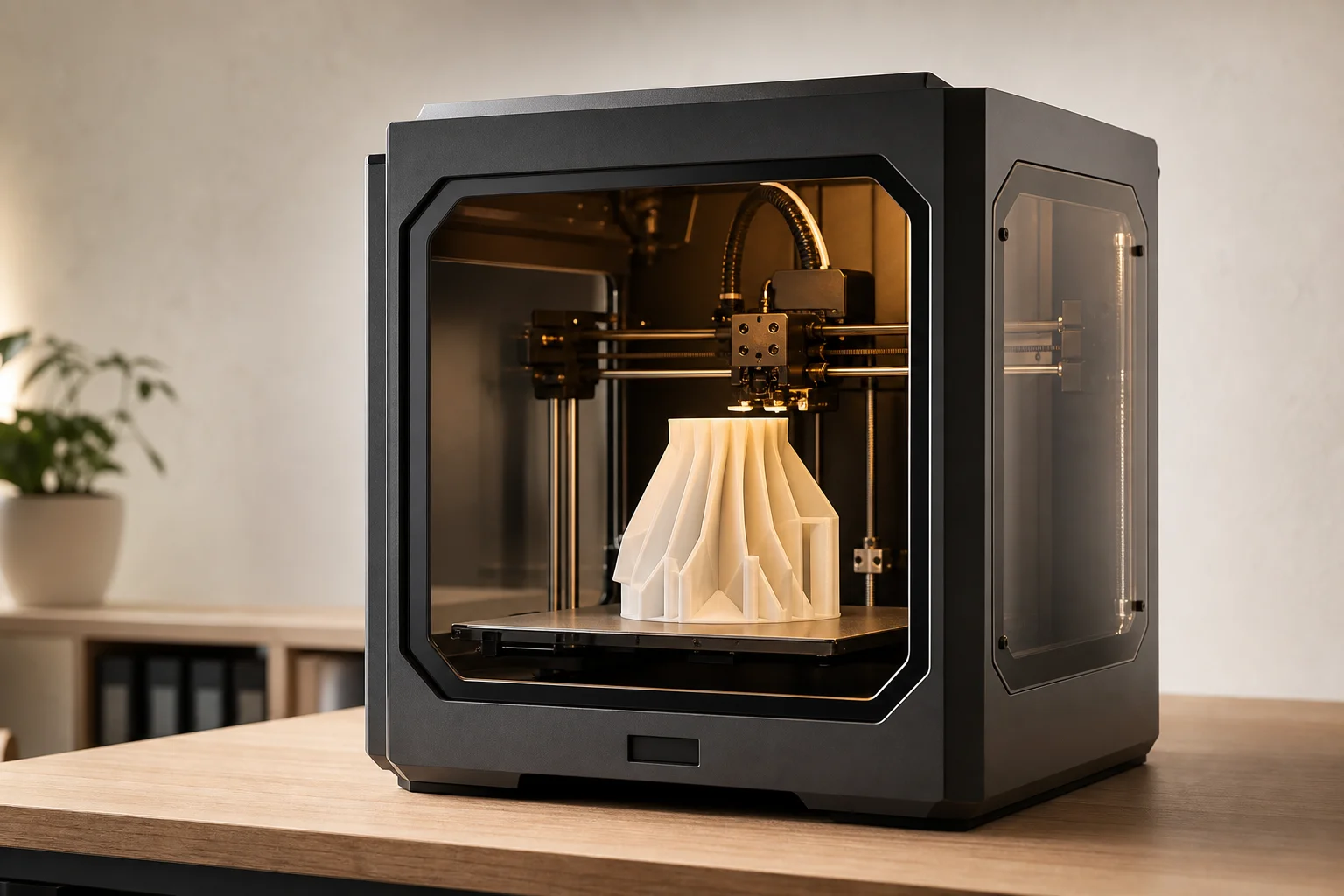
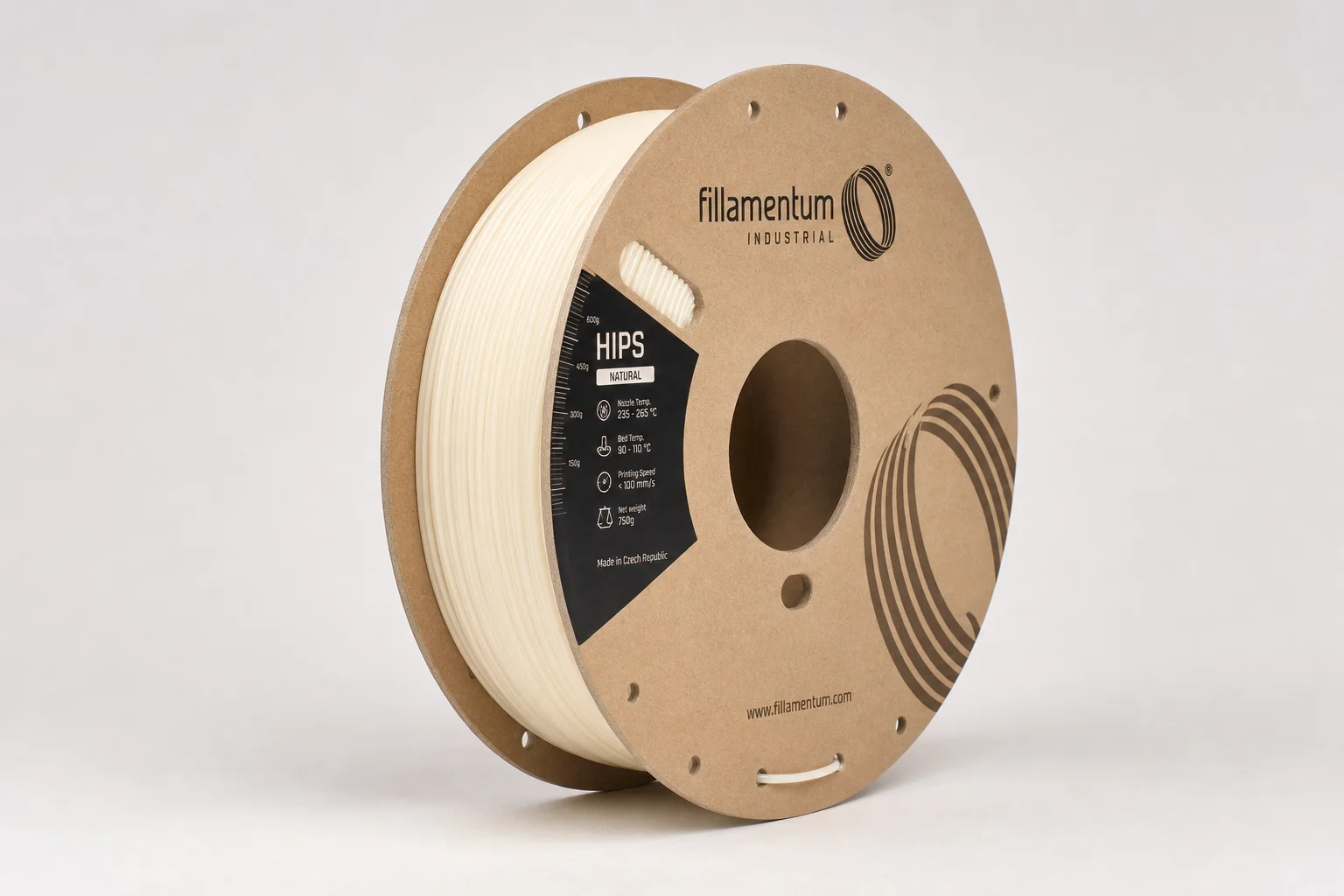
Food-safe variants from manufacturers like Fillamentum can withstand temperatures up to 95 degrees Celsius, opening applications in kitchen environments. The material also carries a matte finish rather than the glossy appearance of many alternatives, which many users find more aesthetically appealing. HIPS is traditionally known as a soluble support material for PETG or PLA because it softens in acetone and dissolves completely in d-limonene, but functional applications extend far beyond supports. Custom brackets for fire safety equipment, electrical enclosures, and kitchen components all benefit from HIPS’ combination of toughness and thermal stability. An enclosed printer is required due to fume production, but the cost remains very affordable compared to engineering-grade alternatives.
PCTG: Polycyclohexylenedimethylene Terephthalate
PCTG functions as a refined version of PETG, offering significantly greater toughness, heat resistance, and chemical resistance. It also resists UV degradation more effectively and exhibits higher clarity than standard PETG. Most notably, PCTG has a much lower moisture absorption rate, reducing the need for extensive drying protocols. The material prints as easily on open 3D printers as PETG does, and many high-speed PETG formulations on the market may actually be rebranded PCTG. Mechanically, PCTG suits applications where impact strength or optical clarity matter, and the printing process requires no special equipment or techniques beyond what PETG users already know.
PEBA: Polyether Block Amide
PEBA differs fundamentally from TPU and TPE in its mechanical behavior. Rather than absorbing impact through gradual deformation, PEBA bounces back almost instantly, returning energy with minimal loss. This property mirrors the behavior of Pebax, a trade name for PEBA used in high-end running shoes. The material remains flexible even at extremely cold temperatures, resists fatigue over millions of cycles, and feels pleasant against skin. Printing PEBA requires keeping the filament dry and reducing friction on the filament path, similar to TPU, though PEBA tends to print slightly cooler and faster.
PEBA excels in gaskets, vibration-damping parts, wearable components, flexible mechanical linkages, and any application where repeated flexing without tearing is essential. Historically limited to cutting-edge brands like Fillamentum, PEBA is now available from manufacturers including Siraya Tech and SYNBOTRON, expanding color and hardness options.
PEBA Air and TPU Air: Foaming Elastomers
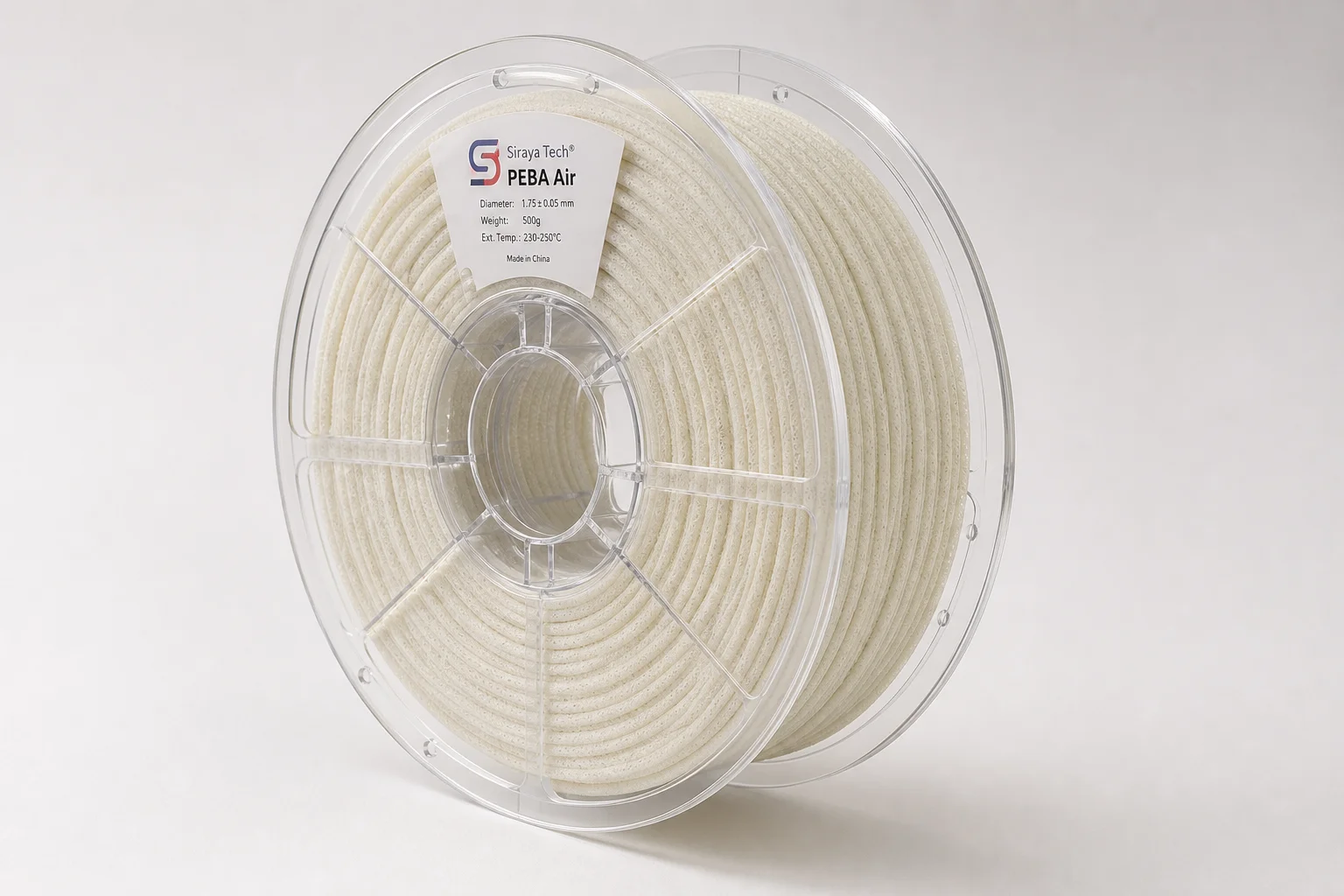
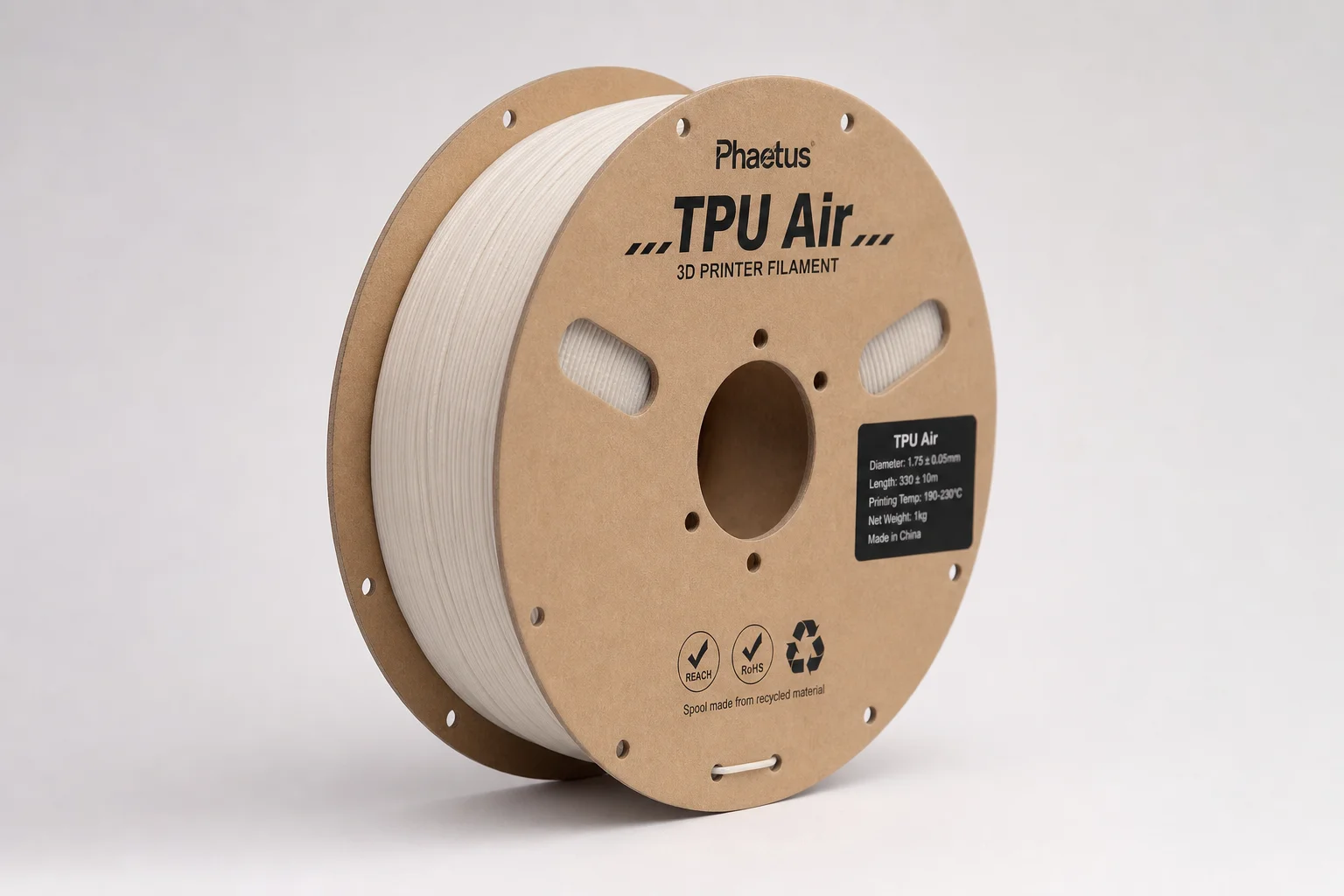
PEBA Air and TPU Air incorporate heat-sensitive foaming agents that expand during printing, allowing hardness adjustment through temperature control. Siraya Tech’s PEBA Air, for example, can achieve shore hardness ranging from 70A to 90A depending on print temperature. The foaming effect also reduces the extrusion multiplier, meaning less material exits the nozzle at higher temperatures. Infill density and perimeter count further influence final hardness.
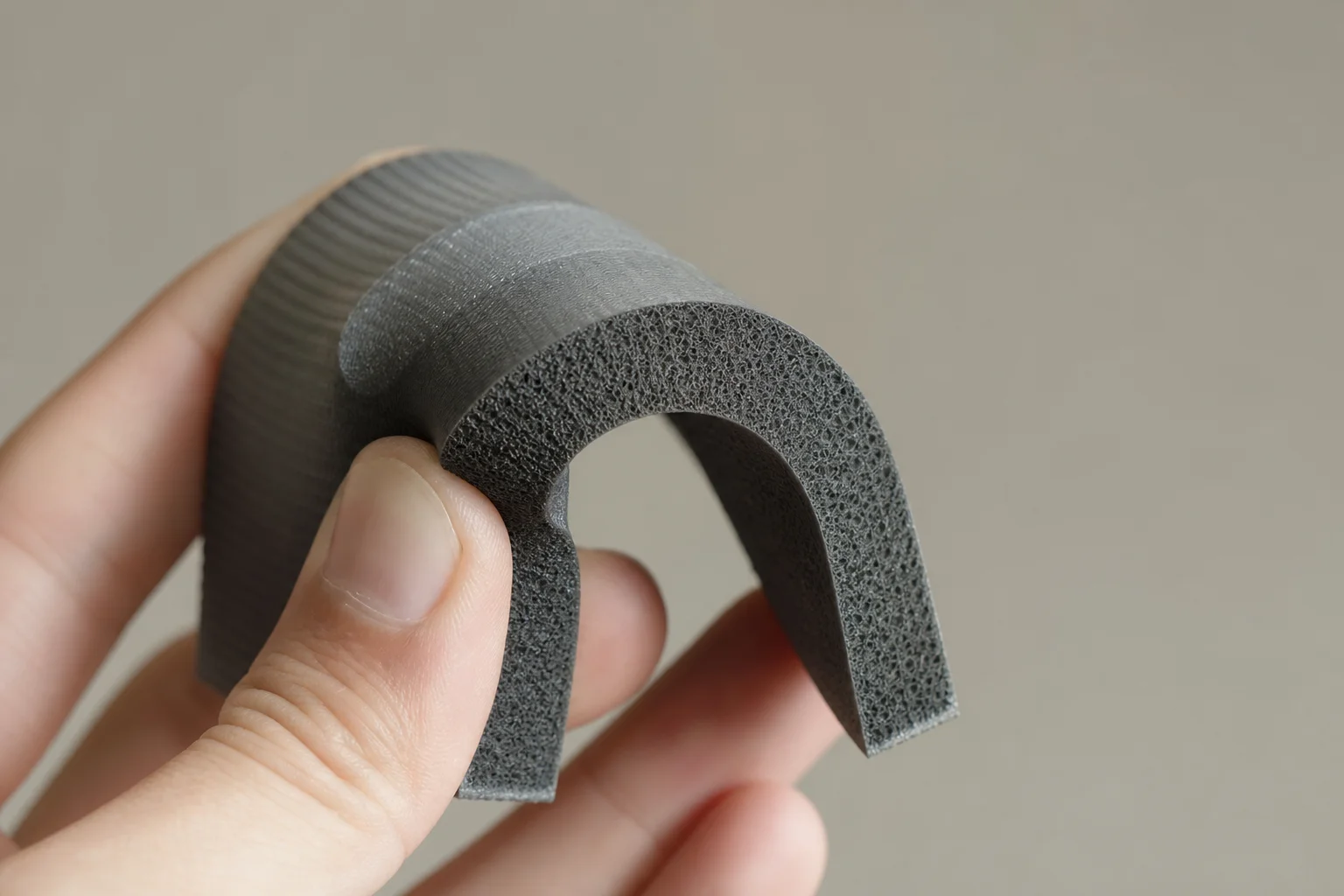
Printing these materials is surprisingly straightforward on printers with flexible filament capability, though friction reduction on the spool and filament path remains critical. The primary challenge lies in dialing in extrusion multiplier and print speed. Because PEBA Air is 40% lighter by weight than standard PEBA, the resulting parts can be too light for certain applications, requiring design modifications. The EVA foam appearance and texture are visually distinctive and feel premium in applications like gridfinity inserts, protective case linings, and tool organizers. TPU Air offers a middle ground between standard TPU and PEBA Air: denser than PEBA Air, with better layer adhesion but less aggressive energy return, making it ideal for soft-touch grips and handles where comfort matters without the springy trampoline effect.
Morphlex: Variable-Hardness Flexible Filament
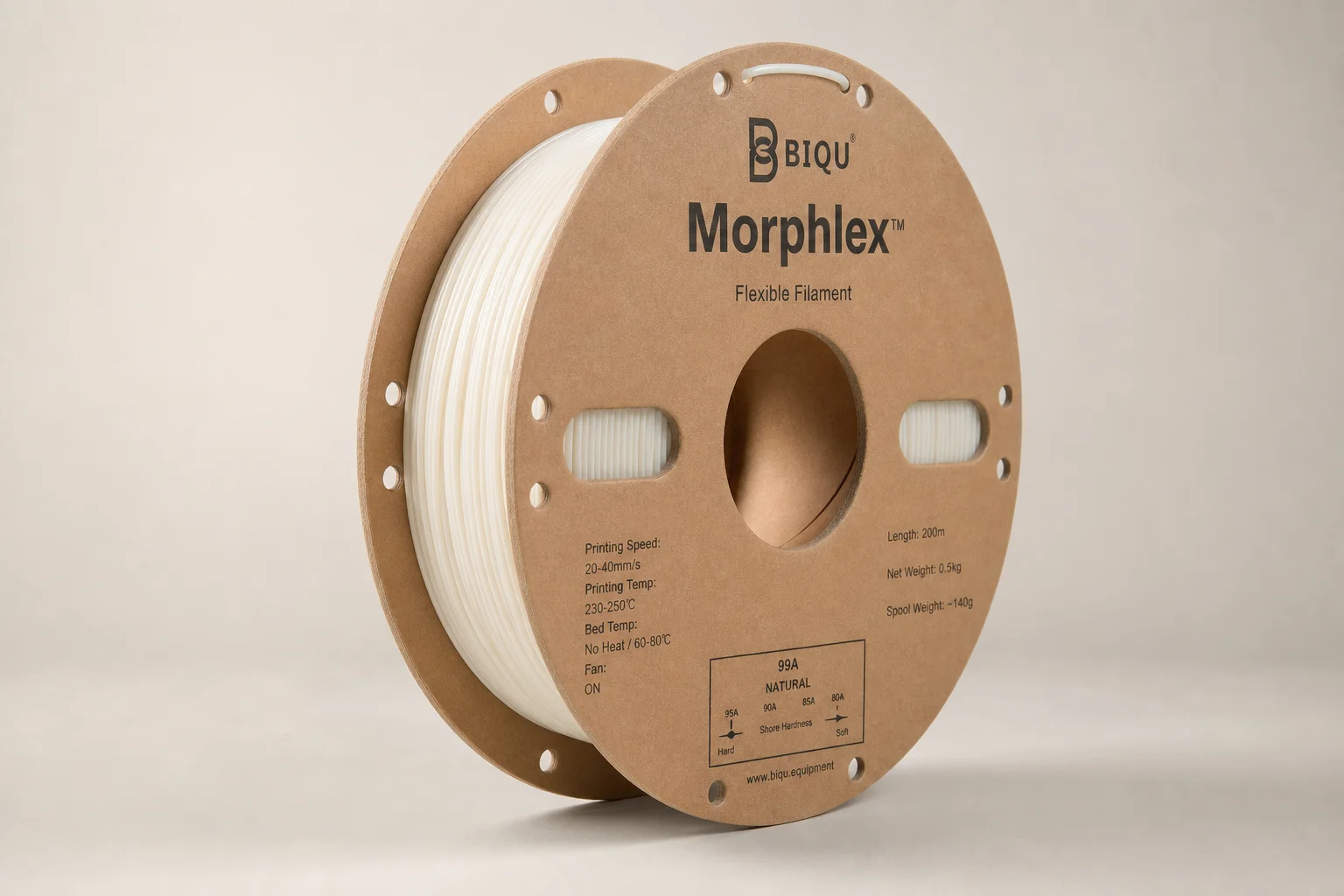
BIQU’s Morphlex achieves variable hardness through a different mechanism than foaming materials. The filament feeds through the extruder at 90A shore hardness for easy printing on standard equipment, but emerges from the nozzle at 70A, becoming significantly more pliant. This design specifically targets shoe printing, where flexibility after extrusion is essential. Printing Morphlex requires friction reduction on the filament path, though a standard printer without filament bypass can handle it with a bearing spool roller installed.
Nylon and Composite Materials
Fishy Filament PA6 Nylon
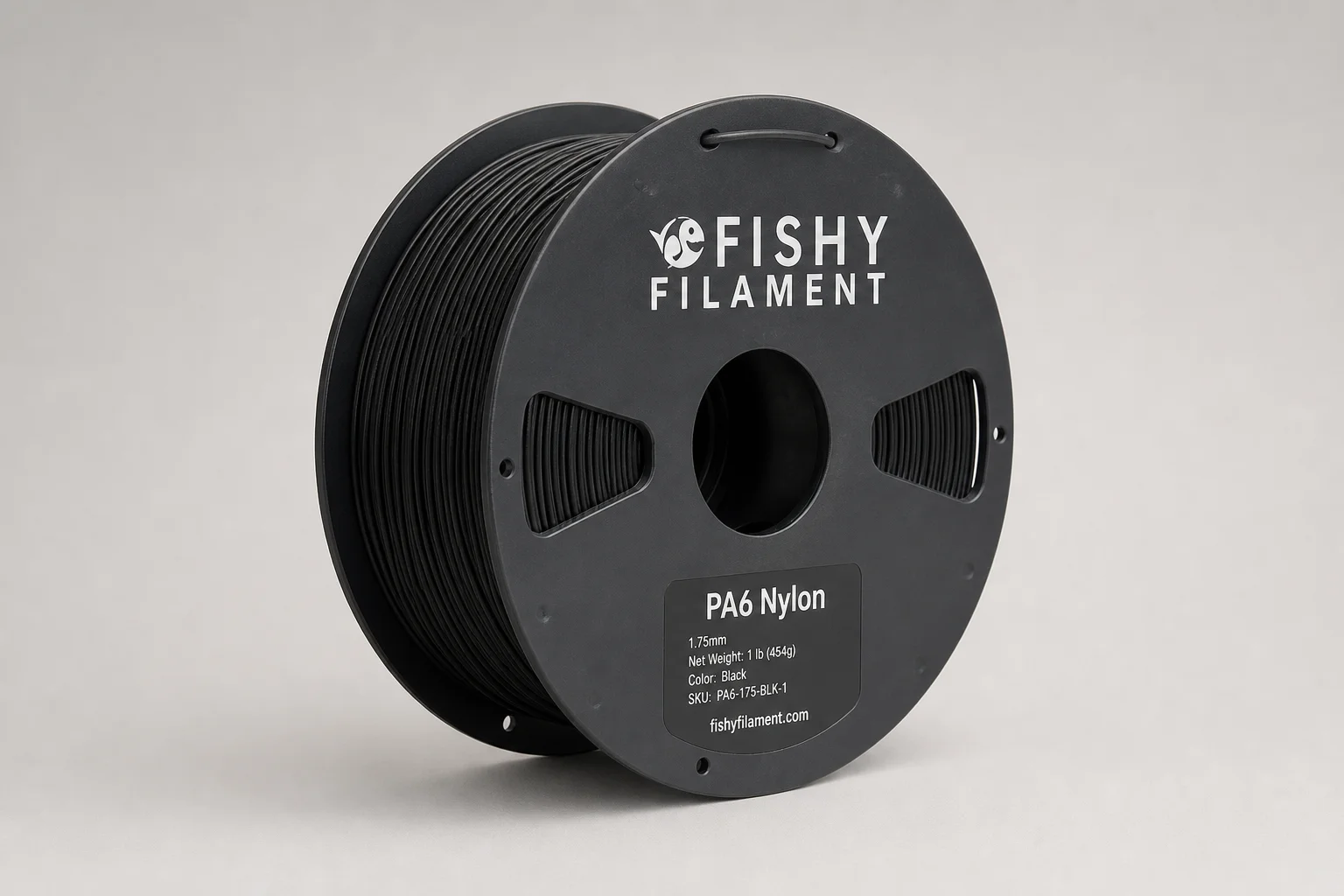
Fishy Filament, a collaboration between Fishy Filament and Fillamentum, manufactures PA6 Nylon from 100% recycled fishing nets. Each spool removes approximately 200 grams of CO2 equivalent from emissions, resulting in 98% lower environmental impact than virgin nylon. Two variants exist: Porthcurno for flexibility and impact resistance, and OrCA, which adds carbon fiber for stiffness and creep resistance. Like all nylons, this material suits engineering applications across workshops, particularly for brackets, camera accessories, and tripod components requiring rigidity and durability.
PETG-PTFE: Friction-Reducing Composite
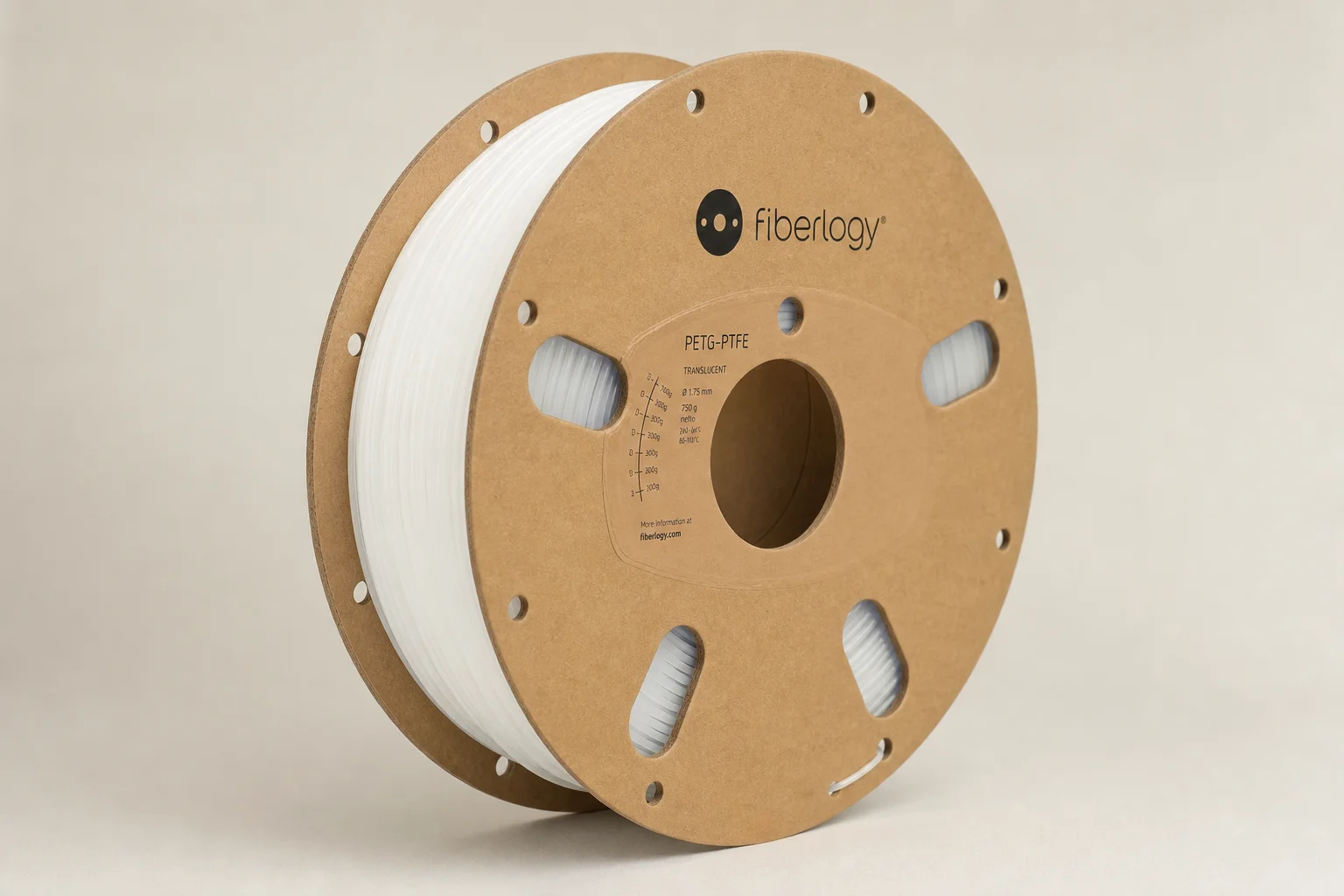
Fiberlogy’s PETG-PTFE blends 10% PTFE (Teflon) into standard PETG, creating a material that slides smoothly against other surfaces and materials. Despite PTFE’s notorious difficulty adhering to anything, Fiberlogy successfully integrated it into this composite. The material proved invaluable for reducing friction in mechanical hubs and sliding assemblies where standard PETG would cause binding. Applications include any mechanism where parts must move freely against one another or against external surfaces.
Antibacterial CPE: Silver Nanoparticle Composite
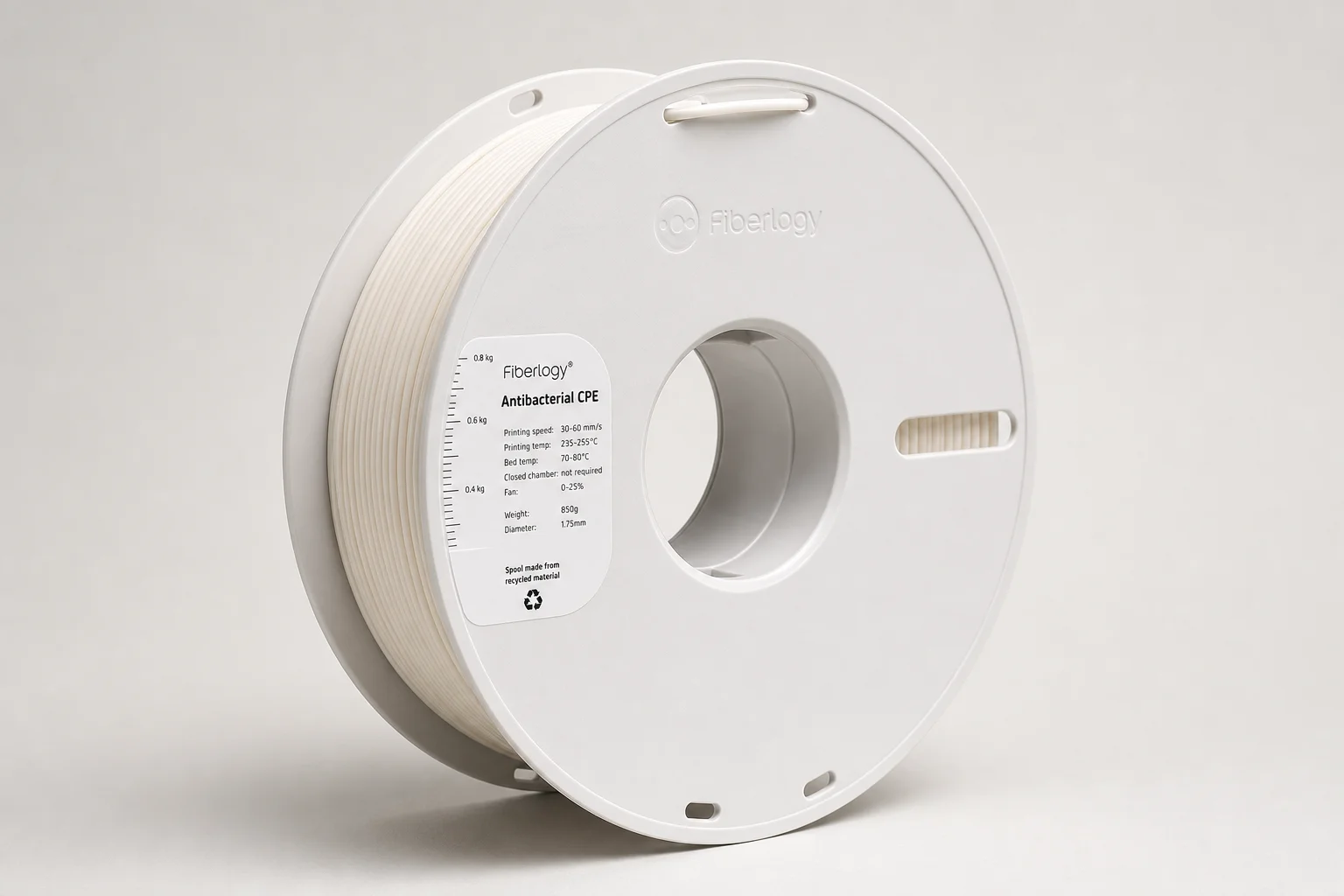
Fiberlogy’s Antibacterial CPE incorporates silver nanoparticles into a copolyester base, creating a material that kills a wide range of bacteria. The filament suits any application exposed to microbial growth: kitchen components, laboratory equipment, public-space fixtures, and shared tools. The material behaves similarly to standard PETG in printing characteristics while adding antimicrobial properties.
Magnetite PETG: Magnetic Composite
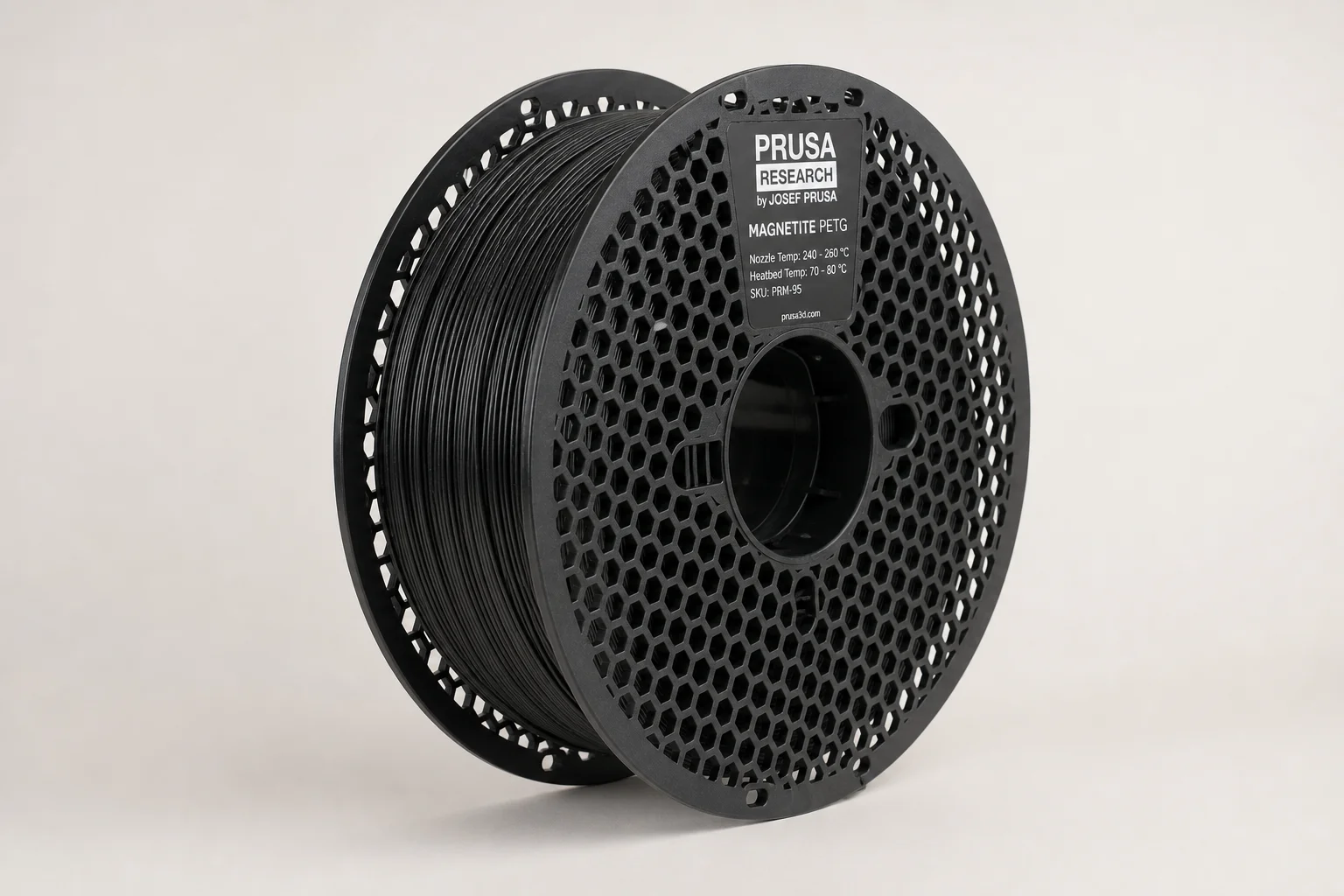
Prusa Research’s Magnetite PETG combines standard PETG with 40% magnetite, creating a material that responds to magnetic fields. The filament was developed for industrial applications like switches, potentiometers, and induction loops, but hobbyists can use it for any design requiring magnetic response without embedded magnets. The material is extremely heavy, making it useful when weight is needed. Note that home equipment cannot permanently magnetize this material, so it responds to external magnetic fields rather than becoming a permanent magnet.
Heat-Resistant Polymers
Fibreheart ABS HT: Fast-Printing High-Temperature ABS
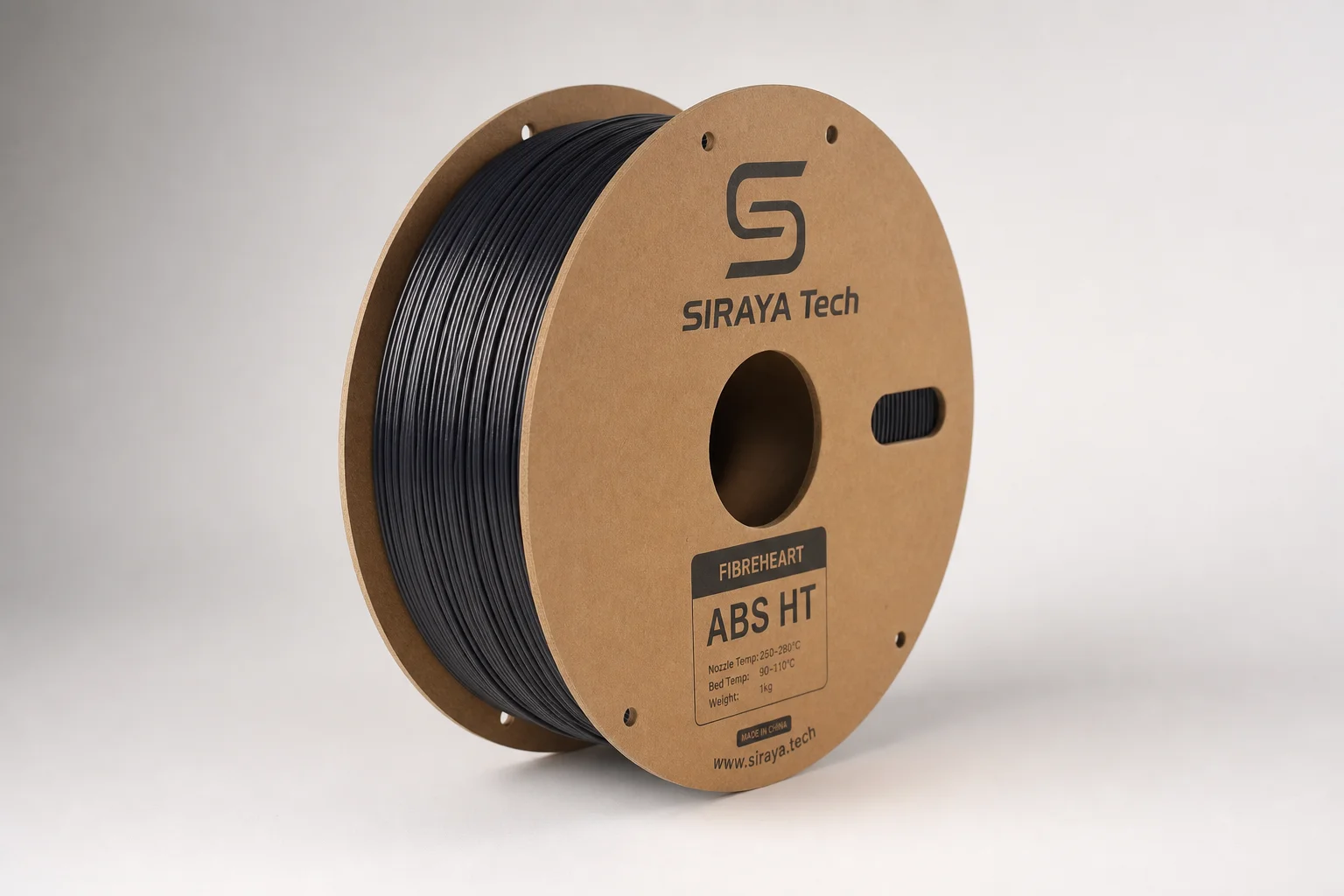
Siraya Tech’s Fibreheart ABS HT is engineered for speed and heat resistance, withstanding temperatures up to 101 degrees Celsius. The material prints much faster than standard ABS while maintaining the high-temperature properties needed for engine bays, dashboard components, and parts inside heated 3D printer chambers. It retains ABS’s strength and rigidity while reducing print time.
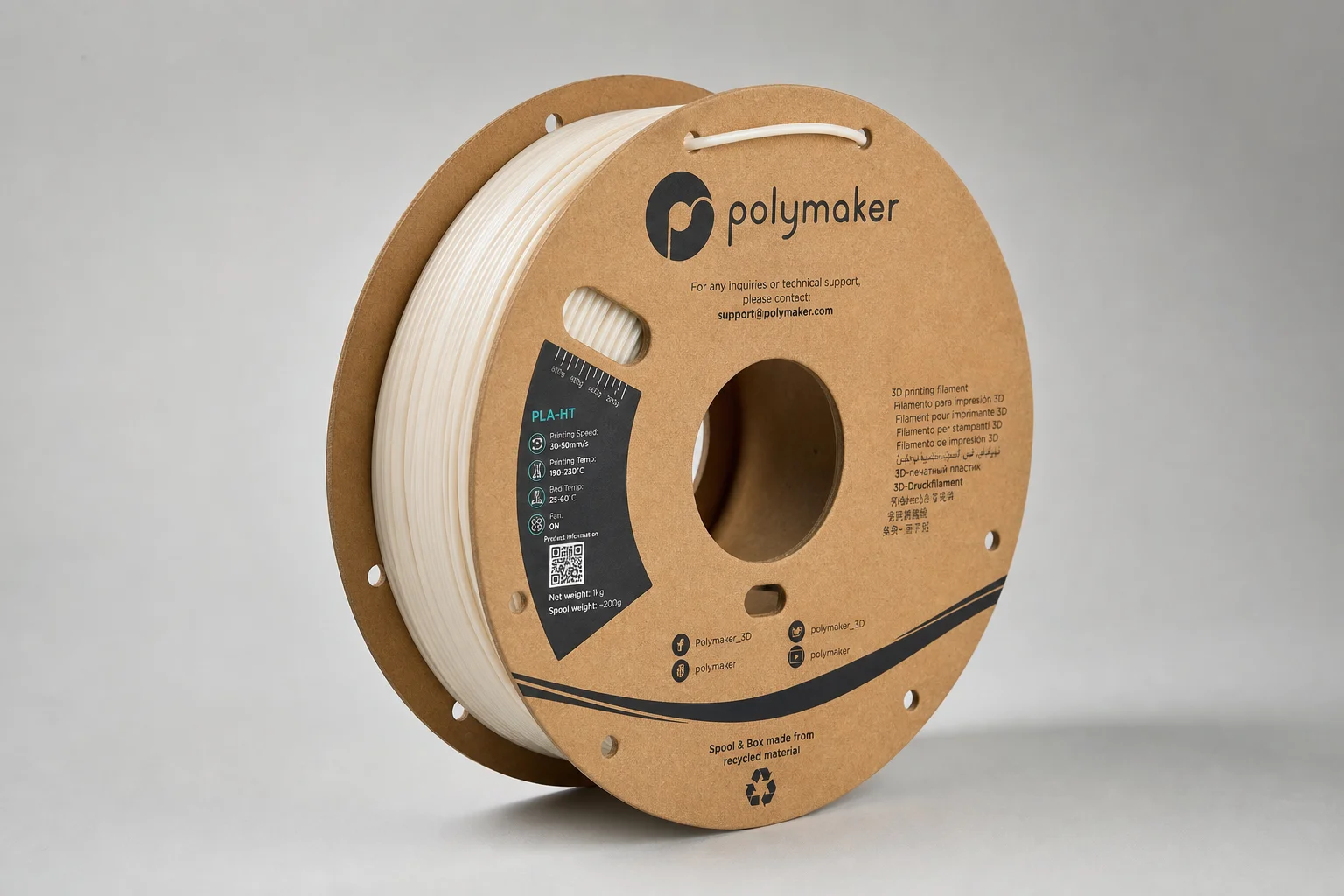
PLA-HT: High-Temperature PLA
Polymaker’s PLA-HT represents a significant advancement in accessible high-temperature printing. The material handles temperatures up to 150 degrees Celsius, outperforming much more exotic polymers like polycarbonate and ASA. It prints like standard PLA on open 3D printers without requiring an enclosed chamber, making it accessible to users without advanced equipment. Optional post-processing through annealing maximizes performance. Applications include build plate cooling racks, heat-resistant fixtures, and any component requiring thermal stability without the fumes and warping of ABS.
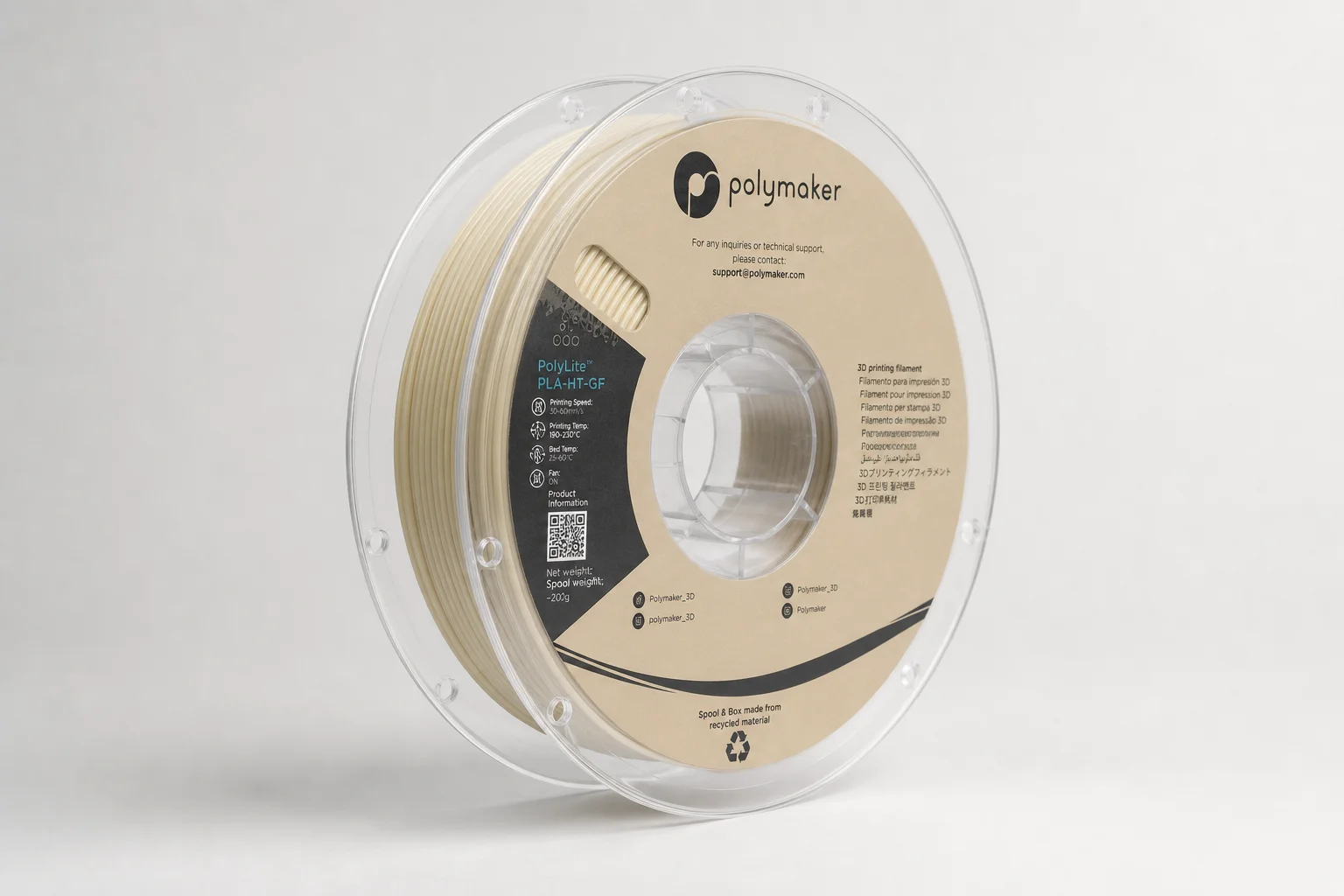
PLA-HT-GF: Glass-Fiber-Reinforced High-Temperature PLA
Polymaker’s PLA-HT-GF combines the high-temperature capability of PLA-HT with glass fiber reinforcement, adding rigidity and dimensional stability while maintaining the matte finish. The material comes in power-tool brand colors, making it visually distinctive. Glass fiber reinforcement increases stiffness without the electrical conductivity concerns of carbon fiber.
Extreme-Temperature Engineering Polymers
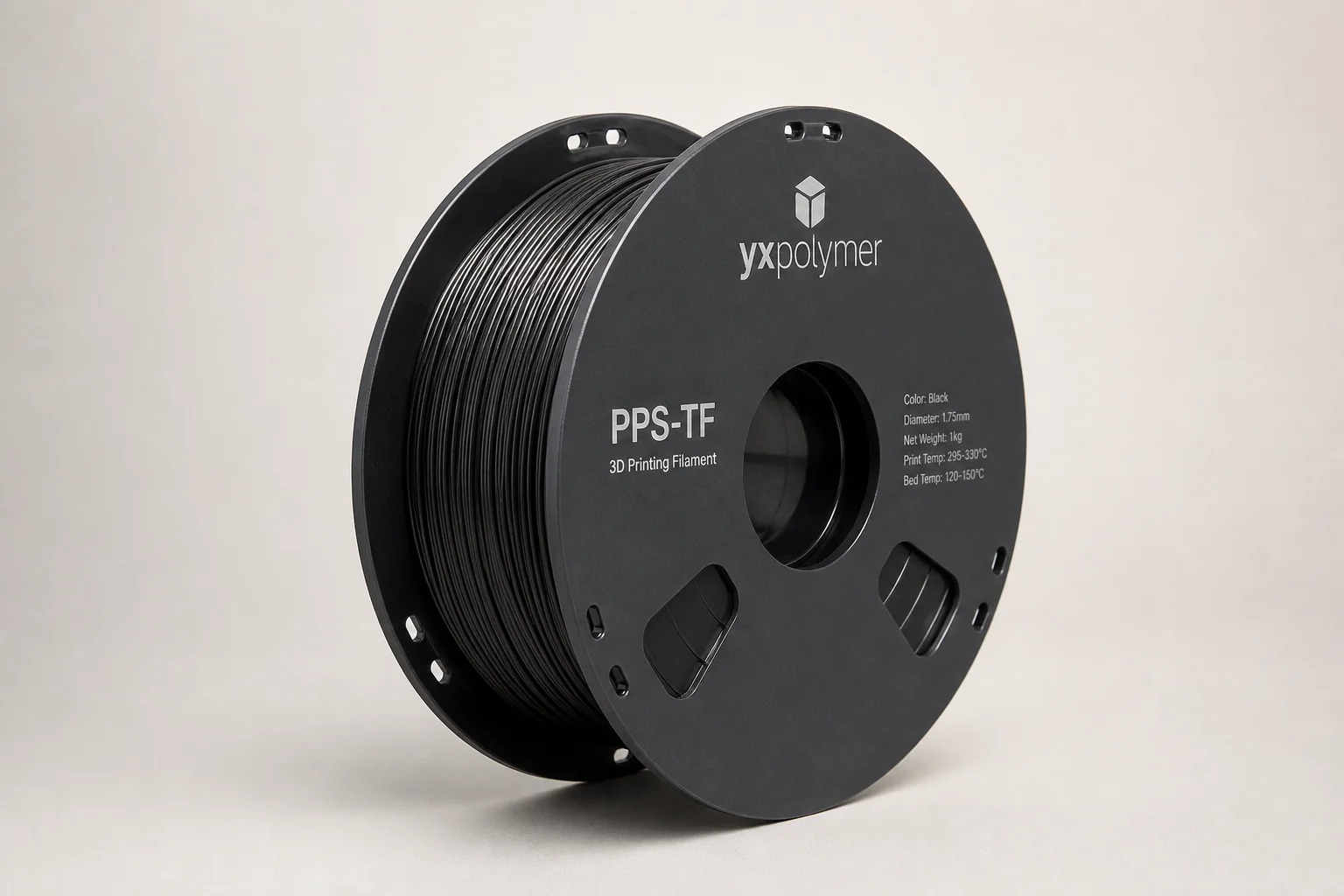
PPS-TF: Polyphenylene Sulfide with Teflon
yxpolymer’s PPS-TF (Polyphenylene Sulfide with Teflon) is often mistaken for a performance nylon but is actually a distinct engineering polymer. The material resists chemicals, heat, flames, and UV degradation with remarkable consistency. It is strong, shrink-resistant, and reasonably affordable, but printing presents significant challenges. Adhesion to build surfaces requires specialized formulations like Magigoo’s Super Grip, and a heated chamber is essential. The actively managed convection heating on advanced printers like the Prusa Core ONE L performs well, but opening the chamber during printing causes immediate layer delamination. Once successfully printed, PPS-TF excels in applications requiring both chemical and heat resistance or where flame retardancy is critical.
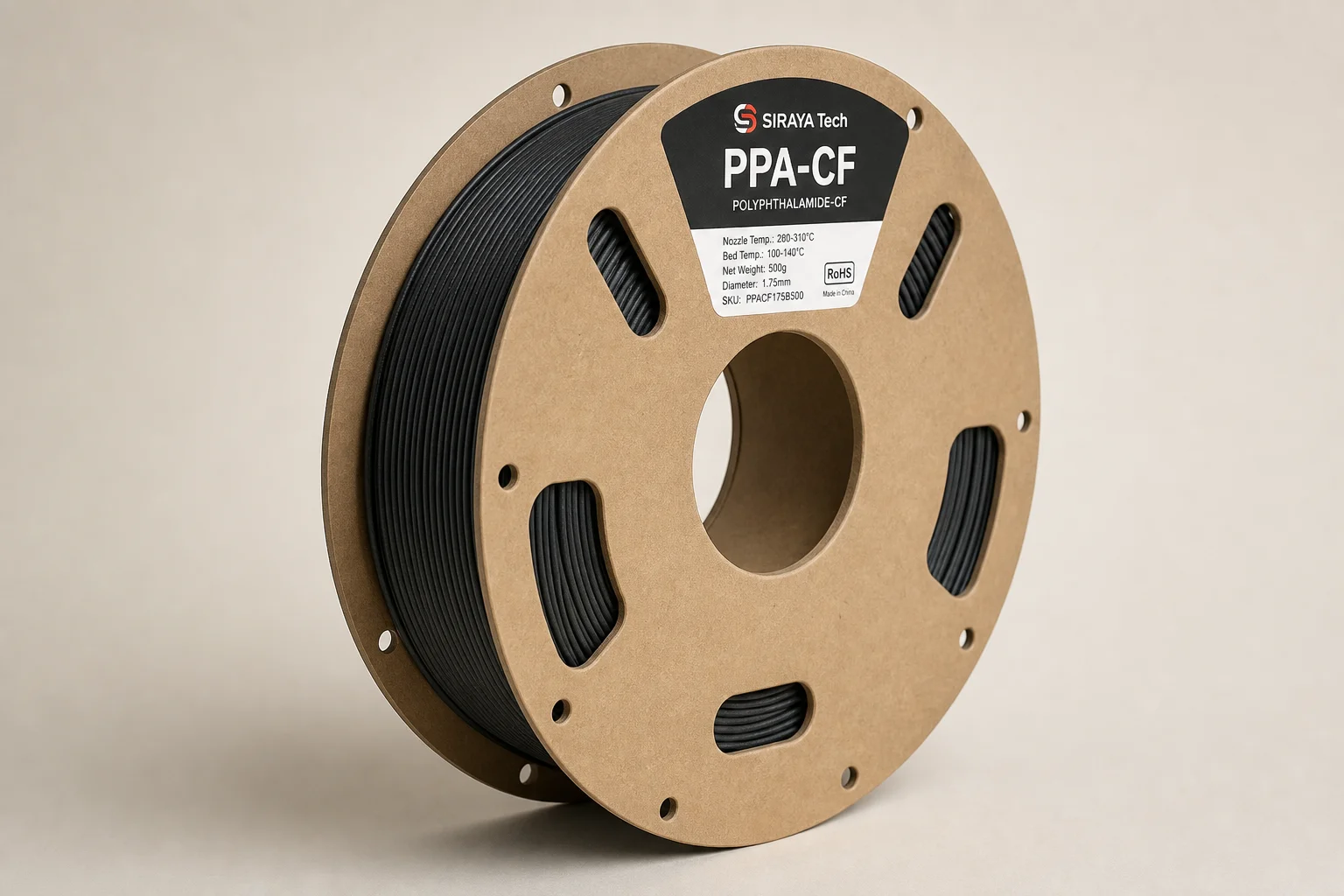
PPA-CF: Carbon-Fiber-Reinforced Polyphthalamide
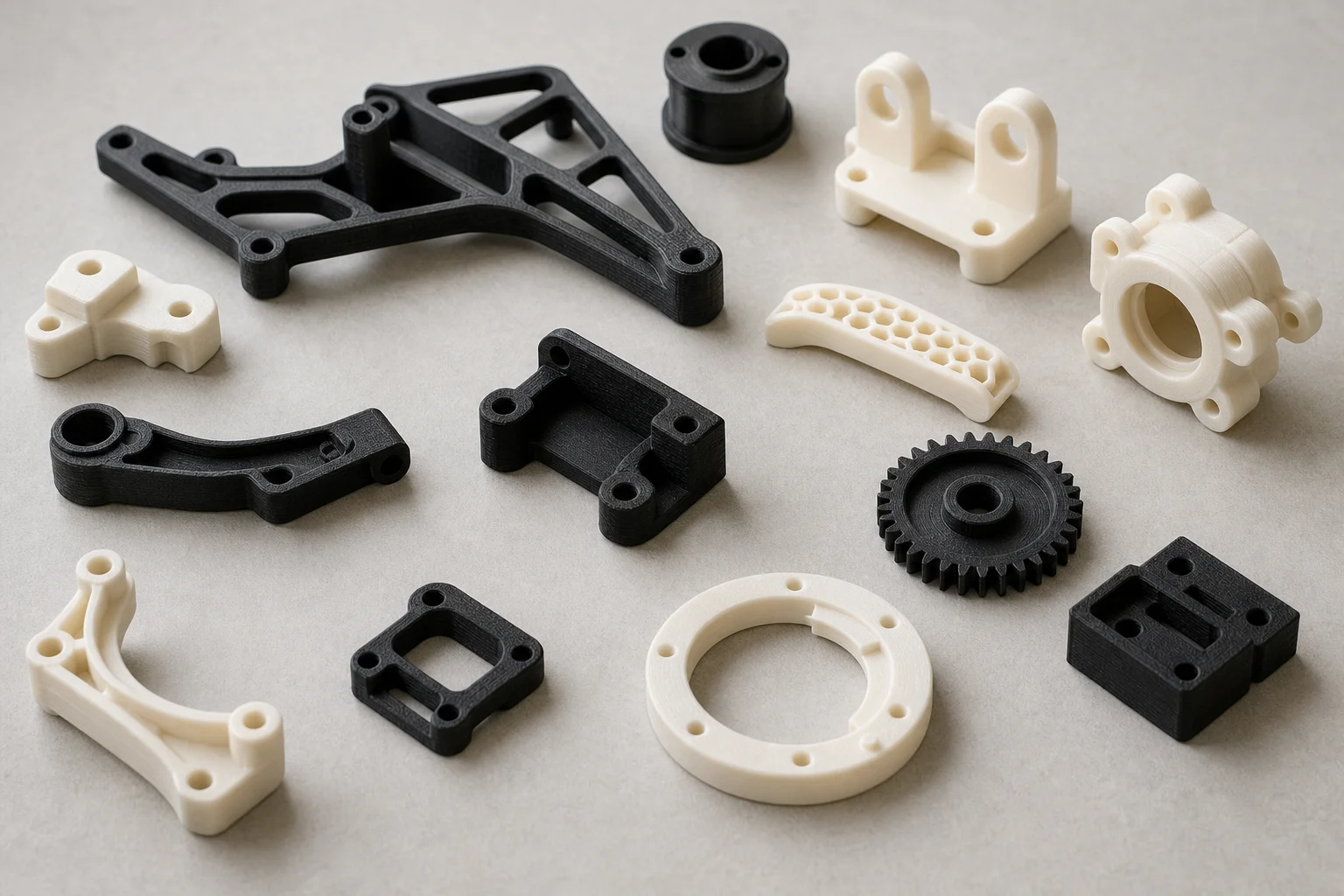
Siraya Tech’s PPA-CF combines reinforced Polyphthalamide (a high-temperature nylon variant) with carbon fiber, handling temperatures from 190 to 230 degrees Celsius. The material is exceptionally tough and rigid, though it is overkill for most hobbyist applications. Automotive upgrades, racing drones, and motorized toys that generate extreme heat benefit from PPA-CF’s combination of strength and thermal stability. At approximately $54 per kilogram spool, it remains more affordable than the next tier of extreme materials.
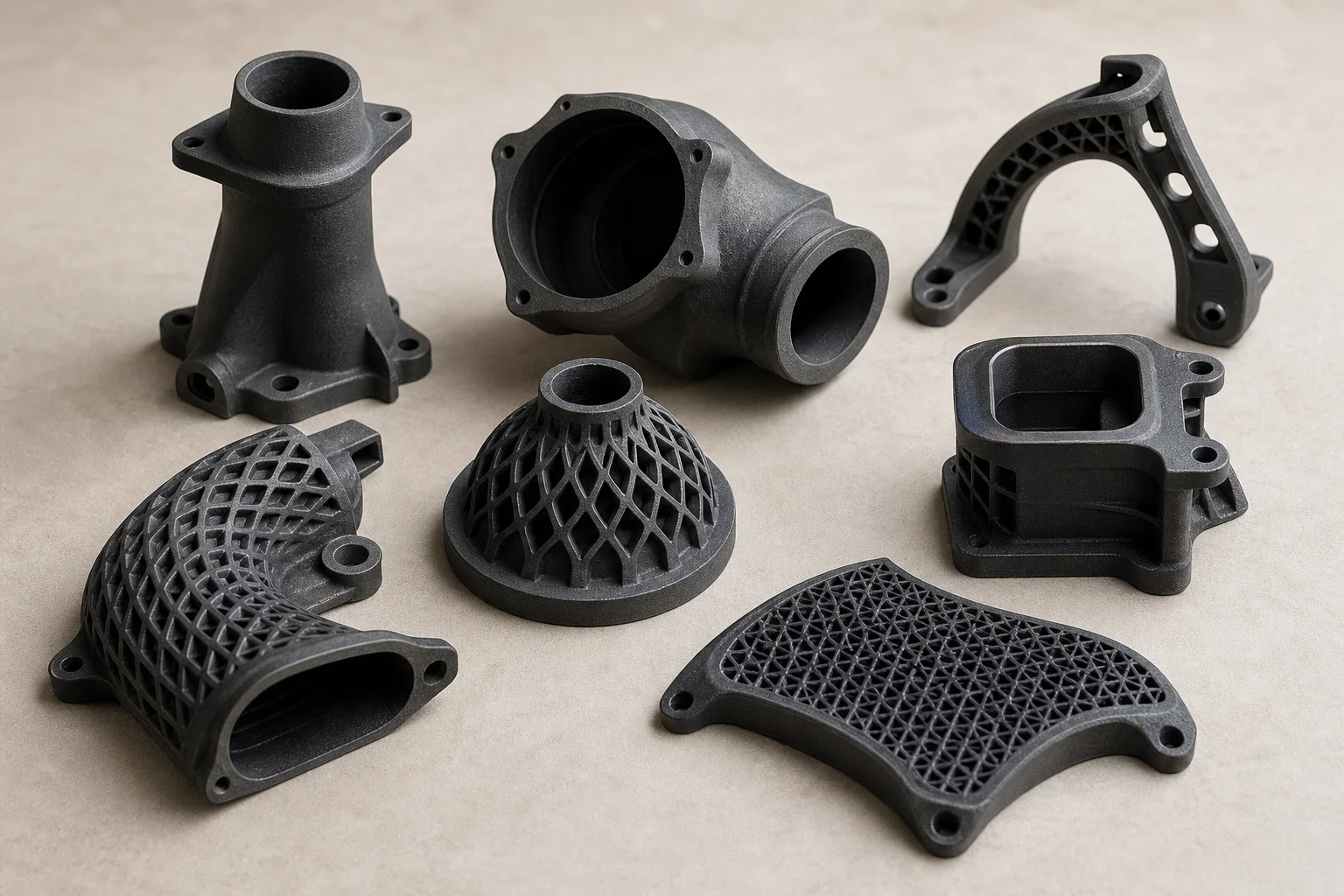
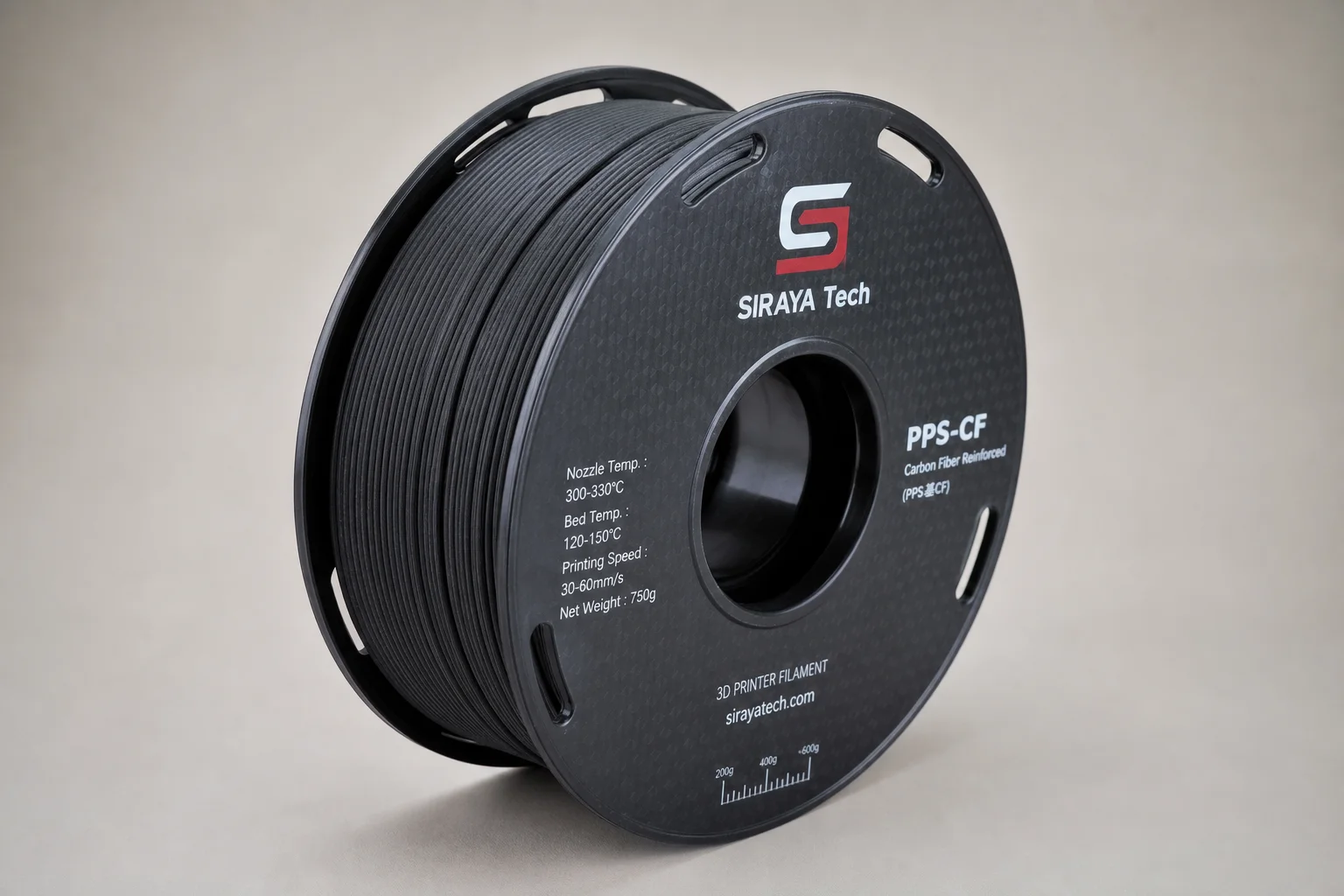
PPS-CF: Extreme-Performance Carbon-Fiber Composite
Siraya Tech’s PPS-CF represents the most extreme filament most consumer 3D printers can reasonably handle. It resists heat up to 240 degrees Celsius, offers rigidity approaching aluminum, and demonstrates exceptional chemical resistance, humidity stability, and flame retardancy. The material is slightly more prone to brittleness than PPA-CF but outperforms it in nearly every other metric. For hobbyists, PPS-CF is genuinely overkill for most projects, but it guarantees that parts will never break, deform, dissolve, or catch fire. The cost is substantial, but it remains cheaper than purchasing a CNC machine for equivalent durability.
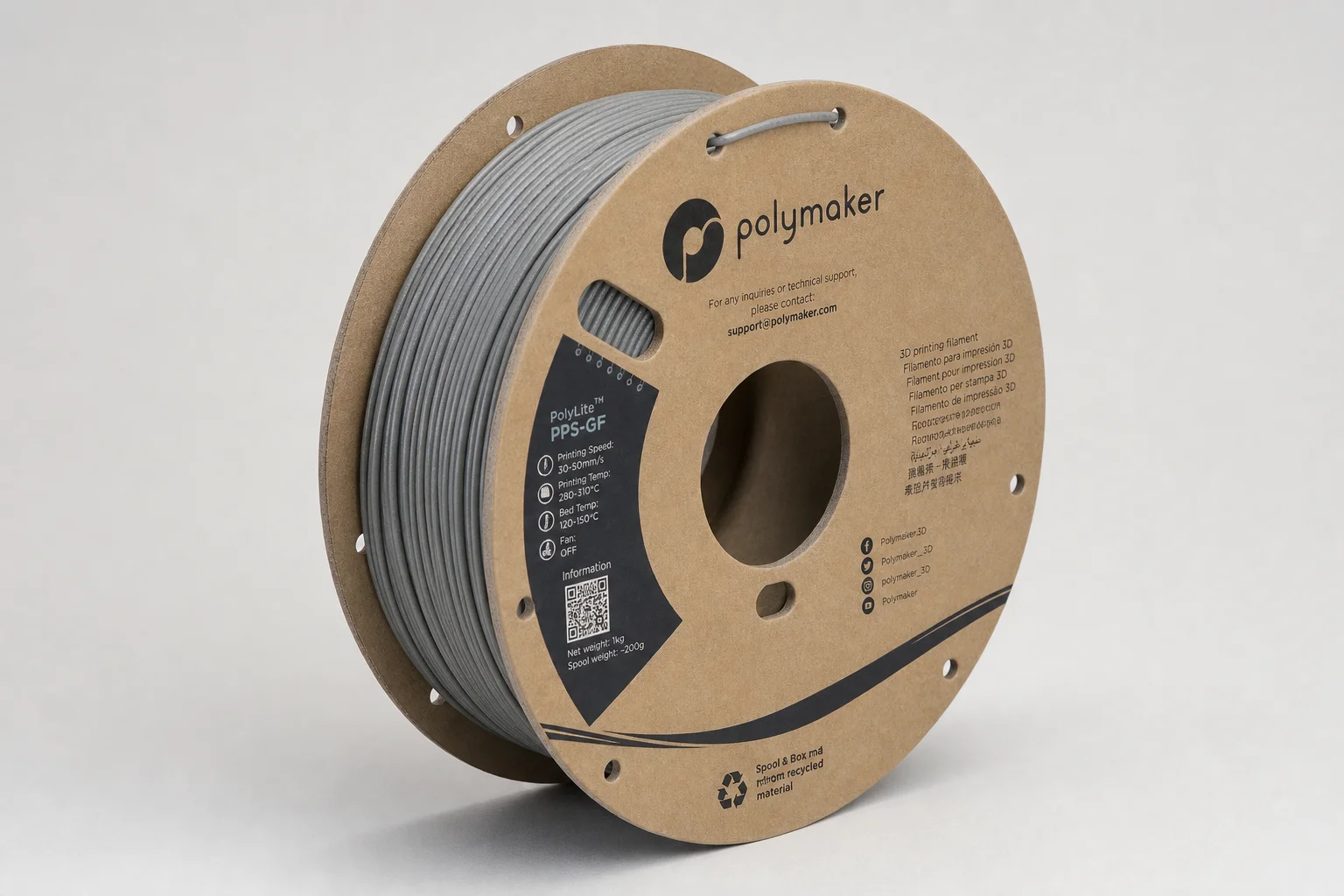
PPS-GF: Glass-Fiber-Reinforced Polyphenylene Sulfide
For users seeking extreme-temperature performance without the cost of PPS-CF, Polymaker and Siraya Tech both offer PPS-GF. The trade-offs mirror those between ASA-CF and ASA-GF: glass fiber provides less rigidity and temperature resistance than carbon fiber but is non-conductive and available in lighter colors like gray. The material typically costs 15 to 30% less than PPS-CF, making it a practical stepping stone before committing to the most extreme option.
Conclusion
The filament landscape has expanded dramatically, offering solutions for nearly every engineering challenge. Starting with HIPS for affordable durability and moving through flexible foaming materials, nylon composites, and extreme-temperature polymers, each material type solves specific problems that standard PLA and PETG cannot address. Success with these advanced materials requires understanding their printing requirements, from friction reduction for flexible filaments to heated chambers for engineering polymers. Begin with materials matching your printer’s capabilities and your project’s actual needs, then expand into more specialized options as your experience grows. The investment in learning these materials pays dividends in part performance, durability, and the ability to tackle projects previously impossible with standard filaments.
Further reading
Related Reviews
3D Printing Materials
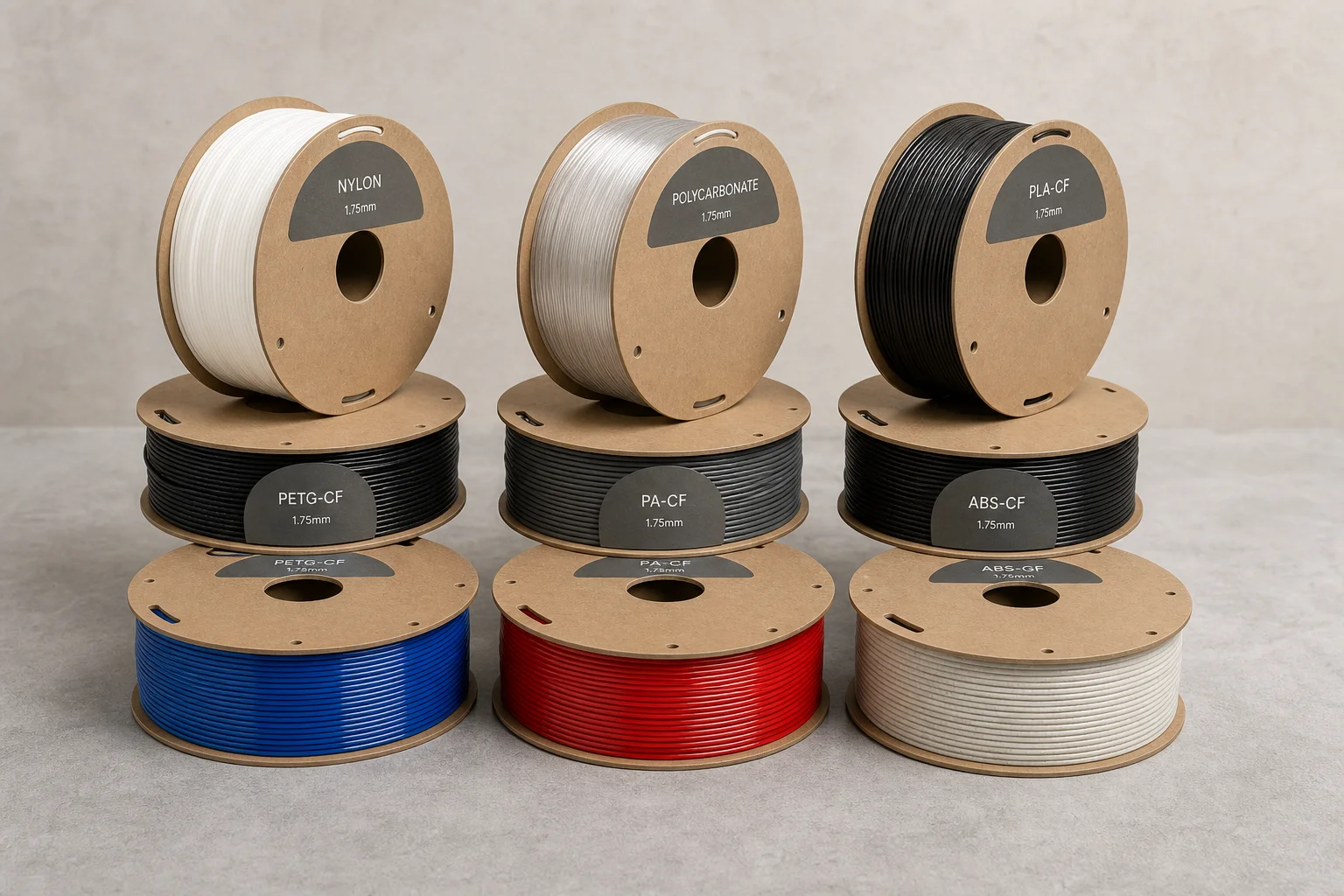
9 Advanced 3D Printer Filaments: A Practical Guide to Engineering-Grade Materials
Explore nine advanced filament types for 3D printing, from Nylon and polycarbonate to carbon fiber composites. Learn their strengths, trade-offs, and best applications.
3D Printing Materials
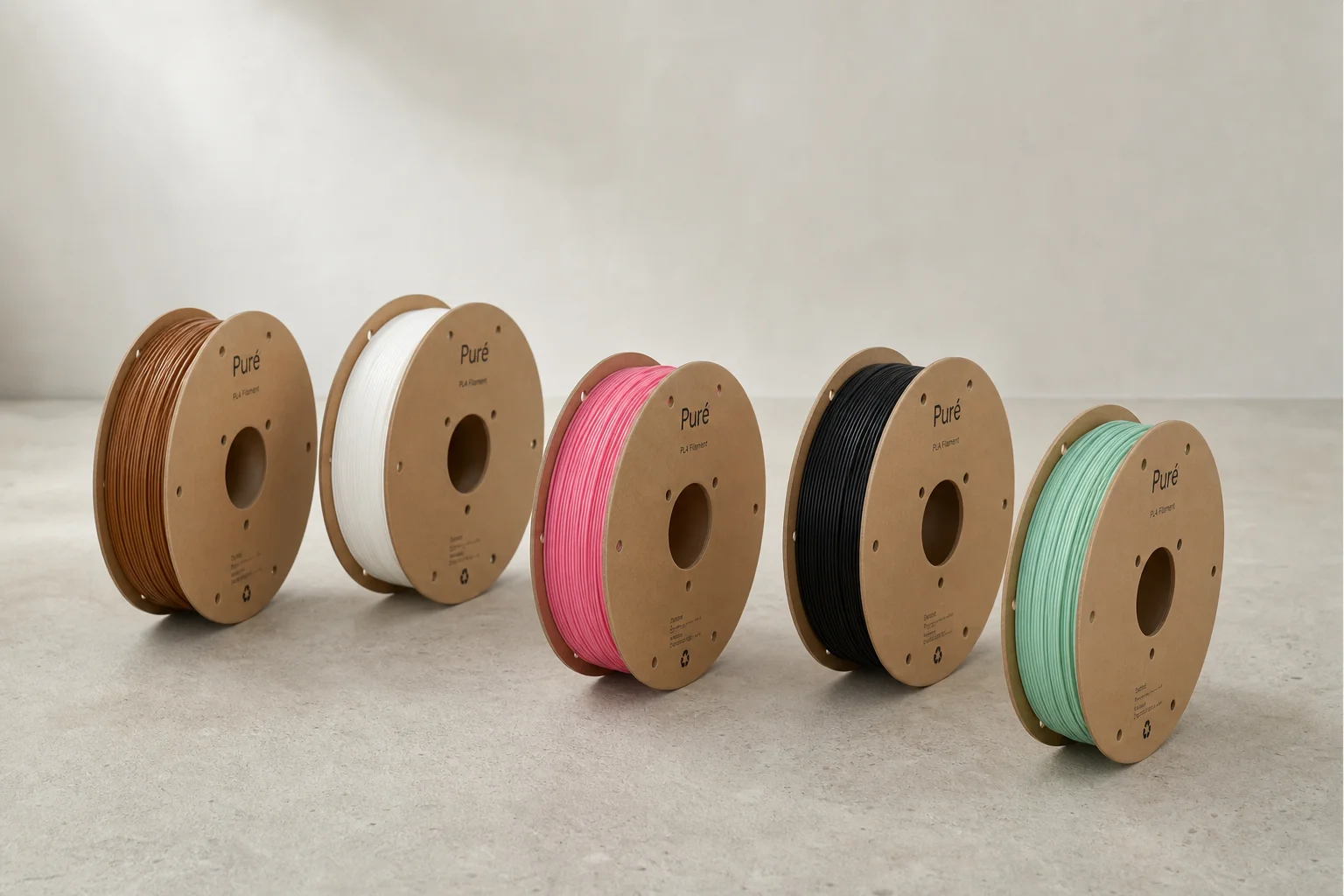
Best PLA Filament Brands 2026: Five Reliable Options for Clean, Consistent Prints
Five PLA filament brands that deliver reliable results, great color, and minimal printing headaches, from budget-friendly to premium options.
3D Printing Materials
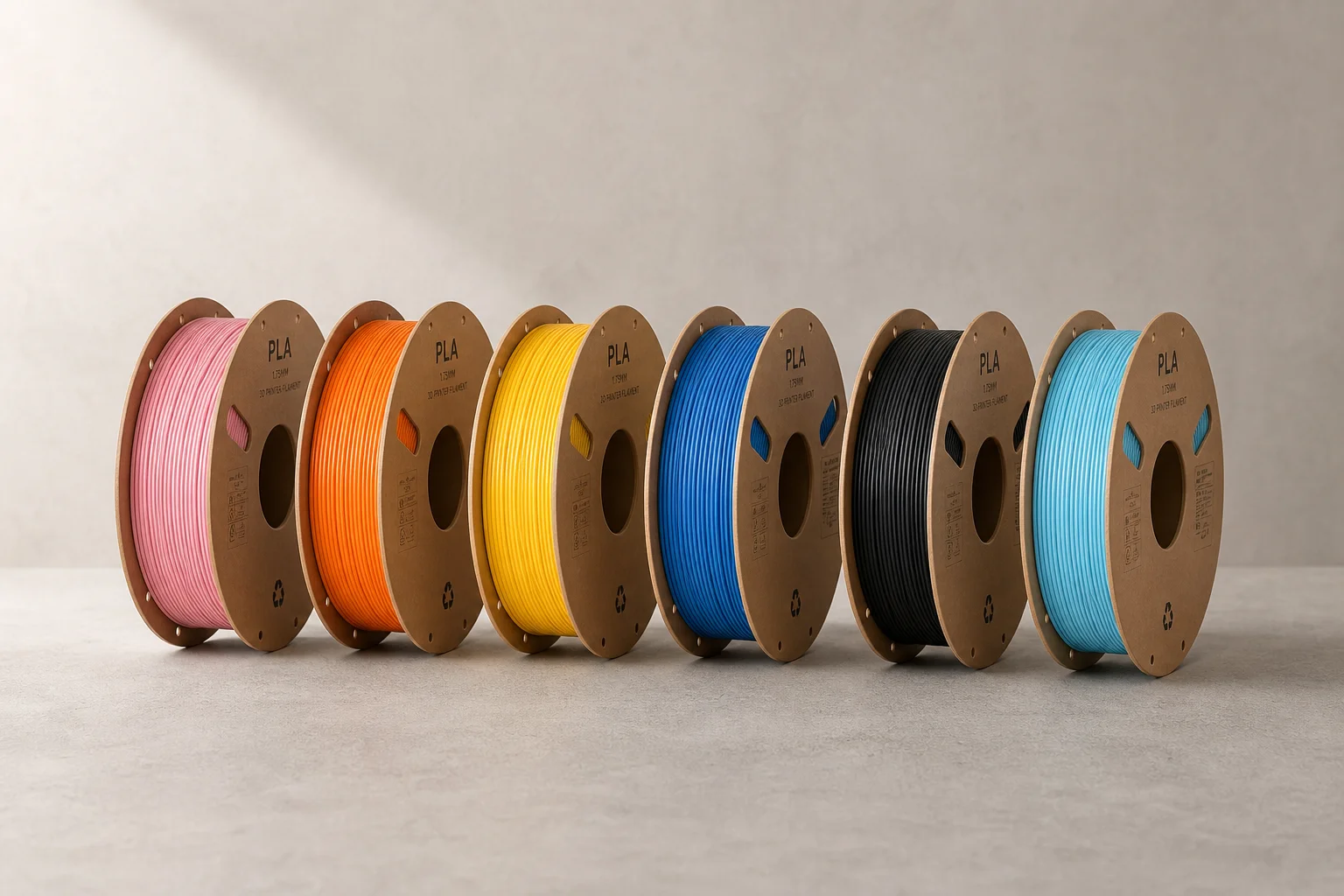
Best PLA Filament Brands for 3D Printing: Six Options Tested
A practical comparison of six PLA filament brands including Bambu Lab, Polymaker, Sunlu, Elegoo, Deeplee, and eSun. Print quality, color options, pricing, and availability reviewed.