3D Printing Materials
9 Advanced 3D Printer Filaments: A Practical Guide to Engineering-Grade Materials
Explore nine advanced filament types for 3D printing, from Nylon and polycarbonate to carbon fiber composites. Learn their strengths, trade-offs, and best applications.
Introduction
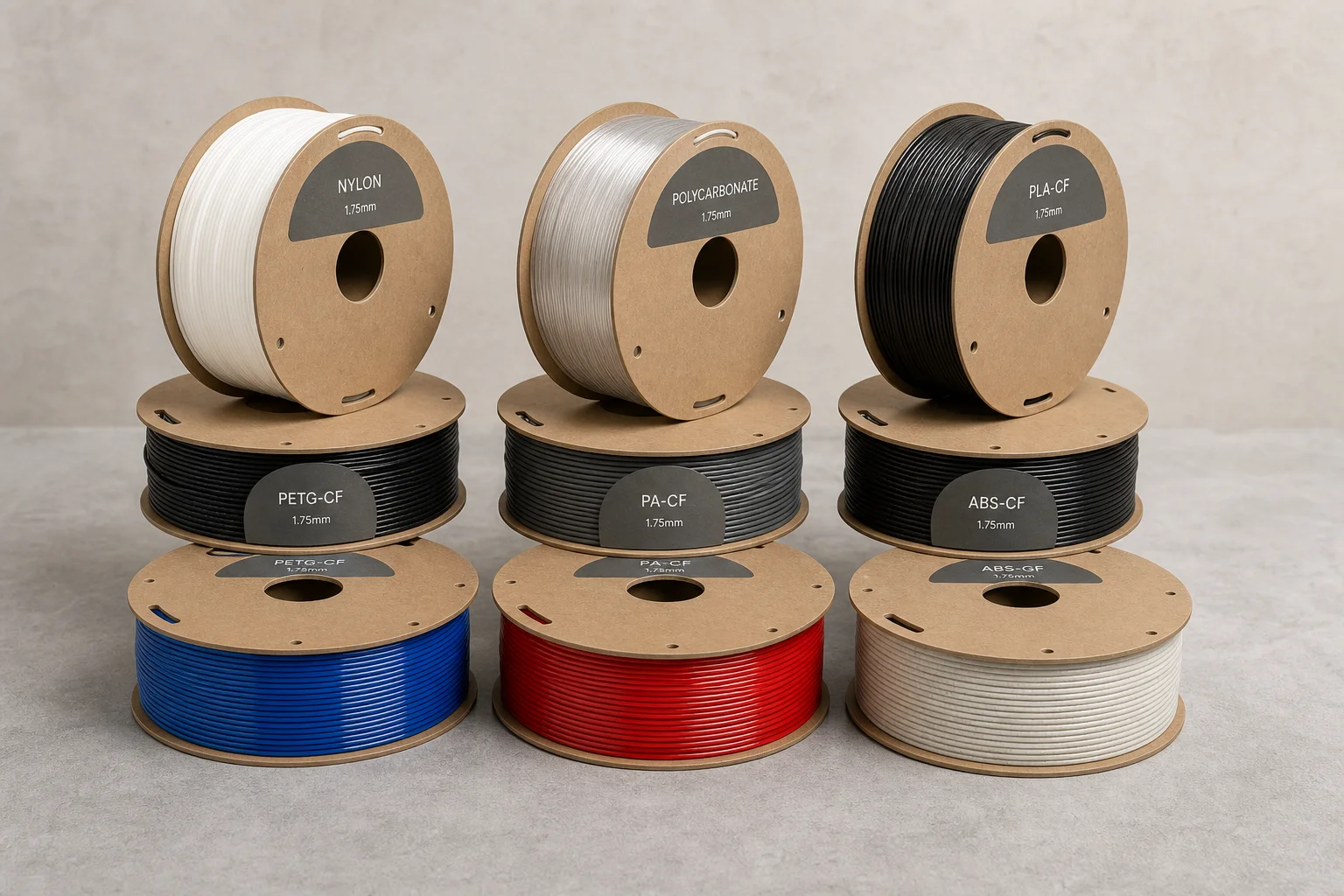
Advanced engineering-grade filaments have transformed consumer 3D printing from a hobby focused on simple plastics into a capable manufacturing tool. Materials like Nylon, polycarbonate, and carbon fiber composites now make it possible to print functional parts that rival injection-molded components in durability and performance. Understanding the strengths and limitations of each material helps you select the right filament for your specific application, whether you’re building drone frames, automotive components, or heat-resistant workshop tools.
Understanding Nylon: Durability and Heat Resistance
Nylon stands out as one of the most versatile advanced filaments available. It offers significantly higher heat resistance than commodity plastics like ABS or PETG, combined with exceptional toughness and durability. The material excels in interlayer adhesion and provides substantial ductility, meaning it flexes rather than shatters under stress. This combination makes it ideal for parts that need to absorb impact and vibration without failing.
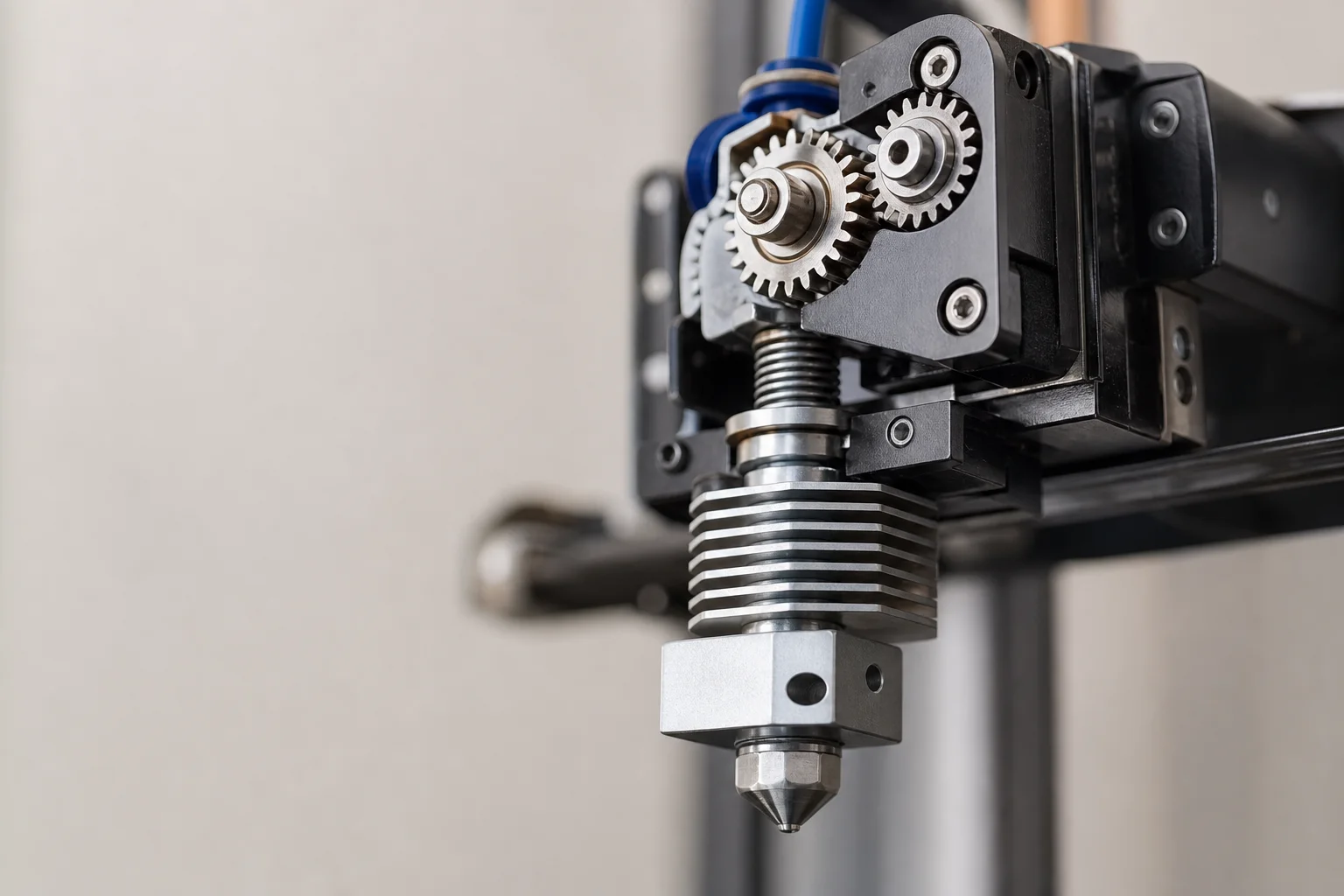
Nylon also resists oils and solvents well, making it suitable for applications in workshops or automotive environments. The material comes in two primary variants: PA-6 and PA-12. PA-12 offers lower moisture absorption and higher flexibility, making it more stable during and after printing. PA-6 provides greater strength and stiffness but absorbs moisture more readily and requires higher printing temperatures, making it trickier to work with. For most 3D printing applications, PA-12 is the more practical choice.
The main challenge with Nylon is its hygroscopic nature, meaning it absorbs moisture from the air. Printing directly from a filament dryer is essential for best results. Additionally, Nylon is highly prone to warping, so an enclosed printer is mandatory. Best applications include plastic gears, automotive parts, flexible living hinges, workshop tools, and gaskets.
Polycarbonate: Clarity Meets Toughness
Polycarbonate (PC) ranks among the toughest thermoplastics available, combining exceptional clarity with remarkable impact resistance. Like Nylon, it offers superior heat resistance compared to standard plastics and delivers excellent interlayer adhesion. The material sits between ABS and Nylon in terms of rigidity versus ductility, making it tough enough to absorb significant shocks without shattering.
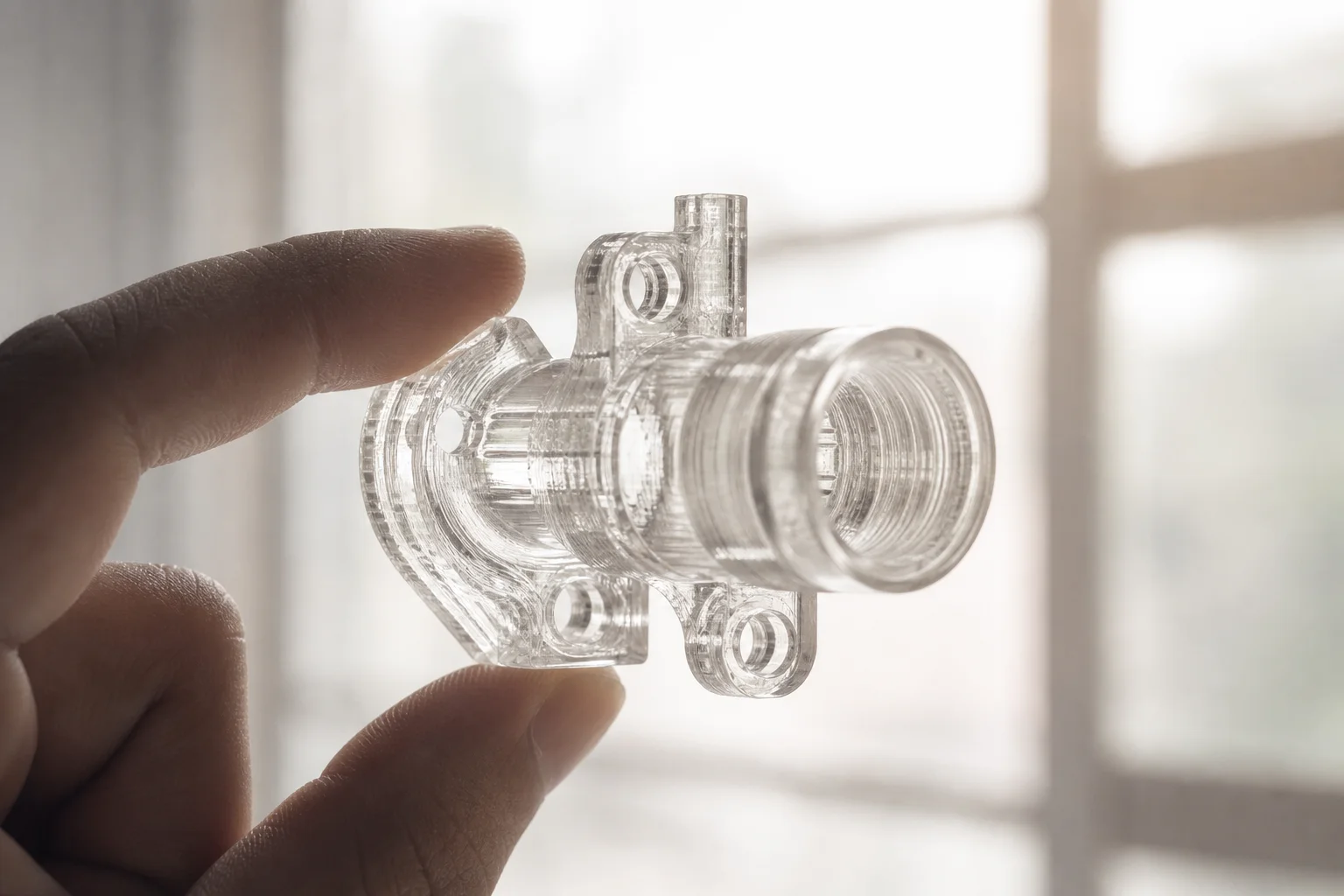
The transparency of polycarbonate opens unique applications. Its combination of strength, clarity, and heat resistance makes it valuable for light housings, LED fixtures, clear containers, and protective covers. It remains more affordable than specialty materials like PEEK while still delivering high performance.
However, polycarbonate shares Nylon’s challenges. It is hygroscopic and prone to warping, especially in larger prints. An enclosed printer with a heated bed is essential, and you may need additional measures like chamber heating or bed adhesion products. Some manufacturers offer PC blends designed to improve printability, but the material fundamentally retains its characteristic behavior. Ideal applications include projects with lighting elements, drone parts, clear containers and tanks, and functional prototypes requiring durability under stress.
Carbon Fiber Composites: Strength and Aesthetics
Carbon fiber reinforcement transforms base materials by increasing stiffness and axial strength while improving dimensional stability. However, the relationship between carbon fiber addition and overall strength is nuanced. While carbon fibers enhance strength in the axial direction, they can reduce interlayer adhesion, potentially weakening the bond between printed layers. This trade-off is particularly important when selecting a carbon composite for load-bearing applications.
PLA-CF: Lightweight and Visually Striking
PLA-CF combines polylactic acid with carbon fiber reinforcement. While the addition of carbon fiber does increase stiffness, experts consider PLA-CF primarily an aesthetic upgrade rather than a true engineering material. The main benefits are the distinctive matte textured finish and improved dimensional stability. However, PLA retains its fundamental weakness: zero heat tolerance. Carbon fiber can also amplify PLA’s brittleness, making it unsuitable for parts requiring impact resistance.
PLA-CF works well for drone frames, RC car components, lightweight tooling, and mounting brackets that do not need to flex or absorb impact. It also serves as an economical prototype material when the final part will be printed in a more expensive carbon composite. One critical requirement: carbon fiber filaments are highly abrasive and demand hardened steel, ruby, or diamond nozzles. You will also need all-metal extruder gears and should expect accelerated wear on Bowden tubes.
PETG-CF: Balance of Performance and Printability
PETG-CF combines the ductility and chemical resistance of PETG with carbon fiber reinforcement, creating a more rigid material while retaining some flex. The result is a filament that handles considerable abuse and resists both ultraviolet light and chemicals better than standard PETG. PETG-CF is generally more affordable and easier to print than other high-performance composites, with improved dimensional accuracy and a desirable matte finish.
The main trade-offs are the need for abrasion-resistant nozzles and the material’s hygroscopic nature, though far less pronounced than in Nylon. PETG-CF remains less heat-resistant than Nylon or polycarbonate. Its strength lies in scenarios demanding durability, cost-effectiveness, and lightweight design. Use it for custom enclosures, protective gear, robotics components, and prototypes destined for more expensive materials. Notably, PETG-CF can be printed on affordable open-frame printers without requiring an enclosed chamber, making it accessible to more users.
PA-CF and PAHT-CF: Engineering-Grade Rigidity
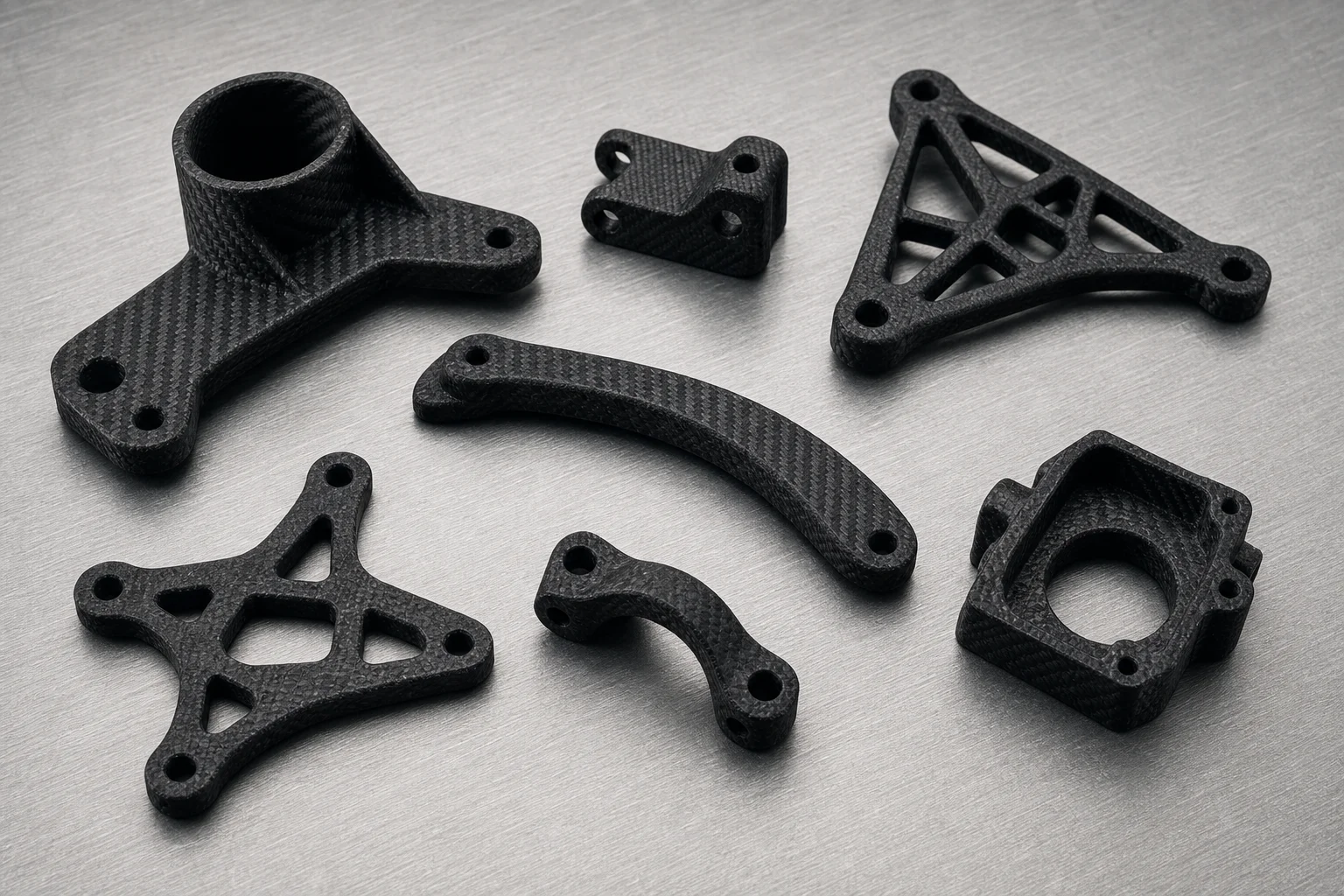
Carbon fiber Nylon represents the most popular carbon composite for serious applications. Adding carbon fiber to Nylon creates a rigid material that retains Nylon’s heat resistance while eliminating its ductility. This trade-off is intentional: you gain rigidity and heat resistance at the cost of impact resistance. Parts made from PA-CF can take more force before deforming, but once deformation begins, failure becomes catastrophic rather than gradual.
This characteristic makes PA-CF ideal for applications where rigid, fixed positioning is essential but catastrophic failure would be unacceptable in weight-bearing scenarios. Carbon fiber addition significantly improves Nylon’s printability by reducing warping and improving dimensional accuracy. It can also add 10 to 20 degrees Celsius to Nylon’s heat resistance, making it the best consumer-grade alternative to PEEK. Use PA-CF for caster wheel mounts, rigid mounting brackets inside enclosures, tools that must remain rigid around heat sources, and workshop applications requiring rigidity under thermal stress.
ABS-CF: Affordable and Durable
ABS-CF combines the affordability and durability of ABS with carbon fiber reinforcement. While ABS is a commodity plastic, its carbon composite version remains significantly cheaper than PA-CF. ABS-CF is also easier to print than PA-CF in most cases, being less hygroscopic and warping less. However, it still requires an enclosed printer, primarily due to fumes.
ABS-CF represents an excellent all-around compromise, blending affordability, printability, durability, strength, moderate heat resistance, and rigidity without excelling at any single property. It works well for automotive parts under moderate heat, tools, rigid indoor brackets for camera equipment or robotic arms, and any application requiring substantial rigidity. Note that unlike PETG-CF, ABS-CF does not tolerate ultraviolet light or chemical exposure well.
Printer Capabilities and Material Selection
The choice of printer significantly impacts which advanced filaments you can successfully print. Budget-friendly printers like the Sovol SV07 and Sovol SV07 Plus, despite their low cost, include features that enable printing many advanced materials. Both models feature full metal heat breaks, powerful volcano hotends, planetary extruders, and the ability to reach 300 degrees Celsius. With an enclosure and abrasion-resistant nozzles, these printers can handle nearly all materials discussed here, including carbon fiber Nylon.
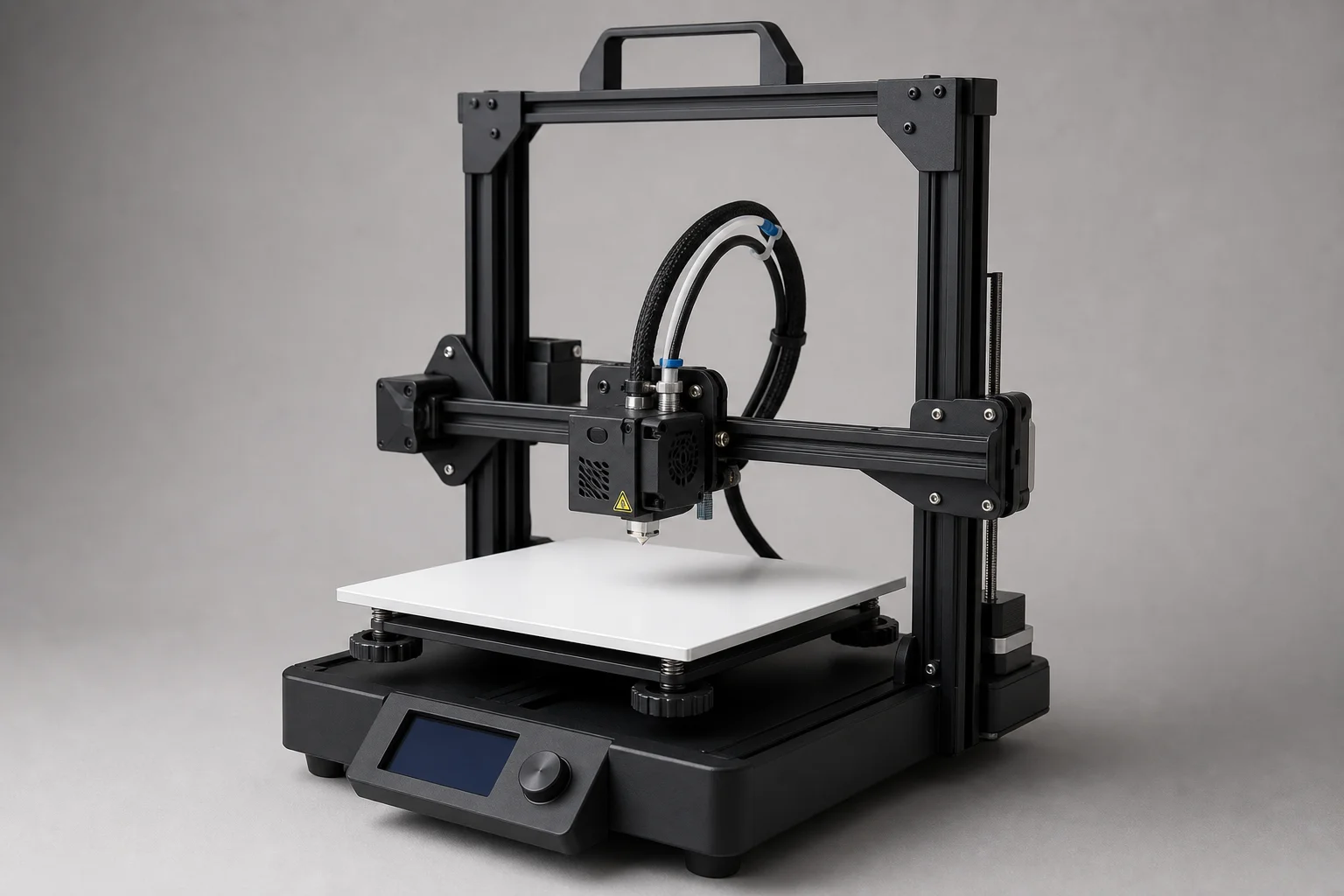
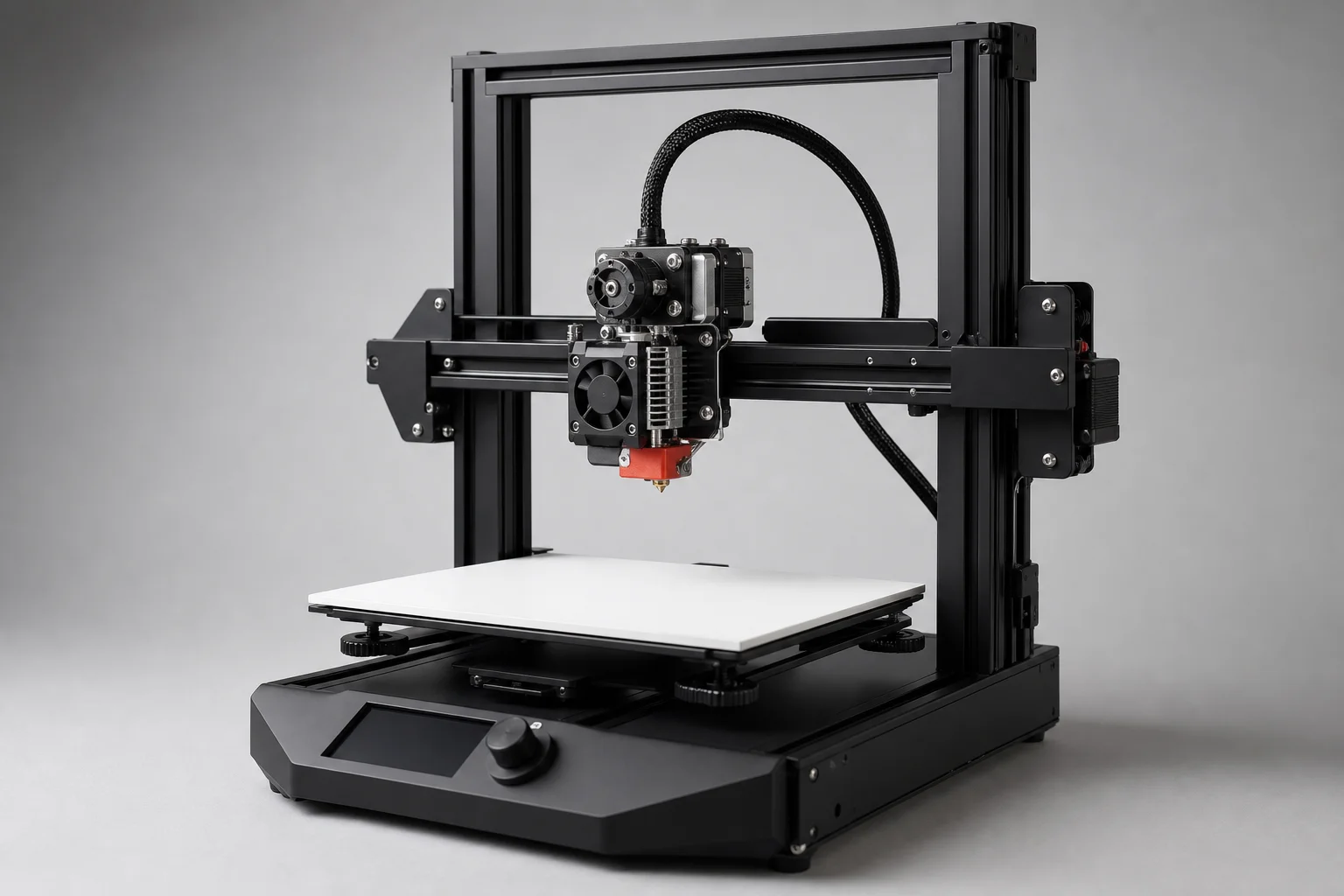
The open-source Klipper firmware running on both Sovol models provides flexibility for tweaking and customizing the machine to optimize settings for different materials. This combination of capable hardware and software control makes advanced filament printing accessible without requiring a premium printer investment.
Glass Fiber Reinforcement: An Alternative Approach
ABS-GF (glass fiber) offers a different approach to reinforcement. While carbon fiber improves axial strength and rigidity, glass fiber adds tensile strength instead. Glass fibers are more economical than carbon fiber and do not conduct heat or electricity, making them preferable in electronics applications where thermal or electrical conductivity could be problematic.
The primary advantage of ABS-GF is cost. If you can justify the expense, ABS-CF generally outperforms ABS-GF. However, ABS-GF remains excellent for adding tensile strength to standard ABS without significant cost increase, or for prototyping parts that will eventually be reprinted in carbon fiber. Suitable applications include electronics housings, tool cases, tools, and handles that benefit from enhanced tensile strength.
Choosing the Right Filament for Your Needs
Selecting an advanced filament requires matching material properties to application demands. Start by identifying your primary requirement: heat resistance, impact absorption, rigidity, clarity, or cost-effectiveness. Nylon excels when durability and heat resistance matter most. Polycarbonate is the choice for transparent, impact-resistant parts. Carbon fiber composites provide rigidity and improved dimensional stability at the cost of interlayer adhesion and material expense.
Consider your printer’s capabilities honestly. An enclosed printer with a heated bed is non-negotiable for Nylon and polycarbonate. Carbon fiber filaments demand hardened nozzles and all-metal extruder components. PETG-CF stands out as the most accessible advanced material for open-frame printers. Budget constraints may push you toward ABS-CF over PA-CF, or ABS-GF over ABS-CF, and both remain viable choices for many applications.
Finally, start with small test prints to understand how each material behaves on your specific machine. Print settings, environmental conditions, and hardware variations significantly impact results. The investment in learning these materials pays dividends when you can confidently print functional parts that match or exceed injection-molded alternatives.
Conclusion
Advanced filaments have democratized access to engineering-grade 3D printing. Whether you choose Nylon for durability, polycarbonate for clarity, or carbon fiber composites for rigidity, each material offers distinct advantages for specific applications. Understanding the trade-offs between strength, heat resistance, printability, and cost ensures you select the right filament for your project. With capable hardware like the Sovol SV07 series and proper technique, consumer-grade 3D printers can now produce parts that rival industrial manufacturing in performance and reliability.
Further reading
Related Reviews
3D Printing Materials
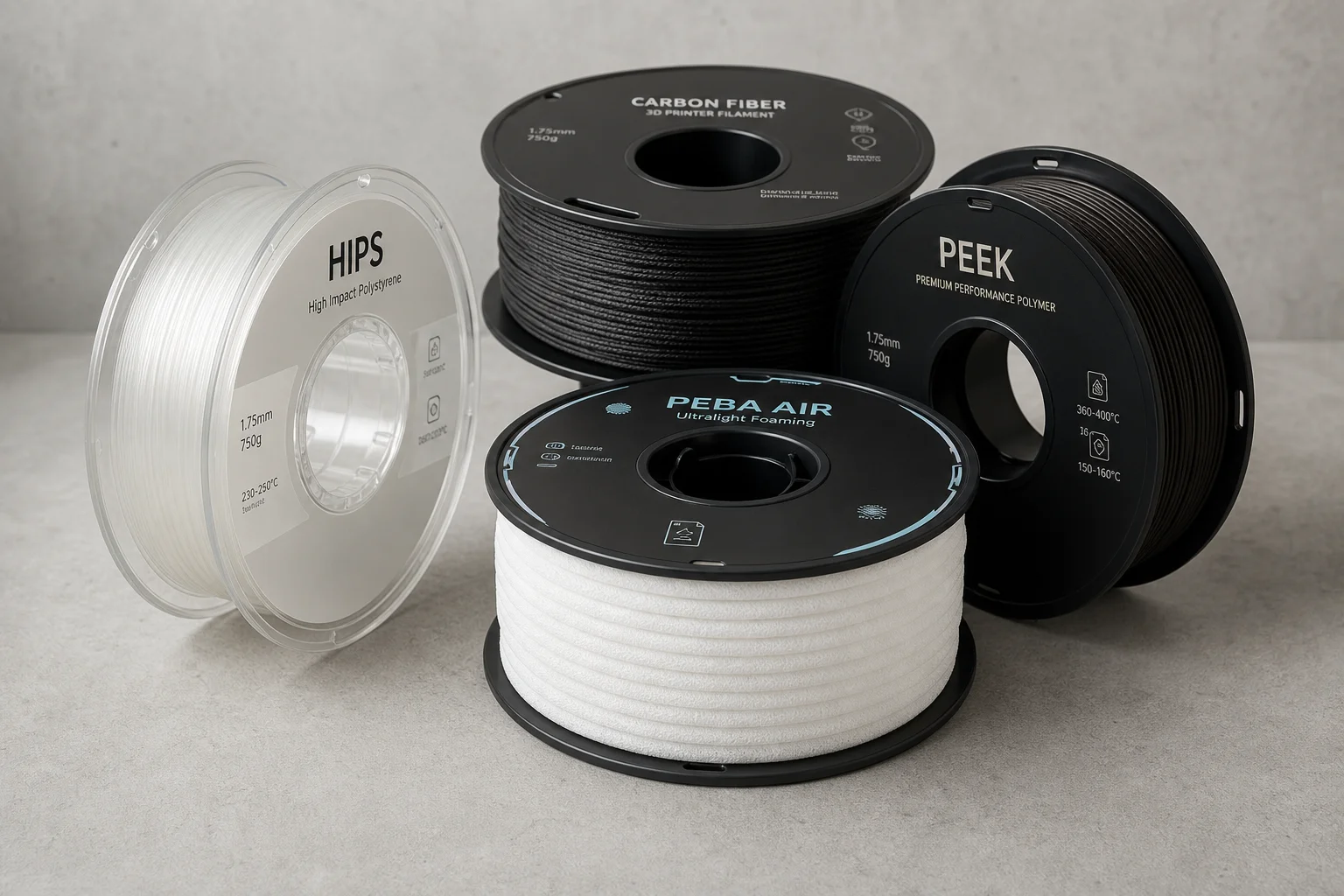
Advanced 3D Printing Filaments: 15 Functional Materials Beyond PLA and PETG
Explore over 15 specialized 3D printing filaments with unique properties, from flexible PEBA Air to extreme-temperature PPS-CF. Learn what each material excels at and how to print it successfully.
3D Printing Materials
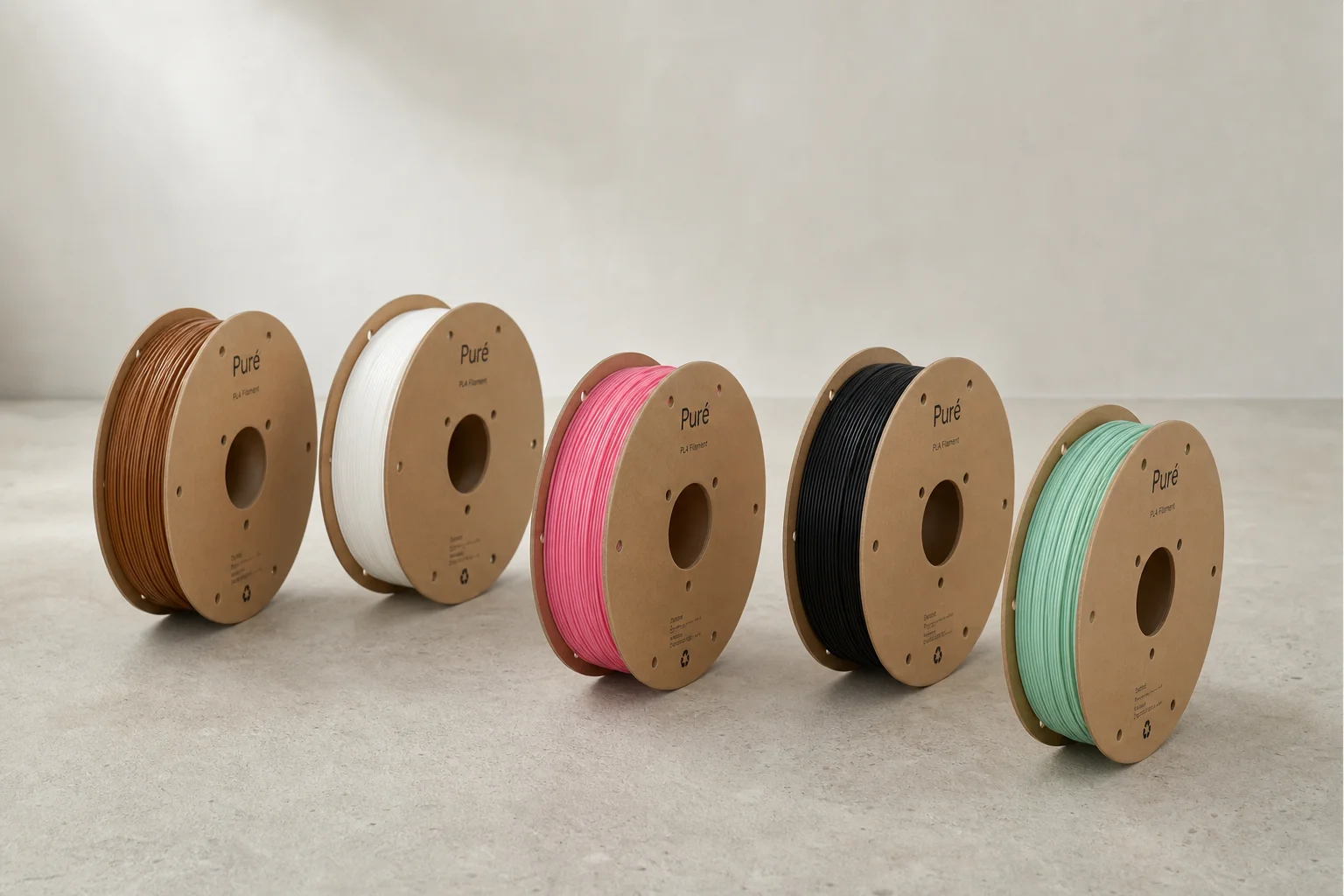
Best PLA Filament Brands 2026: Five Reliable Options for Clean, Consistent Prints
Five PLA filament brands that deliver reliable results, great color, and minimal printing headaches, from budget-friendly to premium options.
3D Printing Materials
Best PLA Filament Brands for 3D Printing: Six Options Tested
A practical comparison of six PLA filament brands including Bambu Lab, Polymaker, Sunlu, Elegoo, Deeplee, and eSun. Print quality, color options, pricing, and availability reviewed.