Running Shoes
Adidas Boston 13 Review: 100 Miles of Testing a True Do-It-All Trainer
After 100 miles of daily runs, long runs, and speed work, the Adidas Boston 13 proves itself as one of the most capable versatile trainers available.
Introduction
The Adidas Boston 13 sits in an odd spot in the market conversation. By the time a 100-mile review lands, a shoe has usually been on shelves for months and the hype cycle has already moved on. That is exactly why this kind of testing still matters. New-shoe first impressions tell you how a shoe feels out of the box; 100 miles tell you how it holds up in real training. After daily miles, two 20-mile long runs, vacation running, and a stack of comparisons, the Boston 13 has earned its place as one of the most quietly capable trainers in the Adidas lineup.
100 Miles In: What the Testing Looked Like
Getting this shoe to the 100-mile mark involved the kind of training most runners actually do: easy and moderate daily runs at 7:00 to 8:00 pace, afternoon doubles, and long runs stretched to 20 miles. The final push to 100 came in typical humid summer conditions, over two runs of 10 and 9 miles on a single day, which is as honest a test of a daily trainer as you can get.
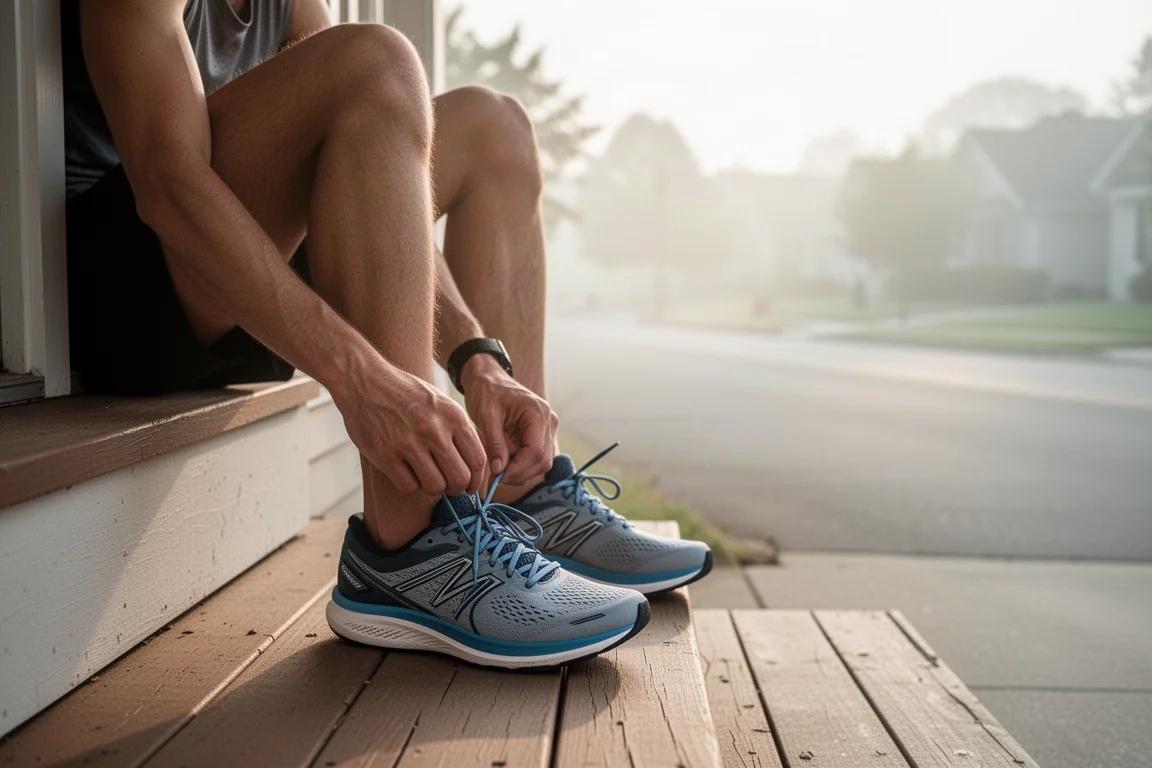
That mileage pattern matters because it reveals what the shoe is really for. The shoes with the most exciting rides rarely reach 100 miles in a rotation. It is the shoes with comfort, capability, and genuine performance for everyday miles that rack up the distance, and the Boston 13 is firmly in that category.
Build and Specs
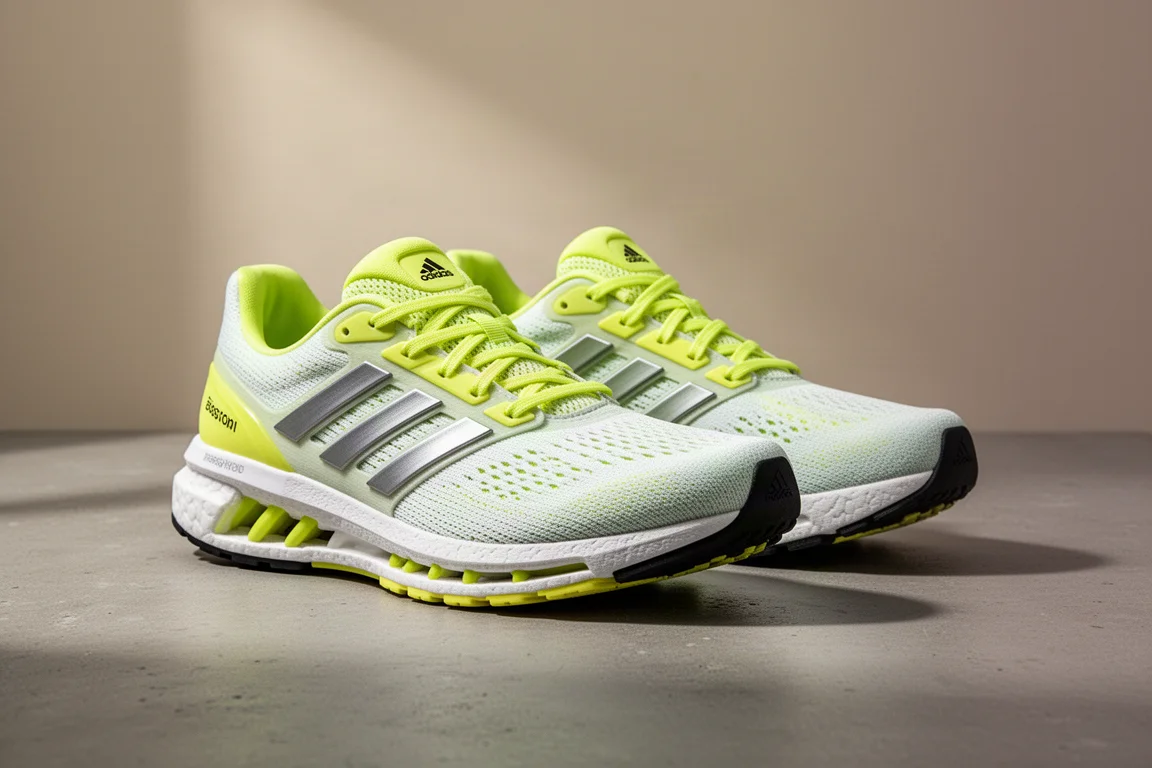
At around 275g in a typical men’s size, the Boston 13 is slightly heavier than the Adidas Evo SL. The price sits at $160, which places it below the $150 Evo SL’s flashier technology story in spirit but above the more budget-focused Adizero SL2 in capability.
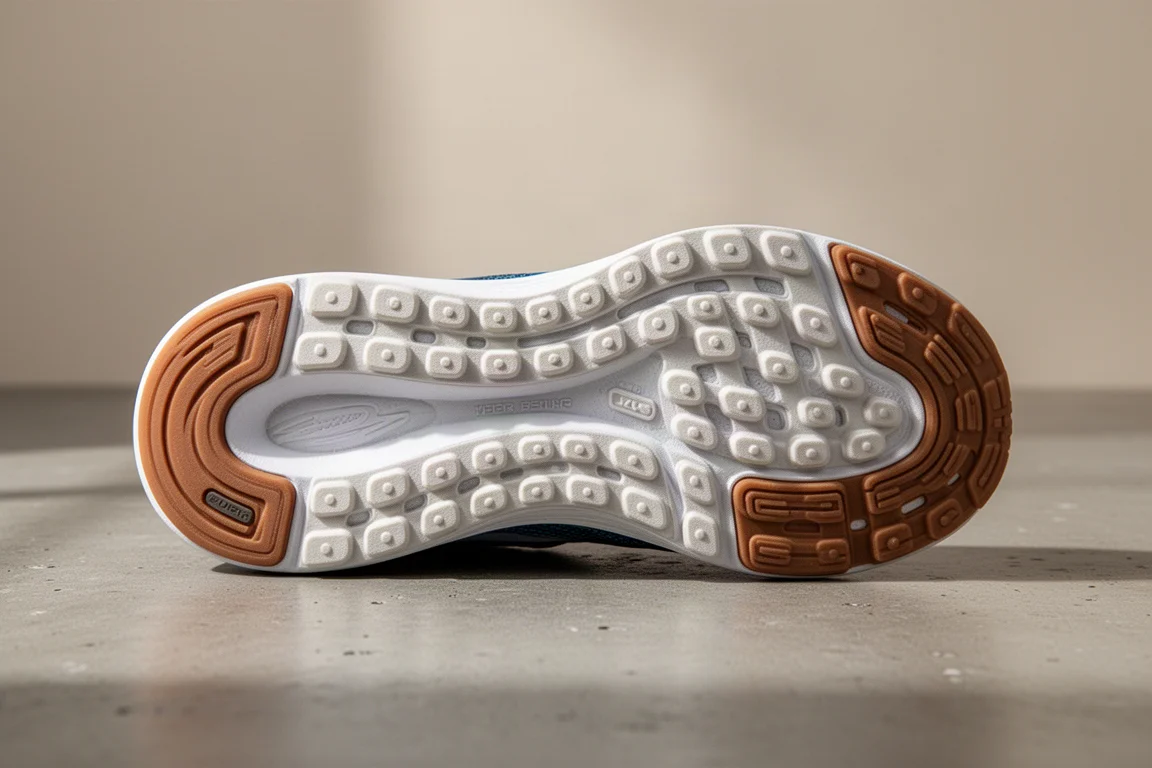
The construction is where this shoe earns its keep. You get energy rods visible through the outsole, Lightstrike Pro race foam on the top layer, and standard Lightstrike 2.0 training foam underneath, topped with a really nice upper. Adidas has kept Continental rubber only in the toe-off zone, with the rest of the outsole using Light Traktion, the same approach seen on the Prime X 2. It is not the lowest-tech shoe, but it feels far more traditional than most modern performance trainers.
The upper deserves special mention. The Boston 12 was known for a lightweight but starchy upper. The 13 keeps the lightweight, breathable feel while adding more padding around the heel, which makes it genuinely comfortable for daily miles rather than just fast sessions.
Ride and Feel: Traditional, Capable, Connected
This is where the Boston 13 separates itself from the current market. It is a lower-to-the-ground, streamlined shoe with a moderate-to-low drop, and near 100 miles it feels very flat and settled. The stack comes in around 34 to 35mm at the heel once the foam compresses, which is low by today’s standards; it may well be one of the lowest-stack plated trainers available.
There is no aggressive rocker, no squishy softness, and no unnatural bounce. It feels like a Saucony-ride, a Nike Pegasus, or a New Balance Rebel v3 kind of shoe, but with race foam and rods adding real snap. At easy paces it does not punish you or force you to run faster, unlike some more aggressive shoes. It is simply workmanlike and reliable.
The trade-off is real, though. It is not the most comfortable shoe for slow recovery runs, and if you want a max-cushion cruiser for easy days, options like a Glycerin Max or Magnify fit better. The Boston 13 is do-it-all that leans faster.
How It Handles Speed Work and Long Runs
The impressive thing is how well this shoe handles both ends of the spectrum. For repeat workouts and high-end speed, the firmer forefoot and energy rods let it hang with the best race shoes. It may not deliver as much speed assistance as something like an Evo SL or a premium racing shoe, but it does a very similar job with more comfort and more durability.

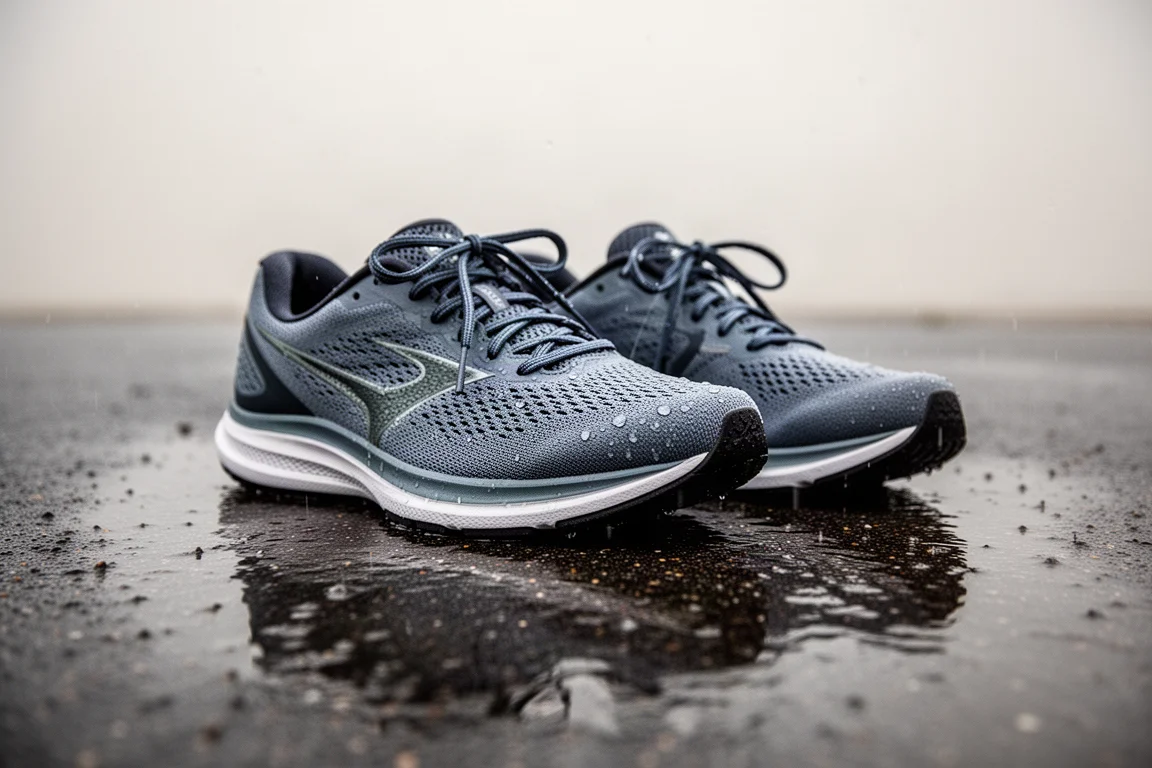
On the other end, two 20-mile long runs did not bottom it out. The race foam provides balance through the entire run, and the protection is decent enough for the distance. Very few training shoes are genuinely good at both long runs and fast sessions without being a max-stack marathon racer, and that rare combination is the Boston 13’s defining quality. It even handles wet roads confidently thanks to the outsole, and light gravel paths are within its comfort zone.
How It Compares
Against the Saucony Endorphin Speed 5, the picture is clear: the Speed 5 is softer, bouncier, more modern-feeling with its rocker, and ironically more flexible. It is the fun, less serious speed option. The Boston 13 is the more substantial speed option.
Within the Adizero family, this shoe sits dead center. Below it you have the SL2, Evo SL, and Adios; above it the Adios Pro 4, Prime X 2, and Evo Pro 2. It is the one designed to do everything, and it executes that brief well. The standard Lightstrike foam is not an outdated gimmick here; it plays a supporting role, adding durability and firmness in the back without getting in the way.
Compared to standard daily trainers in the same price range, like the Aeroglide, the Boston 13 gives up some all-day cushioning but gains far more performance capability. Compared to a $250 to $300 race shoe, it gives up assistance but keeps a large share of the performance at $160.
Buying Advice: Who Should Pick the Boston 13
If you want one fun, fast, capable training shoe for workouts, long runs, and track days, this is arguably the best bang for your buck right now. It is highly capable without having too much going on: just enough comfort, just enough stack, just enough race foam, and enough stability for most runners. It handles short and fast, long and slow, roads, track, wet surfaces, and light gravel.
Look elsewhere if you want the flashiest race foam experience (the Evo SL), an emotional max-tech purchase (the Prime X 2), or the absolute value pick for runners not doing heavy long runs (the SL2). And if your rotation is built around slow, cushioned easy days, a non-plated max-cushion trainer is the better fit. But for a single do-everything shoe that looks sharp, is put together well, and shows no build quality issues, the Boston 13 is the best pick in this space.
Conclusion
One small note on placement: a running shoe’s worth shows up over miles, not in unboxing videos. After 100 miles of honest training, the Adidas Boston 13 stands out as a versatile workhorse that can substitute for race shoes on workout days while still handling everyday miles. It is not the bounciest, most exciting, or most stacked shoe available, and that is exactly the point. Everything you need, nothing you don’t. For runners who want a trainer that can genuinely do it all and lean fast while doing it, this is one of the strongest choices of the year.
Product link
View more details for Adidas Boston 13
This product is mentioned in the review. Check the specifications, options, and compatibility before buying.
View more details for Adidas Boston 13Further reading
Related Reviews

Running Shoes
Best Road-to-Trail Running Shoes: Three Versatile Options for Mixed Terrain
A practical guide to three road-to-trail running shoes that handle both pavement and mild trails, with clear strengths and trade-offs for different runner types.

Running Shoes
Best Running Shoes for Achilles Tendonitis: Three Options Explained
Three running shoes with different heel drops and support features designed to help reduce Achilles tendon pain during walking and running.

Running Shoes
Best Running Shoes for Women: Five Top Choices Ranked
A ranked guide to five women's running shoes, from versatile daily trainers to high-performance racing options, with real strengths and trade-offs for each.