Running Shoes
Adidas Adizero Evo SL vs Dynavish Shaion (Dino Fish): Which All-Rounder Should You Buy?
Two lightweight, versatile daily trainers go head to head on price, weight, ride feel, and fit to help you pick the right one.
Introduction
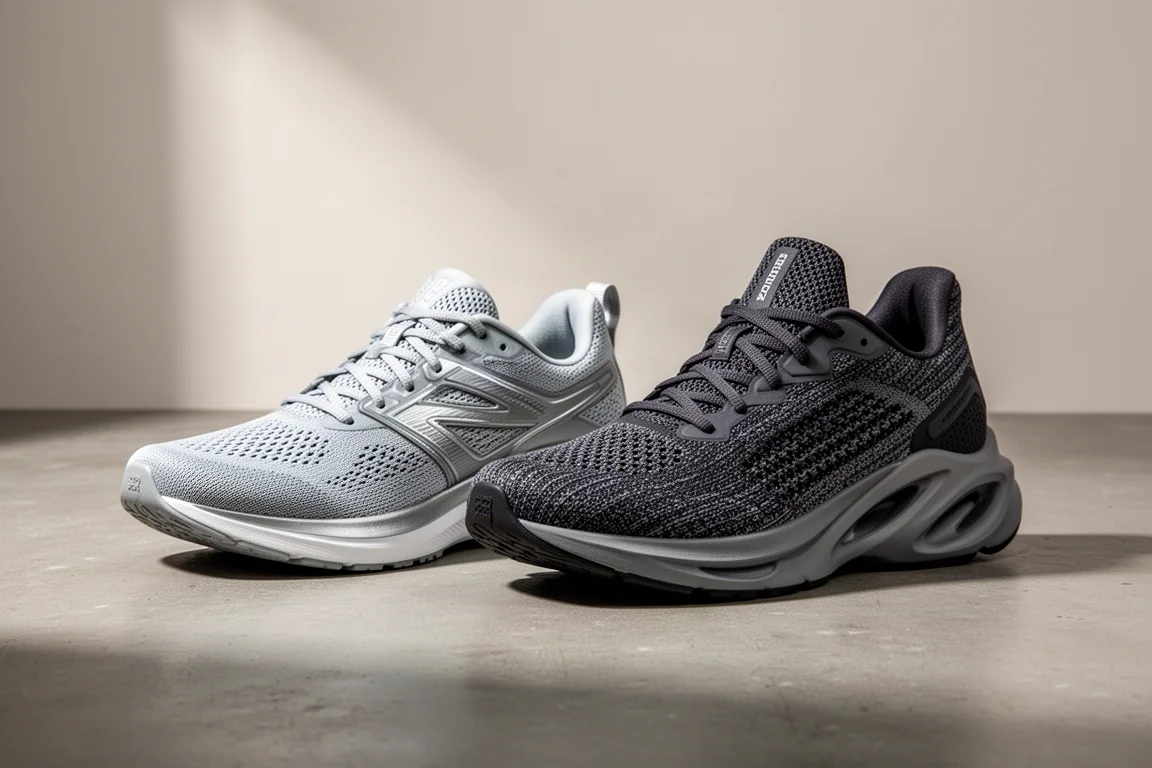
The Adidas Adizero Evo SL has spent the better part of a year and a half as one of the most popular running shoes on the market, repeatedly praised as a very good value, versatile daily trainer. The Dynavish Shaion, better known in running circles as the Dino Fish, is one of the newer challengers. It has mostly been available through marketplaces like AliExpress so far, but it is now starting to go on sale directly in the US and looks set to spread further, because it is itself a very good, versatile, very good value shoe.
This comparison looks at how these two stack up across price, weight, construction, fit, and ride, because on paper and on the road they are far more alike than either is to typical shoes at their respective price points.
Price and Weight: Close on Cost, Different on Scale
The Evo SL costs £130 in the UK and $150 in the US, though it often drops to around £100 in sales. The Dino Fish is a bit more up in the air on pricing, but at the upper range you are probably paying something like £120 in the UK and $130 to $150 in the US, and you may find it cheaper depending on where you buy it. In practice, both shoes now land in a similar price zone, so a genuinely good deal on either one should probably decide your purchase.
Weight is where they separate more clearly. The Dino Fish weighs just 216 g (7.6 oz), and that is in a UK 9.5, a size up from the tester’s normal UK 9. The Evo SL weighs 224 g (7.9 oz) in a UK 9. So the Dino Fish is a slightly bigger shoe yet a fair bit lighter, and that lightness turns out to be its defining trait.
Design and Construction
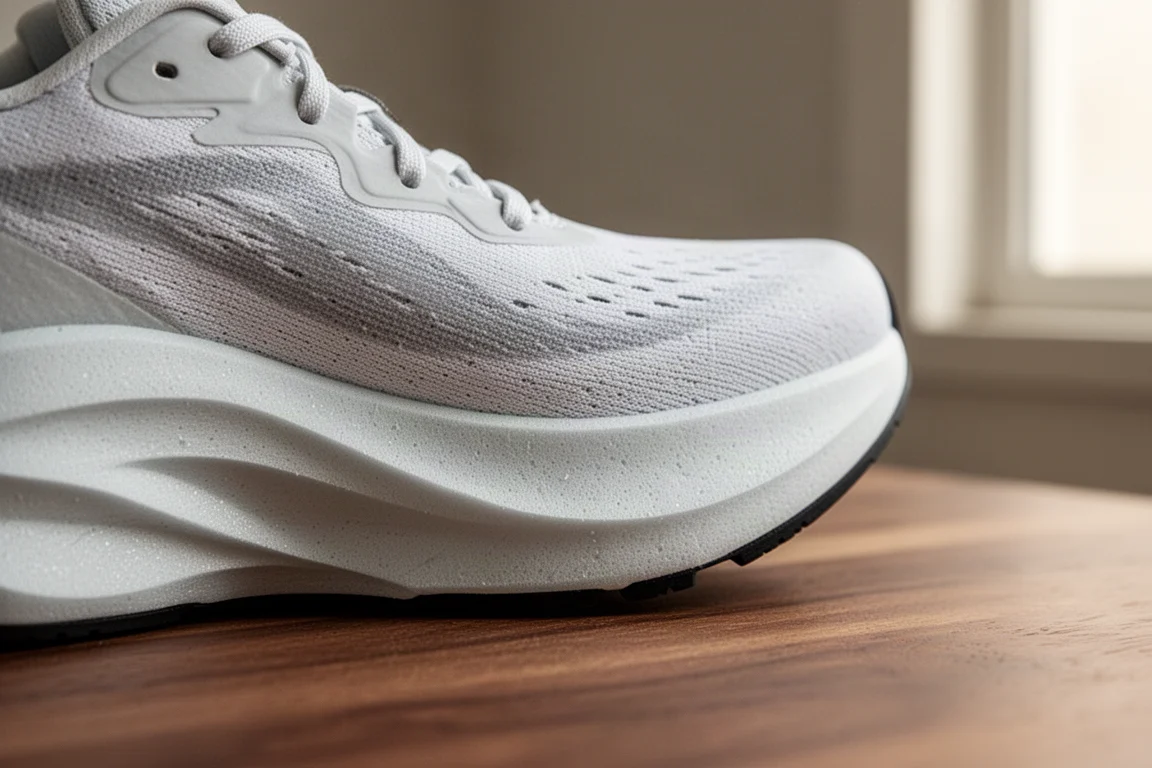
The Dynavish Shaion uses a woven upper with a firm race section around the front to keep material away from your toes, plus very long laces that are not particularly great. In the midsole you get supercritical TPE foam, a bouncy and resilient material, paired with a fairly sharp rocker design. The outsole is the standout detail: nearly full rubber coverage with a reasonably thick layer of rubber, which is impressive in a shoe this light.
The Evo SL counters with a lightweight mesh upper that has a bit more padding around the back of the shoe and more structure in the heel thanks to an internal heel counter. Its midsole is Adidas’s Light Strike Pro foam, another very bouncy, lively material, with a nylon shank in the midfoot that makes it feel slightly stiffer. It also has a very aggressive forefoot rocker, similar in spirit to the Dino Fish. Outsole coverage is good too, with Continental rubber on the forefoot and Adidas’s clear rubber on the two heel sections.
Fit and Sizing
Fit guidance matters here because both shoes run tight, but in different ways. The Dino Fish is quite a restrictive, narrow-fitting shoe, lean through the midfoot. Testers agreed you should go half a size up: one went from UK 8 to UK 8.5 and got just about the right toe space, while another, normally a UK 9 (often a US 10), found a UK 9.5 gave the right amount of room. The laces are widely considered poor and worth swapping out, but otherwise the shoe fits comfortably around the rest of the foot.
The Evo SL is also fairly tight-fitting, though the verdict is split. One tester runs it in his true UK 8.5 and calls the fit nice, not restrictive; a size 8 sent for testing was clearly half a size too small, with the big toe rubbing at the end. Another tester, caught between two sizes, gets away with a UK 9 (US 9.5) but notes that Adidas sizing tends to convert slightly small, so going half a size up is a reasonable call. Neither shoe has serious fit concerns beyond sizing and the Dino Fish’s laces.
Ride and Performance
Both shoes share a bell-curve performance profile: they excel in the middle pace range, roughly steady and tempo work, and both handle easy paces with slight stability concerns. The Evo SL is a bit more unstable than the Dino Fish, but the Dino Fish is still a little wobbly for very easy recovery running.
At faster efforts, both absolutely fly. The Evo SL is proven at speed work and has a real stiffness and aggressive rocker that make it feel direct and bouncy, and it firms up as you run faster. The Dino Fish is more subtle: it is not an obviously energetic, bouncy shoe out of the box, but it rolls smoothly, disappears on the foot thanks to its low weight, and gives a high amount of response off the toes without feeling overly soft.

For distance, the split is fairly clear. If you focus on shorter distances and want a shoe for 5K and 10K training or even an all-out track effort, the Evo SL is the better pick, since it is bouncier and a touch better at flat-out pace. If you are marathon training with workouts like four times 4K or five times 2K around marathon pace, the Dino Fish makes more sense: it has a bit more cushion, a bit more stability, and a smoother rocker from the heel that suits longer progressive runs and easy days.
Verdict and Buying Advice
Both are among the top all-rounder shoes on the market right now, and you will not go far wrong with either. Prices are now effectively similar, and unless you find a great deal on one, the decision comes down to your training.
Pick the Evo SL if your running leans toward shorter, faster work and you want a bouncier, more aggressive ride; the extra weight will not bother most runners. Pick the Dino Fish if you are heading into a marathon block, doing regular 10-mile-plus easy-to-steady days and long workouts, and you value the lower weight, extra cushion, and added stability, provided you can source it through official channels or marketplaces like AliExpress.
Conclusion
The Adidas Adizero Evo SL remains a superb value, do-it-all trainer with a fun, bouncy ride and proven speed credentials. The Dynavish Shaion matches much of that for less weight, with more cushion and stability for long-distance work. Choose by distance and pace rather than by price, because these two are closer than almost any other pairing in this category.
Product link
View more details for Adidas Adizero Evo SL
This product is mentioned in the review. Check the specifications, options, and compatibility before buying.
View more details for Adidas Adizero Evo SLFurther reading
Related Reviews

Running Shoes
Best Road-to-Trail Running Shoes: Three Versatile Options for Mixed Terrain
A practical guide to three road-to-trail running shoes that handle both pavement and mild trails, with clear strengths and trade-offs for different runner types.

Running Shoes
Best Running Shoes for Achilles Tendonitis: Three Options Explained
Three running shoes with different heel drops and support features designed to help reduce Achilles tendon pain during walking and running.

Running Shoes
Best Running Shoes for Women: Five Top Choices Ranked
A ranked guide to five women's running shoes, from versatile daily trainers to high-performance racing options, with real strengths and trade-offs for each.