Running Shoes
Adidas Adizero Adios Pro 4 vs the Best Marathon Super Shoes: Five Racers Compared
How the Adidas Adizero Adios Pro 4 stacks up against the Saucony Endorphin Elite, Endorphin Pro 4, Puma Fast-R Nitro Elite 2, and On Cloudboom Strike for marathon racing.
Introduction
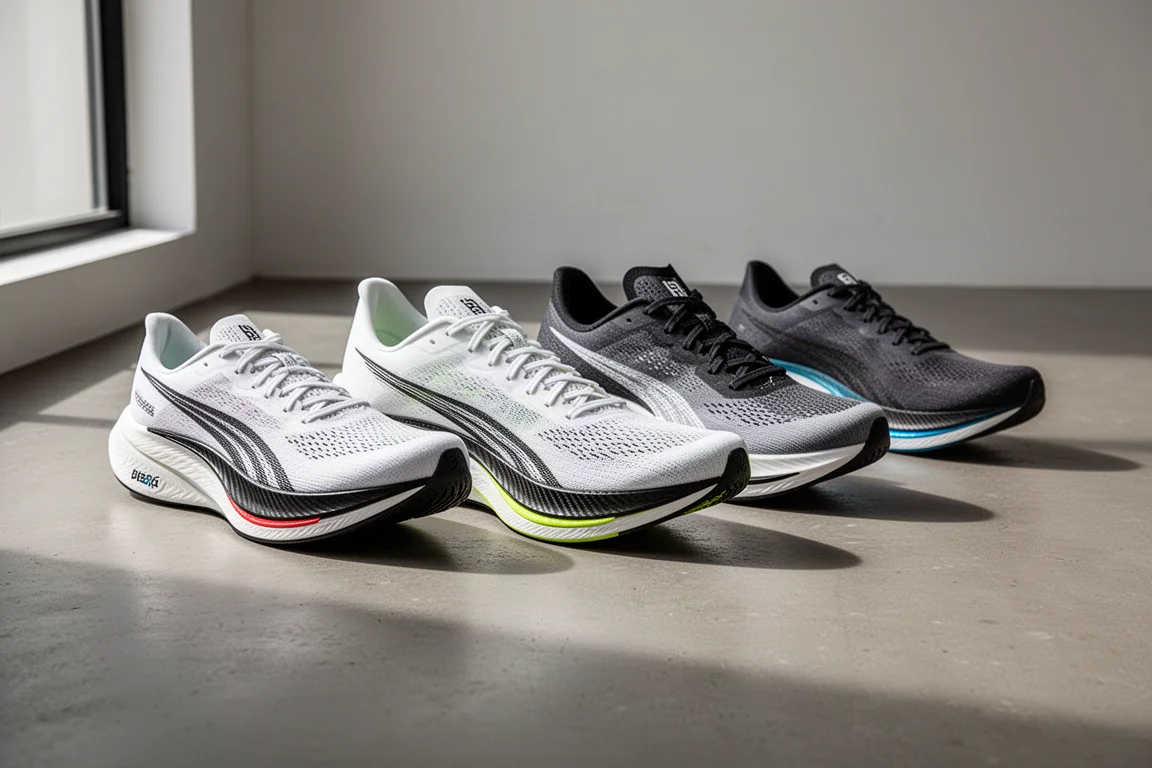
The Adidas Adizero Adios Pro 4 has quickly become one of the most talked-about marathon racers, and for good reason. In head-to-head testing against the Saucony Endorphin Elite, the Saucony Endorphin Pro 4, the Puma Fast-R Nitro Elite 2, and the On Cloudboom Strike, it kept coming out on top as the shoe to pick if you could only own one pair. This guide breaks down where each shoe wins and loses, so you can work out which one actually fits your feet, your pace, and your budget.
Quick Comparison: Stacks, Weights, and Prices
The headline stats are close in several areas. Heel stack is broadly similar across most of these shoes in a typical size, though the On Cloudboom Strike carries a little more cushioning in the forefoot area.
The Adizero Adios Pro 4 is the lightest of the group, with the Puma Fast-R Nitro Elite 2 the heaviest at roughly 1.5 ounces more than the Adidas. The Adidas is also the cheapest of the set, which matters when every rival costs more and some cost substantially more.
Adidas Adizero Adios Pro 4: The All-Round Pick
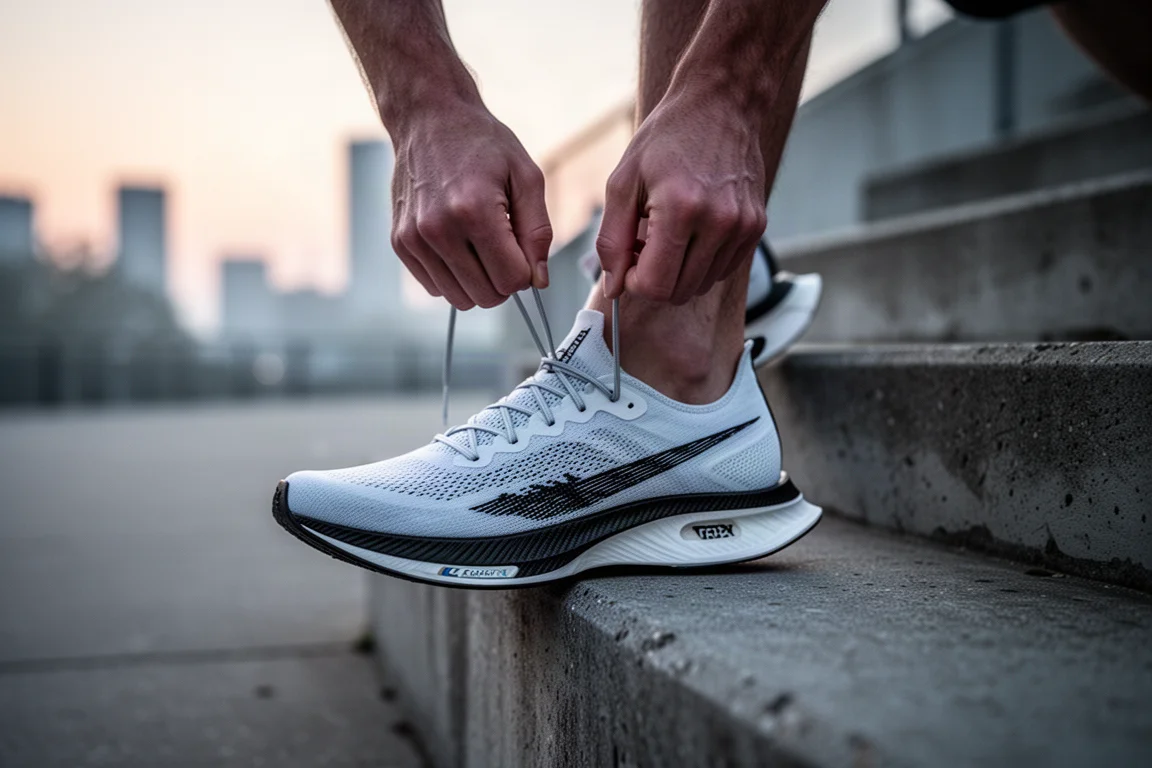
The Adios Pro 4 earns its place as the benchmark here. Its foam is soft and highly compressive with a slightly rubbery character that snaps back to form quickly, giving it a fun, engaging ride with a bit of the brilliance of a super foam racer without the bulk. It hit impressive form straight out of the box and felt special from the very first run, working at pretty much any pace.
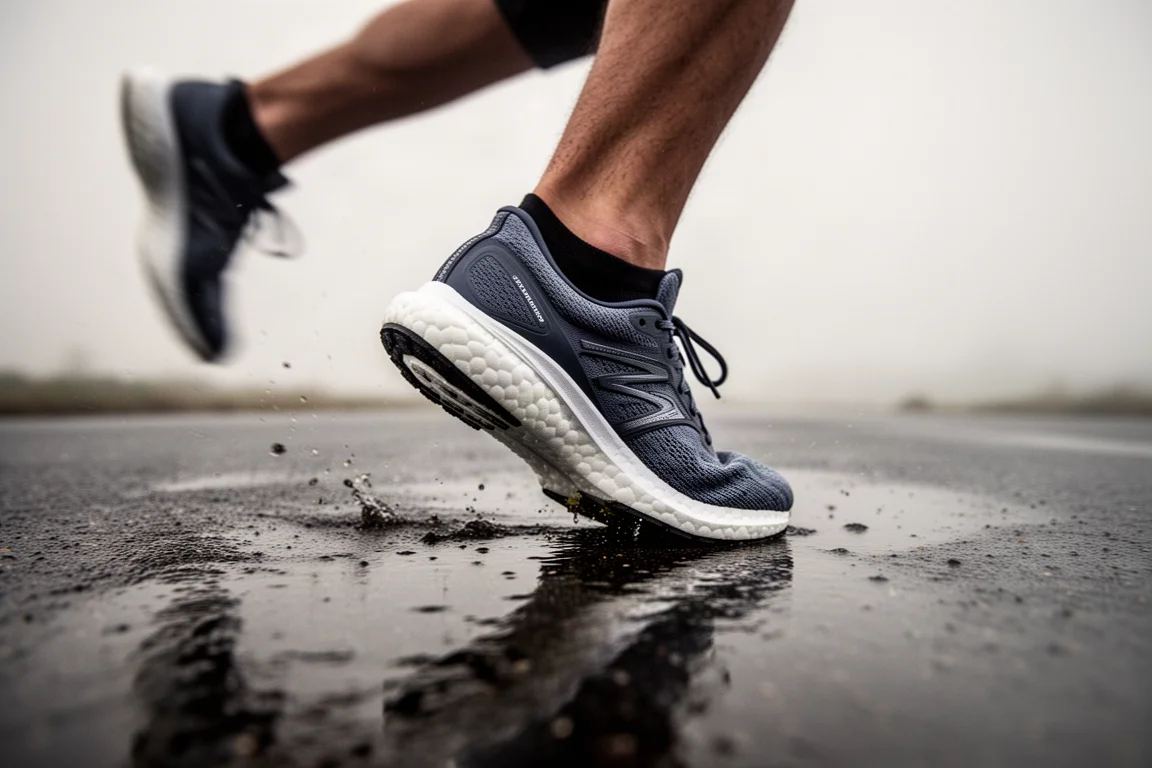
Grip is a genuine highlight. The Lightstrike Pro outsole compound was tested in torrential rain on its very first run and simply kept rolling, delivering strong traction at most paces. That wet-weather reliability is rare in a shoe this light. The upper is a slightly more traditional feel that will suit more runners, and the fit was true to size in testing, with no need to size up despite some runners doing so.
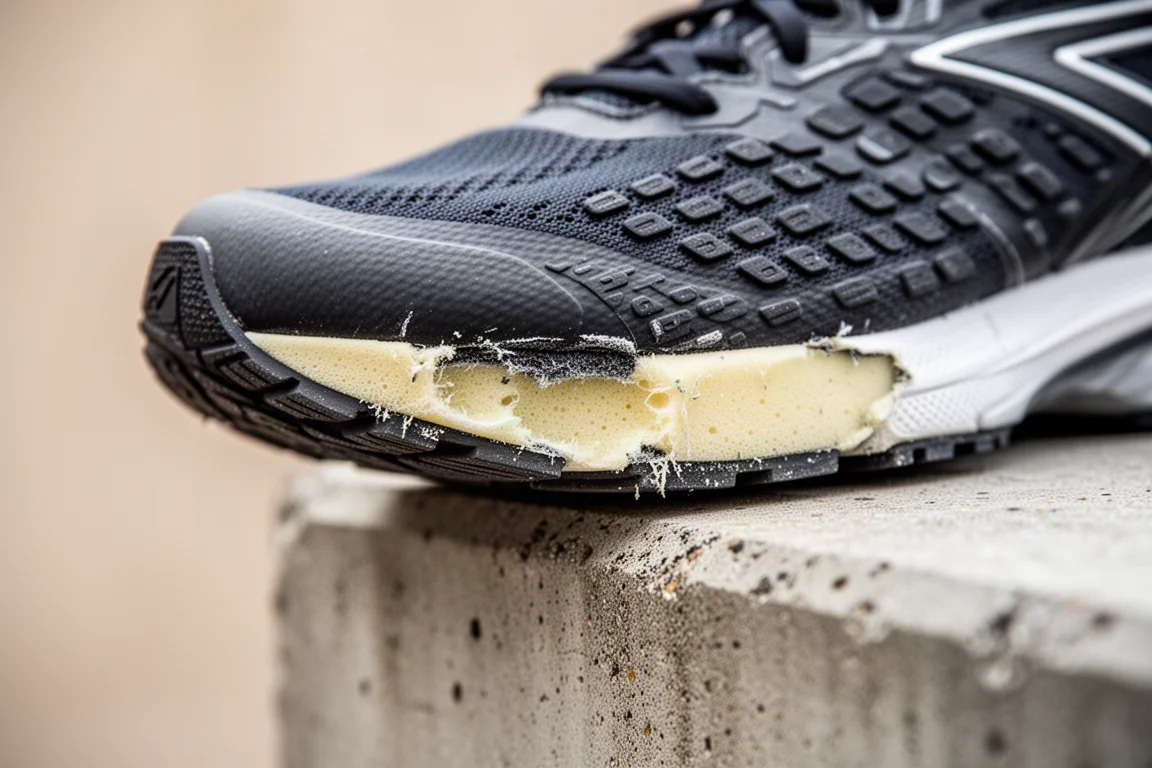
There are trade-offs. The medial cutouts mean the ride is not the most stable, so runners with stability-related issues on foot strike might struggle, and some find it simply too soft. The foam also seems a little fragile for daily training, so this is best treated as an all-out racer rather than an everyday workhorse. One quirky note: on polished marble floors, such as airports and hotel lobbies, these shoes are surprisingly noisy to walk in.
Retail sits at around $280, though discounts have brought the price down considerably, making it easier to find at a good price than most rivals.
Saucony Endorphin Elite: Rebound With a Grip Problem
The Endorphin Elite is a touch heavier than the Adios Pro 4, though most runners are unlikely to notice the difference on foot. Its firmer, more rebound-focused midsole contrasts with the very squashy cushioning of the Pro 4, and while many brands have since moved to softer, more compressive foams, the Elite still works well for certain runners. Some impressive fast times were recorded in it toward the end of 2024, although one high-mileage runner noted it seemed to lose a bit of pop over time.
If you prefer a wider heel platform in the rear of the shoe, the Endorphin Elite offers notably more than the Adidas, which suits runners who like a broader base at foot strike. In terms of softness, though, there is no contest: the Adidas foam compresses far more readily, while the Elite’s denser, airier foam barely compresses by comparison.
The bigger problem is grip. The Elite’s limited rubber coverage has been an Achilles heel, chewing up the exposed foam, and the foam does not appear to enjoy wet weather. Against the Adios Pro 4’s Lightstrike Pro traction, it is not close. If you only get one pair, the Adidas is the easy choice.
Saucony Endorphin Pro 4: The Stable, Denser Alternative
The Endorphin Pro 4 sits at a similar price point to the Adios Pro 4, though it is a little more affordable while still costing well over $200. Forefoot width and heel stack are very similar between the two, but the ride is quite different. The Pro 4 uses a denser foam combination, with Pwrrun HG directly under the foot layered with Pwrrun PB, a crushed-up material with less air in it that feels noticeably more dense.
There is also a touch of extra bulk because Saucony has included some suede details in places, an odd choice for a race shoe, though perhaps intended to differentiate it from the Elite. Adidas, by contrast, is obsessed with minimalism in its race shoes, stripping out everything but the essentials, down to thinner laces and thinner rubber, to hit remarkably low weights even in larger sizes.

Where the Pro 4 wins is stability. It offers a more consistent, more traditional ride without the significant medial cutouts of the Adios Pro 4. If you want a more stabilized ride in your marathon shoe, or you have any stability concerns at foot strike, the Pro 4 is the safer bet. Otherwise, the question is not which shoe is best, but which is most appropriate for you.
Puma Fast-R Nitro Elite 2: Aggressive but Heavy
The Fast-R Nitro Elite 2 is a genuinely characterful shoe, often described as feeling like a football boot attached to a ski. Pace-wise, it is an aggressive banger: put it on when you want to blast tempo pace or faster. It is especially suited to midfoot and forefoot strikers, with an extended carbon plate in the toe box that delivers real venom on push-off and plenty of surface area under the forefoot.
The major downside is weight. At roughly 1.5 ounces heavier than the Adios Pro 4, it is hard to pinpoint where the extra mass lives, whether in the upper materials, the extended plate, or thick rubber. When cheaper shoes with carbon plates and excellent foams come in at lower weights, that extra bulk makes it a harder sell. The narrow heel is another limit: this is a niche option for very specific runners who land mid to forefoot, want something aggressive and different, and do not mind the lack of heel width.
On the plus side, the outsole grip is easily comparable to the Adidas Lightstrike Pro compound, and over time the Puma grip may actually outlast it, as the Adidas rubber shows some wear on the outer portions that will need a full 100 miles to properly assess. Many people still preferred the lighter, nimbler, and cheaper Deviate Nitro Elite 3 from Puma, which makes the Fast-R Nitro Elite 2 feel like a specialist pick rather than a default one.
On Cloudboom Strike: Soft, Close, but Costlier
The Cloudboom Strike is the closest rival to the Adios Pro 4 in this group. Weights are similar between the two, though the On shoe carries noticeably more forefoot stack and a 4mm drop compared to roughly 8mm on the Adidas. Both are surprisingly similar in operation, performing well on almost any surface aside from extremely smooth wet ground, and the underfoot feel is very much alike: bouncy, slightly softer foams with a quicker return to form, very much products of the latest generation of super shoes that hold up far better in bad weather and over more miles than earlier super foams.
Both lack medial stability, and if anything the On is arguably a touch more stable than the Adios Pro 4, whose considerable medial cutouts can challenge newcomers to carbon-plated super shoes. For experienced super shoe users, both are enjoyable rides.
The differences come down to fit, finish, and price. The Adidas upper is simply better: simple, nuanced, and refined, whereas the On upper feels a bit messy and could be simplified, particularly the laces. The Cloudboom Strike is also $40 more expensive, less widely available, and, at the time of testing, easiest to find in a silver colorway that is not the most attractive. If you had to pick one pair, the Adios Pro 4 is the choice: cheaper, easier to find, and it does virtually the same job.
Which One Should You Buy?
If you can only own one pair from this group, the Adidas Adizero Adios Pro 4 is the strongest overall pick: the lightest, the cheapest, with class-leading wet-weather grip and a fun, fast ride at any pace. Choose the Saucony Endorphin Pro 4 if you want a denser, more stable, more traditional marathon ride. Pick the Saucony Endorphin Elite if a wider heel platform matters more to you than outsole grip. The Puma Fast-R Nitro Elite 2 is for aggressive midfoot and forefoot strikers who want maximum forefoot venom and can live with the weight. And the On Cloudboom Strike is a very close runner-up to the Adidas, if you do not mind paying more and hunting down availability.
Conclusion
The Adizero Adios Pro 4 comes out of this five-way comparison remarkably well, beating more expensive rivals on weight, price, and grip while matching or exceeding them on ride quality. Its main caveats, medial stability and long-term durability for daily use, are the same trade-offs every super shoe makes. Match the shoe to your foot strike and stability needs, and any of these five can carry you through a marathon. But as a single-pair choice, the Adidas is the one to beat.
Product link
View more details for Adidas Adizero Adios Pro 4
This product is mentioned in the review. Check the specifications, options, and compatibility before buying.
View more details for Adidas Adizero Adios Pro 4Further reading
Related Reviews

Running Shoes
Best Road-to-Trail Running Shoes: Three Versatile Options for Mixed Terrain
A practical guide to three road-to-trail running shoes that handle both pavement and mild trails, with clear strengths and trade-offs for different runner types.

Running Shoes
Best Running Shoes for Achilles Tendonitis: Three Options Explained
Three running shoes with different heel drops and support features designed to help reduce Achilles tendon pain during walking and running.

Running Shoes
Best Running Shoes for Women: Five Top Choices Ranked
A ranked guide to five women's running shoes, from versatile daily trainers to high-performance racing options, with real strengths and trade-offs for each.