Running Shoes
Adidas Adios Pro Evo 2 vs Adizero Star 3: A $500 Racer and a $130 Cruiser
Two very different Adidas running shoes tested back to back: the ultra-expensive Adios Pro Evo 2 marathon racer and the budget-friendly Adizero Star 3 daily trainer.
Introduction
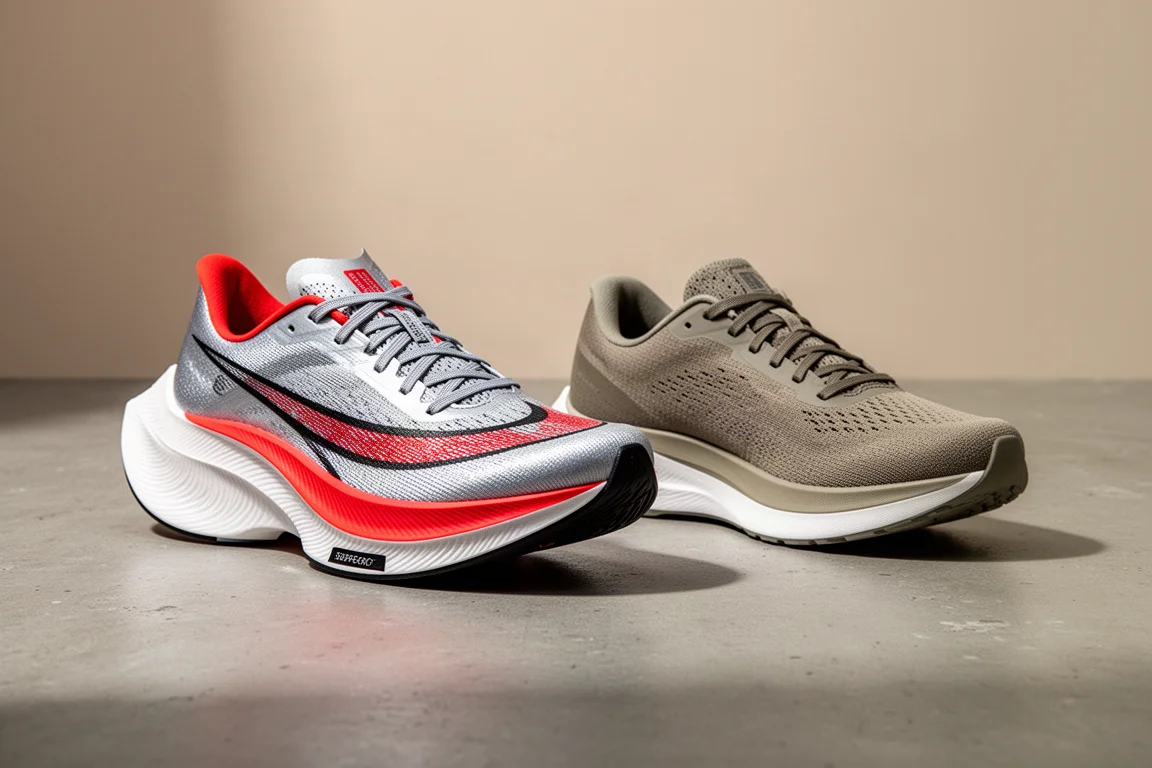
Adidas currently sells one of the most expensive running shoes on the market, and also one of the cheapest legitimate trainers. We tested both back to back on the same day: the Adios Pro Evo 2, a $500 marathon race shoe that cost $521.36 with tax and shipping, and the Adizero Star 3, a roughly $130 cushioned daily trainer that may be increasingly hard to find in the US.
The comparison is not really about which is better. It is about what you actually get at each end of the price scale, and the answer is more interesting than you might expect.
Adidas Adios Pro Evo 2: Stack, Geometry and Ride
The Adios Pro Evo 2 is Adidas’s top-tier marathon race shoe and the successor to the original Pro Evo, which was pitched as a single-use race shoe for one marathon. This second generation is not a radical departure. The foam feels nearly identical to the original Lightstrike Pro Evo foam, and the weight actually went up slightly: the new version measured about 149 grams on our scale versus roughly 146 for the first generation.
What has changed is the geometry. The midfoot stack is enormous, measuring around 47 mm on our calipers in the midfoot versus about 42-43 mm on the original, with roughly 39.8-40.2 mm at the heel. The forefoot rocker is one of the most aggressive we have seen this year, second only to the Puma Fast-R 3 in how wild the curve looks, and the outside of the forefoot foam is shaved off at an angle that gives it an almost sculptural appearance.
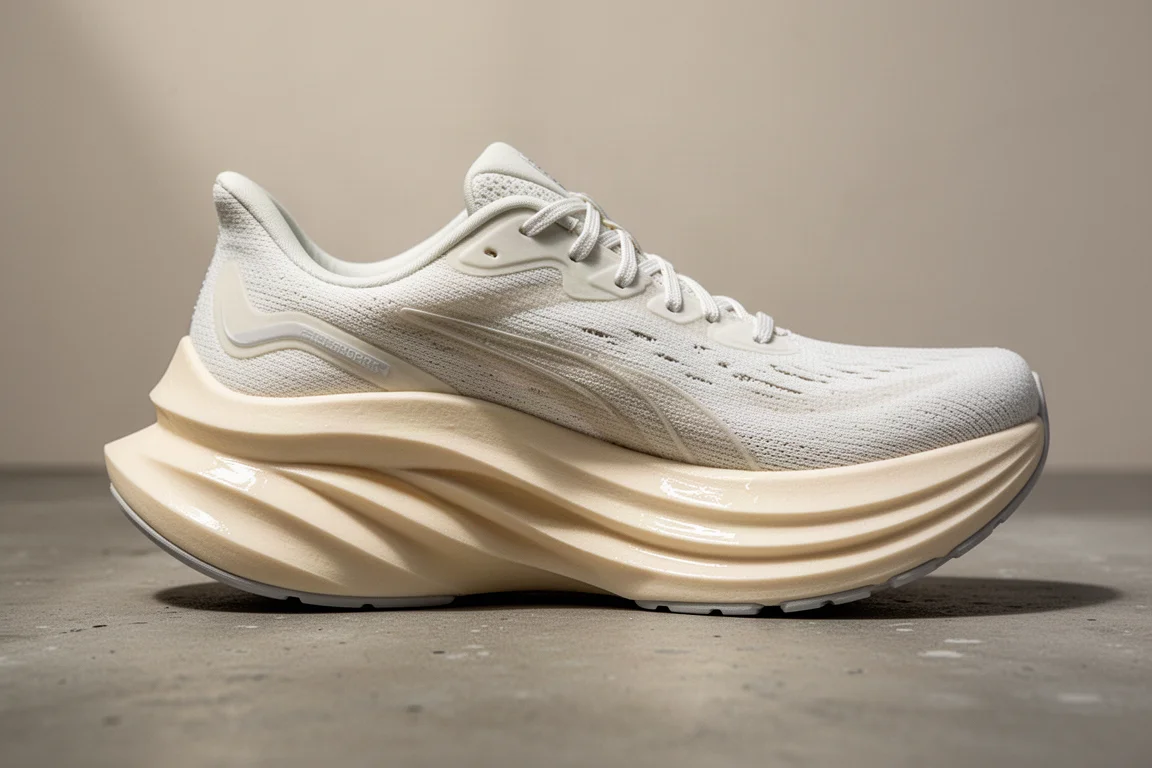
The ride itself is the surprise. You might expect a $500 race shoe to be harsh, rigid, and only usable at 4:30 mile pace. Instead, this feels like the best version of a normal marathon shoe: high cushion, smooth rocker, no aggressive plate or rod feel, and a foam tuned right in the Goldilocks zone, not too soft and not too firm. It felt stable, structured, and robust underfoot, closer to a max-cushion cruiser you can race in than an F1 car.
How the Adios Pro Evo 2 Performs on the Run
Across a 12-mile test run with a mixed-pace workout surging up hills at half-marathon effort and cruising the flats, the shoe worked across a huge range of paces. It felt just as natural at a relaxed 8:30 heel strike as it did during strides down to around 5:00 pace. That accessibility is rare in a super shoe. The Puma Fast-R 3, for comparison, feels like it was engineered for pure speed and is uncomfortable at anything slower.
The rocker does the heavy lifting. It slants you forward and makes it easy to keep your legs ticking over without forcing anything. There is no sensation of needing to fully activate the plate or throw your weight into the shoe. You can simply glide.

It is also comfortable enough that it blurs the line with daily trainers. It feels like what would happen if you took a Ghost Max or a Glycerin Max and turned it into a race shoe. If durability were better, some runners could genuinely rotate it for most of their miles.
Grip and Durability Considerations
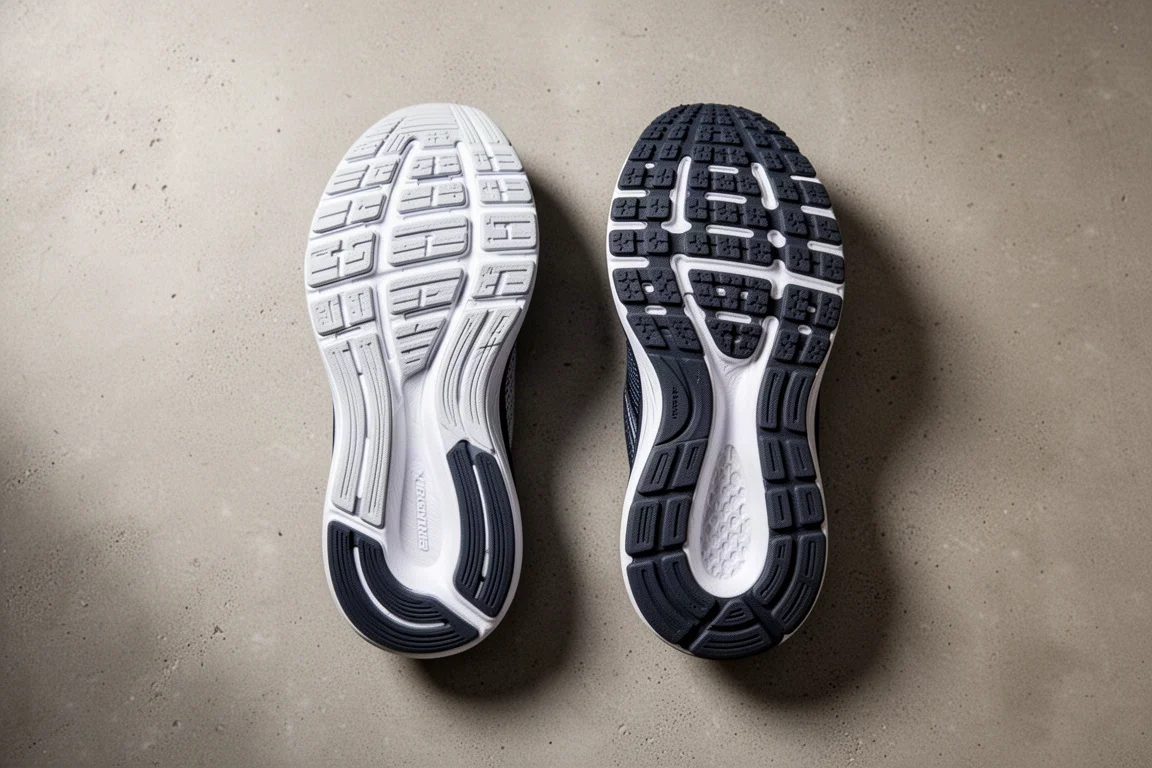
The outsole uses the same liquid-rubber approach as the original, with line patterns on the medial forefoot and a fuller pad on the lateral side. Grip was a mixed bag: solid on many surfaces and even on some muddy corners, but slippery on wet sidewalks and when landing on the heel where there is little rubber. We would rate it a six out of ten, compared with an eight for the standard Lightstrike Pro or Continental rubber setups.
Durability remains the open question. The original Pro Evo was reported to reach around 300 miles, but the concept remains a shoe designed for peak race performance rather than long-term training. There is also a quality-control wrinkle worth knowing: our pair’s two shoes weighed 149 grams and 139 grams respectively, roughly a 7 percent difference between left and right. That is disappointing at this price. Adidas’s cheaper Boston lines showed near-perfect pairing on the same scale, so the inconsistency is hard to excuse.
The upper is another soft spot. The material looks more legitimate than the original’s nearly see-through upper, but fit at the front was not fully dialed, with the lace area feeling loose and oddly cheap for a $500 shoe. The Adios Pro 4’s upper is better built; if that were transferred onto this platform, it would be one of the best race shoes available.
Should You Buy the Adios Pro Evo 2?
Honestly, for most runners, no. Nothing here is a new experience you cannot find elsewhere. The stack and bounce resemble the Mag Max family, the rocker is Alphafly-like, and the comfort over long distances matches other marathon shoes. What makes it special is that it combines all of those traits into one reliable, distraction-free package.
If you want a peak marathon racing shoe and have the disposable income, it is arguably the best all-around race-day option for comfort and speed over 26.2 miles. If you want excitement or value, look elsewhere. The Puma Deviate Nitro Elite 3 offers roughly 95 percent of the performance at less than half the price.
Adidas Adizero Star 3: The Other End of the Price Scale
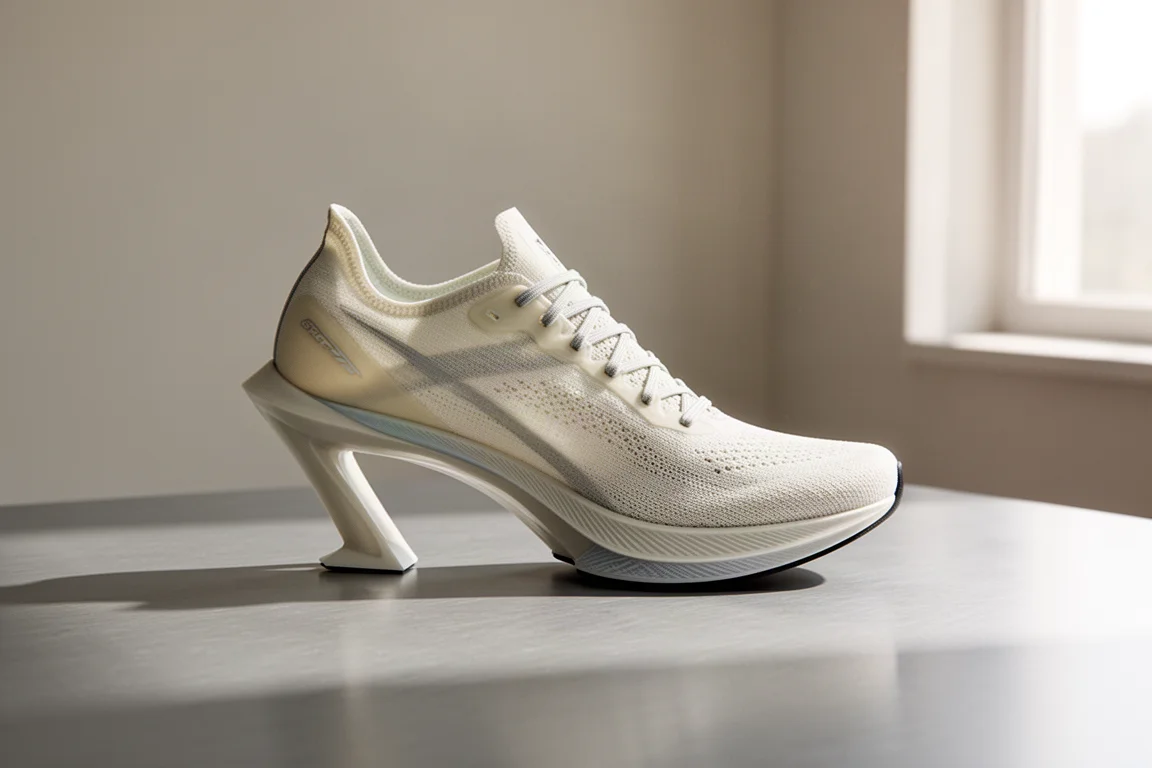
The Adizero Star 3 sits at the bottom of Adidas’s performance lineup and costs around $130 in the US, though availability appears limited and it may not be easy to buy anymore. It uses standard EVA Repetitor foam in a slightly softer tune, with a moderate drop that on paper is listed around 6 mm but feels taller in practice.
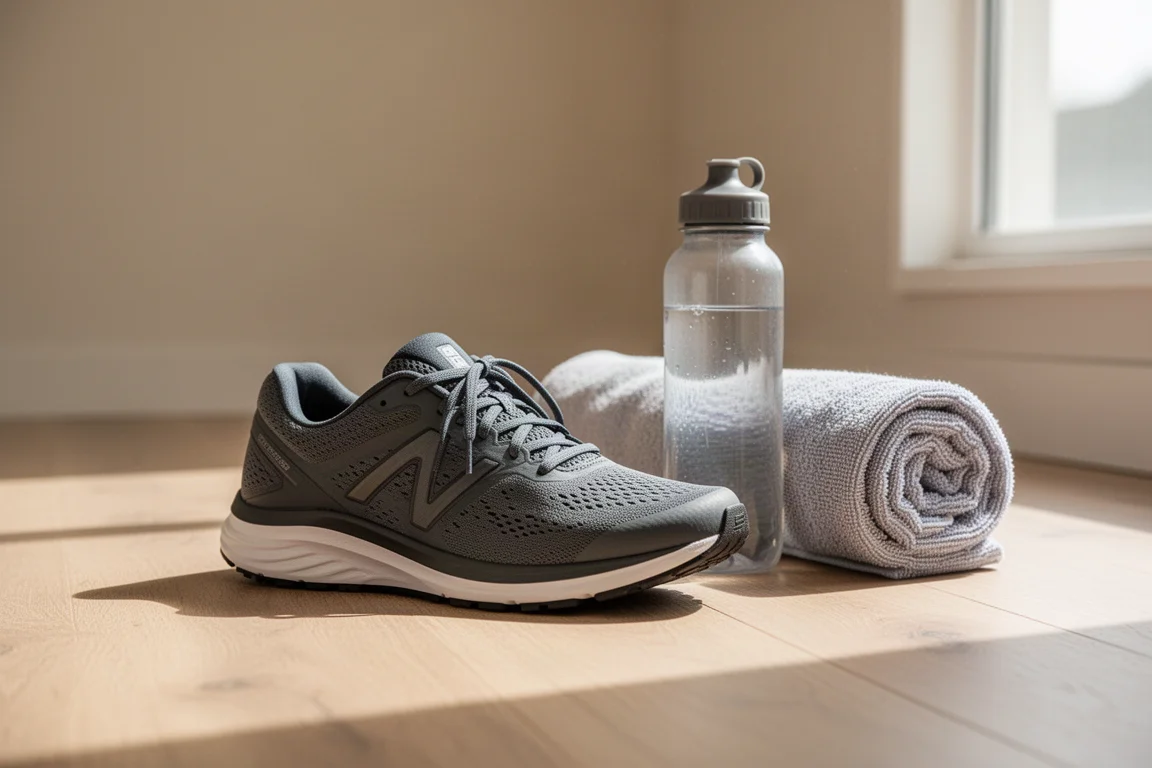
On foot, it feels basic at first, without the premium step-in feel of shoes like the Vomero. But on the run, it surprised us. Across a 4.2-mile easy run at around 8:15 pace, it was comfortable, easy to run in, absorbed impact well with a hint of bounce, and simply disappeared on foot. The grip was solid, the cushion was just enough, and it feels like the kind of simple, reliable daily trainer in the same spirit as the Brooks Ghost.
Which One Makes Sense for You?
The two shoes answer different questions. The Adios Pro Evo 2 is for runners chasing a peak marathon performance who want comfort, stability, and speed in one package and are willing to pay a collector-grade price for it. The Adizero Star 3 is for runners who want a honest, cushioned daily trainer at a fraction of the cost.
The frustrating part for Adidas fans is that the best elements of the $500 shoe, the geometry, the foam tuning, the stability, are not what make it expensive. Those traits could exist in a $250 or $300 package, and competitors like Puma and Saucony prove it. Until Adidas builds that Goldilocks-zone shoe into its core lineup at a normal price, the value pick in this comparison is clearly the cheaper one.
Conclusion
The Adios Pro Evo 2 is a genuinely excellent marathon shoe that happens to be priced like a luxury collectible, with disappointing quality control and grip as the main caveats. The Adizero Star 3 proves that a great running experience does not require a $500 price tag. If your goal is race-day performance and your budget allows, the Pro Evo 2 is the complete package. If your goal is comfortable everyday miles, the Star 3 delivers far more than its price suggests.
Further reading
Related Reviews

Running Shoes
Best Road-to-Trail Running Shoes: Three Versatile Options for Mixed Terrain
A practical guide to three road-to-trail running shoes that handle both pavement and mild trails, with clear strengths and trade-offs for different runner types.

Running Shoes
Best Running Shoes for Achilles Tendonitis: Three Options Explained
Three running shoes with different heel drops and support features designed to help reduce Achilles tendon pain during walking and running.

Running Shoes
Best Running Shoes for Women: Five Top Choices Ranked
A ranked guide to five women's running shoes, from versatile daily trainers to high-performance racing options, with real strengths and trade-offs for each.