Running Shoes
Adidas Adios Pro Evo 1 Review: A $500 Marathon Racer Built for One Job
Extremely light, extremely expensive, and designed for race day only. Here is what the Adios Pro Evo 1 actually delivers for experienced marathoners.
Introduction
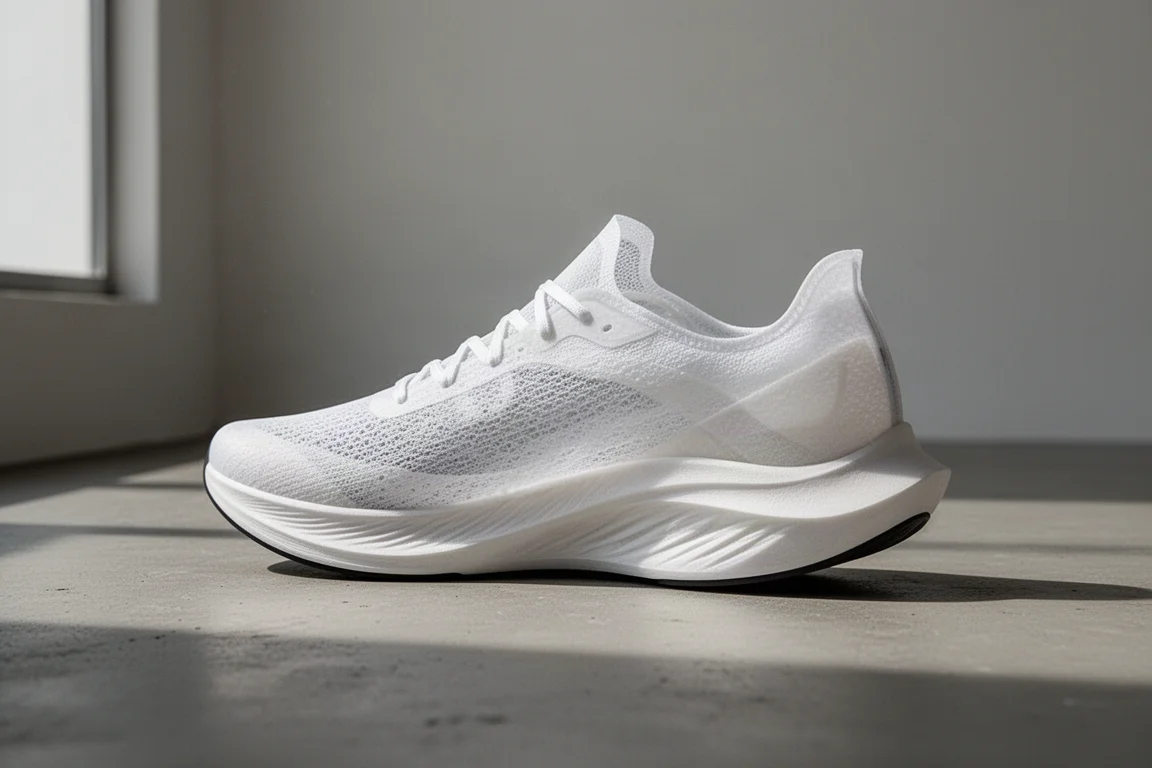
The Adidas Adios Pro Evo 1 sits at the very edge of the marathon racing shoe market. It costs $500, it is designed for essentially one race, and it strips out everything that does not directly contribute to speed. This is not a shoe built for durability, comfort, or training. It is a race day weapon aimed at runners chasing their absolute fastest marathon.
Adidas recommends it only for experienced, advanced runners, ideally with marathon times under 3 hours to 3:30. That guidance is worth taking seriously, because the shoe is tuned to come alive at fast paces and offers less than its standard counterparts for everyone else.
First Impressions and Weight
Out of the box, the shoe looks almost unfinished, in a good way. The upper is astonishingly thin, closer to food-wrapping film than a traditional mesh, with threads dramatically finer than comparable racing uppers. The overall construction feels prototype-like, minimal, and lab-engineered. There is no removable insole, just a small glued-in piece for a touch of extra comfort.
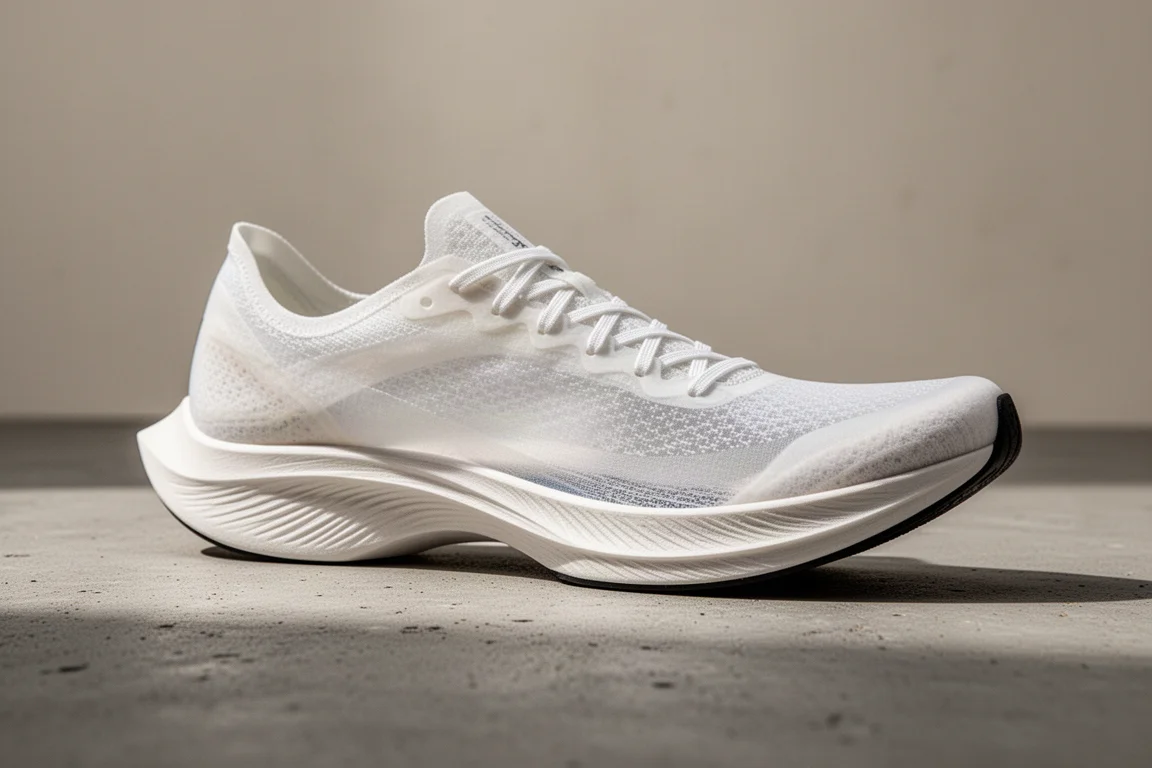
The headline feature is the weight. On a scale, the left shoe came in at 145.6g and the right at 141.5g, which is dramatically lighter than the current benchmarks. For context, the Saucony Endorphin Pro 3 weighs 226g, the Nike Vaporfly 3 comes in at 204g, and the ASICS Sky Paris, a top pick in the lightweight aggressive segment, sits at 190g. The Evo 1 is roughly 45g lighter than the Sky Paris, a difference you can feel just by holding the shoe. It genuinely weighs less than an avocado.
Technology Under the Hood
The midsole uses a new formulation of Lightstrike Pro, paired with Adidas energy rods rather than a traditional plate setup. A durometer reading put the foam around 38 to 43 on a 0 to 100 firmness scale, which places it on the softer side for a racing foam despite the firm step-in feel compared to ZoomX.
The outsole follows the same one-race philosophy. Everything that exists only for durability has been stripped away, and there is no thick rubber layer like you find on the standard Adios Pro 3, which runners routinely take 300 to 400 miles. Adidas describes a rocker that begins at 60% of the shoe length, designed to push the runner onto the next step and improve running economy. In practice, the whole bottom is noticeably more curved than the standard Adios Pro.
Ride and Performance on the Run
During a 10-mile session that included five one-mile repeats at lactate threshold effort, the shoe delivered exactly what it promises. The rocker is the standout: smooth, rolling, and among the best on the market for faster running, comparable to the old Saucony Endorphin Speed 2 and the Salomon S/Lab Spectre. Ground contact feels short, and the shoe pushes you up onto your toes as pace drops toward 6:00 per mile and faster.

At 6:30 pace it still felt good, and below 6:00 it felt exceptional. Slower than about 7:00 to 7:30 pace, nothing felt special, and walking in them felt like being in a brick. The lightweight advantage was not immediately noticeable on foot during the first mile, and is likely more relevant late in a marathon. One quirk: the shoes are audibly squeaky, likely from the minimal rubber or foam.
Stability was a genuine surprise. The platform is not especially narrow, roughly similar in width to a Saucony Endorphin Speed 2, and the foam is not overly soft, so the shoe does not feel squirly even at threshold pace. It is not as stable as the standard Adios Pro 3 or a dedicated stability racer, but light and reasonably stable is a rare combination.
Fit, Feel, and Stability
The fit is snug, snugger than the Sky Paris, and sizing up may be worth considering if you are between sizes. The upper conforms well to the foot and feels far more forgiving than the stiffer material on the standard Adios Pro 3. Lockdown was dialed in everywhere except very tight cornering at speed, where the right foot felt slightly loose.
Compared directly with the Adios Pro 3, the Evo 1 is roomier than expected in some areas but tighter overall, with a better-conforming upper. The standard Adios Pro 3 remains the more comfortable, more durable, and more stable all-around marathon racer, and it is the better choice for most sub-3:30 runners who want a shoe they can race more than once.
Who Should Actually Buy It
This is the hardest part of the review. The shoe is remarkable, but it is designed for a single race. If you are not racing marathons seriously, the $500 price is very difficult to justify when the Endorphin Pro 3, Vaporfly 3, or Sky Paris deliver 90% or more of the experience with far better durability.

For elite or near-elite marathoners targeting personal bests, particularly those running 2:30 or faster, the weight savings and tuned foam are exactly what the category promises. For everyone else, the standard Adios Pro 3 or one of the many excellent alternatives remains the smarter purchase. Three lessons from this shoe that the whole industry should copy: streamline racing uppers, dial in rocker geometry, and tune each foam for one specific runner rather than trying to serve everyone with one shoe.
Conclusion
The Adidas Adios Pro Evo 1 is a genuine evolution rather than a revolution. It is absurdly light, surprisingly stable, and brilliantly tuned for fast running, but it gives up durability, comfort, and versatility to get there. If your marathon time justifies it and your wallet allows it, nothing else on the market feels quite like it. If not, the standard Adios Pro 3 will serve you better for years instead of one race.
Product link
View more details for Adidas Adios Pro Evo 1
This product is mentioned in the review. Check the specifications, options, and compatibility before buying.
View more details for Adidas Adios Pro Evo 1Further reading
Related Reviews

Running Shoes
Best Road-to-Trail Running Shoes: Three Versatile Options for Mixed Terrain
A practical guide to three road-to-trail running shoes that handle both pavement and mild trails, with clear strengths and trade-offs for different runner types.

Running Shoes
Best Running Shoes for Achilles Tendonitis: Three Options Explained
Three running shoes with different heel drops and support features designed to help reduce Achilles tendon pain during walking and running.

Running Shoes
Best Running Shoes for Women: Five Top Choices Ranked
A ranked guide to five women's running shoes, from versatile daily trainers to high-performance racing options, with real strengths and trade-offs for each.