Fuel & Engines
87 vs 93 Octane: What a Torture-Test on the Honda GX200 Actually Revealed
Four fuels, one Honda generator, and a GX200 pushed to its limits. Here is what higher octane really bought in power, acceleration, and fuel efficiency.
Introduction
Does premium fuel actually make a small engine run better, or are you just paying more at the pump? To find out, four gasolines went head to head: standard 87 octane, 91 octane no-ethanol, 91 octane with ethanol, and Amoco Gold 93 octane. Each fuel was tested in the same Honda inverter generator and in a Honda GX200 engine under load, with careful controls to keep the comparison fair.
The short version: higher octane did not improve fuel efficiency on a carbureted engine, and the acceleration advantage was real but small. Here is how the numbers played out.
How the Fuels Were Tested
Because no single station carried all four fuels, the gasoline came from three different stations. That introduced a real-world problem: most stations share one fuel hose and nozzle across multiple octanes, so residual fuel from the previous customer can linger in the line. Where a dedicated hose was available, such as the 87 octane at Casey’s General Store, it was used directly. Where hoses were shared, a full gallon was pumped into a spare container first to purge the line, so each sample stayed true to its octane rating.
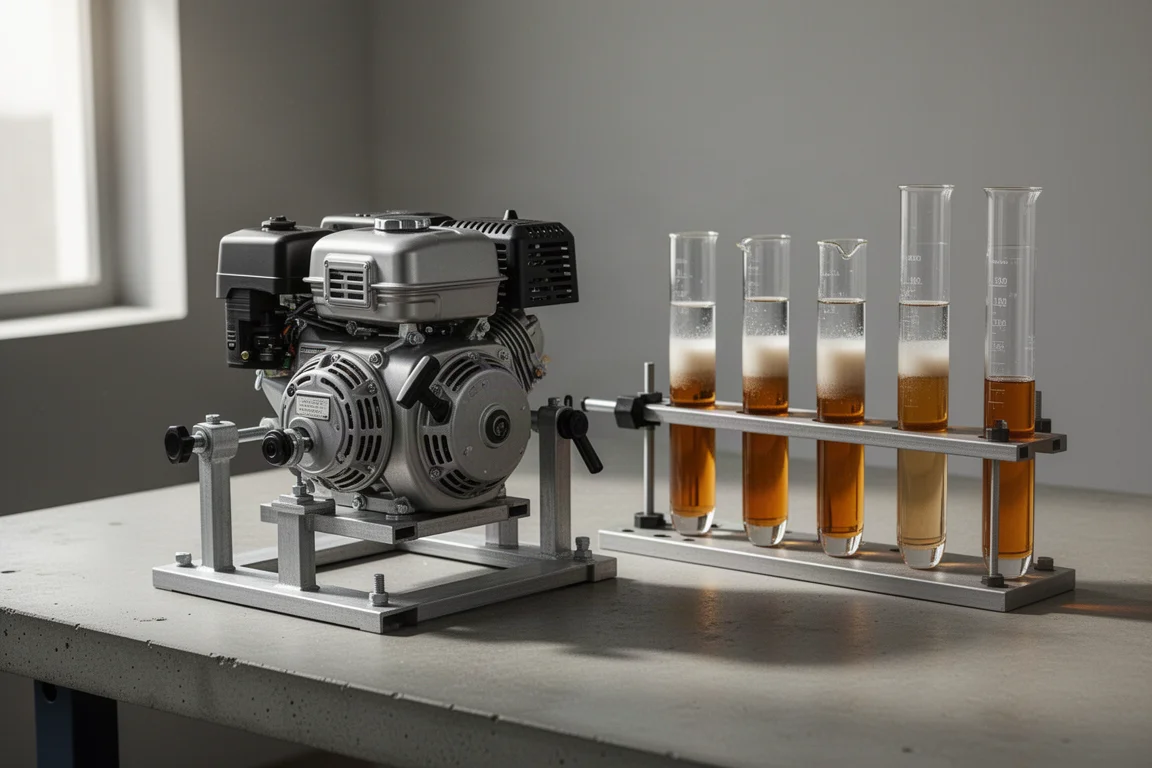
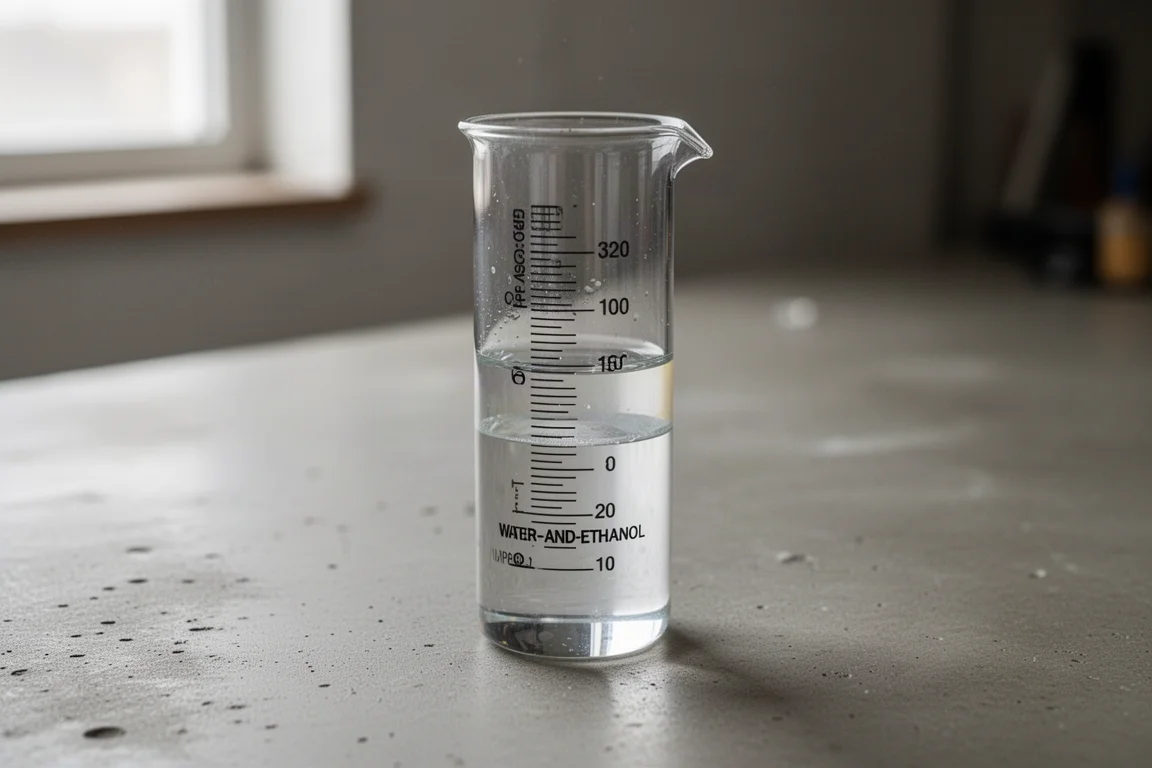
Ethanol content was verified with a phase separation tester: distilled water is added to the tube, gasoline is poured on top, and shaking causes the ethanol to blend with the water while the gasoline separates above it. The 87 octane measured close to 9% ethanol, both 91 octanes measured around 9% or none at all as advertised, and the Amoco Gold 93 measured right at 10%.
Fuel Efficiency Test: The Inverter Generator
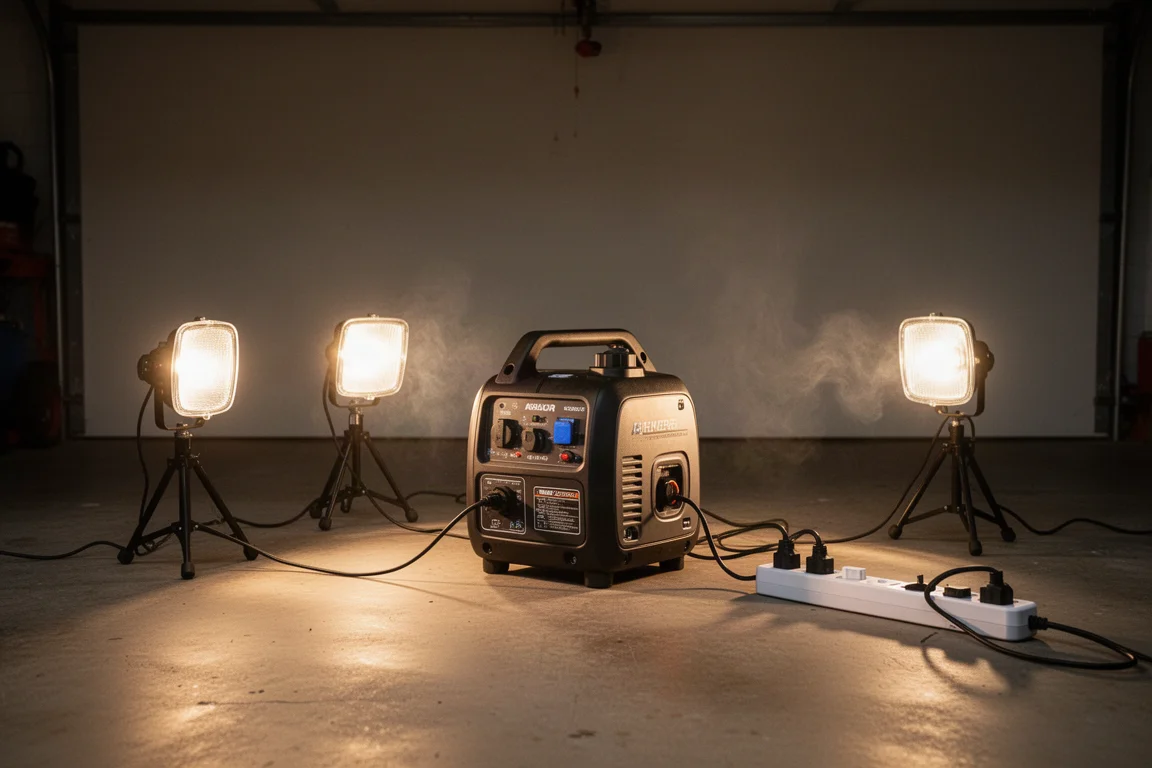
The first comparison used a 2,200 W Honda inverter generator, which is designed for 87 octane but runs fine on higher grades. The same measured amount of fuel was used each time, eco mode stayed off, and the load was constant: three halogen lights drawing around 1,381 W. Exhaust temperatures held between roughly 510 and 520 degrees Fahrenheit for every fuel.
The results were almost a wash. The 87 octane ran out at 28 minutes 15 seconds. The 91 no-ethanol fuel lasted right at 28 minutes, and the 91 with ethanol died slightly earlier at 27 minutes 53 seconds. The 93 octane outlasted the 87 by about three seconds. With every fuel landing within about 20 seconds of each other, fuel efficiency is simply too close to call.
Interestingly, earlier testing with a fuel-injected generator had shown the no-ethanol fuel delivering better efficiency. This generator is carbureted, and with a carburetor, that advantage disappeared entirely.
Pull Force Test: Static Load
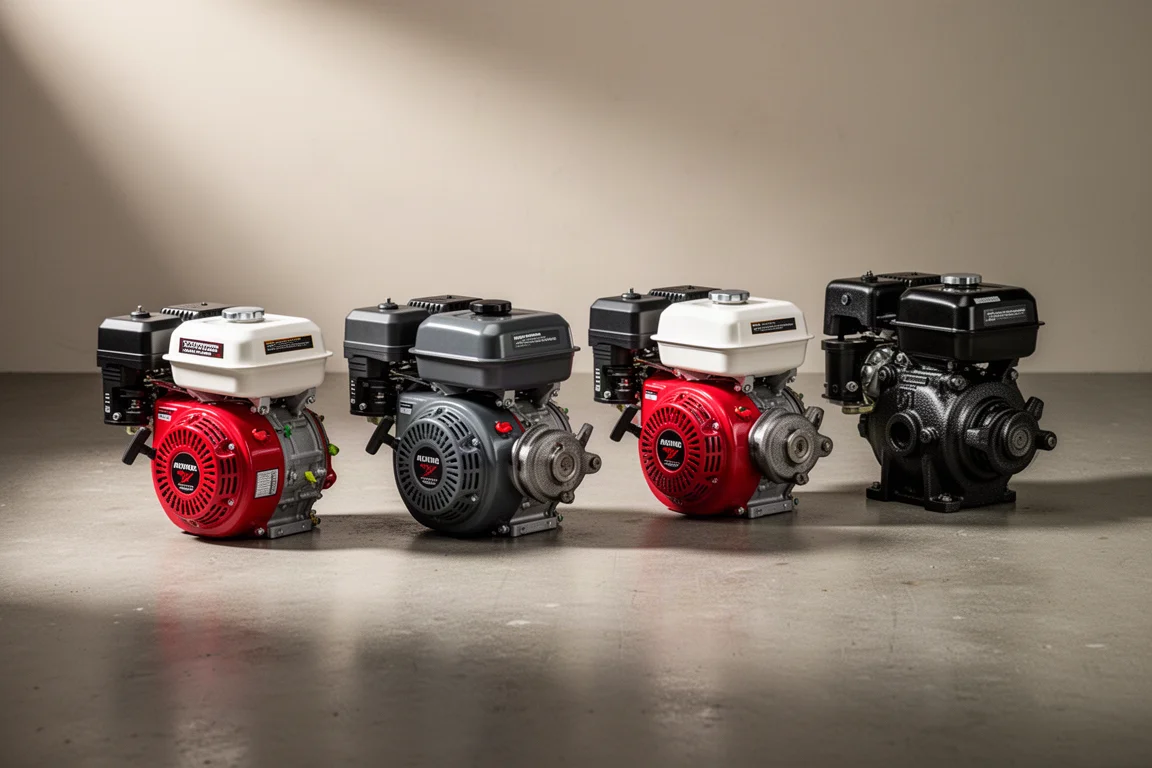
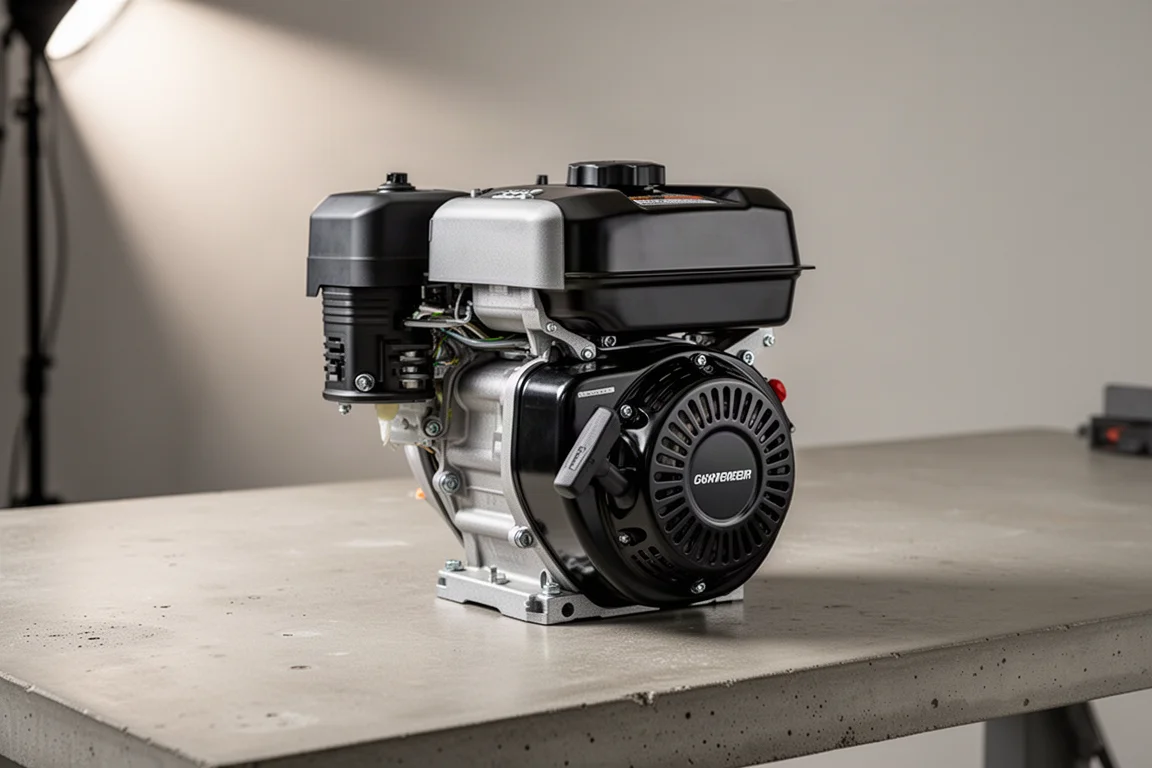
Next came the Honda GX200, fitted with a new properly gapped spark plug and run on factory timing, roughly 24 to 25 degrees before top dead center. A new clutch and drive belt were installed before every fuel test, since the torture test ahead is hard on hardware.
The static pull test measured how much force each fuel produced. The 87 octane briefly reached 241 lb, about 109 kg. The 91 no-ethanol fuel landed within one pound at 240 lb. The 91 with ethanol posted the best factory-timing figure at 244 lb, and the 93 octane came in at 241 lb, right in line with the rest. On a stock engine under static load, the fuels were practically interchangeable.
Acceleration Test: Three Passes Per Fuel
The real torture test was acceleration: towing a trailer with a garden tractor aboard, with a fresh clutch and belt before every run. Each fuel got three passes over a 100-ft course, with the first cone at 40 ft.
On factory timing, the 87 octane averaged 8.5 seconds across three passes. The 91 no-ethanol fuel dropped that to 8.19 seconds, and the 91 with ethanol was faster still at 8.12 seconds, including an 8-second-flat second pass. The 93 octane averaged 8.1 seconds. All three high-octane fuels finished within a tenth of a second of each other and about three-tenths ahead of the 87.

Advanced Timing: Where Higher Octane Finally Helped
Octane rating describes how well a fuel resists early combustion, which is why advanced ignition timing should favor higher-octane gasoline. To test that theory, the factory flywheel key was replaced with an offset key advancing the timing by an additional 12 degrees, putting total timing around 35 degrees.
The improvement was clear across the board. The 87 octane gained roughly 6% more pulling force at 256 lb and set a fastest pass of 7.74 seconds. The 91 no-ethanol fuel reached 264 lb of force, the strongest figure of the day, and averaged 7.63 seconds. The 91 with ethanol also improved to 258 lb and matched that 7.63-second average. The 93 octane, once a slipping drive belt was replaced and retested with a fully warmed belt, also averaged 7.63 seconds with a 4.22-second 40-ft split, the quickest of the test.
Looking at the fastest single passes, both 91s and the 93 tied at 7.53 seconds, while the 87’s best was 7.74 seconds. So with timing advanced, higher octane delivered a small but measurable acceleration advantage.
Buying Advice
Higher octane did not help fuel efficiency in this carbureted engine, and the acceleration gains, while real, were modest. The practical suggestion is simple: buy 87 octane unless your vehicle or equipment specifically requires a higher grade. If your vehicle has a turbocharger, it likely needs something above 87. And if you have a fuel-injected engine, no-ethanol fuel may still be worth considering, since earlier fuel-injected testing did show an efficiency benefit that the carbureted engine here did not.
Conclusion
Across a generator efficiency run and a genuinely punishing GX200 towing test, the four fuels proved remarkably close. Fuel efficiency was effectively identical, the pull force differences were within a few pounds, and only with advanced timing did the higher octanes pull measurably ahead, and even then by fractions of a second. For most small-engine owners, 87 octane remains the sensible default, and paying for premium only makes sense when the engine is built to use it.
Further reading