Workshop Accessories
Four Clever 5-Gallon Bucket Accessories You Probably Haven't Seen
From a spinning bucket seat to a bucket-powered wet/dry vac, these accessories turn a humble 5-gallon bucket into genuinely useful kit.
Introduction
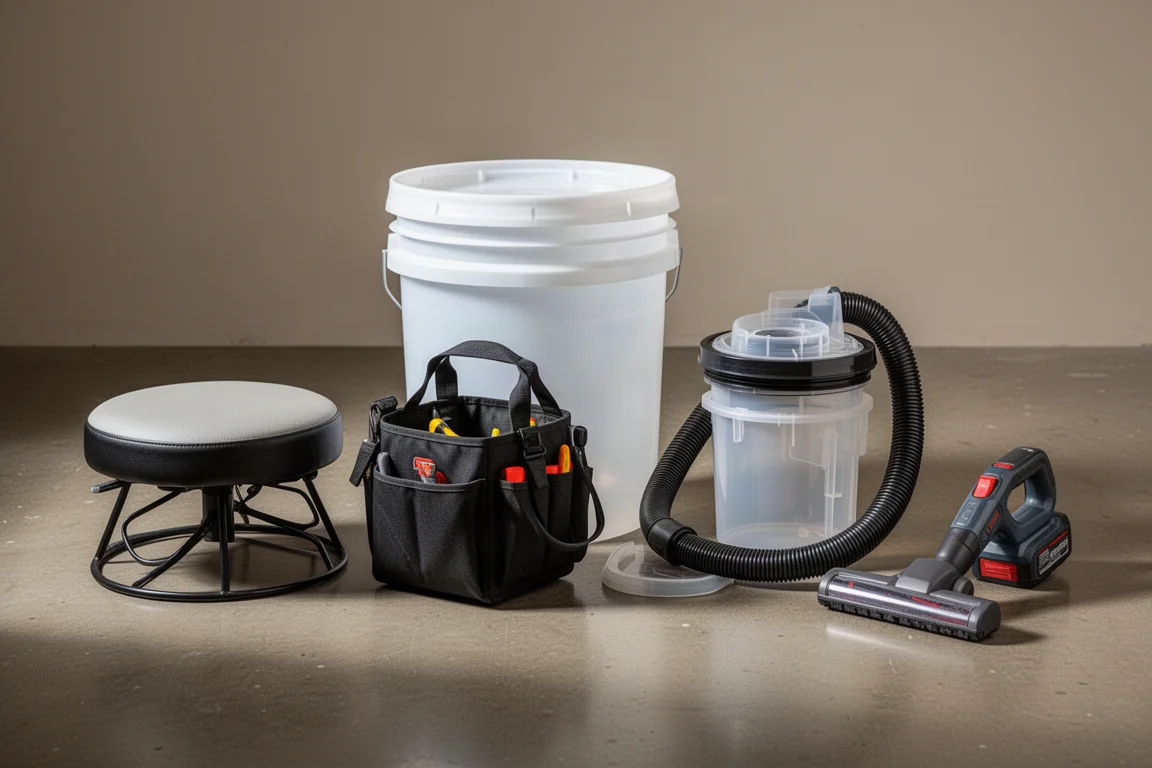
The 5-gallon bucket is one of those everyday items that hides an entire accessory ecosystem. In the UK it is usually sold as a 20-litre bucket, but plenty of purpose-built products are made to fit its top rim, and several of them are far more useful than the bucket itself. Here are four worth knowing about, starting from the simple and cheap and working up to items that cost around $60 or £45 each.
Screw-Off Bucket Lids
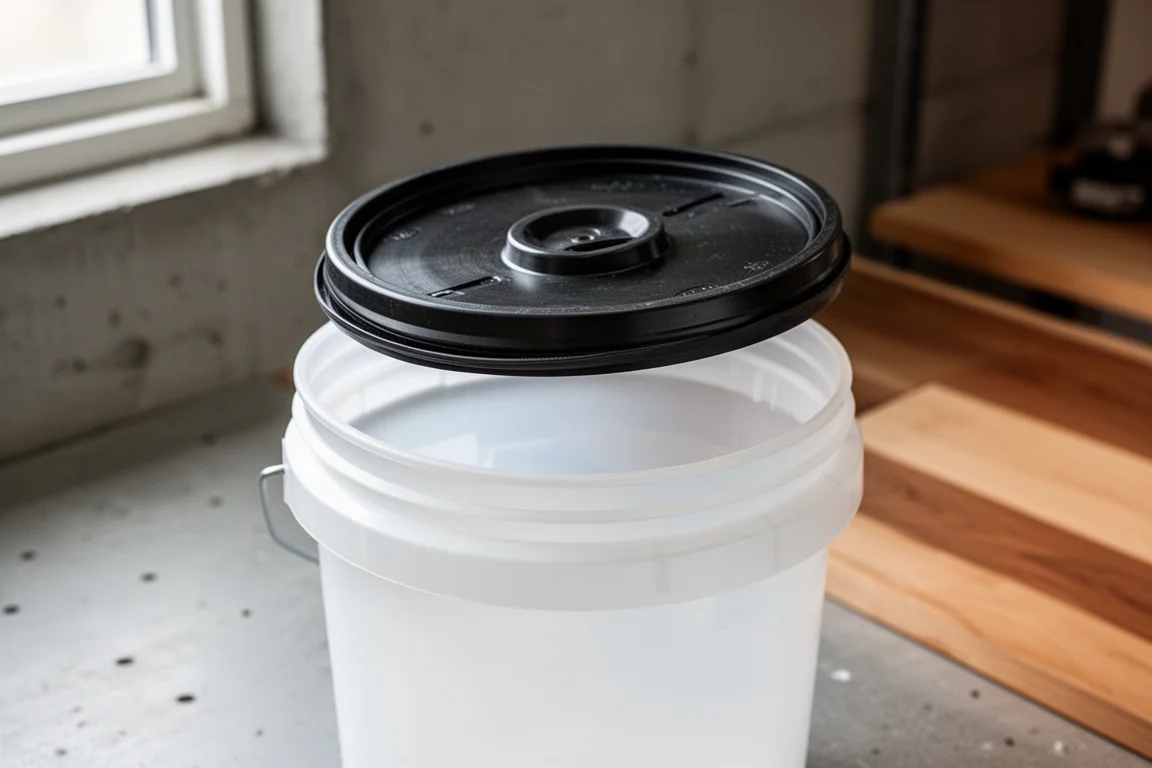
The cheapest upgrade is also one of the smartest. Standard bucket lids have a rubber seal and tighten down hard enough that you can fill the bucket with liquid, turn it upside down, and nothing comes out. But pulling a sealed lid off every time gets old, so there are variations that fix this. One version picked up at Home Depot clips onto the bucket, then the top section rotates off like a screw cap. It is noticeably easier to get on and off than a standard press-fit lid.
Spin Seat
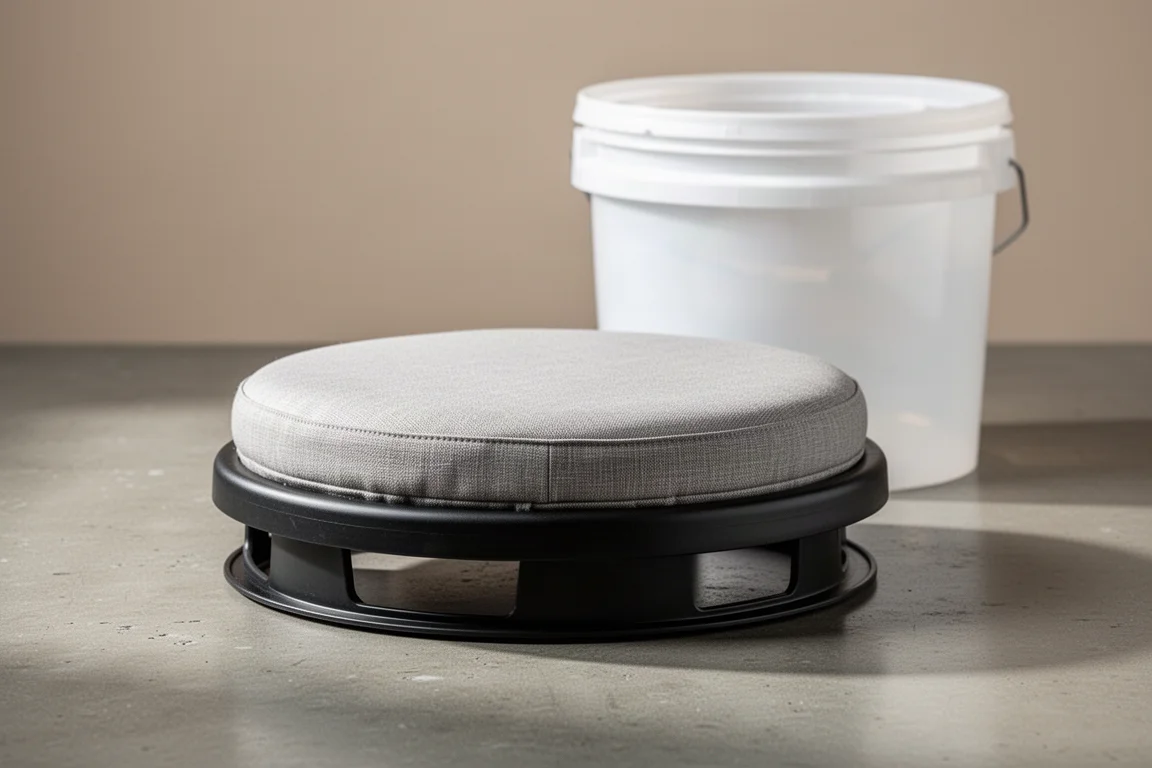
The 5-gallon bucket is tall enough, roughly 400mm high, to be a genuinely convenient sitting height, which is why anglers often take one fishing: bait and bits go inside, the lid goes on, and the bucket doubles as a seat. The problem is that a standard lid is not designed to be sat on and will crack fairly quickly.
That is where the Spin Seat comes in. Made in America and sold at Home Depot, it drops into the top of a 5-gallon bucket and gives you a cushioned, revolving seat. Sit down and you can spin, which makes it a comfortable perch for fishing, shooting, or any pastime where a bucket is your furniture.

DeWalt In-Bucket Tool Caddy
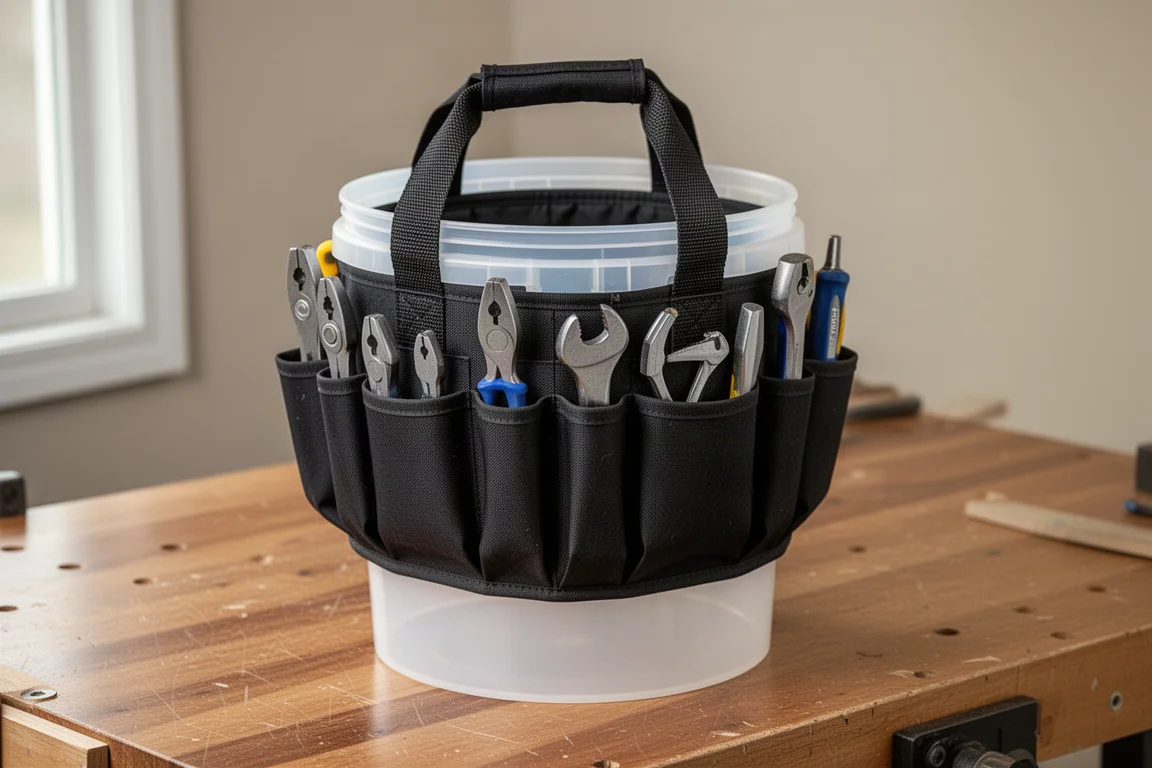
The DeWalt in-bucket tool caddy is a tough nylon tool holder designed to sit neatly inside a 5-gallon bucket. It keeps hand tools organised around the rim while leaving the middle free for drills, materials, or anything else you want to throw in, making it an easy way to carry everything to a job.
The main caveat is weight. Fully loaded, the whole setup gets heavy very quickly, so it suits trips around the house or a short walk to the van more than long hauls across a site. As an open, flexible alternative to a closed toolbox, though, it works well.
Dust Stopper Cyclone Separator
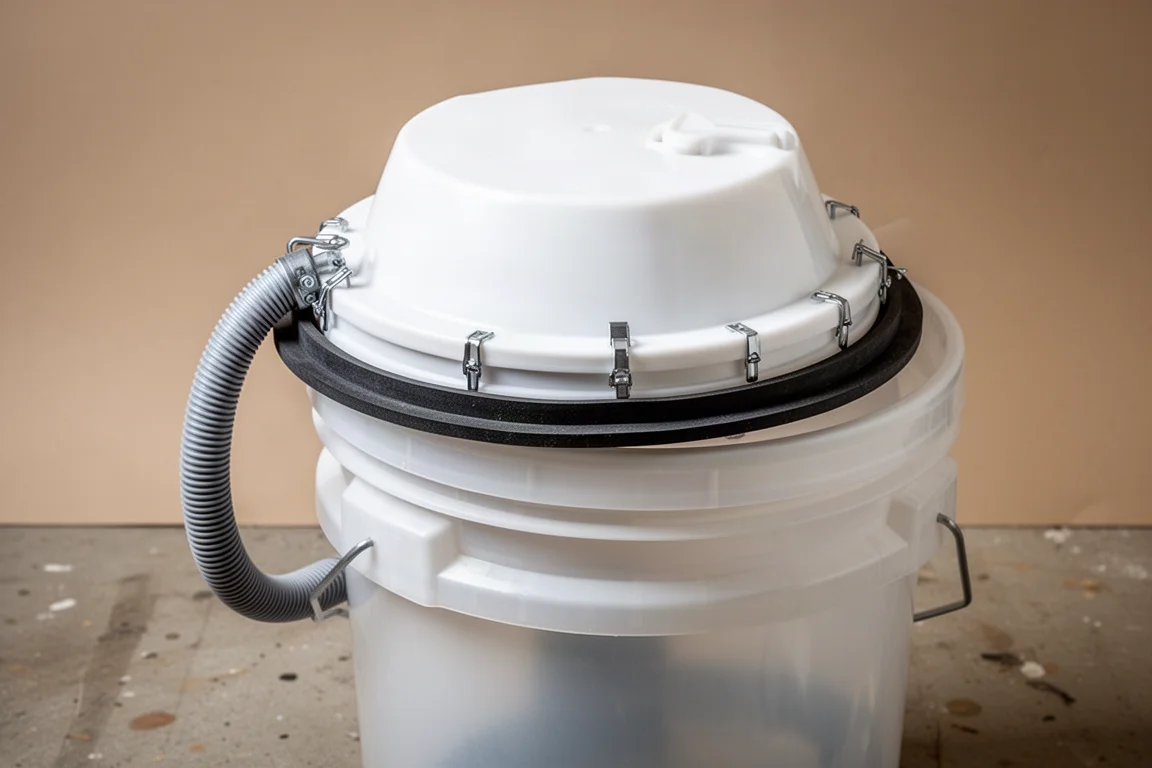
The Dust Stopper is aimed at carpenters and anyone running saws or other equipment that needs dust extraction. It is a cyclone separator: a unit that sits between your tool and your shop vac, sitting on top of a 5-gallon bucket. Dust from the tool spins inside the unit, falls to the bottom of the bucket, and never reaches the shop vac, which is usually the difficult part to clean out. When it is full, you just unclip and empty the bucket.
Inside the box you get the main plastic unit with a rubber gasket around the outside that seals onto the bucket rim, a couple of clips to hold it tight, some attachments, and a fairly large hose, roughly 50mm thick, that runs from the Dust Stopper to your shop vac. That hose size is worth checking: if your existing vacuum hoses are smaller, as many are, you may need an adapter or a different connection plan before it all fits together.
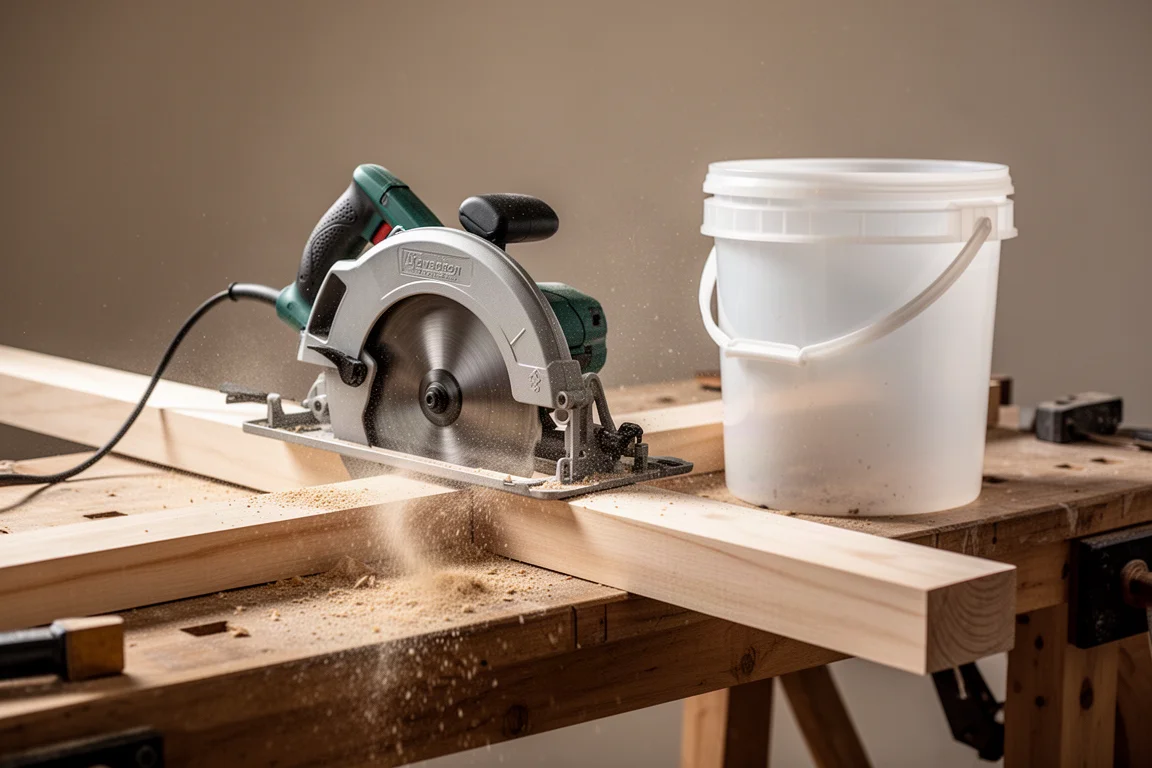
For around $60 or £45 it is a lot of money for what is essentially a shaped plastic lid with no moving parts, so whether it earns its keep depends entirely on how well it separates. The concept is sound, and the payoff, with all your sawdust ending up in a bucket instead of clogging a shop vac, is real. Worth testing with a big machine before committing to it as a permanent setup.
Ryobi ONE+ 5-Gallon Bucket Wet/Dry Vacuum
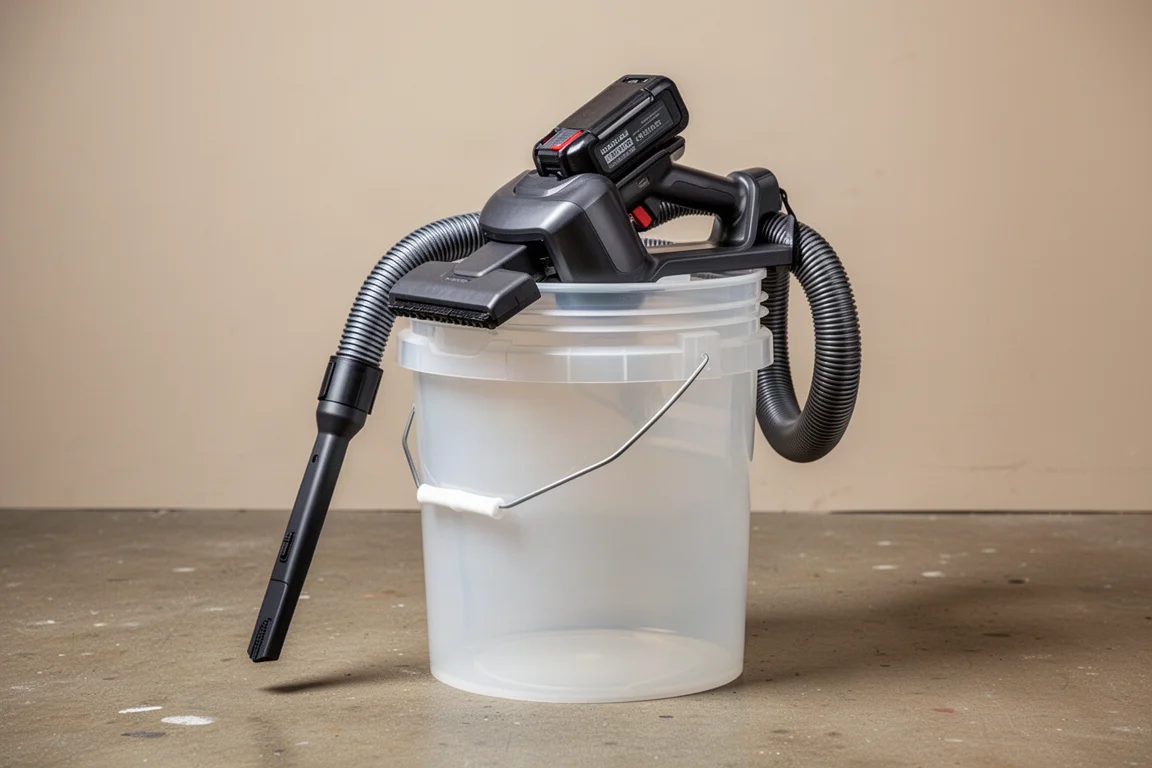
The most ambitious of the lot is the Ryobi ONE+ vacuum, designed specifically to use a 5-gallon bucket as its dust catcher. The product imagery even shows a Home Depot bucket. It is a wet and dry vac, so it handles water as well as dust and sawdust, and it runs on the standard Ryobi ONE+ battery shared with the rest of that tool range.
In the box you get the main head unit, a hose, and a crevice tool. The head pops onto the bucket rim with a loose fit, but once you start sucking, the suction pulls it down and seals it nicely. The hose can go into either the suction or the outlet port, so the unit can suck or blow depending on what you need.
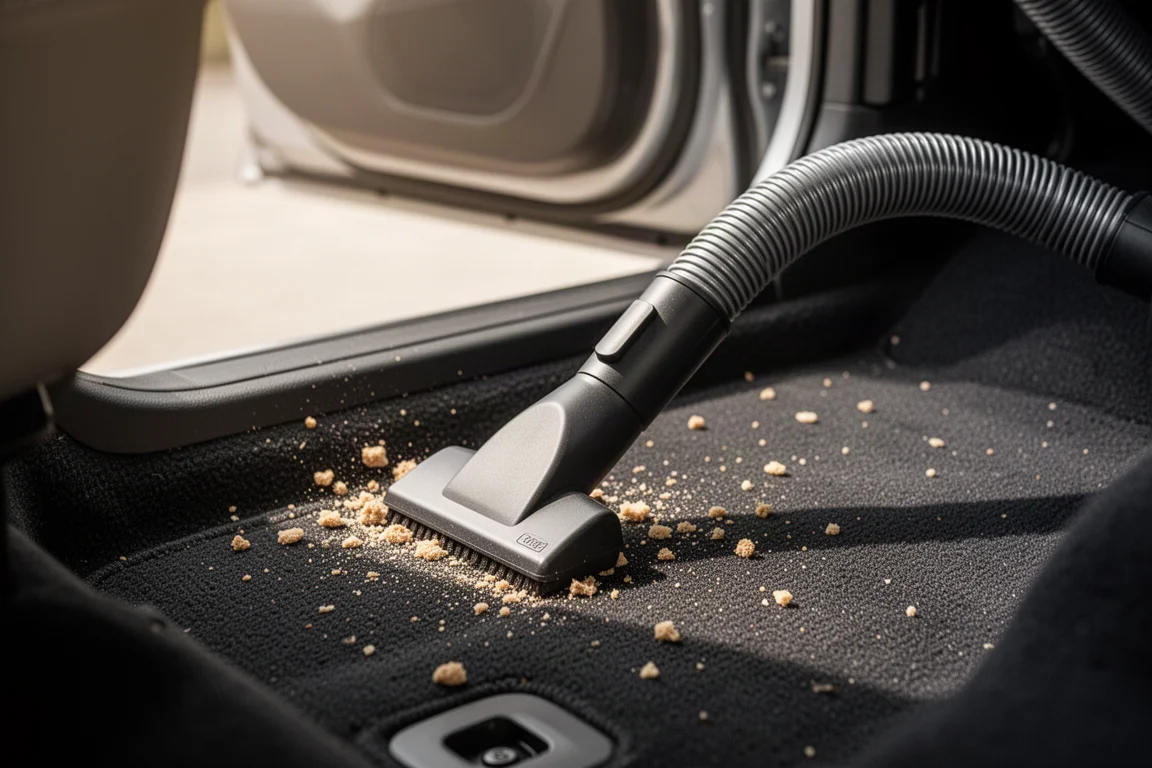
On the bench with a fresh battery, there is no doubt it works well. In real-world use it performed much like any other cordless vacuum, doing the job well, with one quirk: the hose had a tendency to pop out of the top unit, though that was likely because it was not pushed in tightly to begin with. The bigger complaint is the limited accessory range. There is no brush head attachment, which is the best option for coaxing debris out of car carpets.
Still, at around $60 or £45 it is a lot cheaper than comparable machines, and nothing like it is widely available in the UK yet. Once more people discover what a proper hardy 20-litre bucket can do, it seems likely that bucket-based vacuums will follow.
Buying Advice
If you just want to make a bucket easier to live with, a screw-off lid or a Spin Seat is a small outlay for a real convenience gain. The DeWalt caddy suits anyone who already carries tools in buckets and wants more organisation. The Dust Stopper and the Ryobi vacuum both sit at around the $60 mark and need a bit more thought: the Dust Stopper rewards anyone with a shop vac and dusty machines, while the Ryobi vacuum is best if you are already invested in the Ryobi ONE+ battery system.
Conclusion
A 5-gallon bucket is far more versatile than it looks, and these four accessories prove it. Match the accessory to your actual routine, whether that is sitting by a lake, hauling tools, or keeping sawdust out of your vacuum, and the humble bucket becomes something genuinely worth building a setup around.
Further reading
Related Reviews
Workshop Accessories
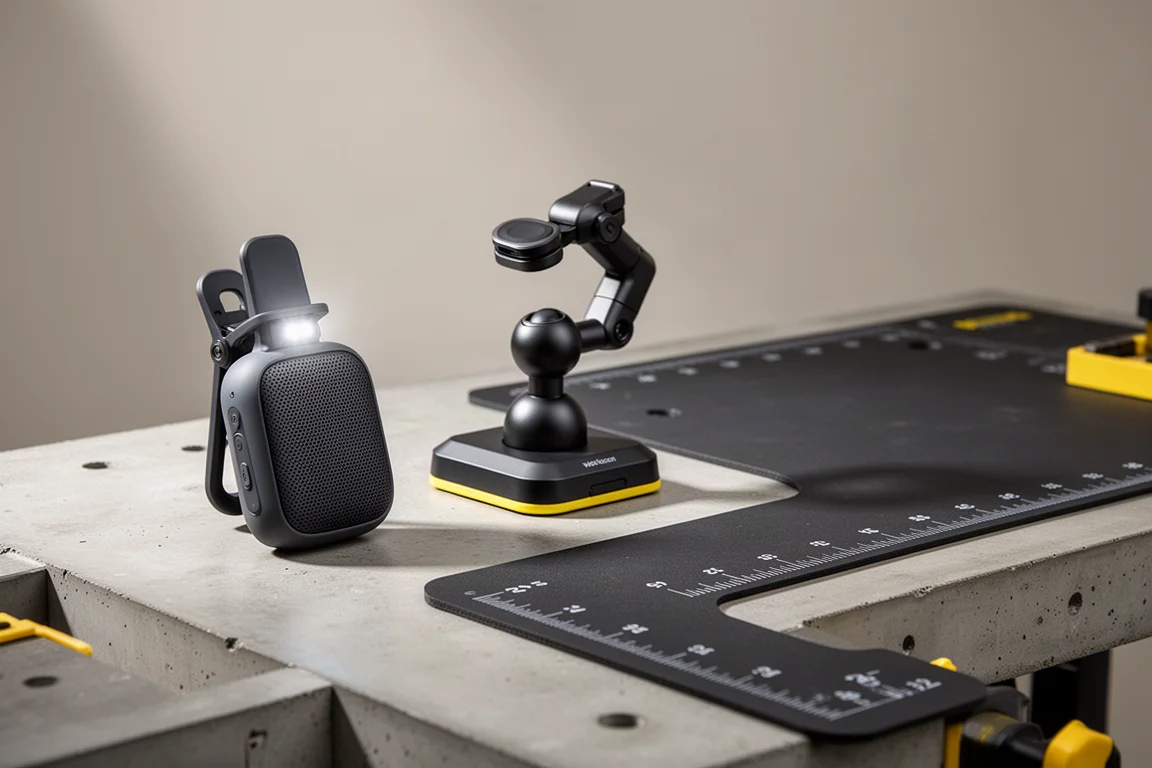
Three DeWalt Workshop Accessories That Are Tools, But Not Tools
A wearable job site speaker with a built-in light, a magnetic charging phone stand, and a heavy-duty workbench mat: three practical DeWalt additions worth a look.
Workshop Accessories
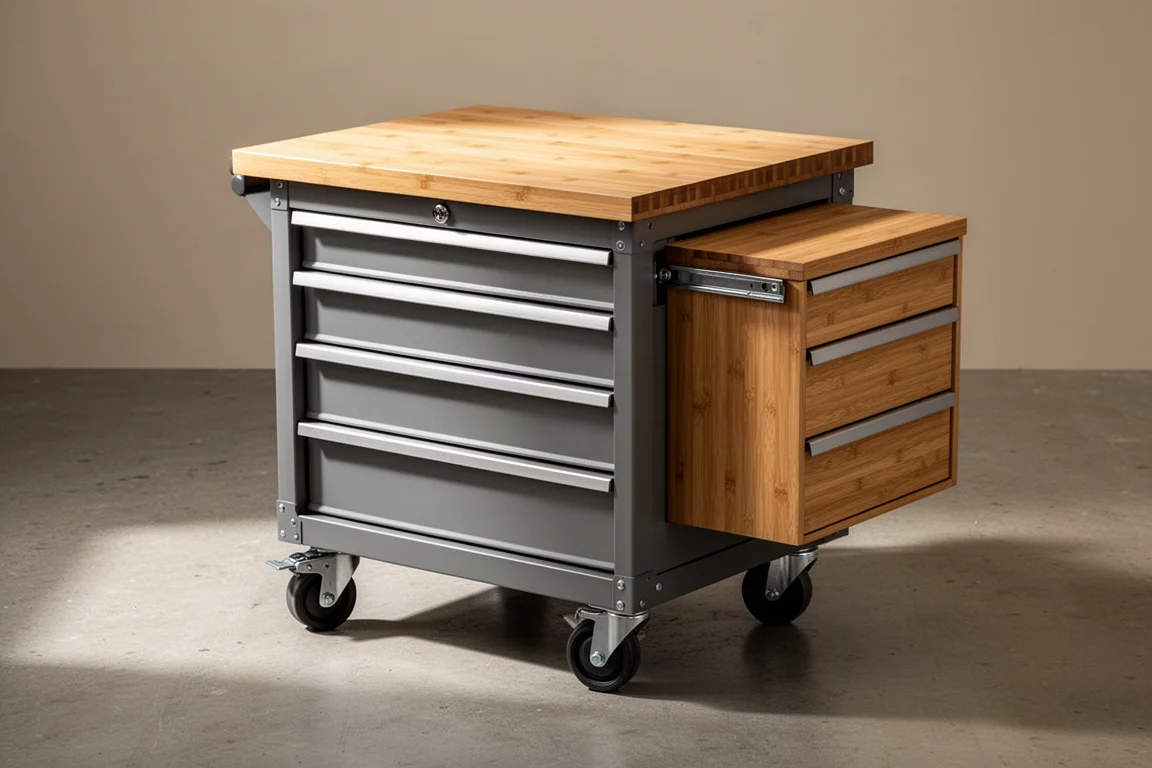
Dirt Church Bamboo Worktop Drawer Bracket Kit Review: A Smart Add-On for Stack System Users
A made-in-USA bamboo worktop and drawer bracket kit that turns a rolling stack system into a more useful mobile workbench.
Workshop Accessories
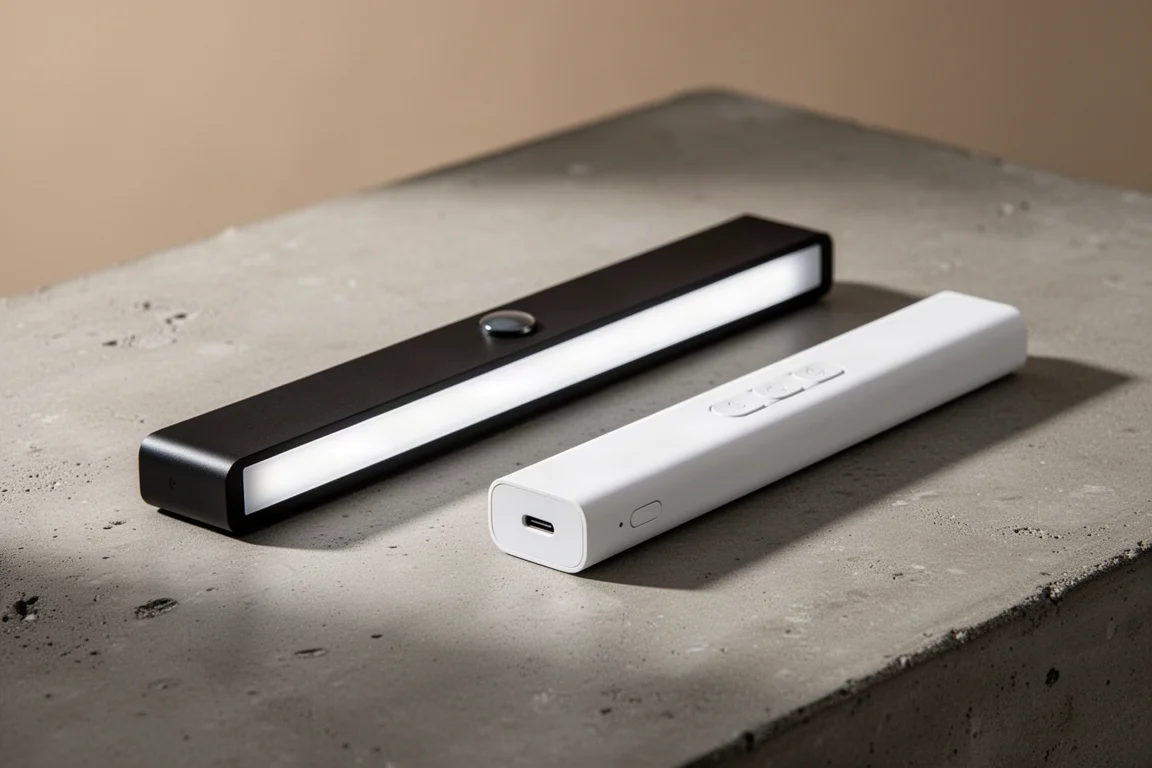
Icon Light Bar vs Budget Rechargeable LED Light Bars: Lighting Your Tool Hutch for Less
A practical comparison between Harbor Freight's Icon light bar and a much cheaper rechargeable LED motion-sensing alternative for illuminating work center hutches.