Camping Gear
3F UL TP10 Hot Tent and Stove: An Affordable Winter Camping System
A practical look at the 3F UL TP10 hot tent and its stainless steel stove, covering size, weight, cooking, airflow, and the trade-offs worth weighing before you buy.
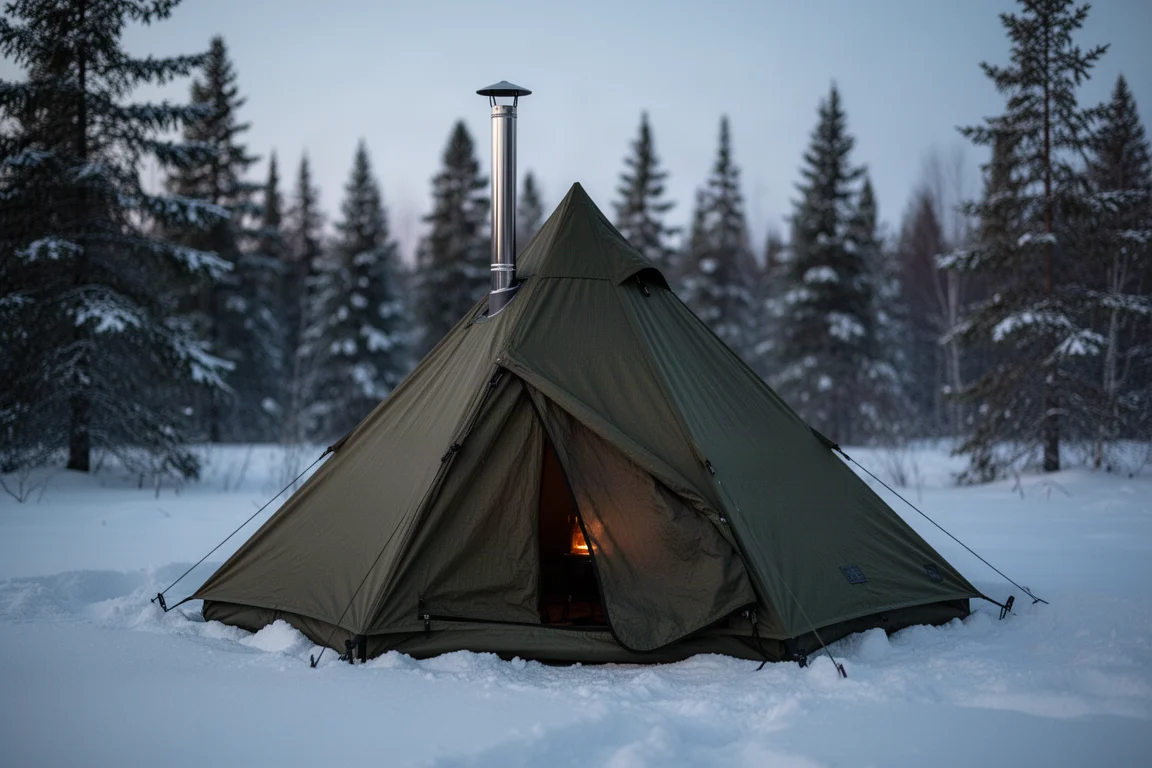
Introduction
Hot tenting has always come with a steep entry price. A shelter and a wood stove bought separately can easily add up to a four-figure outlay, and that combination has kept plenty of winter campers on the sidelines. 3F UL, the brand behind the Lanshan 1 tent, has put together a hot tent system that undercuts most of the alternatives by a wide margin: the TP10 tent sells for around $220 and the matching stainless steel stove for around $200.
That works out to roughly $50 less than comparable tents and about a third less than comparable stoves. The trade-off is weight, because this setup uses 304 stainless steel and heavier fabric rather than titanium and ultralight materials. For campers who care more about cost than grams, the maths is compelling. Here is how the two pieces hold up after pitching the shelter several times and taking the full system out on an overnight winter trip.
What Makes This Hot Tent System Stand Out
The pitch is straightforward: a genuinely usable four-season shelter and a wood stove for roughly the price of a mid-tier tent on its own. The tent comes in around 3 kg, and the adjustable centre pole adds roughly 500 g on its own. The stove weighs about 2.5 kg all in, including its fittings and storage bag, against roughly 1.8 kg for the titanium stoves it competes with.
That gap matters if you are carrying the system on your back, and matters much less if you are skiing or sledding it in. Build quality is the other reason the system deserves attention: the tent uses 40-denier ripstop nylon, and the stove is formed from 304 stainless steel, a grade chosen for corrosion resistance and for how easily it can be rolled and shaped.
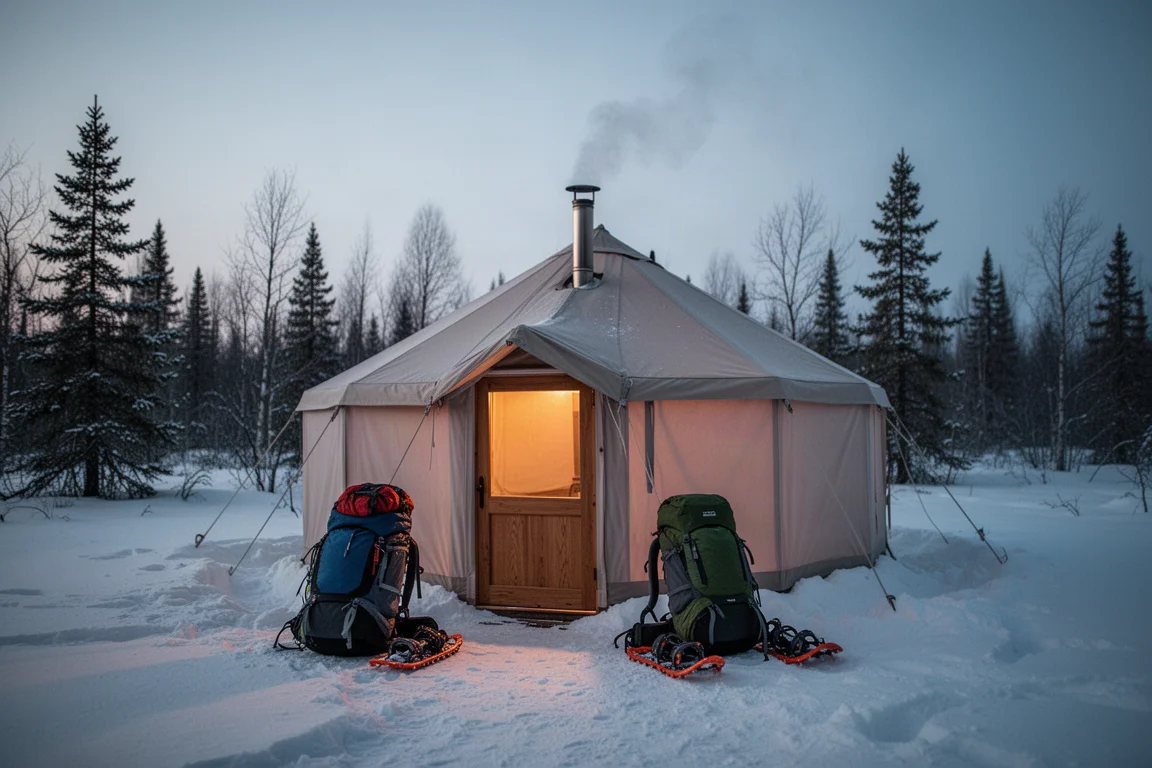
Two design decisions stand out. The stove is a half-cylinder rather than a box or a full cylinder, which keeps the packable weight advantage of a rolled design while giving you a flat surface for cooking. The tent is an eight-sided pyramid with an adjustable centre pole, which makes it tall enough to stand up in and simple enough to pitch without instructions.
Both choices point to the same priority: practical winter comfort at a lower price, rather than the lightest possible kit.
3F UL TP10 Hot Tent: Size, Shape, and Interior Space
The TP10 is an octagonal shelter measuring 4.2 m across and 2.2 m tall at the peak. Standing room is the headline benefit. You can get changed, stretch out, or wait out weather without crouching, and that is a real comfort difference on a long winter night. The centre pole is adjustable, so you can tension the shelter to suit uneven ground.
3F UL advertises the tent for four to six people. In practice, with the stove installed, three adults is a comfortable limit and four is possible in a pinch. Without the stove, four or even five people fit reasonably well. The floor plan is generous for a backpacking shelter, and the 40-denier ripstop nylon gives it a durable, confidence-inspiring feel.
TP10 Doors, Ventilation, and Snow Loading
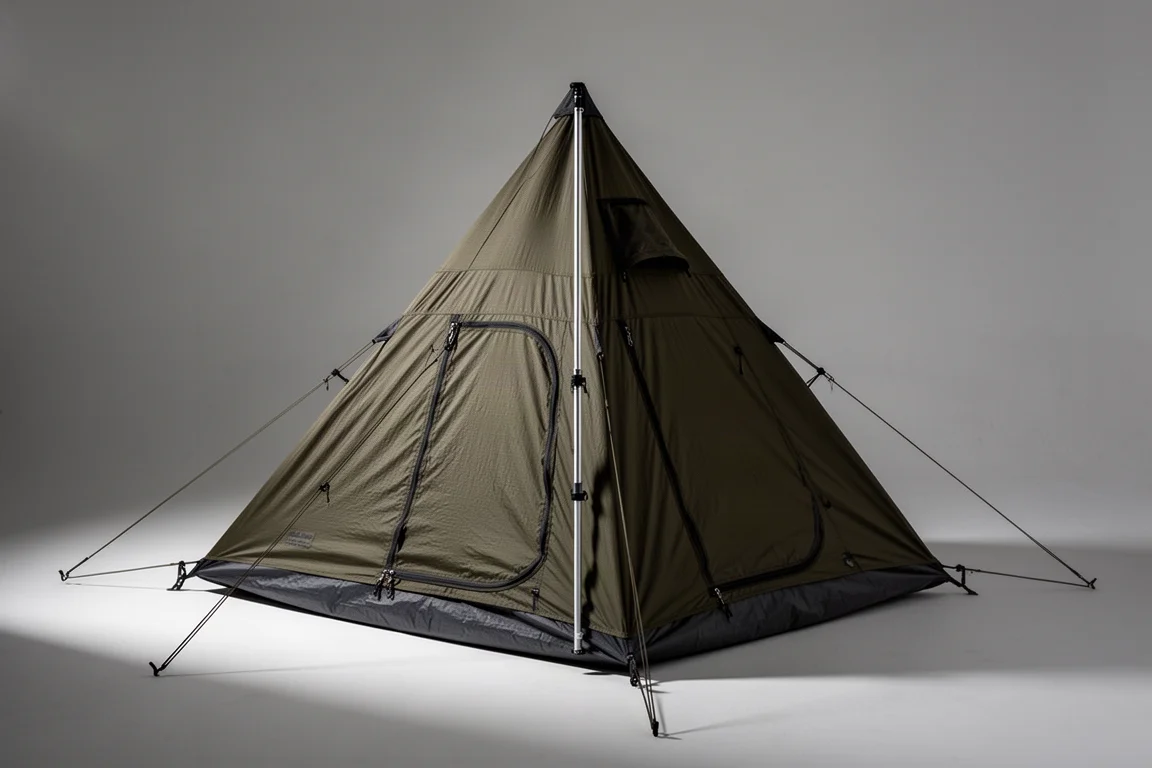
Two doors sit on opposite sides of the tent, and both use two-way zips, so you can open from the bottom or crack the top for ventilation. Each door can be tied back in two ways: half-open with the front staked out, or fully tied out for a cross draft that effectively turns the shelter into a tarp. Interior pulls let you open the top of the door from inside, and they double as hanging points for damp clothing.
Around the perimeter there are eight stakeout points, each with two webbing loops. One sits at the ground edge for conventional staking, and a second sits about six inches higher to create a skirt you can bury under snow. Six guy-out points pull the walls away from the centre pole to open up interior space, and each one has a small pocket to tuck the cord into so it does not tangle in storage. One roof panel carries a fireproof velcro stove jack; the opposite panel has a permanently open vent that keeps air moving through the tent.
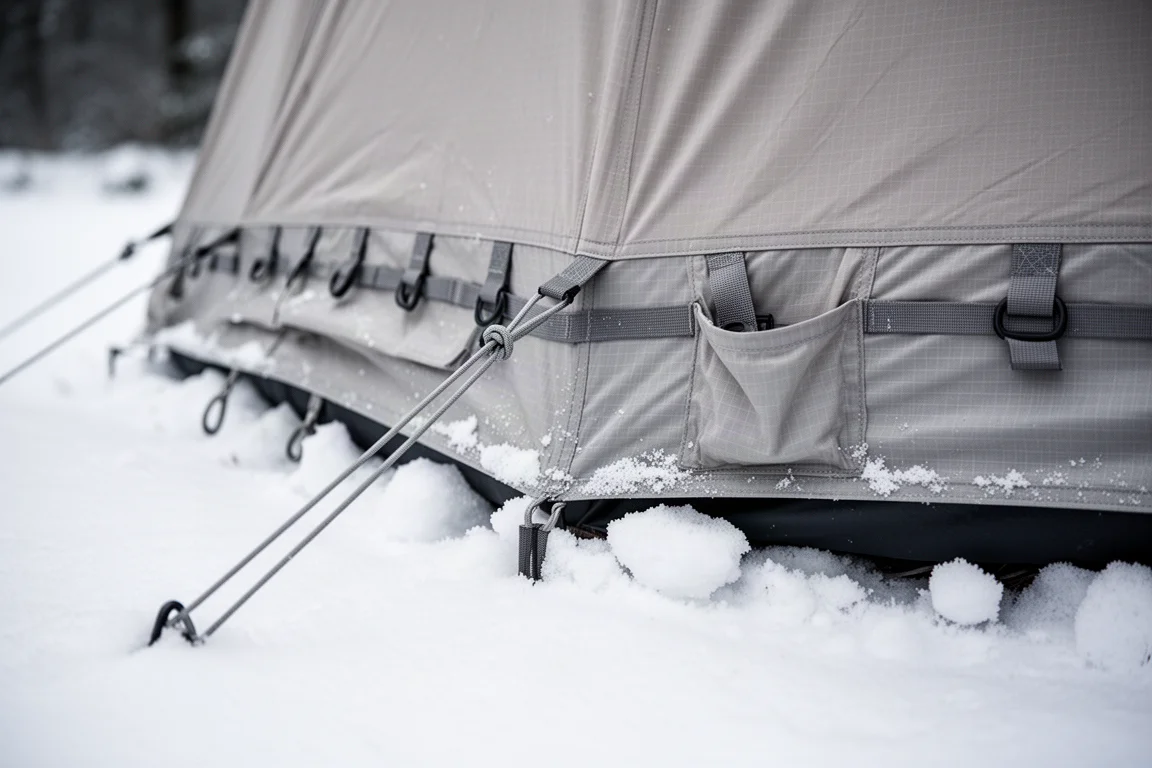
For winter use, the snow skirt and the venting arrangement are the details that matter most. They let you lock the shelter down against wind and drifting snow while still managing the condensation that builds up from breathing and from a burning stove.
3F UL Stainless Steel Hot Tent Stove: Design and Cooking
The stove is the more interesting half of the system. Instead of a box or a full cylinder, it uses a half-cylinder form: a flat top, two U-shaped end plates, and a thin stainless sheet that tucks into those ends to form the base. The result borrows the weight savings of a cylindrical roll-up stove and the practicality of a box stove, because you can set a pot directly on the flat top and cook.
The door has rings that let you open and close it without burning your fingers, and it runs smoothly once the stove has been burned in. A window on the front is a small but genuinely useful addition, since it lets you see how much wood is left and how hot the fire is running.
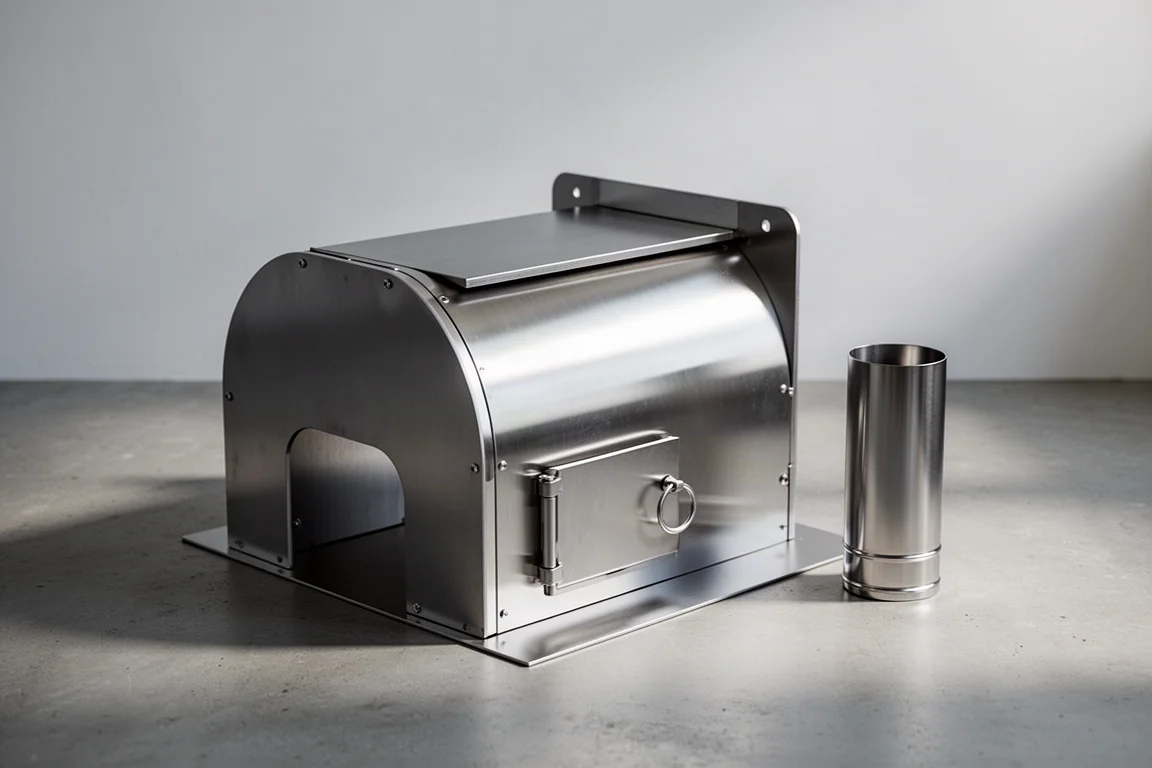
One caution: the top is thin stainless steel, and a heavy pot of water on a stove packed with wood and running flat out can begin to warp the surface. Load it sensibly rather than treating it like a cast iron range.
Stove Airflow, Burn Time, and Heat Control
Airflow is handled in two places. A dial at the bottom controls the primary intake, from a single narrow wedge open through to fully open, and a damper on the back of the stove adjusts how much air passes up through the chimney. Open both and the fire roars; close them down and you get a slower, longer smoulder. Together, the two controls give fine-grained command over heat output and over how quickly your wood disappears.
The firebox is roughly 16 inches long with a wide opening, so larger logs fit without being split down to kindling. Expect an hour or two of useful burn with the airflow managed. That is enough to keep a seated camper warm through an evening, but like every lightweight stove in this class, it will not hold a fire overnight.
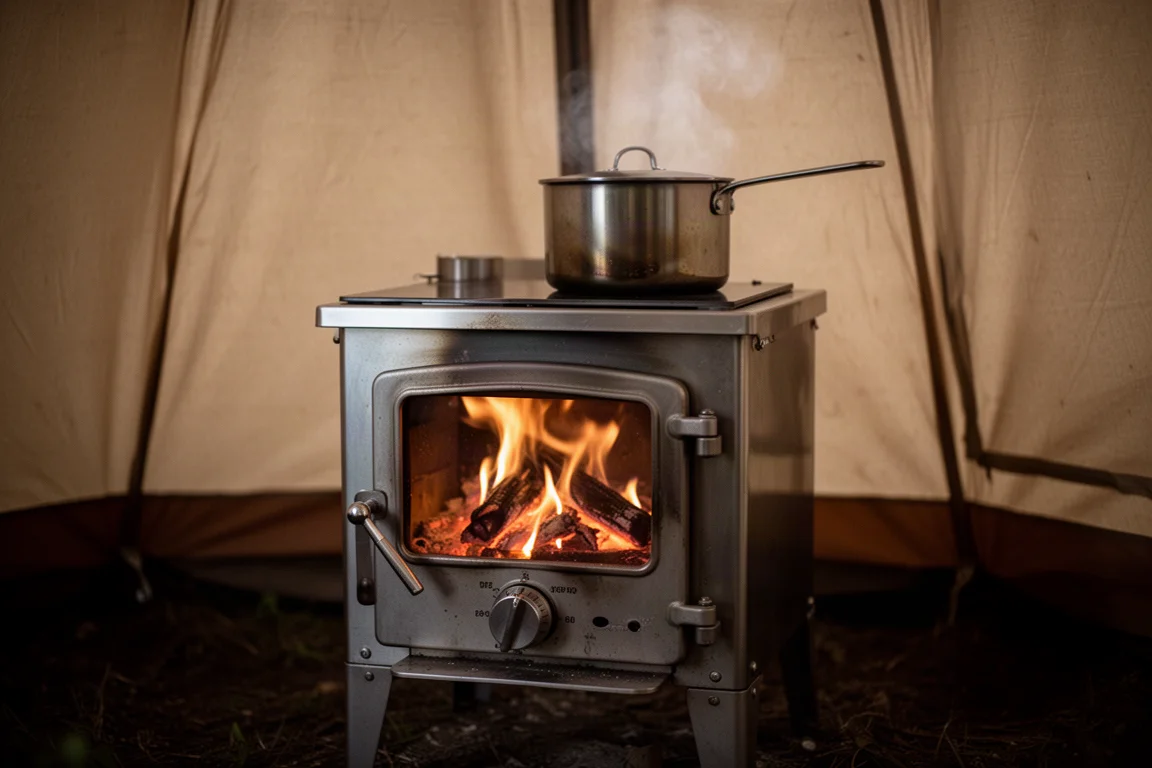
The chimney rolls up from a stainless sheet and comes with a cap intended to keep rain and snow out. The cap does not stop sparks, and an ember can burn a small hole in the roof fabric, so a fine steel mesh spark arrestor on top is a worthwhile addition. Burning the stove in before your first trip also makes the chimney noticeably easier to roll and the parts easier to fit together.
Weight, Packability, and Cold-Weather Backpacking
Packability is where the two pieces diverge. The stove breaks down flat and stows in its own carry bag, taking up very little room. The tent is bulky by backpacking standards, and between the fabric, the pole, and the stove you will want a larger pack or a willingness to strap gear to the outside. Carried over uneven ground on a winter overnight, the load was manageable rather than punishing.
The honest trade-off is long-term durability. Stainless steel and heavier fabric are part of the reason this system costs less than the titanium and high-end alternatives, and only time on the trail will show how well the materials hold up across repeated seasons. What is clear already is that the construction feels solid, the parts fit together well, and the assembly is intuitive enough to manage without instructions.
Buying Advice: Who This Setup Suits
This system makes the most sense for three groups. First, campers who want to try hot tenting without committing to a premium shelter and stove combination. Second, winter car campers, skiers, and sled users who are not counting grams. Third, backpackers who are willing to carry a little more weight in exchange for a shelter they can stand up in and a stove they can cook on.
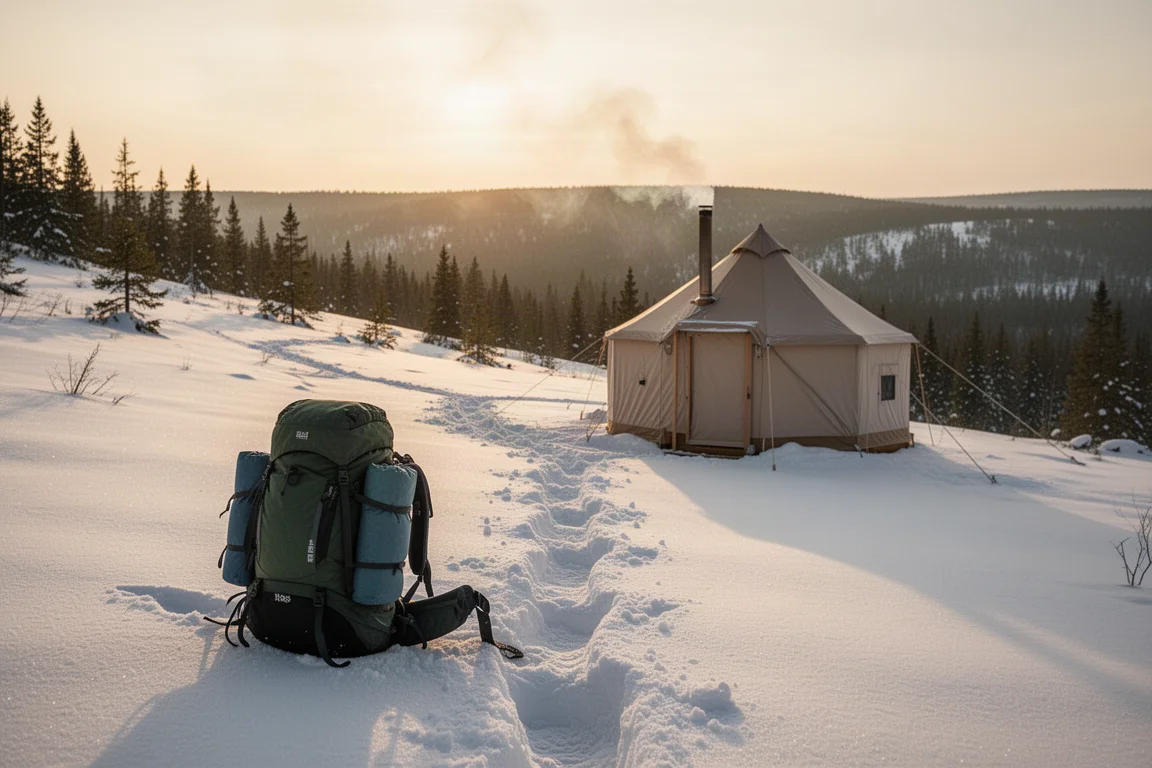
If low weight is your priority, titanium stoves and lighter fabrics remain the better answer, and you will pay for them. If you already own a suitable four-season shelter, the stove alone is a low-risk way to add heat and cooking capability. And if you are buying the pair, budget for a mesh spark arrestor and a little patience during the first burn-in.
Conclusion
The 3F UL TP10 and its stainless steel stove deliver the core hot tenting experience, a tall shelter with a real fire inside it, at a price that undercuts most of the established options. The compromises are weight and the open question of long-term durability, and both are reasonable at this price. For anyone who has been waiting for an affordable way into winter camping with a stove, this is one of the most sensible starting points available.
Further reading
Related Reviews
Camping Gear
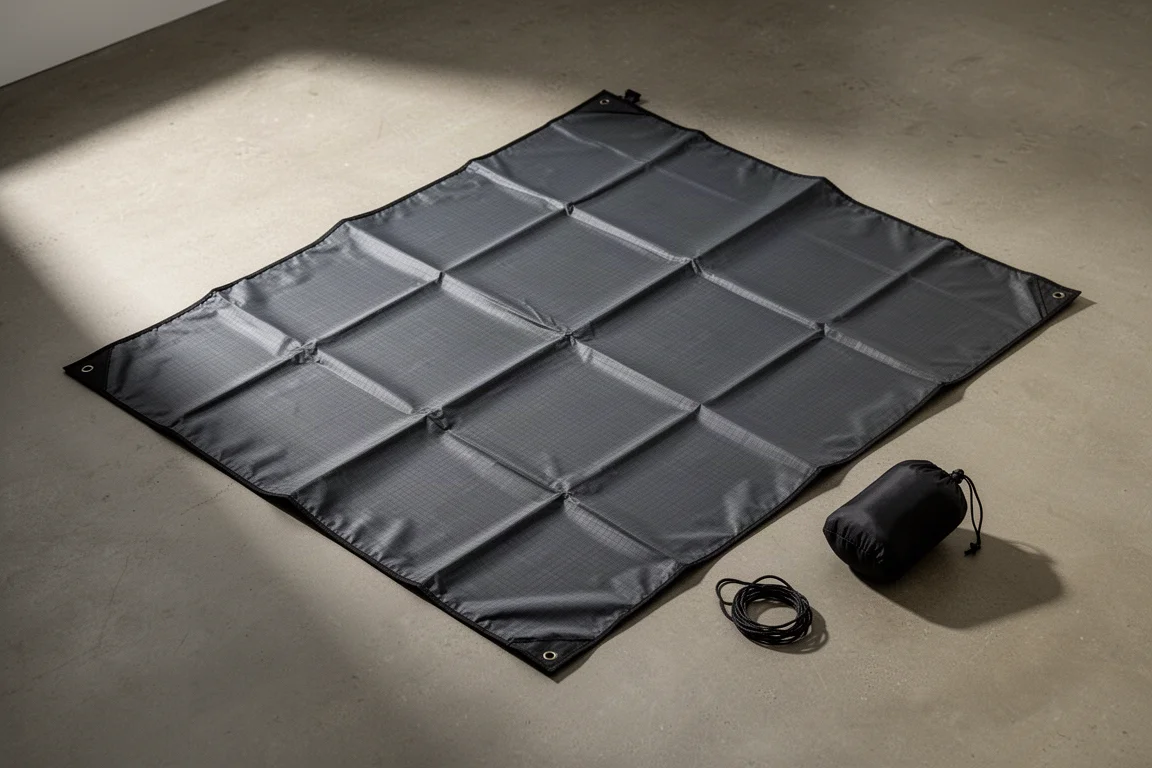
3FUL Ultralight Ground Sheet Review: A Two-Person Footprint Worth Packing
A 6.7 oz two-person ground sheet in ripstop silnylon, priced around $30. Here is what it protects, what it does not do, and who should pack it.
Camping Gear
Backcountry Light Dual-Function Tarp and Floor Review: A Footprint First
A dual-purpose tent floor and tarp that keeps falling rain off you, but cannot block wind. Here is where it works and where it does not.
Camping Gear
Best 2-Person Camping Mattresses for Couples: 10 Options Compared
A practical comparison of ten two-person camping mattresses, covering self-inflating pads, air pads and air mattresses for couples.