Camping Gear
3F UL Gear Hot Tent System Review: TP10 Shelter and Stainless Steel Stove
A hands-on look at the 3F UL Gear hot tent system, pairing the octagonal TP10 shelter with a folding 304 stainless steel stove at a fraction of typical hot tent prices.
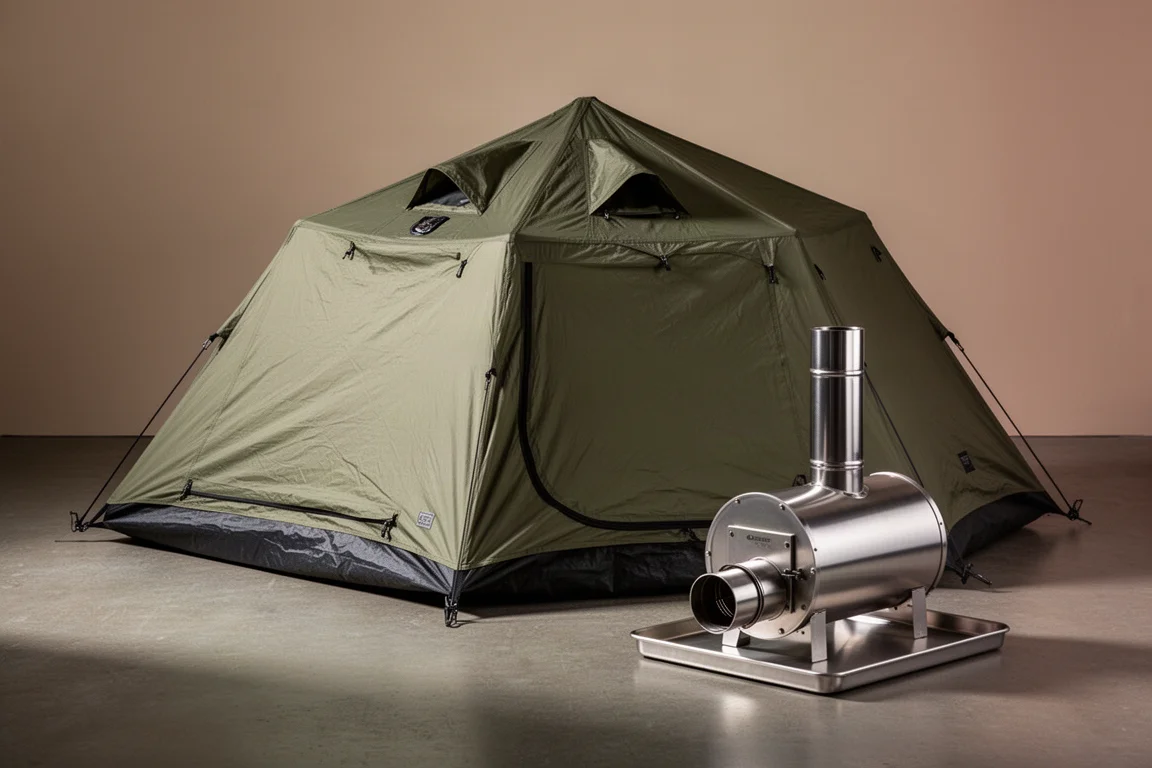
Introduction
Hot tents have become one of the most popular ways to keep camping through the coldest months, but the cost of entry has always been steep. A complete setup can run several hundred dollars for the shelter alone, with the stove adding hundreds more on top. The 3F UL Gear hot tent system is aimed squarely at that gap.
The system pairs the octagonal TP10 shelter with a folding stainless steel stove. This is a hands-on first look rather than a long-term verdict, based on three setups of the tent, a burn-in of the stove, and one overnight winter trip.
What the 3F UL Gear Hot Tent System Offers
Price is the headline. The tent alone is around $220, roughly $50 less than several comparable shelters on the market. The stove is around $200, close to a third less than typical alternatives. For context, hot tents commonly sell for anywhere between $200 and $800, and stoves often sit near the $500 mark.
Weight matters just as much for anyone carrying the setup on their back. The tent comes in at about 3 kg, and the stove weighs around 2.5 kg all in, including every piece and its storage bag. That is heavier than the roughly 1.8 kg you would see from titanium stoves, so this is a system built around value rather than counting grams.
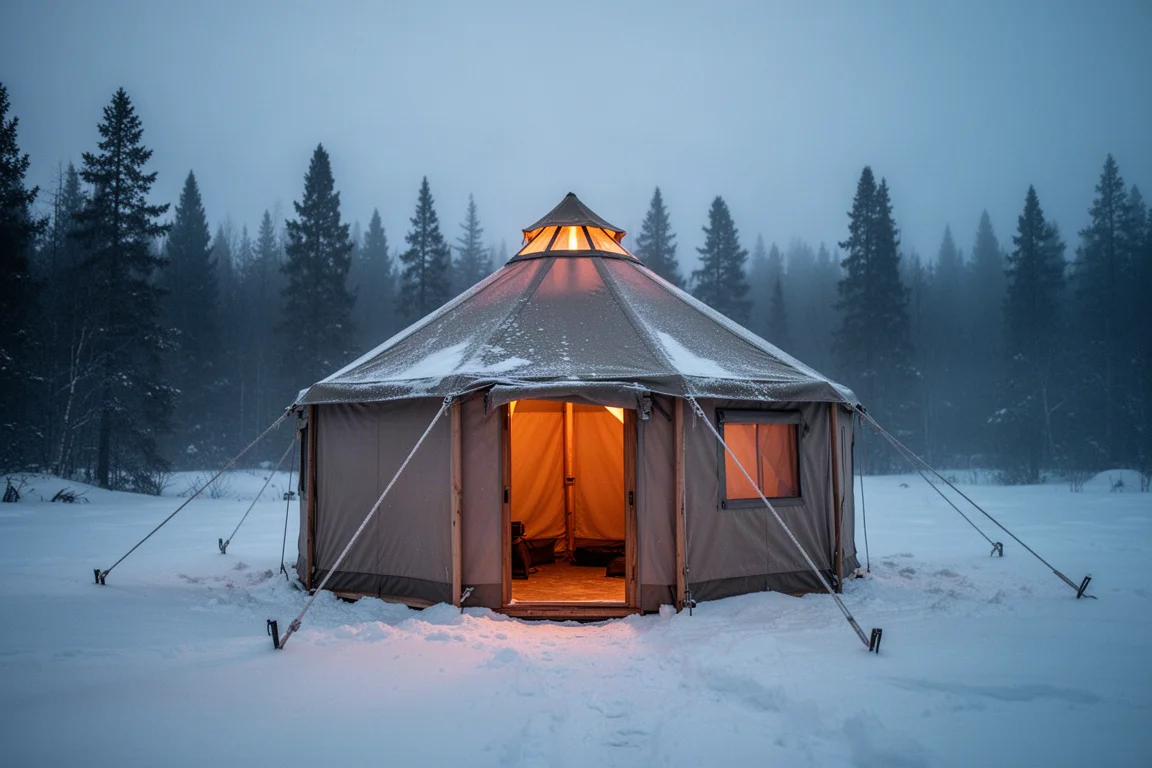
Both pieces were carried on a solo winter backpacking trip over uneven terrain, and the load proved manageable over a decent distance rather than a dealbreaker.
3F UL Gear TP10 Hot Tent: Shelter and Space
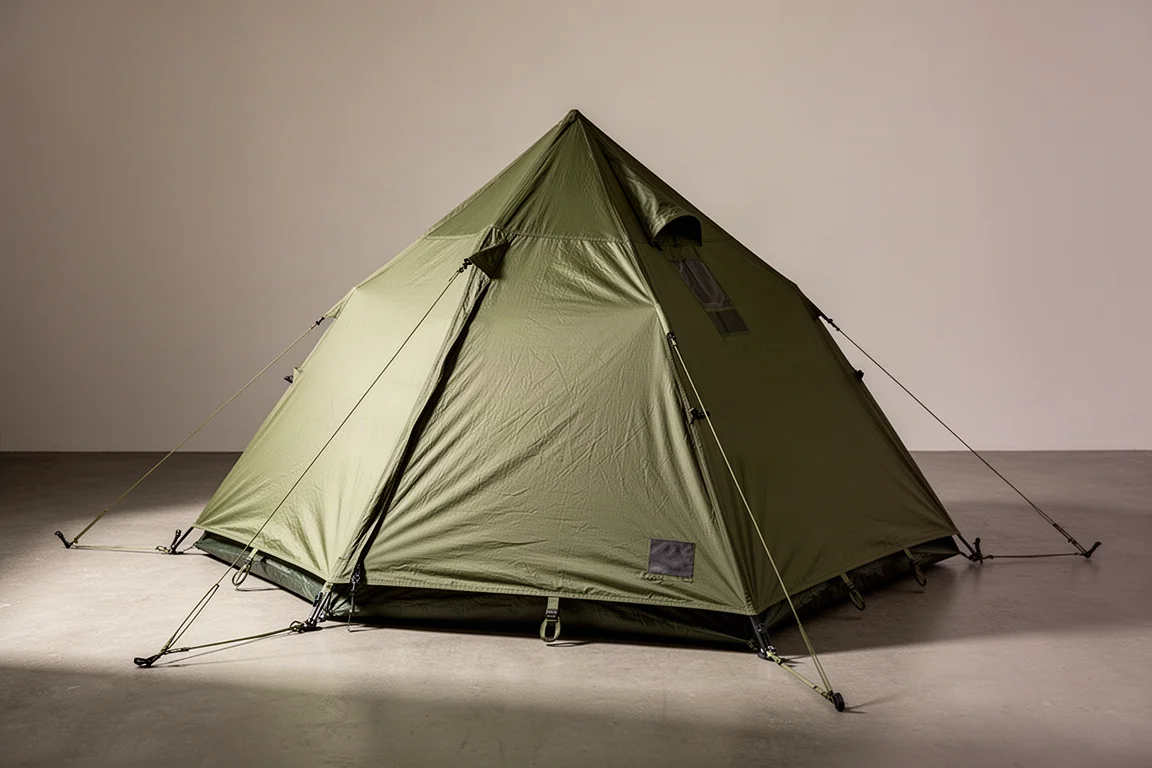
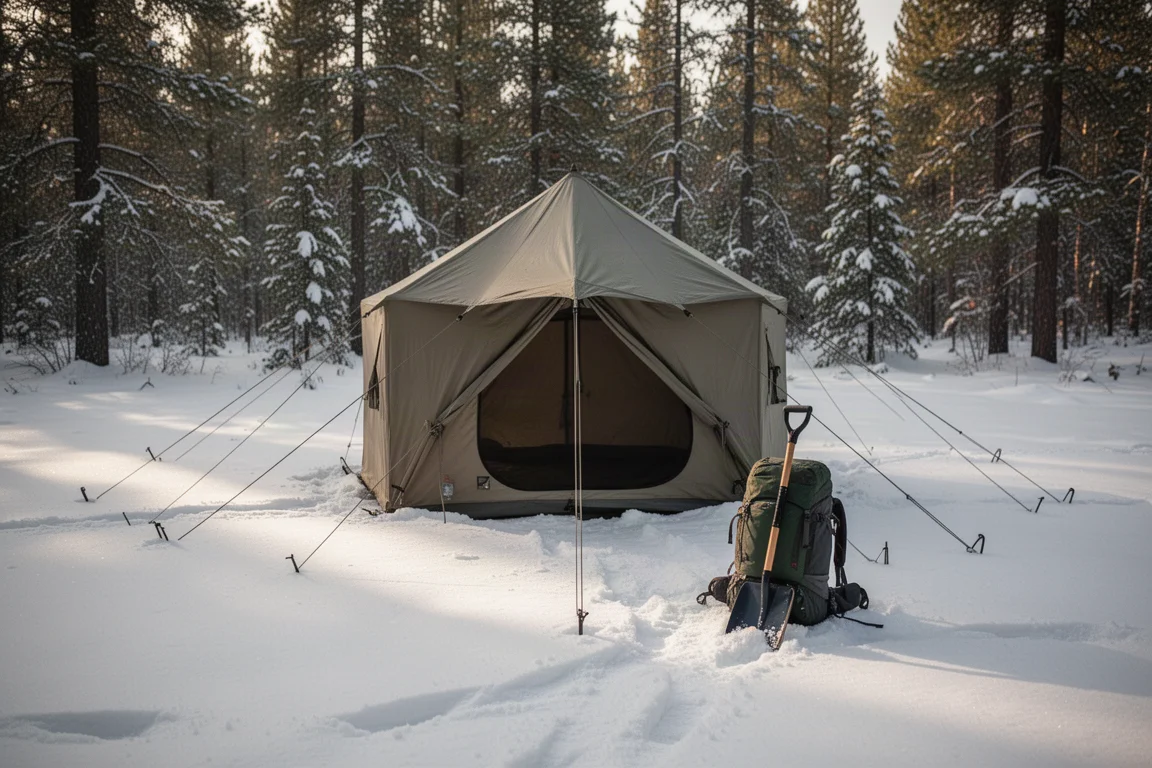
The TP10 is octagonal, measuring 4.2 m across and 2.2 m tall, with an adjustable center pole. The height is the first thing that stands out: it is tall enough to stand up inside, which makes changing layers in winter far less awkward.
Two doors sit on opposite sides, so the shelter can be opened right through for cross ventilation or used almost like a tarp. Both doors tie back in two ways, either half-open with the front staked out or fully tied back. Two-way zips let you crack the top of the door open for extra airflow, and internal pulls make that easy from inside. Those same pulls double as hanging points for damp clothing.
The perimeter has eight stakeout points, and each one offers two webbing loops: one at the edge for a conventional pitch, and another about six inches up the wall that creates a skirt for piling snow against. Six guy-out points pull the walls away from the center pole for more usable floor space, and each has its own pocket to stow the cord when it is not in use.
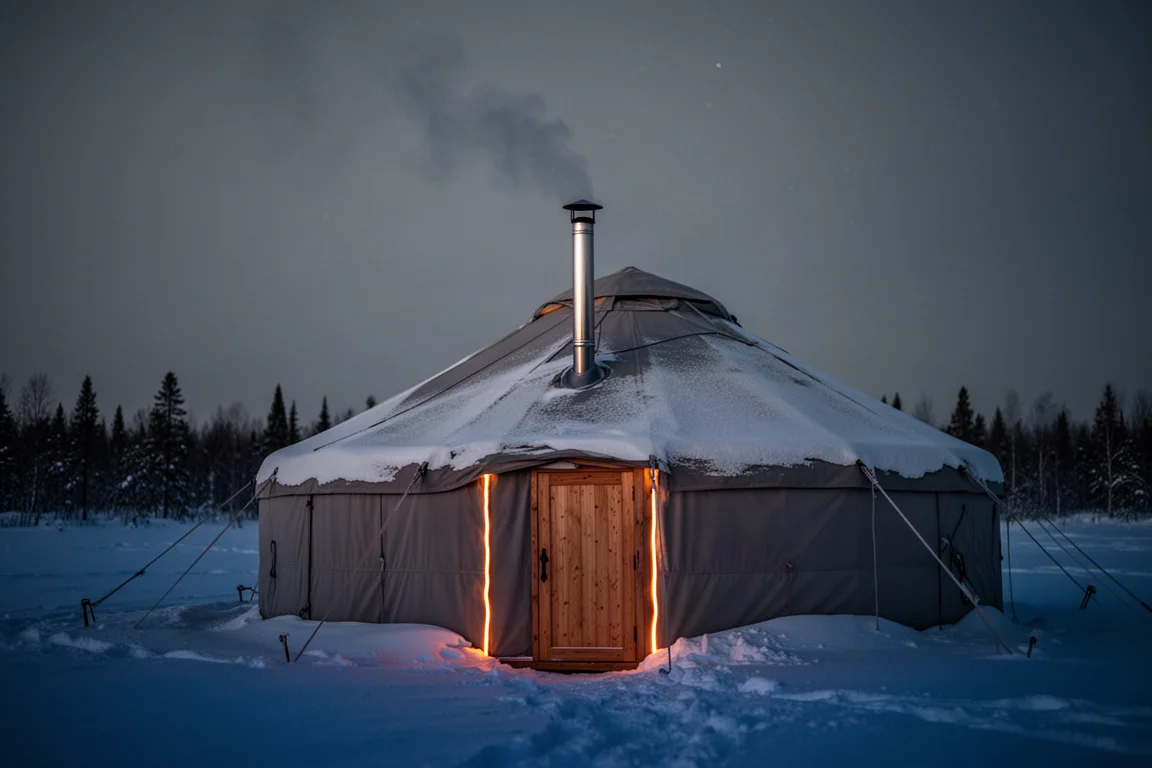
The fabric is 40 denier ripstop nylon. At the peak, one side carries a velcro stove jack made from fireproof material for the chimney, while the opposite side has a vent that stays permanently open for air circulation. The tent is advertised for four to six people. With the stove running, three is comfortable and four is a pinch. Without the stove, four or even five is realistic.
3F UL Gear Hot Tent Stove: Heat, Cooking, and Airflow
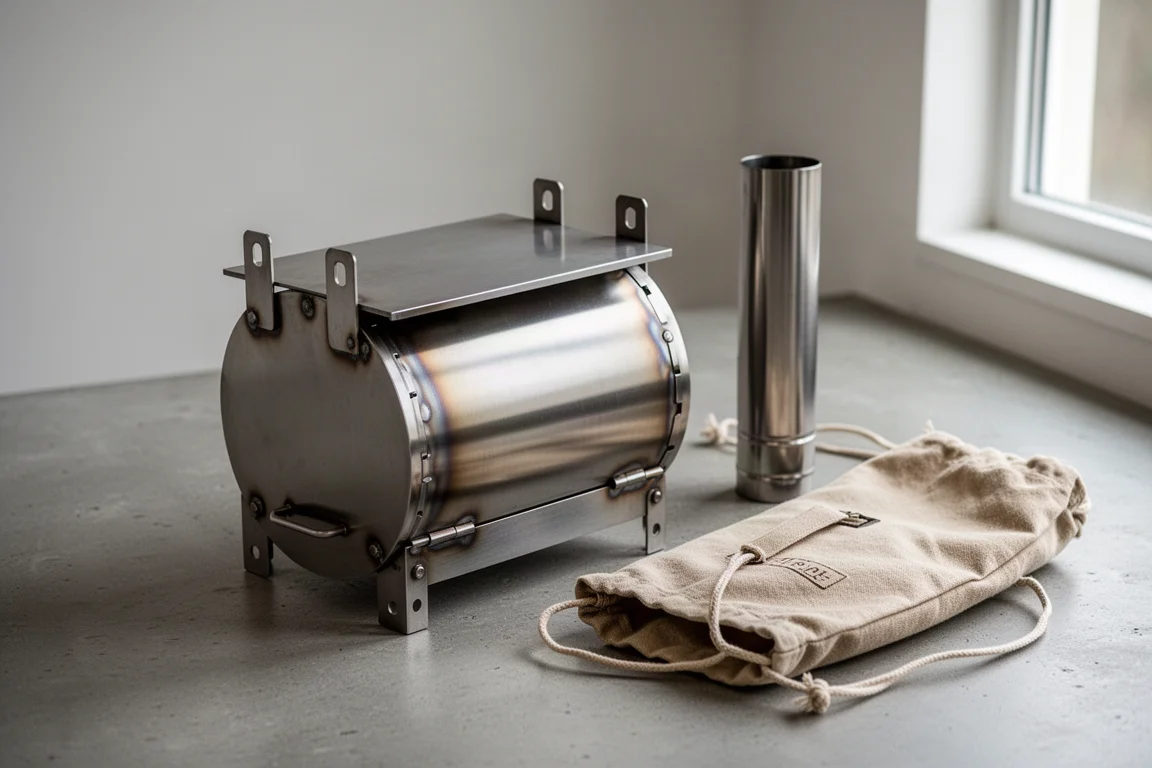
The stove is built from 304 grade stainless steel, chosen for its corrosion resistance and its malleability, which is what allows the chimney to roll into a cylinder. Where most stoves on the market are either box shaped or full cylinders, this one takes a half-cylinder approach: a flat top, two U-shaped end plates, and a thin stainless sheet tucked in to form the base. The result is the weight saving of a cylinder with the flat cooking surface of a box stove, so pots and pans sit securely on top.
The door has rings that let you open and close it without burning your fingers, and it runs smoothly once the stove has been burned in. A window in the door makes it easy to keep an eye on how much wood is left and how hot the fire is running.
Airflow is managed in two places. A wheel at the bottom controls the intake, from a single narrow wedge through to fully open, and a damper at the back regulates draw through the chimney. Together they give a useful range, from a fast hot burn to a slower smolder that stretches the wood.
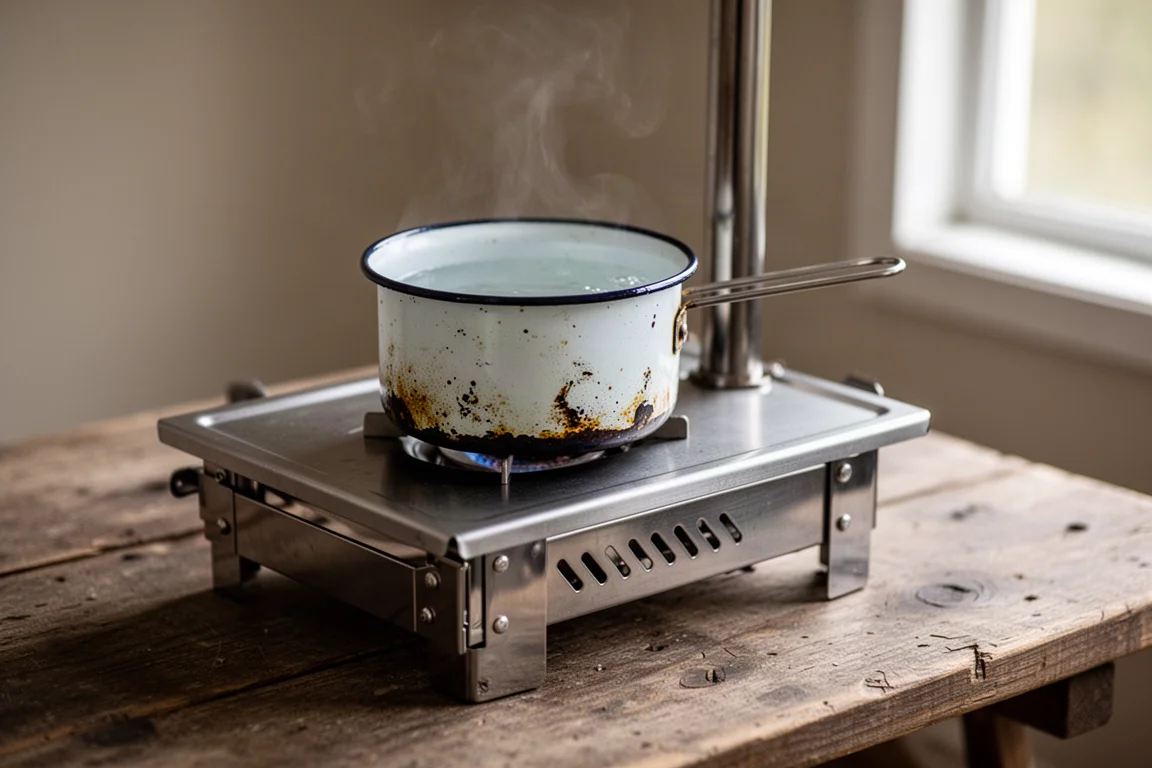
The firebox is around 16 inches long with a generous opening, so fairly large logs fit without splitting them down. Realistically, expect an hour or two of burn time with the airflow managed, which is enough to stay warm while sitting up with a book but not enough to last the night. Assembly is intuitive even without instructions, everything fits together cleanly, and the whole stove packs flat into its own carry bag.
Weight and Packability for Backpacking
The stove is the easier half of the system to carry. It folds flat and stows in its own small bag, so it disappears into a pack without much fuss. The tent is the opposite: it is bulky and takes up a lot of room, which is the price of an octagonal shelter with stand-up height.
In practice, both pieces fit into a larger backpacking pack, and strapping the tent to the outside of a pack is a workable option if interior space runs short. Neither piece is ultralight, so the system suits someone who accepts a few extra kilograms in exchange for a genuinely comfortable winter shelter and a stove that can cook.
Setup and Cold-Weather Details
Pitching follows a predictable routine: stake the eight corners, raise the adjustable center pole, then tension the six guy-outs to open up the interior. The second stakeout loop on each corner is the detail that matters most in bad weather, since it lets you build a snow skirt and lock the shelter down against wind and drifting snow.
The stove benefits from a burn-in before it performs at its best. Running a load of wood through it once makes the chimney far easier to roll and helps every part seat more cleanly. Once it is going, the permanently open vent at the peak and the top-of-door zips give you a way to move air through the shelter as moisture builds up in clothing and sleeping bags.
Things to Consider Before Buying
A few honest caveats came out of the first trips. The stove top can warp if you run a full firebox at maximum draw with a large, heavy pot of water sitting on it, so it pays to watch the load and the airflow together rather than opening everything up at once. The chimney cap is designed to keep snow and rain out, but sparks still escaped through it and one burned a small hole in the fabric. A fine steel mesh spark arrestor placed over the cap solved that.
Burn time is the other expectation to set. One to two hours is realistic with careful airflow management, so this is a stove for warming up before bed and again in the morning rather than an overnight burn. And while the stove packs small, the tent itself is bulky and eats into pack space.
Buying Advice
This system makes the most sense for winter campers and backpackers who want the hot tent experience without paying premium prices. The stand-up height, dual doors, and snow skirt loops give it real cold-weather capability, and the flat-topped stove is genuinely useful for cooking inside the shelter. Anyone who cooks in the tent, wants room to move around, and does not mind carrying a few extra kilograms will find a lot to like.
It is a less obvious fit for ultralight backpackers counting every gram, or for anyone who expects a stove to burn through the night. Titanium stoves are lighter, and comparable alternatives cost considerably more. For value-focused winter camping, the balance here is difficult to argue with.
Conclusion
The 3F UL Gear hot tent system delivers the core hot tent experience at a price that undercuts most of the market. The TP10 offers genuine space and stand-up height, the stove is cleverly shaped for both weight saving and cooking, and the airflow controls work well in practice.
The trade-offs are clear and worth knowing in advance: stainless steel is heavier than titanium, burn times are short, and the stove top and chimney cap both need a little care. If those fit your expectations, this is an affordable route into winter camping with a stove. As with any new gear, the longer-term picture will only come clear with more nights out.
Further reading
Related Reviews
Camping Gear
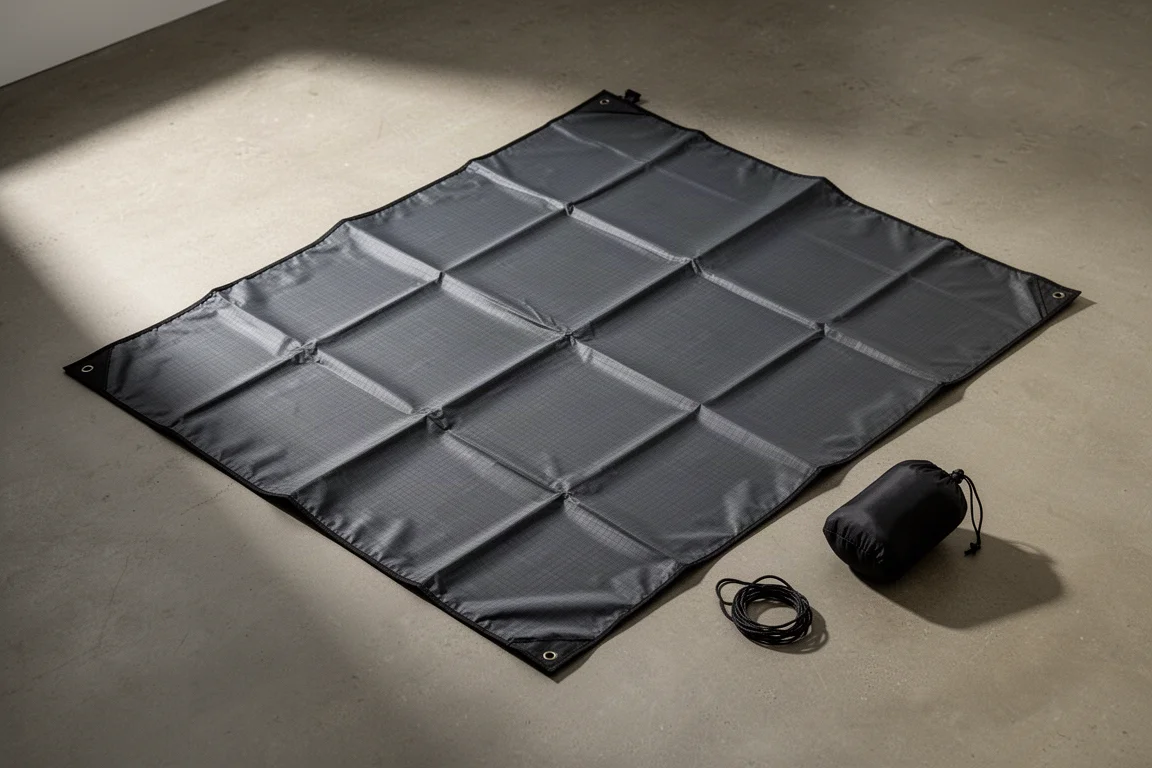
3FUL Ultralight Ground Sheet Review: A Two-Person Footprint Worth Packing
A 6.7 oz two-person ground sheet in ripstop silnylon, priced around $30. Here is what it protects, what it does not do, and who should pack it.
Camping Gear
Backcountry Light Dual-Function Tarp and Floor Review: A Footprint First
A dual-purpose tent floor and tarp that keeps falling rain off you, but cannot block wind. Here is where it works and where it does not.
Camping Gear
Best 2-Person Camping Mattresses for Couples: 10 Options Compared
A practical comparison of ten two-person camping mattresses, covering self-inflating pads, air pads and air mattresses for couples.