繁體中文 · Camping Tents
Hyke and Byke Zion 雙人帳篷評測:防雨表現與購買建議
一款圓頂造型的雙人帳篷,抗風穩定性出色,地布接縫有貼條處理,但帳身接縫未貼條、浴缸式地布偏低,在大雨中表現受限。
引言
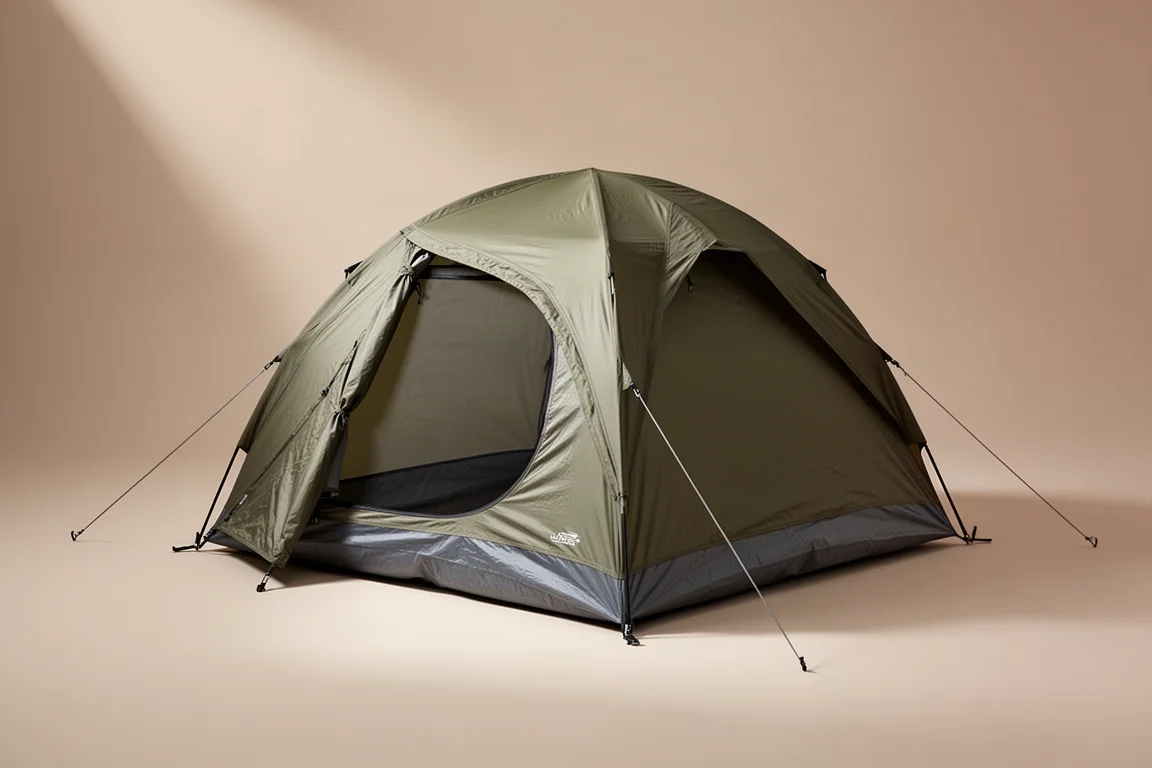
Hyke and Byke Zion 是一款雙人圓頂帳篷,維持緊湊、低矮的外型。這樣的幾何結構有助於它對抗風勢,並讓雨水從頂部滑落,而外帳出廠即附有完整貼條的接縫。更有意思的問題藏在下面:地布如何貼條、浴缸式地布升高多少,以及外帳在側面實際提供多少遮蔽。這些細節決定了 Zion 在天氣轉趨嚴峻時的表現。
這款帳篷適合誰
The Zion fits two-person trips where wind exposure is the bigger concern. Because the peak height is modest, the tent stays stable when every stake and guyline is deployed, and the dome profile means rain runs off the top instead of pooling there. Campers who mostly meet light to moderate showers, or who pitch in sheltered sites, will find it workable. Anyone planning multi-day trips in exposed terrain with sustained heavy rain should read the limitations below first.
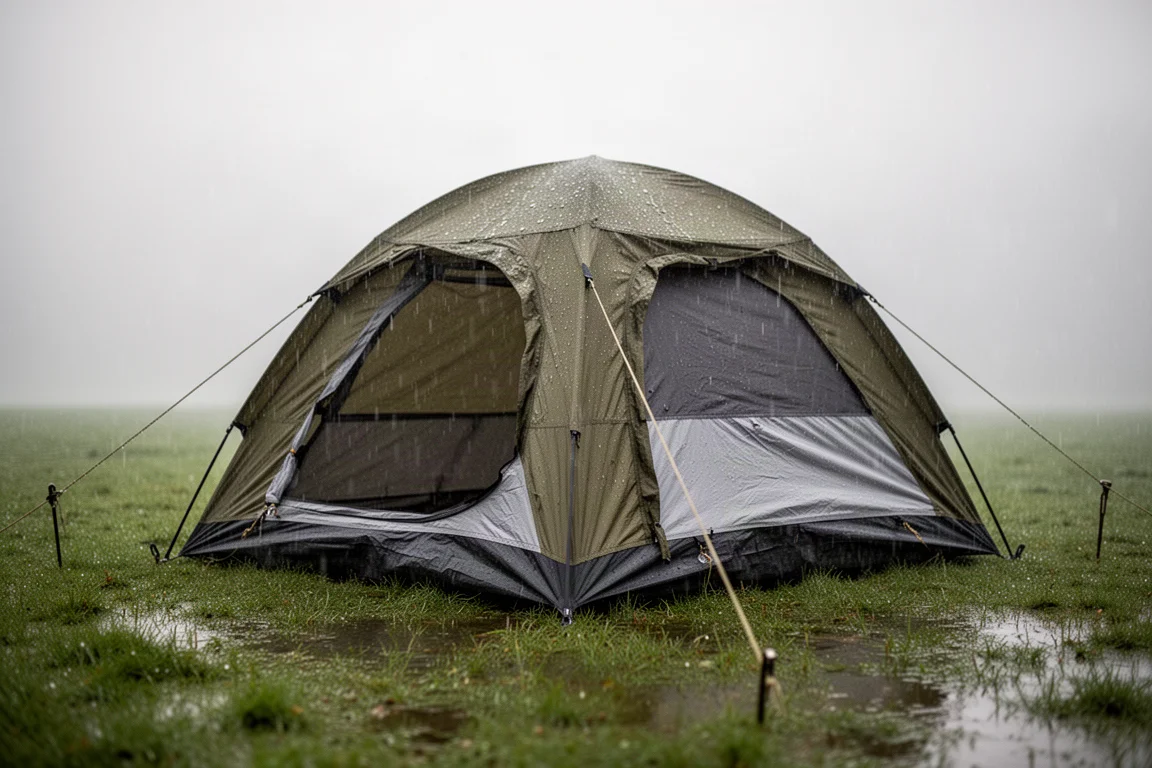
It is also worth noting that the tent’s ventilation is not compromised in wet weather, which is a genuine plus for two occupants sleeping inside on a humid night.
Main Strengths
Wind stability is the Zion’s clearest strength. A low peak height and a rounded dome reduce the surface area catching gusts, and with all guylines staked out the tent held its shape well. Rain ran off the dome cleanly and reached the ground without collecting on top.
Ventilation held up too. The two rainfly vents sit at the sides and face almost straight down, so rain has very little opportunity to enter. Both vents stayed open through a multi-hour rain test without leaking, which is a useful result for anyone weighing condensation control against weather protection.
防雨測試結果
The tent was put through slightly less than an hour of heavy rain followed by roughly three hours of lighter rain, enough to wet every panel. Several results stood out.
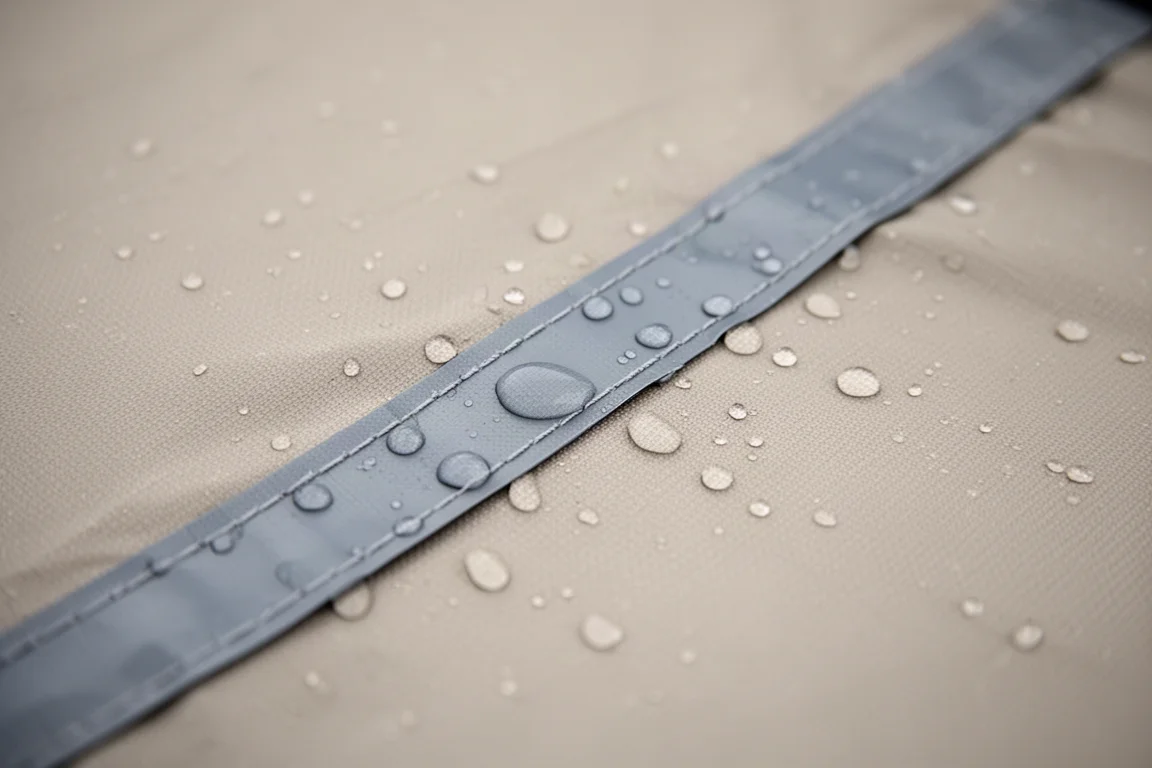
The rainfly seams are all taped, and the floor seams are taped as well, including the seam that runs the length of the floor and all four corner seams. That coverage held: even when the right side of the tent was sitting in a shallow puddle from yard flooding, no water came through the floor or the corners. The rainfly stayed dry on its inner face, and the mesh body was mostly dry, with only a few areas slightly damp.
The verdict on ventilation was similarly positive, with the downward-facing side vents staying dry throughout.
Where the Design Falls Short
Not every result was clean. Water appeared in the middle of the tent floor after the rain, with no obvious entry point, though the seams at the top of the tent were slightly damp at the time. Small droplets also formed across the full width of the interior on both sides, and some dirt found its way inside.
The seam map explains part of this. Only the floor seams are taped on the inside. The seams joining the bathtub floor to the tent body are not taped, the door seams on the opposite side are not taped, and the vertical seams running from bottom to top are not taped either. Those vertical seams are inverted, but inverted seams are not a substitute for taping, and they were slightly damp near the top.
A paper element on the right side of the tent ended up completely soaked and let water through, because the seam above it was neither taped nor sealed. Water collected there, soaked the material, and eventually dripped into the living space.
浴缸式地布高度與地面濺水
The bathtub floor measures about six inches high along the length of the tent and about five inches high across the width. That is low. Comparable budget tents often use tub floors up to ten inches, which is enough to keep ground splash out.
The width measurement is the one that matters most here, and the Zion has it backwards. Normally the width would carry the taller bathtub floor, because the rainfly cannot be pulled as far from the body on that side. On the Zion the length is taller, even though the length is where the vestibule lets the rainfly sit further away.
That mismatch combines badly with the rainfly coverage at the sides. Even with a guyline pulling the rainfly outward and staked down, the fly does not extend low enough, leaving a visible gap on both widths. Backsplash is the result: heavy rain bounces off the ground and travels straight through that gap. After the rainfly came off, dried water and dirt were visible on the bathtub flooring, marking exactly where it happened.
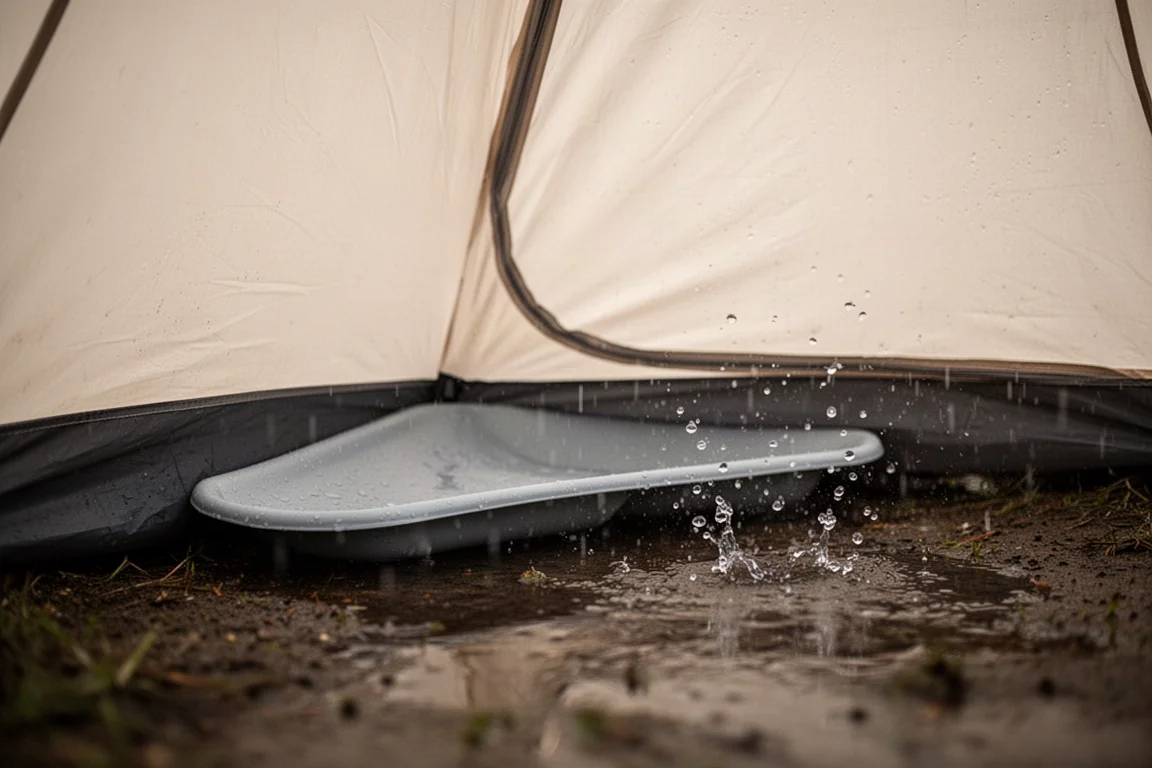
The gaps at the lengths are much smaller, and no backsplash occurred there.
Seam Sealing and Waterproofing Prep
Seam sealing the tent and doing full waterproofing prep will improve the seams that were left untaped. It will not solve the backsplash problem, because the low bathtub floor and the short rainfly drop at the widths are structural, not something a surface treatment can change.
購買建議
The Zion makes sense for fair-weather campers and for trips where wind, rather than rainfall volume, is the main threat. Its dome shape, wind behaviour, and leak-free side vents are real advantages, and the taped floor seams held up even against standing water.
It is a harder recommendation for anyone who expects heavy rain. Water in the middle of the floor, untaped seams across the body and doors, a low bathtub floor, and wide rainfly gaps at the sides all point in the same direction. Even with seam sealing and waterproofing work, backsplash through those gaps remains likely.
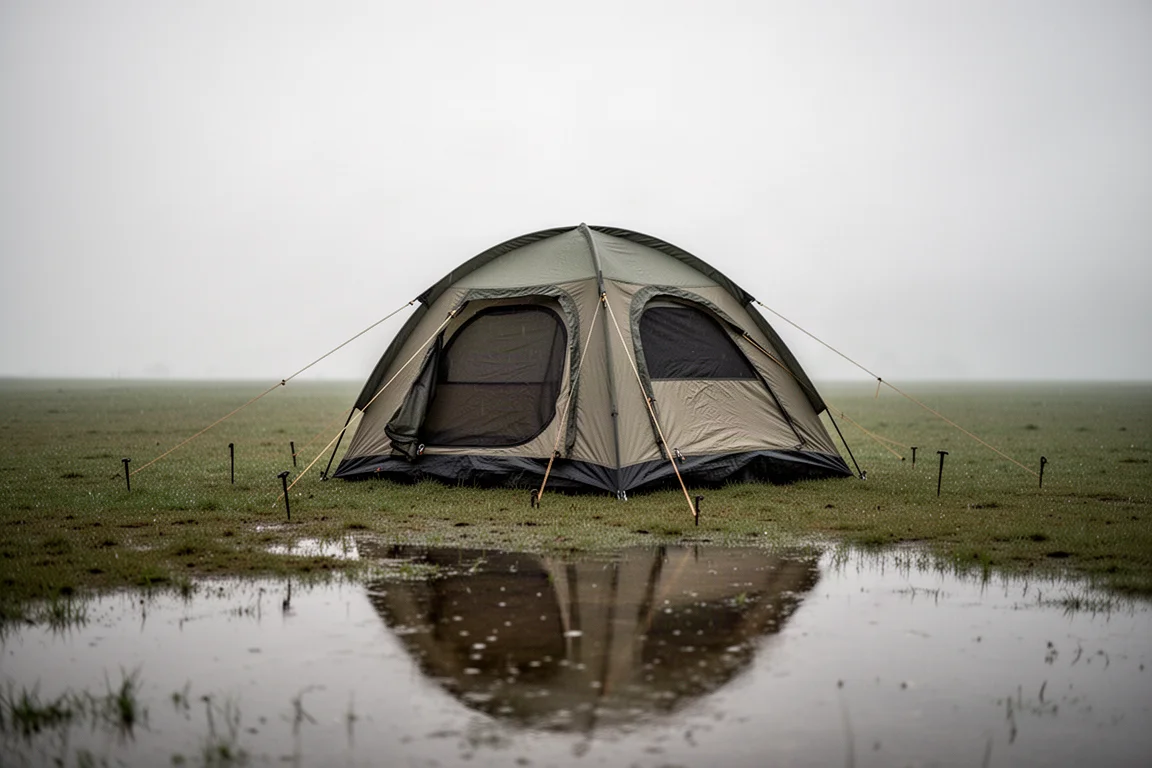
If your trips are mostly dry, or if you pitch in sheltered spots, the Zion’s stability and ventilation are worth the trade-off. If you camp in exposed terrain through sustained downpours, look for a tent with a taller bathtub floor and better rainfly coverage at the widths.
結論
The Hyke and Byke Zion is a stable, well-ventilated two-person dome tent with a fully taped rainfly and a thoroughly taped floor. Its weaknesses show up specifically in heavy rain: untaped body and door seams, a low bathtub floor, and rainfly gaps that allow backsplash. Match it to the conditions you actually camp in, and it is a sensible choice. Expect heavy rain as a regular feature of your trips, and those limitations will matter.
產品連結
查看 Hyke and Byke Zion 2-Person Tent 的更多詳細資訊
此產品已在評測中提及。購買前請確認規格、選項與相容性。
查看 Hyke and Byke Zion 2-Person Tent 的更多詳細資訊延伸閱讀
相關評測
Camping Tents
Fire Maple Tropics 2 評測:一款不到 300 美元的寬敞雙人帳
一款完全自立、雙層壁的雙人登山帳,內部空間寬裕、性價比出色,但選購前得先衡量重量與外帳的取捨。
Camping Tents
Fjallraven Abisko Lightweight 1 評測:一款值得費心尋找的已停產歐規帳篷
實際上手檢視已停產的 Fjallraven Abisko Lightweight 1,從會吸水膨脹的縫線結構,到二手買家在付錢前該檢查哪些地方。
Camping Tents
Fjällräven Abisko View 2 評測:以通風為核心打造的高階雙人帳
深入檢視 Fjällräven Abisko View 2,這是一款先搭外帳的雙人夏季帳篷,擁有出色的通風、可靠防水、具彈性的 silnylon 布料,以及所費不貲的價格。