Svenska · Camping Tents
Naturehike Village 6.0 Version 2 4-Person Blackout Tent Review: A Huge Three-Plus Season Shelter
A close look at the Naturehike Village 6.0 Version 2 blackout tent, covering instant aluminum frame setup, full-coverage rainfly protection, ventilation, and the practical trade-offs worth knowing before you buy.
Introduction
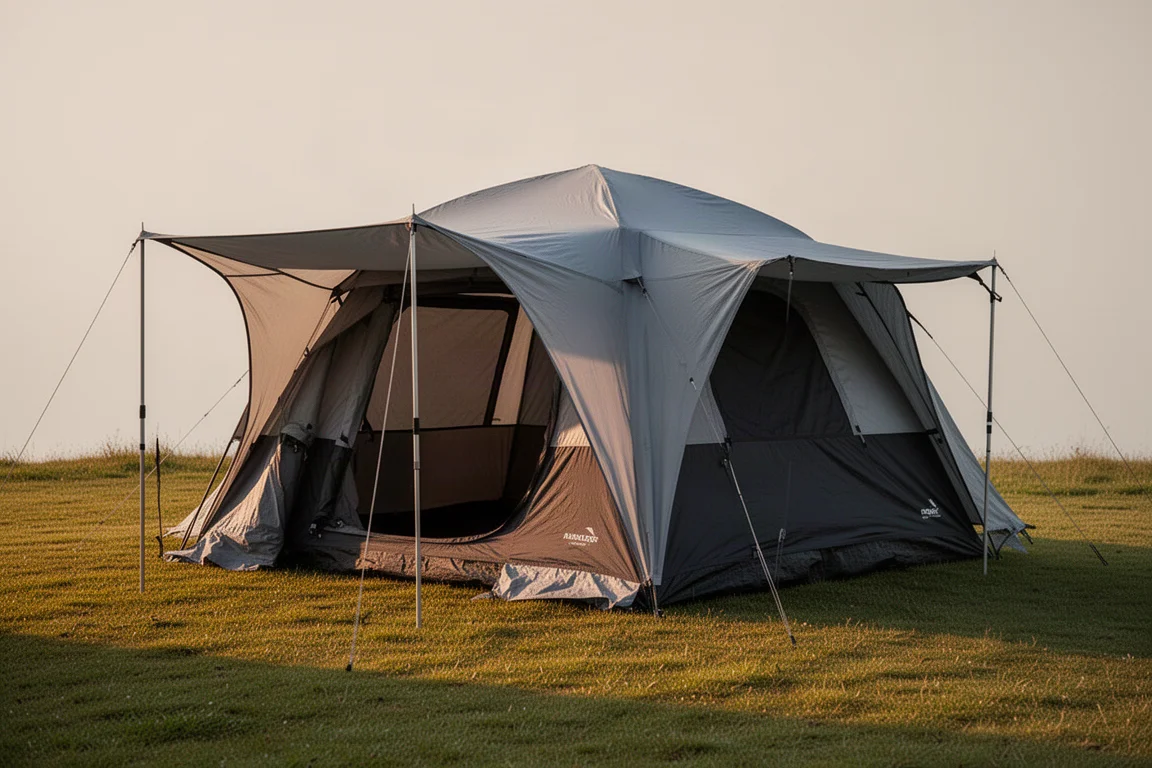
The Naturehike Village 6.0 Version 2 is a four-person tent built around an instant setup frame, a double awning across the front, and blackout fabric that blocks almost all light from entering the sleeping area. It is a genuinely large shelter with a feature list that is unusual at its price, and the details matter far more than the headline numbers.
Naturehike sells this model under several names depending on the region. On Amazon it is listed simply as the Village, while the tent body itself carries the Camp Quick Open Tent label. The technical name is Village 6.0 Version 2, and this article covers the four-person blackout version.
Who This Tent Is For
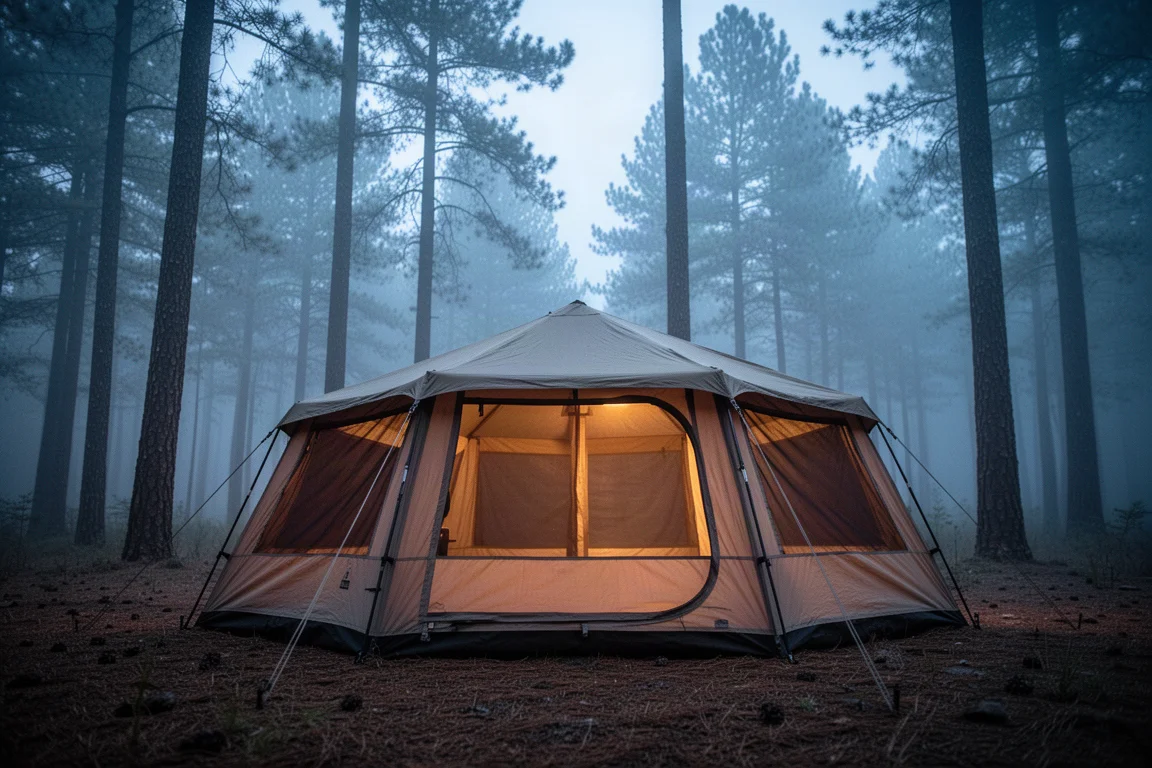
This is a tent for campers who want space, quick pitching, and strong airflow rather than a low pack weight. The interior measures 100 inches long, 87 inches wide, and 6 feet 1 inch at peak height, so four people can sleep inside, though four adults will be close and shoulder to shoulder. For two people it feels like a palace, and three is comfortable.
It also suits campers who move between warm and cool conditions. The generous mesh panels make it pleasant in summer heat, while the closable window panels and a sealed door help hold warmth when temperatures drop.
Anyone who needs a shelter for heavy snow loading or very strong winds should look at a different design, because there is simply too much mesh here for extreme conditions.
Main Strengths
Few large tents combine an instant frame, full rain protection, and ventilation that genuinely works in hot weather. This one does all three.
Instant Setup and an Aluminum Frame
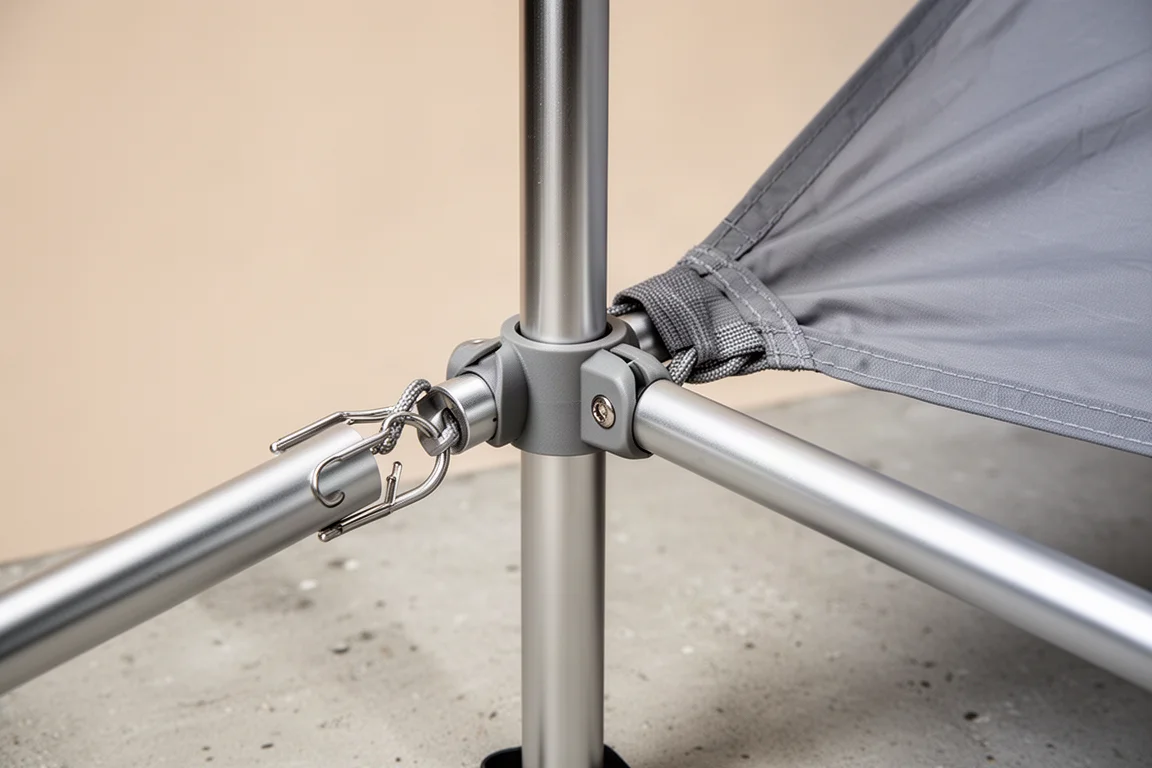
The frame is permanently attached to the inner tent, so raising the frame raises the inner with it. Setup then means throwing the fly over the body, staking the corners, and tensioning the guy lines. The frame is aluminum, where most large instant tents use plastic.
One useful trick while pitching: extending and locking a pole can be awkward with the inner attached. Detaching the inner from that specific pole, extending it, and reconnecting it makes the frame noticeably easier to raise.
Taking the tent down is straightforward but takes time because of its size. Even so, it stays faster and less fiddly than a tent that has to be threaded pole by pole.
Ventilation, Blackout Fabric, and the Full Rainfly
Airflow is the strongest part of the design. There is one large door, four windows, and two big mesh panels at the top of the tent. Each window has an exterior cover that rolls back and an interior fabric panel that can be stuffed into its own pocket, so the panels never hang into the sleeping area. The door also has a mesh panel that can be zipped closed to limit airflow.
The blackout fabric uses a silver lining that blocks roughly 99.9 percent of light, which helps when you want to sleep in or keep the interior darker in bright conditions. The rainfly is removable and covers the entire tent from the top down to the bottom, rather than the partial top fly common on shelters of this size. The fly is a 150D polyester with a 3,000 mm hydrostatic head rating, built from multiple layers of material welded together.
Other details include a bathtub floor that rises about 7 inches, taped seams, a snow skirt around the full perimeter, guy lines at every corner, two mesh pockets, and two hooks at the top for a light or a small fan.
Things to Consider Before Buying
Awning Poles and Weather Limits
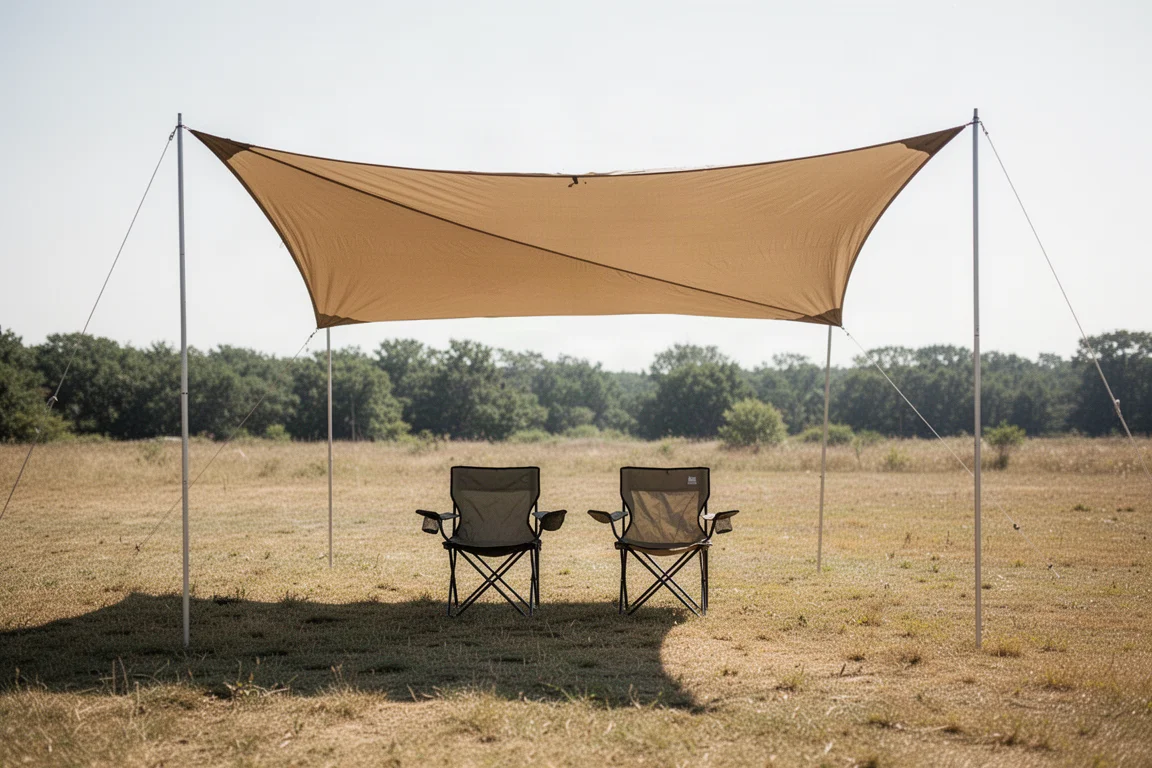
The double awning is enormous and provides serious sun protection, which makes it a genuinely useful living space in good weather. It is intended for dry conditions only. If rain starts, water will run down and find its way inside, so the awning has to be folded back and the front sealed. Fully deploying the awning requires four poles, and only two are included, so the larger pair has to be sourced separately.
The manufacturer describes this as a four-season tent. In practice, the amount of mesh means it is better understood as a three-plus season shelter. It handles warm weather, cool weather, and even cold nights well, but it is not built for heavy snow loading or very strong winds. During testing at roughly 20 degrees Fahrenheit, with the tent fully secured and the windows closed, condensation inside was minimal, and a small portable heater kept the interior comfortably warm. Expect some heat loss through the top mesh panels, which can be reduced by covering them with a fabric panel or a tarp.
Storage Bag and Weight
This is a heavy tent at 35 pounds, with a packed size of 38.5 by 9.8 by 9.8 inches. The storage bag is the one clear frustration. The tent and fly fit inside it, but rolling everything tightly enough to close the zipper is extremely difficult once the fly has been used, and in practice the bag usually cannot be zipped shut. The compression straps can still be fastened, so the tent stays contained, but an oversized bag would have solved the problem.
Waterproofing has not yet been confirmed in sustained rain, so that remains the main open question for anyone planning wet-weather trips.
Buying Advice
At $299, with a 10 percent discount appearing on Amazon at times, the blackout four-person version offers a great deal of tent for the money. The non-blackout four-person version is $260 and comes with a smaller awning, while the four-person version with a screened room is $400. Eight-person versions are also available in blackout, non-blackout, and screened-room configurations.
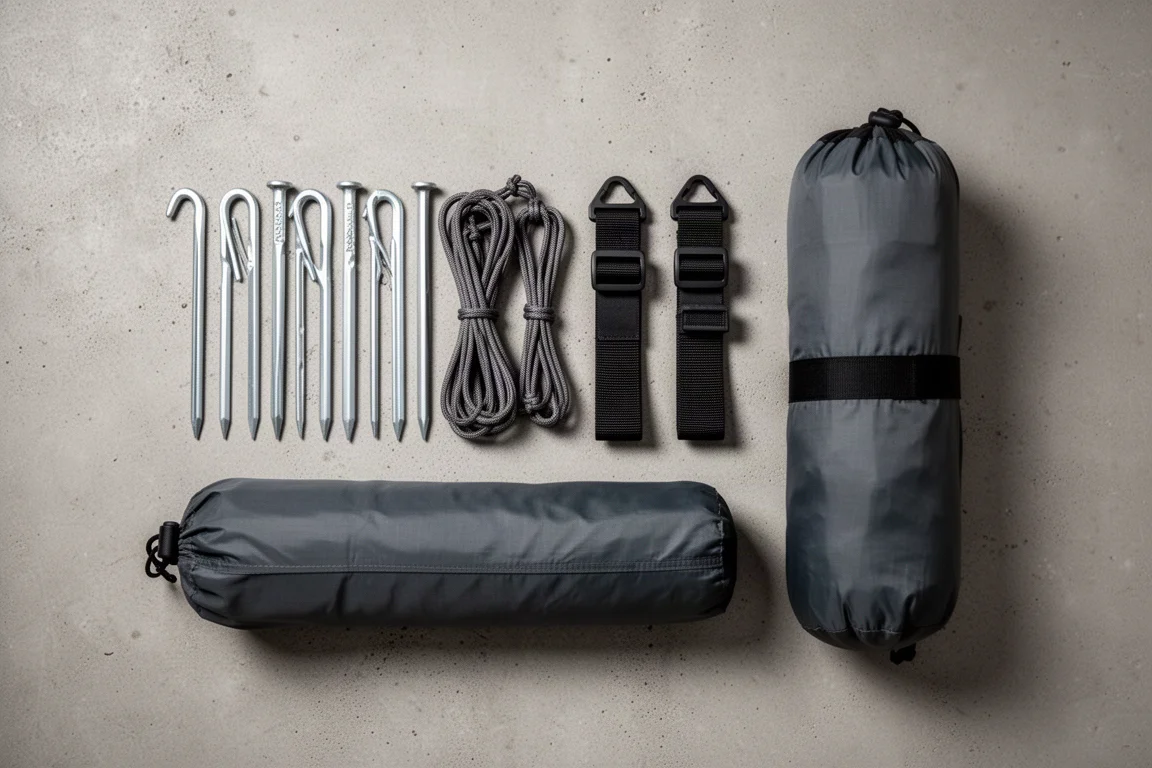
If darker sleeping conditions and the full-coverage fly matter to you, the blackout model is the one worth choosing. Cheaper large tents exist, but they generally give up material quality, seam construction, and airflow. If you need a lightweight backpacking shelter or a true four-season tent for snow, this is not the right product.
Conclusion
The Naturehike Village 6.0 Version 2 delivers an instant aluminum frame, an unusually protective full-length rainfly, and ventilation that makes it usable in real summer heat, all in a tent that sleeps four and costs around $300. Its limits are clear: too much mesh for extreme winter use, an awning that needs extra poles and dry weather, and a storage bag that is too tight to zip. For campers who want a large, comfortable, three-plus season base with quick pitching, it is a compelling option.
Produktlänk
Visa mer information om Naturehike Village 6.0 Version 2 4-Person Blackout Tent
Denna produkt nämns i den här recensionen. Bekräfta specifikationer, alternativ och kompatibilitet innan du köper.
Visa mer information om Naturehike Village 6.0 Version 2 4-Person Blackout TentVidare läsning
Relaterade recensioner
Camping Tents
Hyke and Byke Zion 2-personstält recension: Regnprestanda och köpråd
Ett kupolformat tvåpersonstält med stark vindstabilitet och tejpade bottensömmar, men som hämmas i kraftigt regn av otejpade kroppssömmar och en låg badkarsbotten.
Camping Tents
IDO GIN Instant Popup Tent Recension: Enormt utrymme, omedelbar resning, verkliga avväganden
Ett genuint stort hopfällbart tält med omedelbar resning, tvåstegsmarkis och en ärlig titt på den realistiska tvåpersonerskapaciteten, sömskvaliteten och medföljande hårdvara.
Camping Tents
Ido Jin Instant Popup Tent Recension: Snabbt skydd med en smart markis
Ett budgetpopuptält med inbyggd markis, stark meshventilation och ärliga gränser för kapacitet och väderskydd.