Svenska · Power Tools
Bästa sä Pavelagern...
Five cordless reciprocating saws face off in real cutting tests on concrete blocks, nail-embedded timber and steel, with speed, comfort and blade-change results ranked.
Introduction
Reciprocating saws all look similar on the shelf, but put five of them head to head on the same materials with fresh blades and the differences get obvious fast. This comparison brings together five cordless models from four major brands, testing them on lightweight concrete, nail-embedded framing timber and steel box section, then ranking them on cut speed, vibration comfort and blade change.
The line-up covers the Milwaukee M18 FSX Fuel Super Sawzall, the HiKOKI CR36D, the Makita 36V (18Vx2) reciprocating saw, the DeWalt DCS388, and the newer DeWalt DCS386 FlexVolt Advantage, which stepped in after the DCS388 met an untimely end falling off a roof. If you are starting from scratch or upgrading a tired old saw, this should tell you which one earns your money.
What Was Tested and How
Every tool ran with an identical, brand-new blade for each test, and batteries were fully recharged between runs. Each tool was paired with the best battery its brand offers, so the Milwaukee ran an 18V 12.0Ah High Output pack, the Makita ran two 5.0Ah packs for 36V, the HiKOKI used its largest available 4.0Ah pack, and the DeWalt models ran the larger FlexVolt battery for maximum performance.
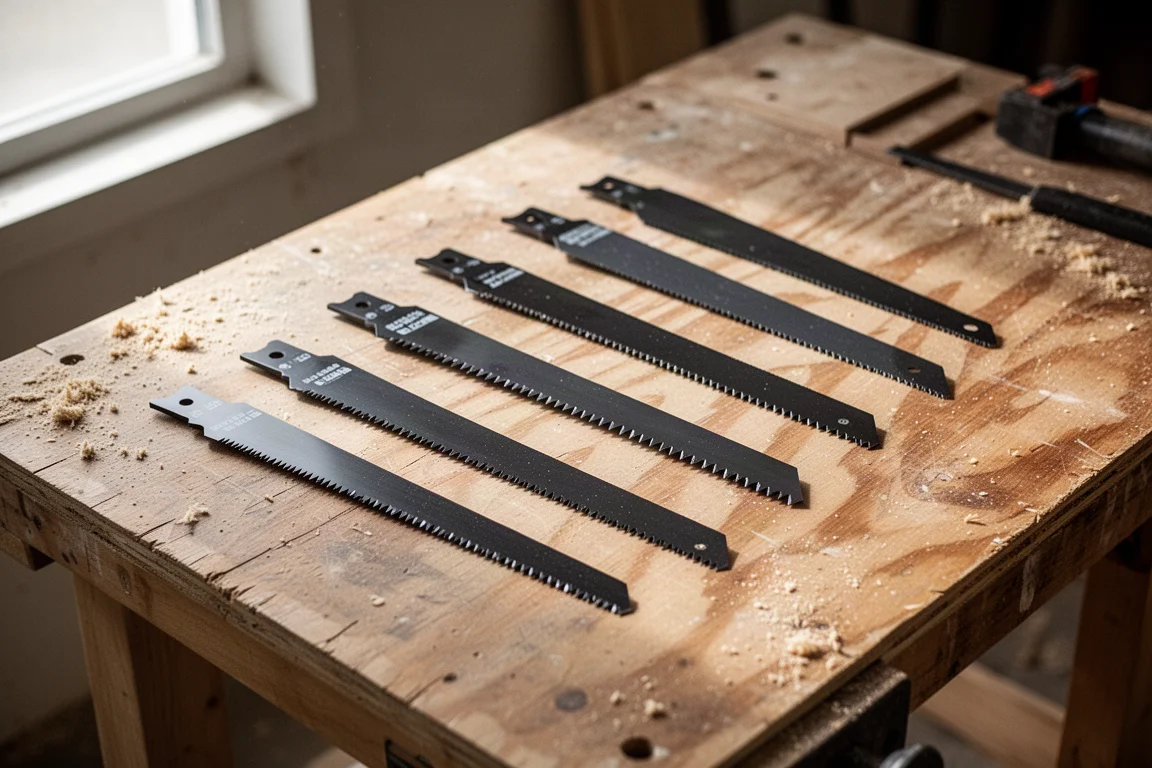
All tools ran at their maximum 3,000 strokes per minute setting with oscillation off, since that was the only speed setting guaranteed to be identical across the line-up. Weight and stroke length were also measured, because both matter more than most spec sheets suggest.
Spec Check: Weight, Stroke and Features
Weighing in at roughly 4kg with its battery, the DeWalt DCS386 FlexVolt Advantage is the heaviest here, just ahead of the HiKOKI CR36D at about 3.9kg and the Milwaukee M18 FSX Fuel at about 3.5kg. The Makita 36V is the surprise lightweight at around 3.35kg.
Stroke length is where the DeWalt models lose ground on paper: the DCS386 and DCS388 manage only 28.6mm of stroke, while the Milwaukee, HiKOKI and Makita all deliver 32mm. That is more than 10 percent less travel per stroke, and it shows in the results.
Feature-wise, the Milwaukee, HiKOKI and Makita all offer tool-free adjustable shoes, multiple speed settings and rafter hooks. The HiKOKI and Makita add an oscillating mode that swings the blade to cut faster through wood. The DeWalt models miss out on the rafter hook, the speed settings and the adjustable shoe entirely, which is a meaningful list of omissions at this level.
Cutting Performance: The Speed Tests
On lightweight concrete heel blocks with a masonry blade, the field finished remarkably close. These blades are designed for bricks, pavers and light concrete, not structural concrete, so keep that in mind if you pick one up.
On nail-embedded framing timber, gaps started to open. On 2mm steel box section with a heavy-duty 228mm metal blade, one tool pulled clearly ahead: the HiKOKI CR36D was visibly quicker on steel, smashing through faster than everything else in the test.
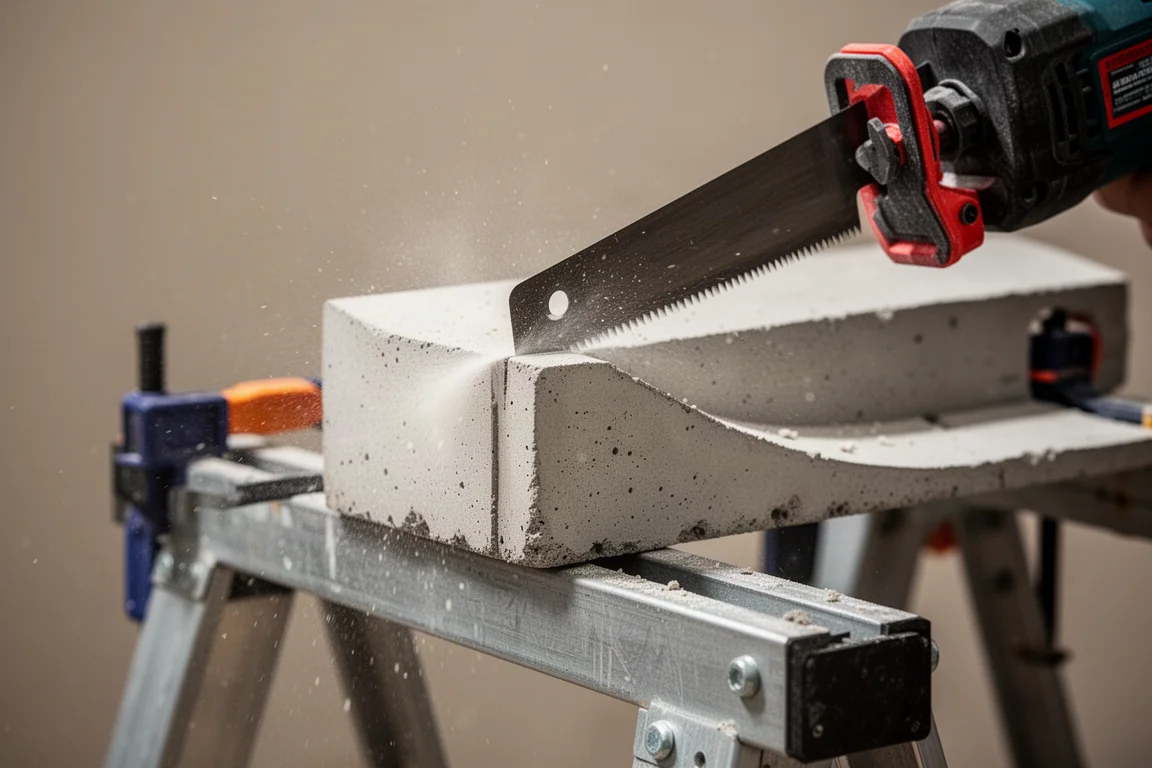
Final speed ranking, best to worst: HiKOKI first, Milwaukee second, Makita third, DeWalt FlexVolt Advantage last. The DeWalt’s shorter stroke explains its position; a 15 percent shorter cut per stroke is hard for the motor to make up. It is no surprise it trailed the three 32mm-stroke saws.
Vibration and Comfort
Comfort is harder to score without weeks of use, but patterns emerged. The HiKOKI was the surprise performer on vibration control, staying smooth across materials, which combined with its speed makes it the strongest all-rounder. The DeWalt DCS386 was also comfortably damped for the work it does.
The Makita, however, is a different story in oscillating mode. Cutting 100x100 H4 posts with oscillation engaged, it shakes aggressively; during one test run both clamps vibrated loose and the workpiece walked away across the sawhorse. If you plan to live in oscillating mode, factor that in.
Handle shape matters too. The Makita’s curved, open-topped handle suits some grips, but the more conventional closed handles on the other three proved more comfortable for standard cuts.
Blade Change: The Decisive Detail
The Makita is the clear winner here. Push the blade in and it locks automatically, ready to go; release the lever and the blade pops out. The mechanism sits at the front of the stroke so it is always reachable, and the rubberized lever feels comfortable, though it does show wear over time.
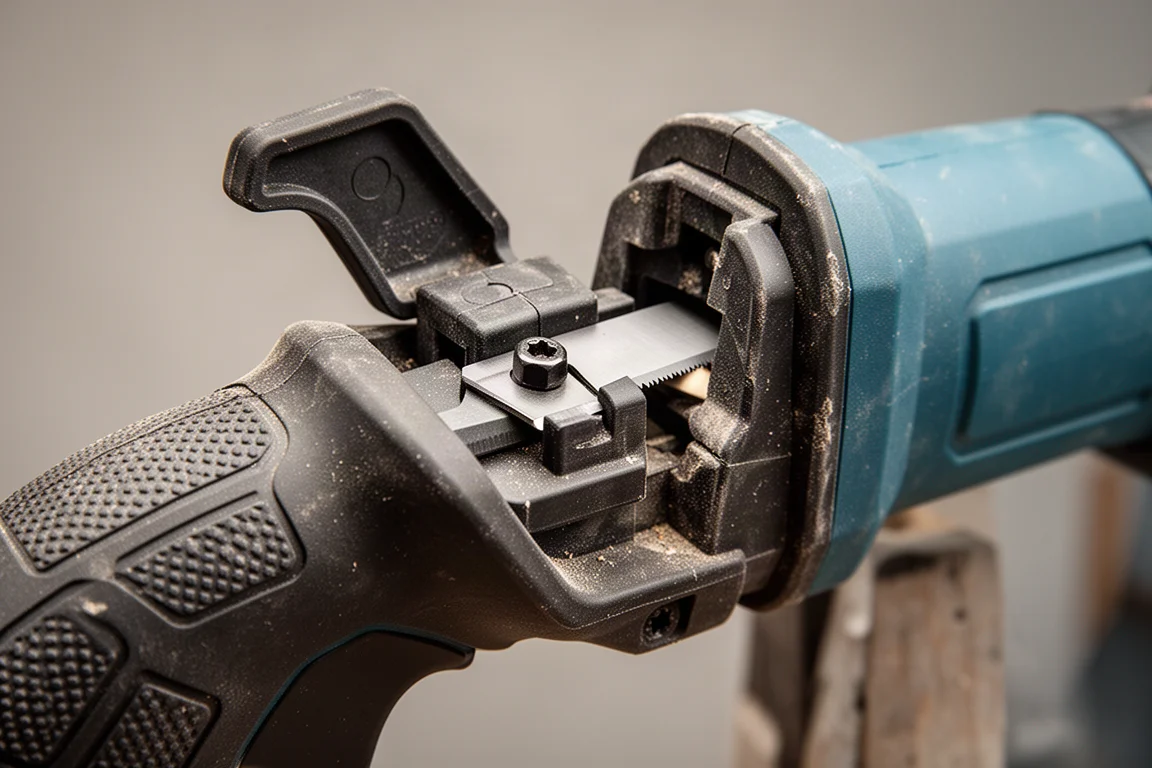
The DeWalt’s side lever is the next best: simple, smooth and easy one-handed operation, even if the fixed shoe means four screws to remove it entirely. The Milwaukee and HiKOKI twist collars are the letdowns for both brands. The Milwaukee’s hard plastic dial has sharp edges and is uncomfortable on the fingers, and the HiKOKI’s collar stops in awkward positions, sometimes requiring you to pull the trigger just to get the blade seated or released. It is the only real complaint about an otherwise excellent tool.
Buying Advice: Which One Should You Pick
If you are starting from zero, the HiKOKI CR36D is the hands-down pick. It wins on speed across steel and timber, controls vibration better than the rest, and its only notable weakness is the fiddly blade collar. A HiKOKI rep has even claimed it out-cuts the brand’s famously powerful corded flagship, which is a serious statement.

If you want the fastest all-round option in a lighter frame, the Makita 36V is a strong choice with the best blade change in the group, provided you can live with the shake in oscillating mode. The Milwaukee M18 FSX Fuel remains an excellent tool if you are already invested in the M18 platform, with strong second-place speed. The DeWalt DCS386 FlexVolt Advantage is comfortable and capable but lags on speed and lacks the feature set of its rivals; it makes most sense if DeWalt batteries are already on your shelf.
Conclusion
Speed crowns the HiKOKI CR36D, comfort confirms it, and only a frustrating blade change stops it from being flawless. The Makita redeems itself with the best blade-change system, the Milwaukee stays competitive everywhere, and the DeWalt models trail on both stroke length and features. Match the choice to the batteries you already own, but if speed is the priority, the decision is simple.
Produktlänk
Visa mer information om Milwaukee M18 FSX Fuel Super Sawzall
Denna produkt nämns i den här recensionen. Bekräfta specifikationer, alternativ och kompatibilitet innan du köper.
Visa mer information om Milwaukee M18 FSX Fuel Super SawzallVidare läsning
Relaterade recensioner
Power Tools
Bästa 1-tums pistolslagnycklar: Tre tunga alternativ jämförda
Vi jämför tre 1-tums pistolslagnycklar, från en prisvärd Harbor Freight-modell till en premium Caterpillar-enhet, för att hjälpa dig välja rätt.
Power Tools
Bästa 3/4-tums mutterdragare 2026: Fem kandidater jämförda
Vi jämför fem 3/4-tums mutterdragare avseende pris och prestanda, från ett budgetalternativ på Amazon till Snap-ons mest kraftfulla modell hittills.
Power Tools
Bästa prisvärda sladdlösa verktyg 2026: Walmart-fynd som slår över sin viktklass
Vi testade fem sladdlösa verktyg från Walmart, inklusive en högtorque momentnyckel som mäter sig med Milwaukee och en dammblåsare för 35 dollar som presterar över sin prisklass.