Svenska · Running Shoes
Adidas Hyperboost Edge vs Adidas Evo SL: Vilken daglig träningssko passar ditt löpande?
Two versatile Adidas daily trainers with very different personalities. We compare ride feel, fit, price, and where each shoe earns its place in a rotation.
Introduktion
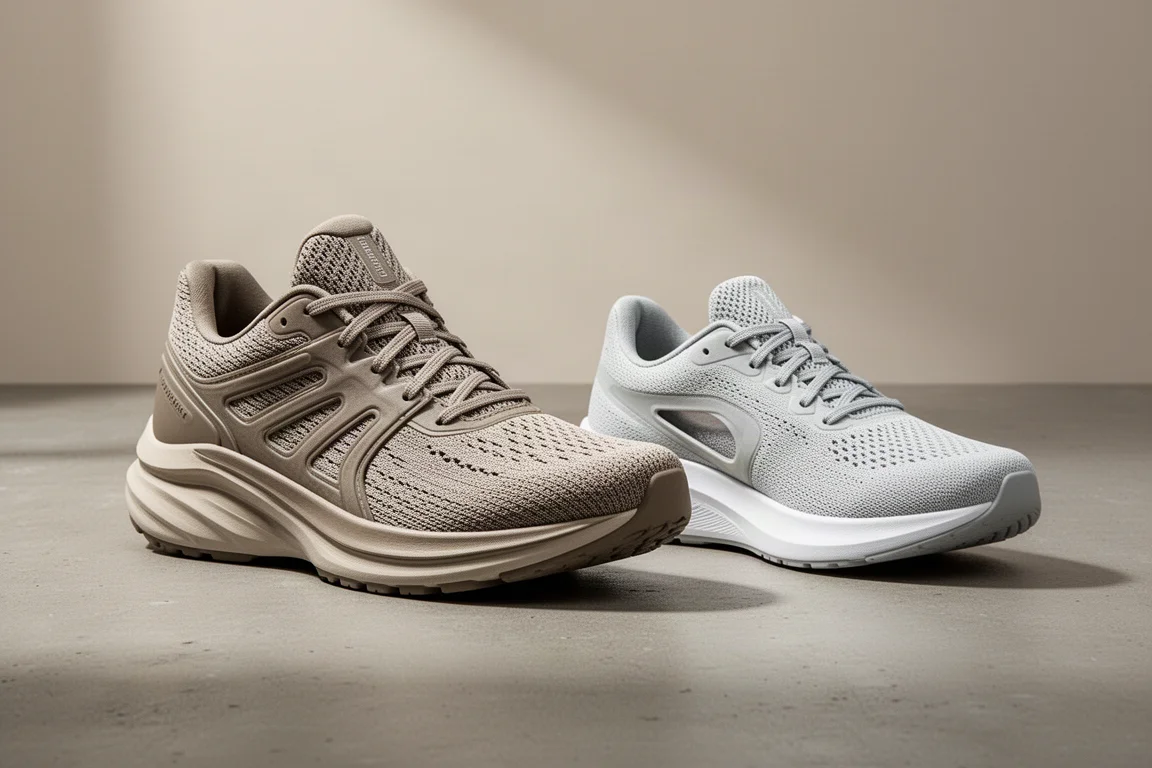
The Adidas Hyperboost Edge and Adidas Evo SL are both impressive, versatile daily trainers that take very different approaches to their design. One is a far larger shoe and the more expensive of the pair, while the other is lighter, leaner, and noticeably cheaper. Both have their merits, so it is worth breaking down what each does better and which one might suit your running in particular.
Design och specifikationer
The Evo SL is the lighter shoe at 224 g (7.9 oz) in a UK 9, which is a US 9.5 in Adidas sizing. The Hyperboost Edge weighs 255 g (9 oz) in the same size. Both have a 6 mm drop, but the stacks differ: the Evo SL sits at 39 mm heel and 33 mm forefoot, while the Hyperboost Edge is 45 mm at the heel and 39 mm at the forefoot. Even at the forefoot, the Hyperboost Edge matches the Evo SL’s heel height.
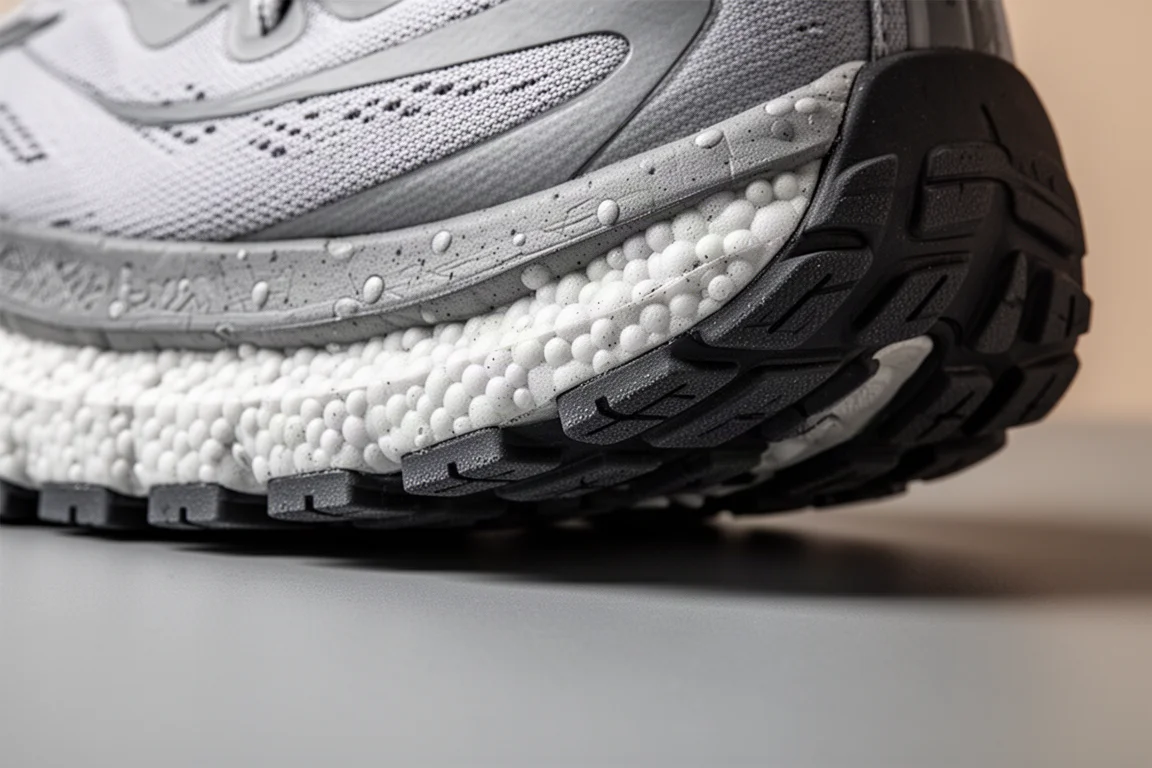
Underneath, the Hyperboost Edge uses a Hyperboost Pro midsole foam, a pelletized form of Lightstrike Pro that is very bouncy and responsive, paired with a full Light Traction outsole covering the entire length of the shoe. Its upper is a Primeknit-style weave with reinforced sections at the front and sides, plus a very rigid collar with two cushioning pads inside.
The Evo SL uses standard Lightstrike Pro in the midsole, a nylon shank in the midfoot, and no full plate in either shoe. Its outsole uses Continental rubber in the forefoot with two strips of Light Traction rubber at the rear, along with a medial side cutout. The upper is a lightweight mesh with light padding at the heel, and there are newer versions, the Evo SL Woven and Exo, if the standard fit does not work for you.
Passform och komfort
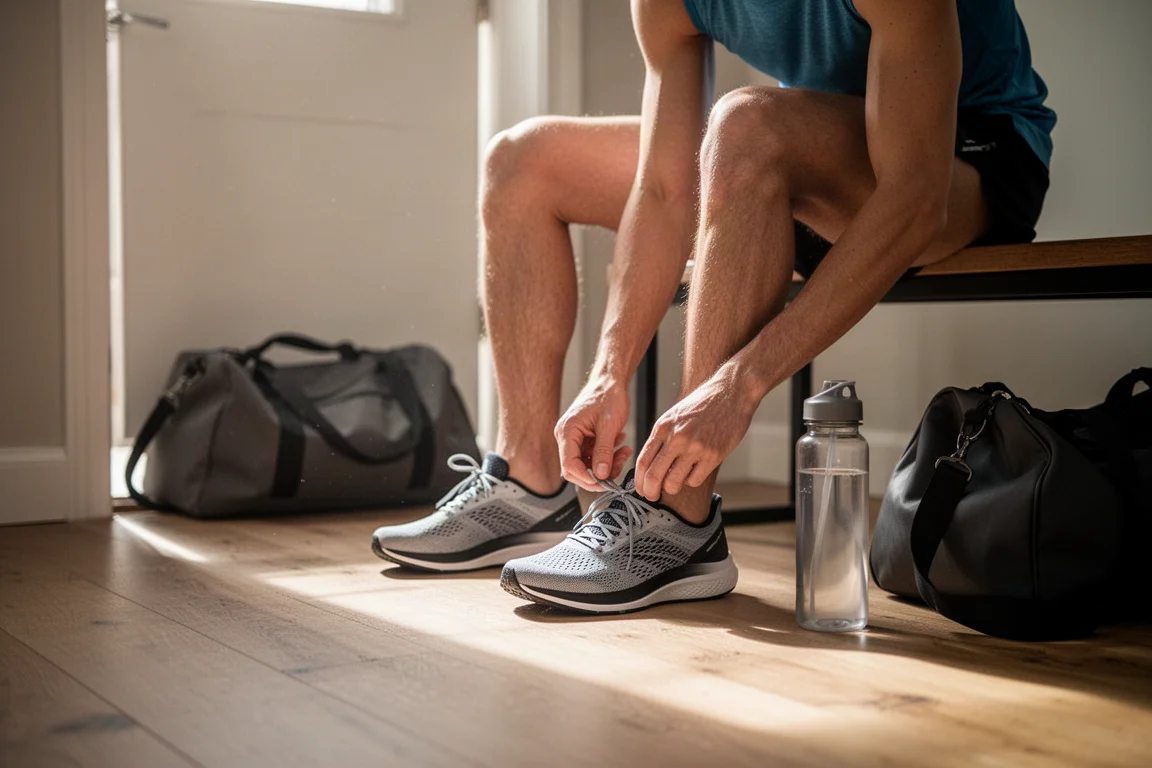
In a UK 9 for both shoes, no half-size-up was needed with either model. The Evo SL runs slightly tighter around the toes, but both worked at normal running shoe size. Some people have reported issues with the Evo SL’s tongue, though fit overall was very comfortable in testing.
The Hyperboost Edge has a weaker upper. The rigid collar in particular can dig in when your foot moves slightly on a cambered surface. It is not the most comfortable upper, and the Evo SL offers the more comfortable fit all round.
Löpkänsla och prestanda
Both shoes deliver excellent underfoot feel with plenty of bounce, but the personalities differ. The Evo SL is lighter, leaner, lower-stack, and feels a touch softer at the heel. Its sharp forefoot rocker rolls you quickly onto your forefoot and turns over fast, feeling more connected to the ground and nippier than the Hyperboost Edge, which carries a lot more foam underfoot.

That makes the Evo SL the preferred pick for track reps and short intervals, and it also shines for cruisey tempo runs. It can work as a fast racing shoe if you are not using a carbon plate racer. It feels soft and easy enough for slow runs too, though it is not the most stable shoe. The medial side cutout means you will roll inwards a little, so it may not suit everyone as an easy-day shoe.
The Hyperboost Edge is superb for easy and steady runs. The pelletized foam gives a booming level of bounce even at relaxed paces, and it becomes more responsive under the forefoot as you speed up. For a big shoe, it is not that heavy and turns over well at pace. It handles tempo runs, long runs, and faster speeds comfortably while offering more cushioning and stability. It could even serve as a solid marathon option for someone not racing in a carbon shoe, though the Evo SL is the faster shoe of the two for harder workouts.
Vilken sko ska du köpa?
Pricing is a real factor here. The Hyperboost Edge costs £170 or $200, while the Evo SL is £130 or $150, a substantial saving. The Evo SL is the better speed workout shoe and slots into a rotation nicely if you already own a cushioned shoe for easy runs. It is also a tremendous all-rounder if you prefer a lighter, more connected shoe and are less concerned about stability.

For most runners looking for one shoe to do everything, the Hyperboost Edge is the smarter pick. You get a lot of cushioning and support, it still turns over well at faster paces, and its durable pelletized foam plus full outsole should help it last. The trade-off is the stiff, less comfortable upper and the higher price.
If you are a fan of Adidas and want an all-Adidas rotation, the Hyperboost Edge can carry the bulk of daily training while the Evo SL handles faster sessions. That works well, though it is an expensive way to go about it.
Slutsats
Both are genuinely good shoes, and it largely comes down to horses for courses. The Evo SL is the faster shoe and the preferred pick as a lighter all-rounder, and its lower price helps its case. The Hyperboost Edge is more stable, more supportive, and probably the better all-rounder for most people, provided you can live with its upper. Match the shoe to your running style and your rotation, and neither is likely to disappoint.
Produktlänk
Visa mer information om Adidas Hyperboost Edge
Denna produkt nämns i den här recensionen. Bekräfta specifikationer, alternativ och kompatibilitet innan du köper.
Visa mer information om Adidas Hyperboost EdgeVidare läsning
Relaterade recensioner
Running Shoes
10 förbisedda skor för maratonträning som förtjänar en ny chans
Bortom hypen: tio solida till briljanta löparskor som hamnar i skuggan, från dämpade stabilitetsskor till reabaserade superträningsskor.
Running Shoes
10 löparskor värda att hålla ögonen på: Tio uppdateringar och höjdpunkter som vi har testat
Från platerade tävlingskor till mjuka träningskor och terrängcruisare – här är vad vi tycker om tio löparskor som för närvarande är under test.
Running Shoes
10 löparskor du behöver känna till just nu
Elva utstickande val som täcker tävlings- och temposkor, dagliga tränare och ett vilt gravelalternativ, utvalda efter hur väl de möter verkliga löparbehov.