Português · Camping Tents
Lone Rider Moto Tent Review: A Two-Person Tunnel Tent With Room for a Motorcycle
A practical look at the Lone Rider Moto Tent, a 12-pound tunnel tent with a motorcycle storage bay, twin awnings, and a three-plus season hybrid build.
Introduction
The Lone Rider Moto Tent answers a question that comes up often among riders and car campers: what if the tent were large enough to bring the motorcycle in with you? Lone Rider’s answer is a tunnel-style tent with a sleeping area for two and a separate storage bay wide enough to park an adventure bike inside it.
This is a first look based on early field use, covering what arrives in the box, how the tent goes up, how it behaves in sustained rain, and where the design asks for compromise.
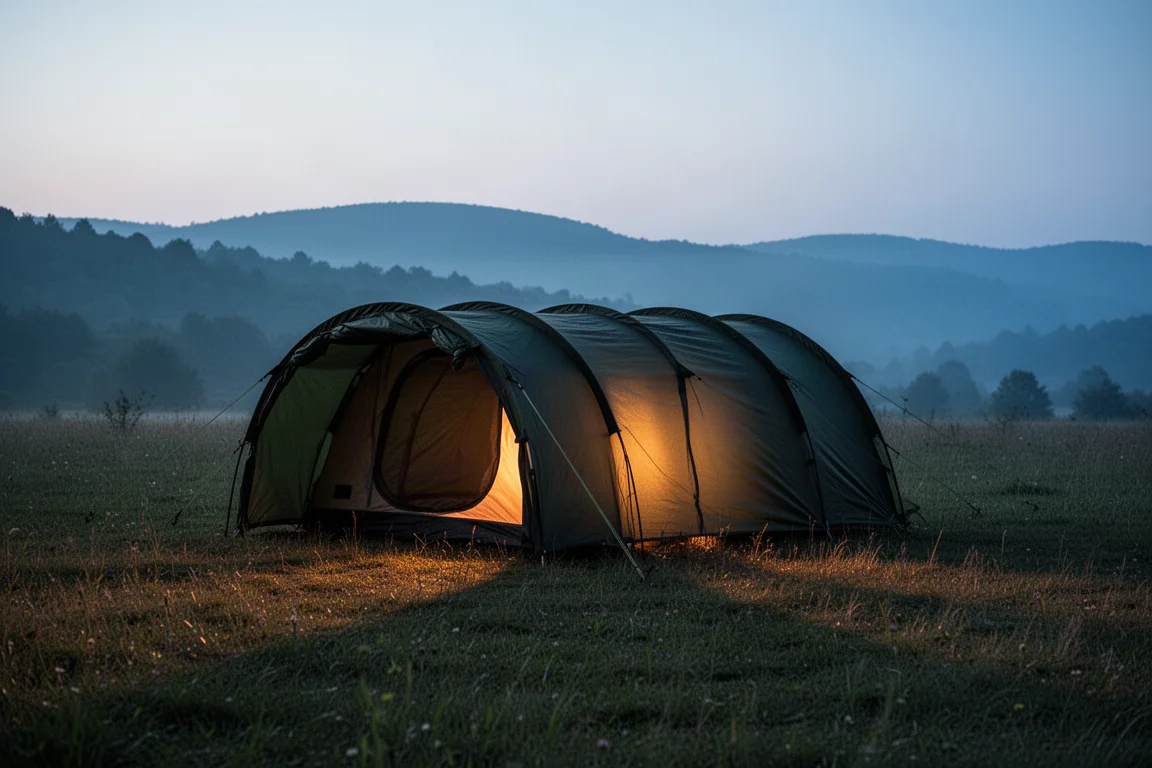
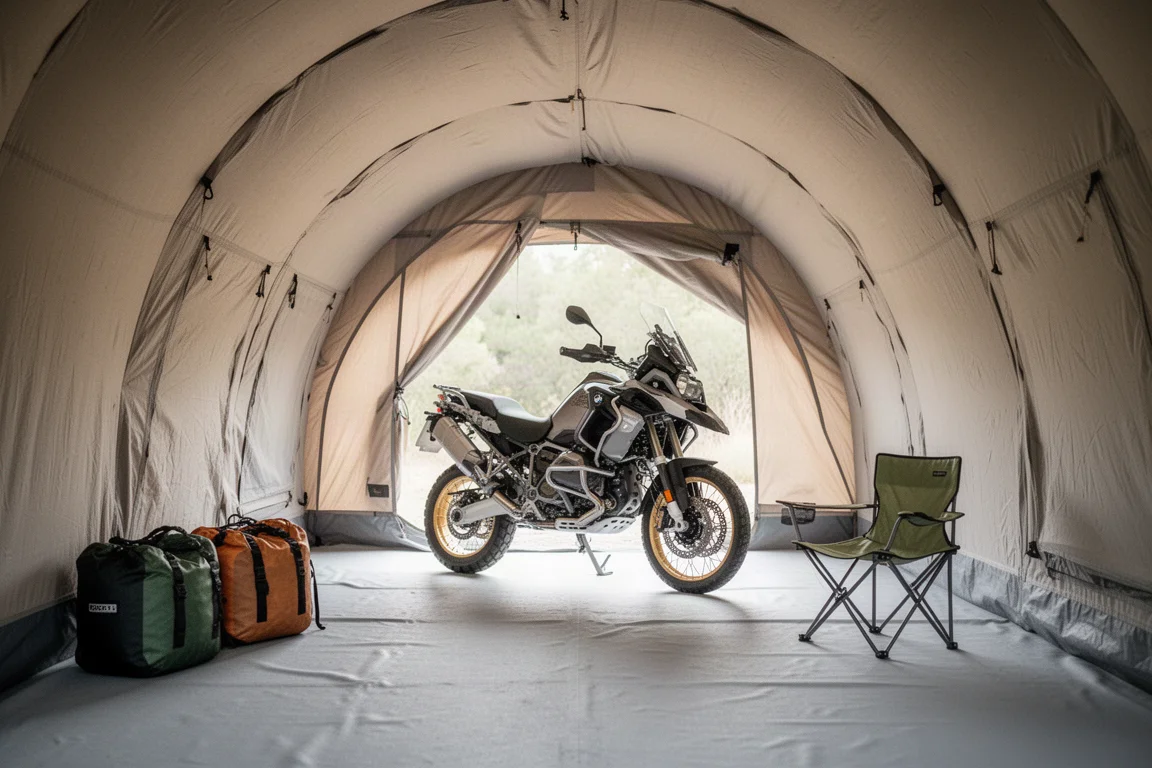
What separates a moto tent from a conventional camping tent is layout rather than materials. The sleeping area and the vehicle bay share a single structure, so gear, tables, chairs, and the motorcycle all sit under the same fly. The result behaves more like a small basecamp than a backpacking shelter, and that framing explains most of the tent’s strengths and most of its weight.
Who this product is for
Two distinct groups tend to look at this tent, and both have sensible reasons.
Motorcycle riders, particularly those on adventure bikes, get a covered bay for the bike and a covered place to sleep without needing a separate tarp or awning setup. Overland travellers who camp from a vehicle get the same benefit with more room to spare, including space for a table and chairs under the extended door panels.
Car campers and truck campers who simply want a very large tent will also find the layout useful, since the storage bay doubles as a covered porch or gear room.
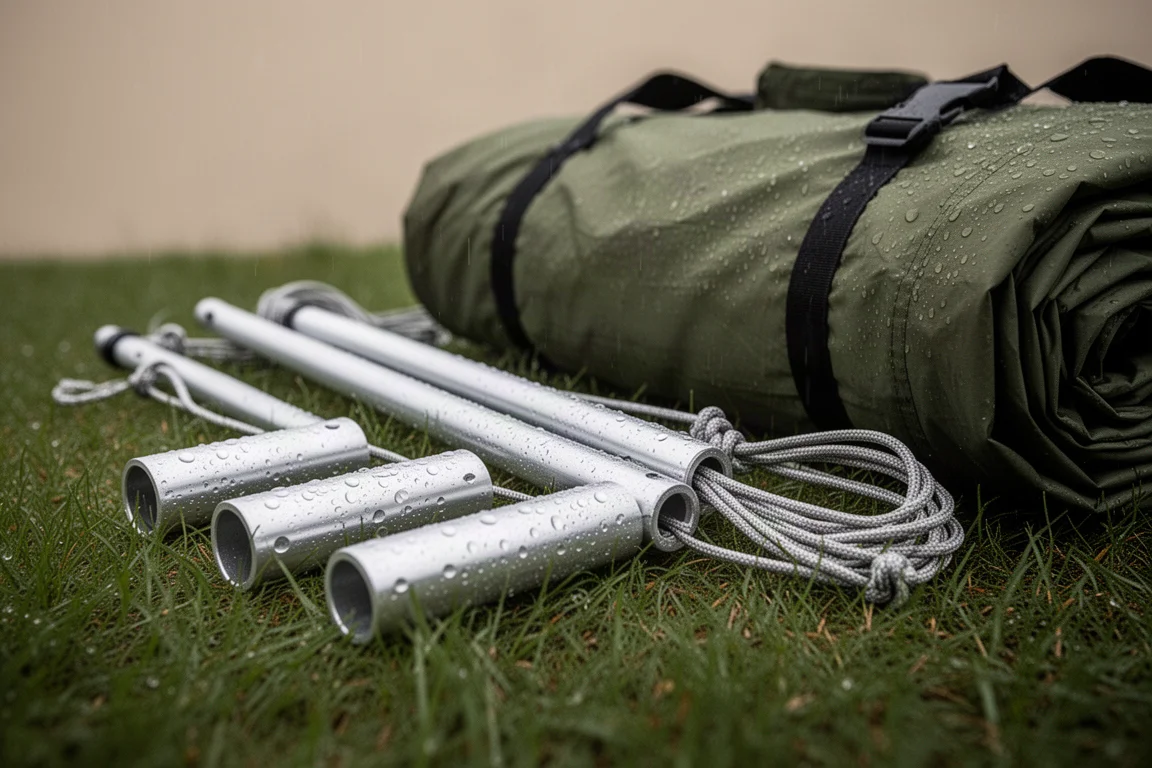
It is not a backpacking tent. At 12 pounds with a pack size of roughly 27 inches by 10 inches, it is meant to travel by vehicle, and anyone planning to carry it on their back should look elsewhere.
Main strengths
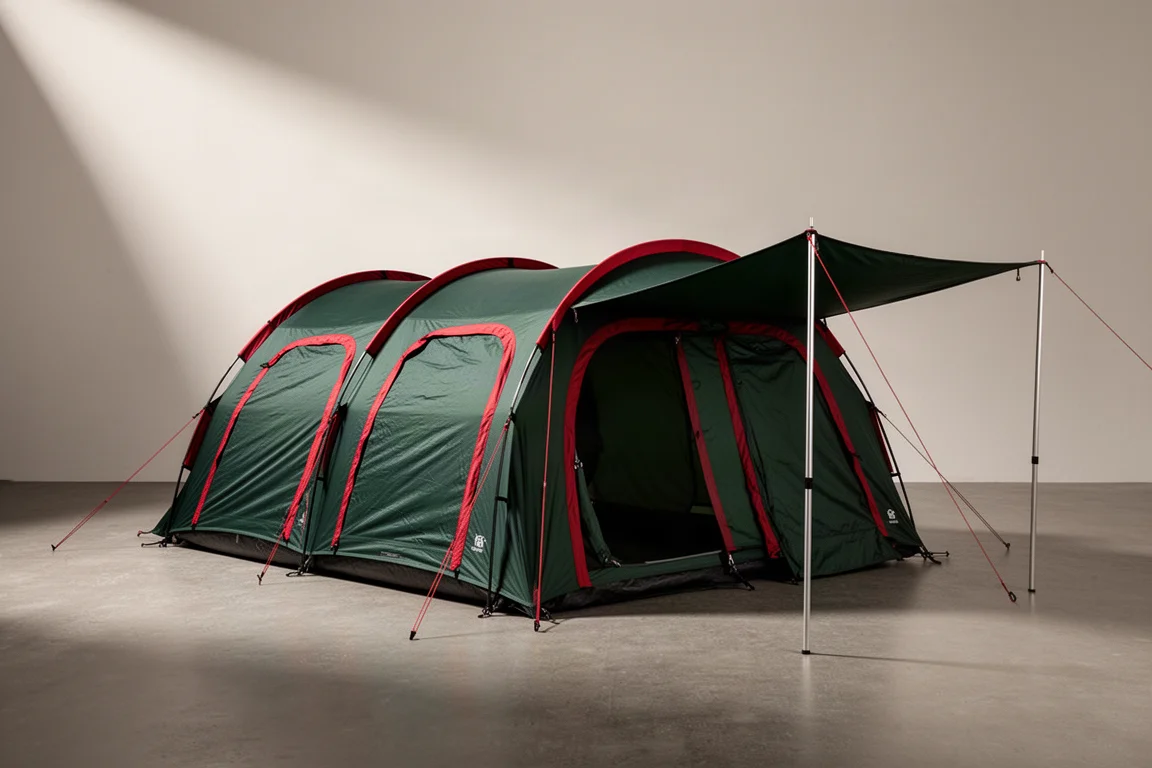
The most obvious strength is size. The tent stands 6 feet 7 inches at its highest point, measures 13 feet 8 inches in overall length, and reaches 7 feet 11 inches across the widest part of the storage bay. The sleeping area is 4 feet 8 inches wide, with a 6 feet 7 inches width noted across the tent body. Two people fit comfortably, and the majority of their gear will still need to live in the storage bay rather than the sleeping compartment.
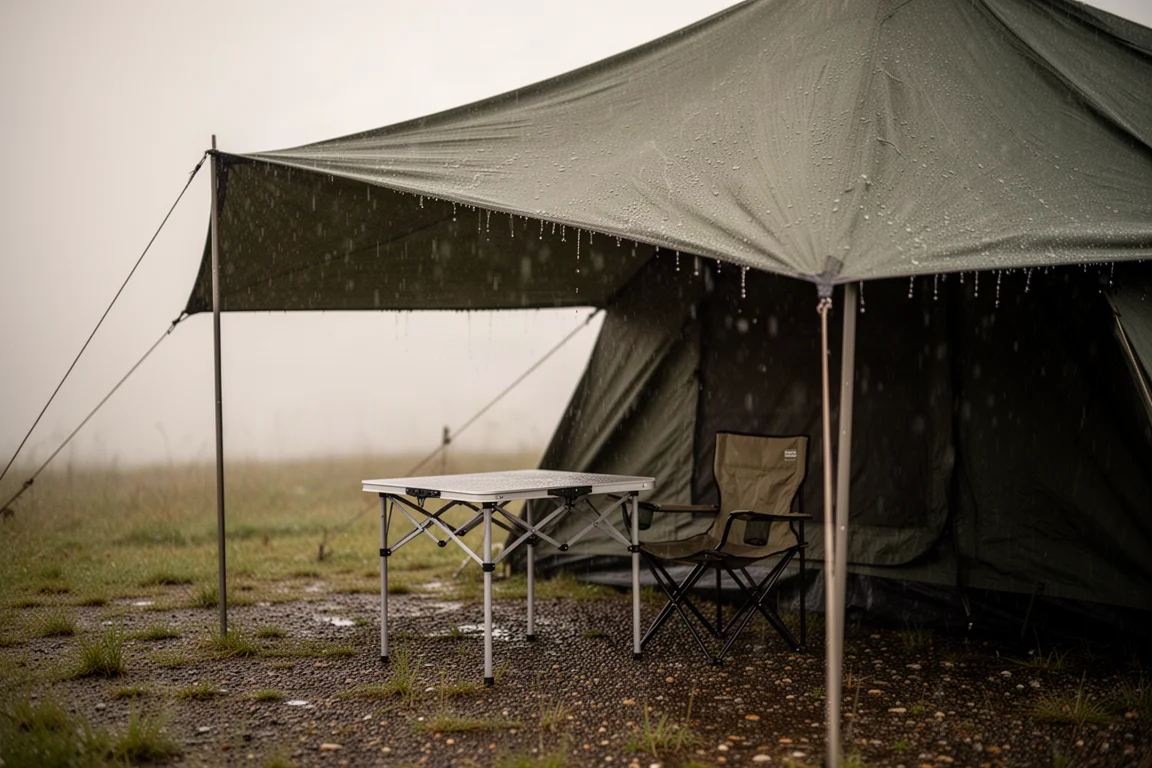
The second strength is the pair of door panels that convert into awnings. Each side needs two poles, and once propped open the panels create genuinely usable covered space. In steady vertical rain, that area stays dry enough for a chair, a table, or a stove, which makes it far more than a decorative feature. The awning space is the reason many buyers will consider this tent in the first place.
Entry points are generous. There are doors at the front, on the side, and at the back, so access does not depend on one awkward opening. Integrated guy lines stow in small pouches along the body when they are not needed, with lines at the front and the rear.
Inside, the tent uses a bathtub floor, corner pockets, and hanging hooks at the top for a line, headlamp, or lantern. The inner compartment can be removed entirely, which lets the tent be used as a simple shell when that suits the trip better.
Build details support the weatherproofing story. The fly is a 210 polyester ripstop with a 10,000 mm hydrostatic head rating, and the floor is a 190T ripstop nylon with the same rating. Nylon was chosen for the floor because it is the stronger material of the two. The poles and stakes are aluminium, and the tent ships with a ground sheet for the sleeping area, 18 stakes, a repair kit, and a pole sleeve.
Setup, pack size, and living space
Pitching is straightforward once the sequence is clear: stake out the back, feed in the poles, pull the tent out, stake out the front, then make adjustments. A first attempt takes roughly 15 to 20 minutes. With practice, around 10 minutes is realistic.
The friction point is the grommets where the poles seat. They are not adjustable, and if the fabric is not stretching easily, seating the poles takes more effort than it should. It is manageable, but it is the least refined part of the process.
Breaking camp is harder than pitching. This is a large, multi-layer tent designed for wet weather, and when it is packed away soaking wet, folding it down and getting it back into the stuff sack becomes a real chore. Doing it at home with a dry tent is one thing; doing it at a campsite in the rain is another. Buyers should go in expecting that.
The supplied stakes are sized for backpacking tents rather than a structure this large. Longer stakes anchor far more securely, especially in loose soil, where the included set can struggle to hold a tent of this weight. Adding longer stakes is a small cost that pays off.
Weather performance and season rating
Waterproofing is the tent’s most convincing attribute so far. Across a trip that involved roughly 19 hours of rain, including heavy rain and thunderstorms, the tent did not leak and showed no issues in that department.
The details behind that result are sensible. The front and rear doors use waterproof zippers, and the side door has a wide storm flap over its zipper, measuring about four inches. Fabric panels over the mesh doors can be closed to block wind or opened to increase airflow, and toggles let the doors be rolled back out of the way.
Lone Rider describes this as a three-plus season hybrid, and that label deserves attention. It is a double-wall tent with a fabric inner, and fabric inners are built to limit airflow and hold heat. That is exactly what you want in cold conditions and exactly what you do not want in warm ones, where airflow is how you stay comfortable. The result sits between categories: warmer than a typical three-season tent in summer, and less capable than a true four-season tent in winter.
The limitation in winter comes down to materials. The tent is not built to withstand strong winds or heavy snow loading. Moderate winds and moderate snow are fine; genuinely severe conditions are not what this shelter was designed for.
Things to consider before buying
Weight and pack size are the first things to weigh up. At over 12 pounds and roughly 27 inches by 10 inches packed, the tent needs real space on a motorcycle. Whether that fits a given bike and luggage setup is a personal calculation, and it is worth measuring before ordering.
Material specification is the second consideration. The fly and inner are polyester, and the floor is nylon, with both the fly and floor rated to a 10,000 mm hydrostatic head. Polyester of this grade is common on budget tents, which makes the price worth scrutinising carefully. The size of the tent does a lot to justify the cost, but the material choice leaves room for debate.
Quality control is mostly good, though loose threads were present on the inner and on the body. They are cosmetic rather than structural, but at this price point buyers may reasonably expect not to find them.
Add-ons deserve a hard look. A ground sheet for the storage bay is offered at around $100, and an awning kit with two poles, two guy lines, and two stakes is also around $100. Setting the tent up with four poles, four guy lines, and four additional stakes therefore adds roughly $200 on top of the tent itself. Those prices are steep for what is included, and the poles in the awning kit are non-adjustable, which matters because adjustable poles let one side sit higher so water sheds off instead of pooling. Adjustable poles from another maker plus inexpensive cord and stakes achieve the same result for considerably less.
Finally, colour. The tent is listed as dark green, though it reads as dark grey with red trim depending on the light and angle. It is a sharp-looking shelter either way, but the description and the reality do not always match.
Buying advice
The tent lists at $600, and sale pricing has brought it closer to $480. That is a premium outlay, and the honest way to evaluate it is to ask what the money buys.
If the goal is a two-person tent for fair-weather camping, this is far more tent than the job requires, and lighter, cheaper shelters will do the work. If the goal is to sleep and park a motorcycle under one roof, with covered space for cooking and sitting through long spells of rain, there is very little on the market that does the same thing, and the size is what carries the value.
Two practical additions make sense: longer stakes for anchoring a tent of this weight, and a set of adjustable poles for the awnings instead of the non-adjustable kit. Both improve real-world use without adding much cost. Skip the storage-bay ground sheet at that price.
Conclusion
The Lone Rider Moto Tent is a large, well-organised shelter with a clear purpose. The awning doors, multiple entry points, removable inner, and generous storage bay make it a genuinely useful basecamp for riders and vehicle-based campers, and it has proven waterproof through sustained heavy rain.
The trade-offs are equally clear. It is heavy, it packs large, breaking it down wet is a chore, the pole grommets are not adjustable, and the polyester fly sits awkwardly against the price. Buy it for the space and the motorcycle bay, budget for better stakes and poles, and treat the winter rating as moderate-conditions-only rather than a four-season promise.
Link do produto
Ver mais detalhes de Lone Rider Moto Tent
Este produto é mencionado nesta avaliação. Antes de comprar, confirme as especificações, opções e compatibilidade.
Ver mais detalhes de Lone Rider Moto TentLeituras recomendadas
Avaliações relacionadas
Camping Tents
Análise da Barraca Hyke and Byke Zion para 2 Pessoas: Desempenho na Chuva e Recomendações de Compra
Uma barraca iglu para duas pessoas com boa estabilidade ao vento e costuras do piso seladas com fita, mas limitada sob chuva forte por costuras do corpo sem fita e um piso tipo banheira baixo.
Camping Tents
Análise da Barraca Instantânea IDO GIN: Espaço Enorme, Montagem Instantânea, Concessões Reais
Uma barraca instantânea genuinamente grande, com toldo de dois estágios e uma análise honesta de sua capacidade realista para duas pessoas, qualidade das costuras e ferragens incluídas.
Camping Tents
Análise da Barraca Ido Jin Instant Popup: Abrigo Rápido com um Toldo Engenhoso
Uma barraca instantânea popup de orçamento com toldo integrado, forte ventilação em tela e limites honestos de capacidade e proteção contra intempéries.