Português · Camping Stoves
Goshawk Stove Review: A Wood Gasifier Stove With a Built-In Fan
A practical look at the Goshawk stove, a lightweight wood gasifier with an electric fan, plus its real fuel options, cooking behaviour, and the safety points worth checking before you buy.
Introduction
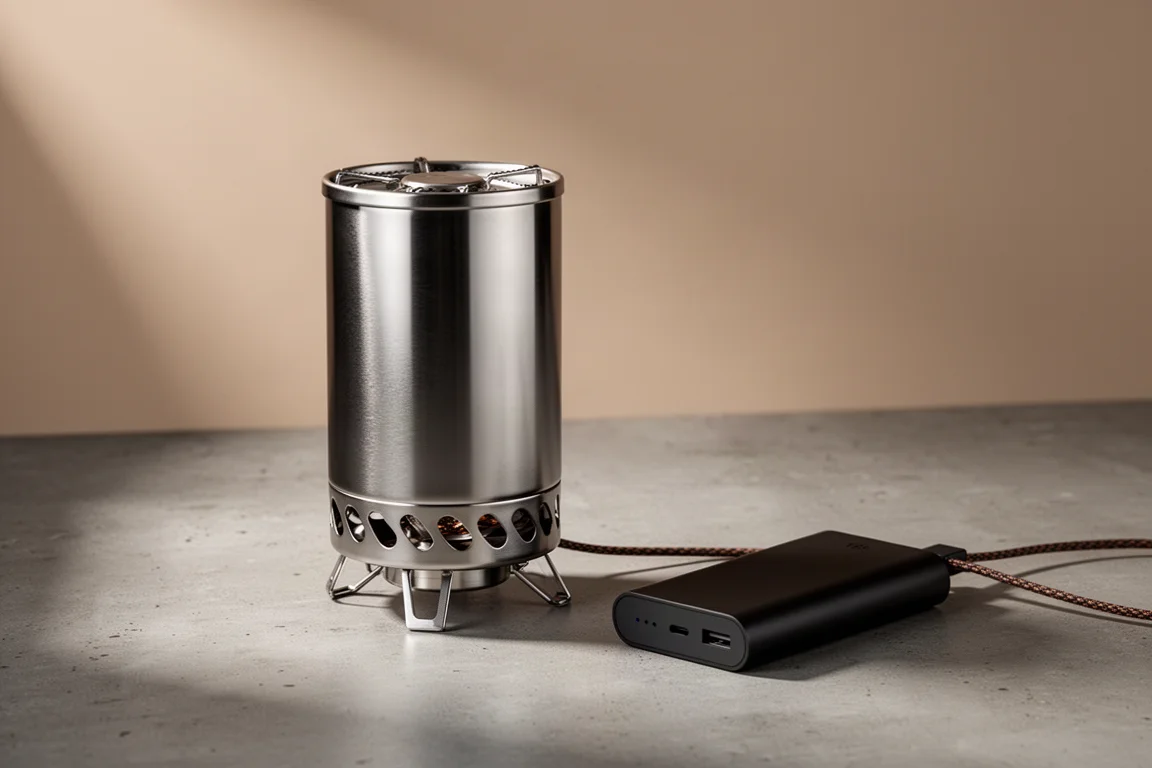
The Goshawk stove is a wood gasifier design with one clear point of difference: a small electric fan built into the base. Rather than relying on lung power or a set of bellows, you connect the stove to a power bank and use a controller to choose a low or high fan setting. The fan pushes air directly into the burn chamber, and the fire responds immediately.
That changes what cooking on wood feels like. A handful of thumb-sized twigs can be turned into a roaring, clean-burning flame within a couple of minutes, and the heat can be dialled back simply by lowering the fan speed. It is a compact and genuinely lightweight piece of kit, marketed as a backpacking stove and reported to weigh somewhere in the region of 125 to 150 g, which is light for anything that burns wood.
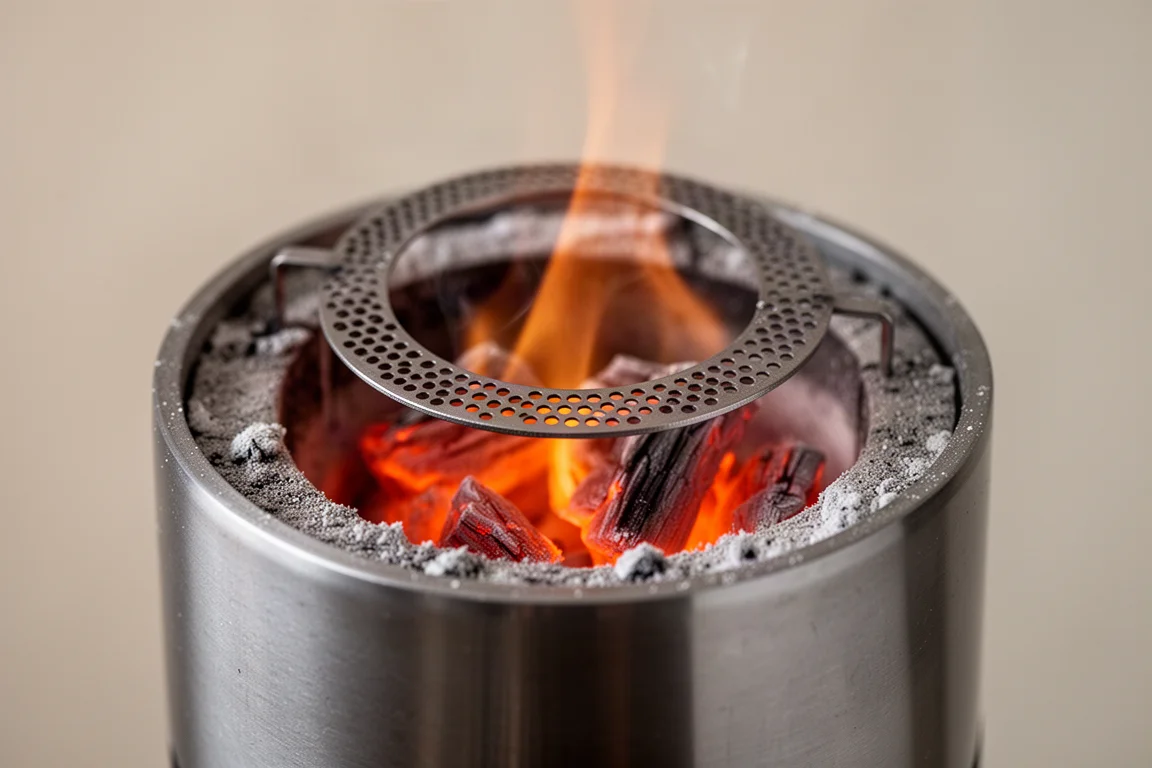
There is a thoughtful detail inside the burn chamber as well. A small guard ring sits above the fuel bed to keep embers and sparks contained while air is being forced through, which matters when the stove is running hard.
Who this product is for
This stove makes most sense for people who want to cook outdoors without carrying gas canisters. If you are backpacking, bikepacking, or simply taking long day trips where a hot drink and a proper lunch matter, the appeal is obvious: fuel can often be gathered on site instead of bought and carried.
It is also a good fit for anyone who enjoys the process of cooking over a real flame. The flame is less controllable than a gas burner, but it is more engaging, and the fan gives you a level of responsiveness that ordinary wood stoves do not have. If you already carry a power bank for your phone, the extra weight and bulk are minimal.
It is not the right choice for everyone. Anyone who needs instant, precise heat control, or who cooks in places where open flames are restricted, is better served by a canister stove.
Main strengths
The headline strength is the fan-assisted burn. Air is forced into the fuel bed through a small waterproof and heat-resistant fan, which behaves like built-in bellows. In practice this means small, modest pieces of wood burn hot and clean, and the stove reaches useful cooking heat quickly.
The controller is refreshingly simple, with low and high settings. Turning the fan down visibly lowers the flame, which gives you a usable range for simmering a pan rather than only full-blast heat.
Weight is the second real strength. For a stove that burns solid fuel, the Goshawk is light enough to justify carrying on trips where every gram is counted, and it packs down small.
Efficiency is the third. Once the fuel has burned down, there is remarkably little left behind, and the base of the stove stays cool to the touch even when the fire is roaring. That means no scorch marks on the ground underneath, which is a genuine practical advantage at lunch stops on grassy or forested ground.
Finally, it is flexible about fuel. Wood pellets work, small dry twigs work, and the burn chamber is tolerant of whatever dry burnable material you can reasonably find.
Things to consider before buying
The most important consideration is power. The stove needs an external source, typically a power bank, connected by cable. It draws very little, and a cable designed to run the stove directly from an Android phone is reportedly in development, but you still need to arrive with something to plug in.
The fan is not optional. Running the stove without it can let the unit get too hot and burn out, so the electrical side of the kit is part of the deal rather than an accessory.
Fuel quality affects the experience. Damp wood still burns, but it takes longer to catch and produces less consistent heat, so a little preparation and dry tinder make a noticeable difference.
Flame control is the other trade-off. Wood simply is not as precise as gas, and the usual technique applies: let the fuel burn down a little before you start cooking so the flame settles into something more manageable. On a small burner like this you cannot always wait for a full bed of charcoal.
Safety deserves a plain statement. This is still an open fire in a small package. It should not be used inside a tent, it should not be used on dry grass, and it should never be left unattended. Used carefully and on suitable ground, it is a contained and well-behaved wood stove, but the usual fire precautions apply.
Fuel options and how it cooks
The stove runs on small pieces of wood, ideally cut to roughly thumb size, and it also accepts wood pellets and similar dry pellet fuel. Reports of people cooking on it with unusually inventive fuels suggest the burn chamber is genuinely tolerant, though dry wood and pellets remain the sensible everyday choices.
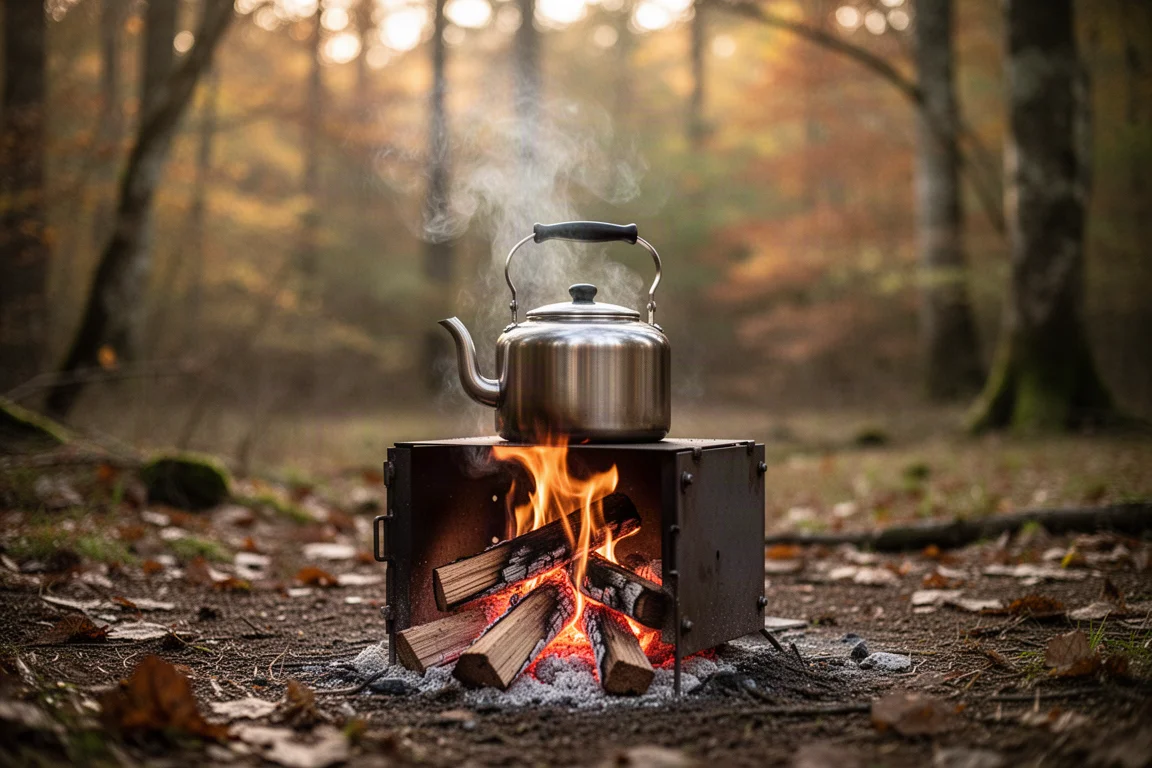
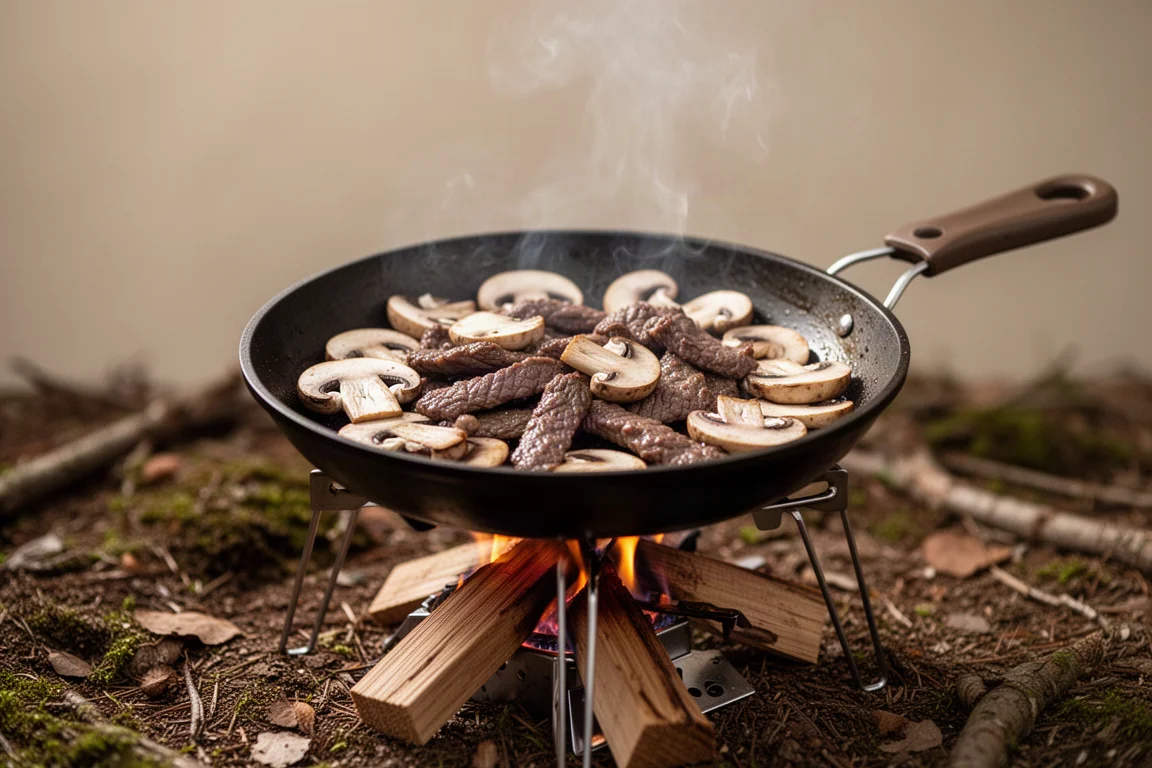
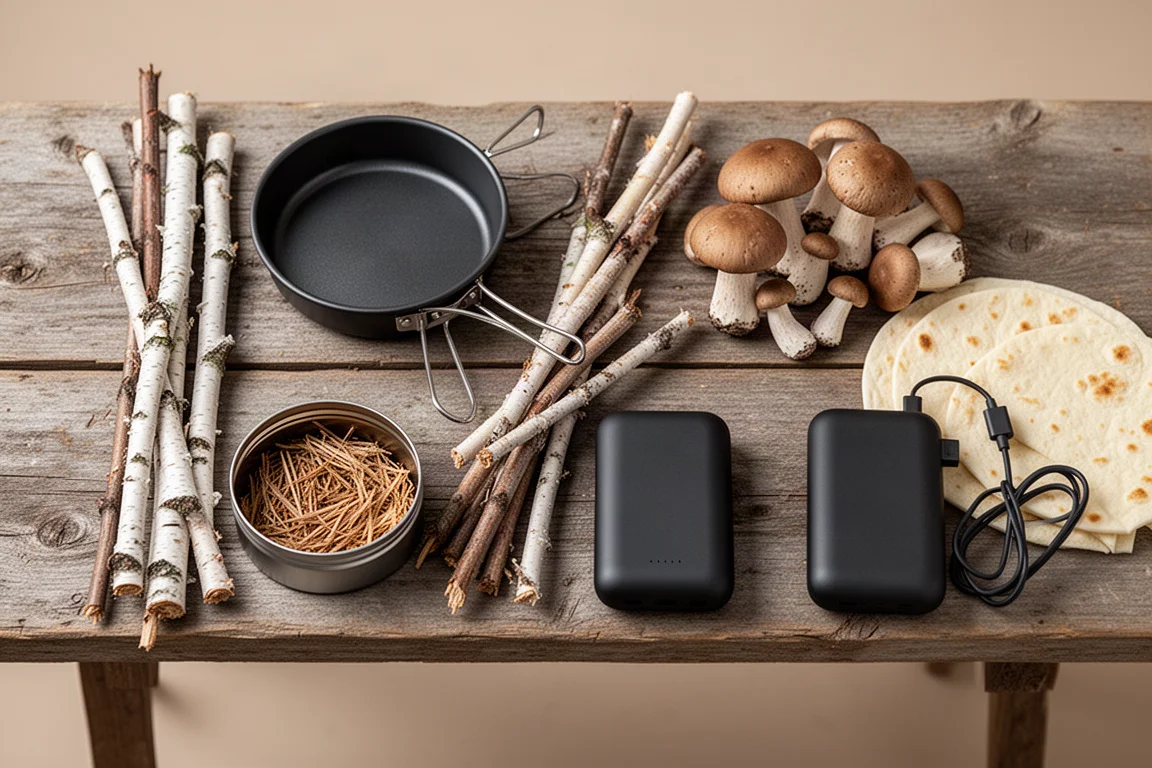
In use, the routine is straightforward. Larger pieces go in the bottom, an ember guard sits above them, and finer twigs and tinder go on top. Once lit, the fan takes over and the fire builds quickly. A kettle comes to the boil in a few minutes, and the same flame is hot enough to sear mushrooms and beef strips in a pan for a proper outdoor lunch.
The cooking technique that works best is to let the initial flare settle. Once the wood has burned down slightly, the flame becomes steadier and the pan can be moved on and off the heat as needed. It is a more hands-on way to cook than turning a gas knob, and considerably more enjoyable.
Where it works best in practice
This is a stove for real trips rather than the garden. The stove’s creator has used it at around 3,000 m in the Alps, reportedly with wood pellets, which says something about how it copes in exposed conditions where gathering dry wood is not always an option.
For most buyers, the sweet spot is a lunch stop on a hike, a bothy or campsite kitchen area, or any trip where carrying canisters is awkward and you would rather travel light. Because the base stays cool, it also suits ground where you would rather not leave a mark.
Buying advice
Buy the Goshawk stove if you want to cook with gathered or pellet fuel, you already carry a power bank, and you value a light pack over the convenience of gas. The combination of forced-air burn and a cool-running base makes it one of the more practical wood stoves for everyday outdoor cooking, and the low fuel consumption means a small bag of twigs goes a long way.
Skip it if your priority is precise temperature control, if you cook in places where open flames are not permitted, or if you would rather not depend on a battery to make dinner. Those are reasonable positions, and a canister stove will serve them better.
Whichever way you decide, plan the supporting kit at the same time: a power bank with the right cable, a small folding saw or pair of snips for cutting fuel to size, and a shallow pan that suits a flame rather than a flat burner.
Conclusion
The Goshawk stove earns its place by solving the two usual problems with wood cooking: slow lighting and inconsistent heat. The integrated fan handles both, turning a small bundle of twigs into a responsive cooking flame, while the cool-running base and near-total burn-down make it tidy to use and easy to leave no trace with.
It is not a replacement for a gas stove in every situation, and it demands the same care you would give any open fire. But for backpackers and day-trippers who like the idea of cooking on found fuel, it is a well-considered, lightweight option that is genuinely fun to use.
Link do produto
Ver mais detalhes de Goshawk Stove
Este produto é mencionado nesta avaliação. Antes de comprar, confirme as especificações, opções e compatibilidade.
Ver mais detalhes de Goshawk StoveLeituras recomendadas
Avaliações relacionadas
Camping Stoves
Análise do Fogareiro Boundless Voyage de Titânio a Álcool e Lenha: Cozinhando Ultralight, de Duas Maneiras
Um kit de fogareiro de titânio a álcool e lenha que pesa 4,5 oz completo, ferve duas xícaras de água em cerca de 10 minutos e custa $36.
Camping Stoves
Análise do Fogareiro Boundless Voyage de Titânio para Álcool e Lenha: Um Kit Ultralight de Dois Combustíveis
Um olhar detalhado sobre um kit de fogareiro de titânio de 4,5 oz que funciona com álcool ou lenha, o que ele faz bem e os trade-offs a considerar antes de comprar.
Camping Stoves
Análise da BRS 32 Fogareiro Duplo: Um Fogareiro Dobrável de Duas Bocas por $60
A BRS 32 dobra quase totalmente e se abre como um acordeão em uma cozinha de acampamento completa de duas bocas com 6.600 BTU por boca, tubos de pré-aquecimento e suporte para adaptadores de butano e propano.