Português · Tarps
AquaQuest Guide 13 ft x 10 ft Tarp Review: Light, Storm-Ready Shelter
A close look at the AquaQuest Guide 13 ft x 10 ft tarp, covering its 5,000 mm waterproof rating, 1 lb 6.3 oz weight, 17 tie-out points, and the trade-offs worth knowing before you buy.
Introduction
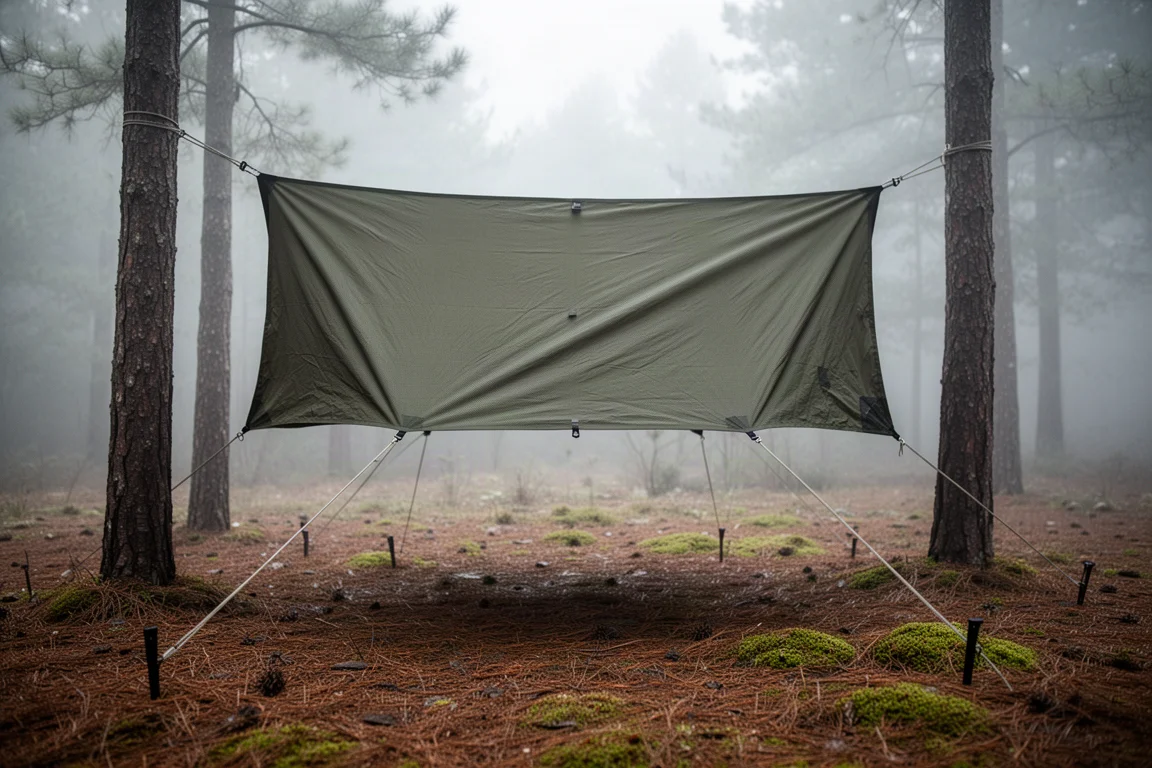
AquaQuest builds its tarps in three tiers of strength, and the Guide series sits at the lightest end of that range. The 13 ft x 10 ft version is the size that tends to make the most sense for general use, because it pairs a genuinely large footprint with a packed weight that stays reasonable in a backpack.
The headline numbers are unusual for the category: a 5,000 mm hydrostatic head rating, a weight of 1 lb 6.3 oz, and 17 tie-out points spread across a shelter that opens to a full 13 ft by 10 ft. This review covers where the Guide tarp performs, where it asks for a little patience, and who should consider it.
Who This Tarp Is For
The 13 ft x 10 ft footprint is generous enough for one person, two people, or even three. In practice that means enough covered space for a chair, a table, and a tent all at the same time, which is the main reason this size is so appealing. It gives you room to set up a livable camp rather than simply a dry spot to sleep.
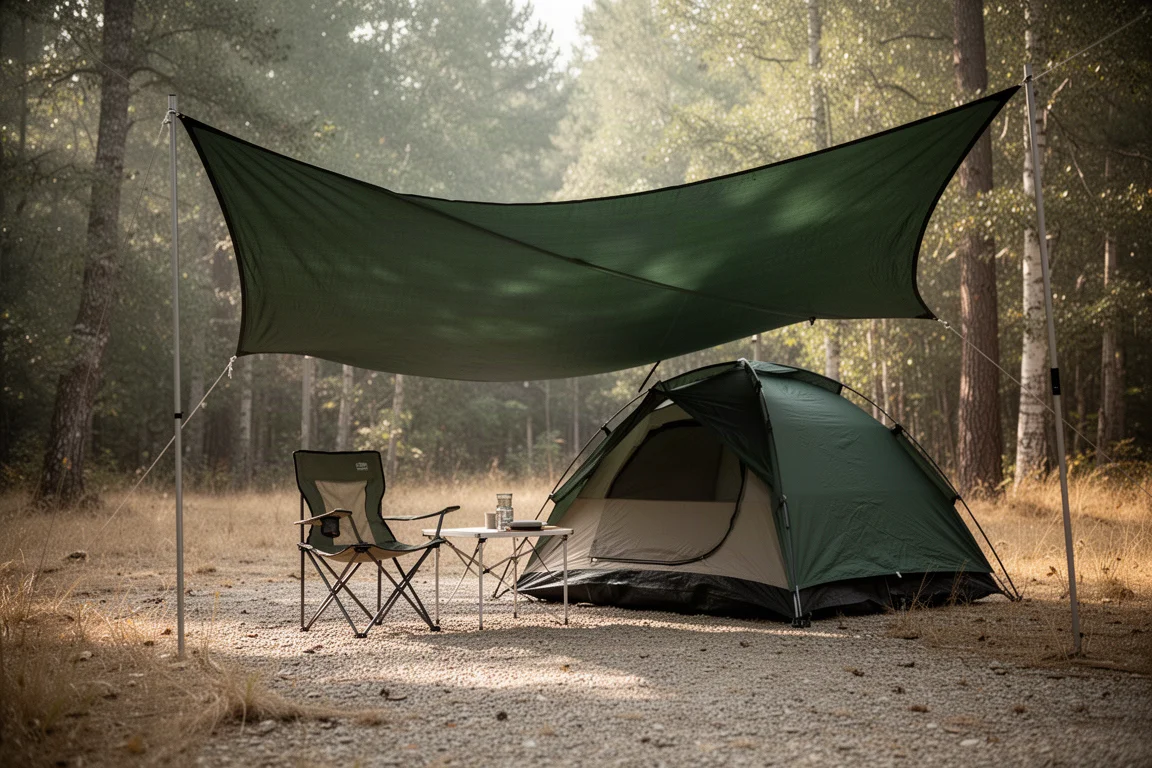
Backpackers get the benefit of that coverage without a weight penalty. When it is packed down, the tarp measures roughly 10 in x 4.5 in, so it slides into a pack, takes up very little volume, and adds only a small amount to the overall load. That combination of a large footprint and a compact stored form is what makes the 13 ft x 10 ft size so flexible across different outdoor activities.
Main Strengths
The Guide series earns its reputation through a small number of things done very well: weather protection, low weight, and a construction that holds together under load.
Durable and Storm-Worthy in Real Conditions
This tarp has been used through thunderstorms with winds around 35 mph, and the force pushing against the back of a pitched tarp in those conditions is substantial. It came through without tearing, without seam failures, and without the kind of damage an inexpensive tarp would typically show. After heavy use, it still pitches and performs the way it did when new.
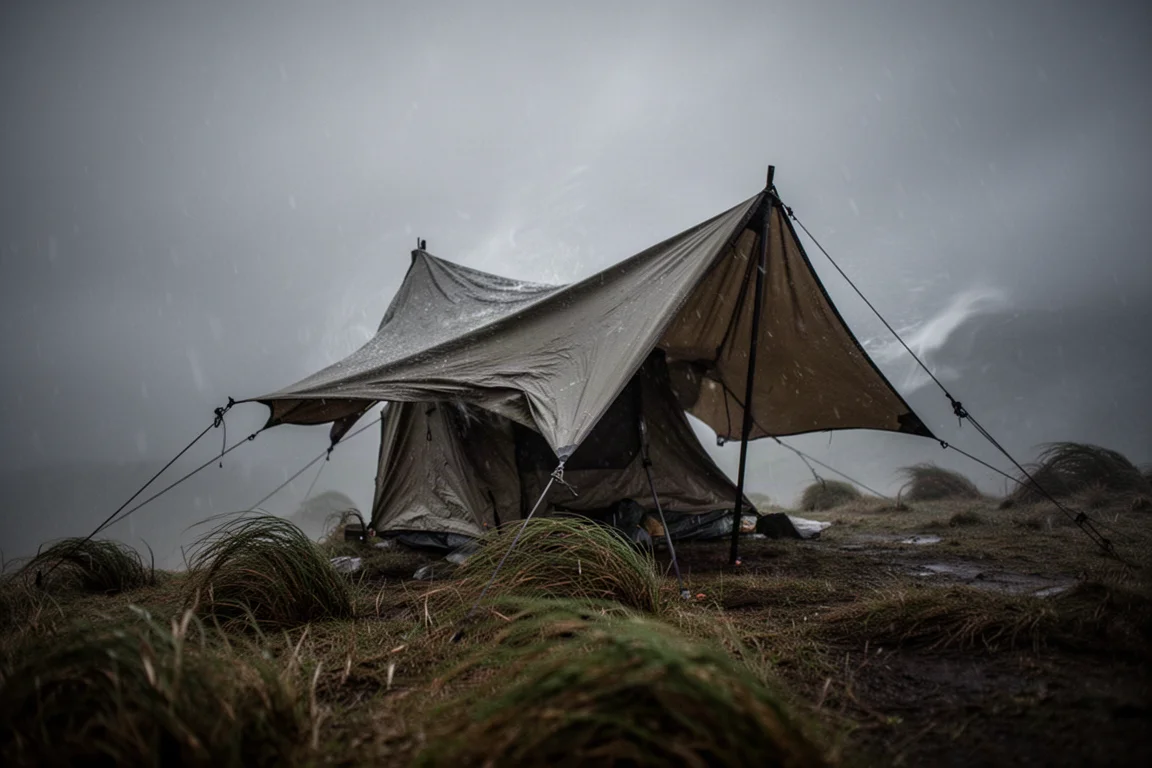
It is worth being precise about strength here. The Guide series is the lightest and least strong of the three AquaQuest lines, but that comparison is internal to the brand. The heavier Safari and the much heavier Defender are the options for the most extreme conditions, including heavy snow loading and the strongest winter winds. For everything else, the Guide has proven itself against wind and rain again and again.
Lightweight, Compact, and Versatile
At 1 lb 6.3 oz for a 13 ft x 10 ft shelter, the weight is the standout specification. It packs to about 10 in x 4.5 in, so it carries easily inside a backpack rather than strapped outside it.
The 17 tie-off points, including a center tie-off, are what unlock the versatility. With that many anchor positions, the tarp can be pitched in a wide range of formations, from a low wind-resistant profile to a high open canopy, which means you can adapt the setup to the weather rather than the other way around. The darker color options, forest green, gray, and olive drab, also diffuse overhead light and heat, so the same shelter works as sun protection in warm conditions.
Waterproofing, Tie-Out Points, and Warranty
The fabric is a ripstop nylon with two coatings, one silicone and one polyurethane, and the hydrostatic head rating is 5,000 mm. For context, an average tarp sits around 1,200 mm, so this is a substantial step up in water resistance rather than a marginal one.
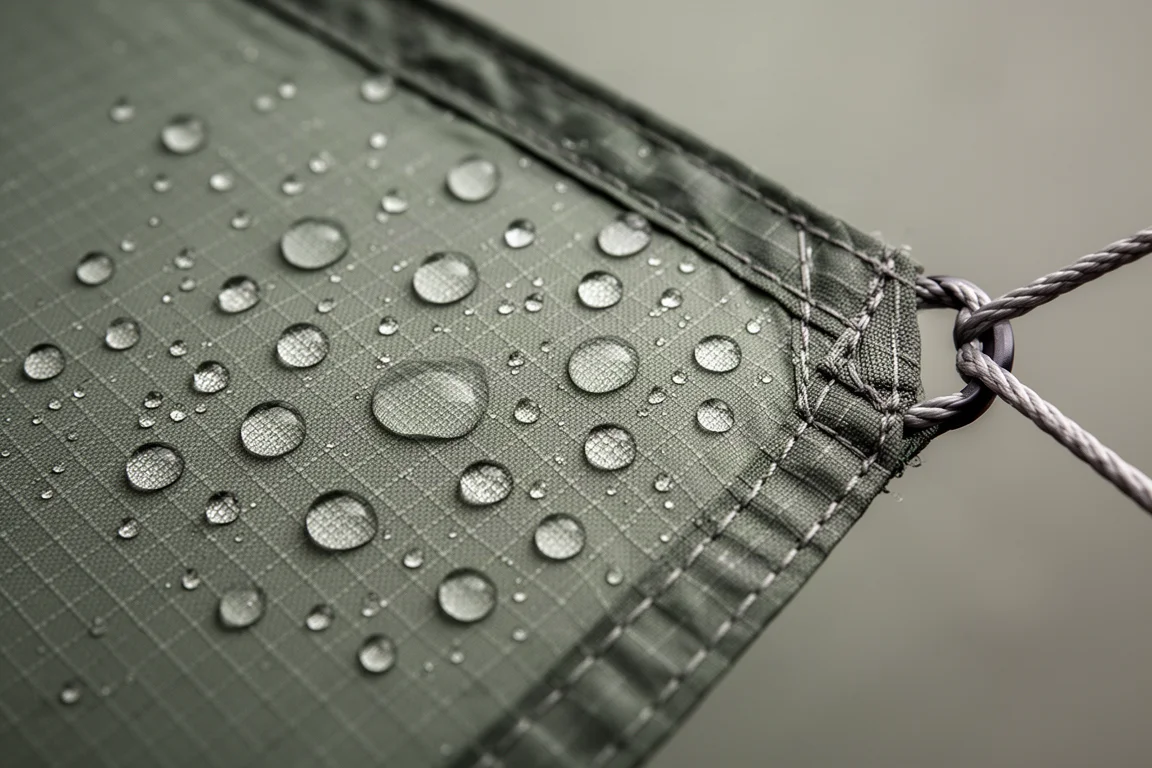
Every one of the 17 tie-out points is reinforced with strong stitching, which is where cheap tarps usually fail first. AquaQuest also backs these tarps with a lifetime warranty, and the fact that it so rarely comes into play says something about how the product is built.
Things to Consider Before Buying
Price is the first honest trade-off. Less expensive tarps are widely available, but they are usually made from polyester, which means more weight, less strength, and lower water resistance. The Guide tarp costs more because of what goes into it, and the materials are the reason it performs the way it does.
The second point is the included storage bag. It is very small, and rolling up a soaking wet tarp in wind, with water absorbed into the fabric and stitching, is a genuine chore. This is a common habit among shelter makers, but it remains frustrating in the field, so plan on either packing loosely or bringing a larger bag of your own.
Finally, silicone-treated nylon stretches, and it stretches more noticeably when it gets wet. After a few hours of rain you will likely need to re-tension the guy lines. It is a minor adjustment rather than a flaw, and it is the same trade-off that makes the tarp so light, compact, and packable in the first place.
Buying Advice
The Guide series is offered in several sizes, and the retail prices scale with them. The 10 x 7 ft runs about $89, the 10 x 10 ft about $120, the 13 x 10 ft about $140, the 15 x 15 ft about $200, and the 20 x 13 ft about $230. In practice these tarps are often listed for roughly $10 to $20 below the retail figure, so it is worth comparing before you commit.
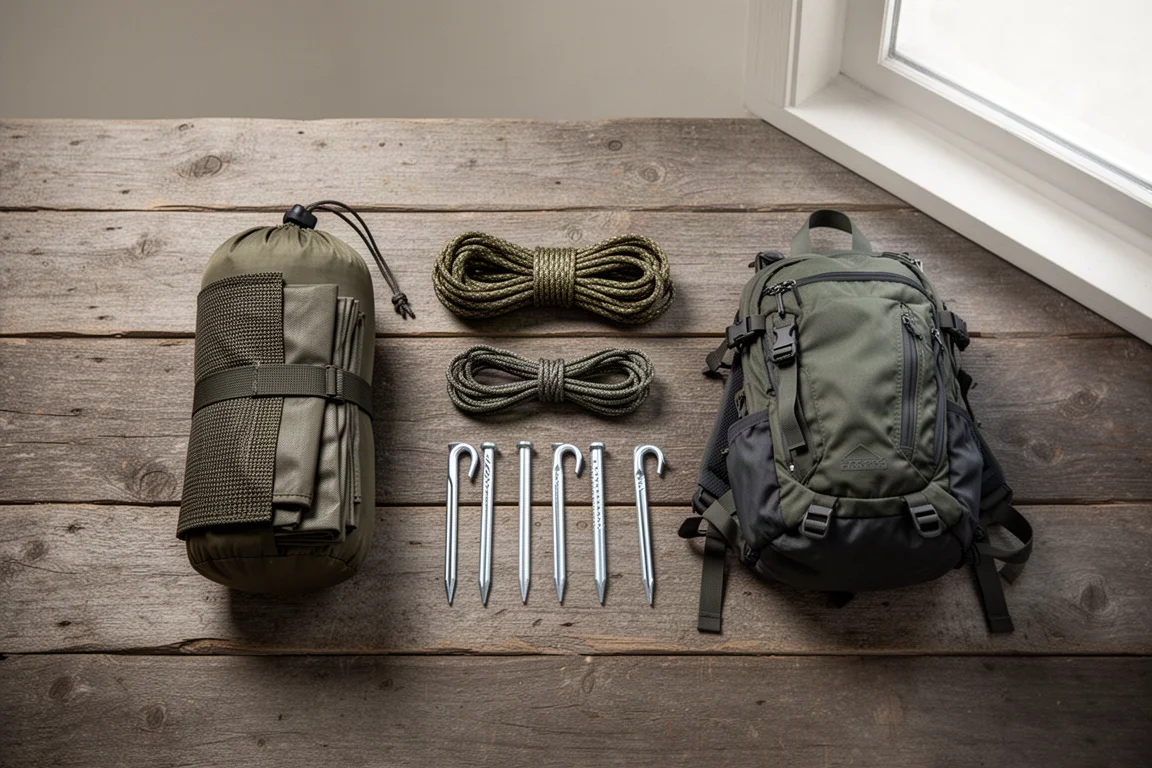
For one to three people, the 13 ft x 10 ft is the size that offers the best balance of coverage, weight, versatility, and packed volume. Step up to the larger sizes if you are building a group shelter or a base camp where weight matters less. Three colorways are available: forest green, gray, and olive drab. Given the lifetime warranty and the durability on display, this is a buy-once purchase rather than a seasonal replacement, and that framing makes the price easier to justify.
Conclusion
The AquaQuest Guide 13 ft x 10 ft tarp combines a large footprint, a 5,000 mm waterproof rating, 17 reinforced tie-out points, and a 1 lb 6.3 oz weight in a package that packs down to roughly the size of a small book. Its quirks, a small storage bag and a fabric that stretches when wet, are manageable and well understood.
For anyone who spends real time outdoors in unpredictable weather and wants shelter they can rely on without carrying the weight of a heavier tarp, this is an easy recommendation.
Link do produto
Ver mais detalhes de AquaQuest Guide 13 ft x 10 ft Tarp
Este produto é mencionado nesta avaliação. Antes de comprar, confirme as especificações, opções e compatibilidade.
Ver mais detalhes de AquaQuest Guide 13 ft x 10 ft TarpLeituras recomendadas
Avaliações relacionadas
Backpacking Tents
3F UL Gear LanShan 2 Four Season vs Pro: Qual Barraca Ultralight de Bastões de Trekking Vale a Pena?
Uma comparação prática entre a LanShan 2 Four Season de parede dupla e a LanShan 2 Pro de três estações, abordando peso, tamanho compactado, proteção contra intempéries e montagem.
Camping Tents
Análise da 3F UL Taiji 2: Uma Tenda de Mochilão Espaçosa de 1,8 kg
Uma primeira montagem da 3F UL Taiji 2, uma tenda leve de mochilão para duas pessoas com altura interna generosa, costuras seladas e alguns pequenos detalhes que vale a pena considerar.
Camping Tents
Análise da 3FUL Gear Lanshan 2 Pro 4-Season: Uma Barraca de Vareta de Caminhada de Parede Única por Menos de US$ 200
Uma primeira olhada na 3FUL Gear Lanshan 2 Pro 4-Season, cobrindo sua montagem descomplicada, espaço interno generoso e as questões de condensação e selagem de costuras que acompanham qualquer abrigo de parede única.