Polski · Camping Tents
REI Base Camp 6 Review: A Six-Person Tent Built for Rough Weather
A close look at the REI Base Camp 6, covering its four-pole frame, full-coverage rainfly, vestibule sizes, sleeping capacity, and the trade-offs worth knowing before you buy.
Introduction
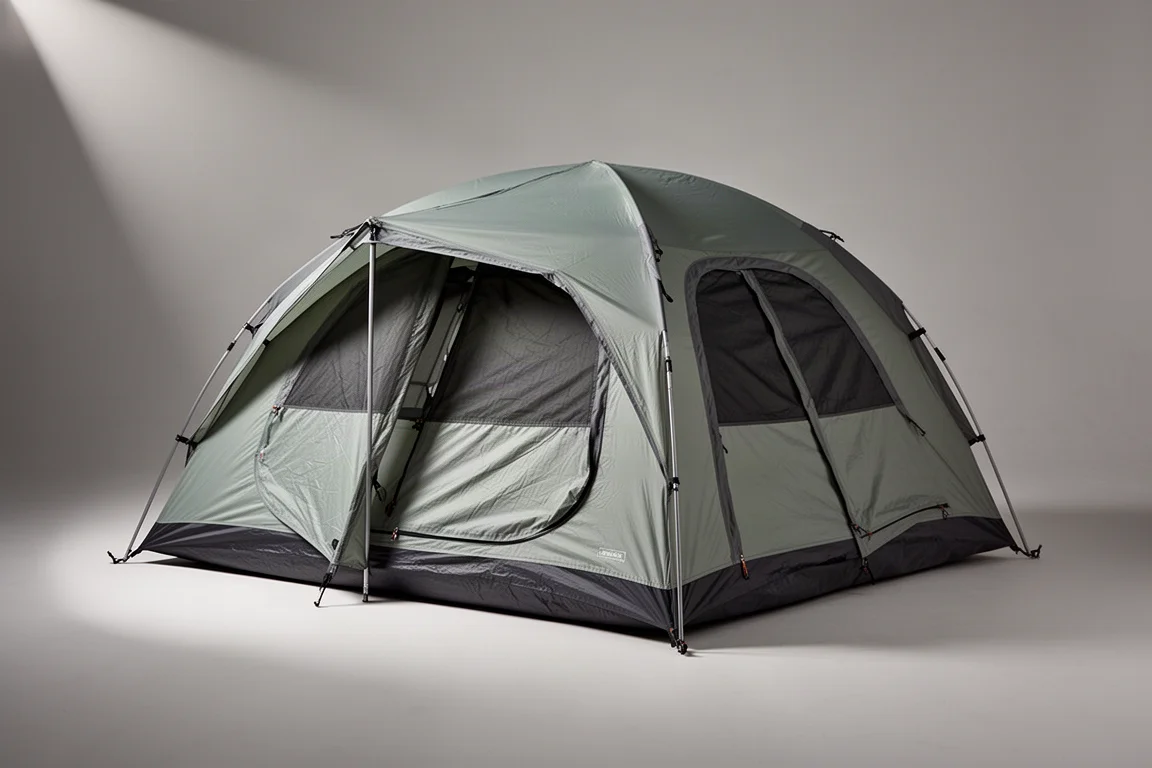
The REI Base Camp 6 is a six-person dome tent designed around weather protection rather than maximum sleeping capacity. Its four-pole frame, near full-coverage rainfly, and pair of vestibules set it apart from the simple two-pole dome tents that dominate budget family camping, and they are the reason it holds up in conditions that would send a lighter shelter home early.
Setup and takedown, base area and sleeping pad fit, vestibule use, interior storage, ventilation, and behaviour in sustained rain and wind all went into this assessment. The short version: the Base Camp 6 is at its best when the weather turns, and it makes a few practical compromises that are worth understanding before you buy.
Who This Tent Is For
This is a tent for campers who expect rain, wind, or cooler shoulder-season nights and want a living space that stays comfortable when the forecast is imperfect. The full-coverage rainfly, the four-pole frame, and the roughly 73-inch peak height are the features that carry that brief. It also suits campers who like organisation, because the interior carries far more pockets and hanging loops than most tents in this class.
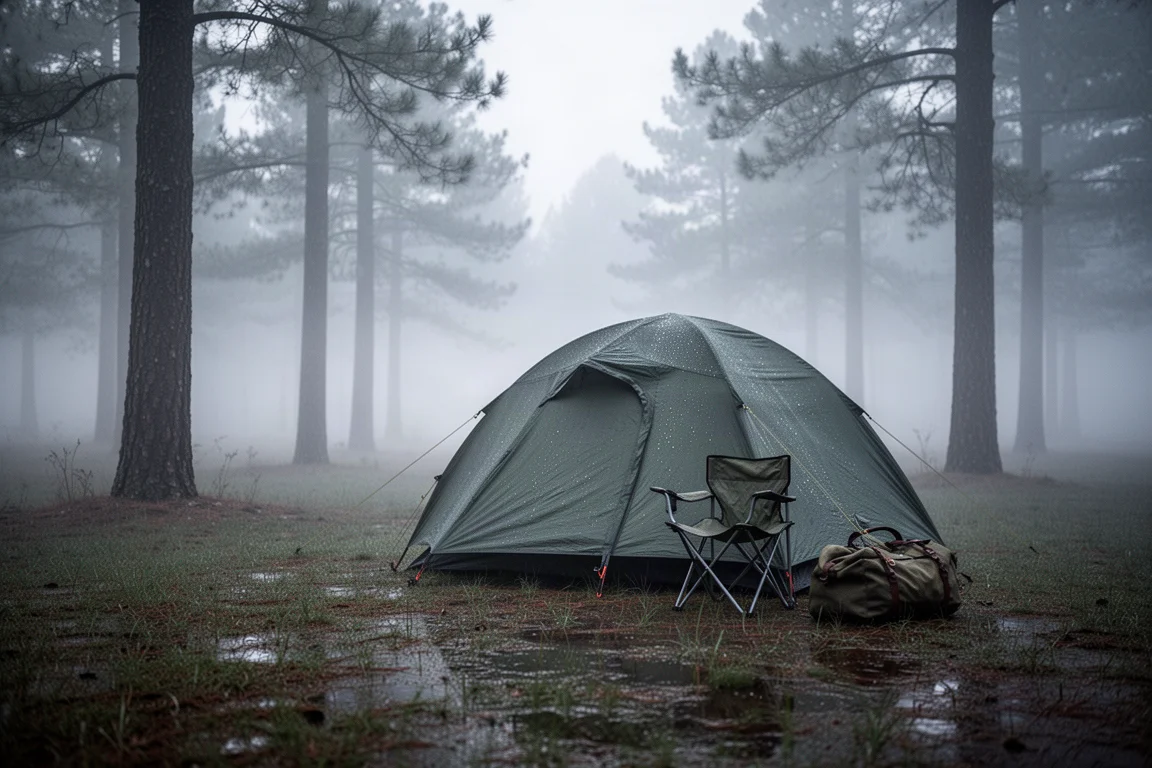
It is not the obvious choice for fair-weather summer camping on a tight budget. The mesh panels are limited, so the interior can feel warm on hot, still days with the rainfly on, and the floor area is smaller than some six-person tents. Realistically, the Base Camp 6 sleeps three, maybe four people comfortably, with enough leftover space for gear.
Main Strengths
Three areas stand out in use: weather protection, a setup that is easier than its size suggests, and an interior that feels larger than its floor plan implies.
Weather Protection: The Full-Coverage Rainfly
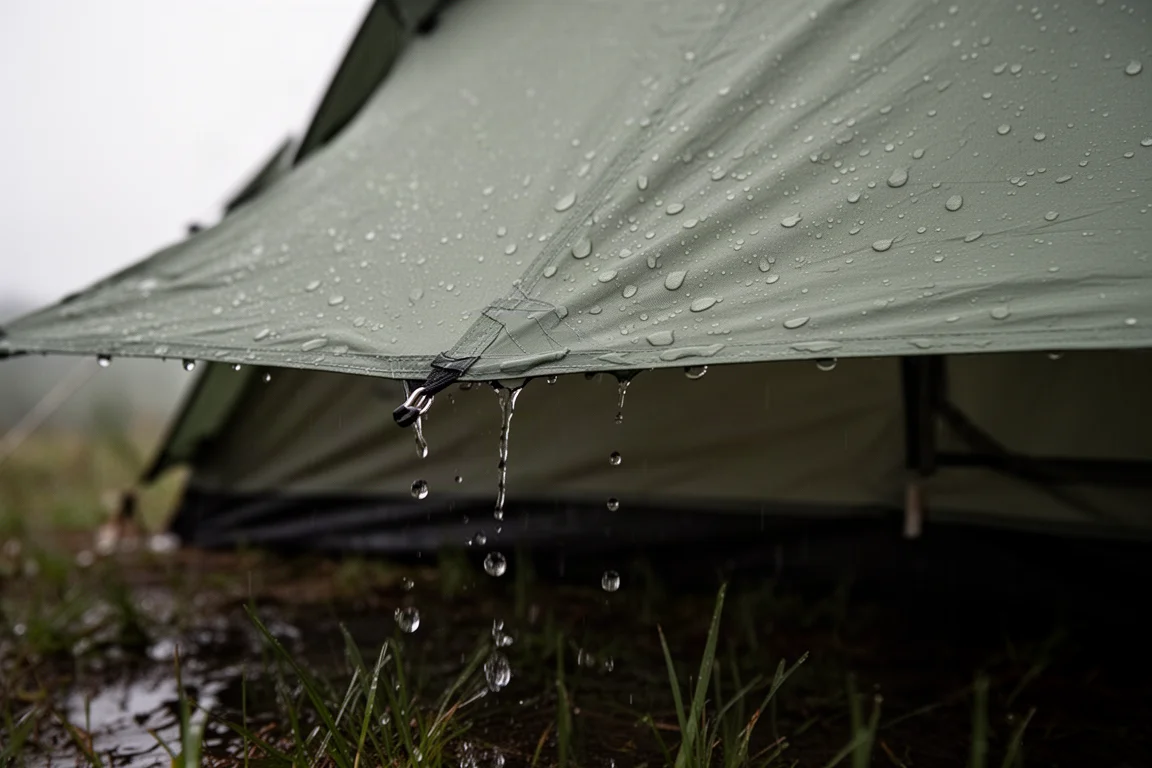
The rainfly is the headline feature. It covers almost the entire tent body, and water sheds off it straight to the ground without running across the inner tent. In an hour-long test with a hose spraying near-horizontal water, the inner tent body, mesh, seams, floor, and rainfly all stayed completely dry, with no water inside the tent at all. The same held true through hours of light rain, and in that lighter rain every vent could stay open without letting water in.
Two details matter here. The rainfly does not touch the inner tent walls, which keeps condensation from transferring to the sleeping area, and the rainfly is long enough that the untaped door seams stay well protected. On the frame side, the four aluminium poles all intersect, and pole clips and buckles hold the fabric against them. In wind, the tent stayed planted, and it felt secure when pushed by hand, which is a meaningful step up from a basic two-pole dome that flexes and shifts in the same conditions. Six guy-out points, reflective strips on the guylines, and reflective stake-downs at the vestibules make the tent easier to find and secure in the dark.
Setup, Poles, and Color Coding
Five aluminium poles ship with the tent, and the ends are colour-coded to match the sleeves they belong in: two blue, two black, and one white. The webbing that holds the grommets follows the same scheme, and the rainfly buckles match it too. The rainfly can also be fitted either way around, so there is no front-or-back guesswork.
A solo pitch, including staking and guying out, took about 17 and a half minutes with practice. That is a reasonable figure for a tent this size and this feature-heavy, and the colour coding is the main reason it stays manageable.
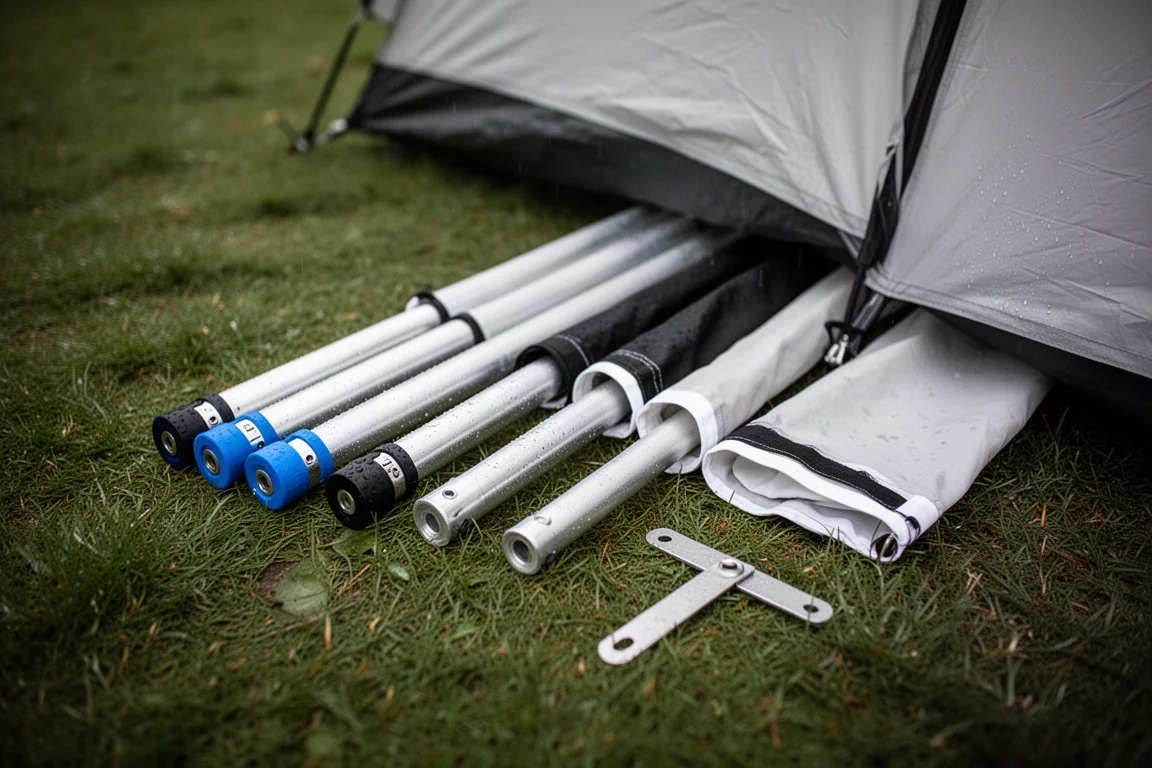
The one recurring annoyance is the pole sleeves. They are long, and the poles snag on them, with the blue sleeves the worst offenders: the first pole snagged once, and the second snagged four times. Takedown showed the same pattern, with the white sleeve snagging repeatedly, though the full pack-down, fold, and bag-up still took around 15 minutes.
Interior Space and Sleeping Capacity
Peak height inside is about 73 inches, enough for most people to stand fully upright under the centre. Because it is a dome, that height exists only at the middle: roughly three small steps away from centre, the ceiling drops to around 60 to 61 inches.
The floor measured 9 feet 1 inch by 9 feet 1 inch, a square base of about 82 and a half square feet, which lands right on the marketed 110 by 110 inches. Six sleeping pads will fit, but they sit shoulder to shoulder with only a little spare room at the edges. Two queen airbeds will not fit. One queen plus a twin does, which is why three, maybe four people is the realistic capacity, with gear space left over.
What lifts the interior beyond its dimensions is the side wall shape. Two black poles pull the sides outward, and pole clips and buckles hold the fabric to them, so arms and head stay clear of the walls when you sit up. That is the difference between this tent and a standard dome, where sitting upright usually means grazing the fabric.
Doors and Vestibules
Both doors are identical and generous: about 74 inches long by 59 inches wide, and about 62 and a half inches tall, which means you can open one only halfway and still walk in and out. Each door unzips almost completely, leaving a small strip of fabric attached at the top, and the door fabric stuffs into a pocket above the opening. Each door runs on two YKK zippers, and unzipping was snag-free. Zipping up past the bend occasionally needed two hands, and extra stake loops under the door would help there.
The two vestibules are not equal, and that appears deliberate. The front vestibule measures about 58 inches at its shortest point, about 109 inches at its longest, and about 54 inches wide, for roughly 31 square feet and about 62 inches of height. An overhanging white pole lifts it, and two camping chairs fit comfortably, which keeps chair legs off the tent floor. The back vestibule is about 57 inches at its shortest, about 109 inches at its longest, and only 37 inches wide, for about 21 and a half square feet, roughly two-thirds of the front. It slopes off immediately from the inner tent, so a camp stool cannot be used upright inside it.
The practical split is simple: lounge at the front, store gear at the back. Both vestibule doors are large, run on YKK zippers, and stayed snag-free, and each has a toggle to hold it open while staked. If you do not need the vestibules, you can pull the stakes and tie the doors back to turn the front into an open porch. The back has no vestibule pole, so it cannot do the same. Notably, both vestibules measured larger than the marketed dimensions.
Storage: Pockets and Loops
There are 14 pockets around the interior, most of them large, running along the walls except where the doors and vents interrupt them. Some sit low enough to reach without standing, and others are placed higher up. There are also pockets above each door for stashing the door fabric.
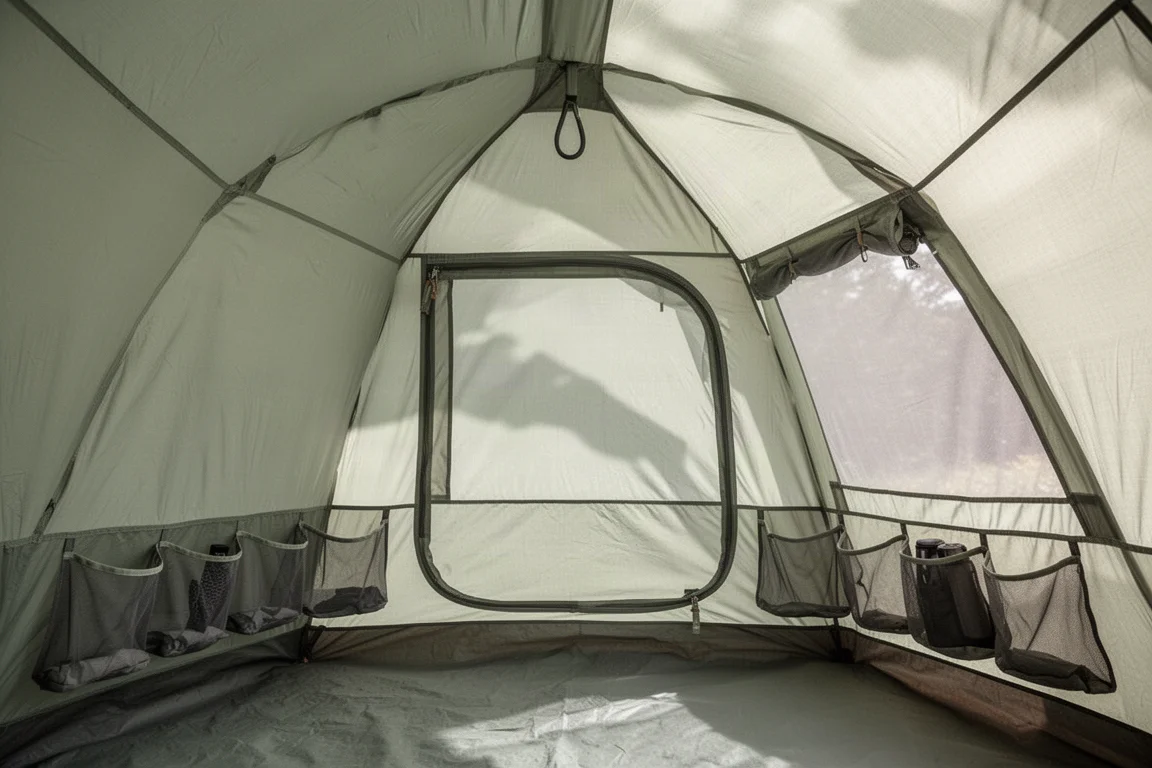
Hanging storage is even more generous: one loop at the top centre, four around it, six along each pair of side walls, and three more in the porch area, for a total of 20 loops.
Ventilation, Build Quality, and Portability
Four vents handle airflow: two roof vents that open and shut from inside the tent, and two floor vents that sit fully under the rainfly. A small gap between the rainfly and the ground adds a little more movement. In light rain, all four can stay open.
In hot weather the picture is more mixed. With the rainfly on, the limited mesh and the modest vent size can make the interior warm and stuffy, and even with the rainfly off there is only a small mesh roof plus four relatively small windows: two in the doors and two formed by the floor vents. That makes this more of a three-plus-season tent than a summer-only shelter. Leaving the vestibules and doors open helps with cross-ventilation, and the windows are the better option when bugs are out.
Build quality is sound rather than exotic. The floor is 150-denier polyester Oxford, and the rest of the tent is listed as polyester, with the body and rainfly looking closer to 75 denier. The five poles are aluminium rather than a premium branded tube set. Seams are double-stitched and consistent, with a couple of loose threads near the door, and the rainfly seams are fully taped, as are the floor seams running the length of the tent and the corner seams. Zippers are YKK on the doors and vestibules and unbranded on the windows, and the mesh is no-see-um. One small note for windy trips: the Velcro along the rainfly vents is thin, so extra clips or clamps along those edges are worth carrying.
Packed, the tent measures about 28 by 13 by 9 and a half inches and weighs about 20 and a half pounds with everything, and the carry bag has a shoulder strap.
Things to Consider Before Buying
The carry bag is the weakest part of the package. The material is fine, but the design is not: it is side-loading rather than top-loading, it closes with a drawstring rather than a zipper, and it is small. Packing the tent, poles, and stakes separately makes it workable, but a top-loading zippered stuff sack or duffel is a worthwhile upgrade.
Stakes and guylines fall short of what the tent can use. There are six guy-out points but only four guylines, and the 12 supplied stakes are all consumed by the tent body and the two vestibules, leaving nothing for the guylines. The stakes are heavier duty than the thin pegs that come with many budget tents, but they are not especially grippy, so plan on adding stakes and guylines if strong wind is likely.
Two more things to weigh: the floor area is smaller than some six-person tents, so treat this as a three-to-four-person shelter, and there is no e-port, no room divider, and no gear loft.
Buying Advice
The Base Camp 6 makes sense if you camp in rain, wind, or shoulder-season cold and want a tent that stays dry, stands up to weather, and keeps gear organised. One person can pitch it in around 17 and a half minutes with practice, and the colour-coded poles and sleeves remove most of the guesswork. Standing height, two doors, and two vestibules make it genuinely comfortable for a small group, and the front vestibule in particular adds usable covered space that most tents in this class do not offer.
The trade-offs are clear rather than hidden: limited mesh for hot summer trips, a floor that fits one queen plus a twin at most, a carry bag that fights you at pack-up, and a shortfall of stakes and guylines. Budget for extra stakes, guylines, and a better stuff sack, and the tent becomes easier to live with. The six-person Base Camp is sold through REI.
If you only camp in settled summer weather and are watching your budget, this is more weather protection than you need. If you expect heavy rain, strong wind, or less than perfect conditions, the full-coverage rainfly and the four-pole frame are exactly the qualities that justify the purchase.
Conclusion
The REI Base Camp 6 is a weather-first family tent. Its full-coverage rainfly kept the interior completely dry through an hour of heavy spray, the four-pole frame held steady in wind, and the interior stays comfortable thanks to outward-pulled side walls, two big doors, and an unusually generous set of pockets and loops. It is not a six-sleeper in practice, and the carry bag, the stake count, and the limited mesh are real compromises. For campers who expect imperfect weather and want a roomy, well-organised base, those compromises are easy to accept.
Link do produktu
Zobacz więcej szczegółów: REI Base Camp 6
Ten produkt jest wymieniony w tej recenzji. Przed zakupem sprawdź specyfikację, dostępne warianty i kompatybilność.
Zobacz więcej szczegółów: REI Base Camp 6Więcej do przeczytania
Powiązane recenzje
Camping Tents
Kacadoo Blackout One-Person Cot Tent – recenzja: szybki montaż, jasne ograniczenia
Australijski swag tent z natychmiastowym montażem, który wynosi Cię nad ziemię i doskonale oddycha, gdy jest otwarty, ale zaczyna zawodzić, gdy tylko pojawi się deszcz.
Camping Tents
Kacadoo Blockout Tent Review: szybko rozkładane australijskie schronienie
Natychmiast rozkładane australijskie schronienie z trzema wejściami i naprawdę szybkim montażem w pojedynkę, ale z realnymi ograniczeniami w zakresie przestrzeni wewnętrznej, wentylacji i odporności na deszcz.
Camping Tents
Katoma Combat 2-Person Tent Review: Rain, Condensation, and Space
A large double-wall Katoma shelter tested through five inches of rain: no leaks, generous space, but heavy condensation when sealed.