Polski · Fountain Pens
Delta 39 Plus One Review: Refined Limited Edition Fountain Pen Made of Celluloid
The revived Delta's limited edition 39 Plus One combines deep brown celluloid, an 18k JoWo nib, and a removable rear weight. Here is what works and what doesn't.
Introduction
Delta, a renowned Italian pen manufacturer, went bankrupt a few years ago and has now been revived. One of the first releases of the revived brand is the 39 Plus One, a limited edition fountain pen limited to just 399 pieces. This review covers a pen numbered 382 out of 399.
The retail price is approximately $1,279 in the US, with a noticeably higher MSRP of around $1,599. By any measure, this is an expensive pen, so the question is whether the materials, writing experience, and design justify it. Here is a full breakdown.
First Impressions and Design
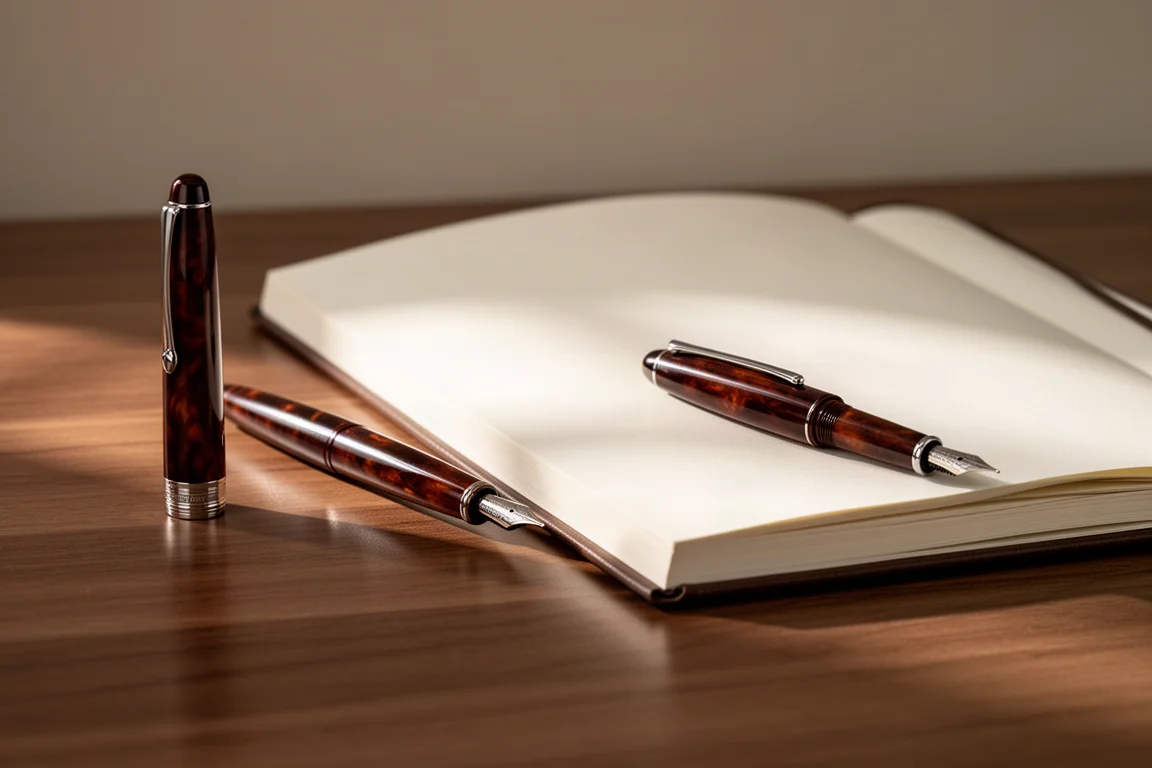
This is a large pen. When compared side by side with the Pilot Metropolitan, the difference in size is immediately noticeable. The silhouette is distinctive: a deeply tapering cap ending in a very sharp finial, a sleek curved barrel, and a pointed rear end giving the entire pen a dramatic, almost weapon-like profile.
The star here is the celluloid. It is a deep brown material with real depth, previously used by Delta on the Enrico Caruso model. Rather than being loud or flashy, it is refined, making it easy to imagine this pen in formal settings. The cap features the classic Delta scrollwork, a large Delta wheel, and a ring commemorating the 1982 to 2022 anniversary.
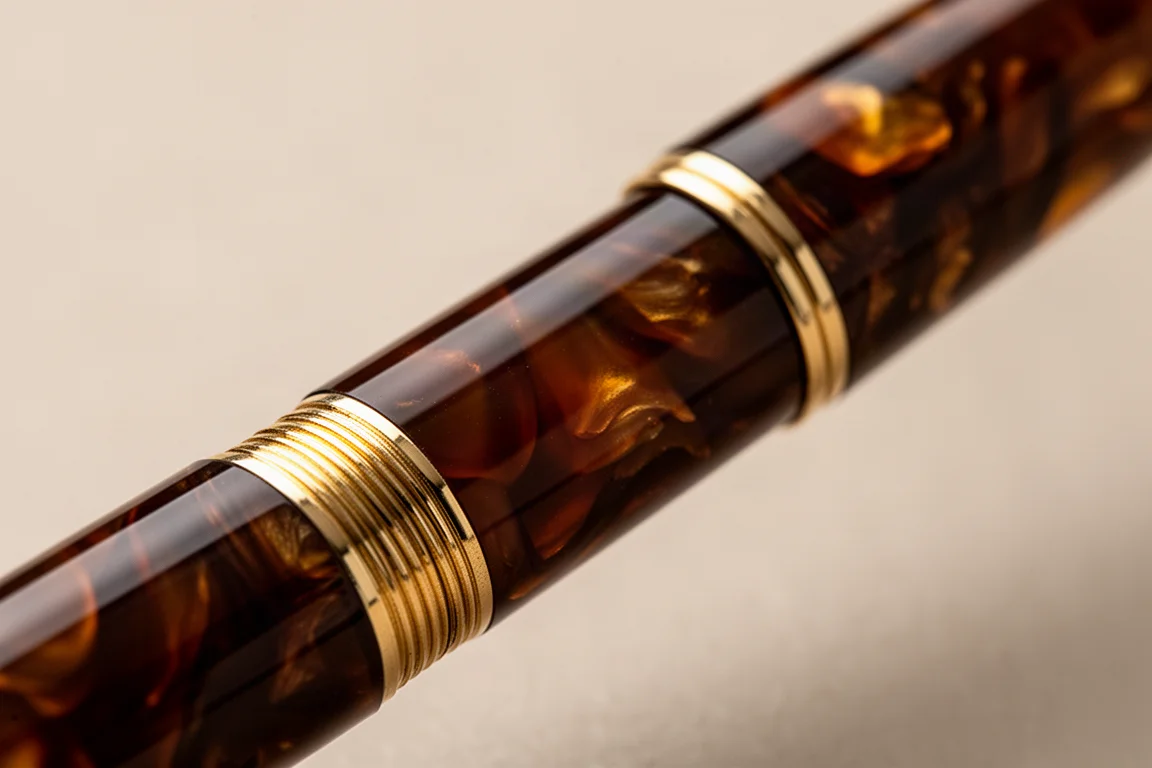
The gold-over-silver trim is consistent throughout, including gold-plated threads on the cap and a gold-plated ring near the grip. One divisive detail is the oversized Delta lettering on the cap band. It is very Delta, but it comes across as somewhat excessive, and some will prefer the pen without it.
The Right Balance System
The most unusual feature is hidden in the rear cone. Unscrew it, and inside there is a two-gram gold-plated weight that can be removed entirely. Leave it inside, and the pen has more weight at the back; take it out, and the balance shifts toward the front.
On paper, the idea is practical: writers working on long sessions may prefer the rear-weighted feel, while calligraphers might favor a front-weighted balance. In practice, two grams is not much, but on a relatively light pen, you truly notice the difference when the weight is in or out. Whether that difference meaningfully changes the writing experience is debatable, and the system borders on a gimmick, but it is fascinating to experiment with.
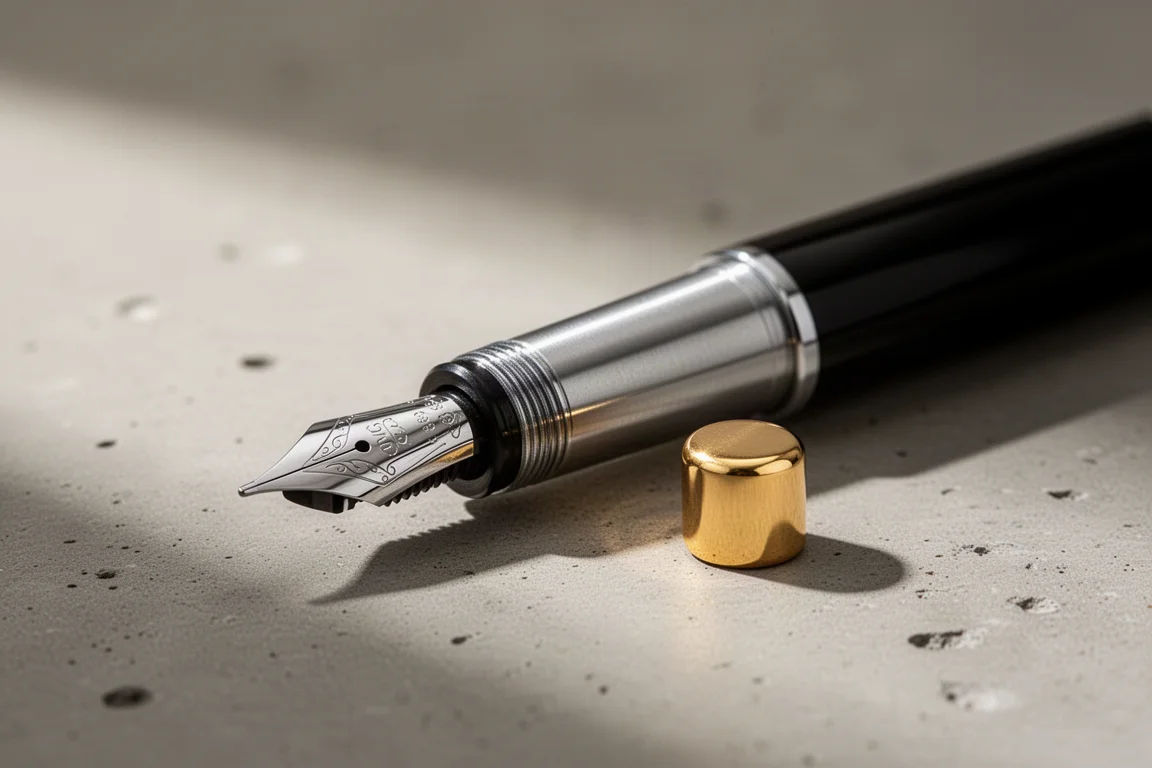
Other pen manufacturers have played with movable internal weights before, so the concept is not new, but Delta executes it cleanly with a cute, precisely machined element.
Filling and the Nib
The pen fills via cartridge, converter, or as an eyedropper. The entire assembly unscrews, revealing a standard Delta converter, and a rubber O-ring is installed to support eyedropper filling. It is not a spectacular filling system, but the eyedropper option adds flexibility.
The nib is an 18k JoWo unit, available in extra fine, medium, broad, and 1.1mm italic widths, all tuned to JoWo’s standard. The tested unit has a broad nib. The grip has an hourglass shape and is longer than it appears at first glance.
How It Writes
Initial skepticism about the thin-looking grip and sharp rear end quickly faded. The pen is genuinely comfortable in the hand and fits well, with the long grip keeping fingers well away from the threads.
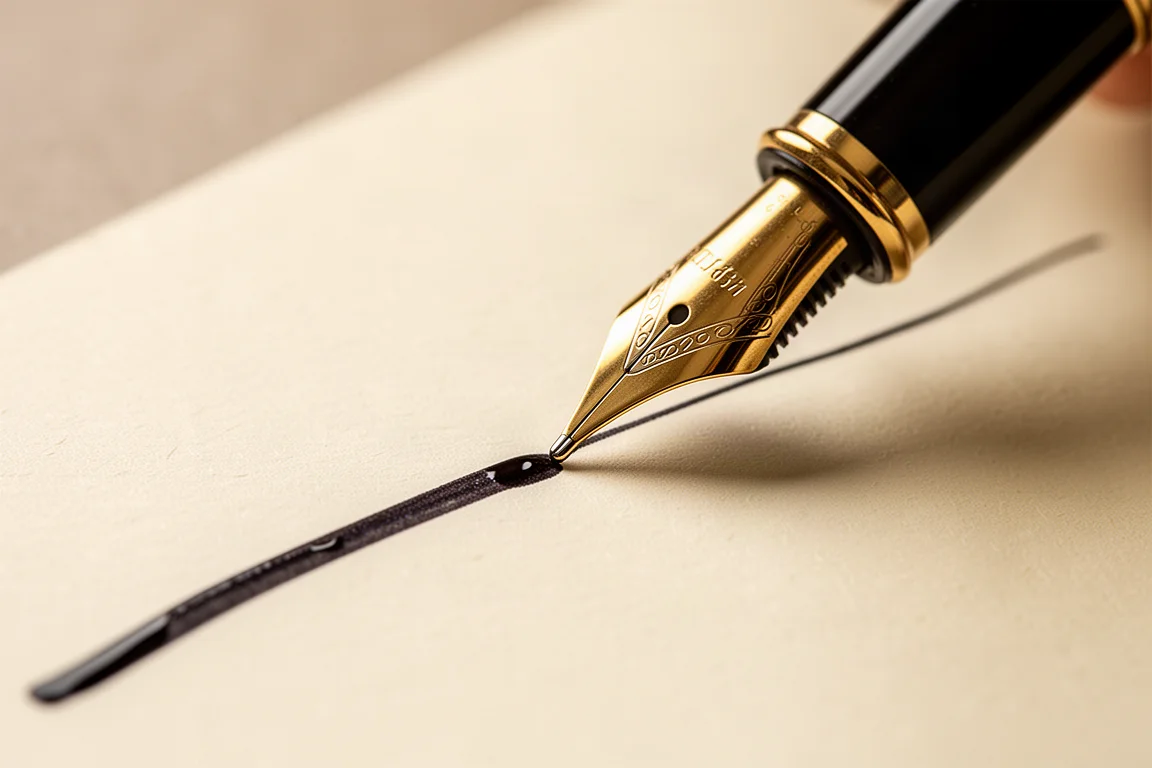
The broad JoWo nib writes smoothly, wetly, and with pleasant line variation. It is not a flex nib, but slight pressure coaxes more ink flow. Reverse writing is possible and reduces the broad to a line close to extra fine without feeling scratchy. As a pure writer, it is a joy, and that matters most when you are spending that kind of money.
Things to Consider Before Buying
The sharp finial and rear end are an aesthetic choice that you may or may not like. The ability to post the cap is also poor: the cap does not really post in a usable way, although at this size, most people will not need to.
Two more concerns are worth weighing. There is no center band, so metal threads rest directly against the celluloid. Overtightening the cap could theoretically crack it, since there is no band to dissipate that pressure, so careful capping is wise. Additionally, the value-for-money ratio is demanding: $1,279 retail is a lot for a cartridge/converter pen with a nib not made in-house, even with limited edition status, gold trim, and attractive celluloid on its side.
Buying Advice
Buy this pen if you love Delta, want a distinctive, original design in refined deep brown celluloid, and prioritize a smooth, well-tuned writing experience over innovations in the filling system. The comfort, wet 18k broad nib, and material quality are the real arguments here.
Skip it if the price feels uncomfortable or if you want a pen that can be posted or carries an in-house nib. As a limited edition from a revived brand, it will appeal primarily to collectors and Delta loyalists who already know what the scrollwork and wheel mean to them.
Conclusion
The Delta 39 Plus One is a lovely, very comfortable writer wrapped in beautiful celluloid, with a clever if slightly gimmicky balance weight and a price that demands real commitment. It is not cheap at around $1,279, but for those drawn to its original design and refined materials, it delivers where it matters most: on paper.
Link do produktu
Zobacz więcej szczegółów: Delta 39 Plus One
Ten produkt jest wymieniony w tej recenzji. Przed zakupem sprawdź specyfikację, dostępne warianty i kompatybilność.
Zobacz więcej szczegółów: Delta 39 Plus OneWięcej do przeczytania
Powiązane recenzje
Fountain Pens
Najlepsze kieszonkowe pióra wieczne: porównanie czterech kompaktowych pisaków
Cztery kieszonkowe metalowe pióra wieczne, trzy z tytanu i jedno ze stali nierdzewnej, porównane pod kątem rozmiaru, stalówek, napełniania i codziennej użyteczności.
Fountain Pens
Najlepsze pióra wieczne do torebki: siedem kieszonkowych propozycji przetestowanych na co dzień
Siedem piór wiecznych ocenionych jako pióra do torebki pod kątem rozmiaru, wagi, trwałości i wygody użytkowania, z jednym wyraźnym zwycięzcą na co dzień.
Fountain Pens
5 długopisów na żyłkę odpornych na prawdziwych koneserów – niezależnie od ceny
Pięć niedrogich piór wiecznych z historią, designem i właściwościami piśmienniczymi, które przekonają nawet najbardziej wybrednego pasjonata.