Polski · Soundbars
Bowers & Wilkins Panorama 3 Review: A Premium All-in-One Dolby Atmos Soundbar
A detailed look at the $999 Bowers & Wilkins Panorama 3, a slim 3.1.2 Dolby Atmos soundbar built to replace TV speakers without an external subwoofer.
Introduction
The Bowers & Wilkins Panorama 3 is a single-body soundbar built to replace the speakers inside a modern television. It carries a $999 price and a Dolby Atmos processor, and it does so without asking for a separate subwoofer, a pair of height modules, or any other add-on box. Everything sits in one slim cabinet that measures 2.5 inches tall, 46.6 inches wide, and 5.5 inches deep.
Bowers & Wilkins is a name that needs little introduction in home theater and audiophile circles. Its Nautilus loudspeakers have been displayed in museums around the world, and recording studios have used the company’s speakers to mix music and to build the soundtracks of films such as Return of the Jedi, Raiders of the Lost Ark, The Lord of the Rings, and The Avengers. The Panorama line itself began in 2009, when the original model was conceived as a premium, no-compromise soundbar that delivered the best possible sound from a single speaker with no external subwoofer. The Panorama 2 followed in 2013 with improved drivers and HDMI inputs, and the Panorama 3 is an entirely new design that adds smart speaker features and Dolby Atmos spatial audio to the same all-in-one idea.
Who this product is for
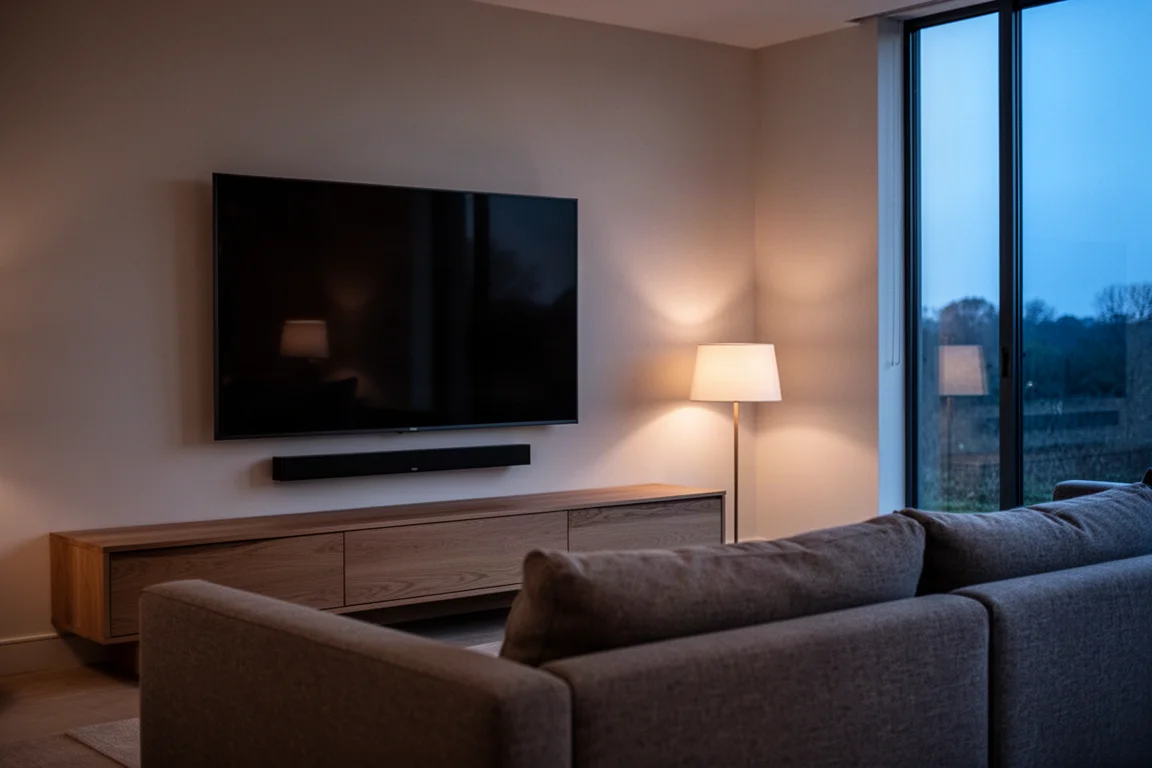
The Panorama 3 is aimed at households with a television of 55 inches or larger. Its low profile is designed to sit discreetly on top of a media console, and it is meant to disappear visually rather than become a feature of the room. Setup reflects that intent: a single HDMI cable into the television’s ARC or eARC port, HDMI CEC enabled, and nothing else required.
It also suits listeners who care more about build quality and sound than about a long list of features. The cabinet is solid and avoids the plasticky feel common to many soundbars in this category. Buyers who want voice control, app-based streaming, and integration with a home automation system will find those capabilities here as well.
Anyone who wants a dedicated external subwoofer, discrete surround speakers, or the deepest possible low-frequency effects should look elsewhere in the range, because the Panorama 3 is deliberately designed as a closed, plug-and-play system.
Main strengths
The first thing that registers is the sense of quality. The soundbar feels solid in the hand and lacks the hollow, plasticky character that defines so much of the category. That impression carries through to the finish and to the way the cabinet sits on a shelf or against a wall.
A 3.1.2 driver array with genuine bass
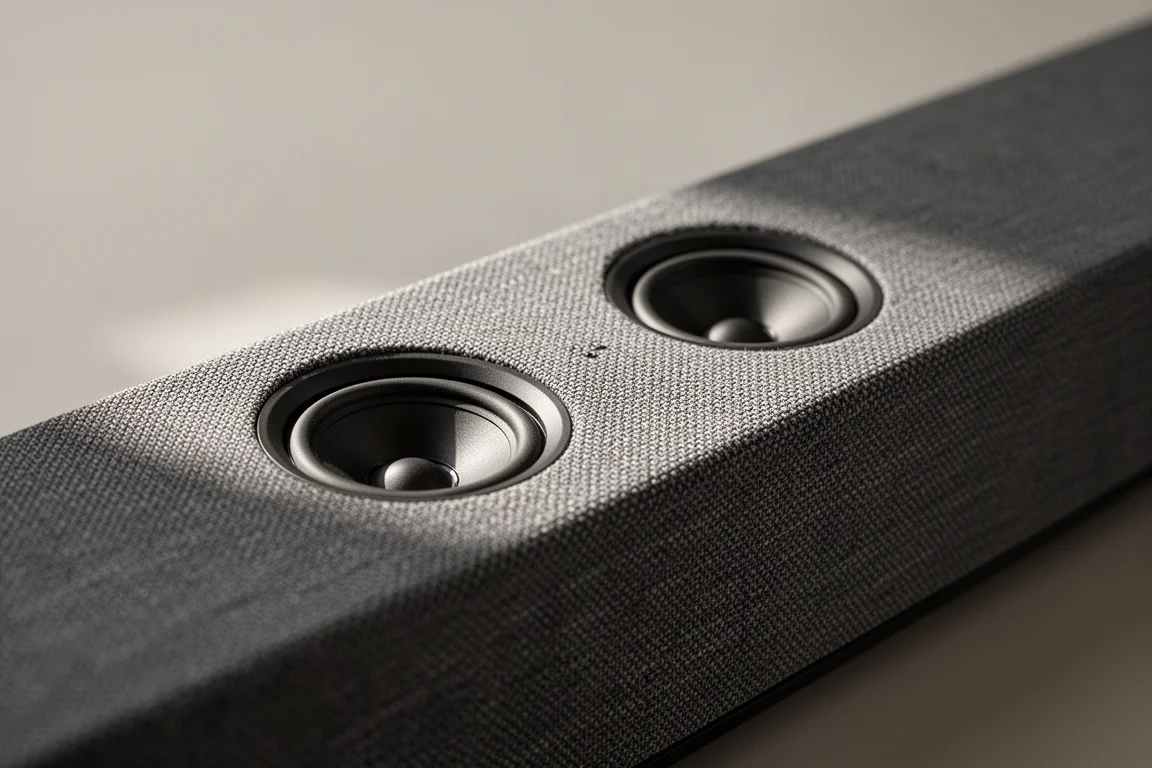
The Panorama 3 is rated at 400 watts of total output driving 13 individual drive units in a 3.1.2 configuration. That figure describes discrete left, center, and right channels, a single subwoofer channel, and two height channels. The left, center, and right drivers are arranged in three sets along the front, and each set pairs two 2-inch midrange cones made of woven glass fibers with a 3/4-inch titanium dome tweeter. The tweeter is decoupled from the rest of the system, which minimizes the effect vibration can have on its frequency response.
Height information comes from two up-firing, angled 2-inch drivers on the top of the cabinet. Bass duties fall to two 4-inch low-profile units mounted on top in their own large enclosure. The soundbar reaches down to 43 Hz and extends up to 48 kHz at the top end. In practice the bass is punchy, tight, and satisfying, and the psychoacoustic effect is strong. A stereo signal is upmixed to 3.1, with vocals locked firmly to the center channel and blended into the left and right channels as you move closer to the bar, creating a wide and stable presentation. A multichannel signal is upmixed to the full 3.1.2 Atmos layout.
Dialogue is the part that matters most in any television setup, and it stays highly intelligible here. There is no voice lift feature, and none is needed, because the voicing places a slight emphasis on the vocal range. The listening window is also unusually broad, so the sound holds together well off axis.
Streaming and smart features that simply work
A capacitive touch interface sits on top of the cabinet. Amazon Alexa is built in, and enabling it takes only a few steps: open the Bowers & Wilkins mobile app, link an Amazon account, and enable the Alexa skill. Voice control for music and for volume responded without issue every time it was used.
The soundbar uses the same wireless streaming platform found in the company’s Zeppelin and Formation series speakers, managed through the mobile app. Deezer, Qobuz, Tidal, and Spotify are supported, with Spotify handled through Spotify Connect. Apple devices connect over AirPlay 2, which is also the route for Apple Music subscribers, and Roon works once the soundbar is configured as an AirPlay 2 speaker. Bluetooth 5.2 is on board with AAC and Qualcomm aptX Adaptive, and the unit connects over both 2.4 GHz and 5 GHz Wi-Fi.
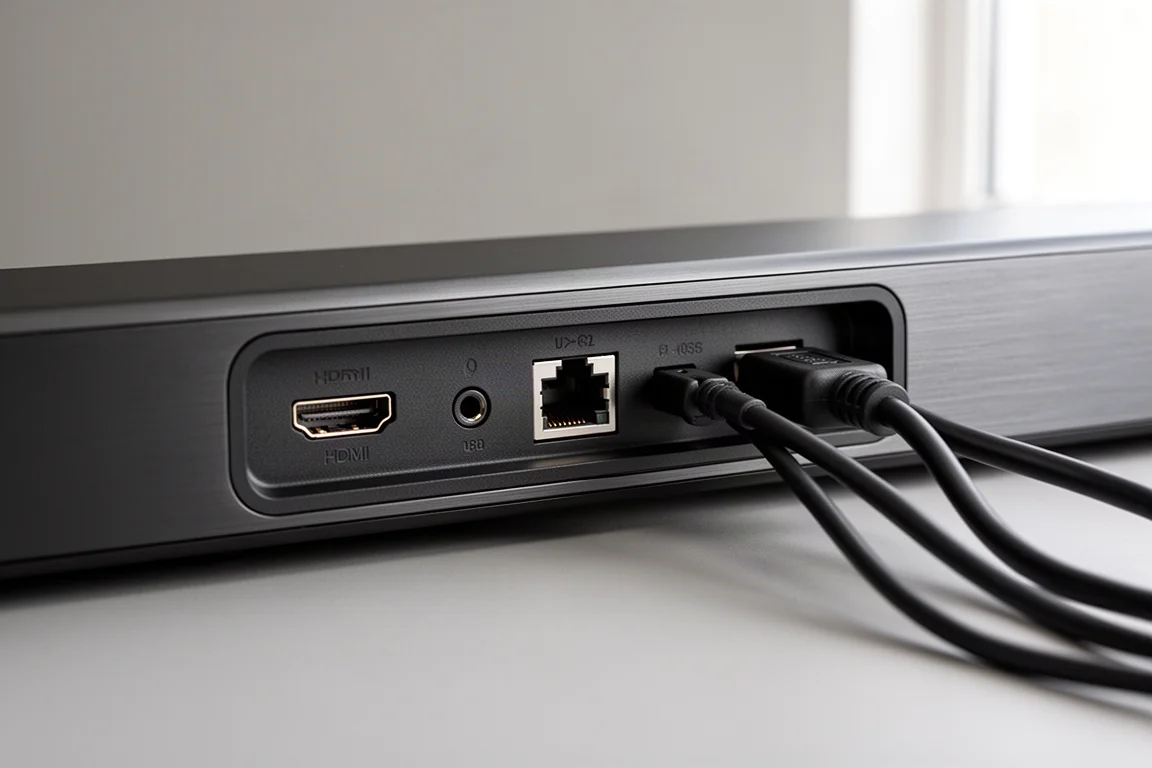
On the processing side, the Panorama 3 supports all flavors of Dolby audio, including Dolby Atmos and Dolby TrueHD. There is no DTS:X or Auro-3D support. Around the back you will find the HDMI eARC port, Ethernet for a wired network connection, and Toslink optical for older televisions. A USB-C port is present for service connections only. No remote is included, and none is really needed, since the television remote handles everyday control and an IR repeater on the unit can learn commands from an older remote.
Things to consider before buying
Wall mounting needs planning
A metal wall mount bracket is included in the box, which is a genuinely useful addition, but no screws or anchors are supplied. Because of the driver arrangement there is only one possible orientation for the soundbar, so a wall-mounted Panorama 3 projects roughly 5.5 inches from the wall. That will be more noticeable under an ultra-thin OLED display than under a typical LED television.
A few practical steps make the installation easier. Make every cable connection before driving the final screw, because the rear port layout does not allow cables to be unplugged without unmounting the soundbar first. Plan for an extra wall outlet behind the television, and set the distance between the bottom of the screen and the top of the soundbar carefully, since both the power cord and the HDMI cable will run up the wall. If you use a low-profile mount, confirm that you can still reach the pull tabs that tilt the television away from the wall.
None of this is difficult, but it does reward a little planning before the bracket goes up. Owners who simply place the soundbar on a console will avoid the issue entirely.
Atmos expectations and the no-subwoofer design
The Panorama 3 is a 3.1.2 system, and it performs exactly as that specification suggests. Multichannel and Dolby Atmos mixes gain a taller, broader, and deeper front soundstage, which is the main benefit of the height channels. What it cannot do is place discrete effects behind or beside the listener. In a scene such as the ornithopter flight through the sandstorm, sounds that a full Atmos system spreads around the room stay largely confined to the front.
Deep bass is the other area where the design sets its own limits. The majority of listeners will be very satisfied with the low-end performance, but content with extreme subterranean bass, such as the opening of Dune, lacks the physical weight that only a dedicated subwoofer can produce. There is no wired or wireless option for adding an external subwoofer, because the Panorama 3 is designed as a complete all-in-one solution. Anyone who wants a wireless subwoofer and discrete wireless surround speakers should look at the company’s Formation soundbar instead.
Room geometry matters as well. The soundbar is designed to work optimally in rooms with a ceiling height of about 9 to 10 feet and a seating distance between 6 and 13 feet. It will still work outside those parameters, but that is the window the design targets. Finally, if you pair the soundbar with an older television that offers ARC rather than eARC and use a standalone streaming device, Atmos delivery may not be possible. The mobile app clearly indicates whether the bar is receiving a Dolby Atmos signal or a standard Dolby Digital one, which makes the situation easy to diagnose.
Buying advice
At $999, the Panorama 3 sits above much of the soundbar competition. What it lacks in bells, whistles, and gimmicks it makes up for in build quality, design, and raw performance. The cabinet feels premium from the moment it leaves the box, the Alexa integration is flawless, and streaming audio simply works as advertised. The result is a refined, articulate presentation with strong vocal intelligibility and a broad listening window, qualities that lesser soundbars often smear or muddy.
This is an easy recommendation for anyone who wants a single, elegant box that upgrades television audio without a subwoofer, without height speakers, and without a stack of cables. It is also a natural fit for a home automation setup, since the soundbar supports Control4 and the company has been preparing Crestron drivers for its music app.
It is not the right choice for a buyer who wants the deepest bass effects, a true surround experience, or the flexibility of adding components later. Those priorities point toward a system with a dedicated subwoofer and discrete surround channels.
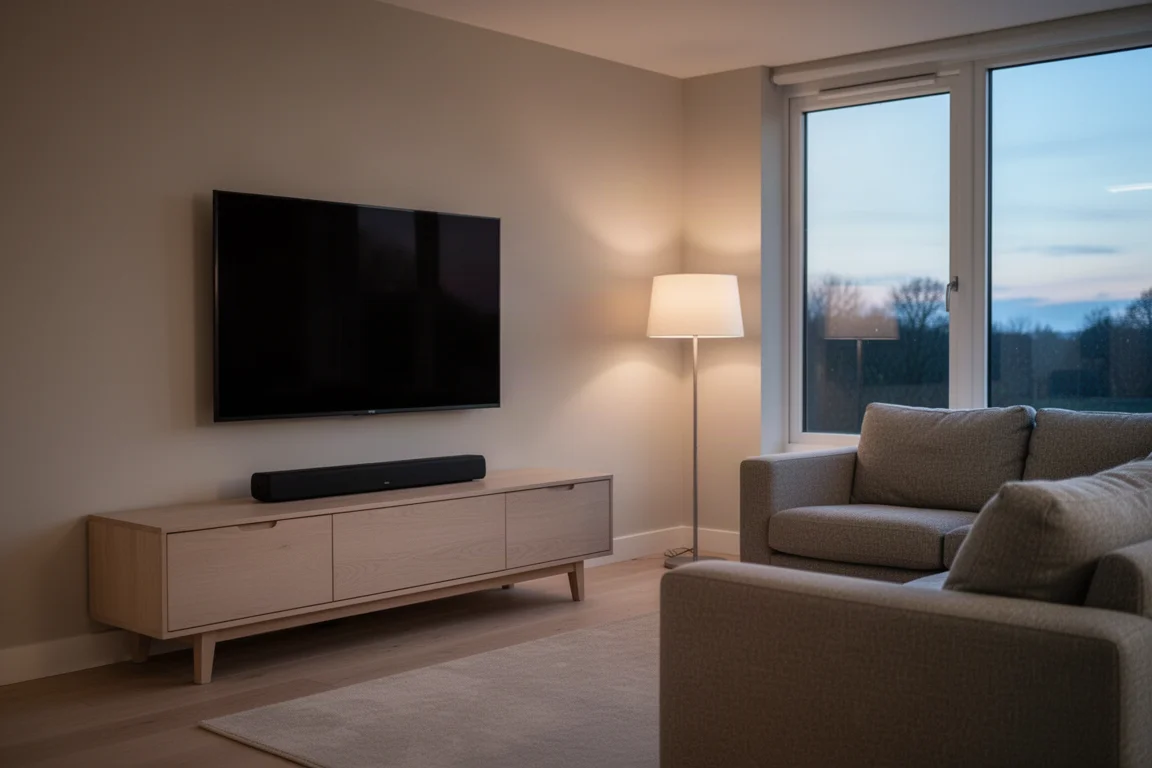
If your priorities are a low-profile cabinet, straightforward setup over a single HDMI connection, and sound quality that holds up across music, television, and film, the Panorama 3 deserves serious consideration. Check that your television offers eARC before you commit, and confirm the mounting approach you intend to use.
Conclusion
The Panorama 3 succeeds at the goal it was designed around. It replaces the speakers built into a thin television with a genuinely refined all-in-one system, adds Dolby Atmos processing, Alexa control, and app-based streaming, and asks for nothing more than a power outlet and a single HDMI cable. The trade-offs are deliberate and easy to understand: no external subwoofer, no DTS:X or Auro-3D, and a front-focused Atmos presentation that stops short of full immersion. For buyers who value build quality, dialogue clarity, and a clean installation over a longer feature list, it is a compelling option at $999.
Link do produktu
Zobacz więcej szczegółów: Bowers & Wilkins Panorama 3
Ten produkt jest wymieniony w tej recenzji. Przed zakupem sprawdź specyfikację, dostępne warianty i kompatybilność.
Zobacz więcej szczegółów: Bowers & Wilkins Panorama 3