Polski · Home Theater
Bose Smart Ultra Soundbar Review: AI Dialogue Clarity From a Slim All-in-One Bar
A single-bar Dolby Atmos flagship that leans on AI dialogue processing instead of extra drivers, with clear strengths, real trade-offs and practical add-on advice.
Introduction
The Bose Smart Ultra Soundbar takes over from the Smart Soundbar 900 as the brand’s flagship 5.1.2 all-in-one Dolby Atmos bar. The cabinet is carried over, the driver count is carried over, and Bose has kept detailed specifications close to its chest, so the real news sits in software: an AI Dialogue Mode that Bose says combines machine learning with the bar’s AdaptiQ calibration and TrueSpace processing to keep speech intelligible no matter what is on screen.
That makes the Smart Ultra an unusual flagship. It does not chase a larger cabinet or a higher driver count. Instead it leans on processing, a slim profile and a genuinely simple setup, and it asks buyers to care most about dialogue clarity.
Who This Soundbar Is For
This bar suits listeners who value intelligible dialogue above almost everything else. If mumbled lines in dense action mixes are the reason you keep reaching for subtitles, the Smart Ultra addresses that problem directly.
It also fits rooms where space is tight. The bar is slim and unassuming, and in a bedroom or a small apartment it can carry a system on its own without a subwoofer. Listeners who want plug-and-play operation from a single HDMI cable, with no appetite for deep menus, will find the app relationship straightforward.
It is a weaker fit for anyone who wants the most detailed front stage edge to edge, or who already owns a Smart Soundbar 900 and is content with its dialogue performance.
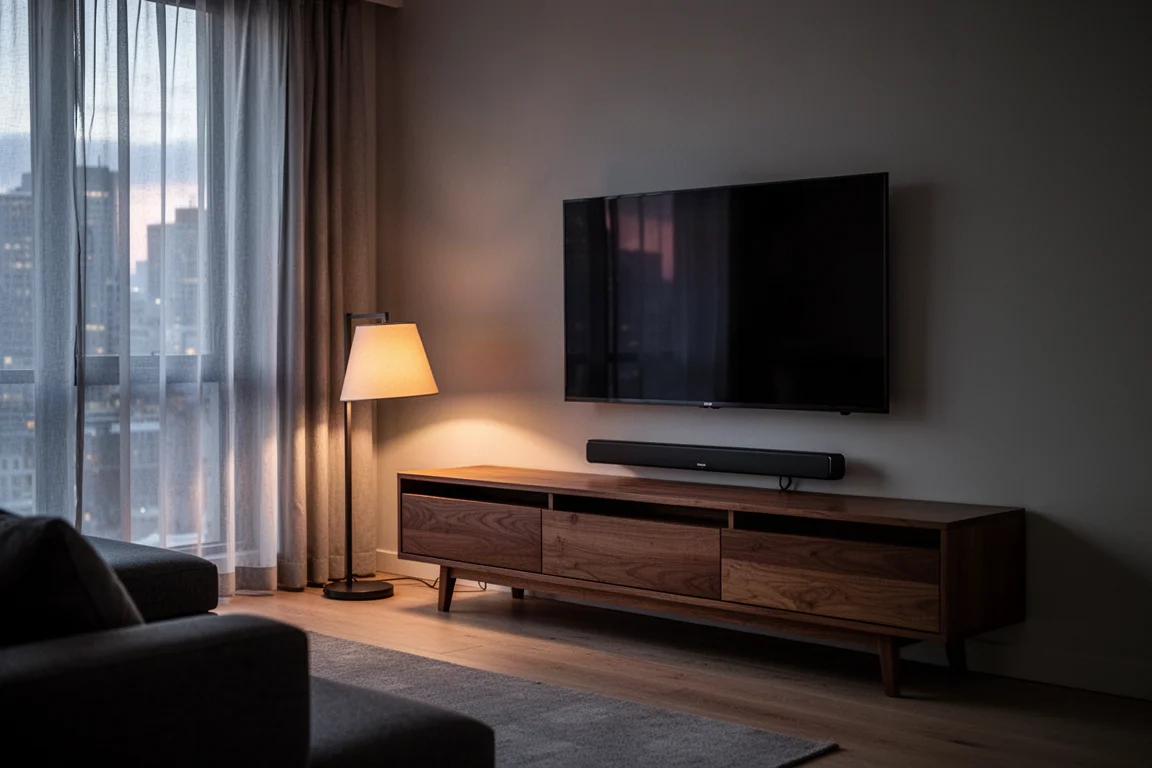
The optional Bass Module 700 and Surround Speakers 700 are available for buyers who want a fuller system, though both carry a premium and neither is class-leading.
Design, Setup, and Connectivity
Physically, the Smart Ultra shares its chassis with the outgoing 900, along with the same number of drivers. Bose has not published detailed power figures, so a like-for-like comparison with the older bar is difficult to make with confidence.
Connectivity on the back panel is deliberately minimal: one eARC-capable HDMI port and a single optical audio input for televisions that lack HDMI. Everything needed to get running, cables included, comes in the box, and one HDMI cable between the television’s eARC port and the bar is enough to start watching.
Wireless options are broad. Wi-Fi, Bluetooth 5.0 (an upgrade over the 900), AirPlay 2, Chromecast and Spotify Connect are all supported, alongside a range of music services accessed through the Bose Music app on iOS and Android. Google Assistant and Amazon Alexa add a measure of voice control.
Dialogue Clarity and the AI Dialogue Mode
AI Dialogue Mode is enabled by default, and its effect is immediate. In dense action mixes, including dialogue delivered from inside a full-face helmet, speech stays clear. Just as importantly, it does not sound artificial or detached from the rest of the mix, and the bar does not appear to duck surrounding elements to force dialogue forward. The spaciousness and scale of the previous flagship remain intact.
The more striking behaviour is placement. Dialogue never feels trapped inside the bar. It appears to come from the screen itself, roughly 12 to 18 inches above the bar depending on where a performer sits in frame. Music vocals behave the same way, hovering above the cabinet rather than emerging from it.
The mode is not a universal fix. Sports broadcasts, which are typically heavily compressed, can confuse the processing. It struggles to decide whether crowd noise or commentary matters more, and the result can sound slightly more sibilant and distorted. The mode can be switched off in the app, and even with it off, dialogue intelligibility remains a genuine strength of this bar.
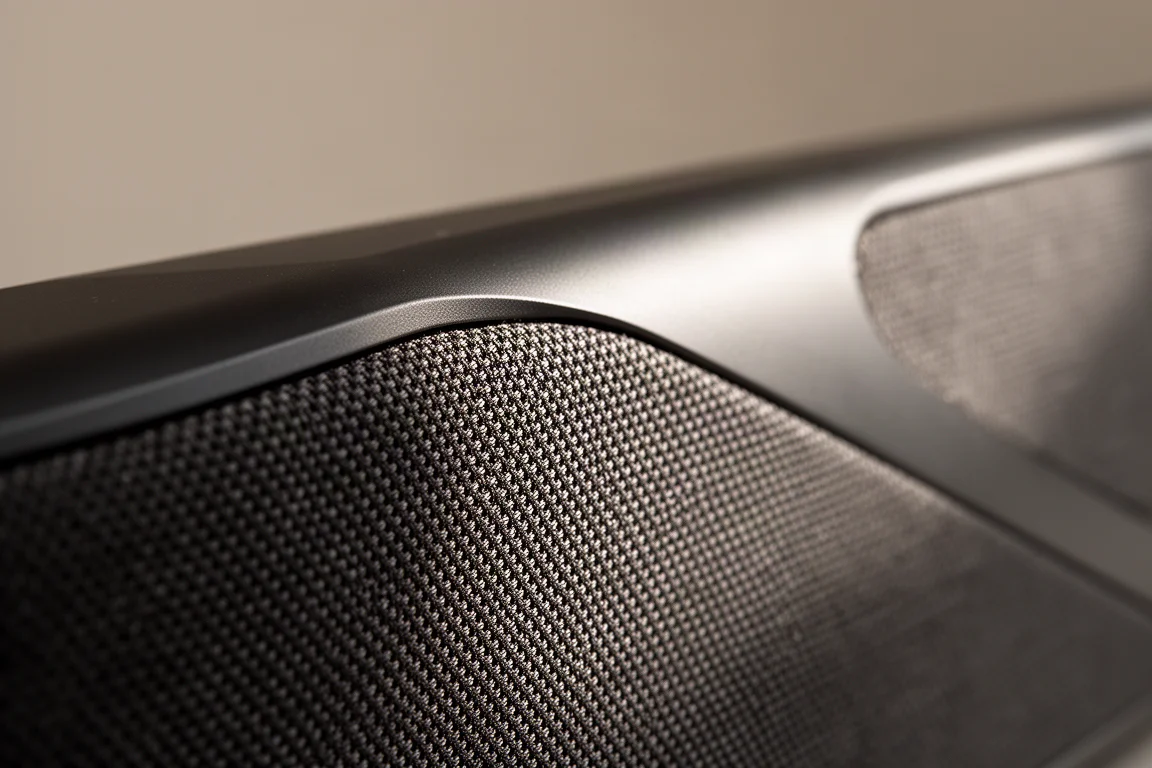
For most viewing, leaving it on is the sensible default. For compressed live sport, a quick toggle or a small treble reduction in the app is worth knowing about.
Soundstage and Surround Performance
For a slim bar, the scale is remarkable. It builds a floor-to-ceiling soundstage with real depth and projects surround effects forward and overhead, reaching a listening position roughly 11 feet away. Few single bars create this kind of dome of sound, and the effect gets close to what a much larger, considerably more expensive bar can achieve.
There are limits. Focus and detail are strongest toward the centre. As effects travel to the sides or overhead, nuance diminishes. For front-of-stage definition across the full width and height, physically larger and more expensive bars still hold the advantage.
Tonally the bar is well judged. It is not strictly neutral, but it avoids bloated bass and shrill, fatiguing highs. In a bedroom or small apartment, the bar alone can carry a system. In a larger room, it benefits from help lower down the frequency range.
Bass Module 700 and Surround Speakers 700
Both add-ons connect wirelessly and are controlled inside the Bose Music app. The Bass Module 700 is the more convincing of the two. It opens up the presentation and grounds bass in both music and film soundtracks. At very high in-room levels, above roughly 95 dB, it can bottom out with demanding low-frequency content, though ordinary explosions and engine effects are handled without trouble.
The Surround Speakers 700 are more of a compromise. They are small, roughly the size of a phone, yet each relies on a large external power supply that is bigger than the speaker itself, which undercuts the minimal look. They also lack overhead drivers, so effects travelling front to back and overhead drop to ear height as they approach the rear. They do elevate the experience, but they are not the strongest surrounds available at this price.
How It Compares With Other Soundbars
The Sonos Arc sits at a similar price and is the fuller-range bar, with a more focused, detailed, traditional high-fidelity presentation. It does not produce the same vast dome of sound as the Bose. Out of the box, dialogue is clearer through the Bose. Once a Sonos system is completed with a subwoofer and a pair of Era 300 surrounds, however, Sonos takes the overall win.
Samsung’s Q990C remains the value leader for soundbar home theater. It uses far more drivers, occupies a larger footprint, and includes a subwoofer and Atmos-enabled surrounds that together outclass the Bose as a complete system.
The JBL 1300X offers strong value and more raw cinematic punch, but it is not built to the same standard, its app is less elegant, and it is physically larger. Dialogue clarity goes to the Bose.
The Ambeo Max is essentially the original Ambeo with software updates rather than new drivers or amplification. It delivers a bigger, bolder sound, adds multiple HDMI inputs so sources can connect directly, and its room correction routine is more straightforward. It suits larger rooms better. Even so, the Bose remains close in impact, and it does so from a far smaller cabinet.
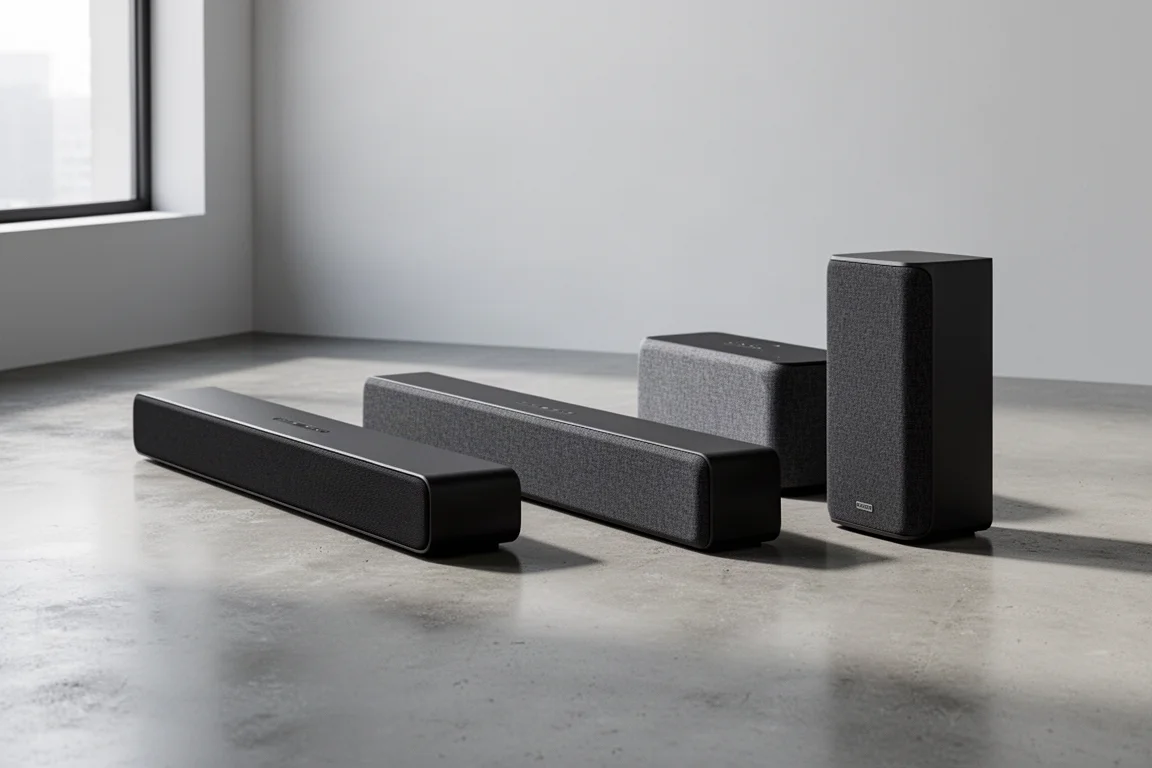
For buyers weighing complete systems rather than single bars, the honest summary is that Bose wins on dialogue and single-bar spaciousness, while larger or fully equipped systems win on scale, detail and value.
Things to Consider Before Buying
A few practical points are worth knowing before committing.
Only one eARC-capable HDMI port is provided, so video switching depends on the television. Buyers with several sources may prefer a bar with multiple HDMI inputs.
Bose does not publish detailed specifications, and the cabinet and driver count match the previous generation, so there is no clear hardware upgrade story beyond Bluetooth 5.0 and the AI Dialogue Mode.
The AI processing is excellent but not universal. Compressed sports broadcasts can sound more sibilant, and the remedy is a manual toggle or a treble adjustment.
The Surround Speakers 700 need large external power supplies and have no overhead drivers, so their price is harder to justify than the subwoofer’s.
The Bass Module 700 can reach its limits at very high volumes with demanding low-frequency material.
Owners of the Smart Soundbar 900 should treat this as a dialogue upgrade rather than a wholesale one. If the 900’s dialogue performance already satisfies, there is little else here that changes the experience.
Buying Advice
Start with room calibration. Bose’s AdaptiQ procedure takes around three minutes, involves wearing a headpiece and following prompts in the app, and makes a meaningful difference to spatial results and to the transition between bar and subwoofer.
Then decide on add-ons by room rather than by habit. In a bedroom or small apartment, the bar alone is a sensible first purchase, with the Bass Module 700 added later only if something feels missing. In a larger room, the subwoofer is close to essential for film and music alike. The surrounds can reasonably be skipped.
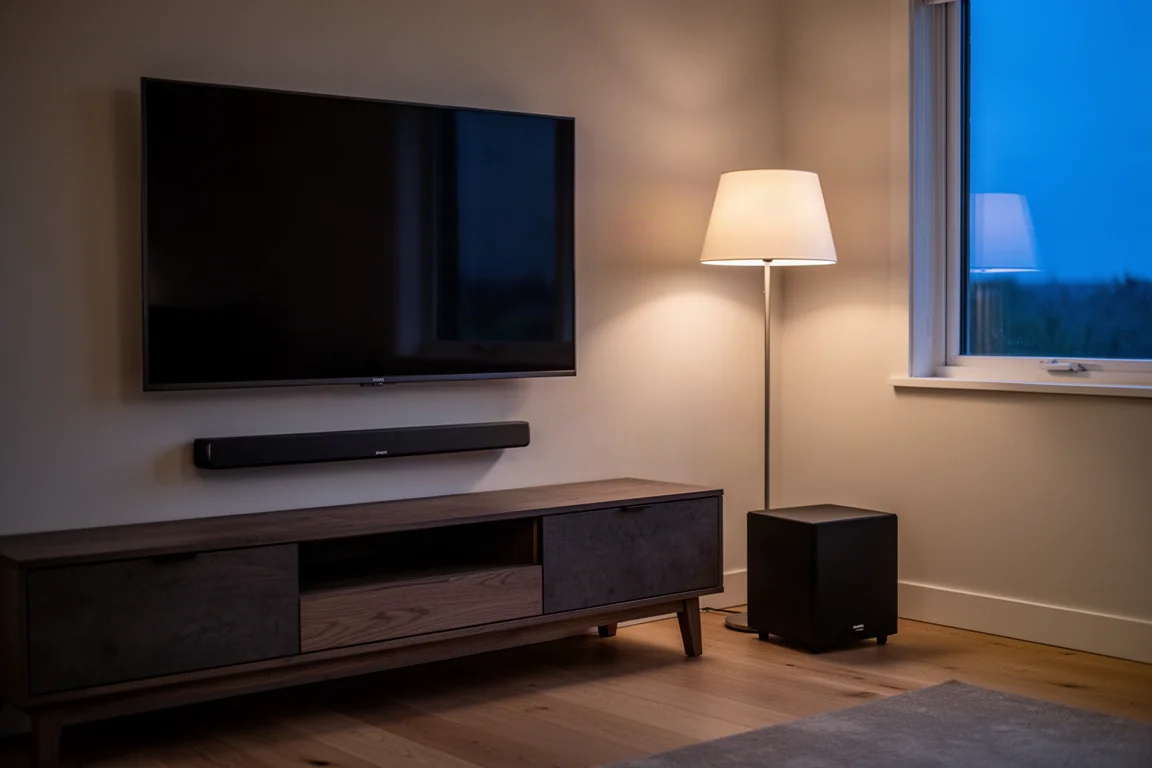
Buyers who prioritise dialogue clarity, a slim footprint and a simple setup will find the Smart Ultra easy to recommend. Buyers who want maximum front-stage detail or the best possible value from a complete system should compare carefully, because larger and more heavily equipped options still lead in those areas.
Conclusion
The Bose Smart Ultra Soundbar is an impressive all-in-one solution and ranks among the better bars of its kind. Its AI Dialogue Mode is genuinely useful, its sense of space from a single slim cabinet is close to class-leading, and its setup is about as simple as home theater gets. The trade-offs are the ones Bose has chosen: a single HDMI input, modest connectivity on the back panel, and add-ons that are not the best value in their class. For listeners who want clear speech and a big, broad sound from one unassuming bar, it deserves a place on the shortlist.
Link do produktu
Zobacz więcej szczegółów: Bose Smart Ultra Soundbar
Ten produkt jest wymieniony w tej recenzji. Przed zakupem sprawdź specyfikację, dostępne warianty i kompatybilność.
Zobacz więcej szczegółów: Bose Smart Ultra Soundbar