Nederlands · Bookshelf Speakers
Wharfedale Evo 4.1 vs Acoustic Energy AE300 vs Q Acoustics 5020: Three Compact Speakers Compared
A practical comparison of three compact two-way bookshelf speakers from UK-based brands, covering bass, midrange, treble, build quality, and what each one demands from your room.
Introduction
Three compact two-way bookshelf speakers, all from UK-based brands, all built around a roughly five-inch woofer and a one-inch tweeter, and all priced within a couple of hundred dollars of each other. The Wharfedale Evo 4.1, the Acoustic Energy AE300, and the Q Acoustics 5020 look like direct rivals on paper, but they behave very differently once they are sitting in a room.
All three are ported designs, with the Q Acoustics and the Acoustic Energy using rear-firing ports. Each one also asks something different of its owner. One demands precise placement and careful toe-in, one demands the correct listening height, and one is content almost anywhere you put it. That difference ends up mattering more than any single line on a specification sheet, because a speaker that fights your room will rarely sound as good as one that suits it.
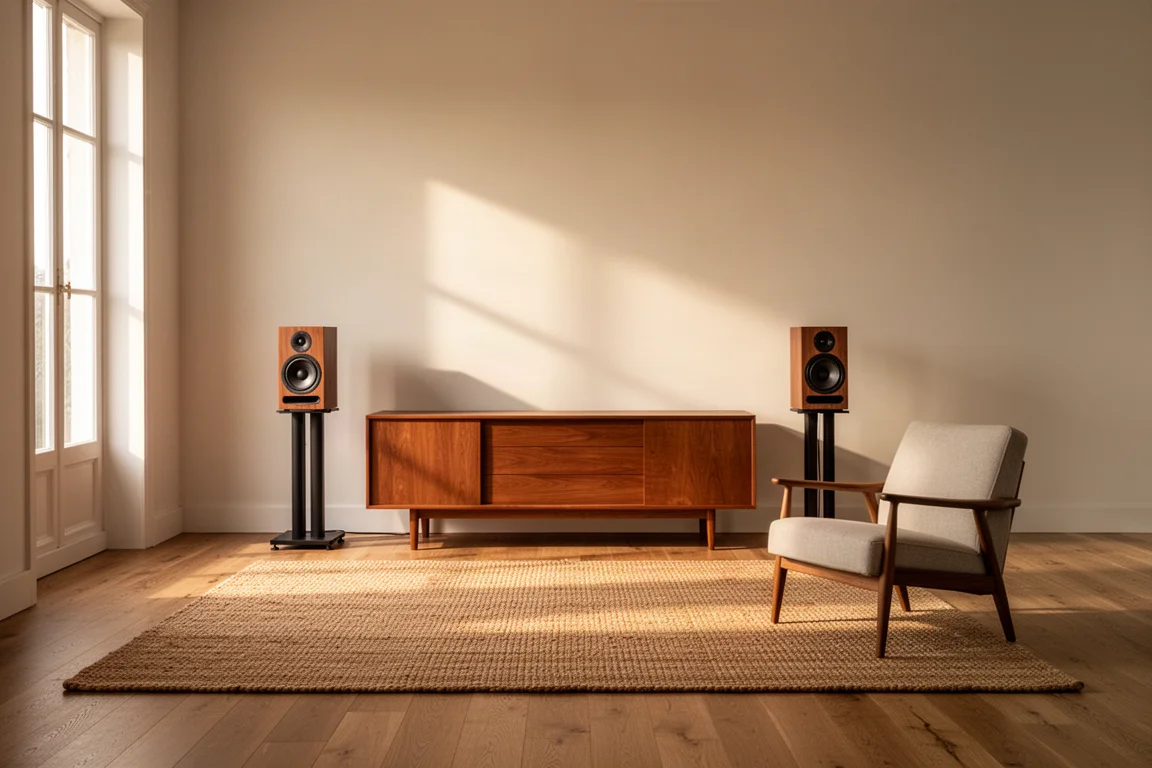
This comparison looks at how each speaker handles bass, midrange, and treble, how they are built and finished, and what each one needs from an amplifier and a room. Prices in this part of the market shift around, so treat the figures below as a starting point rather than a fixed number.
How These Three Speakers Compare
| Speaker | Approx. price | Drivers | Rated range | Sensitivity | Weight |
|---|---|---|---|---|---|
| Wharfedale Evo 4.1 | Around $800 | 5-inch Kevlar woofer, AMT tweeter | 58 Hz to 22 kHz | 87 dB | 17 lb |
| Acoustic Energy AE300 | $999 | 130 mm woofer, 28 mm aluminum dome tweeter | 45 Hz to 30 kHz | 86 dB | 14 lb |
| Q Acoustics 5020 | $899 | 5-inch woofer, 1-inch tweeter decoupled from the cabinet | 53 Hz to 30 kHz | 87.9 dB | 15.5 lb |
The Wharfedale runs an 8 ohm nominal impedance, while the Q Acoustics is rated at 6 ohm nominal. The Q Acoustics cabinet also uses point-to-point bracing and a tweeter that is decoupled from the enclosure, a combination that helps explain its composure at higher volumes. The Acoustic Energy is the lightest of the three at 14 lb, the Wharfedale is the heaviest at 17 lb, and the Q Acoustics sits between them at 15.5 lb.
The rated numbers already hint at the characters involved. The Acoustic Energy reaches lowest on paper at 45 Hz, the Q Acoustics covers the widest practical spread with a clean 53 Hz to 30 kHz rating, and the Wharfedale trades some extension for a very different tweeter design.
Wharfedale Evo 4.1: Precision That Rewards Careful Setup
The Evo 4.1 pairs a 5-inch Kevlar woofer with an AMT tweeter, rated from 58 Hz to 22 kHz with 87 dB sensitivity and an 8 ohm nominal load. At 17 lb it is the heaviest speaker here, and it is also the most efficient, which makes it the easiest to drive. A clean amplifier with roughly 30 to 40 watts is enough to bring it to life, and it will work with a wider range of amplifiers than the other two.
That AMT tweeter is the main event. Percussion attacks sound snappier and cleaner, cymbals sound more natural, and there is more air and reverb around instruments than either rival produces. The likely trade-off is that AMT designs cannot be crossed over very low, which may be why the lower midrange sounds slightly veiled before the tweeter takes over and the detail returns.
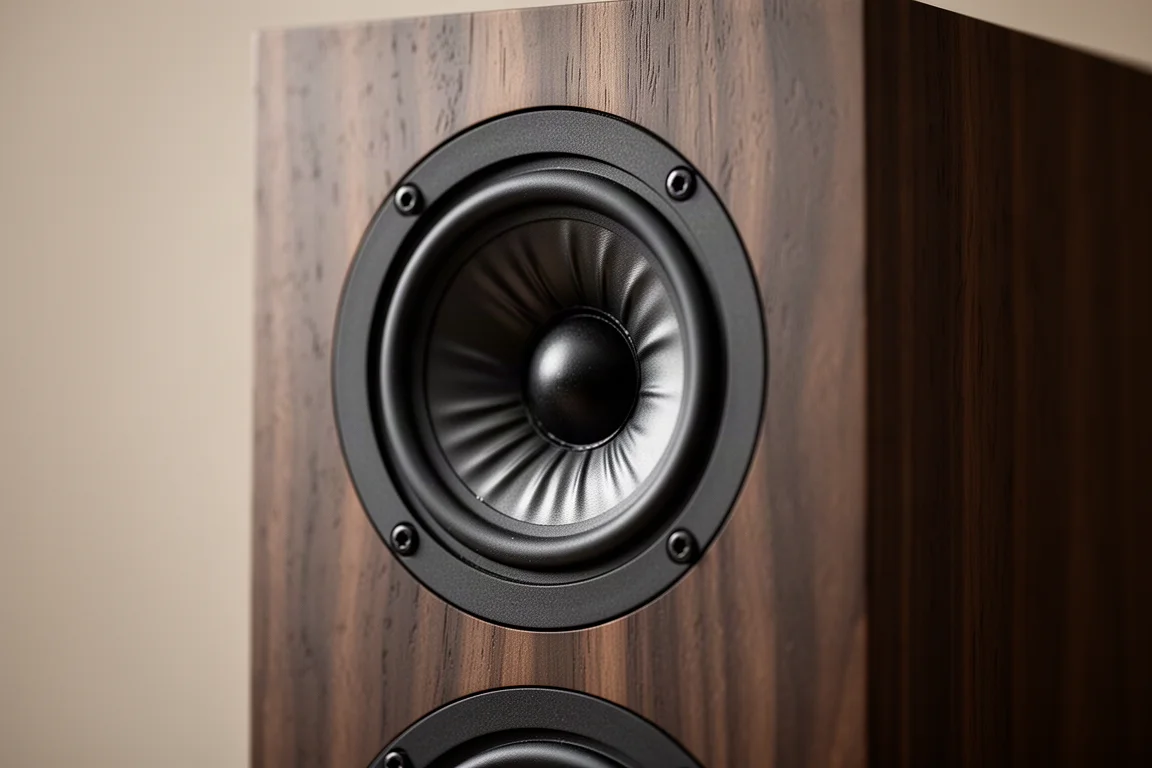
Bass is punchier than the cabinet size suggests, though it is not the most extended of the three. There is a slight bloom around 200 to 300 Hz that gives lower midrange instruments and male vocals plenty of body while softening clarity, and the upper midrange can sound a touch forward, with a possible peak around 1.5 to 2 kHz that may become tiring over long listening sessions. Pulling the speakers further out from the wall, or applying a little EQ at the bottom end, are the usual ways to tame it.
Placement is the real condition of ownership. The Evo 4.1 is precise, and it rewards patience: get the height and toe-in right and it locks into focus, but leave it slightly off and some of that magic disappears. The finish is excellent, with real wood veneer and solid binding posts, and it is the least expensive speaker of the three.
Acoustic Energy AE300: Big, Warm Sound From a Small Cabinet
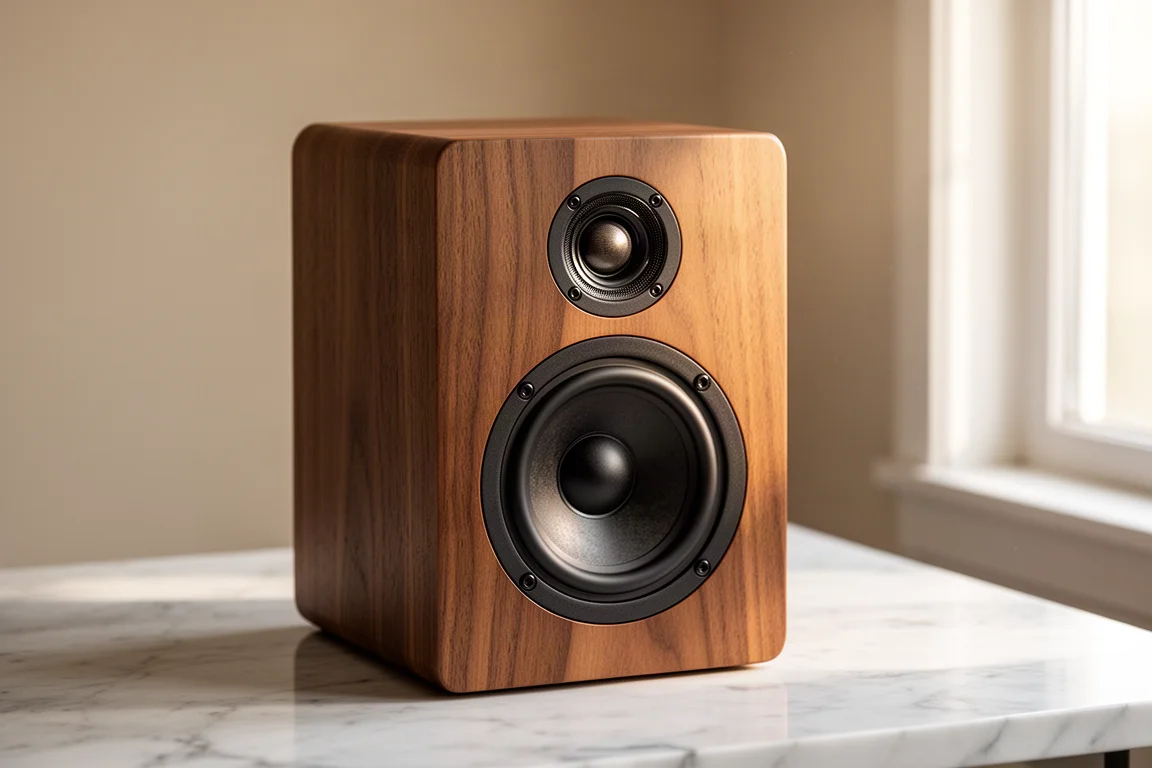
The AE300 uses a 130 mm woofer and a 28 mm aluminum dome tweeter, rated from 45 Hz to 30 kHz with 86 dB sensitivity and a 14 lb cabinet finished in real walnut veneer. Bass is the headline: it goes deeper and with more weight than either of the other two, and the speaker plays far bigger than its physical size suggests. For anyone who values scale and low-end generosity from a small box, this is the obvious starting point.
The rest of the range is a deliberate trade. Treble is rolled off, so percussion loses its bite and crispy detail sits further back in the mix, and the midrange is veiled throughout, with detail sacrificed across the frequency range in exchange for that rich, weighty presentation. The upside is a completely fatigue-free listen: no sibilance, no harshness, and almost any recording comes across as pleasant and easy to sit with.
It is also the most height-sensitive of the three. Listening height matters a great deal here, and once your ears sit above the tweeter axis the sound falls away noticeably, so the speaker really wants one correct position rather than a range of them. At 86 dB it needs a little more amplifier power than the Wharfedale to reach the same loudness. Build quality is a step below the other two, and at $999 it is the most expensive speaker in this group, which stretches the value case; closer to $750 it would be a far easier recommendation.
Q Acoustics 5020: The Most Balanced All-Rounder
At $899, the Q Acoustics 5020 is built around a 5-inch woofer and a 1-inch tweeter that is decoupled from the enclosure, with point-to-point bracing inside the cabinet. It is rated from 53 Hz to 30 kHz, with a 6 ohm nominal impedance, 87.9 dB sensitivity, and a 15.5 lb cabinet.
Across the board, this is the best balanced speaker of the three. The midrange is the cleanest and most natural, free of peaks and easy to follow. Bass is the fastest and tightest here, with more low-end output than the cabinet size implies and none of the bloat that can smear the lower midrange. The top end is clean and even, without obvious bumps or troughs, and it stays neutral on sibilant recordings.
It is also the least fussy about where it sits, with strong off-axis performance that makes it forgiving of imperfect rooms and less than ideal stands. That combination of balance and flexibility is what makes it the most enjoyable listen of the group, and the most dynamic.
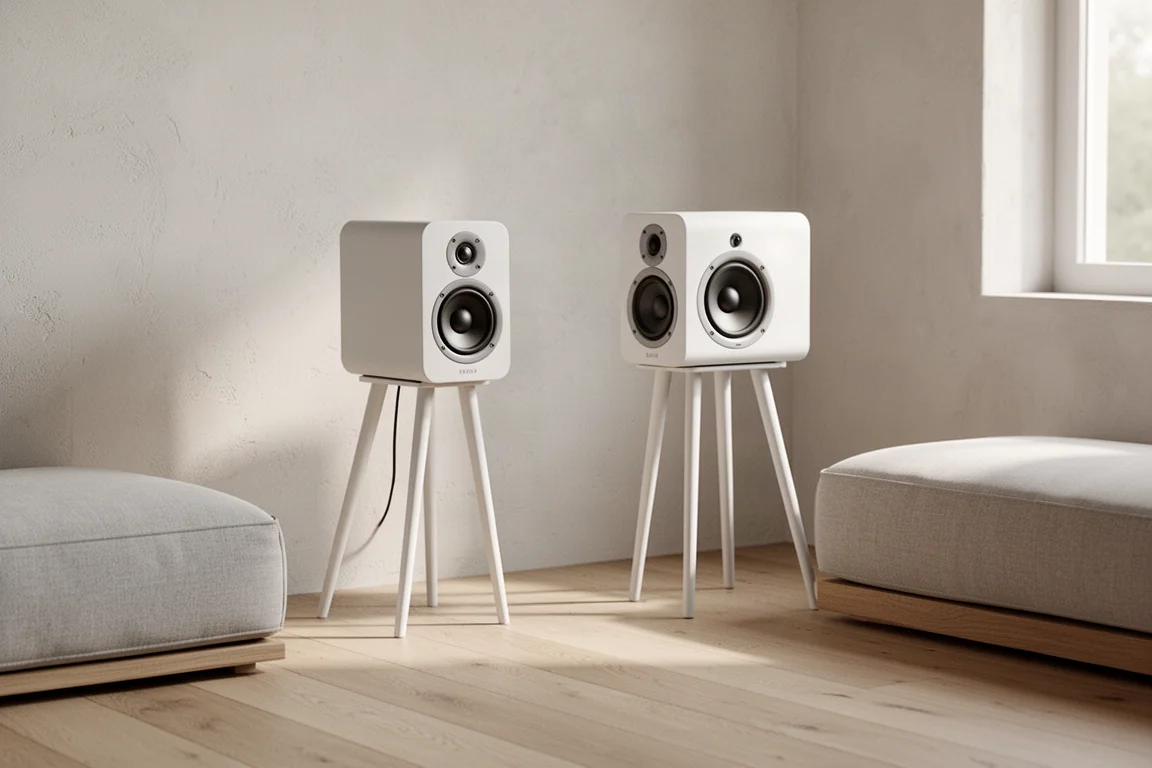
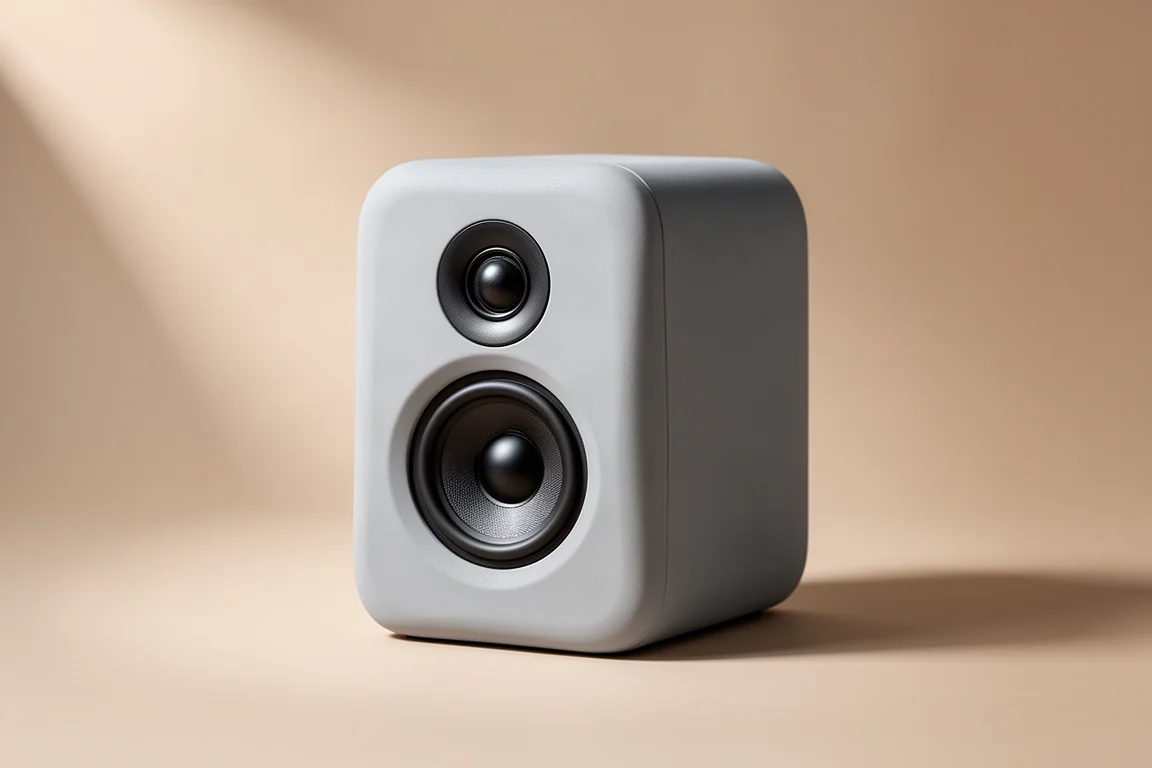
The compromises are mostly about flavour rather than faults. Treble lacks the extra air and snap of the Wharfedale’s AMT tweeter, and bass does not reach as deep or hit as hard as the Acoustic Energy. The white painted cabinet in this finish is not as refined as the real wood veneers on the other two, though build quality is still a step above the AE300.
Build Quality and Placement Considerations
Finish and construction separate these three more than the price tags suggest. The Wharfedale Evo 4.1 is the best built of the group, with real wood veneer, a distinctive cabinet shape, and binding posts that feel genuinely solid. The Q Acoustics 5020 is built better than the Acoustic Energy, with a heavier, tidier cabinet, but its painted finish is not as handsome as the wood veneers on the other two. The Acoustic Energy AE300 also uses real wood veneer and looks the part, though its construction is the least impressive of the three.
Placement demands differ just as much. The Evo 4.1 wants precision: one position, correct height, and careful toe-in. The AE300 wants the right listening height above all else, and it gives up noticeably once your ears rise above the tweeter. The 5020 is the one that can go almost anywhere and still sound convincing, which matters if your room does not allow much freedom.
Room size plays a part too. All three were run without subwoofers in a large living room, and the Acoustic Energy filled that space with bass far beyond its dimensions. The Wharfedale and the Q Acoustics both produce more low end than their cabinets suggest, but neither reaches as deep as the AE300.
Buying Advice: Matching Speaker to Room
Start with the room, not the specification sheet. If you can place a speaker precisely, keep it clear of the wall, and dial in toe-in, the Wharfedale Evo 4.1 gives you the best treble performance here, the easiest amplifier load, the best build, and the lowest price. It is the enthusiast’s choice, provided you are willing to do the setup work and, if needed, a little EQ around the lower midrange.
If flexibility is what you need, the Q Acoustics 5020 is the safest buy of the three. It is balanced from top to bottom, quick in the bass, clean through the midrange, and tolerant of placement and listening position. It does not have the last word in air or the deepest bass, but it does almost everything well and is the most fun to listen to.
If your priority is a big, warm, low-end-heavy sound from a small cabinet, and you mostly listen at moderate levels where fatigue matters more than absolute detail, the Acoustic Energy AE300 delivers that in a way the other two cannot. Just plan for the correct listening height, a little more amplifier power, and the fact that you are paying the highest price here for the least refined build.
Amplifier matching is straightforward. The Wharfedale is the easiest to drive and will run happily on a modest integrated with 30 to 40 clean watts. The Q Acoustics is close behind. The Acoustic Energy is the one that benefits most from a little extra power on tap.
One more practical point: none of these speakers needs a subwoofer to sound complete in a normal room, but if deep bass is your priority, the AE300 gets closest on its own. If accuracy across the whole range matters more, the Q Acoustics is the one to choose.
Conclusion
All three of these compact speakers are worth owning, and the right pick depends on what you value and what your room allows. The Wharfedale Evo 4.1 is the most precise and the best finished, with the finest treble of the group, but it asks for careful placement and rewards it. The Acoustic Energy AE300 is the most indulgent, with bass that seems impossible for its size, at the cost of midrange clarity and a higher price. The Q Acoustics 5020 is the most balanced and the most forgiving, and for most listeners it is the one that will stay in the system longest.