Français · Power Tools
FLEX Compact Impact Wrench Prototypes: How They Stack Up Against DeWalt, Milwaukee, and Hyper Tough
Two pre-release Flex compact impact wrenches went head to head with the DeWalt DCF921, Milwaukee M18 and M12, and a budget Hyper Tough. Here is what the numbers and teardown revealed.
Introduction
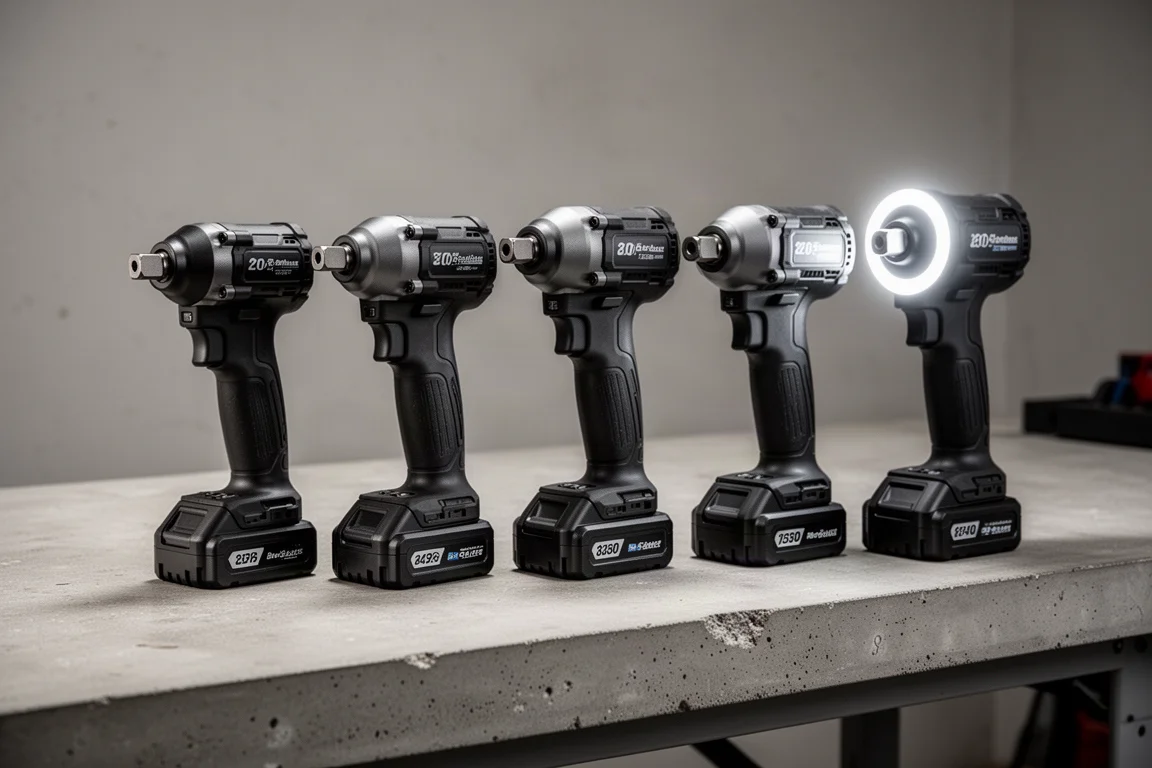
Compact impact wrenches are having a moment, and the newest entrant is an unusual one: a pair of branded but unlabeled Flex compact impact wrenches, one with a 1/2-inch drive and one with a 3/8-inch drive. These are pre-production field test prototypes, so there is no model number, no claimed torque figure, and no confirmed price yet. What we can tell you is how they measure, how they perform on a test rig, and how they compare with the established options in the same size class.
At 5.05 to 5.1 inches in length, the Flex prototypes slot right into a competitive group: the 5-inch DeWalt DCF921, the shorter 4.9-inch Milwaukee M18 compact, and the even smaller M12, which has long been a go-to recommendation because it delivers similar power in a smaller overall footprint. The Hyper Tough compact from Walmart sits in the mix too, though it tested with a larger head.
Evaluation Criteria
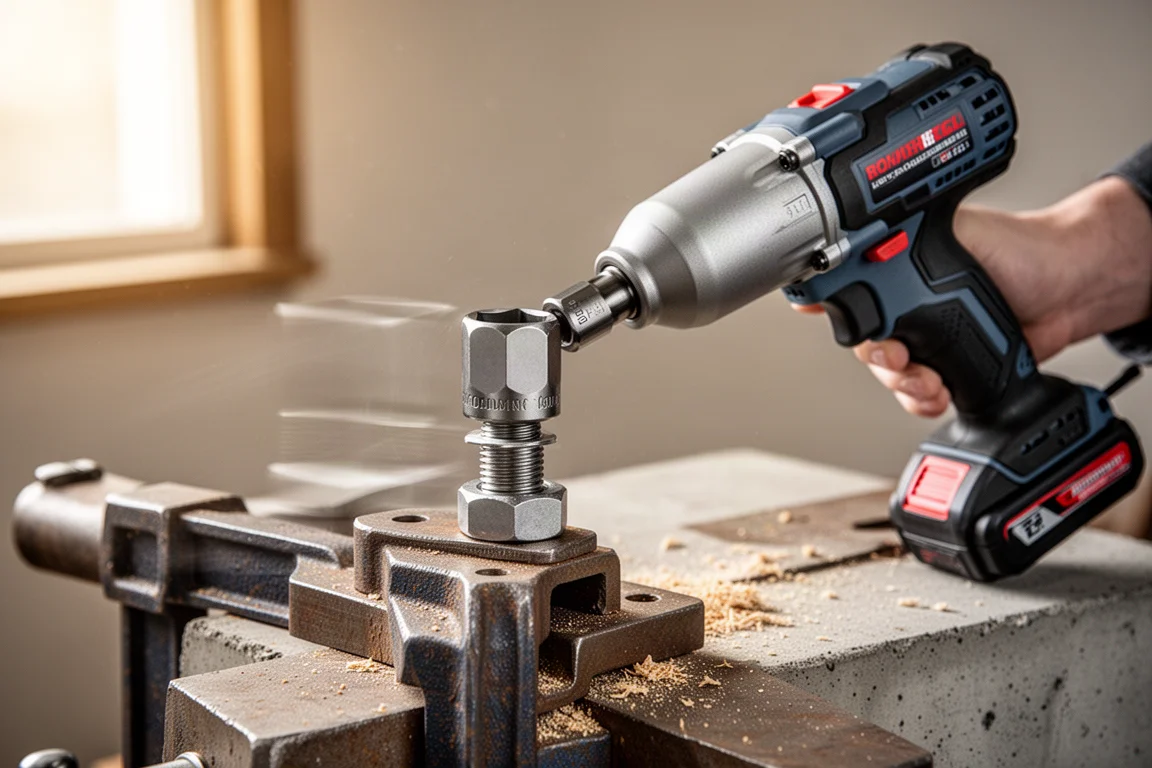
Every tool here was measured on length, head width, torque output on a test rig, reverse fastening performance, speed of hitting, heat behavior during repeated runs, and overall value including the battery ecosystem you have to buy into. Prototype status means some Flex figures could shift before the production release, so treat those numbers as a strong preview rather than a final verdict.
Flex 1/2-Inch Compact Prototype
The 1/2-inch Flex prototype posted a 10-second reverse median of 300 ft-lbs, which is an excellent figure for a tool this short. In longer 15-second reverse runs it was edged out by the DeWalt DCF921, which reached 319. With a 6 amp-hour stacked lithium pack the Flex 1/2 improved to 330 ft-lbs, its best result of the day, and averaged out to the same 231 ft-lbs per second as its 3/8-inch sibling.
The interesting quirk: with a 10 amp-hour stacked lithium pack, output actually dropped to 292 ft-lbs, below even the original 5 amp-hour pack result. The tool also ran roughly 20 to 30 degrees F hotter than most competitors during repeated testing and gave off a strong smell of hot adhesive. Larger batteries are rarely a guarantee on small impacts, and this was a textbook case.
Inside the Flex Prototypes
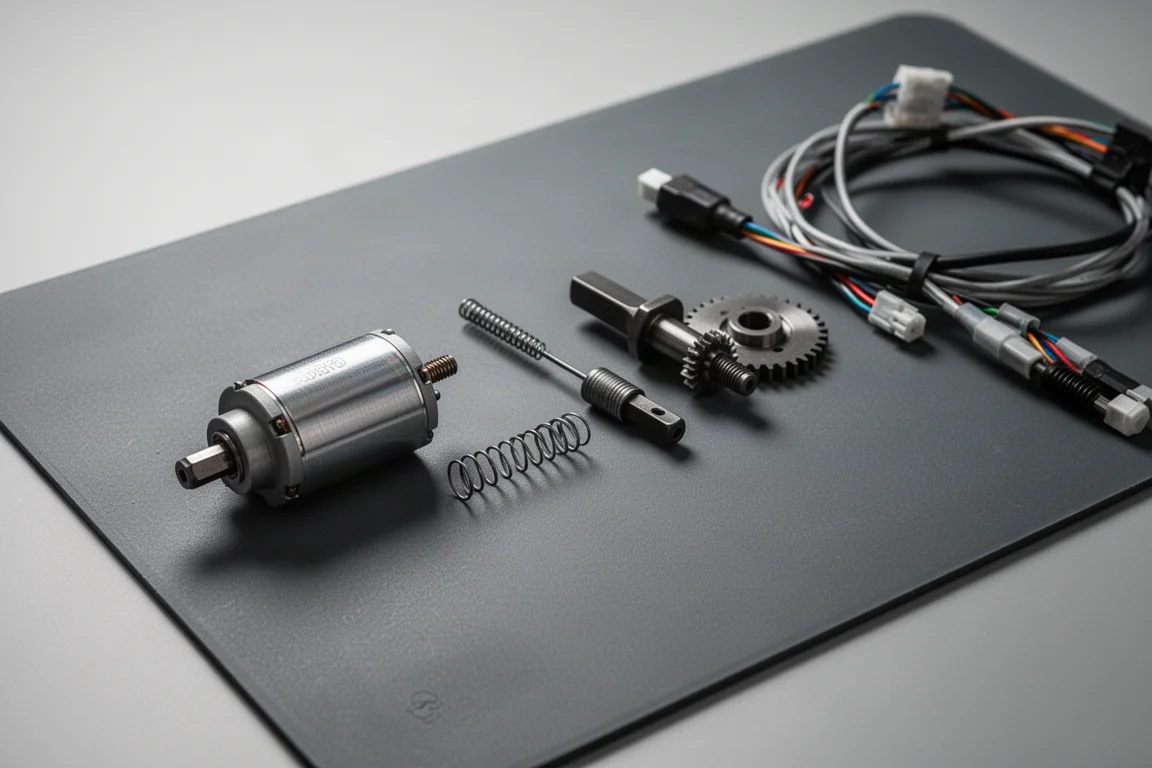
The teardown revealed genuinely unusual engineering. A full-size, 40-amp automotive fuse sits inside, sending serious current to a tiny brushless motor roughly 5/16 of an inch thick, one of the smallest seen in an impact wrench, with wiring capable of feeding it roughly 850-plus watts before the fuse lets go. The hammer mechanism uses a very thin hammer spring, which enables the extremely high impacts-per-minute rate the tools display. The overall architecture behaves on the power curve like a converted impact driver, which for Flex is a sensible recipe given how strong its impact drivers are.
Flex 3/8-Inch Compact Prototype
The 3/8-inch prototype is the headline performer. On the test rig it registered around 216, well ahead of the DeWalt and Milwaukee in this size class, and while that is not a cordless record overall, the tools above it are in a different length class. Its 10-second reverse median came in at 277 against the DeWalt’s 259. Based on footage analysis it hits roughly 20 percent faster than either the DeWalt or the Milwaukee, which makes a real difference on short fasteners and quick removal work.
The trade-off is heat. Like its 1/2-inch sibling, it ran hot under repeated testing and never repeated its best 330 mark later in the day. As a prototype this may improve before release, but hot-running under sustained use is a known Flex trait across its saw, driver, and drill lineup.
DeWalt DCF921: The Benchmark in This Size
The DeWalt DCF921 is no slouch, and on the day it took the top reverse extended-run result at 319 ft-lbs, beating the Flex for the first time. With a large 15 amp-hour pack it climbed to 338, and in person it felt like it was hitting harder, even if the Flex put up comparable numbers by simply being faster.
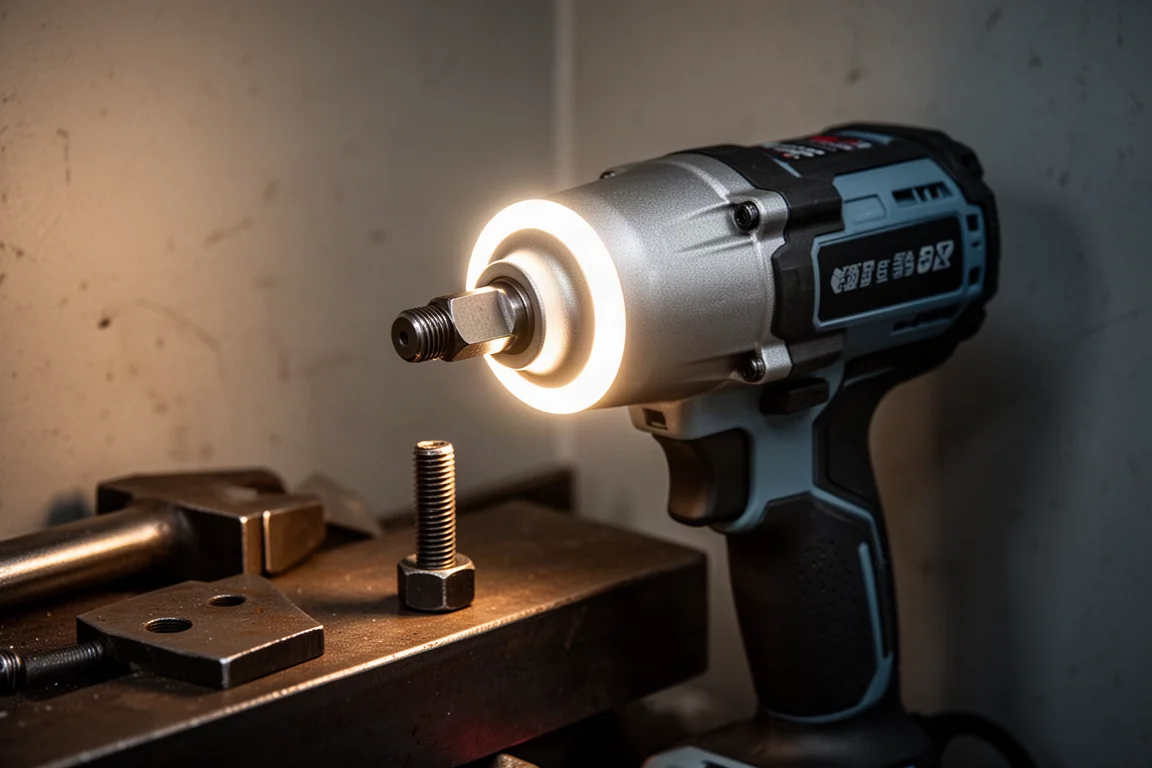
One genuinely welcome feature: the DCF921 carries a ring light around the anvil, similar in spirit to the Skil design, throwing a useful amount of light right where the socket sits. It is arguably more useful on the 3/8-inch format than on larger drives, where big sockets can block the glow, and DeWalt pushes the LEDs to the edge of the tool where they work well.
Milwaukee M18 and M12 Compacts
The Milwaukee M18 compact, at 4.9 inches, is the closest dimensional rival to the Flex prototypes and delivered strong, consistent results, trading blows with the DeWalt in forward torque. The M12 is the one we typically reach for first, because it essentially produces the same output as the M18 compact in a smaller overall footprint, and the two are used somewhat interchangeably around the shop depending on which battery is closer.
Where the Flex prototypes genuinely stand out is head width. Next to the Hyper Tough, the Flex tools are shorter and similar in head size. Against the M12, calipers say the Flex is longer, but to the eye the heads look about equal. If you want the smallest total footprint rather than the smallest head, the M12 still wins.
Hyper Tough Compact: The Budget Baseline
The Hyper Tough compact impact wrench from Walmart served as the budget reference point, and it did not blow anyone away. Its motor is larger in diameter than the tiny Flex unit yet winds fewer coils, and its head is wider than the Flex despite the Flex being shorter overall. If your needs are occasional and light duty, it exists and it is cheap, but the performance gap to everything above it is real.
Buying Advice: Which One Makes Sense for You
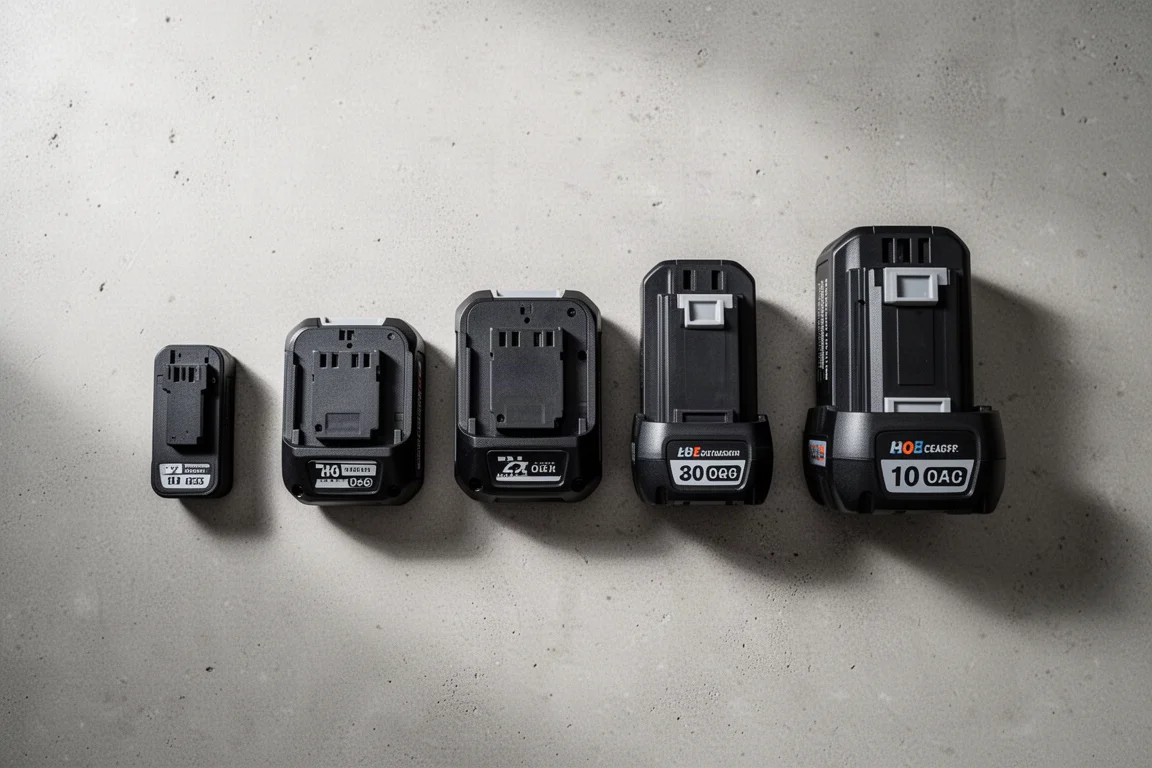
The central question for the Flex prototypes is the battery. Any 24-volt max platform needs six cells in series, so even with the tiniest possible head the overall tool is never going to be truly small. The stacked lithium packs redefine that, and the 3 and 2 amp-hour stacked lithium battery, priced at 180 dollars for 3.5 amp-hours of capacity, has long felt like a rough value proposition. If the compacts perform like the rest of the Flex lineup, buying that pack suddenly pencils out, and we would lean toward picking up the 3 amp-hour stacked lithium to keep the overall package small.
By contrast, Milwaukee’s high-capacity options are a friendlier story: the 6 amp-hour M18 Forge costs only 10 to 19 dollars more than that Flex pack and replaces a 12.0 in the M18 lineup. If you already live in DeWalt, Milwaukee, or M12, the DCF921 and M18 remain excellent, proven choices, and the M12 is still the size-and-value pick. If the Flex production units land near expected pricing, they look like the fastest hitters in the class, provided you accept the heat and the battery premium.
Conclusion
The Flex prototypes are spicy: the 3/8-inch leads the size class on the test rig, both hit roughly 20 percent faster than DeWalt and Milwaukee, and the head dimensions are genuinely impressive. They also run hot, dip in output with oversized batteries, and force you into a 24-volt platform with expensive compact packs. The DeWalt DCF921 remains the proven all-rounder with the best extended-run reverse torque, the Milwaukee M18 and M12 cover size and value beautifully, and the Hyper Tough stays in budget territory. Wait for production Flex pricing if you are curious, but do not sleep on these.
Lien du produit
Voir plus de détails pour Flex 1/2-Inch Compact Impact Wrench (Prototype)
Ce produit est mentionné dans cet avis. Avant d'acheter, confirmez les spécifications, les options et la compatibilité.
Voir plus de détails pour Flex 1/2-Inch Compact Impact Wrench (Prototype)Lectures complémentaires
Avis connexes
Power Tools
Meilleures clés à chocs pistolet de 1 pouce : trois options robustes comparées
Nous comparons trois clés à chocs pistolet de 1 pouce, du modèle économique de Harbor Freight à l'unité haut de gamme Caterpillar, pour vous aider à choisir la bonne.
Power Tools
Meilleures clés à chocs de 3/4 de pouce 2026 : cinq concurrentes comparées
Nous comparons cinq clés à chocs de 3/4 de pouce sur le prix et les performances, d'une option économique d'Amazon à la plus puissante de Snap-on à ce jour.
Power Tools
Meilleurs outils sans fil pas chers 2026 : les trouvailles Walmart qui en donnent plus pour leur prix
Nous avons testé cinq outils sans fil de Walmart, dont une clé à chocs à couple élevé qui rivalise avec Milwaukee et un souffleur à 35 $ qui surpasse sa catégorie de prix.