Deutsch · Power Tools
Flex reciprocating saw vs Milwaukee Super Sawzall: A Hands-On Comparison
The Flex reciprocating saw brings orbital action, minimal vibration, and a clever blade holder. Here is how it stacks up against the Milwaukee Super Sawzall.
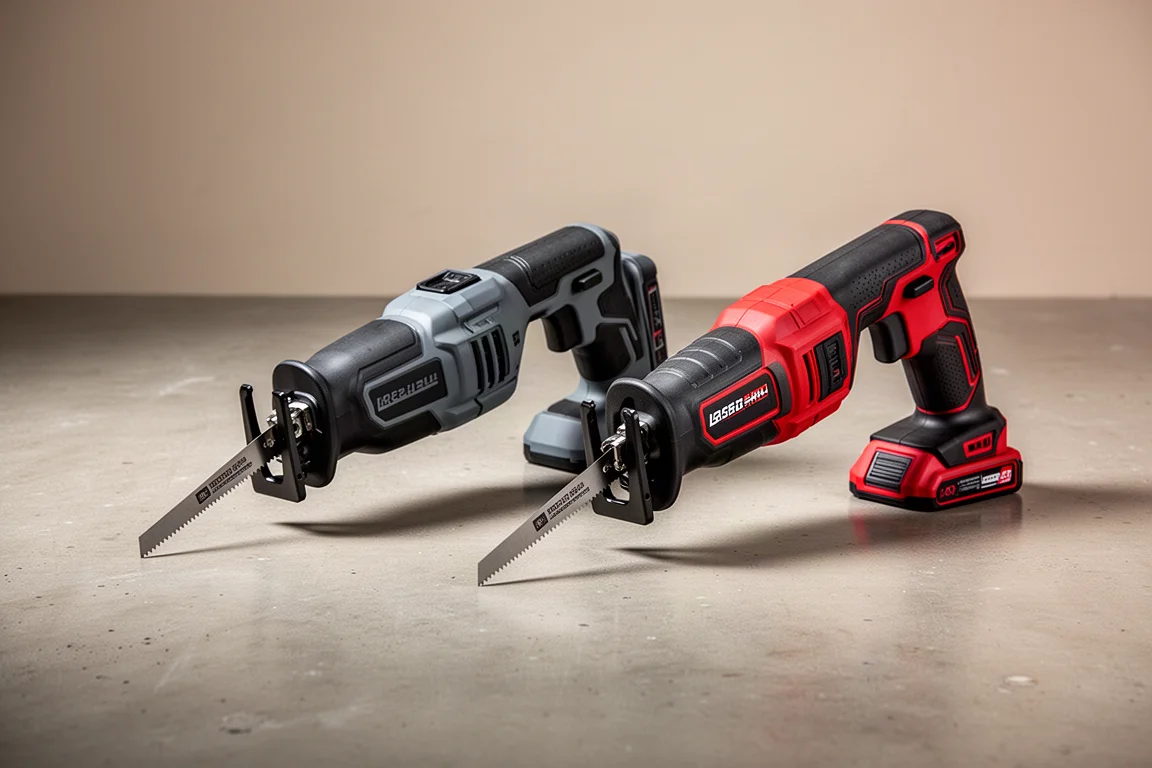
Introduction
The Flex reciprocating saw has been one of the most asked-about cordless tools in recent memory, and for good reason. It promises pro-grade cutting performance with features that some more expensive saws still leave out. To see whether the hype holds up, we put it to work cutting, slicing, and eventually racing against the Milwaukee Super Sawzall, long considered the benchmark in this category.
First impressions: surprisingly light and well balanced
The first thing that stands out is the weight. Expecting a bulky tool, the Flex instead feels light and easy to handle, even one-handed with a full-size 10Ah Stack Lithium battery attached. It is fully brushless, as expected at this level, and the grip is comfortable straight out of the box.
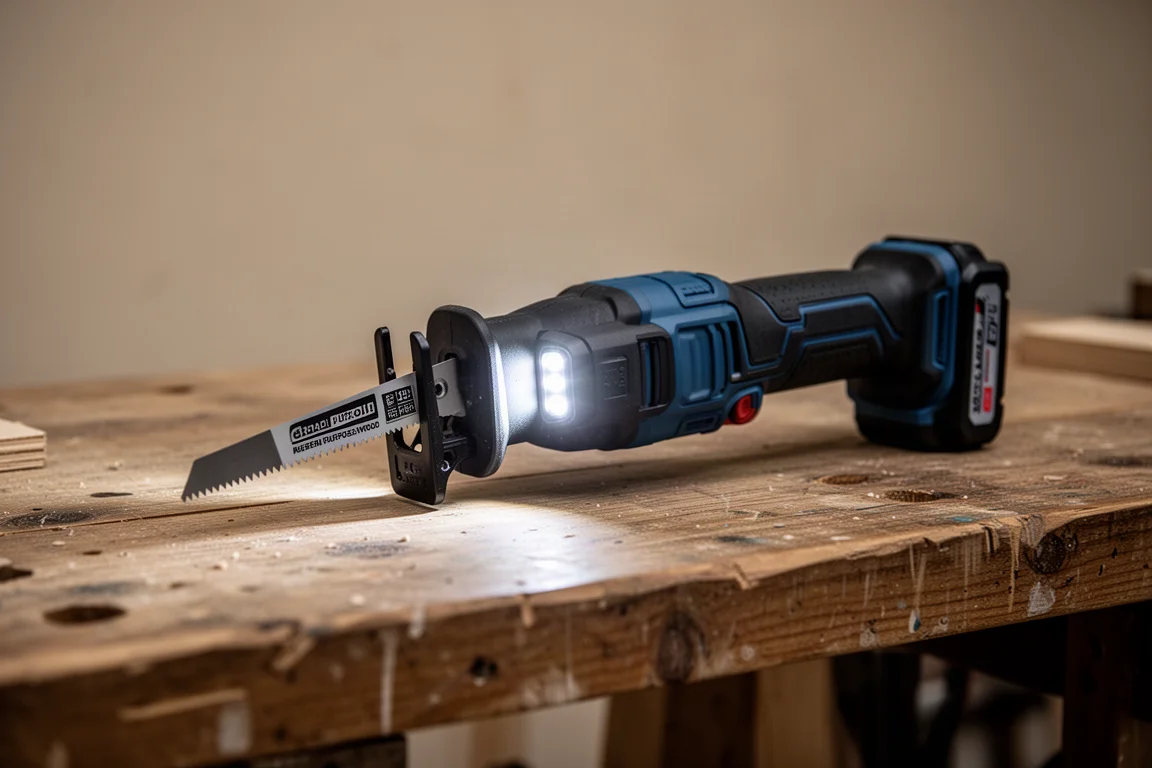
Two features immediately set it apart. First, it includes orbital action, something plenty of pro-grade recip saws omit entirely. Second, the orbital switch is easy to flip and clicks firmly into place, so it will not drift off or disengage mid-cut.
Blade changes: no lever, but it works
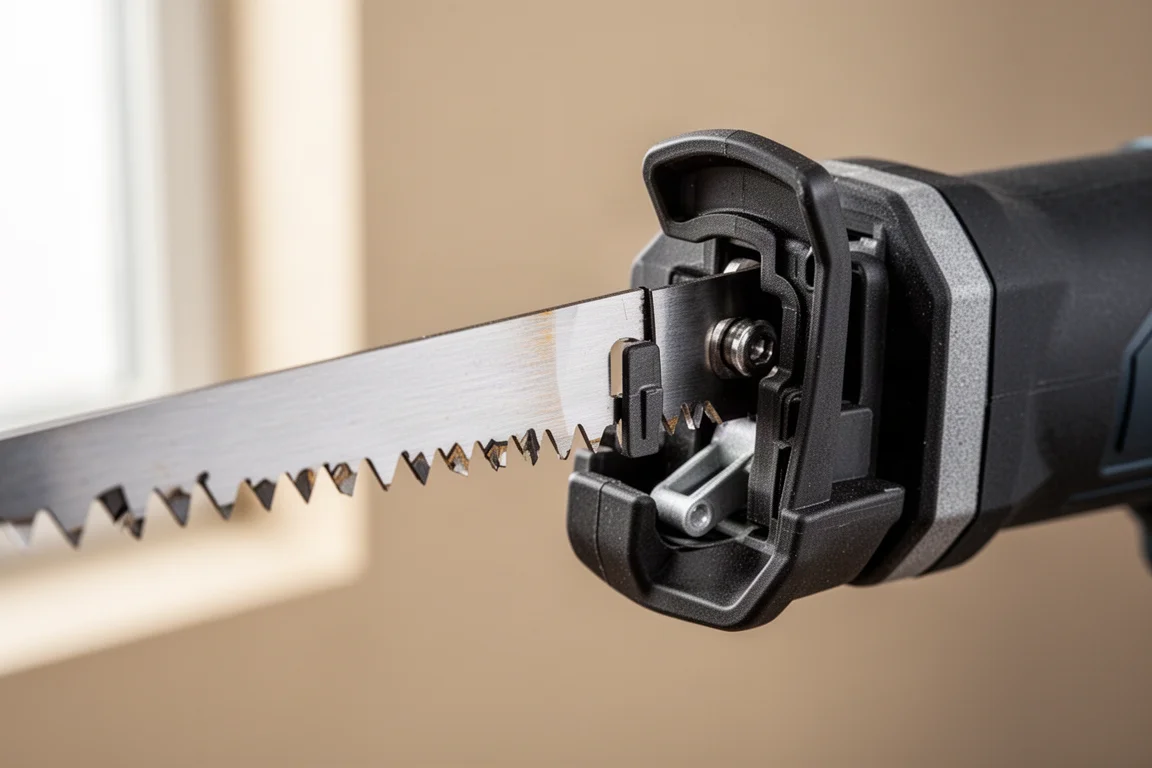
There is no traditional quick-release lever, which raises questions at first. In practice, the system works well: drop the blade in and it automatically locks into place with no fuss.
The one caveat is blade position. If the blade sits fully down in the holder, the release can be awkward to open. Keep the blade raised slightly, turn the release, and it opens easily so you can swap blades quickly.
On top of that, the saw has an LED work light that stays on during use, which helps in dim corners and inside framing.
Cutting performance in wood and metal
In wood, the Flex cuts fast and, notably, stays smooth. With orbital mode on, many recip saws generate heavy vibration, but this one barely transmits any to your hands. The vibration control is genuinely impressive, and the cut stays straight even in orbital mode rather than wandering.
Switch to a metal cutting blade and the same story continues. On a quarter-inch steel plate, the saw cuts without the bouncing you often feel with lesser tools. Flipping orbital off for metal is a simple one-flip action, and the variable speed trigger gives fine control over the cut.
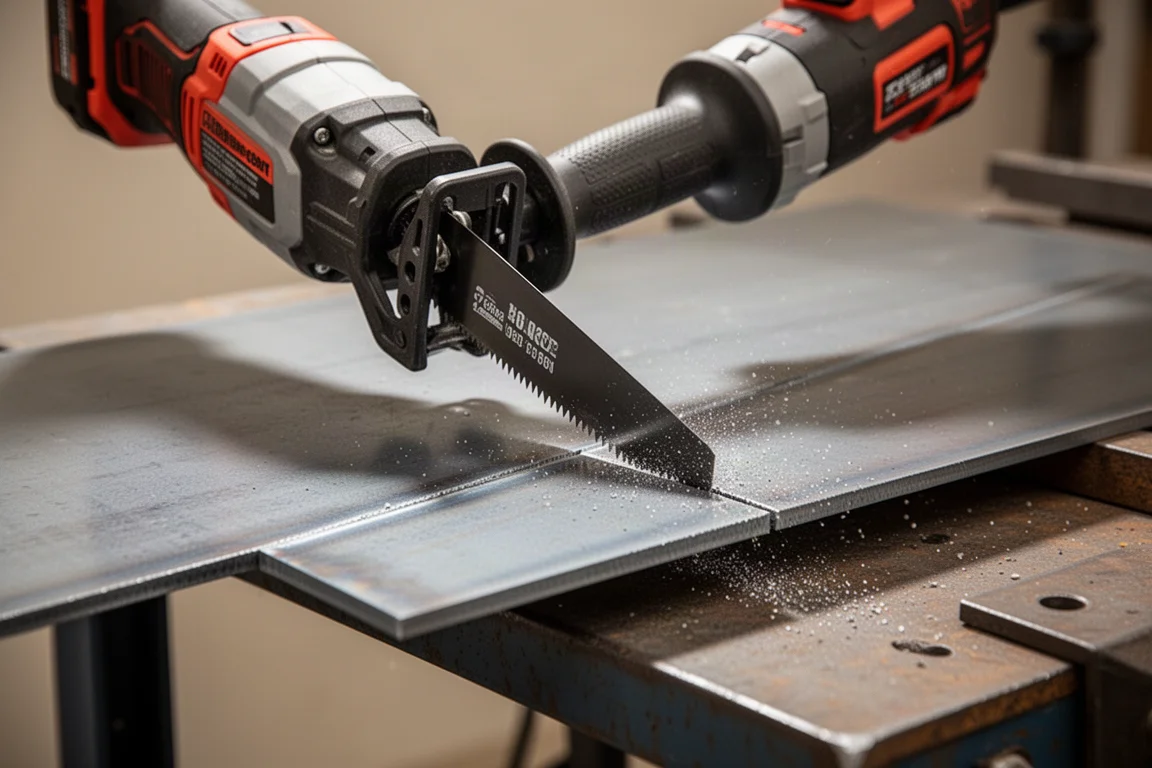
A few extras round out the package: a rafter hook for hanging the saw between cuts, and a design that stays light even with the largest battery attached.
Head to head against the Milwaukee Super Sawzall
The Milwaukee Super Sawzall has long been the reference point for reciprocating saws, so a direct comparison was the obvious final test. Both saws ran new Diablo blades, both in orbital mode, each cutting the same stock.
One difference worth noting: the Milwaukee does not have an easy blade release. You need to hold the lever in the whole time, which makes the Flex’s drop-in system feel like a genuine advantage in day-to-day use.
In the cut-off comparison, the result was honestly too close to call. What stood out more was how the Flex behaves under load: no jumping around, it just sinks into the cut. Even one-handed with orbital engaged, it keeps a reasonably straight line, and the vibration stays well controlled.
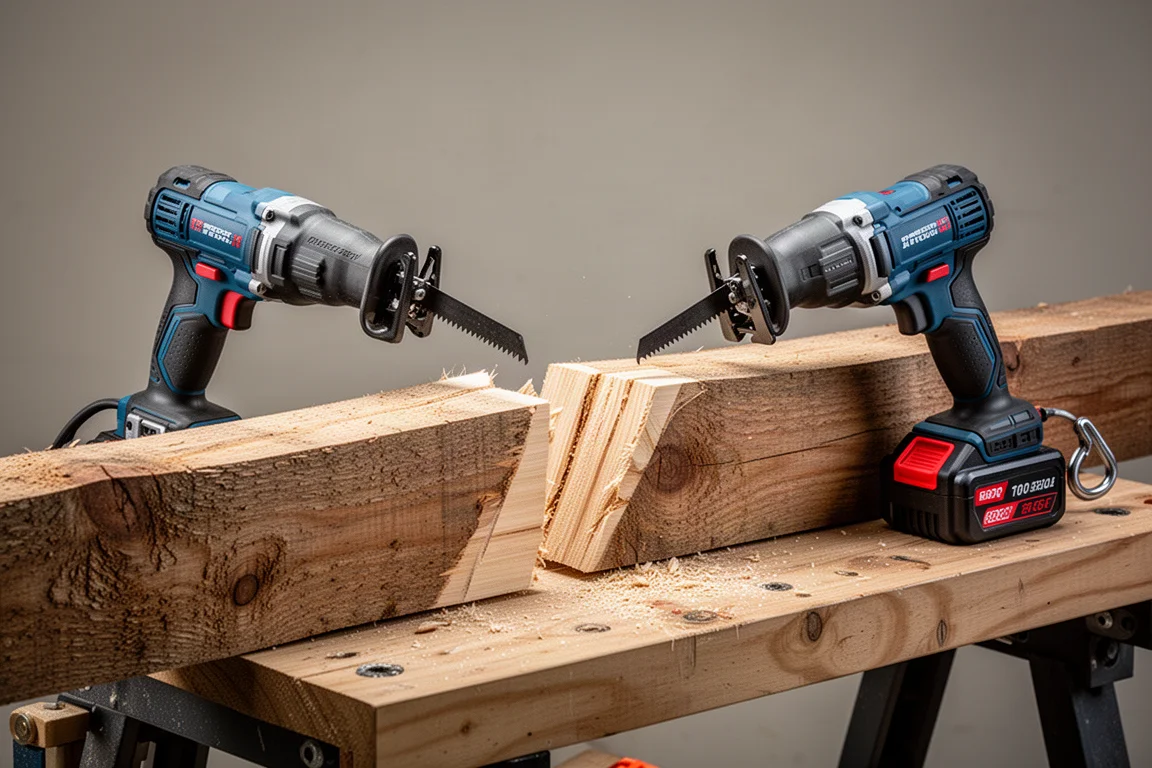
Buying advice
If you want a reciprocating saw that combines low vibration, orbital action, quick blade swaps, and a light overall feel, the Flex makes a very strong case. If you prefer the established benchmark with a long track record, the Milwaukee Super Sawzall remains exactly that, and it cut just as well in our testing. The Flex’s blade holder and vibration control are the details that give it an edge for everyday work.
Conclusion
The Flex reciprocating saw turned out to be a genuinely well-executed tool: light, smooth, feature-rich, and competitive with the best in the category. Whether it replaces a Sawzall on your bench depends on what you value, but it clearly belongs in the conversation.
Produktlink
Mehr Details zu Flex Cordless Reciprocating Saw anzeigen
Dieses Produkt wird in dieser Bewertung erwähnt. Bestätigen Sie vor dem Kauf die Spezifikationen, Optionen und Kompatibilität.
Mehr Details zu Flex Cordless Reciprocating Saw anzeigenWeiterführende Literatur
Ähnliche Bewertungen
Power Tools
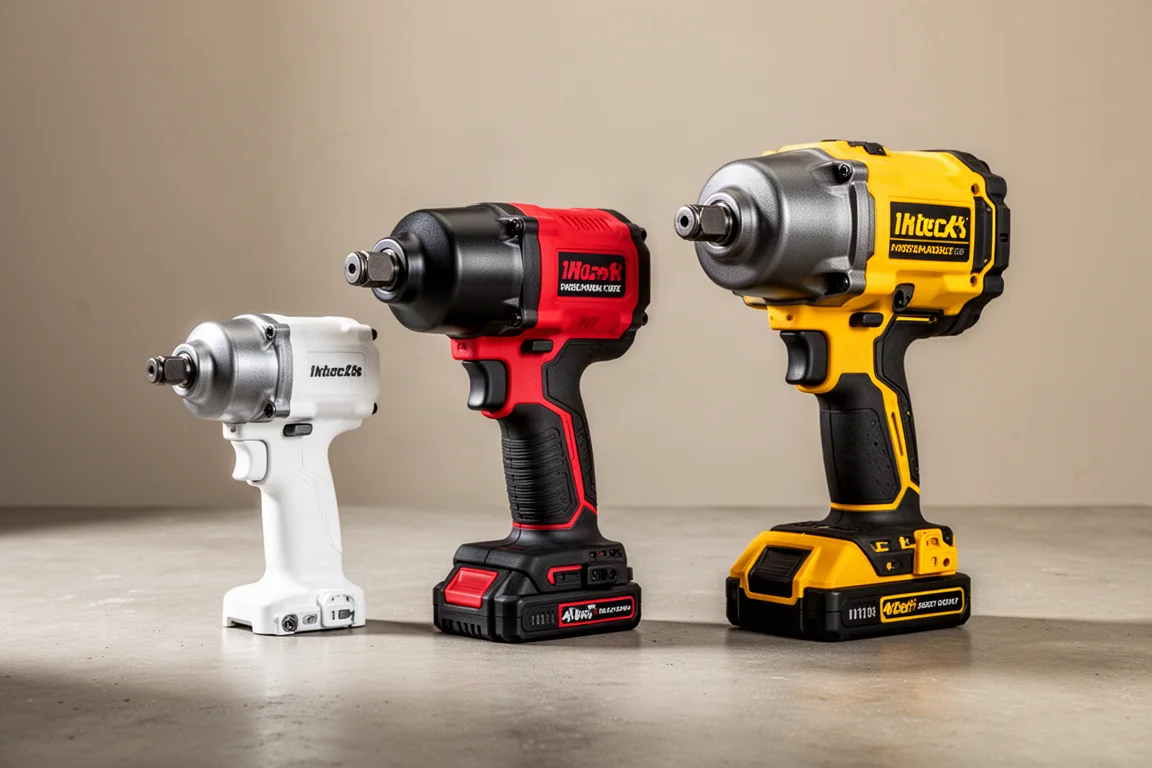
Beste 1-Zoll-Pistolen-Schlagschrauber: Drei Schwerlast-Optionen im Vergleich
Wir vergleichen drei 1-Zoll-Pistolen-Schlagschrauber, von einem preisgünstigen Harbor-Freight-Modell bis zu einem Premium-Gerät von Caterpillar, um Ihnen bei der Wahl des richtigen zu helfen.
Power Tools
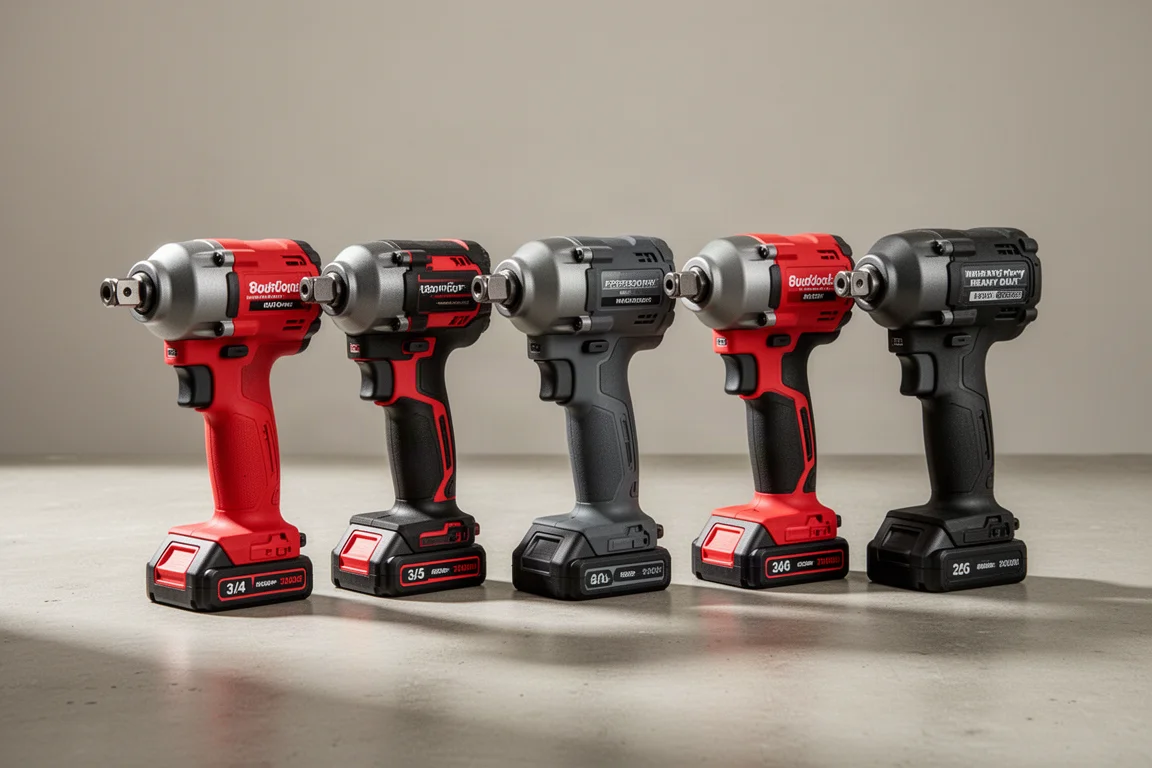
Beste 3/4-Zoll-Schlagschrauber 2026: Fünf Kandidaten im Vergleich
Wir vergleichen fünf 3/4-Zoll-Schlagschrauber hinsichtlich Preis und Leistung, von einer günstigen Amazon-Option bis zu Snap-ons leistungsstärkstem Modell.
Power Tools
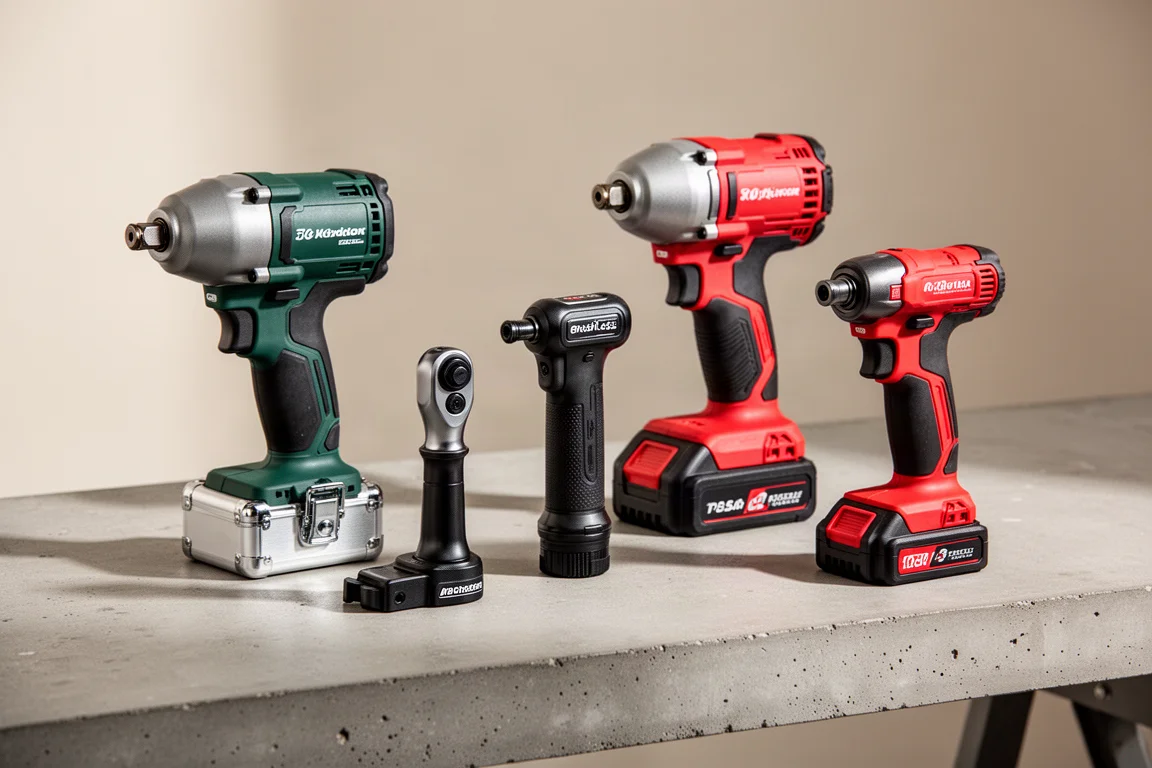
Beste Akku-Werkzeuge für kleines Geld 2026: Walmart-Funde, die mehr leisten, als ihr Preis vermuten lässt
Wir haben fünf Akku-Werkzeuge von Walmart getestet, darunter einen High-Torque-Schlagschrauber, der mit Milwaukee mithält, und einen Gebläse für 35 $, das seine Preisklasse übertrifft.