Deutsch · Workwear
Bamal FR flame-resistant shirts and pants: fire, tear and water resistance in one kit
A hands-on look at Bamal FR's treated cotton workwear, which combines flame resistance with water and tear resistance, plus sizing notes worth knowing before buying.
Introduction
Flame-resistant workwear is nothing new, but most FR clothing makes you choose between fire protection and everything else. Bamal FR’s newer shirts and pants attempt to pack three protective qualities into one fabric: flame resistance, water resistance, and tear resistance. That combination is genuinely rare, so we put both pieces through a series of worst-case tests to see whether the claims hold up.
The tag confirms that this is 100% cotton, certified to NFPA 2112 2023 for the protection of industrial personnel against short-duration thermal exposures from fire. Despite the cotton base, the surface treatment gives the fabric a smoother, almost coated feel rather than the soft hand of untreated cotton — exactly what you would expect once waterproofing comes into play.
Test of flame resistance
The fabric was put up against a plasma arc lighter, which counts as roughly the worst-case scenario you can create at a bench: sustained, direct heat applied to the material with the explicit goal of igniting it. The fabric did not catch. It scorched and smoldered slightly, but repeated attempts to actively light it failed across multiple corners of the swatch.
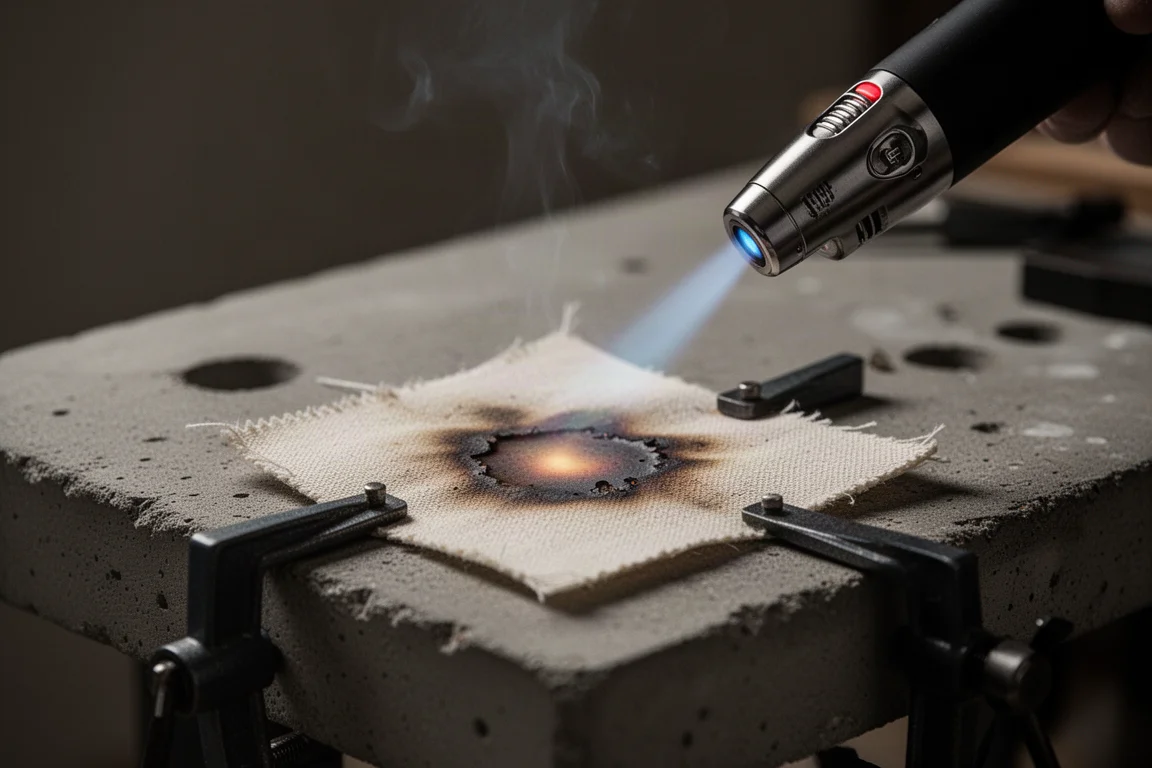
This is consistent with earlier grinder testing on Bamal FR pants, where hot sparks and debris thrown at the fabric left no burn marks and caused no ignition. For anyone working around hot material, open flame, or flash-fire risk, this is the core reason to buy FR clothing — and the fabric behaved exactly as certified clothing should.
Test of tear and puncture resistance
Next came tear resistance, tested the blunt way: with knives, a razor blade, and by dragging the fabric across a board of exposed screws, as the brand itself suggested. A razor drawn across the fabric repeatedly did not catch or pull threads loose. On ordinary fabric, that kind of contact starts pulling strands immediately and the weave begins to come apart.
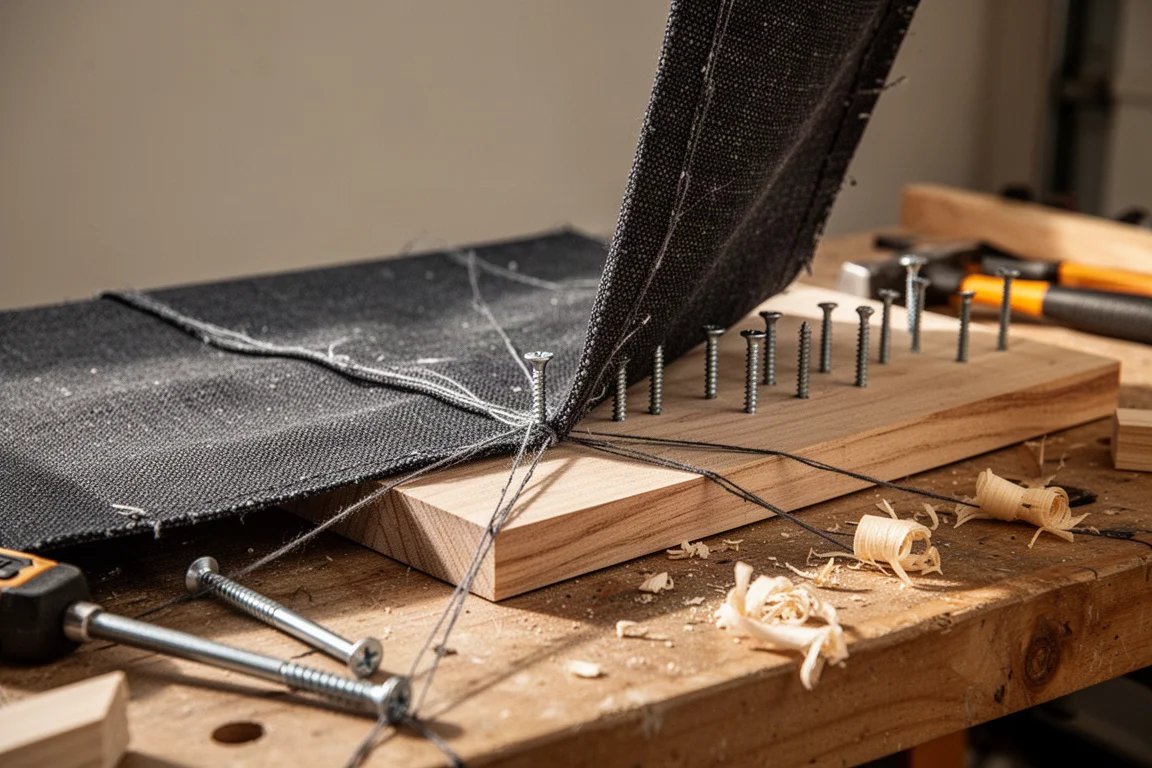
To be clear: this is not cut-proof fabric. A determined effort with scissors or a knife will cut it, and no puncture resistance is claimed here. What the tear resistance protects against is accidental damage: brushing against something sharp at work and having your pants rip open. After deliberately dragging the fabric over four screws on a board, the only damage was one small loose loop — impressive.
The fabric has another practical advantage in this regard: there is very little on the surface for sharp objects to snag. Loose hardware and protruding bits are what usually start tears on work pants, and this fabric gives them little to grab. The shirt uses the exact same fabric as the pants and performed identically; the sleeve fabric also blocked the sharpness of the blade against the hand.
Test of water resistance
The water resistance behaves like a high-performance hydrophobic finish: pour water on the fabric and it beads up and runs straight off, taking loose debris with it. Droplets that linger on the surface flick away easily, and the fabric stays dry underneath.
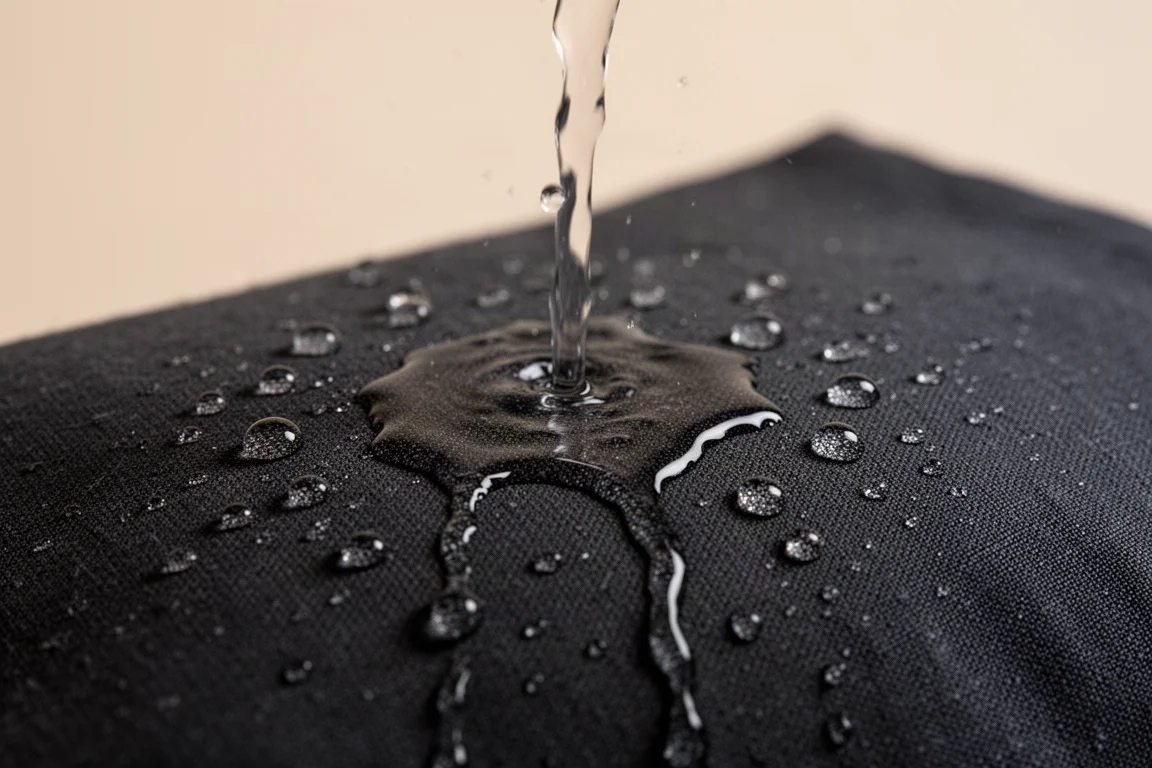
There is a trade-off worth knowing about. Because the fabric repels water, it also resists wicking sweat, which can become uncomfortable in very hot working conditions. If you labor in serious heat, that lack of breathability is the price of water protection. In moderate conditions it is a clear win — especially since the treatment makes both pieces relatively easy to clean.
Notes on fit and sizing
Sizing is the one consistent complaint, and it applies only to the pants. A wearer who normally buys a 34 waist by 34 length found the first pair fit closer to a 36 waist and ran too long. Dropping to a 30 waist by 32 length produced a proper fit. The practical advice: if you usually buy a 34 by 34, go one size smaller and one size shorter on the pants.
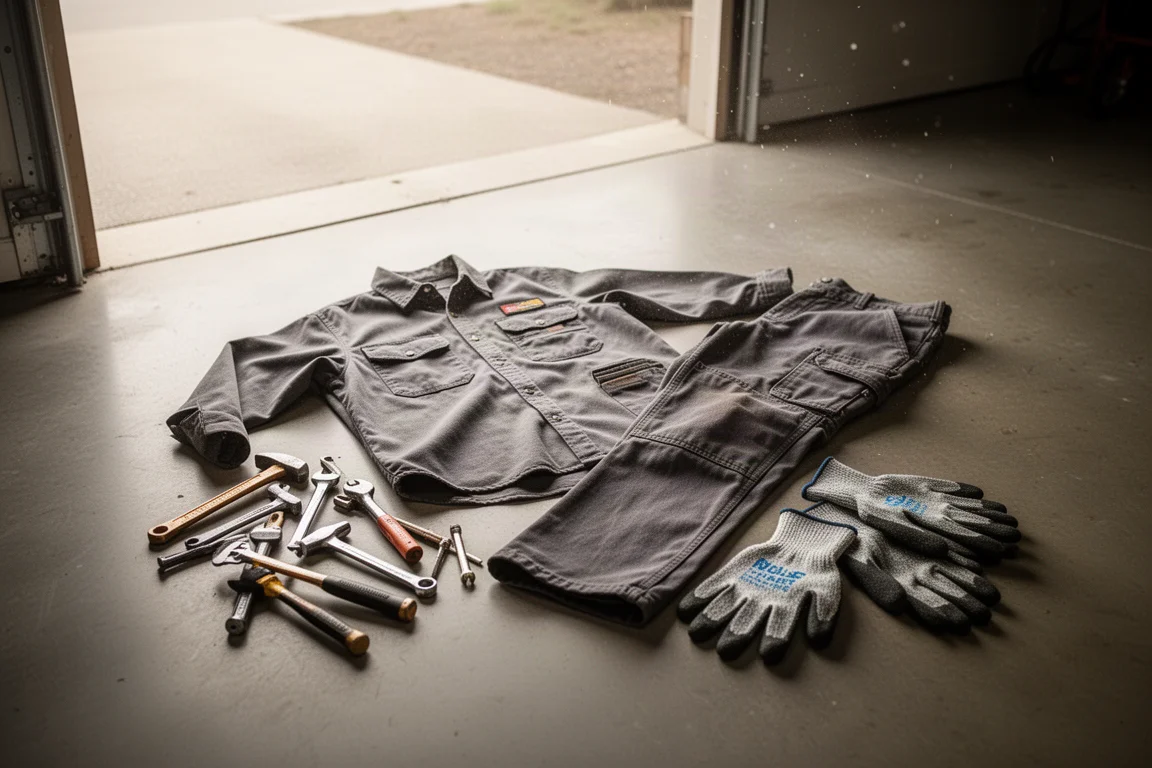
The shirt sizing runs true; a medium fits like a medium. The slightly baggy cut of the pants is intentional, since flame-resistant fabric should never sit tight against the body. Both pieces are comfortable enough that the tester reaches for them regularly for general projects, not just FR-required work — which says something about everyday wearability.
Buying advice
If your work involves any risk of flash fire, hot debris, or grinding sparks, FR clothing certified to NFPA 2112 is the baseline — and this kit meets it. The additions of tear resistance and water resistance are what set it apart, since most FR garments offer neither. Order the pants a size down from your usual, expect a smooth rather than cotton-soft fabric feel, and account for reduced sweat wicking in hot weather.
Conclusion
Bamal FR’s shirts and pants deliver on all three of their headline claims: the fabric refused to ignite under a direct plasma lighter, shrugged off knives and screws without tearing, and shed water on contact. With a single honest caveat about pants sizing and hot-weather breathability, this is a genuinely practical all-in-one workwear option for anyone who needs flame protection plus a bit more durability than typical FR gear provides.
Produktlink
Mehr Details zu Bamal FR Flame Resistant Shirts and Pants anzeigen
Dieses Produkt wird in dieser Bewertung erwähnt. Bestätigen Sie vor dem Kauf die Spezifikationen, Optionen und Kompatibilität.
Mehr Details zu Bamal FR Flame Resistant Shirts and Pants anzeigenWeiterführende Literatur
Ähnliche Bewertungen
Workwear
1620 Workwear Foundation Series Work Pants: Gebaut wie eine Rüstung, zum entsprechendem Preis
Schwere, wasserdichte Arbeitshosen aus den USA mit figurgünstigem Schnitt, dickem Cordura-Mischgewebe und ein paar Kompromissen, die man kennen sollte, bevor man rund 140 $ ausgibt.
Workwear
Brunt Workwear-Empfehlungen: Drei Teile, die man 2026 in Betracht ziehen sollte
Der Marin, der Omen und die McKenna Workwear: drei Brunt-Produkte, die harte Beanspruchung überstehen – plus, was man vor dem Kauf wissen sollte.
Workwear
Beste beheizte Kleidung für sehr kalte Arbeitstage: Westen und Jacken im Vergleich
So schichtet man beheizte Westen und beheizte Jacken richtig, plus drei Empfehlungen für die Arbeit im Freien bei Frosttemperaturen.