Kitchen Knives
Zwilling Pro Chef's Knife Review: Durability, Sharpness, and How It Compares
After long-term testing, we look at what makes the Zwilling Pro chef's knife stand out, where it falls short, and how it compares to Misen, Made In, Victorinox, and Wusthof.
Introduction
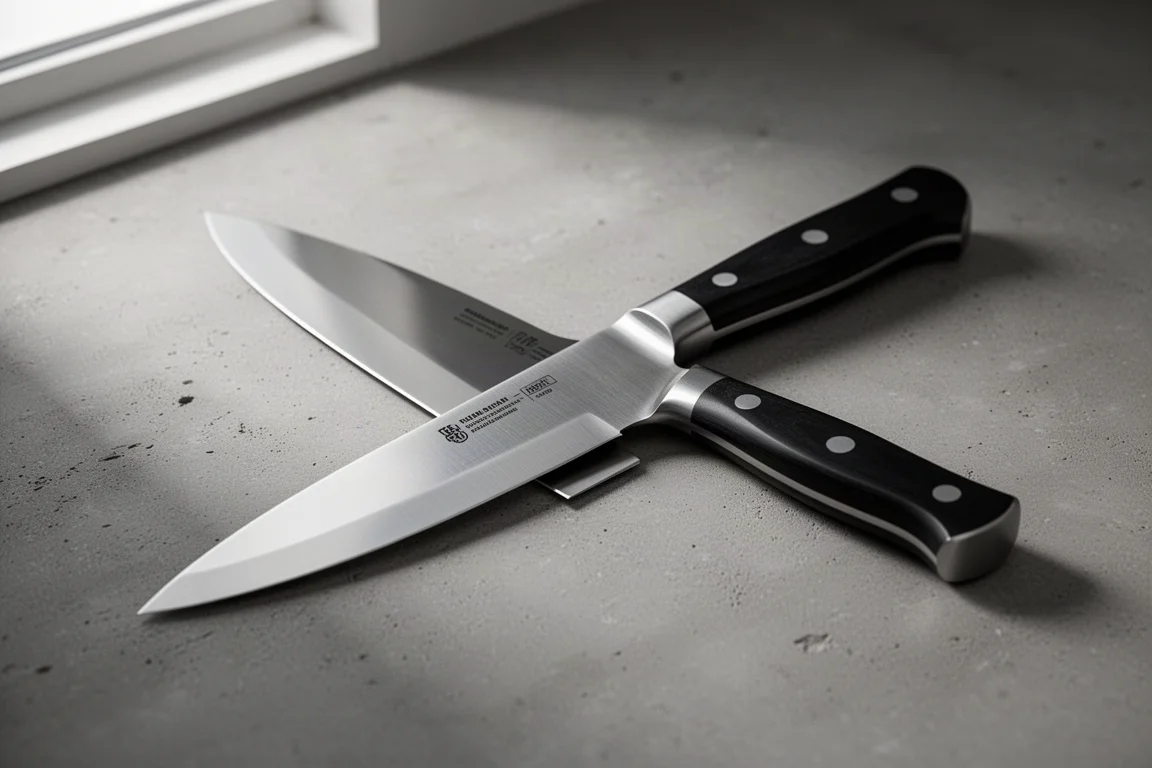
Zwilling Pro has been around long enough to build a reputation, but is it actually worth adding to your kitchen? We have spent more than two years cooking with these knives, and the short answer is that they earn their place for a very specific type of cook. This review covers what makes them stand out, the trade-offs you should know about, and how they stack up against popular alternatives like Misen, Made In, Victorinox, and Wusthof.
What Makes the Zwilling Pro Special
The first thing you notice when picking up a Zwilling Pro knife is its heft. The handle and blade are thick, and the 8-inch chef’s knife weighs 9.4 ounces. For context, the Misen 8-inch chef’s knife weighs 7.9 ounces, Made In weighs 8.3 ounces, and the Victorinox Swiss Classic weighs just 5.8 ounces. Looking down the spine of the blade, the Zwilling Pro is noticeably thicker than all of them.
That thickness comes with real durability. The forged blade is made of high-carbon German stainless steel, and the handle is made of Polyoxymethylene, an ultra-durable, non-porous material that resists fading and moisture damage. The handle is triple-riveted to the tang, the part of the blade that extends through the handle. These are workhorse knives built for daily use, with little risk of a broken handle or chipped edge.
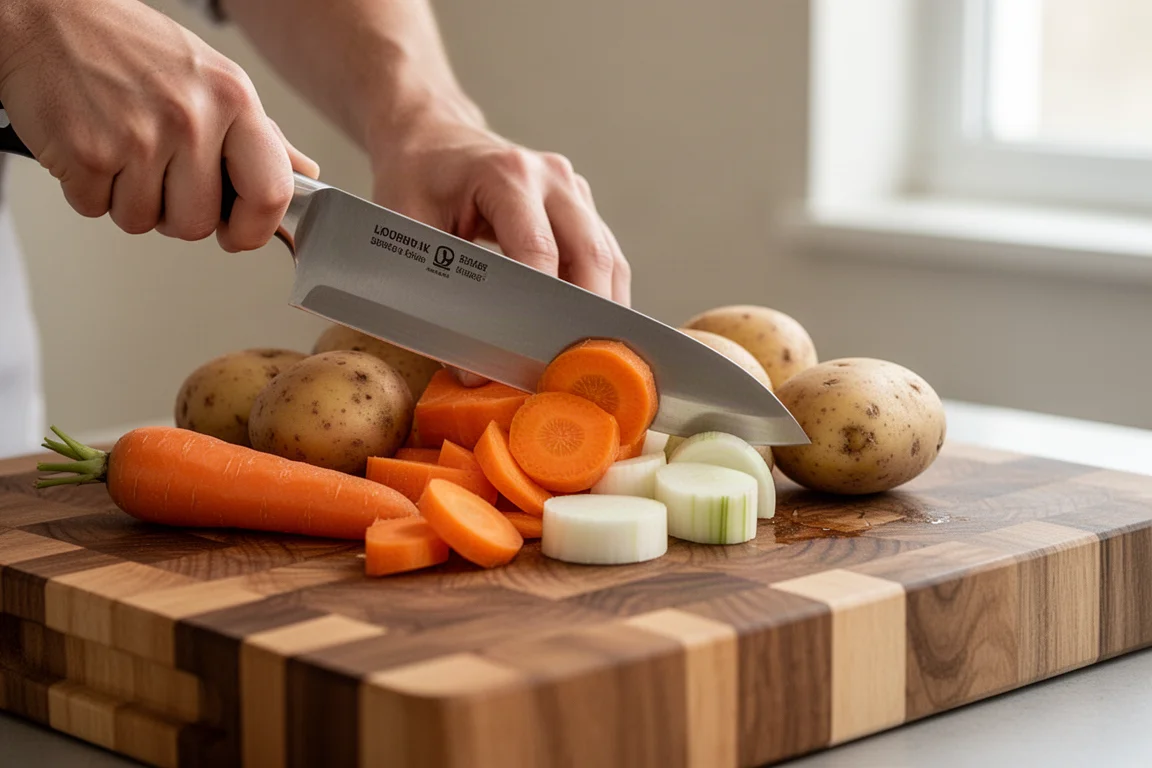
Sharpness is the second standout. Both sides of the edge are sharpened to a 15-degree angle, which is a very fine edge for such a thick blade. It glides through carrots, potatoes, and other dense vegetables easily, and because the knife is heavy, it does not take much force to cut through anything.
Zwilling also hardens these blades with a process called FRIODUR, where the hot metal is cooled in sub-zero temperatures after forging. The result is a sharper, more corrosion-resistant blade with better edge retention, so you will not need to sharpen it often.

The Bolster: Zwilling’s Key Design Choice
The main reason to buy a Zwilling Pro is the sloped bolster. The bolster is the thick part of the metal where the blade and handle meet. Traditional German knives, such as the Zwilling Professional S and the Wusthof Classic, use a thick bolster that extends from the spine all the way down to the edge.
Zwilling took a different approach with the Pro collection. Instead of extending the bolster down to the edge, it transitions gradually from the handle to the blade. This feels excellent in the hand: there are no sharp edges or corners, and when you hold the knife with a pinch grip, your thumb and index finger rest naturally on the curved bolster while the handle fills the rest of your hand. The knife feels like an extension of your hand.
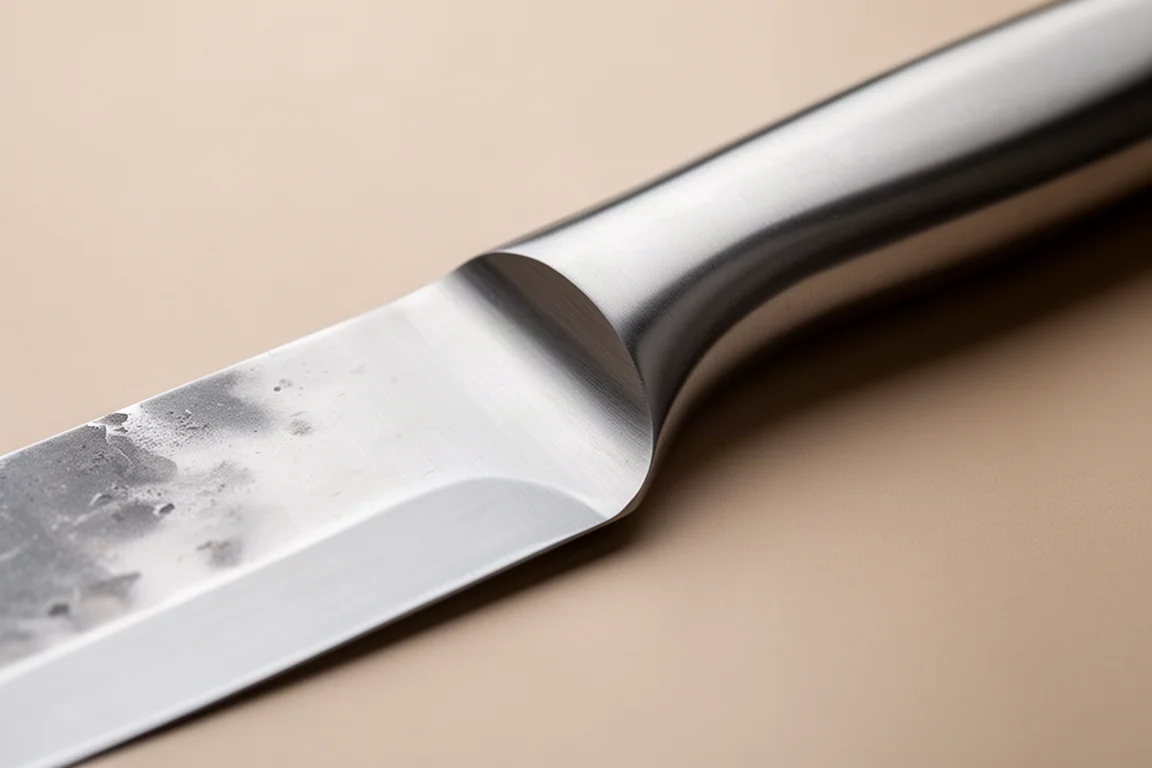
The design has a practical benefit too. Full bolsters make the heel of the blade too thick to use or sharpen, and over time the bolster can protrude as the edge wears down from repeated sharpenings. With the sloped bolster, you can cut and sharpen the entire edge.
Misen and Made In use a similar sloped bolster, but there is a key difference. On the Zwilling, the top of the bolster extends further up and overlaps with the blade, while on Misen and Made In it sits further back toward the handle. With the Zwilling, you get a solid grip on the handle while your thumb and index finger control the cutting action. With the others, you have to choke up and pinch the blade itself, so your grip on the handle is looser. It sounds minor, but the comfort and control difference is noticeable when you cook every day.


Things to Consider Before Buying
The weight and thickness that make these knives durable can also make them feel like a brick if you are not used to heavy knives. The large handles may also feel oversized if you have small hands. If you want a lightweight, nimble knife, this is not it.
The blade profile is the other sticking point. Most western-style knives have a slightly curved belly and spine, but the Zwilling Pro has a straight spine and a much more curved belly, which positions the tip of the blade much higher than most knives. When dicing an onion or making small precise cuts with the tip, you need to angle the knife much higher, which puts your hand in an awkward position.
We are also not fans of the straight lower half of the edge. Zwilling designed it that way so more of the edge contacts the cutting board during up-and-down chopping, but when you rock the knife back toward the heel, it comes to an abrupt stop on the board instead of rolling smoothly.
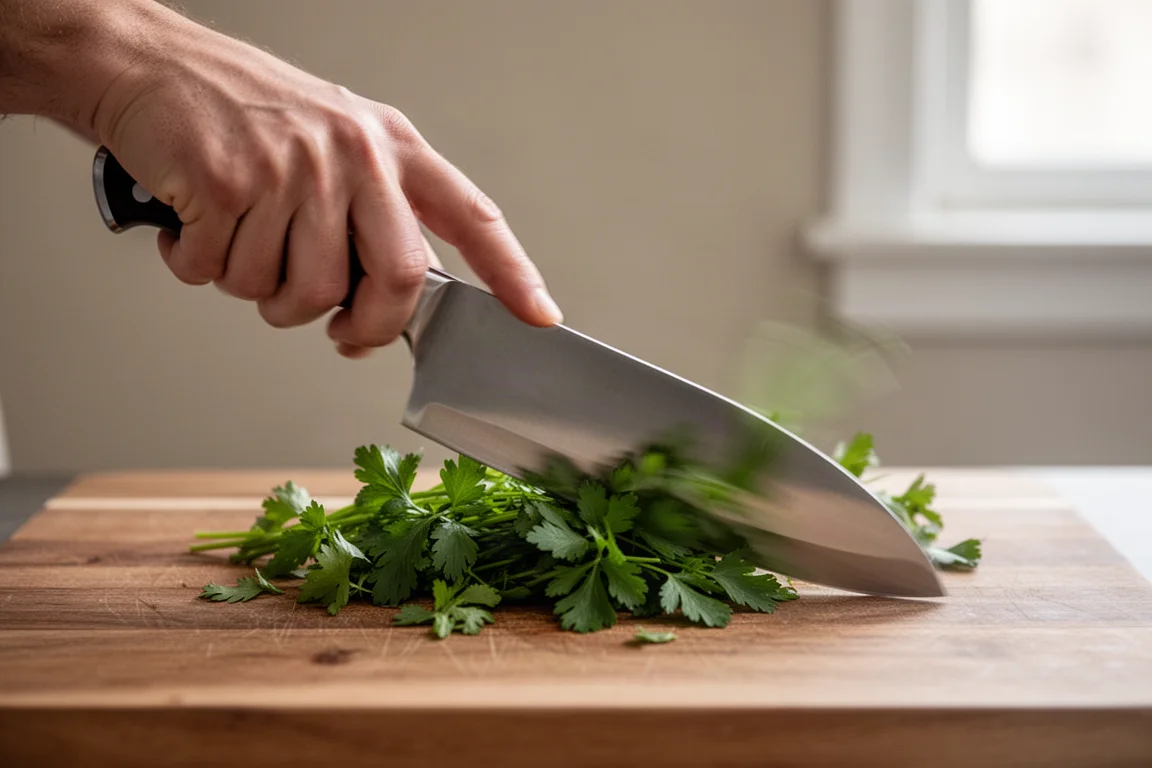
Fortunately, Zwilling makes a version with a traditional blade profile. Everything else is the same, but the blade is shaped like a typical German knife. If you like everything about the Pro except the profile, that is the version to get.
One last quirk: because of the bolster, the heel of the blade sticks out when you slide the knife into a standard knife block. Zwilling sells knife blocks designed specifically for this collection, so it is a solvable problem.
How Zwilling Pro Compares to the Alternatives
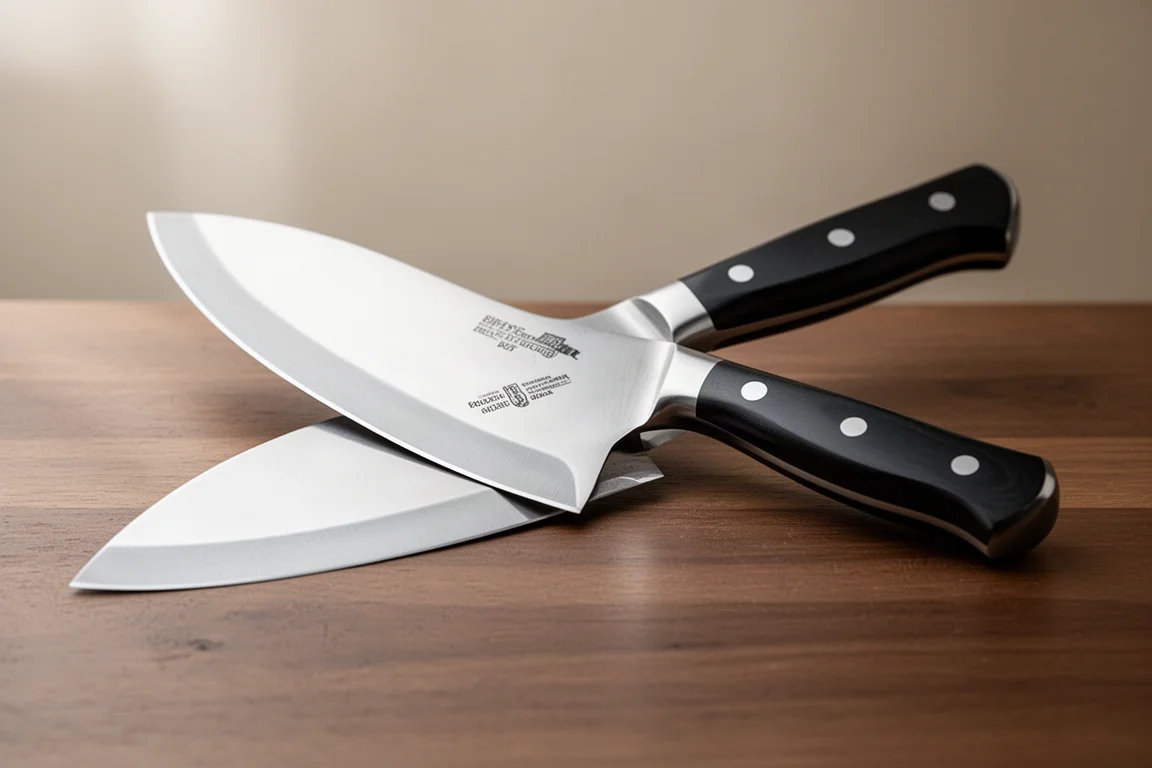
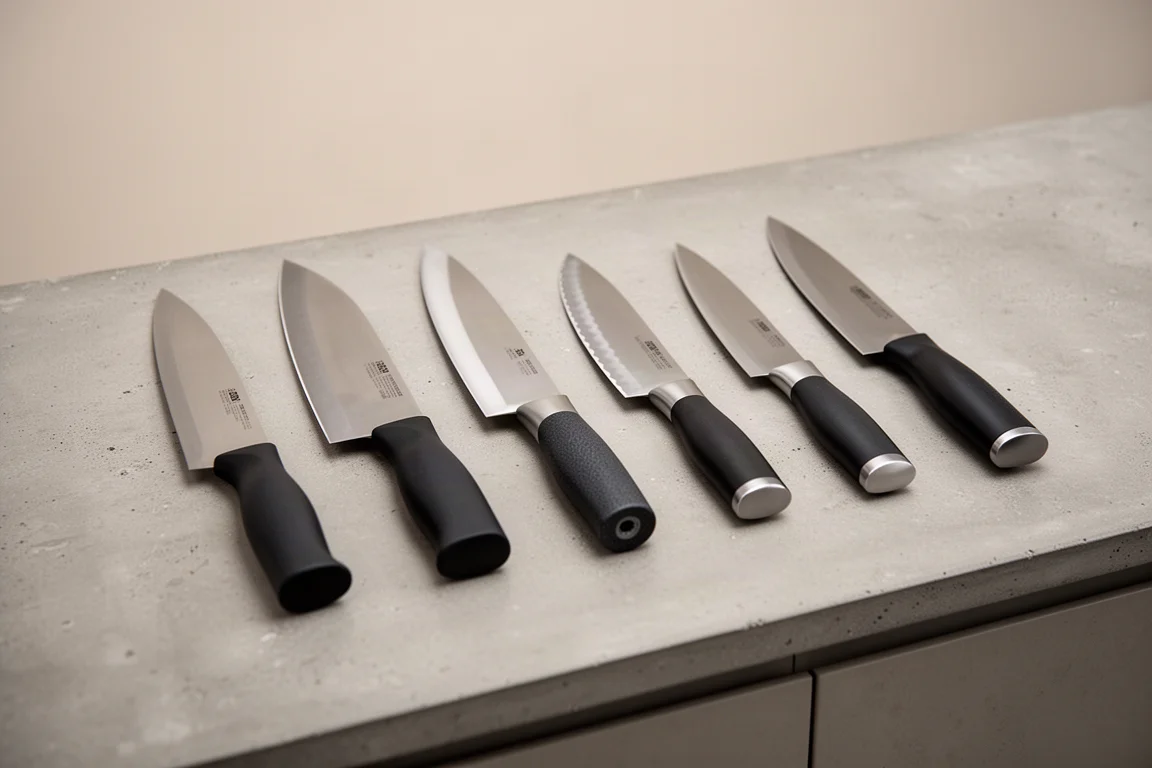
The Zwilling Pro is not the most expensive knife collection in the world, but it is not cheap either. It costs more than brands like Misen and Victorinox, less than high-end Japanese knives like Miyabi and Shun, and is priced similarly to other quality German knives like the Wusthof Classic and Messermeister Meridian Elite.
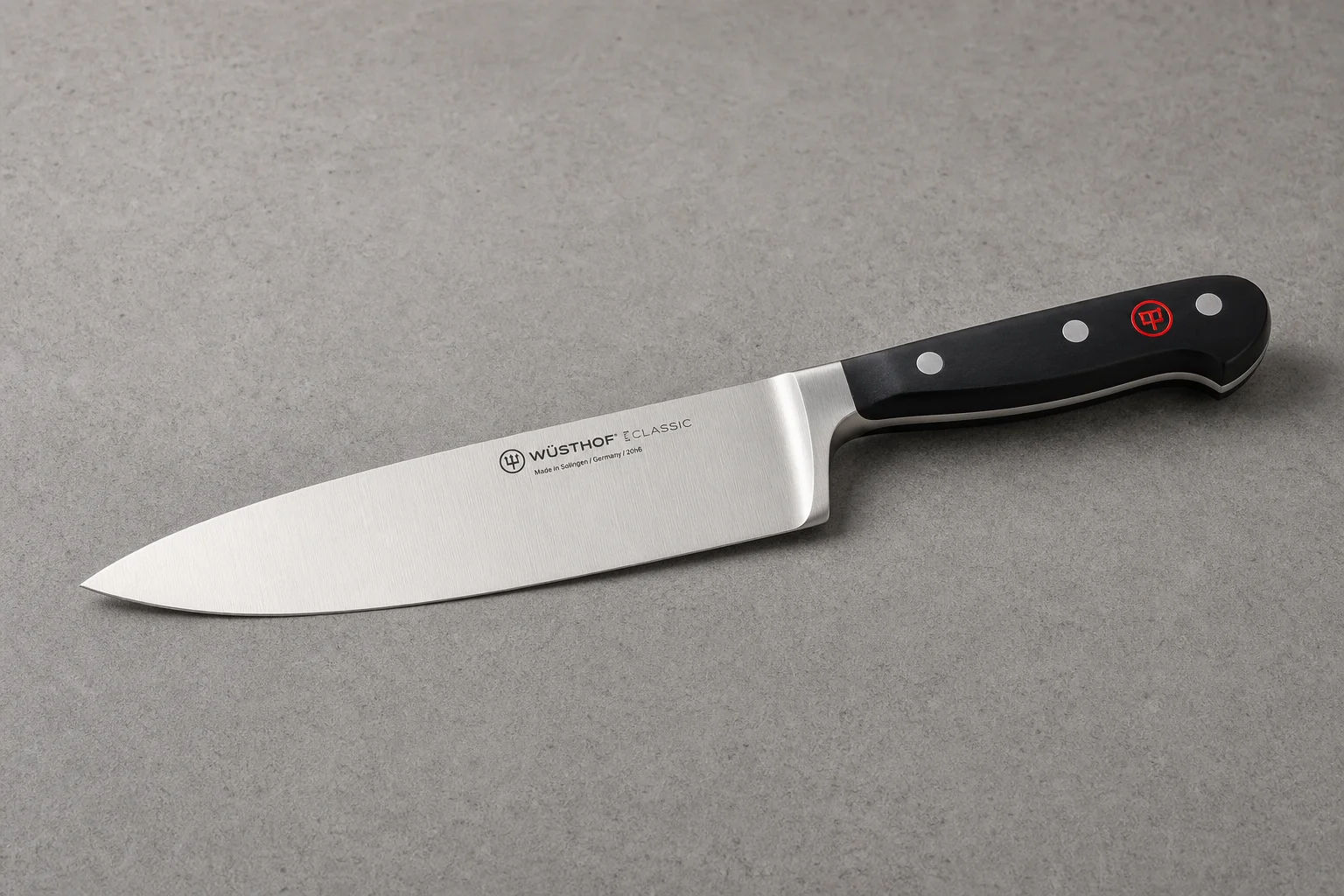
If the Zwilling Pro’s heft does not suit you, the Victorinox Swiss Classic is the standout lightweight option at 5.8 ounces. It is a nimble, budget-friendly knife that many cooks prefer for long prep sessions.

Buying Advice
If you want ultra-durable, German-style knives that are thick, heavy, and feel solid in your hand, the Zwilling Pro is worth the investment. The sloped bolster is the best part: it makes the knife comfortable to hold and easy to control, especially with a pinch grip.
If you like everything about the Zwilling Pro except the blade profile, go with the Zwilling Pro Traditional version instead. If you have small hands or want a lighter, more nimble knife, look at Misen, Shun, or Victorinox rather than the Zwilling Pro.
Conclusion
The Zwilling Pro chef’s knife is a durable, sharp, and comfortable workhorse with a genuinely smart bolster design, held back only by its weight and unusual blade profile. Match the knife to your hand size and cutting style, and it is easy to recommend.
Further reading
Related Reviews

Kitchen Knives
Best Chef's Knives 2026: 27 Popular Options Tested and Ranked
A comprehensive review of 27 chef's knives ranging from $18 to $380, with honest assessments of handle comfort, blade balance, and real-world performance.

Kitchen Knives
Best Chef's Knives Under $75: Two Tested Recommendations
Two practical 8-inch chef's knives that balance sharpness, comfort, and durability without premium pricing.

Kitchen Knives
Best Chef's Knives 2026: 27 Options Tested and Ranked
A comprehensive review of 27 chef's knives ranging from $18 to $380, with honest assessments of handle design, balance, blade profile, and real-world performance.