Kitchen Knives
Yoshikane 210mm vs Tosaichi 240mm Gyuto Kirituke: Which Kirituke-Style Gyuto Wins?
A head-to-head look at two kirituke-style gyutos: the Yoshikane 210mm in White #2 and the Tosaichi 240mm in Aogami Super, tested on carrots, peppers, onions, and sweet potatoes.
Introduction
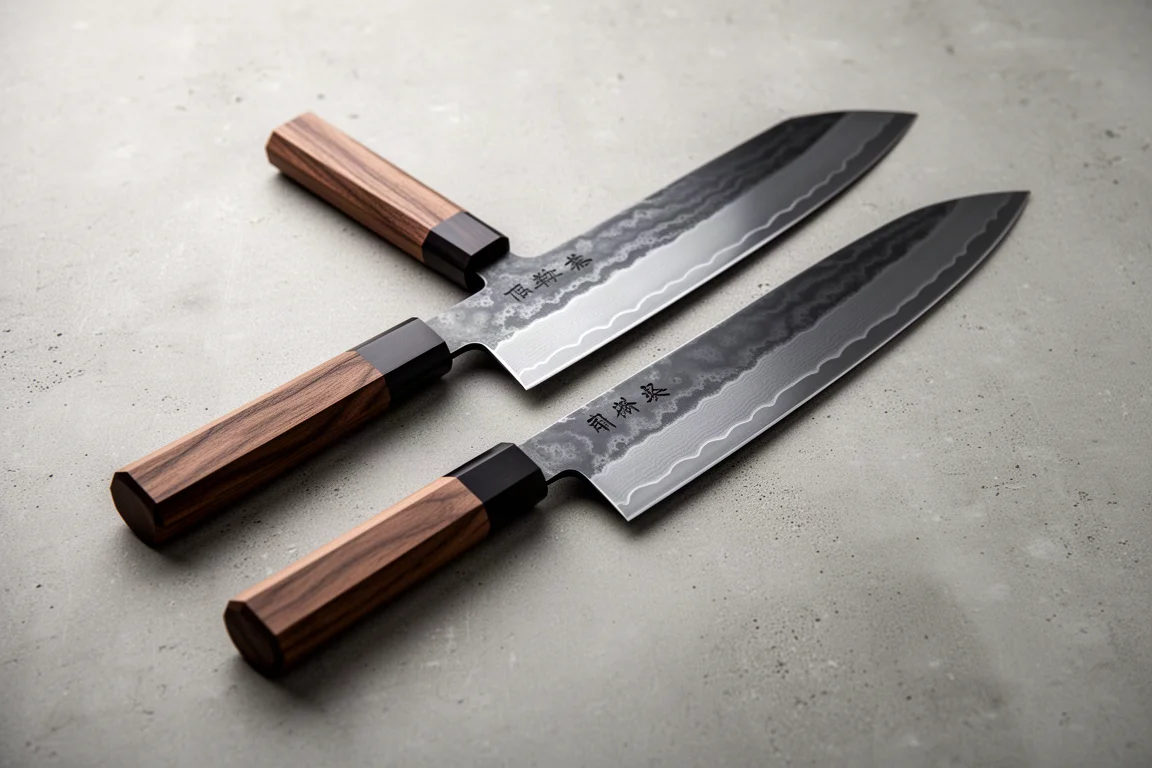
Kirituke-style gyutos occupy an interesting corner of the Japanese knife world: tall blades, aggressive tips, and geometry that rewards good technique. Today’s comparison pits two very different takes on the style against each other: the Yoshikane 210mm Gyuto Kirituke in White #2 steel, and the Tosaichi 240mm Gyuto Kirituke from the Aogami Super line.
Both knives use stainless cladding over a carbon steel core, which means only the steel below the cloud line is exposed and can rust or discolor if left wet. Keeping a damp towel at the station and wiping the blade down before it sits on the board is essential for either knife. Both also feature octagonal handles, so both work comfortably for right- and left-handed users.
We put both knives through the same series of vegetable tests to see where each one shines.
Tosaichi 240mm Gyuto Kirituke Aogami Super
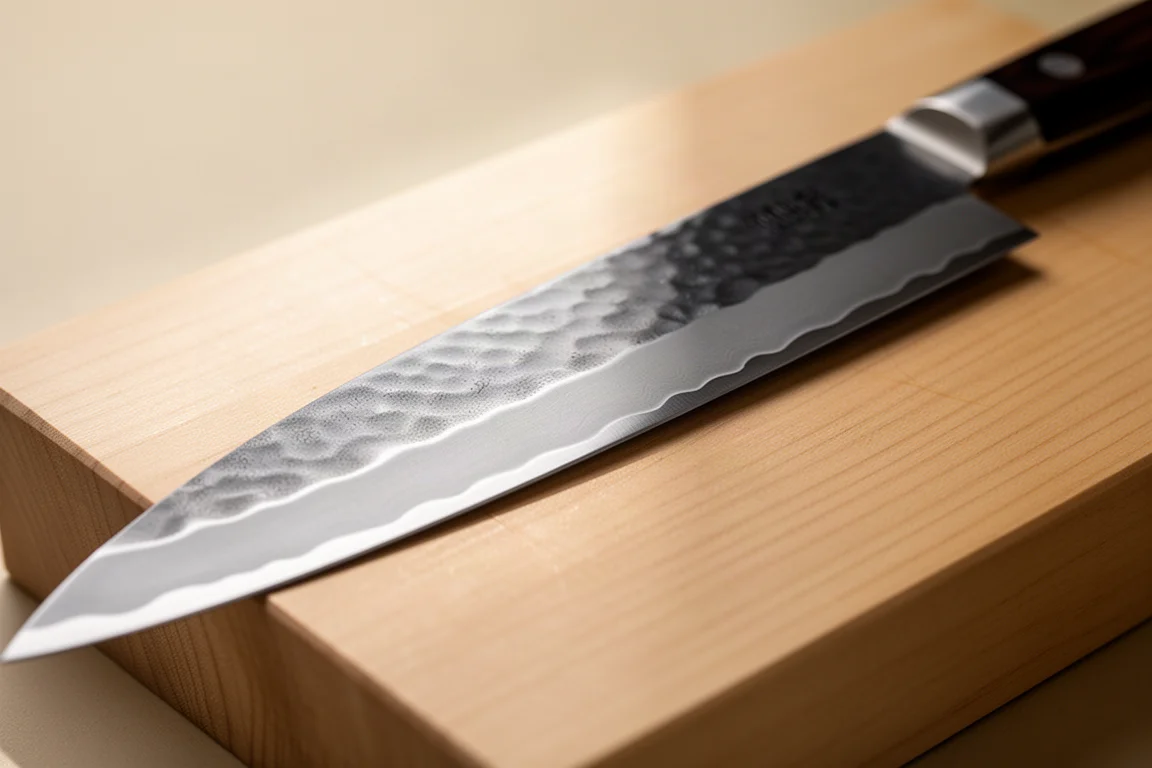
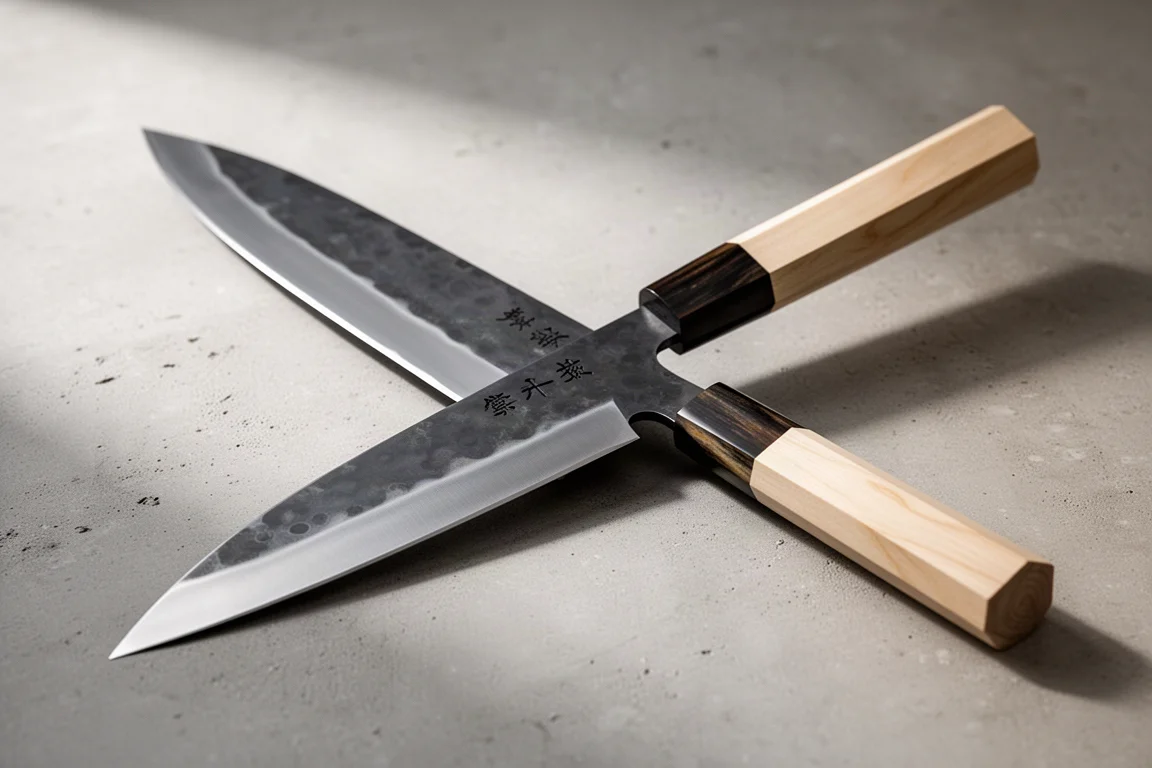
The Tosaichi is made from Aogami Super with stainless cladding, a three-layer construction where the outer layers are stainless and the core is carbon steel exposed only past the cloud line. It features a ho wood handle with a buffalo horn ferrule and a striking Tanto-style tip.
The balance point sits noticeably far forward on this knife, ahead of a typical pinch grip position. That forward balance actually works in its favor for up-and-down chopping motions, though it changes where your hand naturally wants to rest. The profile is quite flat with just a gentle belly curving up toward the tip, and the overall package is surprisingly light for a 240mm blade. Fit and finish are good, though the choil and spine could be sanded a little more. It is also priced attractively, coming in at roughly half the price of the shorter Yoshikane.
Yoshikane 210mm Gyuto Kirituke
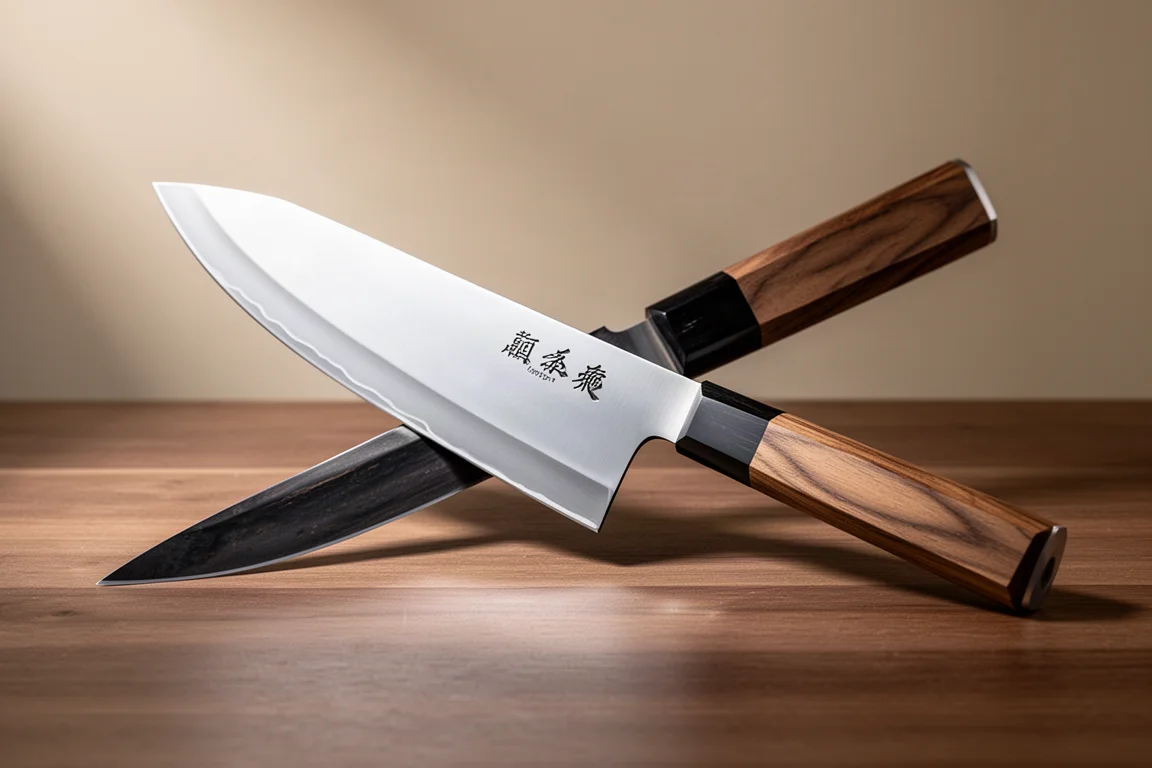
The Yoshikane takes a different approach with White #2 steel under stainless cladding. White #2 generally does not hold an edge as long as Aogami Super, but it is a pleasure to sharpen: it takes an edge extremely easily and gets very sharp with little effort.
This is a Sanjo-made knife, and that shows in the details. It is a little thick right at the handle insertion but tapers nicely toward the tip, with very thin steel behind the edge and a well-executed edge geometry. The balance point sits right at the pinch grip, giving it an exceptionally neutral, balanced feel in the hand. The walnut handle with buffalo horn ferrule is beautifully fitted, with no bumps, gaps, or rough spots, and the spine and choil are nicely sanded. It carries a bit more weight than the Tosaichi, characteristic of Sanjo-made knives, and it simply feels fantastic to hold.
Cutting Performance: Carrots, Peppers, and Onions
On the carrot test, the Yoshikane was spectacular. Entry into the carrot was phenomenal, tip work was effortless, and despite a reasonably thick spine there was no wedging at all. Food release was very good, with no ingredients mushing against the fingers. The Tosaichi matched it almost point for point on the same test, an impressive result, and with just a few minutes of sharpening it reaches a screaming edge thanks to its strong geometry.
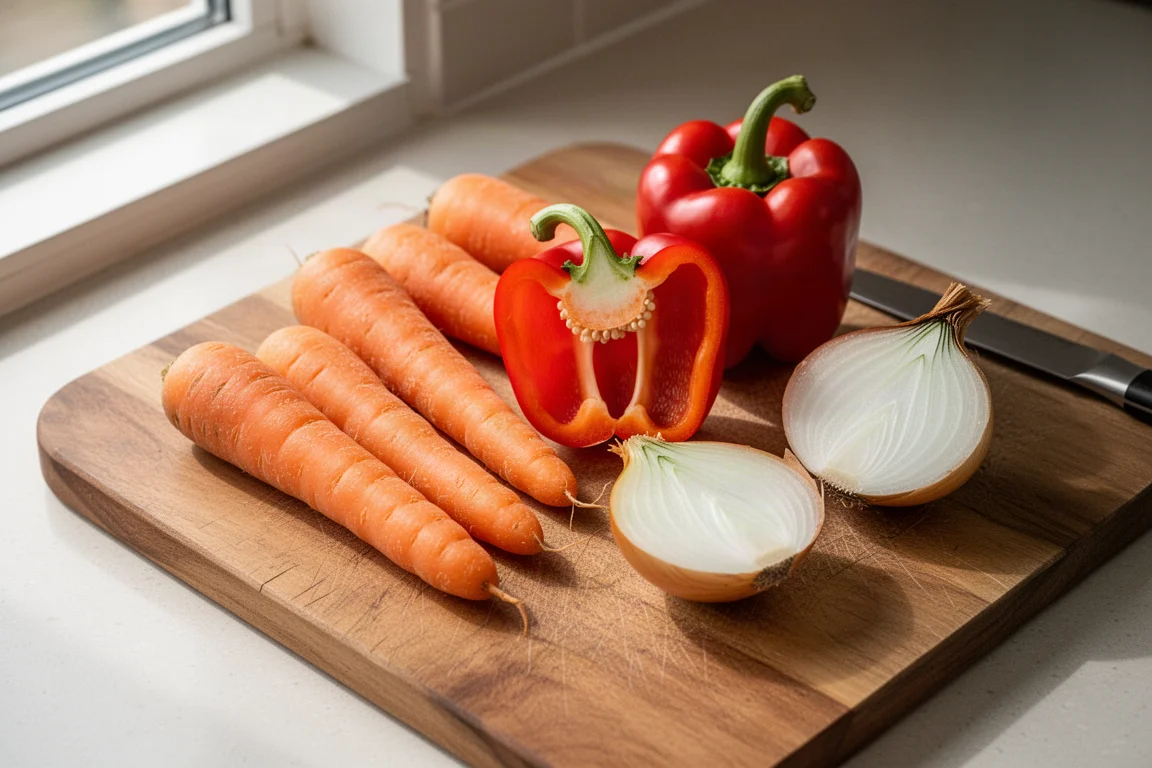
The bell pepper test separated them. The Tosaichi handled peppers well but did not wow, likely because its transition from the cutting edge into the secondary bevel is less gradual, with slightly larger shoulders. The Yoshikane, with its nearly seamless progression from primary bevel to edge, clearly outperformed and took the point here.
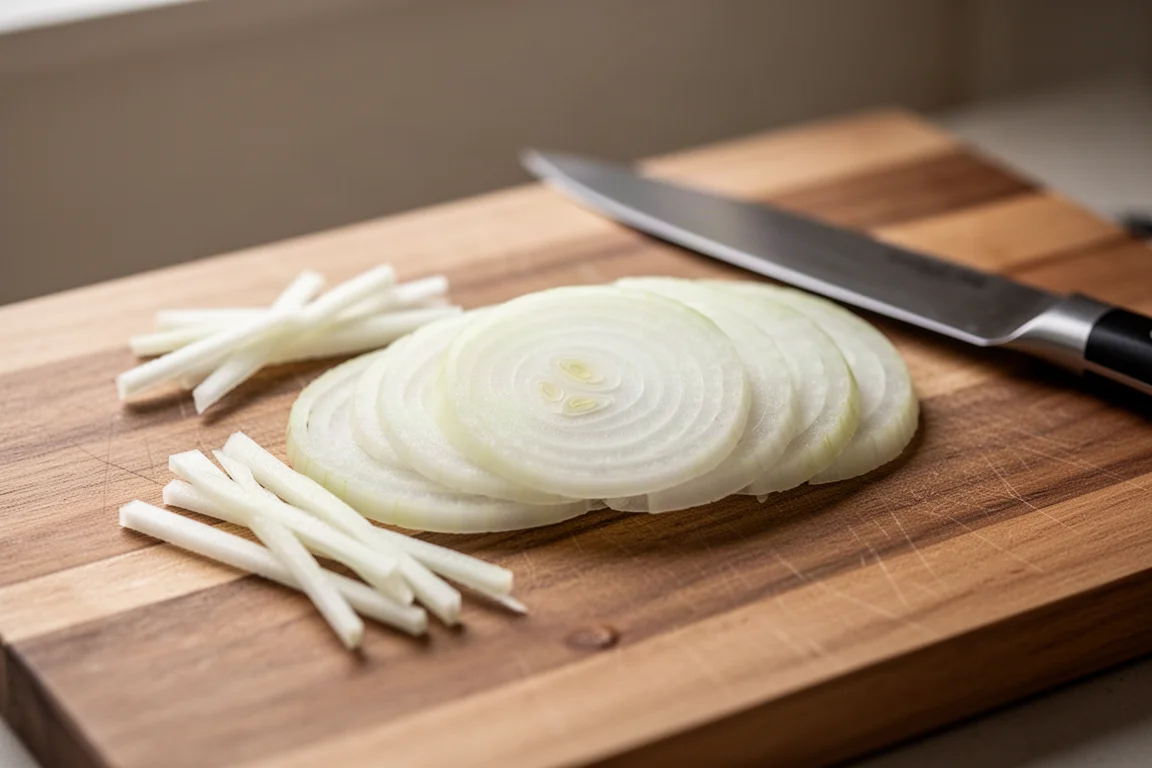
Onions went to the Yoshikane as well. The flat profile and reverse Tanto tip made up-and-down chopping motions and tip incisions easy, with clean board contact and no pieces flailing up. Food release was good, cross cuts felt excellent, and the julienne was comfortable thanks to the forward weight. The Tosaichi still performed well on onions, but the Yoshikane’s geometry simply felt more special, bringing the score to two points to zero.
The Sweet Potato Showdown
Going into the final test, expectations favored the longer, thinner Tosaichi. The Yoshikane had other ideas: it went through the sweet potato like a hot knife through butter, with no serious wedging even on long push cuts. Food release was mixed on straight push cuts, but switching to tip-drawing strokes solved it entirely. The slightly thicker spine gives it a robust feel while it still cuts like a laser.
The Tosaichi responded strongly. Its extra length made a noticeable difference on the sweet potato, and it earned a slight edge on this test. Both knives performed exceptionally here, and on the medium-small sweet potatoes used, either would be a comfortable choice.
Which One Should You Buy?
With two points to the Yoshikane and one to the Tosaichi, the Yoshikane takes the overall win on these vegetable tests, and it also feels better in the hand. The Tosaichi, however, costs roughly half as much for a longer blade, making it an outstanding value.
Context matters. These tests covered vegetables only; tasks like slicing brisket, a large ribeye, or raw fish might favor the Tosaichi’s extra length. And the Tosaichi’s out-of-the-box performance was not its ceiling: with a small amount of sharpening skill, it gets impressively sharp. If feel, fit, and finish are your priority, the Yoshikane justifies its price. If value and length matter more, the Tosaichi is hard to argue with.
Conclusion
The Yoshikane 210mm wins the battle on performance and feel, but the Tosaichi 240mm is one of the most impressive values in this style, matching or nearly matching a knife twice its price. Both are excellent kirituke-style gyutos; the right choice comes down to budget, preferred length, and how much you value premium fit and finish.
Further reading
Related Reviews

Kitchen Knives
Best Chef's Knives 2026: 27 Popular Options Tested and Ranked
A comprehensive review of 27 chef's knives ranging from $18 to $380, with honest assessments of handle comfort, blade balance, and real-world performance.

Kitchen Knives
Best Chef's Knives Under $75: Two Tested Recommendations
Two practical 8-inch chef's knives that balance sharpness, comfort, and durability without premium pricing.

Kitchen Knives
Best Chef's Knives 2026: 27 Options Tested and Ranked
A comprehensive review of 27 chef's knives ranging from $18 to $380, with honest assessments of handle design, balance, blade profile, and real-world performance.