Kitchen Knives
Yoshihiro Yasha Yukawa Tamahagane Warikomi Gyuto 240mm Review: A Kitchen Knife From a Licensed Swordsmith
A 240mm gyuto forged from traditional tatara tamahagane by licensed swordsmith Yasha Yukawa, with premium unboxing details, build observations, and who it really suits.
Introduction
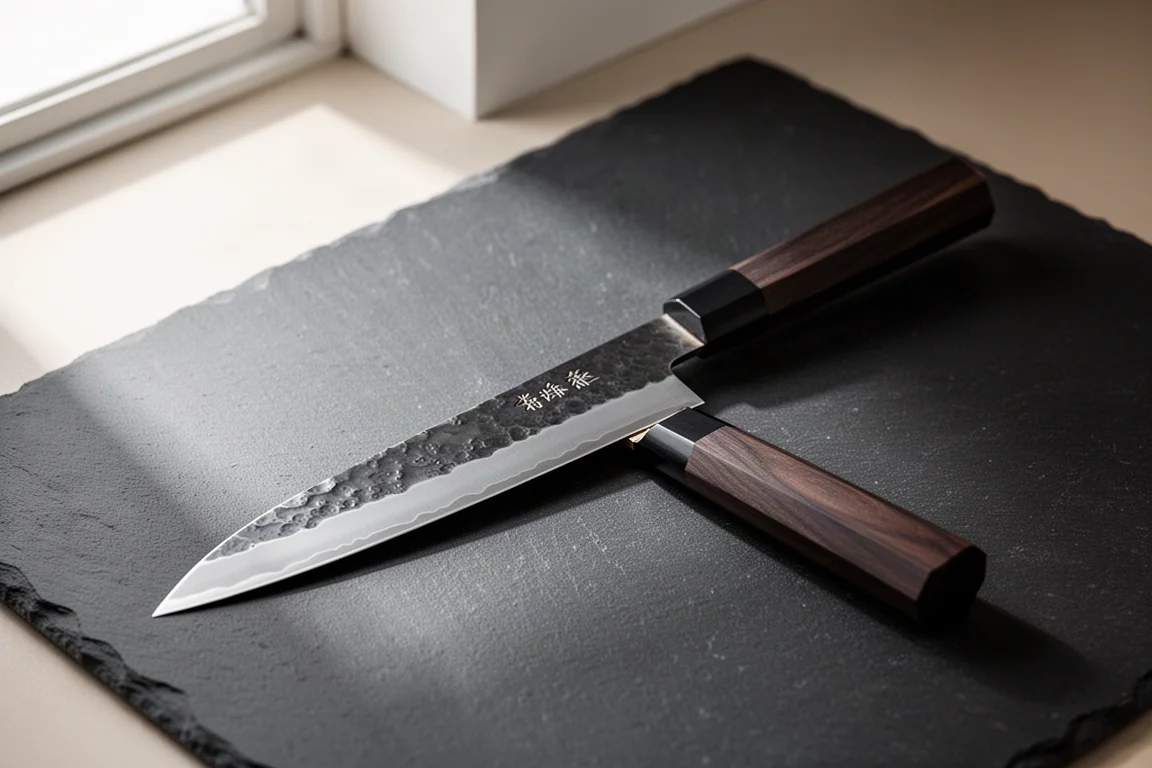
Some kitchen knives are tools. A very small number are closer to objects of craft, and this is one of them. The Yoshihiro Yasha Yukawa Tamahagane Warikomi Gyuto 240mm (TW002) is a chef’s knife made by a licensed Japanese swordsmith using traditional tatara-forged tamahagane steel, the material historically associated with Japanese sword making.
This is a premium product in every sense: the blade, the maker, the packaging, and the price point. This review walks through what you actually get, what the steel and construction mean, and whether a knife like this makes sense for you.
Who This Product Is For
This is not a knife for someone shopping on a budget or looking for a first Japanese chef’s knife. It is aimed at collectors, enthusiasts, and cooks who want a genuine piece of swordsmith work for the kitchen, complete with the documentation and presentation that implies.
The serial numbering alone tells you how limited it is. This specific example is TW002: the T stands for tamahagane, the W stands for warikomi, and 002 indicates it is the second knife of the series, the first gyuto of this size. If provenance and scarcity matter to you, that matters here.
What’s in the Box
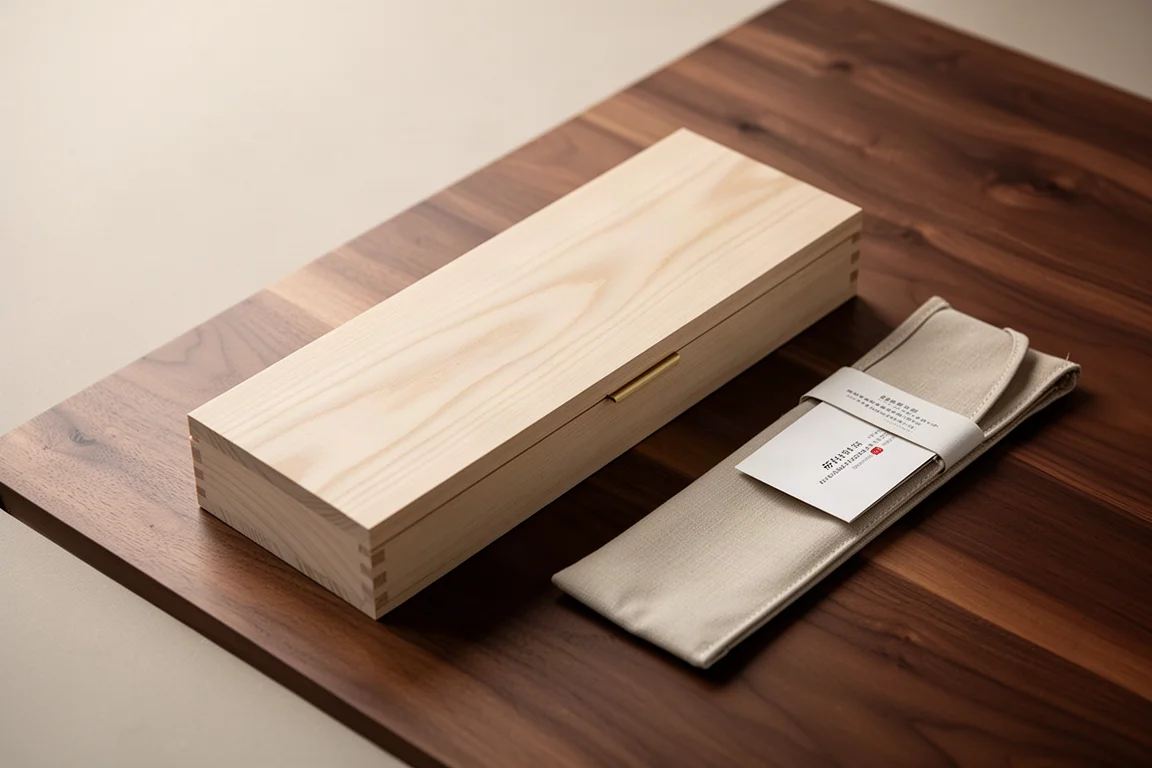
The unboxing experience is a major part of what you are paying for. The knife arrives in a gorgeous kiri box made of paulownia, a hardwood from Eastern Asia, and it is more detailed than most. Yoshihiro branding appears on the box, including “swordsmith Yoshihiro sacred steel” lettering, with the TW002 identifier shown in both lettering and numbers on the side. A decorative cloth sleeve wraps the box, unnecessary in a practical sense but genuinely additive to the sense of occasion.
Inside you get:
- A kiri carry box with Yoshihiro branding and series marking
- A decorative sleeve for the box
- A certificate stating the blade was made by swordsmith Yasha Yukawa using authentic tamahagane processed by traditional methods, signed by the smith
- A business card and a high-quality pamphlet about the swordsmith, with consistent branding, signature, and stamp throughout
- A charcoal-style sketch of the knife, plus a view of the serial number stamped into the tang
- A protective blade cover with glued ends and a small foam pad bent over the tip to protect the most delicate part of the blade during transport and storage
The certificate, pamphlet, and sketch are not filler. They reinforce exactly what you are buying: a numbered blade from a specific maker, with paperwork to back it up.
Blade Design and Steel: Warikomi Tamahagane
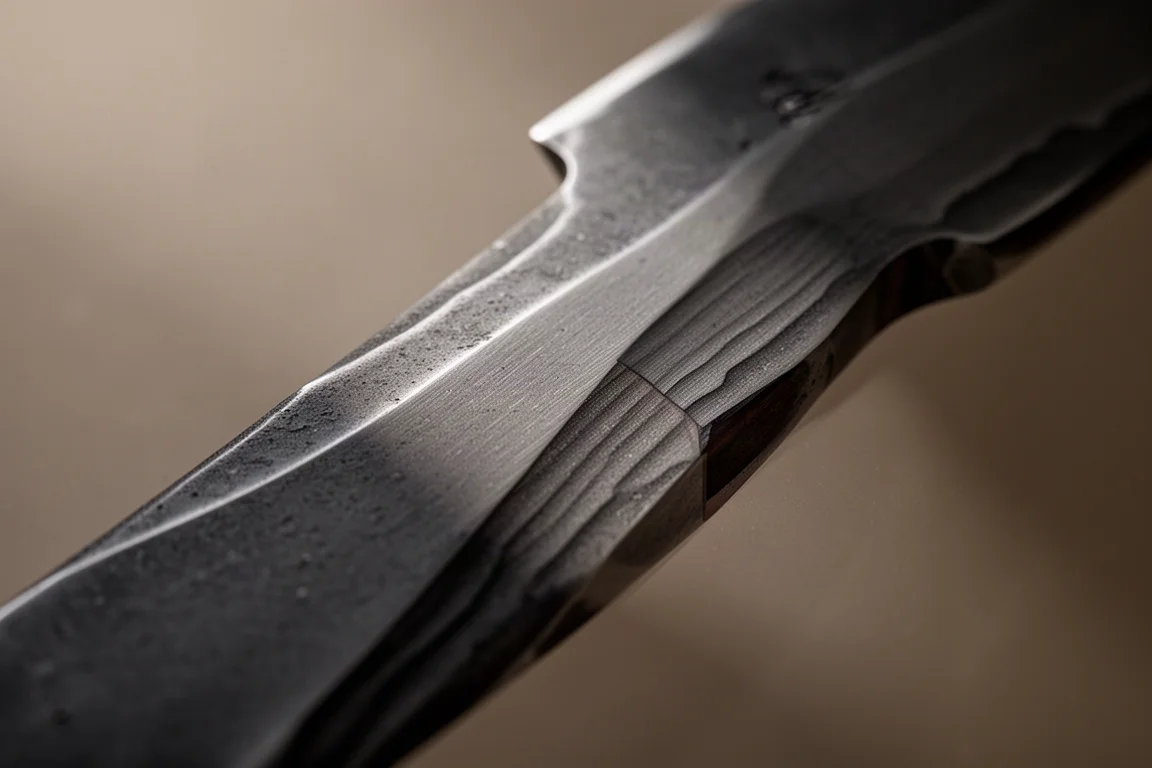
This is a 240mm gyuto made of Nittoho tatara tamahagane in warikomi fashion. The construction is notable: the soft cladding steel wraps over the spine of a blade made with tamahagane, so the cladding is visible along the top of the knife, not just the sides. Tamahagane is the traditional steel associated with Japanese sword making, and its provenance and processing are topics that carry a lot of misconception in the knife world.
Visually, the finish is striking. The raw, pure tamahagane look with visible cladding is unlike most stainless kitchen knives, and the blade’s drop point gives it a slightly santoku-like silhouette even though it is formally a gyuto.
One thing to know before buying: this knife is heavy for its class. The spine is thick, coming in at 3.7mm at the heel on a 240mm blade. That heft gives it presence in hand, but it is a defining characteristic you should be comfortable with.
Handle and Handling
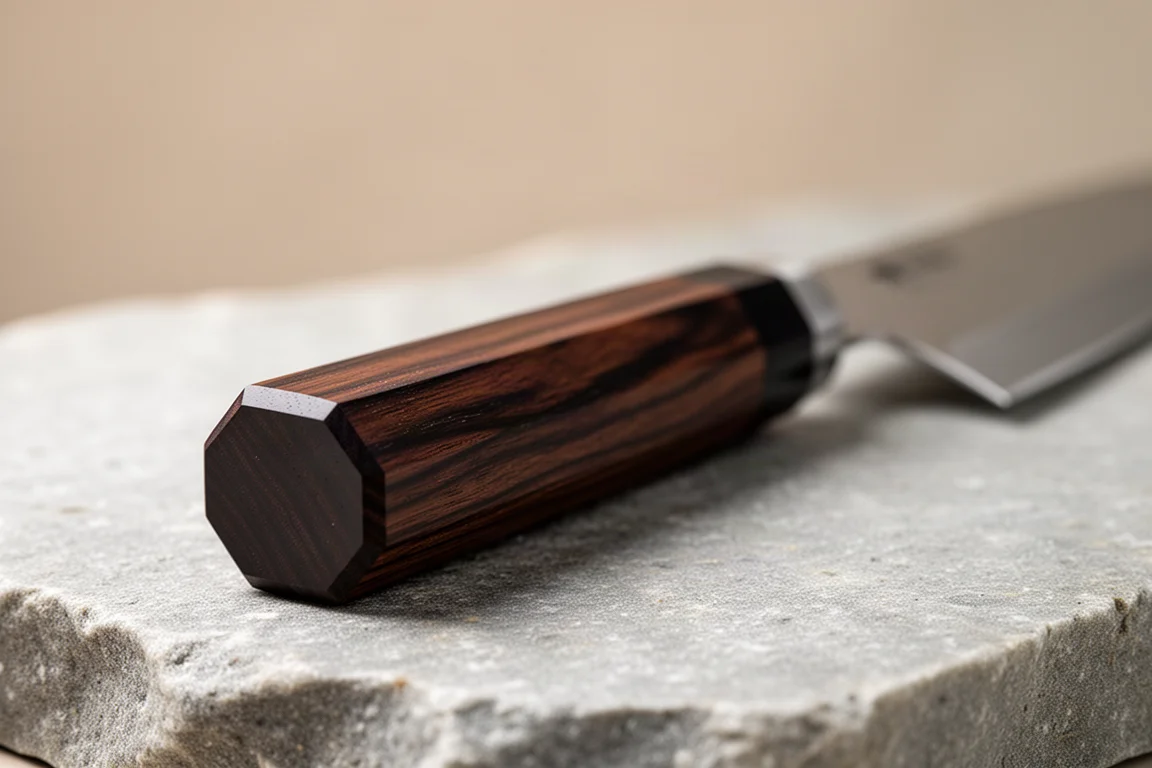
The handle is a wa-octagonal design, and it is quite beefy. That bulk matches the blade well. In hand it is described as very comfortable to hold, and the octagonal profile gives secure orientation without hot spots. The overall balance of a thick-spined, heavier 240mm gyuto will feel different from lighter laser-style Japanese knives, so expect a knife with real presence rather than featherweight agility.
The Smith Behind the Blade: Yasha Yukawa
The maker is Yasha Yukawa, swordsmith name Kagami Yashamaru, a Swedish-born smith who became a licensed Japanese swordsmith. His path followed the traditional route: an apprenticeship of at least five full-time years under Mukansa swordsmith Matsuba Kunimasa, followed by an eight-day national examination organized by the Ministry of Cultural Affairs, in which the candidate must produce a wakizashi using traditional methods. His stated philosophy treats the sword as a tool for self-mastery and discipline, and that perspective carries through to how these kitchen knives are presented and documented.
Understanding the maker matters with a knife like this, because you are not just paying for cutting performance. You are paying for a blade forged by a licensed swordsmith, using traditional methods and traditional steel.
Things to Consider Before Buying
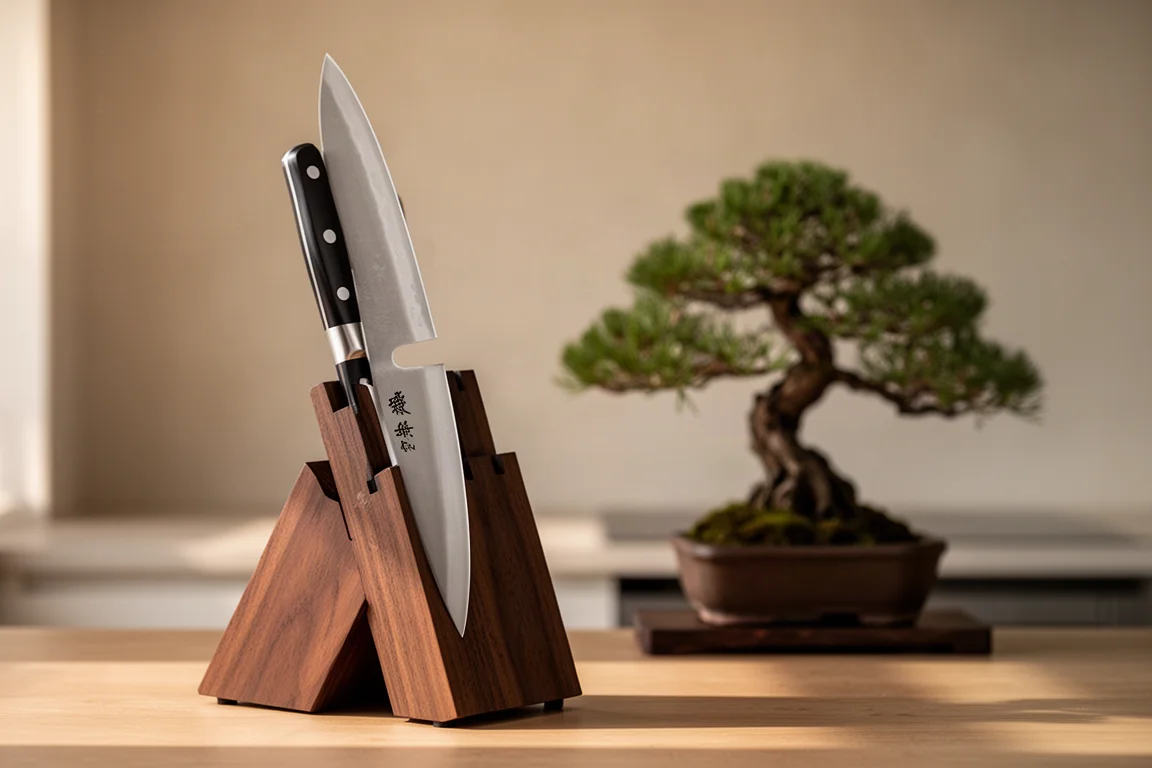
Before committing to a knife at this level, weigh the following:
- Price. The price point is explicitly not low. This is a collector-grade purchase, not a value proposition.
- Weight and thickness. At 3.7mm at the heel, this is a thick, heavy gyuto. If you prefer thin, light cutting knives, this will feel very different.
- Steel care. Tamahagane is a carbon-style steel associated with traditional forging. Expect the maintenance that implies.
- Availability. These are numbered, limited knives. This specific example, number two of the series, was offered for sale through a collector, and a santoku from the same series and maker has also been offered.
Buying Advice
If you want a high-performance workhorse gyuto at a sensible price, this is not the knife to buy. If you want a numbered, certified blade from a licensed Japanese swordsmith, forged from authentic tatara tamahagane in warikomi construction, presented in one of the most complete unboxing experiences available in the knife world, this is exactly the kind of purchase that delivers on its promise. Collectors and serious enthusiasts will find the documentation, the sketch, the certificate, and the smith’s story to be genuine parts of the product, not marketing fluff.
Conclusion
The Yoshihiro Yasha Yukawa Tamahagane Warikomi Gyuto 240mm is a rare kind of kitchen knife: a swordsmith’s blade made for the cutting board, with traditional steel, warikomi construction, and a thick, substantial profile. It is expensive, limited, and unapologetically premium, and for the right buyer, that is precisely the point.
Product link
View more details for Yoshihiro Yasha Yukawa Tamahagane Warikomi Gyuto 240mm (TW002)
This product is mentioned in the review. Check the specifications, options, and compatibility before buying.
View more details for Yoshihiro Yasha Yukawa Tamahagane Warikomi Gyuto 240mm (TW002)Further reading
Related Reviews

Kitchen Knives
Best Chef's Knives 2026: 27 Popular Options Tested and Ranked
A comprehensive review of 27 chef's knives ranging from $18 to $380, with honest assessments of handle comfort, blade balance, and real-world performance.

Kitchen Knives
Best Chef's Knives Under $75: Two Tested Recommendations
Two practical 8-inch chef's knives that balance sharpness, comfort, and durability without premium pricing.

Kitchen Knives
Best Chef's Knives 2026: 27 Options Tested and Ranked
A comprehensive review of 27 chef's knives ranging from $18 to $380, with honest assessments of handle design, balance, blade profile, and real-world performance.