Kitchen Knives
Yell's Cutlery Petty Chef Knife Review: A Convex-Grind Gem from Quebec
A 175mm production series petty chef knife with AEB-L steel, a full convex grind, and standout handle work. Tested on produce most of us have never cut before.
Introduction
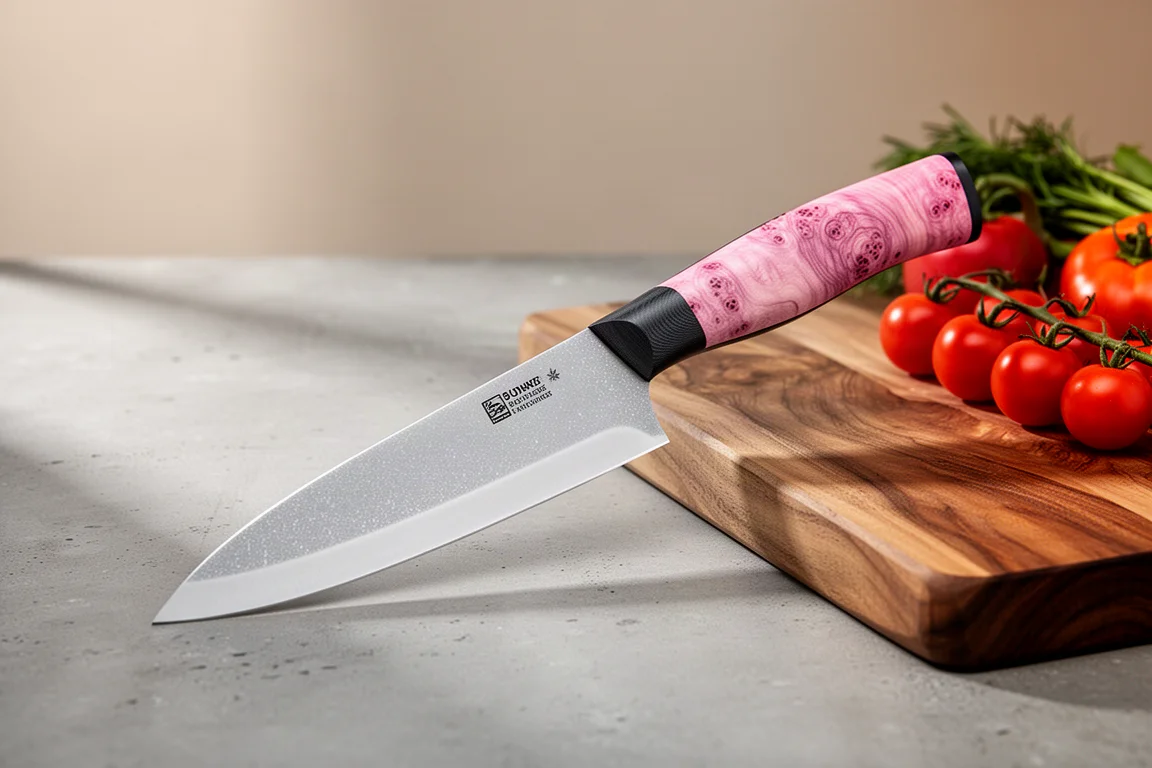
Some knives look the part before you ever pick them up. This one does. The Yell’s Cutlery production series petty chef knife arrived from Jeremy Yell’s workshop in Quebec, Canada, and it turned out to be one of the more interesting knives we have spent time with recently: a small chef-style blade with a full convex grind, AEB-L steel, and a handle that genuinely steals the show.
To give it a proper shakeout, the cutting demo was taken on the road and filmed on location in Mexico, using the knife on produce that rarely appears in a standard test lineup. Chayote, bitter orange, white onions, and more all got put through their paces.
Unboxing and First Impressions
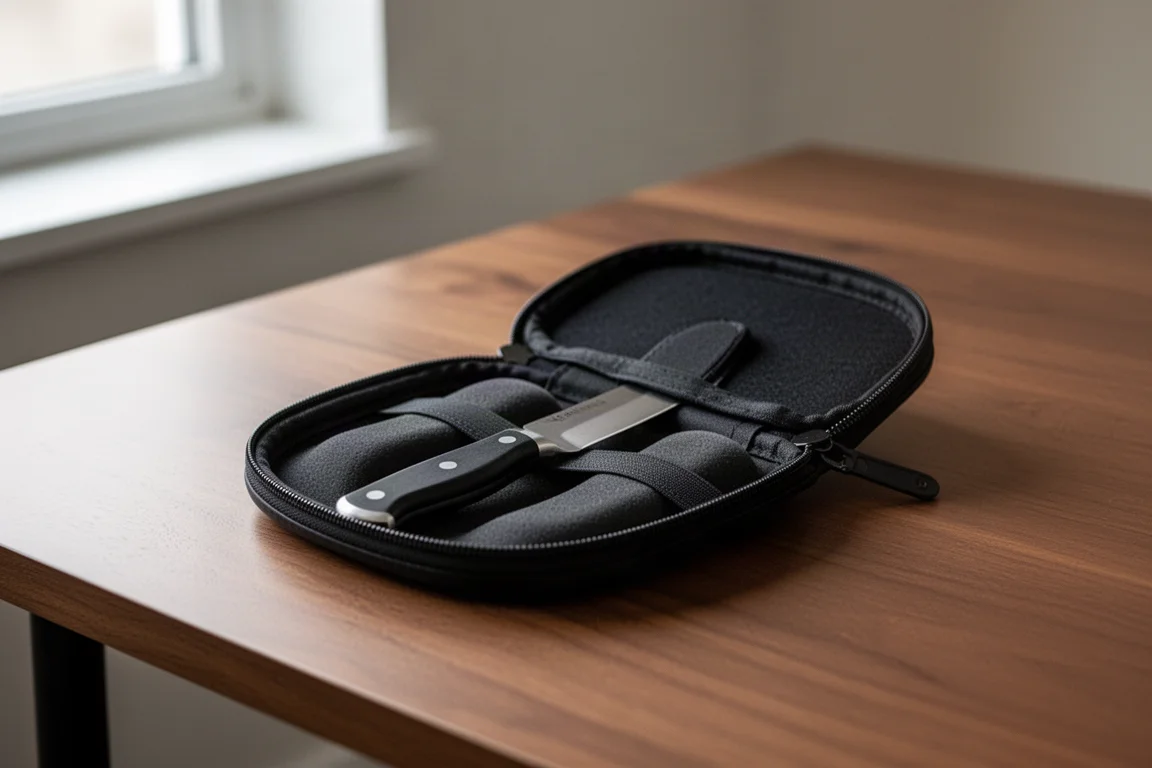
Packaging is solid, with no concerns about shipping damage. The knife arrives in a simple zippered pouch with no logo, existing purely to cushion, hold, and protect the blade. That is exactly what a pouch should do. The included business card is a simple printed photograph with a distinctly 1990s feel and a blank back, though a blank white reverse does read as slightly cheap. A QR code linking to the maker’s social pages would be a welcome touch.
The knife itself is an absolute stunner. It is essentially a small chef knife, what many call a petty chef, with 175mm (almost 7 inches) of sandblasted blade in a full convex grind. Details are handled with care: a discreet maker’s mark, a G10 bolster, and an eye-catching piece of pink dyed stabilized maple burl for the handle.
The fluted handle profile deserves special mention. It is narrow at the ricasso and wider at the butt, which makes it fit exceptionally well in hand. Fit and finish is honestly hard to complain about. A little more chamfer on the spine and choil would be welcome, but for looks and feel this knife earns a 9.5 out of 10.
Cutting Performance in Real-World Testing
Testing on unfamiliar Mexican produce was a revealing experience. The chayote, firm like an unripe pear, was handled beautifully despite inexperience with the ingredient. Pepino blanco, which turned out to taste like a cross between cucumber and melon, was cut cleanly enough to inspire a spoon.
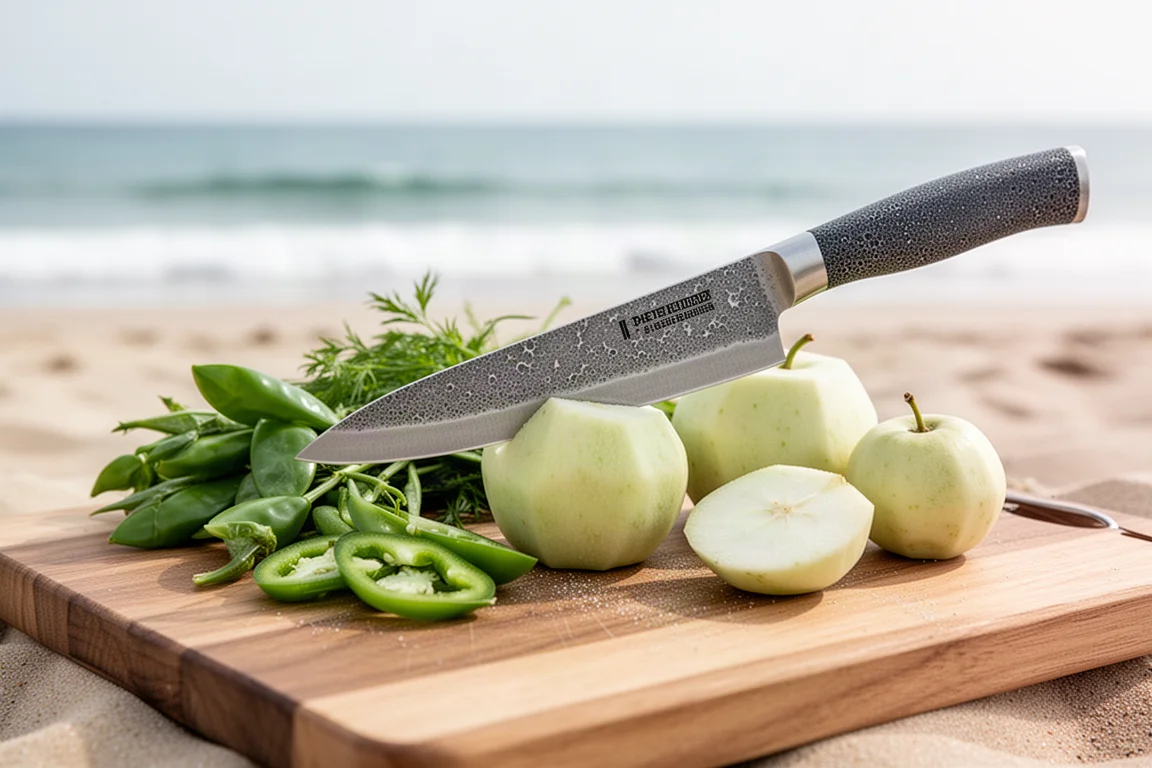
With calabaza, the versatility of the blade profile really showed. The knife is genuinely versatile, just as a chef knife should be, even in a compact petty format. It is small enough that it felt natural to use it almost like a paring knife, something a taller blade would not allow as comfortably.
The chile dolce, with its leathery skin, was handled smoothly, including the seeds. Bitter orange was the surprise: skin much thicker and tougher than a typical orange, and tart enough to numb lips after a taste. Pineapple cuttings went smoothly with good food release on pull cuts. On tougher-skinned produce like lime, the edge does not always bite instantly without some pressure, but with a white onion it is easy work.
The Convex Grind Advantage
Convex grinds are worth getting excited about. Unlike S grinds, C grinds, and their many mill combinations, convex is the least gimmicky grind and should deliver the highest return on investment for food release. Grind alone does not determine food release, though. Technique matters, and so does blade finish.
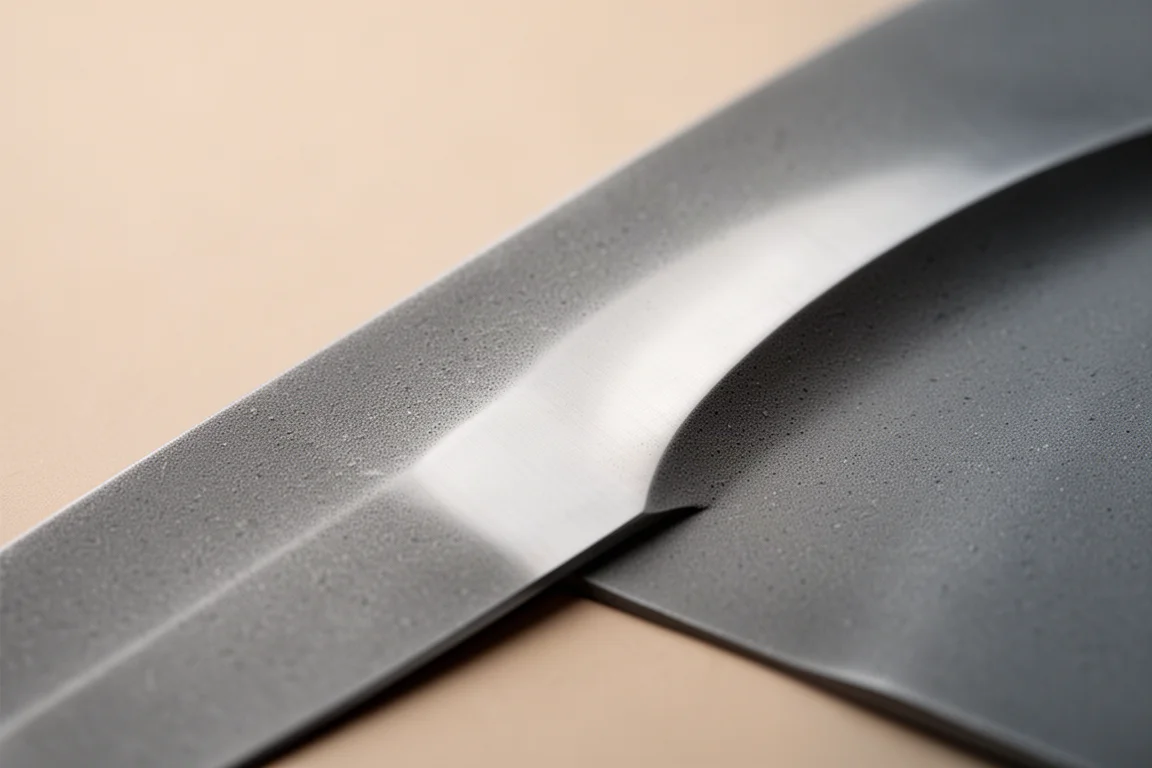
In testing, food release was good but not exceptional, and the sandblasted finish may be the reason. Sandblasting leaves tiny surface pores where moisture and suction can occur, which can make food stick a bit more. A hand satin finish option, one of the available upgrades, would likely release food better and is worth considering at ordering time.
Production Series Done Right
An affordable production series from a smith often keeps the essence of the handmade work while simplifying the aesthetics, sometimes to the point of looking boring. This knife avoids that trap completely. It is visually stunning, the craftsmanship is excellent, the build model is flexible, and the price sits right where it should.
For clarity, production series is not the same thing as production batch. A production series knife claims to deliver the same function as the maker’s regular work without the aesthetic extras. A production batch means multiple knives made at once for efficiency, which is a different and equally valid approach used by many makers.
Here, Jeremy nailed the formula. Buyers still get a fully convex blade, which is a huge win, and a meaningful level of customization: handle color, stabilized or not, knife bag or not, and blade finish, with the most expensive option being a handmade kasumi finish. Pricing ranges from $400 to $600 Canadian depending on those choices.
Things to Consider Before Buying
A couple of blade nitpicks are worth knowing. The secondary bevel would arguably benefit from being longer and narrower, which would make the knife feel sharper and thinner behind the edge. AEB-L is a very resilient steel, so edge stability should not suffer from that change.
It might also be a little small for some users. A larger chef-size version of this design would be welcome. And while the pouch is fine, the presentation extras, like the blank card back and the bowie knife photo on a kitchen knife card, could use some polish.
Who This Knife Is For
This knife suits someone who appreciates a solid, thoughtfully built knife that keeps the details that drive performance, delivered in a smart, attractive package. The handle design is excellent, fit and finish is top notch, and the blade shape is extremely versatile.

The small level of customization makes the buyer feel part of the build, which is smart in every sense. It is also priced well below the maker’s high-end work, which makes it very appealing. Perhaps the strongest endorsement possible: a knife that normally never leaves the block at home has actually been replaced by this petty chef. That says a lot about the work.
Buying Advice
If you order, think through the options before committing. Handle material, whether stabilized, and blade finish all affect the final price. The handmade kasumi finish is the premium choice, while the sandblasted finish trades a little food release for its distinctive look. For most buyers who prioritize performance, a smoother finish is worth considering.
Conclusion
The Yell’s Cutlery production series petty chef knife delivers the function of a maker’s custom work in a beautifully executed, customizable, and sensibly priced package. A full convex grind in AEB-L steel, outstanding handle work, and a versatile 175mm profile make it easy to recommend, with only minor nitpicks on bevel geometry, food release, and presentation extras standing between it and perfection.
Product link
View more details for Yell's Cutlery Production Series Petty Chef Knife (175mm Convex, AEB-L)
This product is mentioned in the review. Check the specifications, options, and compatibility before buying.
View more details for Yell's Cutlery Production Series Petty Chef Knife (175mm Convex, AEB-L)Further reading
Related Reviews

Kitchen Knives
Best Chef's Knives 2026: 27 Popular Options Tested and Ranked
A comprehensive review of 27 chef's knives ranging from $18 to $380, with honest assessments of handle comfort, blade balance, and real-world performance.

Kitchen Knives
Best Chef's Knives Under $75: Two Tested Recommendations
Two practical 8-inch chef's knives that balance sharpness, comfort, and durability without premium pricing.

Kitchen Knives
Best Chef's Knives 2026: 27 Options Tested and Ranked
A comprehensive review of 27 chef's knives ranging from $18 to $380, with honest assessments of handle design, balance, blade profile, and real-world performance.