Kitchen Knives
Yelles Custom vs Production Kitchen Knives: Is the Extra $1,000 Worth It?
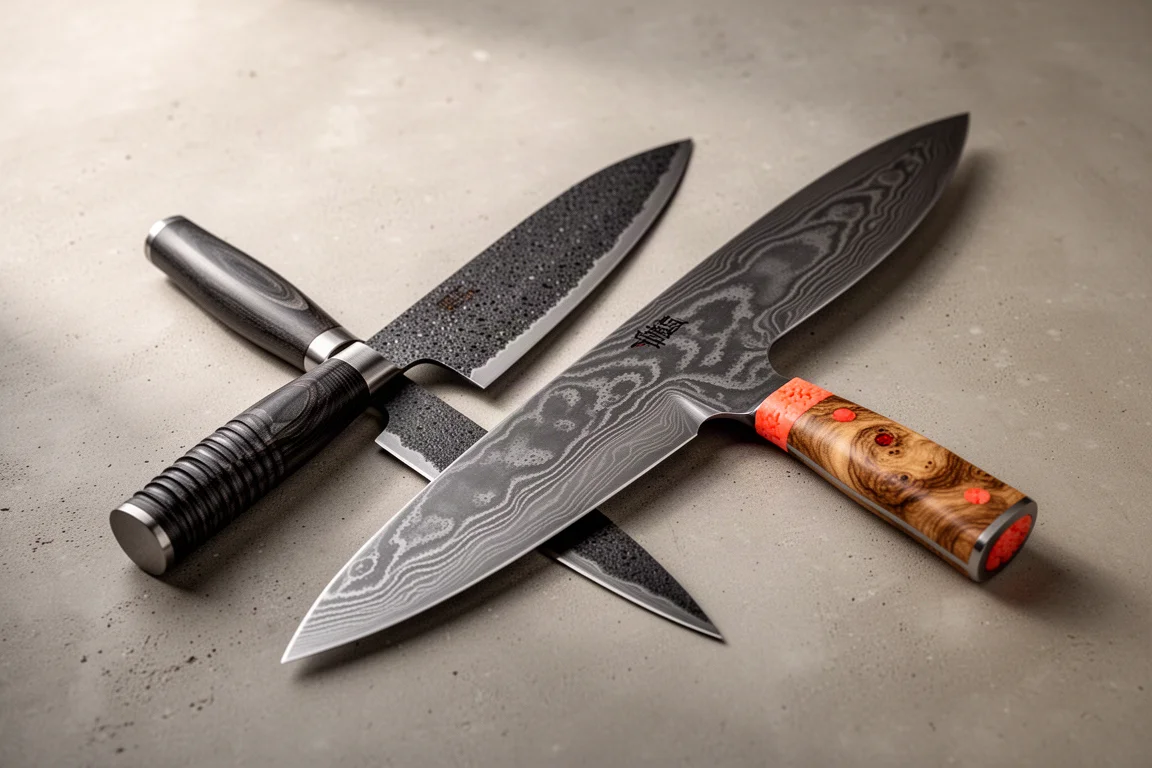
Two knives from the same Quebec smith, a $1,000 gap, and a surprisingly close comparison of geometry, food release, and fit and finish.
Introduction
With handmade kitchen knives, more and more smiths are launching production lines: the idea is to make a knife that is far more affordable while keeping the cutting performance and the maker’s identity intact. On paper, it sounds like the best of both worlds. In reality, that is not always the case.
This comparison is about as fair as it gets. Both knives come from the exact same maker: Jeremy Yelles, a journeyman smith from Quebec, Canada. His production gyuto sold for around $500 Canadian. His custom kitchen knives sell for just over $1,500 Canadian. Same maker, same style of knife, and a $1,000 difference. The question is simple: does the custom actually earn that extra money, or does the production model get close enough that the custom is not worth it?
The Production Knife: Yelles Petit Chef
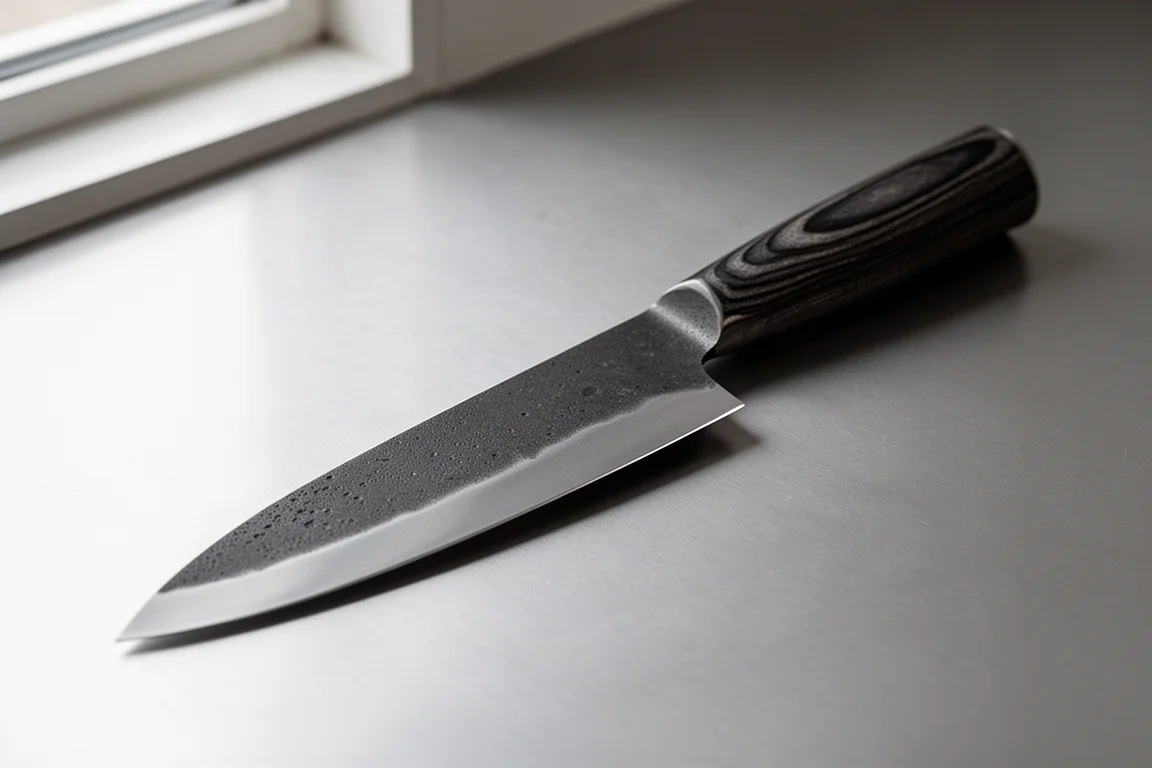
When the Petit Chef first arrived, it looked every bit like a Yelles kitchen knife, just a little simpler. The real question was whether it would perform like one, because $500 Canadian is cheaper than $1,500, but it is still not cheap. This is not an entry-level kitchen knife.
The short version: the Petit Chef impresses. It handled almost everything thrown at it exceptionally well, and it was not some watered-down version of a custom knife. It is a genuinely excellent performer. The fit and finish is terrific, with a nicely tapered handle, everything flush and smooth, no gaps, and subtle curves where they matter.
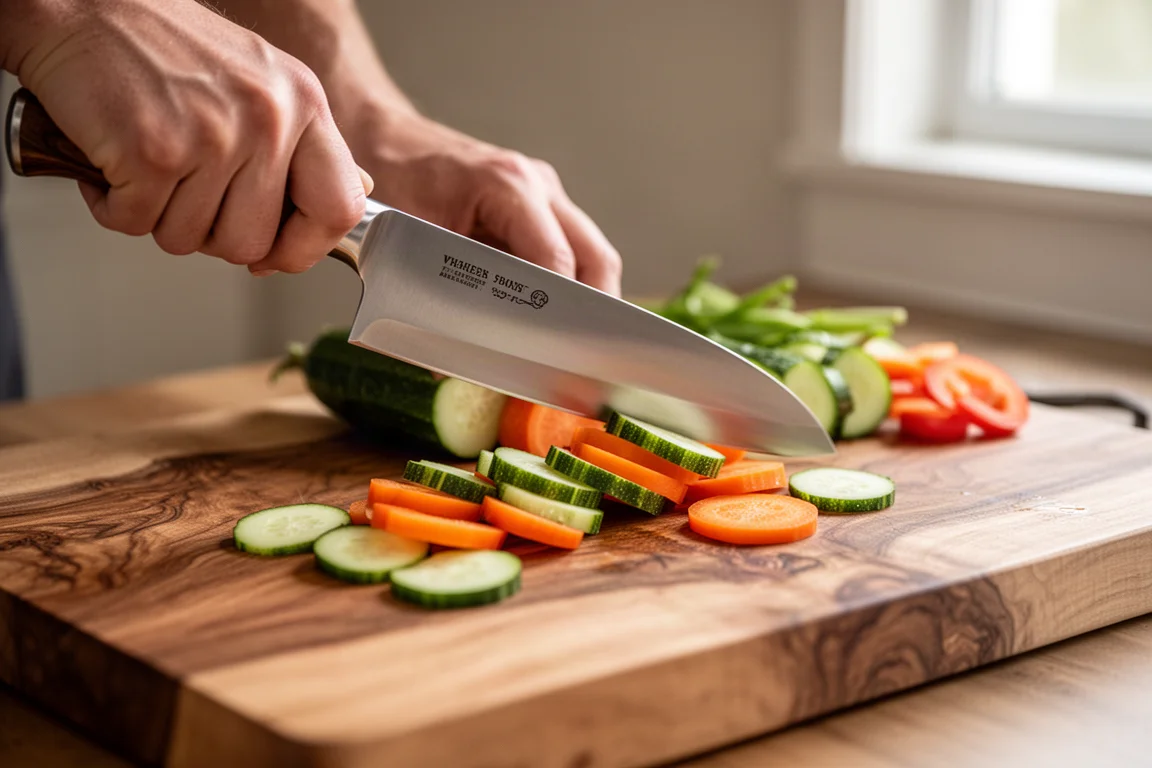
It was not perfect, though. The food release was not great, the blade had quite a bit of stiction, and it felt a touch thick behind the edge. It was also wished a little longer. Yet despite those criticisms, it did something unexpected: it replaced a much-loved Takeda Funayuki in daily kitchen duty and has barely left the knife bar since. That is probably the strongest endorsement a knife can get.
The handle feels nimble and melts into the hand when pinch gripping. The fluted handle is a nice touch both visually and in use, and the balance point sits right around the pinch grip area above the heel.
The Custom Knife: Archangel Gabriel
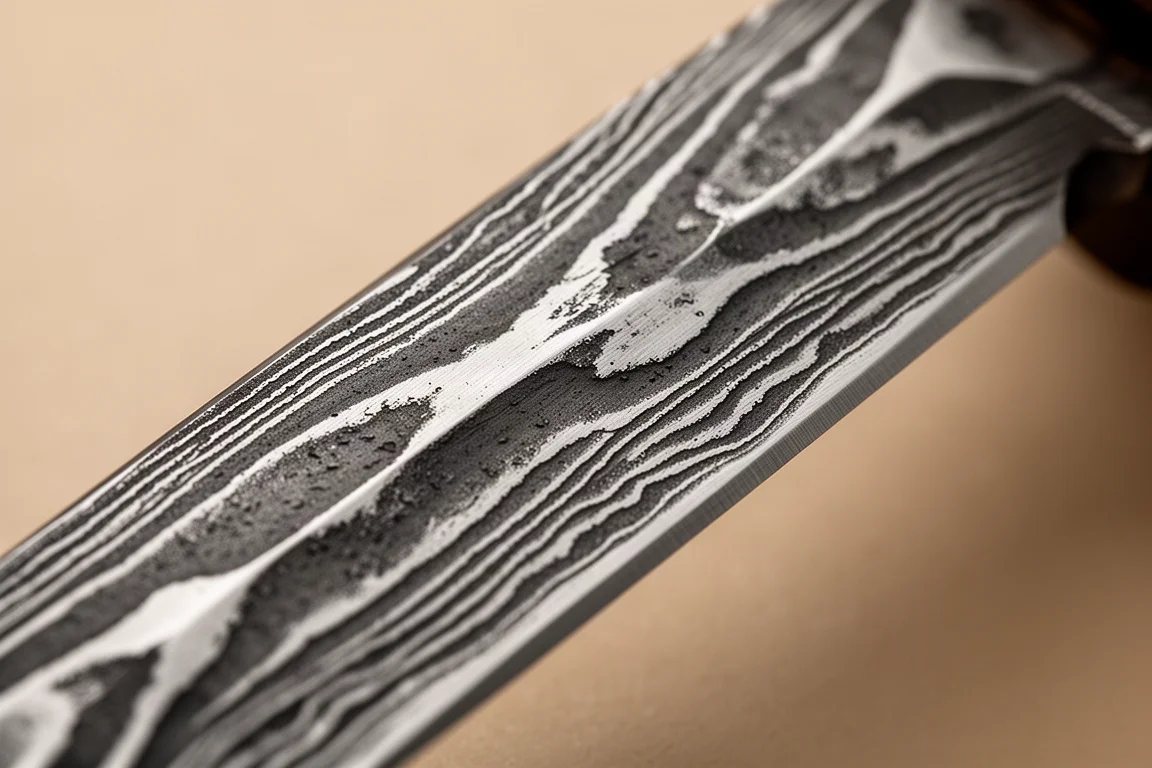
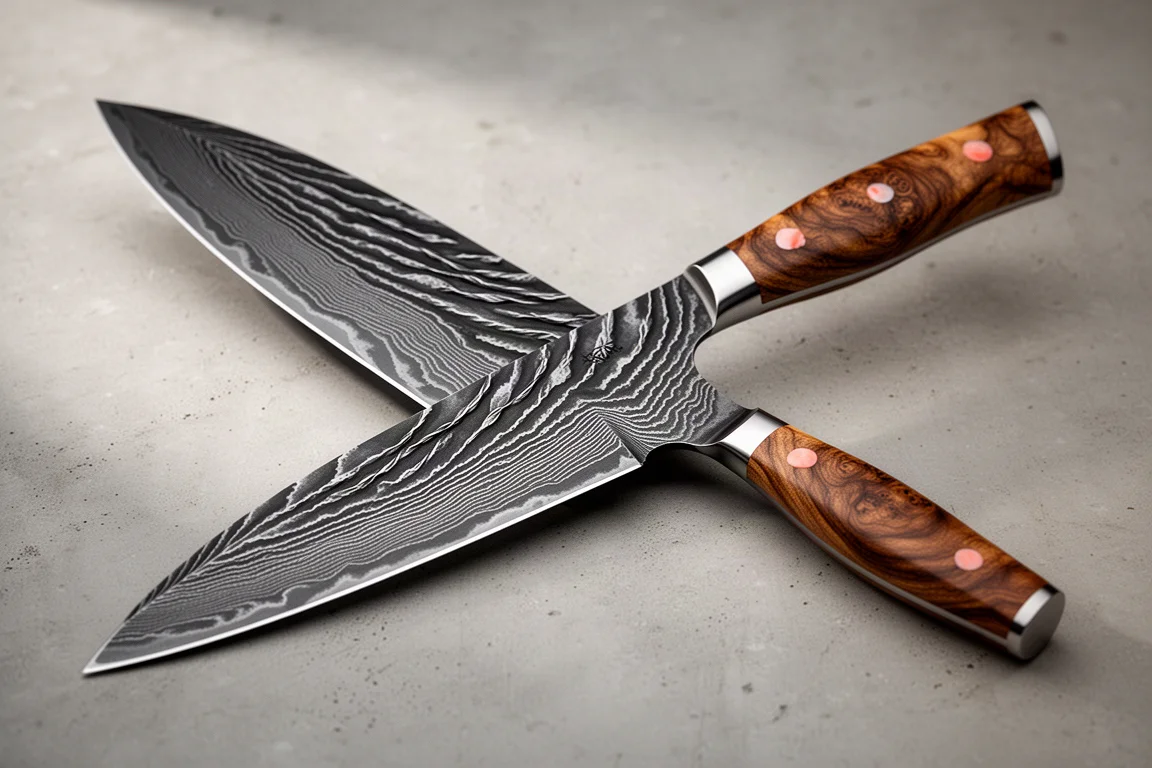
If the production knife is that good, why spend three times more on a custom? Because sometimes you see a knife, and you cannot stop thinking about it. Archangel Gabriel features in-house laminated Damascus, force-etched to show the contrast between the two carbon steels used: 15N20 and 1084. And it is not a regular laminated billet either. It is feather Damascus welded to an edge twist Damascus bar. That is a lot of work.
The handle uses premium materials: Afzelia burl, coral, and stainless. Compared to the mono steel and simpler handle on the production knife, this feels premium, it is beautifully executed, and every detail is a step up.
One practical note: the 220mm custom suits a more western grip, holding the knife primarily by the handle. The curvature of the handle and the shorter neck do not make for the most comfortable pinch grip, and the balance point sits almost at the junction of the handle and the knife neck. Details like grip and balance matter, so ask questions before buying.
Cutting Performance and Food Release
This is where the extra money was supposed to show up. The production knife is solid in every way and scores highly across the board, but it feels thick behind the edge. It is an edge built for people who are not delicate with their knives: bamboo boards, twisting through ingredients, and wanting more edge confidence.
The custom delivered here. It feels significantly thinner behind the edge, and for anyone who loves extremely sharp knives with very little meat behind the edge, that is exactly the kind of confidence worth paying for. A knife needs to cut, and cut well, and blade geometry matters far more than raw sharpness alone.
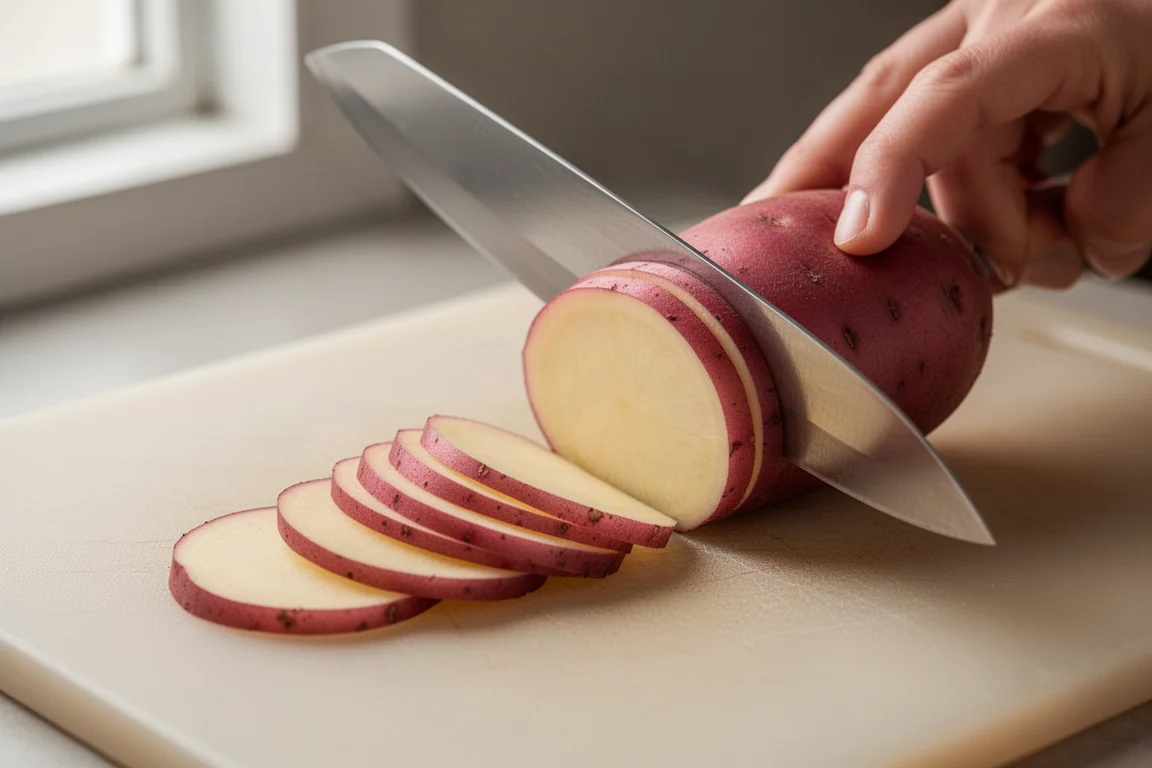
Food release was the biggest complaint on the production knife. The sandblasted finish seemed to make stiction worse, with some ingredients having to be pried off the blade. The custom is clearly a step up: ingredients slide off much more easily, thanks to the heavily textured Damascus and the alternating grain pattern in the blade. It still is not exceptional food release, but it is noticeably better. With a spine that thin, the finish and polish contribute more here than a dramatically different grind would.
The Knife in the Drawer: Takeda Funayuki
The Takeda Funayuki deserves a mention because it was the household favorite before the Petit Chef arrived. When a production knife displaces a beloved daily cutter, that says a lot about how well the cheaper option performs.
What the Production Knife Does Better
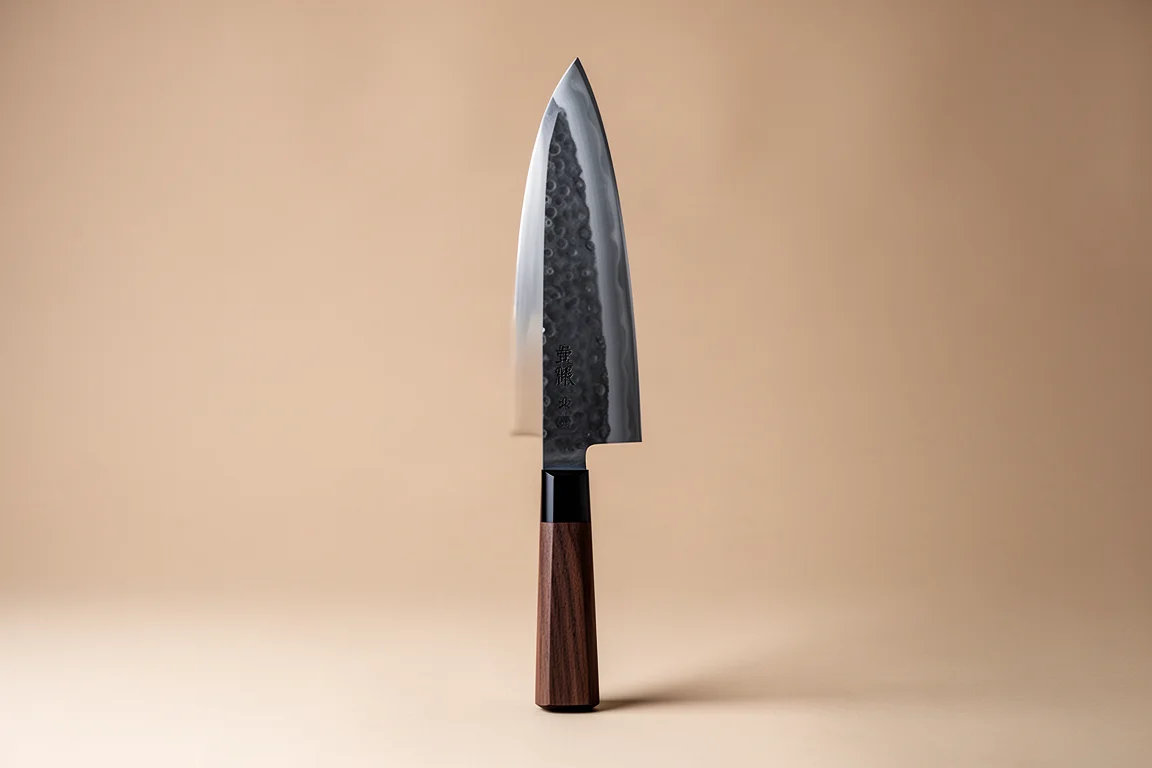
For all the custom’s refinements, the production knife has real advantages. It is more mindless to use. The edge is tough: pushing it through a massive sweet potato is exactly what it is built for, and there is no hesitation about whether the edge can take it. That confidence also comes from the extra thickness behind the edge, which makes chipping or rolling less likely.
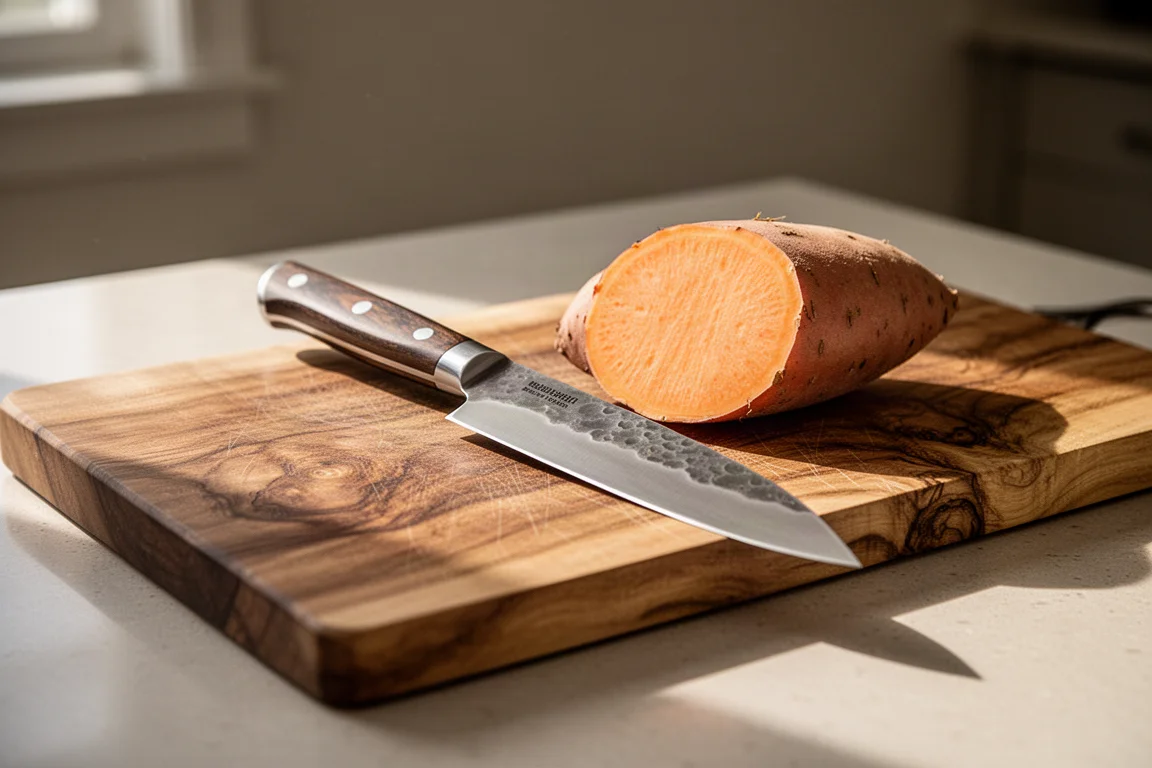
It is also stainless, which reinforces the carefree character. No patina to manage, and none of the heavier maintenance routine that comes with a carbon steel blade. It is a true all-purpose chef knife that almost anyone could pick up and use for the rest of their life.
Is the Custom Worth Three Times the Price?
The honest answer: the custom is better. It has better food release and better edge geometry, and those improvements are objective. The extra refinement and beauty are subjective. But it is not three times better. Performance does not scale linearly with price, and eventually the returns diminish.
Interestingly, that point of diminishing returns is not fixed. Some of the highest-performing knives available cost well under $500 Canadian, and brands like Koutetsu are almost absurdly good for the money, especially for those who do not mind a very thin knife.
Worth is personal. For anyone who wants one incredible kitchen knife, the production knife gets you surprisingly close. But for the person who notices the last ten percent, the way a knife moves through food, the way ingredients fall off the blade, the premium materials and techniques, that is exactly what the custom is charging for.
Conclusion
Two knives from the same maker, two very different value propositions. The Yelles Petit Chef is a confident, tough, low-maintenance performer that gets remarkably close to the custom experience. The Archangel Gabriel earns its price through thinner geometry, better food release, and exceptional craftsmanship, but only buyers who notice those last few percent will feel the difference. Choose based on how you cook and how you care for your knives, not on price alone.
Further reading
Related Reviews

Kitchen Knives
Best Chef's Knives 2026: 27 Popular Options Tested and Ranked
A comprehensive review of 27 chef's knives ranging from $18 to $380, with honest assessments of handle comfort, blade balance, and real-world performance.

Kitchen Knives
Best Chef's Knives Under $75: Two Tested Recommendations
Two practical 8-inch chef's knives that balance sharpness, comfort, and durability without premium pricing.

Kitchen Knives
Best Chef's Knives 2026: 27 Options Tested and Ranked
A comprehensive review of 27 chef's knives ranging from $18 to $380, with honest assessments of handle design, balance, blade profile, and real-world performance.