RC Aircraft
X-Fly C-17 Globemaster RC Aircraft Review: Four-EDF Scale Flyer at an Accessible Price
The X-Fly C-17 Globemaster delivers impressive scale flying characteristics with four 40mm electric ducted fans, efficient battery performance, and responsive handling at a competitive price point.
Introduction
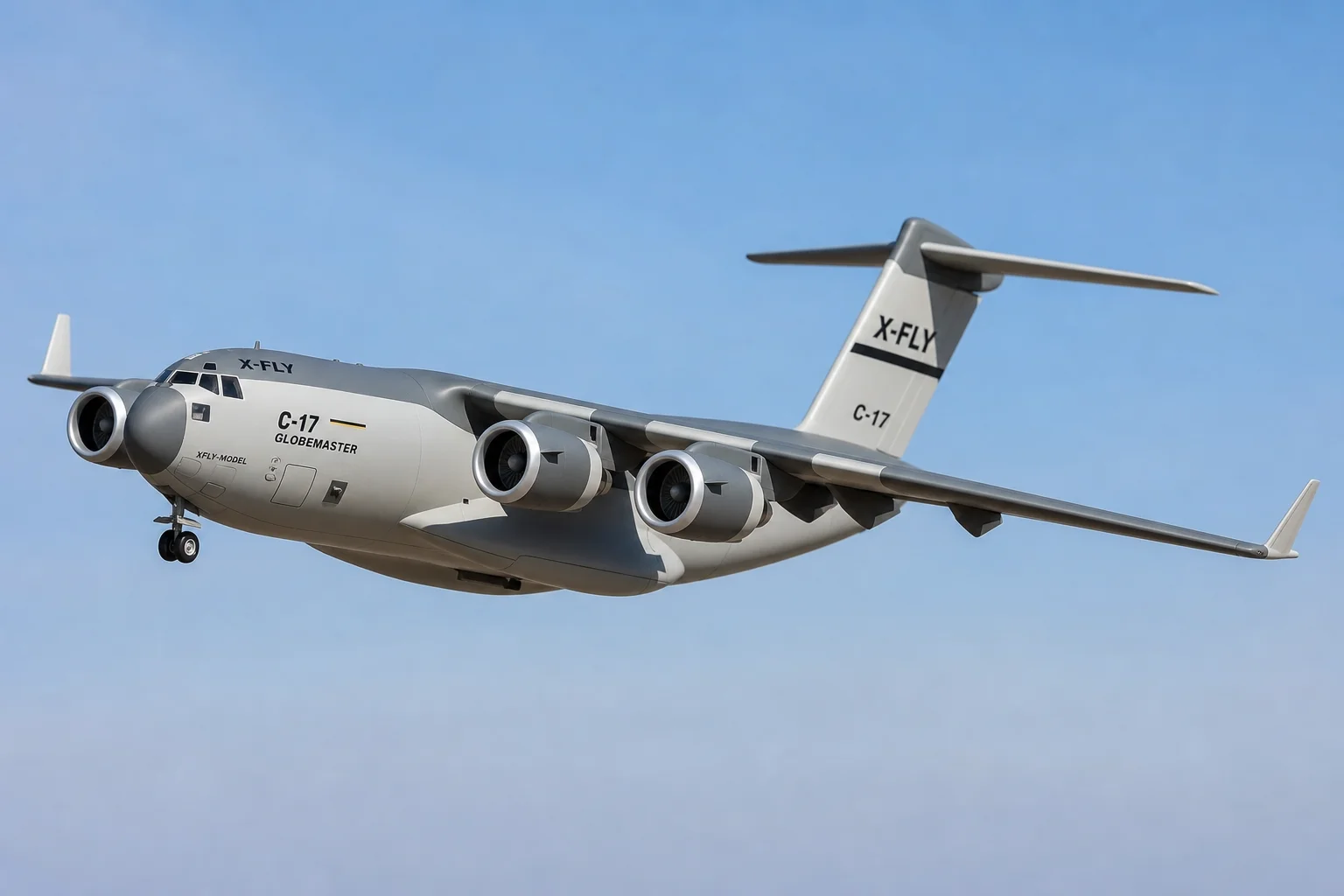
The X-Fly C-17 Globemaster is a four-engine electric ducted fan (EDF) scale model aircraft that combines realistic military transport aesthetics with practical flying characteristics. Equipped with four 40mm EDFs and powered by a 3,300mAh battery pack, this aircraft delivers strong thrust, stable handling, and efficient energy use at a price point of $319. The design accommodates both experienced RC pilots and those new to scale aircraft, with responsive controls and forgiving flight dynamics.
Power and Thrust Performance
The four 40mm EDFs generate substantial thrust that makes takeoff effortless and climb performance straightforward. At full throttle, the aircraft lifts off the ground instantly with no hesitation, even from grass surfaces. The power delivery is linear and predictable, allowing pilots to control speed precisely across a wide throttle range.

Cruising at 40 to 50 percent throttle produces speeds that feel fast in the air but remain manageable for close-in flying and camera passes. The excess thrust available at partial throttle settings means the aircraft never feels underpowered, even when carrying a full battery pack. This design choice makes the C-17 forgiving for pilots who want to explore the flight envelope without constant throttle management.
Handling and Flight Characteristics
The airframe responds smoothly to control inputs, with gentle roll rates and predictable pitch authority. A gyro stabilization system is optional but recommended; it adds a “buttery smooth” quality to the flight without being essential. The aircraft maintains stable flight across a wide speed range, from slow cruise to higher-speed passes.
Flap deployment noticeably affects pitch attitude, lifting the nose when extended. This requires small elevator adjustments during flap transitions, but the behavior is consistent and easy to anticipate. The aircraft glides effectively with the engine at idle, making it a capable platform for energy-management landings.
Flap Effectiveness and Landing Performance
The flaps are highly effective for speed control and descent management. Deploying them produces immediate pitch-up, requiring modest elevator trim to maintain a stable descent angle. The aircraft slows dramatically with flaps extended, making approaches predictable and landings straightforward.

A full-flap landing from a shallow descent angle requires minimal elevator input and produces smooth, controlled touchdowns. Pilots can also land without flaps if desired, relying on the aircraft’s natural glide characteristics. This flexibility suits different flying styles and field conditions.
Hand-Launch Capability
The fixed nose gear and retractable main landing gear allow hand-launching, though the fixed nose gear limits the aerodynamic cleanliness of a hand-toss launch. The aircraft launches cleanly from a hand throw at full throttle and climbs away without difficulty. This capability expands launch options for pilots with limited runway space.
Battery Efficiency and Flight Time
A 3,300mAh battery pack provides approximately 3 minutes and 50 seconds of flight time during mixed flying (cruising, climbs, and maneuvers). Battery consumption is remarkably efficient for a four-EDF aircraft; after a flight consisting mostly of gentle cruising at 40 to 50 percent throttle, the battery retained 66 percent charge. A second flight with more aggressive flying (full throttle climbs and a barrel roll) consumed an additional 7 percent, leaving 59 percent remaining.
This efficiency means pilots can expect extended flight sessions with a single battery pack if they cruise rather than maintain high throttle settings. The aircraft is described as a “scale plane flown by a scale RC pilot,” emphasizing that realistic flying speeds and attitudes yield the best battery economy. A 4,000mAh battery pack is also compatible and would extend flight time further.
Conclusion
The X-Fly C-17 Globemaster delivers genuine scale flying characteristics, responsive handling, and efficient power management at a price that undercuts comparable aircraft. The four-EDF design produces ample thrust, the airframe is stable and forgiving, and the flap system is effective for approach and landing control. At $319, the value proposition is strong for pilots seeking a capable scale transport model without a premium price tag.
Product link
View more details for X-Fly C-17 Globemaster
This product is mentioned in the review. Check the specifications, options, and compatibility before buying.
View more details for X-Fly C-17 GlobemasterFurther reading
Related Reviews
RC Aircraft
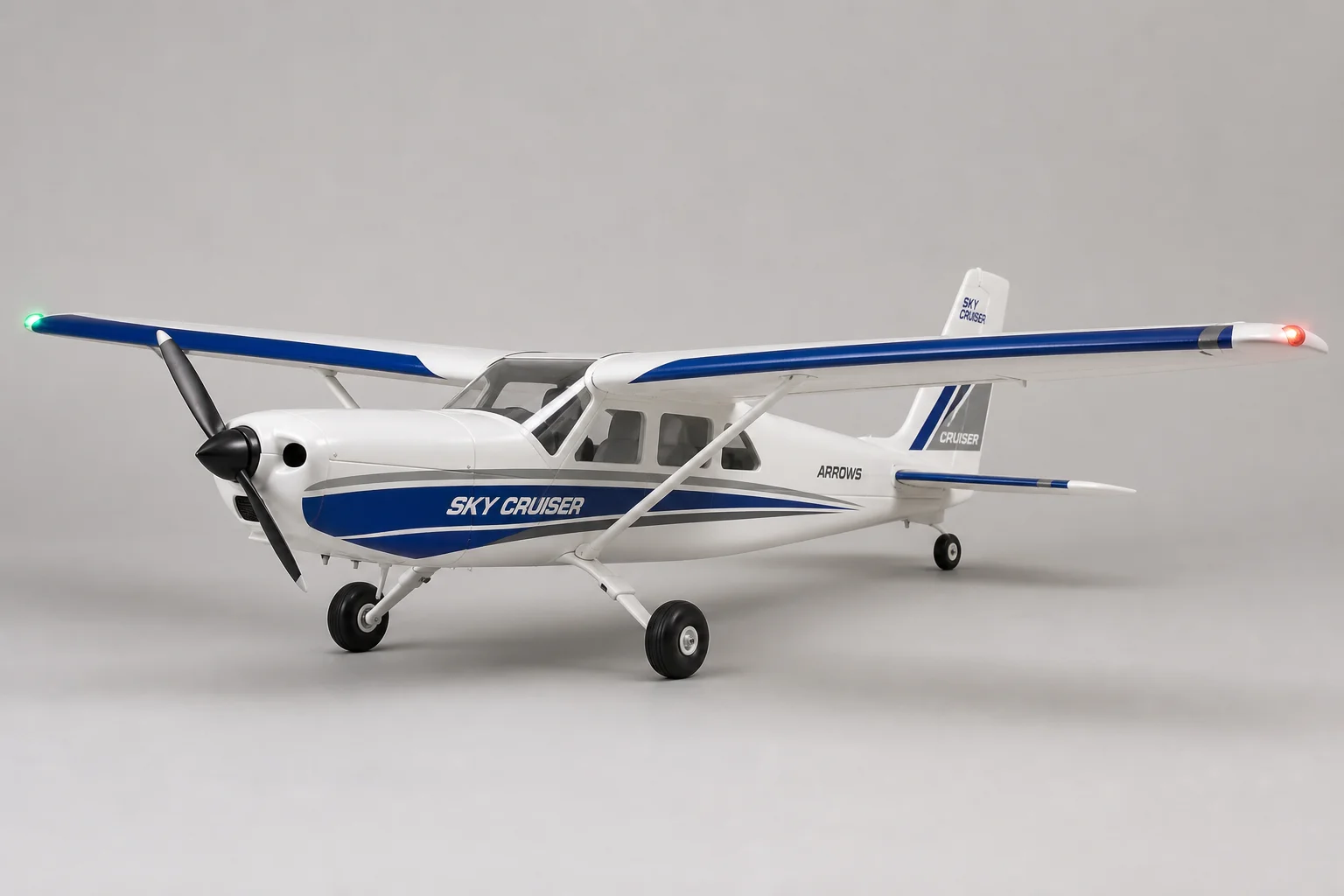
Arrows RC Sky Cruiser Review: A Capable Beginner-Friendly Scale Trainer
The Arrows RC Sky Cruiser delivers stable, predictable flying with useful features like flaps and lights, making it a solid choice for pilots stepping up to their first scale aircraft.
RC Aircraft
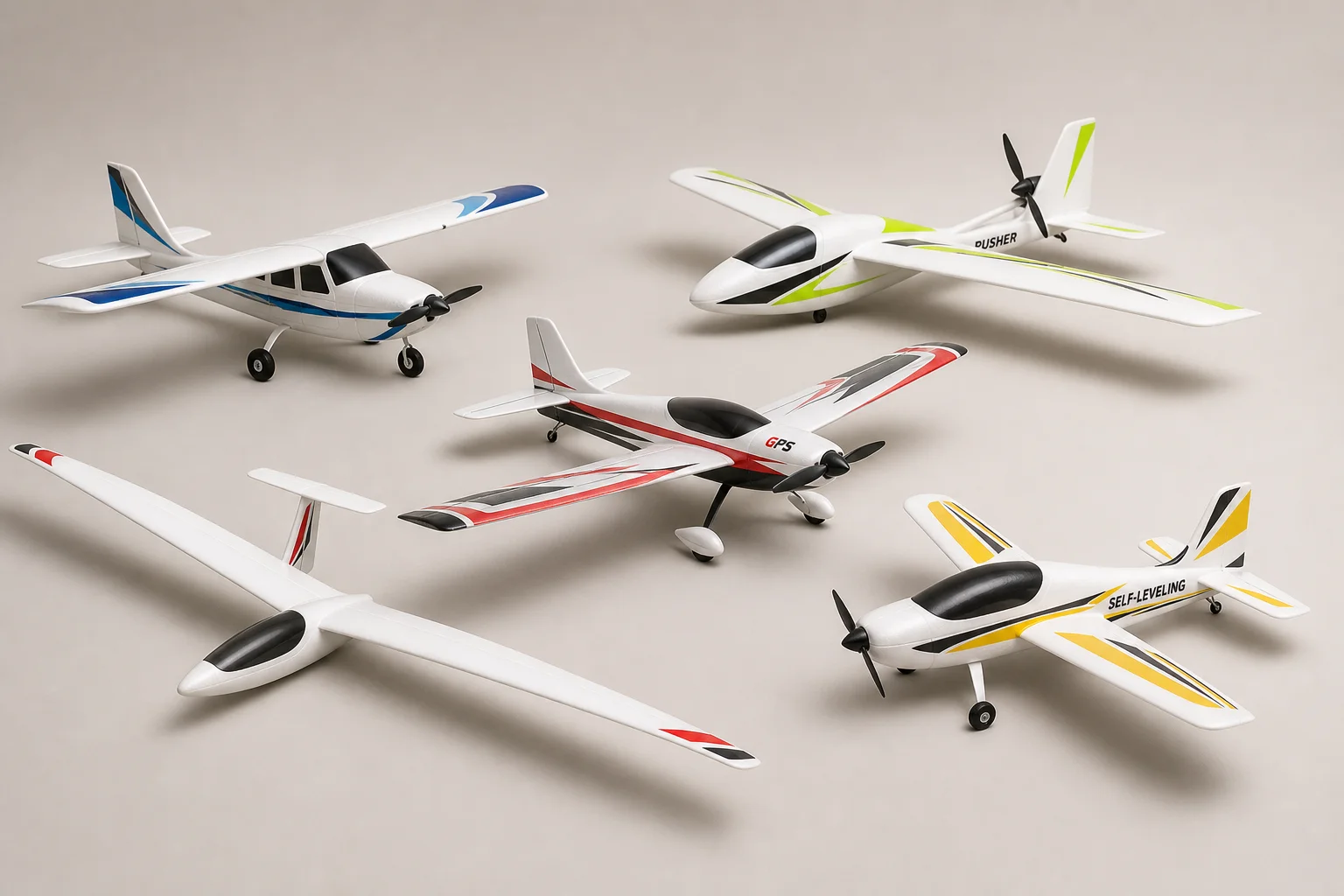
Best Beginner RC Planes: Five Reliable Models for Learning to Fly
Five beginner-friendly RC planes that combine stability, durability, and ease of control for new pilots learning the fundamentals of radio-controlled flight.
RC Aircraft
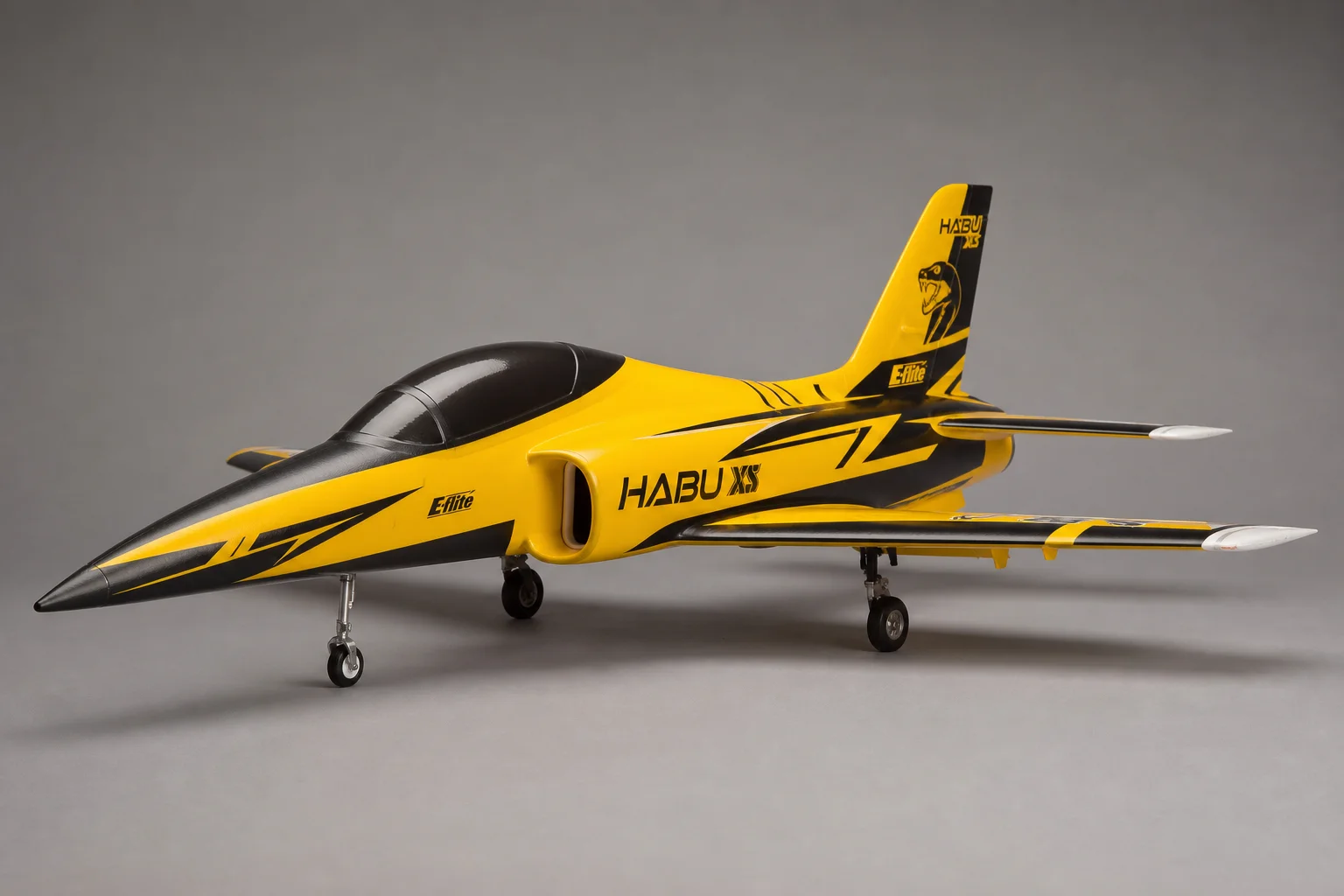
E-flite Habu XS 80mm EDF Review: A Capable Sport Jet for Intermediate Pilots
The E-flite Habu XS 80mm EDF combines smooth handling, impressive speed, and stable flight characteristics that make it accessible to pilots beyond pure beginners.