Kitchen Knives
Wusthof Classic vs Made In 8-Inch Chef's Knife: Which One Fits Your Cutting Style?
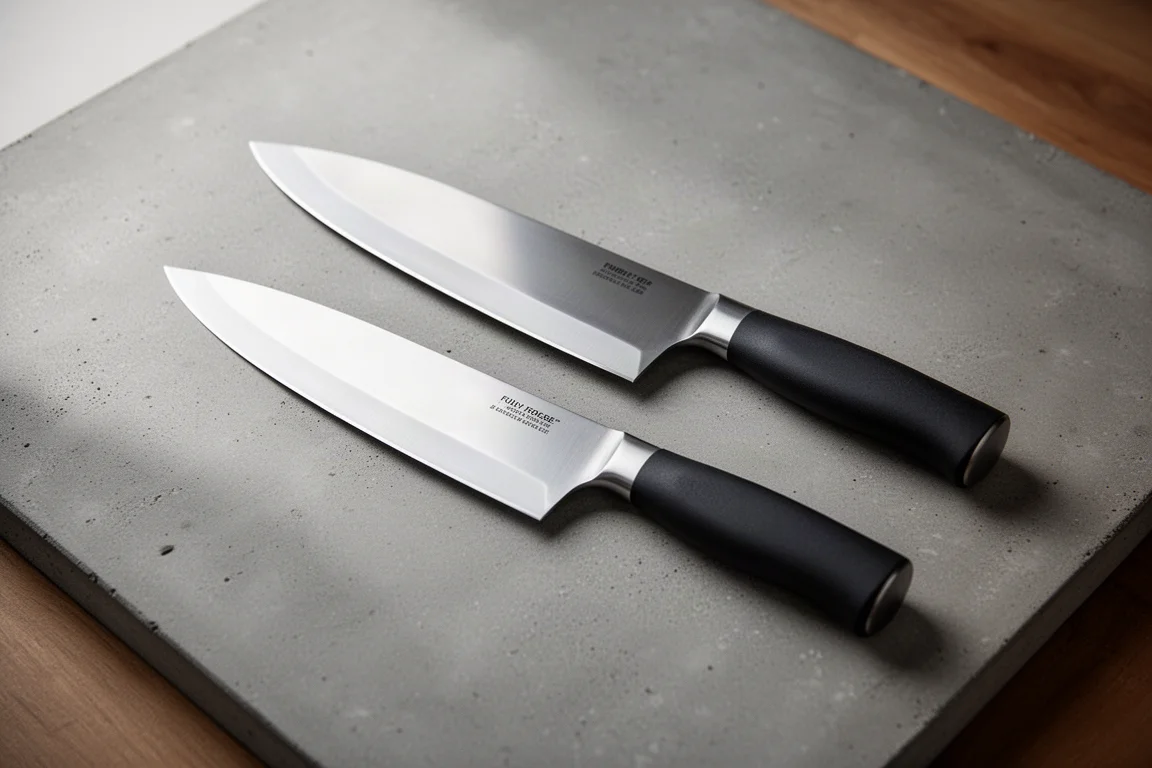
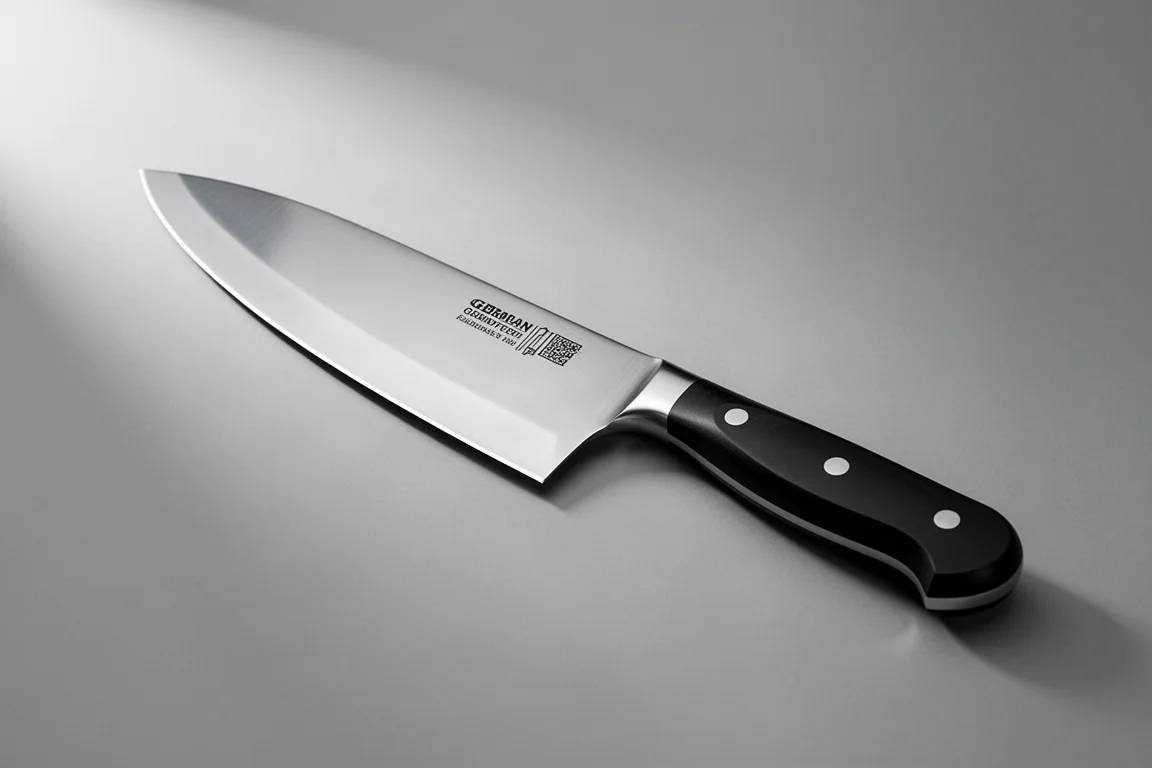
Two fully forged 8-inch chef's knives built from the same German steel, with very different handle and bolster designs. Here is how they compare.
Introduction
The Wusthof Classic 8-inch and the Made In 8-inch chef’s knife look like close cousins, and in several ways they are. Both are built from the same German steel, both feature durable and moisture-resistant synthetic handles, and both blades are fully forged. Yet these knives diverge in meaningful ways: where they are made, how they are balanced, and how much of the edge you can actually use. This comparison breaks down the differences so you can pick the knife that matches your cutting style.
What They Have in Common
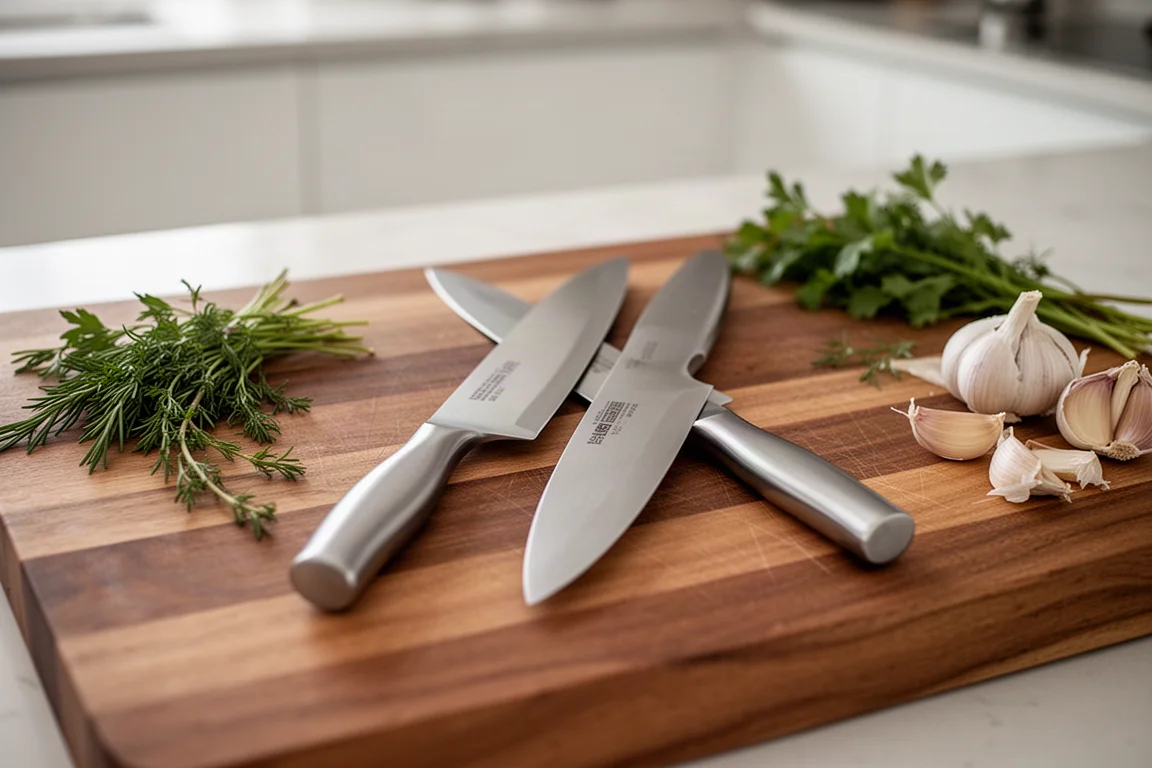
The foundation is nearly identical. Each knife uses the same German steel, and each handle is a synthetic material that resists moisture and daily wear. The blades are fully forged on both knives, which contributes to a solid, connected feel from tip to butt.
In practice, the overall cutting performance is very similar. Where the two knives separate is in geometry, balance, and ergonomics rather than raw cutting ability.
Blade Weight and Edge Angle
The Wusthof Classic weighs 9.2 oz, while the Made In comes in lighter at 8.3 oz. That difference is noticeable in the hand, especially during longer prep sessions where a lighter knife can feel more agile.
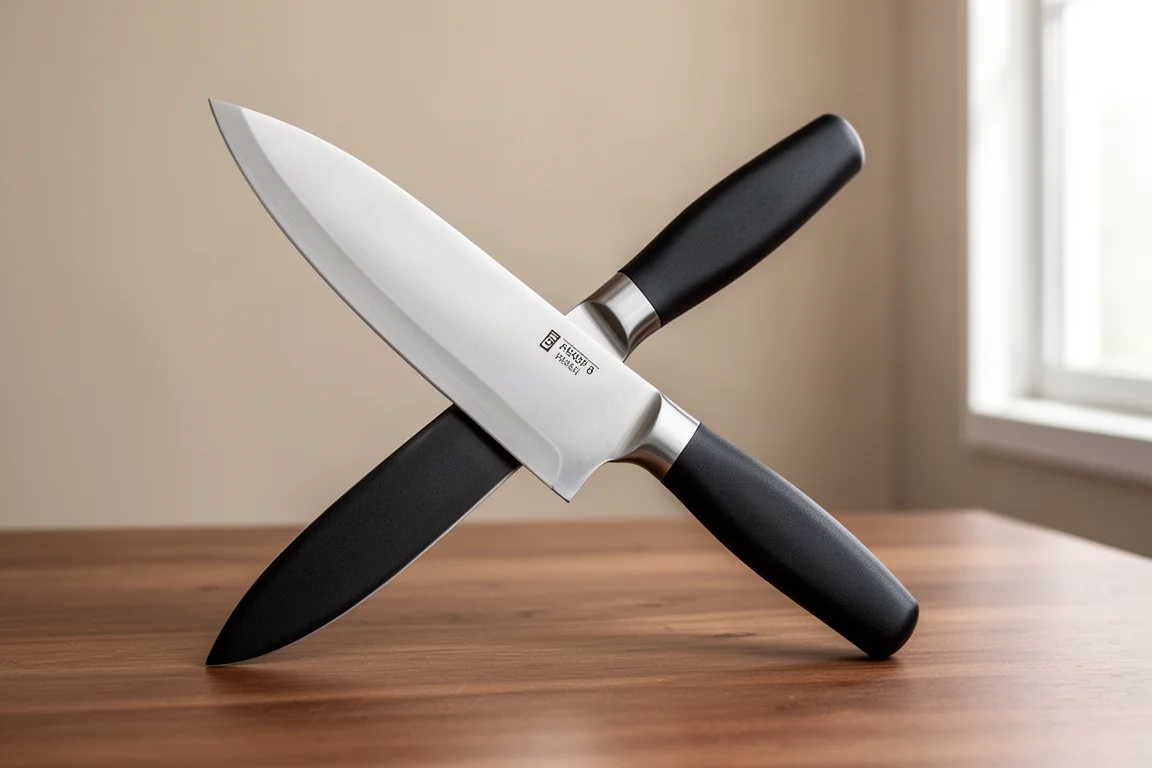
Out of the box, the Made In is also a touch sharper: its edge is ground to 12.5 degrees per side, compared with 14 degrees per side on the Wusthof. Additionally, the Made In has a wider blade profile, so its edge extends a little further out than the Wusthof’s when the two are stacked edge to edge.
The Bolster: Full vs Tapered
This is one of the most consequential design differences. The Wusthof Classic has a full bolster that extends all the way to the edge, acting as a finger guard and giving the knife a more centered balance point. That centered balance is one of the Wusthof’s most likable traits.
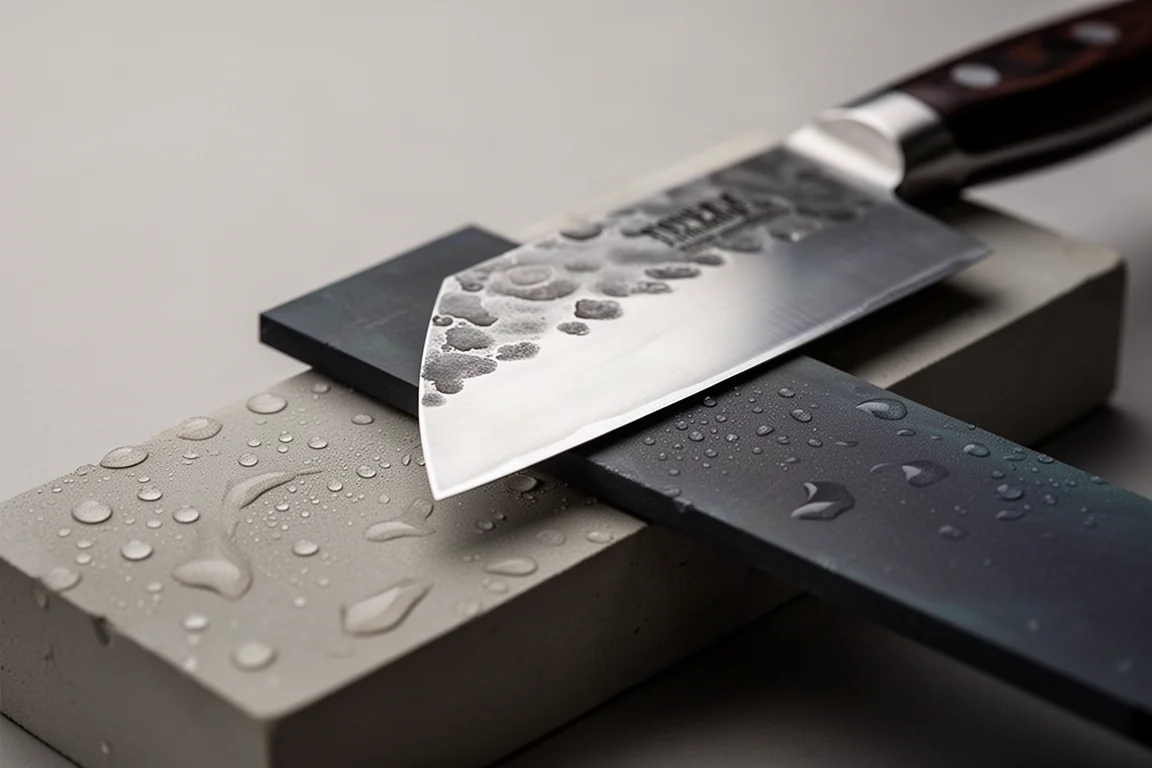
The Made In takes the opposite approach with a tapered bolster that stops well before the edge. The benefit is practical: you can sharpen and use the entire edge all the way to the heel. On the Wusthof, the heel becomes too thick because of the bolster, so that area cannot be sharpened.
Handle Design: The Biggest Difference
The handles could not be more different in feel. The Wusthof handle is flat on both sides, with a curve at the butt end designed to rest your pinky comfortably. The Made In handle is rounded and straight, with no curve at all.
There is no objectively correct answer here. The Wusthof’s shaped handle rewards a classic pinch-and-grip technique, while the Made In’s straight, rounded profile suits cooks who prefer a simpler, uninterrupted grip. If handle comfort is your priority, this single factor may decide the comparison for you.
Everyday Performance and Buying Advice
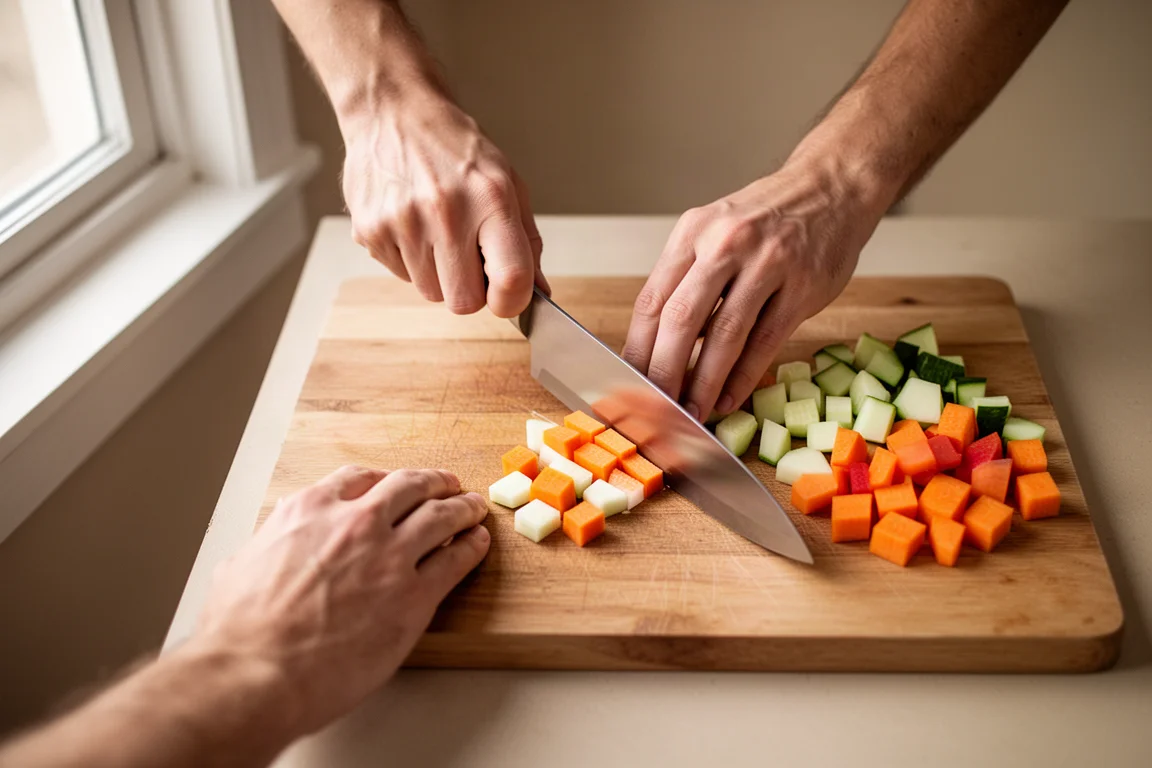
The Made In earns points for utility at the cutting board. Its wide blade lets you scoop a generous amount of chopped ingredients and transfer them to the pan, and it makes quick work of crushing garlic cloves with the flat of the blade. The tapered bolster is also the design many cooks would prefer on paper, since it keeps the full edge usable.
The Wusthof counters with a handle design that is genuinely pleasant to hold and a balance point that sits more centrally in the knife, which many cooks find confidence-inspiring during precise work.
Conclusion
Since the overall performance is nearly identical between these two knives, the decision comes down to personal preference. If you favor a shaped handle with a pinky rest, a finger-guard bolster, and centered balance, the Wusthof Classic is the better match. If you prefer a lighter, slightly sharper knife with a fully usable edge to the heel and a wide blade for scooping, the Made In is the one to pick. Choose the handle design and bolster style that feel right in your hand, and that is the right knife for you.
Further reading
Related Reviews

Kitchen Knives
Best Chef's Knives 2026: 27 Popular Options Tested and Ranked
A comprehensive review of 27 chef's knives ranging from $18 to $380, with honest assessments of handle comfort, blade balance, and real-world performance.

Kitchen Knives
Best Chef's Knives Under $75: Two Tested Recommendations
Two practical 8-inch chef's knives that balance sharpness, comfort, and durability without premium pricing.

Kitchen Knives
Best Chef's Knives 2026: 27 Options Tested and Ranked
A comprehensive review of 27 chef's knives ranging from $18 to $380, with honest assessments of handle design, balance, blade profile, and real-world performance.