Kitchen Knives
Wusthof Classic vs MAC MTH-80: Which Chef's Knife Deserves a Spot in Your Kitchen?
A side-by-side comparison of two of the best chef's knives on the market, covering blade design, steel, construction, warranty, and price.
Introduction
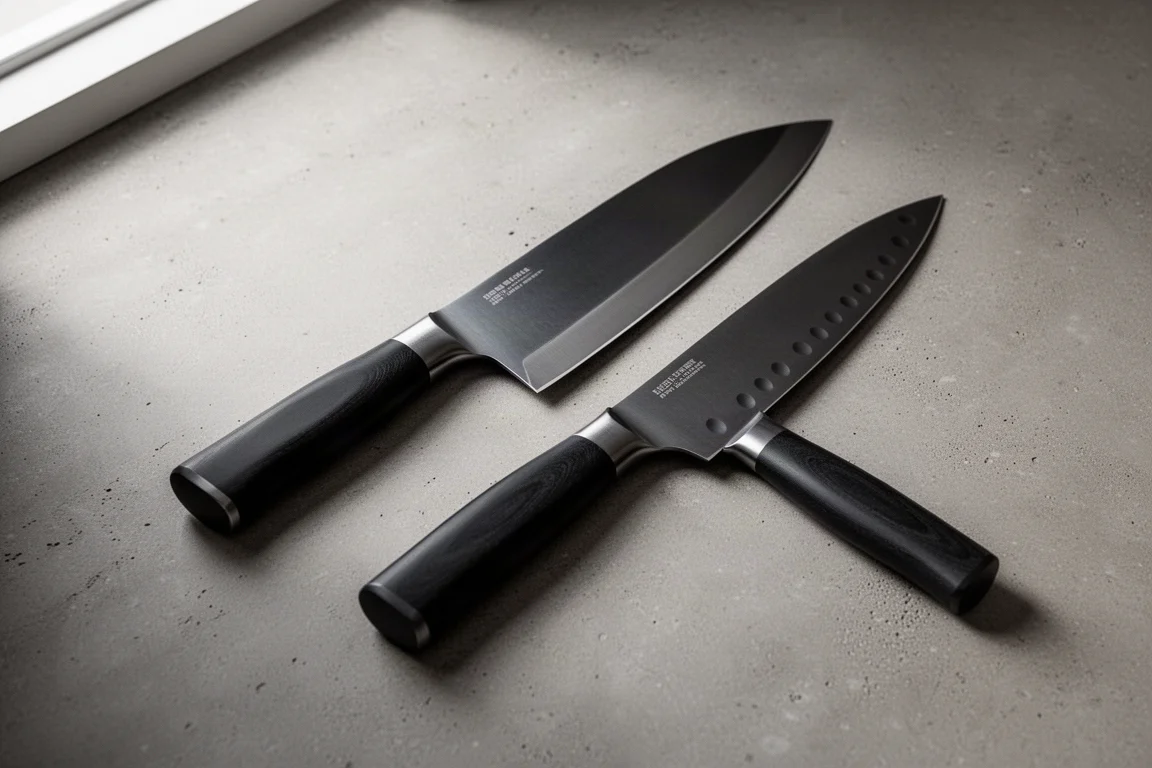
Wusthof and MAC both make knives that belong in any serious conversation about the best chef’s knives you can buy. Wusthof is a household name with more than two centuries of history and distribution in thousands of stores worldwide. MAC is less widely recognized, but publications like Good Housekeeping and Food & Wine give its knives high praise, and the MAC MTH-80 was named the best overall chef’s knife after testing more than 20 options, including several Wusthof models.
This comparison focuses on each brand’s most popular knife: the Wusthof Classic and the MAC MTH-80 chef’s knives, both in the 8-inch size. Here is how they differ, and which one makes more sense depending on how you cook.
Wusthof Classic 8-Inch Chef’s Knife
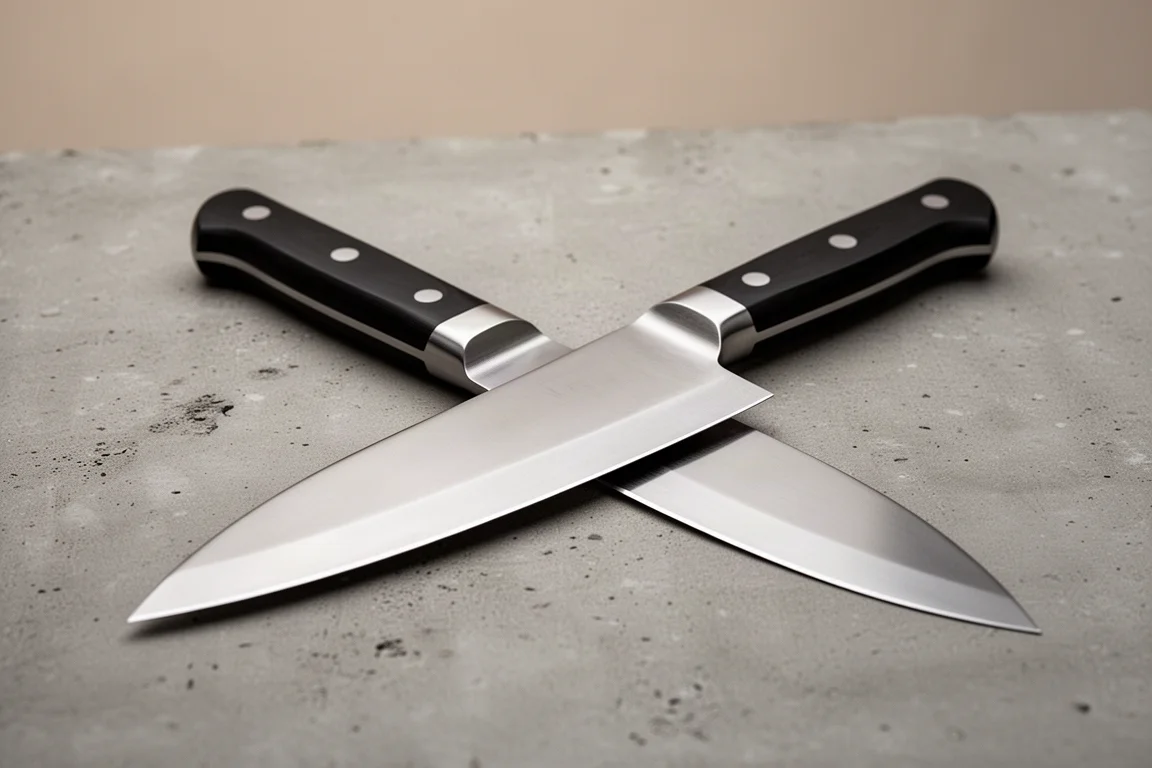
The Wusthof Classic is forged from a single block of German stainless steel, heated, pounded into shape, then polished and ground through a 40-step process that combines advanced robotics and lasers with skilled artisans. The result is a knife that is one solid piece from blade to bolster to tang, with the handle riveted on. It weighs 8.5 ounces in the 8-inch size, so it feels noticeably hefty and solid in the hand.
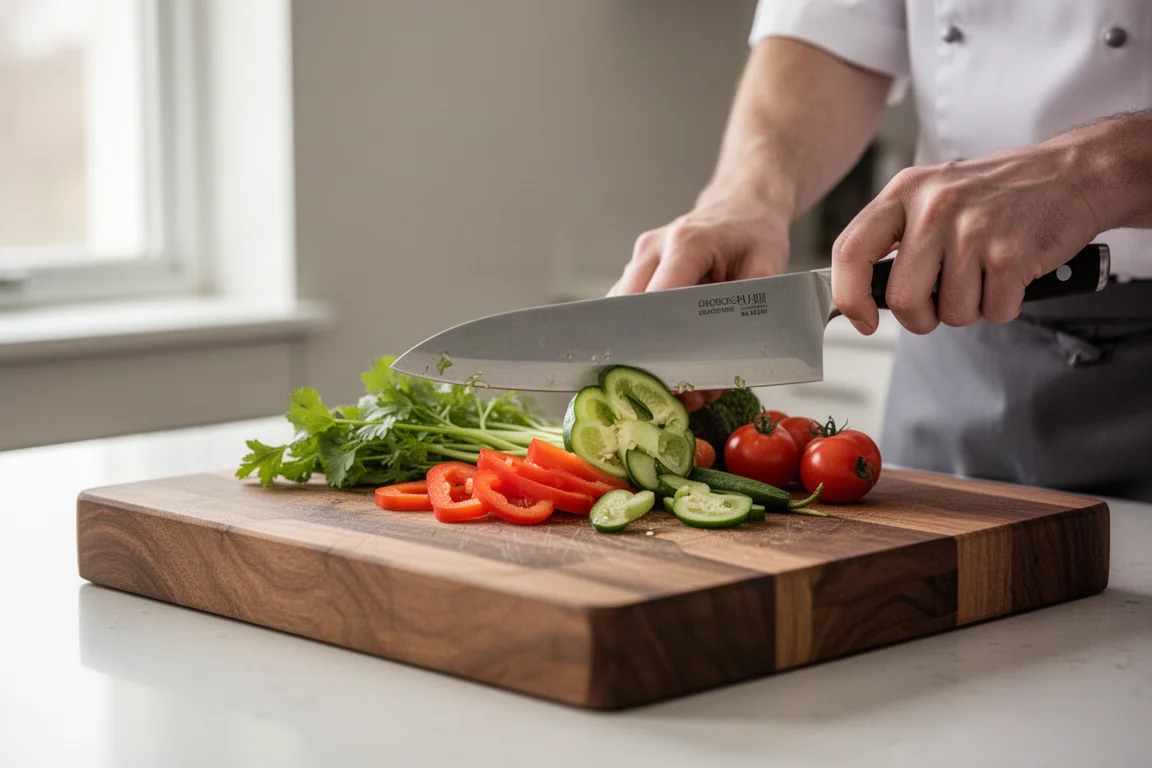
Wusthof knives are ground to a 14-degree angle per side, making them razor sharp out of the box. The full bolster adds heft and acts as a safety barrier for your fingers, though it does prevent you from sharpening the entire edge. The Classic’s POM handle is a dense, durable synthetic that won’t fade or damage. Blades are made in Solingen, Germany, known as the “City of Blades.”
MAC MTH-80 Chef’s Knife
The MAC MTH-80 takes a completely different construction approach. Its blade is stamped from a sheet of high carbon steel, then goes through sub-zero tempering, where the steel is treated with liquid nitrogen to make the alloy harder and improve edge retention. The full side is ground from spine to edge into a V taper, and the slim bolster is welded on afterward. It is a more labor-intensive process than forging, and it produces a sharper, more precise blade.
At 6.5 ounces, the 8-inch MTH-80 is noticeably lighter and more nimble than the Wusthof. It is ground to a 15-degree angle per side, and in everyday use it holds its factory edge longer. The pakkawood handle, a wood and resin composite, is durable and resistant to heat and moisture. MAC knives are made in Seki City, Japan, a region with a blade-making history dating back to 13th-century swordsmiths.
Blade Design: Belly Curve and the Granton Edge
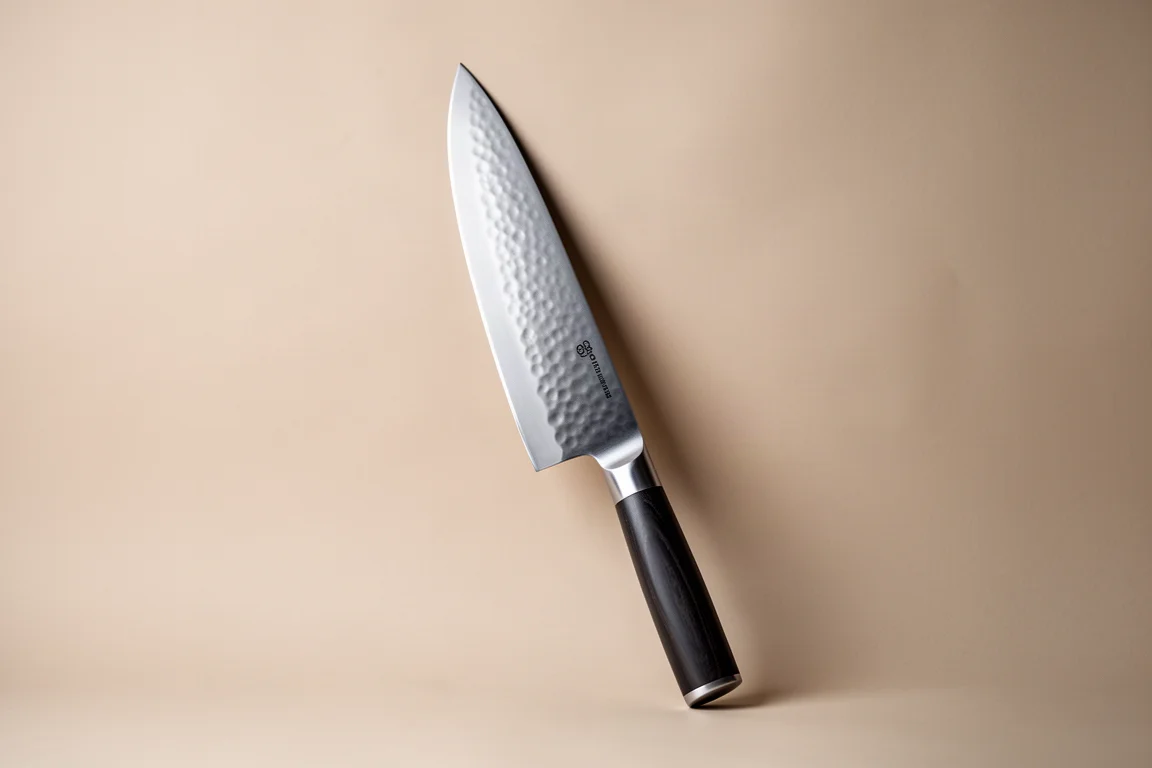
The most visible difference is the blade profile. The Wusthof’s edge, or belly, is slightly more curved, which enables a prominent rocking motion, the cutting style many home cooks default to. The MAC’s straighter edge still allows rocking, but with a much shorter motion. In exchange, it delivers smoother, cleaner, straighter cuts and more precision.
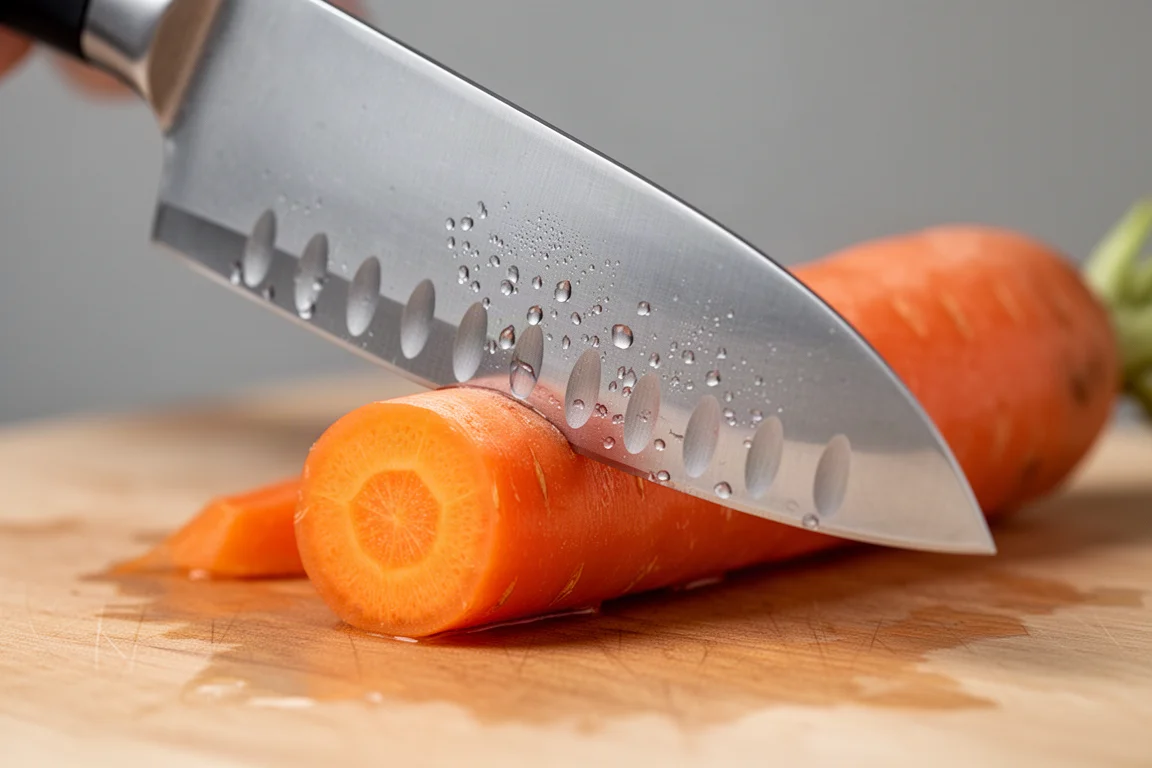
The MTH-80 also has a hollow edge, sometimes called a Granton edge. Small dimples along the blade create air pockets that help prevent food from sticking. In practice the difference is modest, but it is worth knowing. Some Wusthof knives, such as its santoku, share the design, though most Wusthof chef’s knives have a smooth finish.
Steel, Edge Retention, and Maintenance
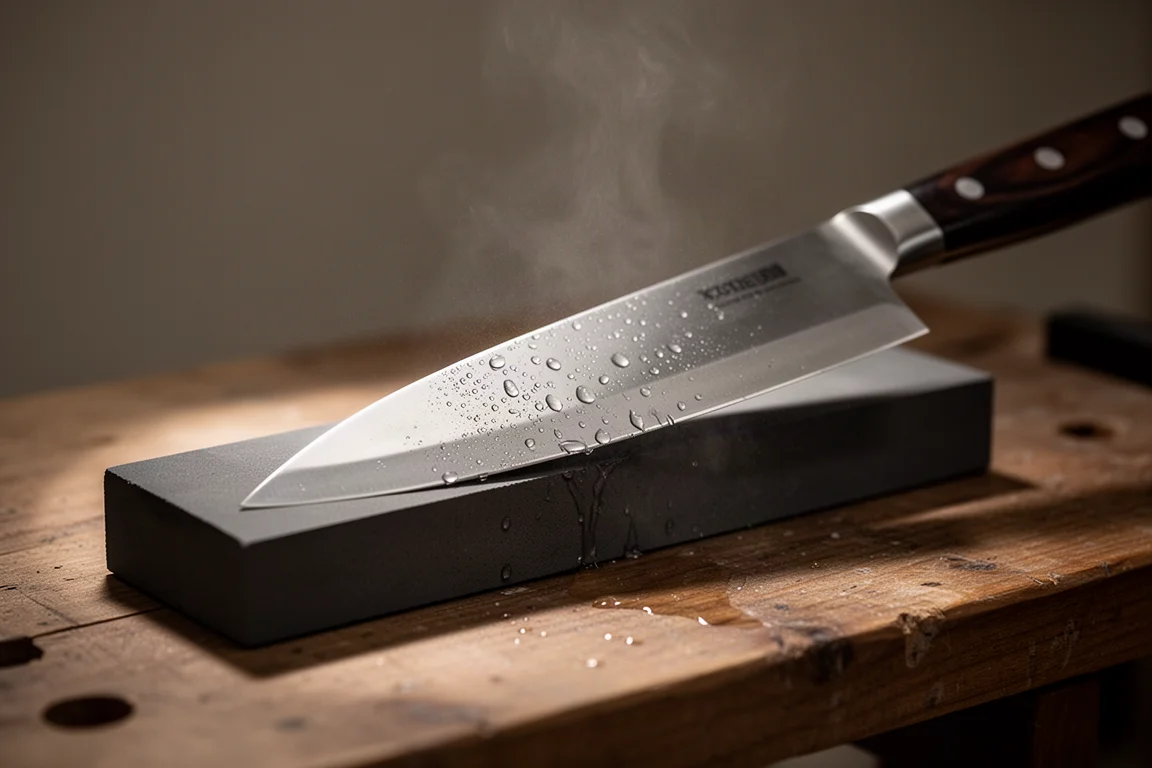
Both knives are exceptionally sharp out of the box, with nearly identical edge angles at 14 degrees per side for Wusthof and 15 for MAC. Over time, though, the difference shows. The MAC held its factory razor edge noticeably longer, gliding through carrots months in without sharpening, while the Wusthof needed a little more effort at the same point.
The steel choice explains the trade-off. Wusthof uses German stainless steel with more chromium, which makes the blades shinier and more resistant to stains and rust. MAC limits chromium content, deliberately choosing performance over appearance, which is why the most common complaints in MAC’s negative reviews involve staining and rusting. Wash and dry the MTH-80 immediately after use and it rewards you with better edge retention.
Construction and Handle Materials
All Wusthof blades except the Gourmet collection are forged, giving them thickness and durability that can withstand some abuse in the kitchen. MAC’s stamped blades are generally thinner and flimsier in most knives, but not here: MAC’s blades are relatively thick, and the sub-zero tempering plus full V-grind make up for the stamped origins.
Handle options also differ sharply. Wusthof offers several materials across its collections: POM on the Classic, smoked oak on the Crafter, blackwood on the Ikon, and olive wood on the Amici. MAC offers exactly one: pakkawood, which feels similar to POM but shows subtle wood grains. If handle variety matters to you, Wusthof simply has more to offer.
Price, Availability, and Warranty
Both brands are expensive, but Wusthof offers a wider price range. The Amici, Aeon, and Performer collections sit at the high end, the Ikon and Classic in the mid-tier, and the Gourmet at the entry level. MAC is more affordable overall, with the Ultimate collection most expensive, the Original and Chef Series least expensive, and the Professional, which includes the MTH-80, priced similarly to the Wusthof Classic and Ikon.
Availability is another practical difference. Wusthof knives are stocked in thousands of stores worldwide, including Williams Sonoma, Sur La Table, Crate and Barrel, and Macy’s, plus online retailers. MAC is available online and through its own site, but you won’t find it in many physical stores. On warranty, Wusthof offers a limited lifetime warranty covering defects in materials and craftsmanship, while MAC offers 25 years. One important catch: MAC’s warranty is void if you don’t buy from an authorized seller, so check the brand’s list before purchasing.
Which Knife Should You Buy?
Both knives are among the best this category has to offer, and you genuinely can’t go wrong with either. The decision comes down to how you like a knife to feel and how you treat your tools.
Choose the Wusthof Classic if you prefer a heftier knife that feels solid in the hand, want durable forged blades that tolerate rougher treatment, value a curved belly for rocking cuts, or like having multiple collections and handle materials to choose from. The trade-off is that the edge dulls somewhat faster than the MAC.
Choose the MAC MTH-80 if you want a lighter, nimbler knife with outstanding edge retention and a sharper, more precise grind. Just be prepared to wash and dry it immediately after every use to avoid staining and rust, and buy only from an authorized seller to protect the 25-year warranty.
Conclusion
The Wusthof Classic and MAC MTH-80 represent two excellent but philosophically different takes on the chef’s knife: forged German heft and durability versus a lighter, sharper Japanese-style blade that holds its edge longer. If hands-on feel and toughness top your list, the Wusthof is the safer bet. If precision and long-lasting sharpness matter more and you don’t mind hand-washing and drying your knife, the MAC MTH-80 is a superb pick.
Further reading
Related Reviews

Kitchen Knives
Best Chef's Knives 2026: 27 Popular Options Tested and Ranked
A comprehensive review of 27 chef's knives ranging from $18 to $380, with honest assessments of handle comfort, blade balance, and real-world performance.

Kitchen Knives
Best Chef's Knives Under $75: Two Tested Recommendations
Two practical 8-inch chef's knives that balance sharpness, comfort, and durability without premium pricing.

Kitchen Knives
Best Chef's Knives 2026: 27 Options Tested and Ranked
A comprehensive review of 27 chef's knives ranging from $18 to $380, with honest assessments of handle design, balance, blade profile, and real-world performance.