Kitchen Knives
Wusthof Classic vs Gourmet: Which Knife Series Makes More Sense?
Both series use the same German steel, but forging, hardness, balance, and price set them apart. Here is how the Wusthof Classic and Gourmet compare after years of regular use.
Introduction
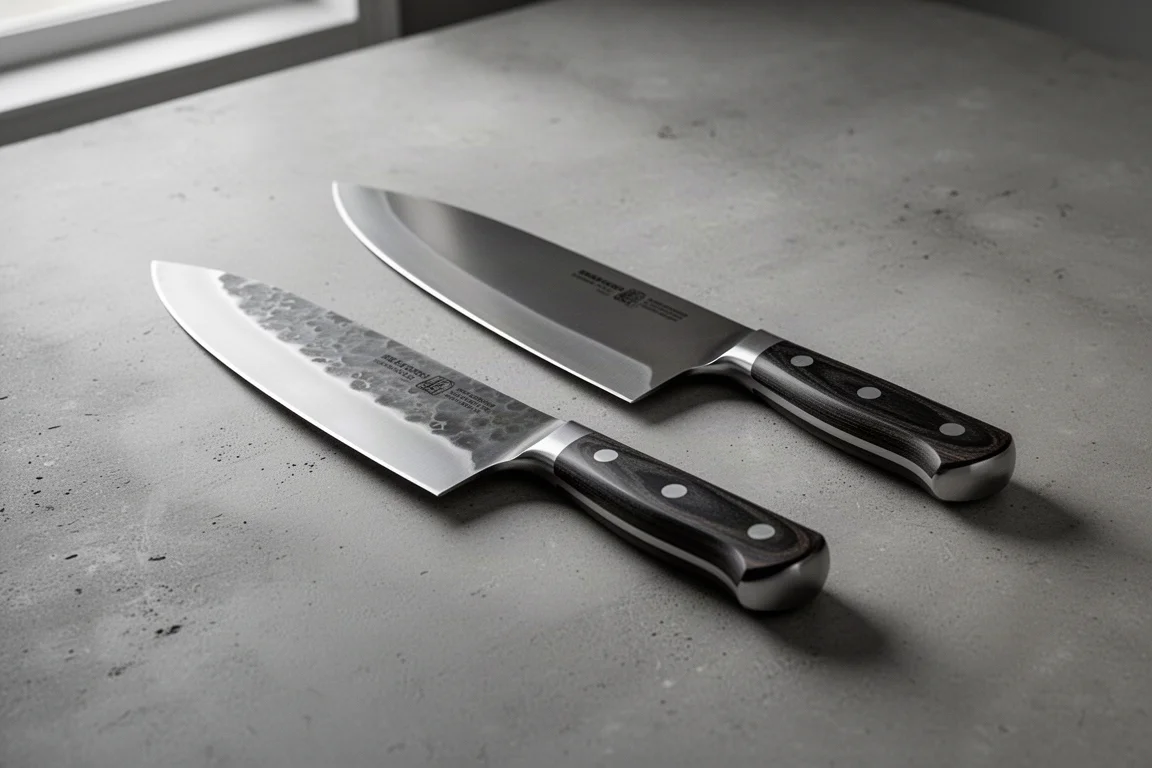
Wusthof has been making knives for over 200 years and produces more than 1.7 million knives per year. Among its many lines, two stand out for most home cooks: the best-selling Classic series and the much more affordable Gourmet series. Both look similar at a glance, and both are made from the same German steel, but they differ in construction, cutting feel, and long-term durability in ways that matter when you are deciding where to spend your money.
This comparison looks at how the two series differ in materials, design, cutting performance, and price, and how they hold up after years of regular use.
Forged vs Stamped Blades
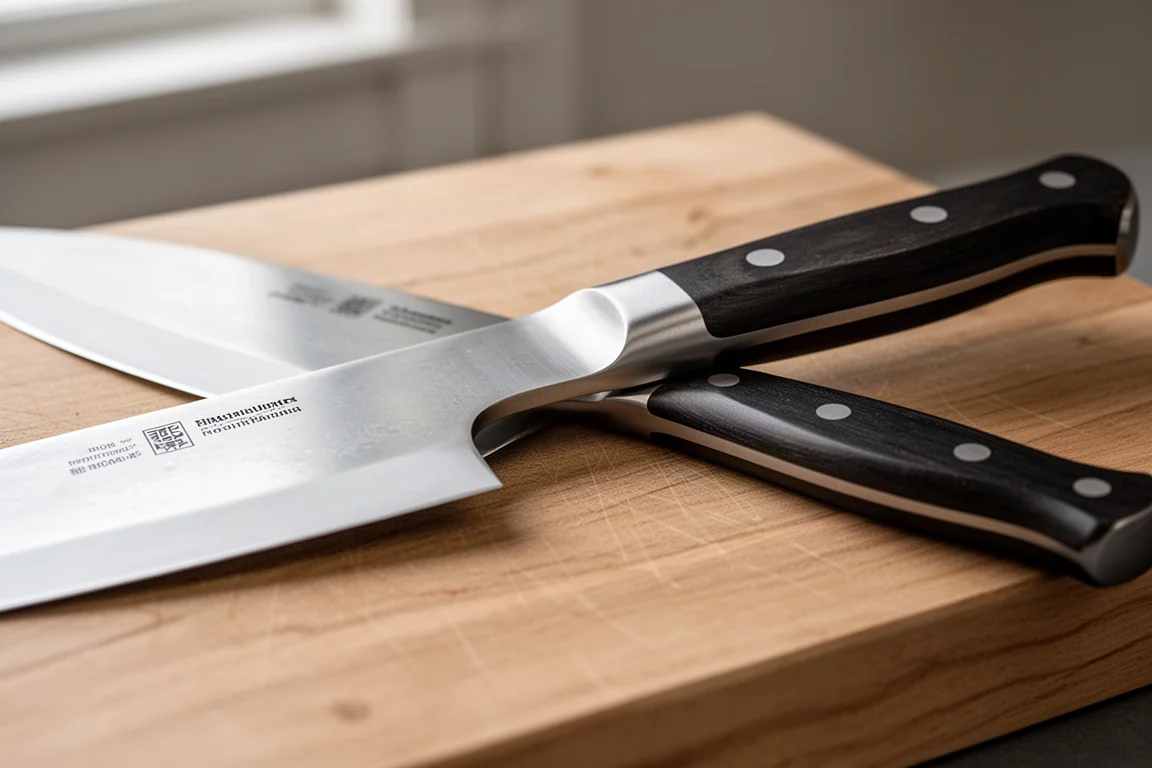
The core difference between the two series comes down to how each blade is made. Classic blades are forged: they start as a single bar of steel that is heated and shaped into the blade. This process produces blades that are thick, heavy, and durable. Gourmet blades are stamped, laser-cut from a sheet of steel much like a cookie cutter. Stamping is easier and more economical to mass-produce, which is a major reason Gourmet knives cost significantly less.
Hardness and Edge Retention
Stamped blades have one notable downside: the steel is not hardened to the same level as Classic’s forged blades. Classic blades reach 58 on the Rockwell scale, while Gourmet blades sit at 56. Harder steel is slightly more prone to chipping, but it holds a sharp edge longer.
Out of the box, knives in both series are extremely sharp. With regular use, though, Classic knives simply do not need sharpening as often as Gourmet knives do.
The Bolster Difference
Classic knives feature a full bolster, the thick part of the blade that provides a smooth transition from blade to handle. The bolster is formed during forging, adds weight and balance, and most importantly acts as a barrier that prevents your hand from slipping onto the blade. Gourmet knives mimic a bolster by extending and tapering the handle up toward the blade, but it does not protect your hand nearly as well.
The bolster is not universally loved. It can dig into your middle finger when using a pinch grip, and it makes the heel of the blade too thick to use or sharpen. With Gourmet knives, you can sharpen all the way through the heel. There is also a long-term consideration: after years of frequent sharpening, the bolster can protrude past the knife edge so the blade no longer makes full contact with the cutting board. For most home cooks this is not a concern, but if you work in a commercial kitchen and sharpen daily, the Gourmet series, or alternatives like Zwilling Pro where the bolster does not extend through the heel, are worth considering.
Tang and Handle Construction
Most high-quality German kitchen knives feature a tang, the part of the steel blade that runs through the handle. Like the bolster, the tang adds weight, balance, and durability, and it prevents the blade from detaching from the handle.
Classic knives have a full tang that runs the entire length and width of the handle. The exposed metal shows off the handle’s sturdiness and adds a nice design element. Gourmet knives also have a full tang, but it does not run the full width of the handle. The tang is exposed on top but stops halfway down the butt end, leaving the bottom of the handle all plastic.
Weight and Balance in Hand
Because Classic knives have a thick forged blade, a full bolster, and a full tang, they are noticeably heavier. The Classic 8-inch chef’s knife weighs 9.1 ounces, while the Gourmet 8-inch chef’s knife weighs 6.4 ounces. A few ounces may sound minor, but it is easy to feel when you pick the knives up, and you notice it even more during long prep sessions.
The heavier Classic feels more stable and balanced, with weight distributed evenly through the knife, and the added mass does some of the chopping work for you. Gourmet knives are more nimble and put less strain on your wrist, but you need to apply more pressure when chopping, and they feel blade-heavy and less balanced in the hand.
Selection and Price
Classic is Wusthof’s most extensive series, with over 100 different knives in a range of blade shapes and sizes and several handle colors, all sharing the same forged German steel, full tang, and traditional triple-riveted handle. Gourmet still offers plenty of choice with 60 unique knives, but you do not get the same range.
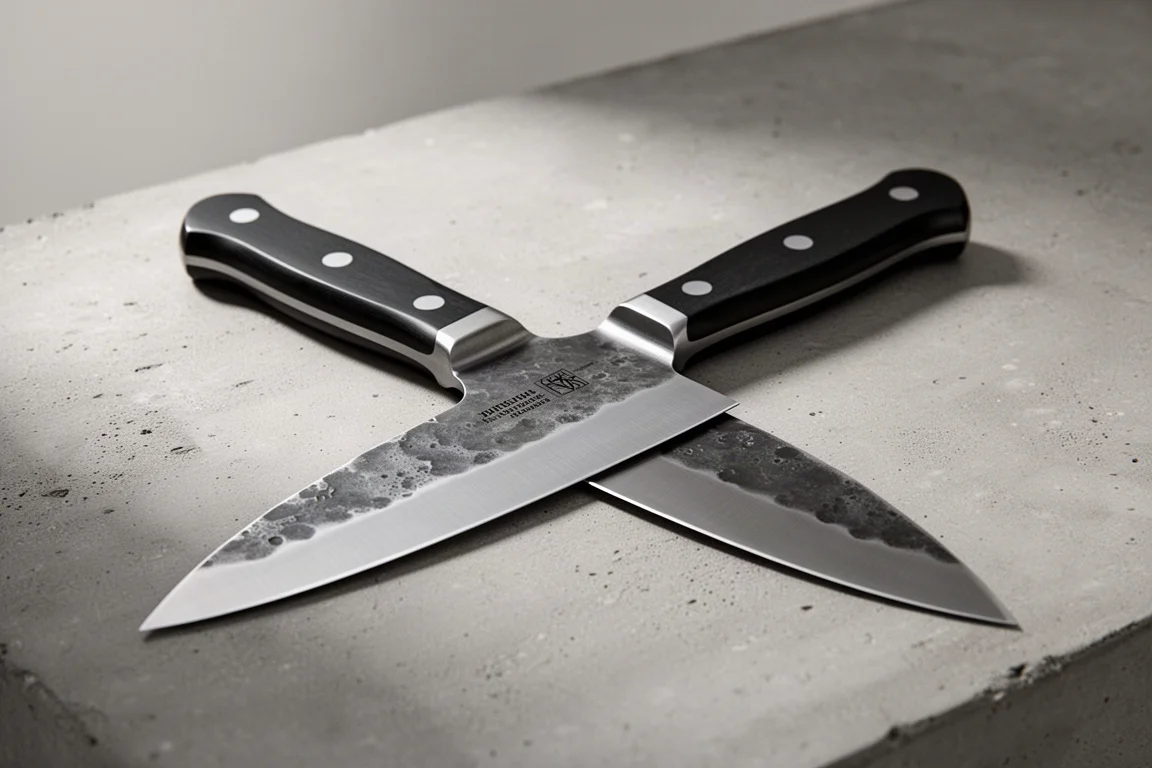
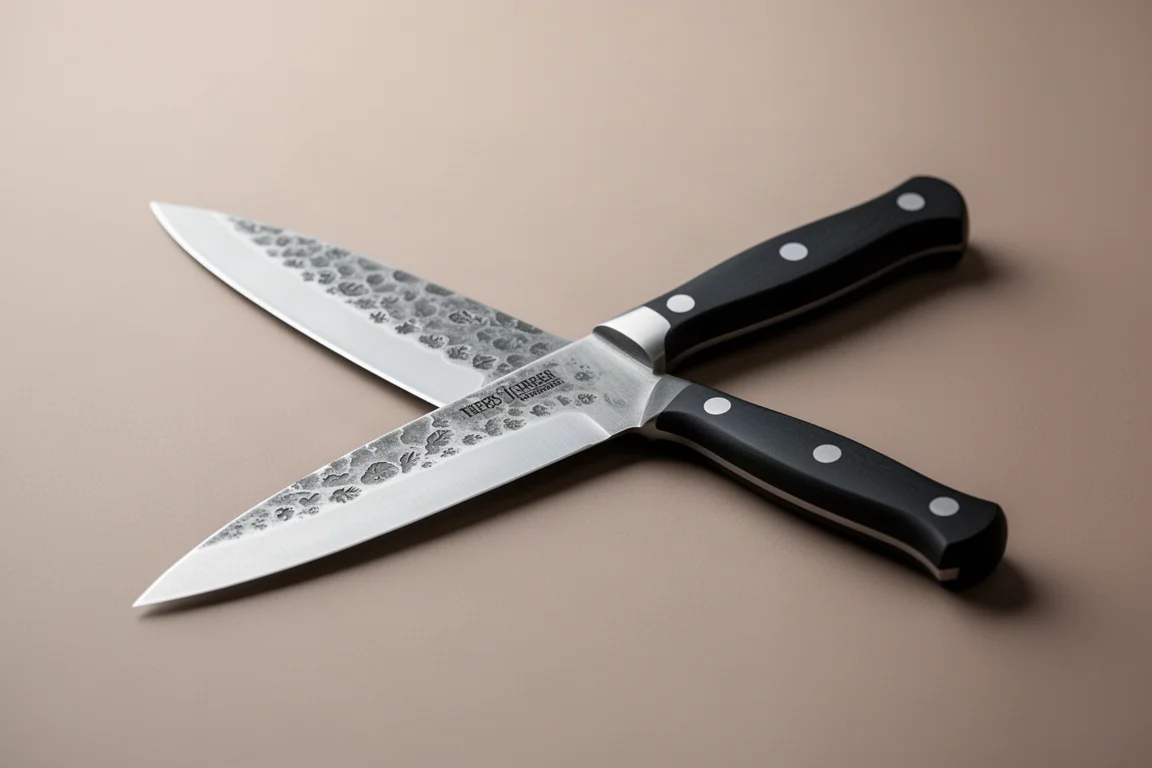
Price is one of the biggest differences. Gourmet is Wusthof’s entry-level, budget-friendly series: essentially a cheaper version of the Classic with the same handle design and blade profile, but with a stamped blade, no true bolster, and a partially exposed tang. Prices vary by knife and retailer, but as a reference, the 8-inch Gourmet chef’s knife is listed at $100 on Wusthof.com while the 8-inch Classic chef’s knife is $170.
Which Series Should You Buy?
If it fits your budget, Classic is the stronger recommendation. The forged blades are harder, heavier, more balanced, and hold an edge longer, but durability is the most convincing argument. A Classic 6-inch chef’s knife used regularly for over 7 years can still look excellent, with the blade and handle in great shape and cutting performance as good as day one. Classic knives cost more, but they are better performers built to last for decades.
Gourmet is a sensible option if you want to save or prefer lightweight knives, as long as you accept more frequent sharpening, more pressure when chopping, and a less sturdy, less balanced feel.
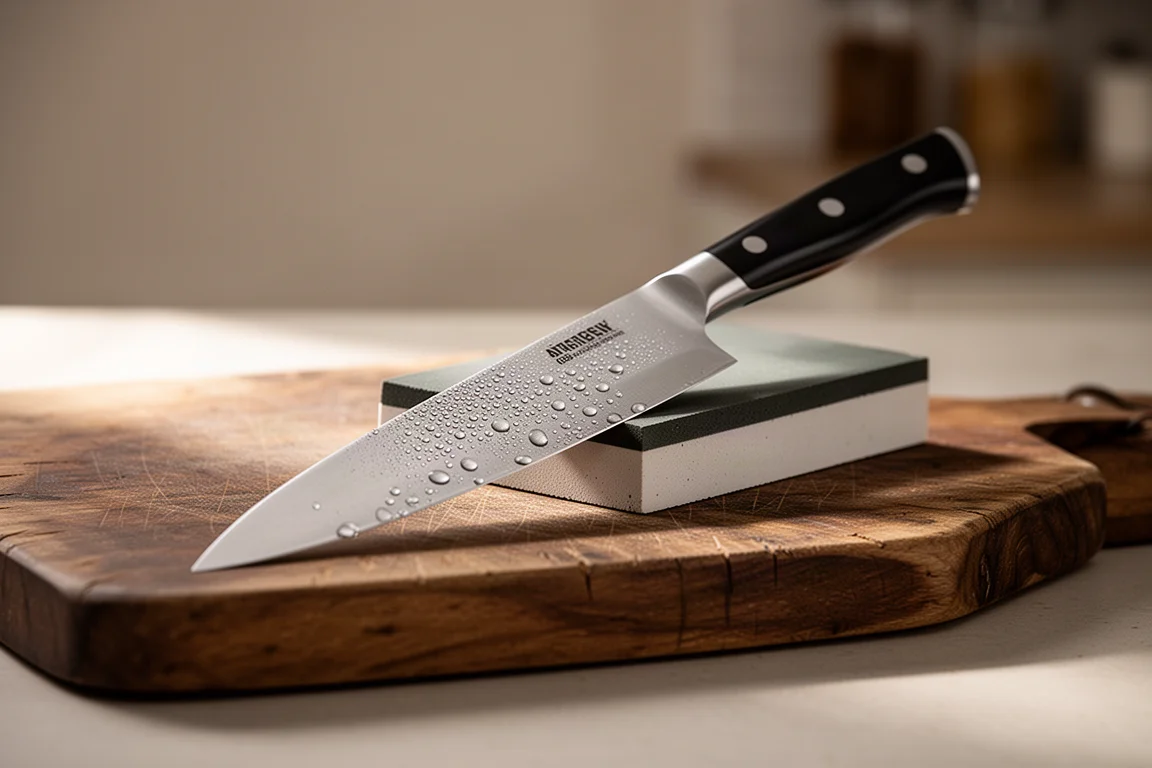
If a full lineup of Classic knives is out of budget, a smart approach is to invest in a Classic chef’s knife for most cutting tasks, then save money by complementing it with Gourmet specialty knives such as a bread knife or paring knife.
Conclusion
Wusthof Classic and Gourmet share the same German steel and similar styling, but forging versus stamping drives nearly every practical difference: hardness, balance, edge retention, hand protection, and price. Classic is the better long-term investment for serious cooks, while Gourmet offers an affordable entry point and a lighter feel, especially as a complement to a Classic chef’s knife.
Further reading
Related Reviews

Kitchen Knives
Best Chef's Knives 2026: 27 Popular Options Tested and Ranked
A comprehensive review of 27 chef's knives ranging from $18 to $380, with honest assessments of handle comfort, blade balance, and real-world performance.

Kitchen Knives
Best Chef's Knives Under $75: Two Tested Recommendations
Two practical 8-inch chef's knives that balance sharpness, comfort, and durability without premium pricing.

Kitchen Knives
Best Chef's Knives 2026: 27 Options Tested and Ranked
A comprehensive review of 27 chef's knives ranging from $18 to $380, with honest assessments of handle design, balance, blade profile, and real-world performance.