Kitchen Knives
Winter Forge Kobunka Review: A Prehistoric-Looking Knife with Unreal Food Release
A 132 mm handmade kitchen knife with a glassy etched finish, pronounced C-grind, and outstanding food release, held back by thickness behind the edge and a steep price.
Introduction
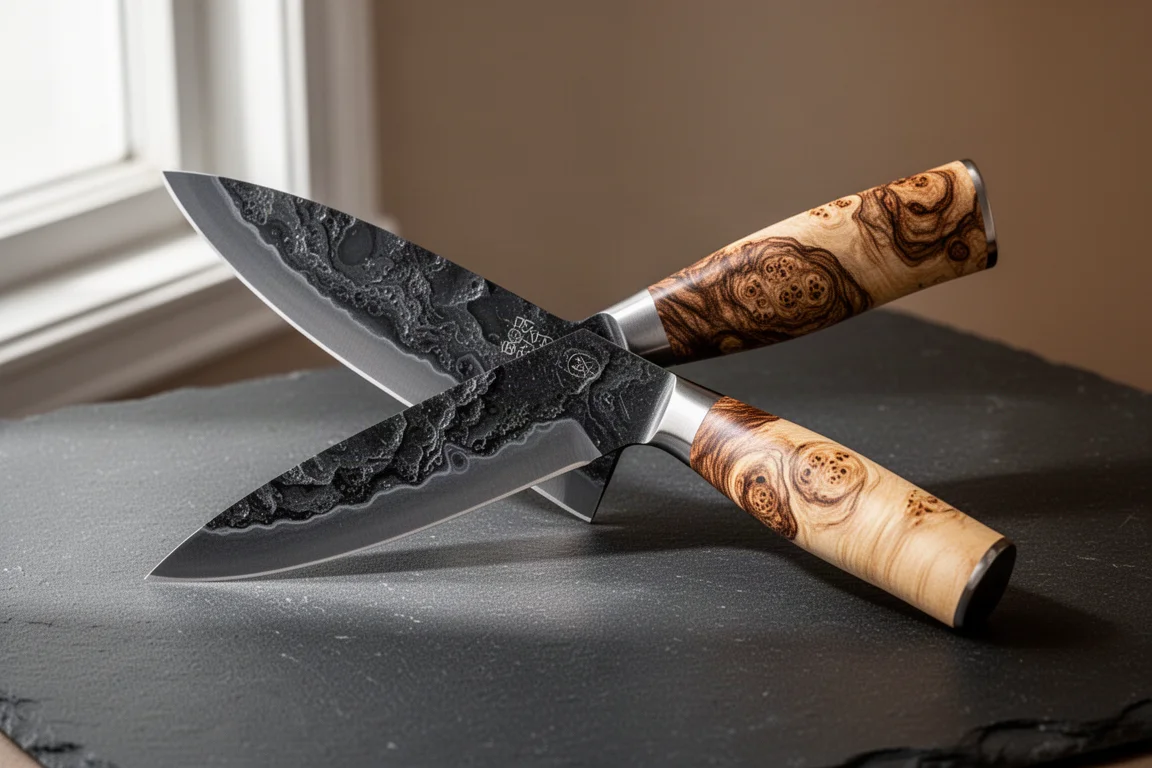
Every so often a knife comes along that does not look like anything else on the market. The Kobunka from Winter Forge, made by bladesmith Liam, is one of them. It is a 132 mm kitchen knife with a deeply etched, obsidian-like blade finish, a pronounced C-grind, and a stabilized birch burl handle that looks like it belongs in a museum of natural history. It also carries a price of 450 Great British pounds, which raises the question of whether the experience justifies the cost. After putting it through a full range of kitchen tasks, the answer is more interesting than a simple yes or no.
First Impressions and Build Quality
The unboxing sets a particular tone. The wrapping does not fully cover the package, there are multiple layers of bubble wrap including a random branded scrap, and the knife itself arrives wrapped in plastic and shoved into the saya. Even if the goal was moisture retention, it feels odd. The saya itself is thick, with an off-center slot, which is a shame given how good the rest of the presentation could be.
The blade is where things turn around completely. It uses a Wolfram Special core with a nickel shim and AEB-L style cladding, finished with a deep etch and an incredibly glassy polish that genuinely resembles obsidian. The handle, with stabilized birch burl on the bottom half, calls to mind mammoth molar. The overall effect is prehistoric in the best way. The angles, the slight roughness, the bolster geometry, and the semi-rounded handle facets all feel very handmade. One oddity is a 6 mm spine, which feels like overkill for edge stability, and the edges show over-rounding with visible finishing scratches. There is a C-grind on one side and a convex grind on the left, which raises questions about whether so many ideas need to live on one blade.
Food Release and Cutting Performance
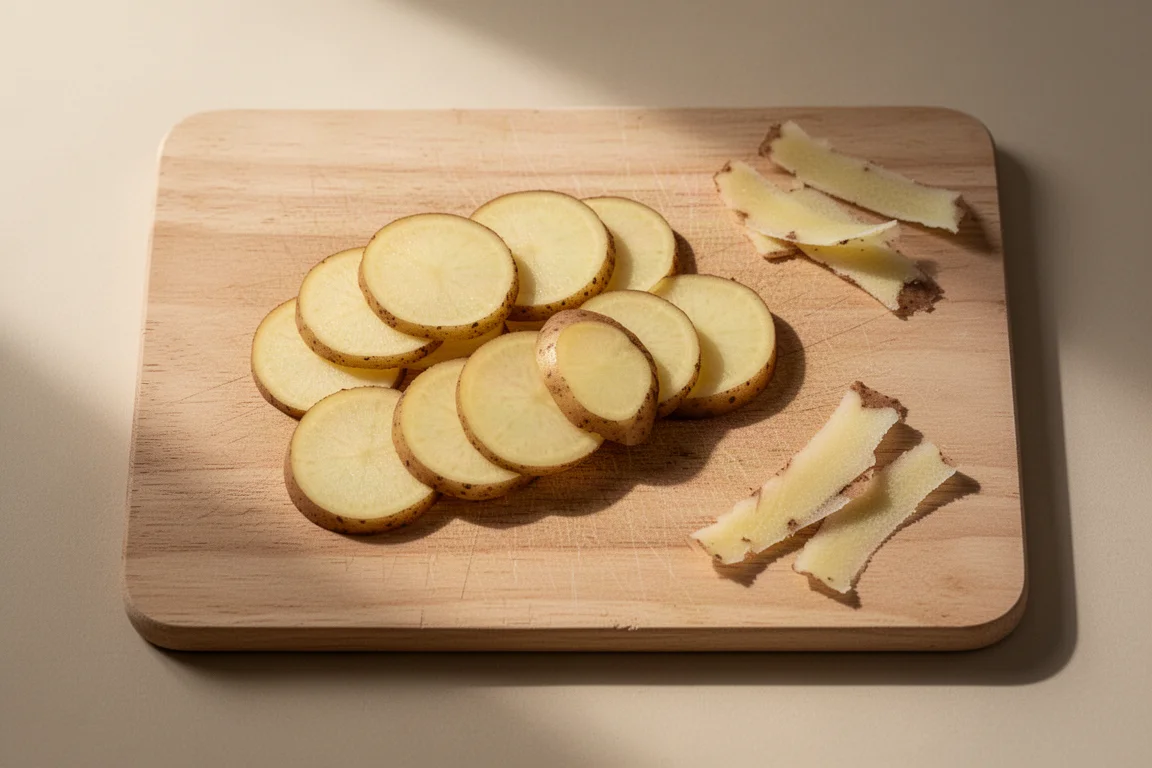
Potatoes were the first test, chosen deliberately because their starch mixes with moisture to create a weak glue that exposes poor food release. The Kobunka absolutely delivered. The pronounced C-grind combined with the glassy, low-suction finish produced seriously impressive food release, and that might be the knife’s single biggest perk.
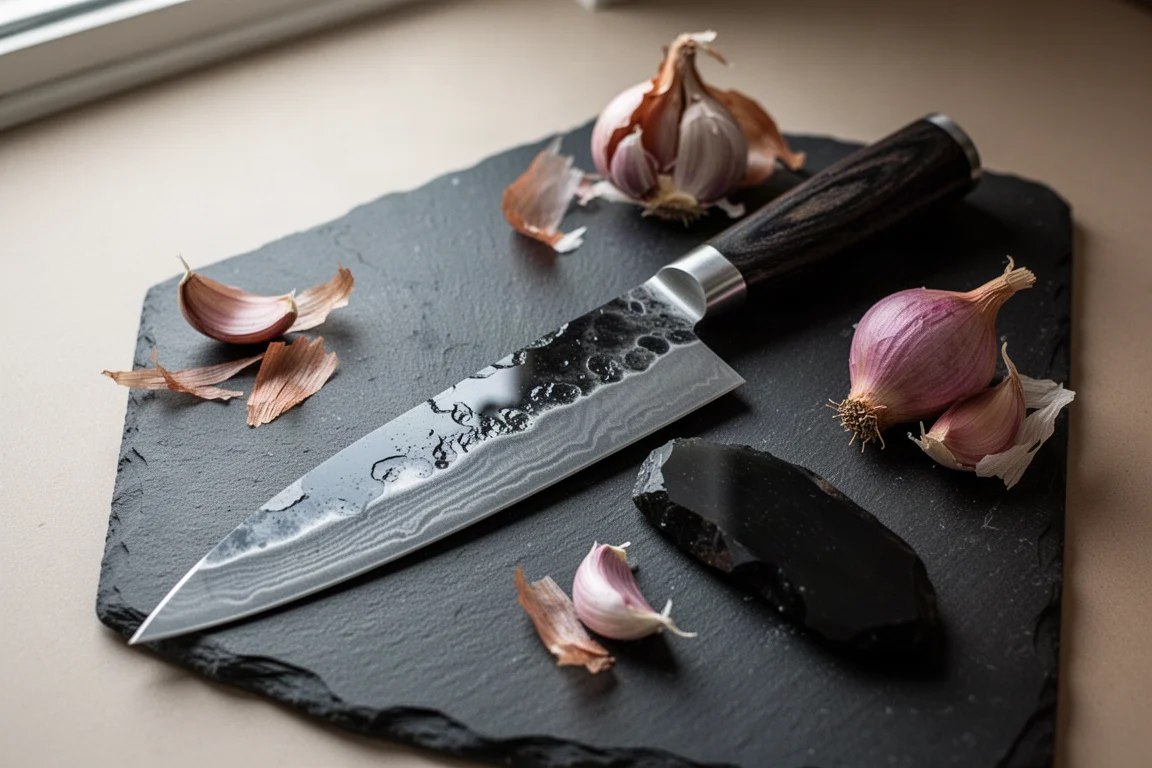
Onions and shallots showed the trade-offs. Slight cracking and some wedging appeared exactly where expected, and when an ingredient is shorter than the C-grind cavity, food sticks. It still handled a shallot well overall. Cherry tomatoes revealed an edge that felt sharper near the tip but not quite a clean finishing edge for catching tomato skin. The Wolfram Special steel comes from Sheffield in the UK and is relatively new, and edge feel clearly reflects its composition, not just the finish grit. Garlic forced a grip adjustment: with a 41 mm heel height, you will drag your knuckles if you do not adapt. It is not a flop, just something to be aware of. On the choil test, the knife wedged but did not crack, which is an important distinction. Carrots behaved the same way.
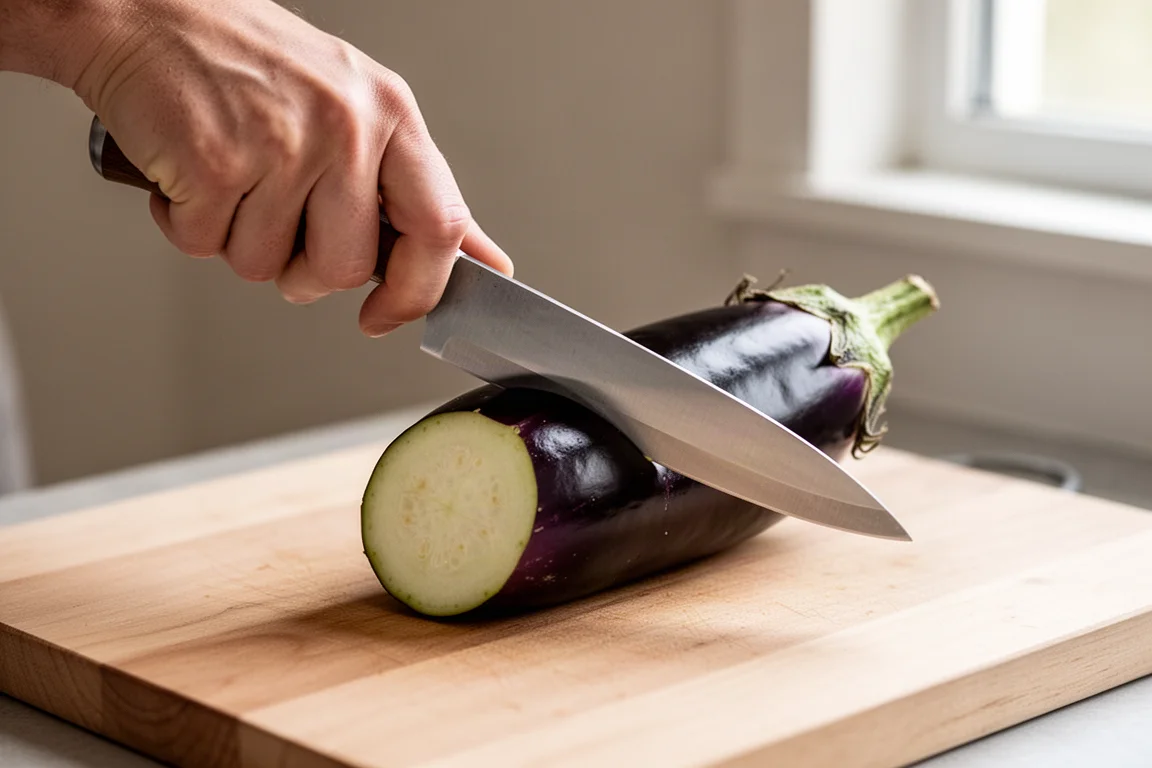
Fruits told a better story. The pear cut showed great maneuverability around the core, and the grapefruit test confirmed solid edge sharpness. Tofu was the surprise highlight. Even laser-grind knives tend to suction onto tofu, but this one pushes food away, producing effortless cuts. Eggplant showed almost zero sticking and, frankly, ridiculous food release.
The Glassy Finish: The Star of the Show
The finish deserves its own section because it is unlike anything else commonly seen. Running a finger across it feels like a polished resin floor, almost frictionless. It is essentially an etched mirror polish with nearly zero surface resistance, something the maker has approached a level of quality rarely seen elsewhere.
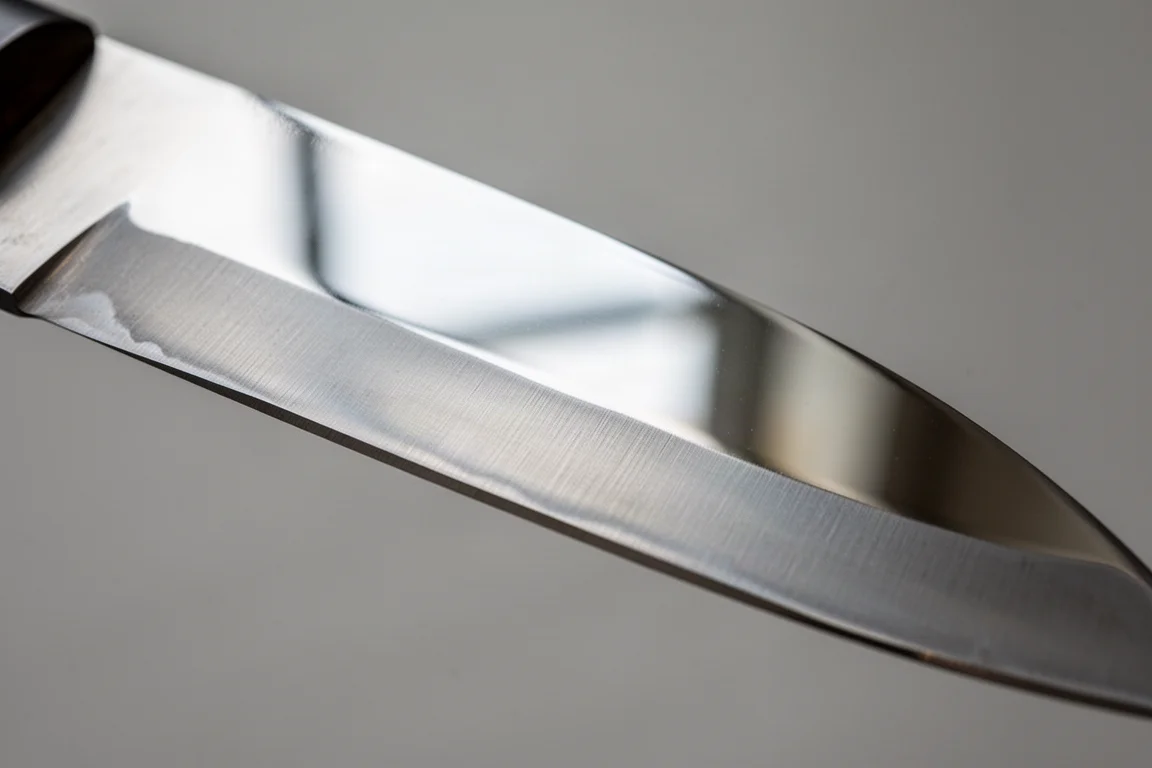
This finish has real practical value. If food sticks, wiping it off is weirdly satisfying, and cleaning the blade is absolutely effortless. It is one of those qualities you have to experience to fully appreciate, and it is arguably the main reason to consider this knife.
Who Is This Knife For?
This is a knife for someone who wants to experience one of the coolest blade finishes available, exceptional food release, and genuinely unique geometry. The polish and the C-grind are the stars. It is also a rare opportunity to try Wolfram Special steel, a Sheffield steel not commonly found in handmade knives.
The nitpicks matter at this price. The blade is thick behind the edge, compounded by the partial convex grind and the thick spine, and it feels like too many ideas layered into one blade. The geometry works, but it could be simplified and refined. At 450 Great British pounds for a 132 mm kitchen knife, the price feels high, and expectations should scale accordingly: more refined handle finishing, cleaner packaging, a less bulky saya with a centered slot, and a full-length option rather than its shorter counterpart. The handle design is subjective; the finishing quality is less so.
Buying Advice
If you are shopping purely for a versatile daily cutter at a reasonable price, this is not it. The thickness behind the edge changes how the knife moves through food, and lateral cuts on onions are best avoided in favor of push cuts. But if you value food release above almost everything else, love unusual handmade builds, and want to try an uncommon British steel, the Kobunka delivers an experience few knives can match. Is it the world’s most versatile knife? That title probably does not exist. But it handled everything thrown at it, wedging in carrots without cracking them, and that resilience counts for a lot.
Conclusion
The Winter Forge Kobunka is a bold, handmade knife with a genuinely remarkable glassy finish, standout food release, and character to spare. Its flaws, thickness behind the edge, bulky packaging, and a high price, are real, but they do not erase what makes it special. For collectors and enthusiasts who want something that feels like it came from another era and performs impressively in the kitchen, it is well worth a look.
Product link
View more details for Winter Forge Kobunka
This product is mentioned in the review. Check the specifications, options, and compatibility before buying.
View more details for Winter Forge KobunkaFurther reading
Related Reviews

Kitchen Knives
Best Chef's Knives 2026: 27 Popular Options Tested and Ranked
A comprehensive review of 27 chef's knives ranging from $18 to $380, with honest assessments of handle comfort, blade balance, and real-world performance.

Kitchen Knives
Best Chef's Knives Under $75: Two Tested Recommendations
Two practical 8-inch chef's knives that balance sharpness, comfort, and durability without premium pricing.

Kitchen Knives
Best Chef's Knives 2026: 27 Options Tested and Ranked
A comprehensive review of 27 chef's knives ranging from $18 to $380, with honest assessments of handle design, balance, blade profile, and real-world performance.