Gravel Bikes
Wilier Rave SLR Review: A Fast Gravel Bike With Road Bike Manners
A carbon gravel frameset that keeps road bike geometry, an integrated flared bar and a wide-range Shimano GRX Di2 drivetrain. Here is what to know before buying.
Introduction
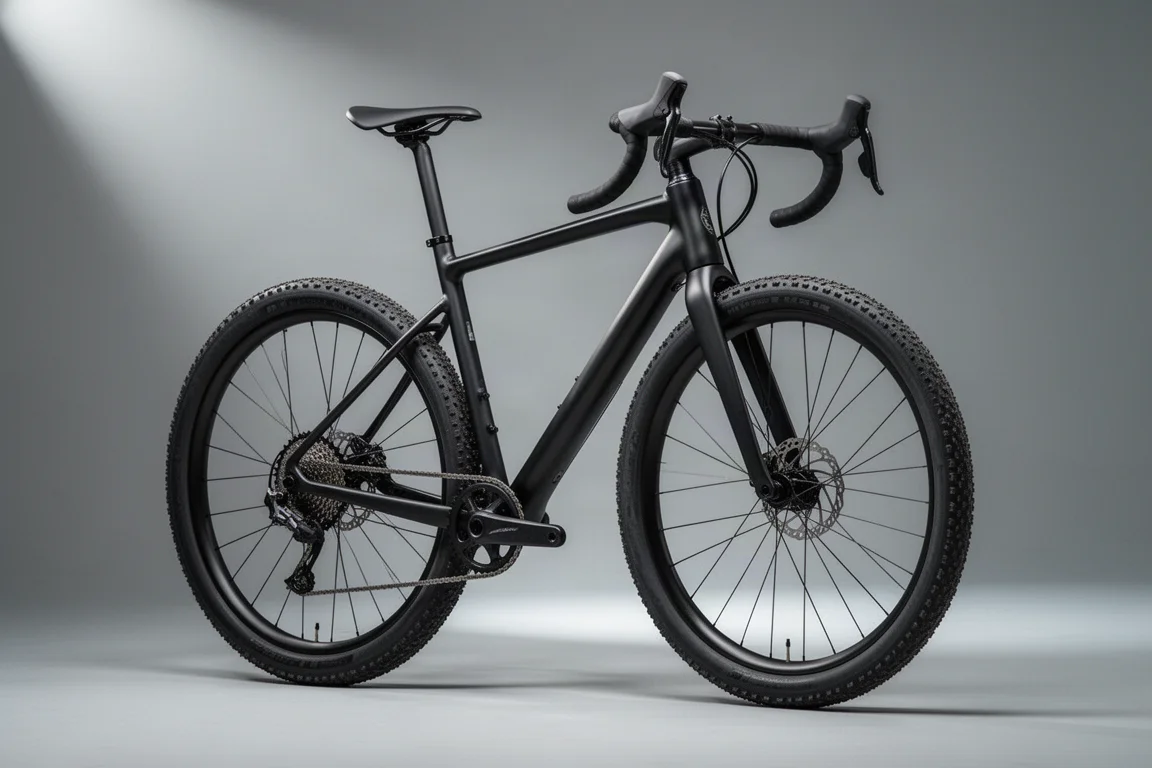
The Wilier Rave SLR is a carbon gravel frameset that leans hard toward road bike behaviour instead of drifting toward the comfort-first end of the gravel spectrum. The build shown here is a size small, specced as a gravel bike with a Shimano GRX Di2 groupset, an integrated flared handlebar and wide carbon gravel wheels. It came out on a wet, cold morning for a first ride of roughly an hour, one descent and the climb back up.
The first impression is speed. This does not feel like a bike that has been softened for off-road use. It feels like a road bike that has been given wider tyres, a slightly taller front end and a flared bar.
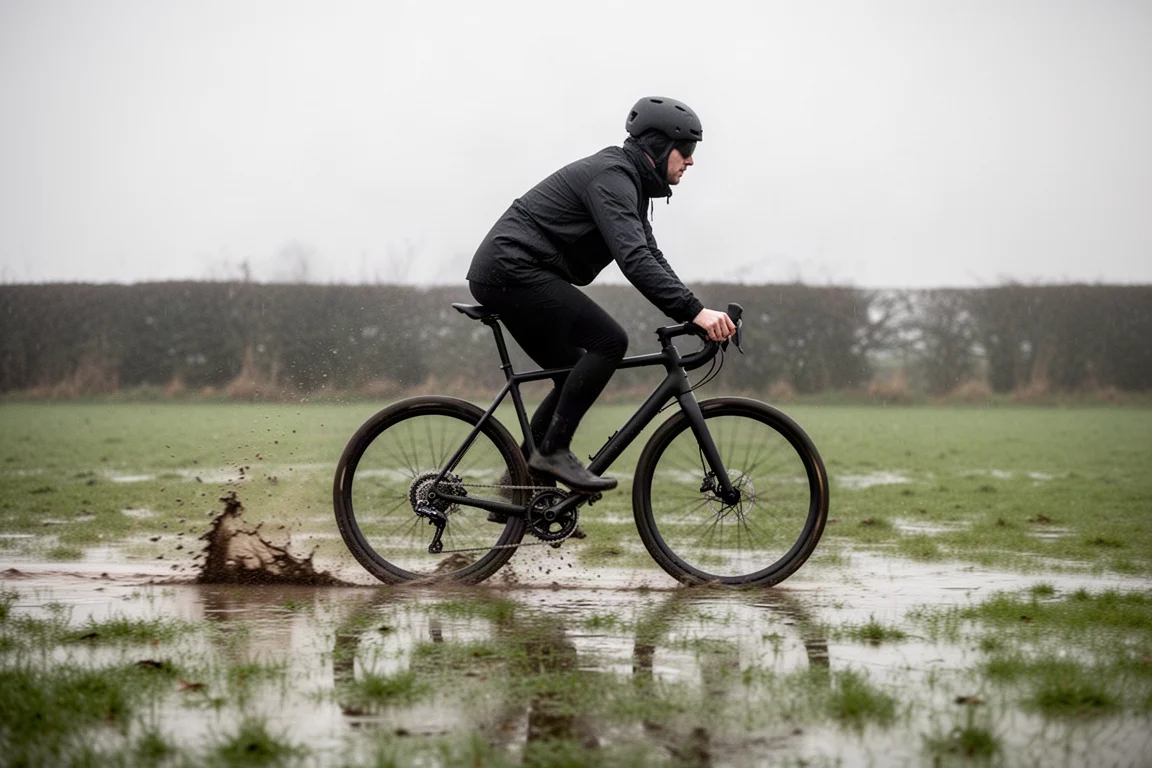
Wilier also offers the frameset with a road groupset and conventional road handlebars, which says a great deal about how the platform is positioned. The Rave SLR is aimed at riders who want one fast machine for both tarmac and gravel, and who are willing to accept a more aggressive riding position in exchange for that versatility.
Who the Wilier Rave SLR Is For
This bike makes the most sense for riders who already enjoy a stretched, race-oriented position and do not want to give it up when the surface turns to gravel. If your idea of a good gravel bike is an upright, upright-and-relaxed machine with a very tall stack, the Rave SLR is pointed in the opposite direction.
It also suits riders who split their time between road and gravel and would rather own one fast bike than two specialist ones. The geometry sits close enough to Wilier’s road frames that the transition between surfaces should feel natural rather than jarring.
The two build paths reinforce that idea. Choose the road groupset and you get road handlebars and a more neutral stem. Choose the gravel groupset and you get the J-bar, an integrated design named after Wilier’s Yana gravel model, with a flared shape and a stem that sits at a more positive angle.
Frame and Geometry
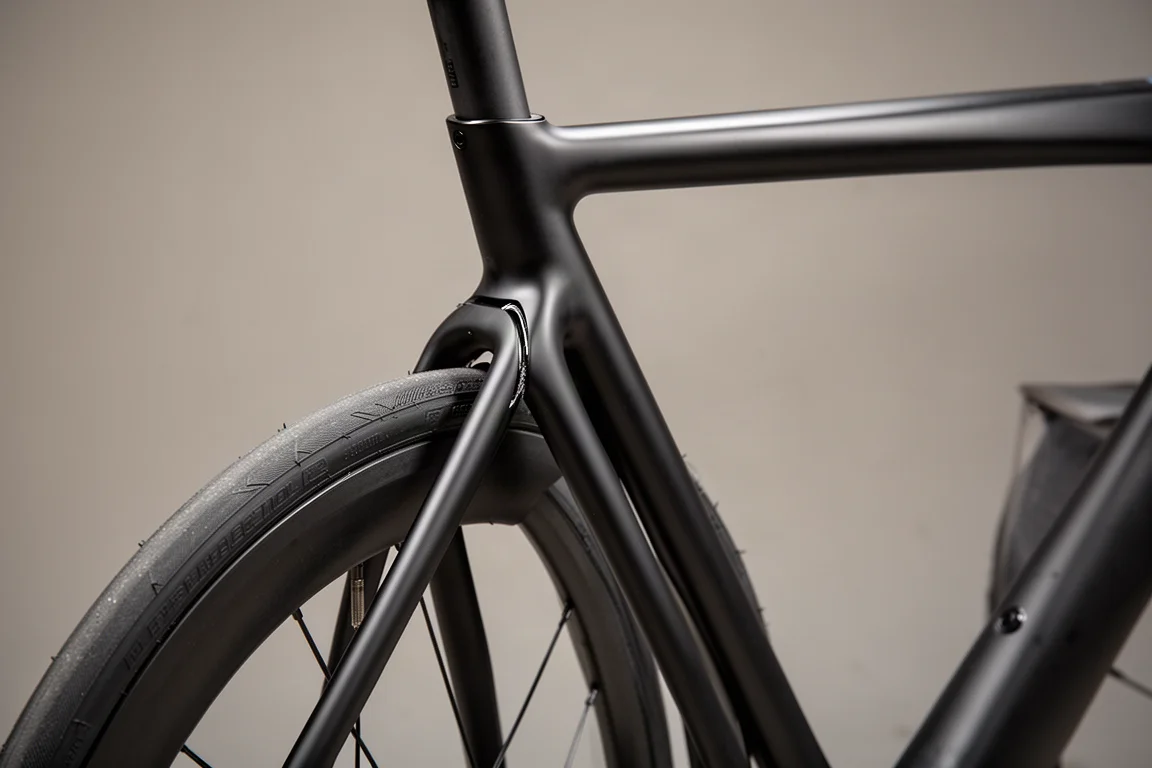
The frame here is a size small. Compared with Wilier’s road frames, the Rave SLR runs a very slightly higher stack and a very slightly shorter reach. Those differences are small rather than transformative. You still feel like you are on a road bike, and the position remains fairly aggressive.
That is the core character of the bike. It is not a geometry that asks you to sit up and cruise. It asks you to ride it the way you would ride a road race frame, with the same forward weight distribution and the same quick steering instincts.
In practice, that means the Rave SLR rewards riders who are comfortable being low and long. The slightly taller front end takes a little pressure off the shoulders over long distances without turning the bike into something it is not. For anyone chasing a fast gravel bike that can also serve as a road bike, this is the balance point the whole design is built around.
Cockpit, Saddle, and Seatpost
The integrated J-bar is flared at the shifters. The bar on this build measures roughly 40 centimetres across the hoods and 43 centimetres across the drops, which is a meaningful difference when you look down at it. Visually it reads as very wide. With your hands actually on the hoods, it does not feel like an unusually wide bar at all, and the shape comes across as comfortable.
Because the gravel bar’s stem has a fairly positive angle, the resulting handlebar position sits slightly higher than the road version with its more neutral stem. Riders who want a taller front end for gravel may prefer that out of the box. On this build the bar has been slammed, which puts it in the right place for a road-like position.
The saddle is a Prologo AGX, a standard short-nose design with a cutout in the middle. It felt reasonably comfortable across the first ride, though it deserves more testing over longer distances. The seatpost is integrated and developed in collaboration with Ritchey, and it houses the battery for the GRX Di2 groupset, which keeps the lines clean and removes one more thing to mount.
Drivetrain, Wheels, and Tyres
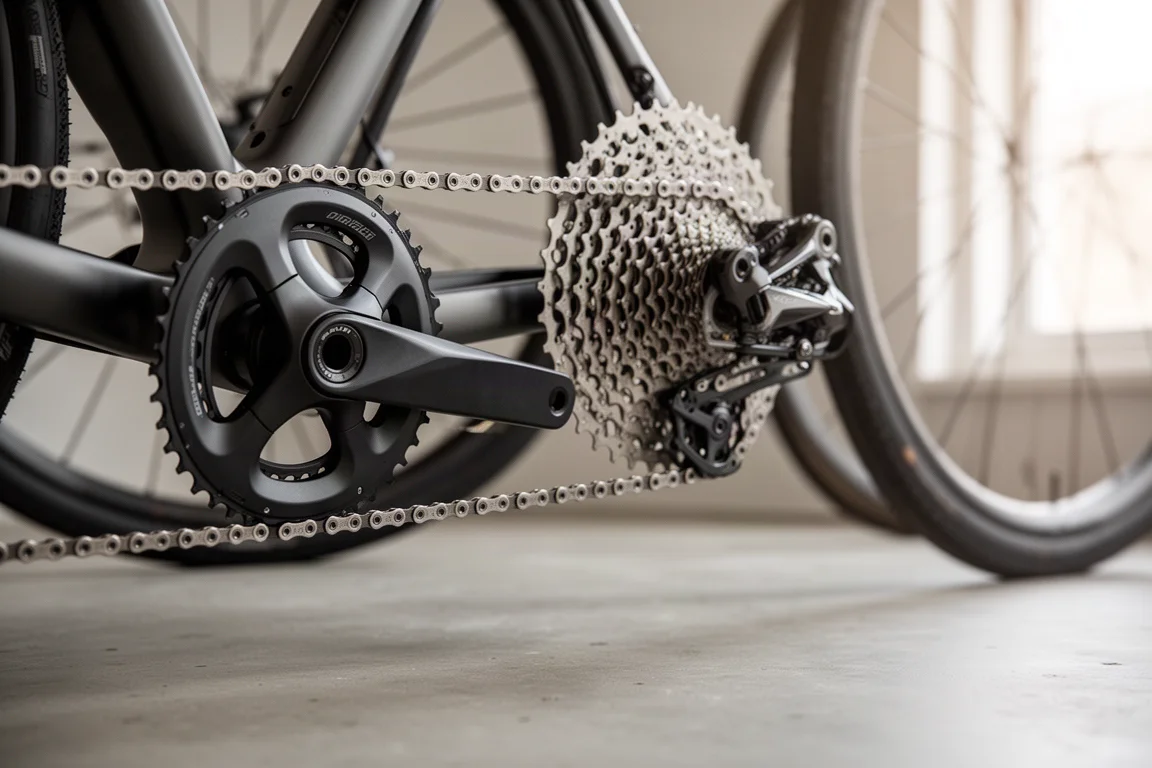
The drivetrain is Shimano GRX Di2 with double 46/30 chainrings and an 11-32 cassette. That combination delivers a very wide spread of gears, which matters on a bike that is expected to climb loose surfaces and still hold speed on tarmac. Disc rotors are 160 millimetres at both the front and the rear.
The wheels are carbon gravel hoops that are notably light and notably wide, and they are wrapped in 33 millimetre Hutchinson Toro tyres. Those are cyclocross tyres rather than pure gravel tyres, which is a deliberate choice on a bike this fast. They are set up tubeless with Stan’s Race sealant, a particularly thick formula that has proven reliable at sealing punctures on lower-volume setups in the past. How it behaves here, with a smaller tyre volume and slightly higher pressures, is something worth watching over time.
The finishing details are equally considered. Garmin Rally pedals double as a power meter, so wattage data is available without adding a separate crank-based unit. The bottle cages are Fidlock magnetic holders, with one piece mounted to the frame and one on the bottle. They look exceptionally clean when a bottle is removed, and they hold firm over rough ground, which is why they have become popular with enduro riders.
Things to Consider Before Buying
The flared bar is comfortable on the hoods, but the wide drop position has not yet been put through anything genuinely technical, so riders who spend most of their time on steep, loose descents may want to try the shape before committing.
The 33 millimetre cyclocross tyres are narrower than what many gravel riders run. That suits the fast, road-adjacent character of the bike, but it does reduce cushioning and float on rough terrain compared with a wider gravel tyre.
The integrated seatpost looks excellent and houses the Di2 battery neatly, but it also limits how much you can change saddle setback and height with a conventional post. Getting your fit dialled in matters more here than on a bike with a standard round post.
Finally, the bike has only had a short first ride so far. First impressions are of a very fast machine, but longer-term durability and comfort impressions will only become clear with more distance, including the planned testing on rougher Spanish terrain.
Buying Advice
Start with the build rather than the frame. If you expect to spend meaningful time on tarmac and want the most familiar front end, the road groupset version with road handlebars and a neutral stem is the simpler choice. If gravel is the priority and you want the flared control of the J-bar, the gravel build is the one to take, and the higher bar position it produces will suit many riders straight away.
Check your fit carefully before ordering, because the integrated seatpost leaves less room for adjustment later. Riders who already know their preferred saddle height and setback will have an easier time here than those still experimenting.
It is also worth being honest about the position. The Rave SLR is close to a road race frame in how it asks you to sit, so if you want a relaxed, upright gravel bike, this is not it. If you want a fast one that does not feel compromised on tarmac, it is exactly on target.
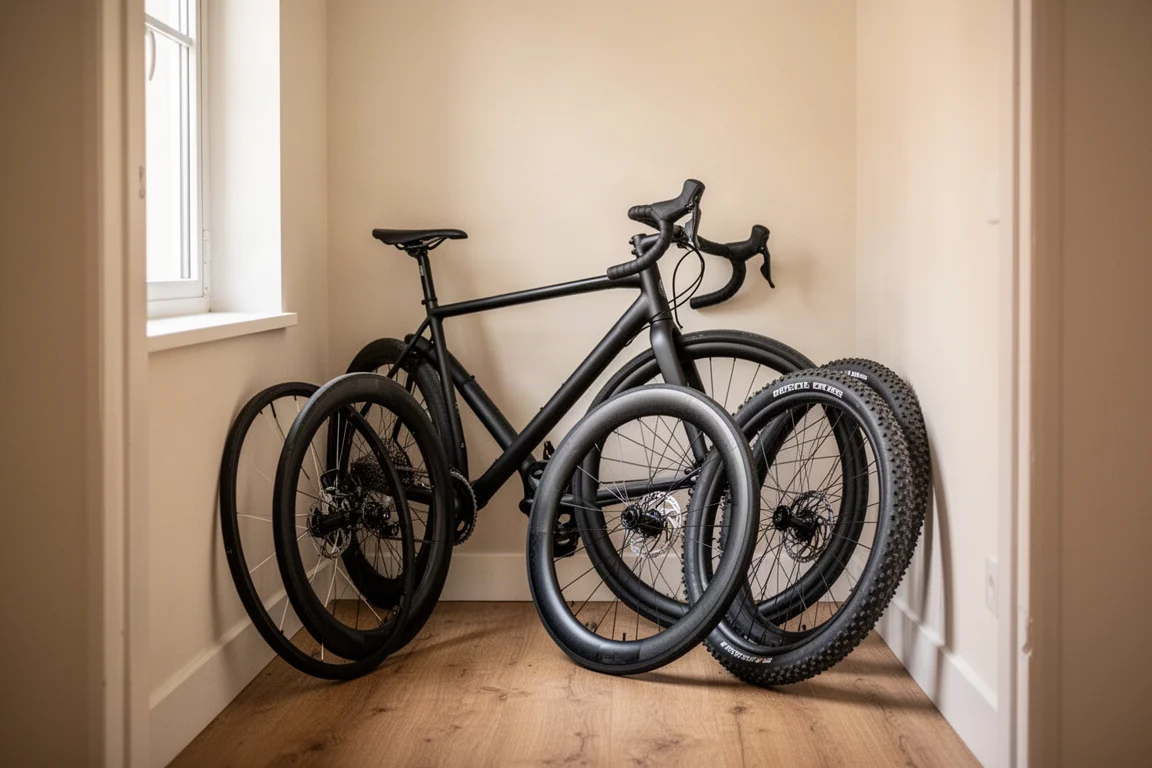
Either way, the platform is coherent. The geometry, the bar options and the wide-range gearing all point in the same direction, which makes the choice between the two versions a genuinely useful decision rather than a cosmetic one.
Conclusion
The Wilier Rave SLR is a fast gravel bike built for riders who do not want to leave road bike manners behind. The slightly higher stack and slightly shorter reach keep it usable over distance, the integrated J-bar brings control without feeling unwieldy at the hoods, and the GRX Di2 drivetrain with 46/30 chainrings and an 11-32 cassette covers an enormous range of terrain.
The trade-offs are clear and worth accepting only if they match how you ride. Narrow cyclocross tyres, an integrated seatpost with limited adjustment and an aggressive position are all part of the same design intent. For riders who want one quick bike for tarmac and gravel, the Rave SLR makes a strong case for itself. For everyone else, the two build options make it easy to see exactly what you would be buying.
Product link
View more details for Wilier Rave SLR
This product is mentioned in the review. Check the specifications, options, and compatibility before buying.
View more details for Wilier Rave SLRFurther reading
Related Reviews
Gravel Bikes
3T Exploro Ultra Review: A Fast Gravel Bike Built for Big Tyres
A close look at the 3T Exploro Ultra, an aero carbon gravel bike designed around wide tyres, with road-like handling, a 980 g frame and genuine rough-terrain capability.
Gravel Bikes
3T Extrema Italia Review: Aero Gravel Speed With Room for 57 mm Tires
The 3T Extrema Italia pairs an aero frame with huge tire clearance, Italian-made carbon and a more comfortable ride than the RaceMax. Here is what to know before buying.
Gravel Bikes
3T Race Max 2 Italia Review: An Aero Gravel Race Bike Made in Italy
A closer look at the second-generation 3T Race Max 2 Italia, covering its aero updates, ride character, tire clearance, internal storage and who it suits.