Kitchen Knives
Why Some Japanese Kitchen Knives Cost More: Six Blades Explained
A close look at six Japanese kitchen knives from two very different price tiers, and what actually drives the difference: steel, handles, finishes, grinds, and craftsmanship.
Introduction
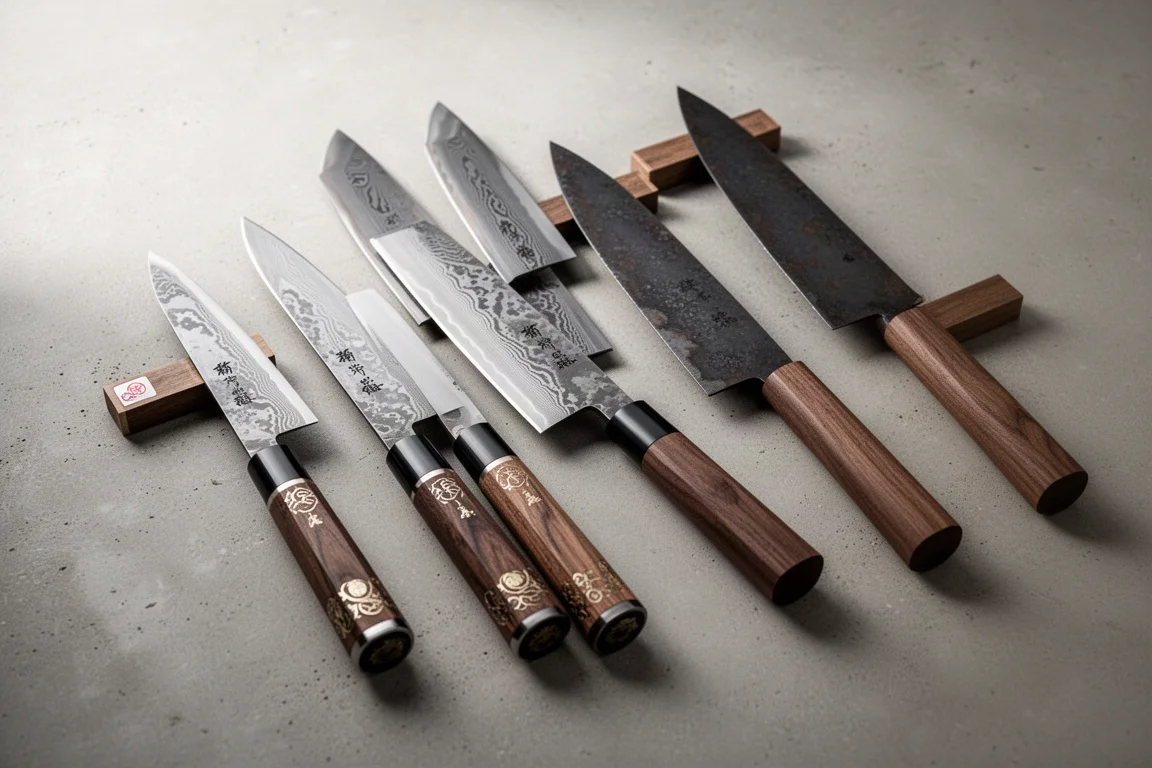
Why can two Japanese kitchen knives that look similar sit at completely different price points? The answer usually comes down to a handful of factors: the steel used, the handle materials and construction, the finish and polish applied to the blade, the quality of the grind, and the small details that take extra time and skill to produce.
To make this concrete, we are looking at six knives in two tiers: three from a premium kit and three from a more affordable kit. Together they show exactly where your money goes, and where it arguably does not need to.
The Premium Kit
Yu Kurosaki Senko Eii 150mm Petty
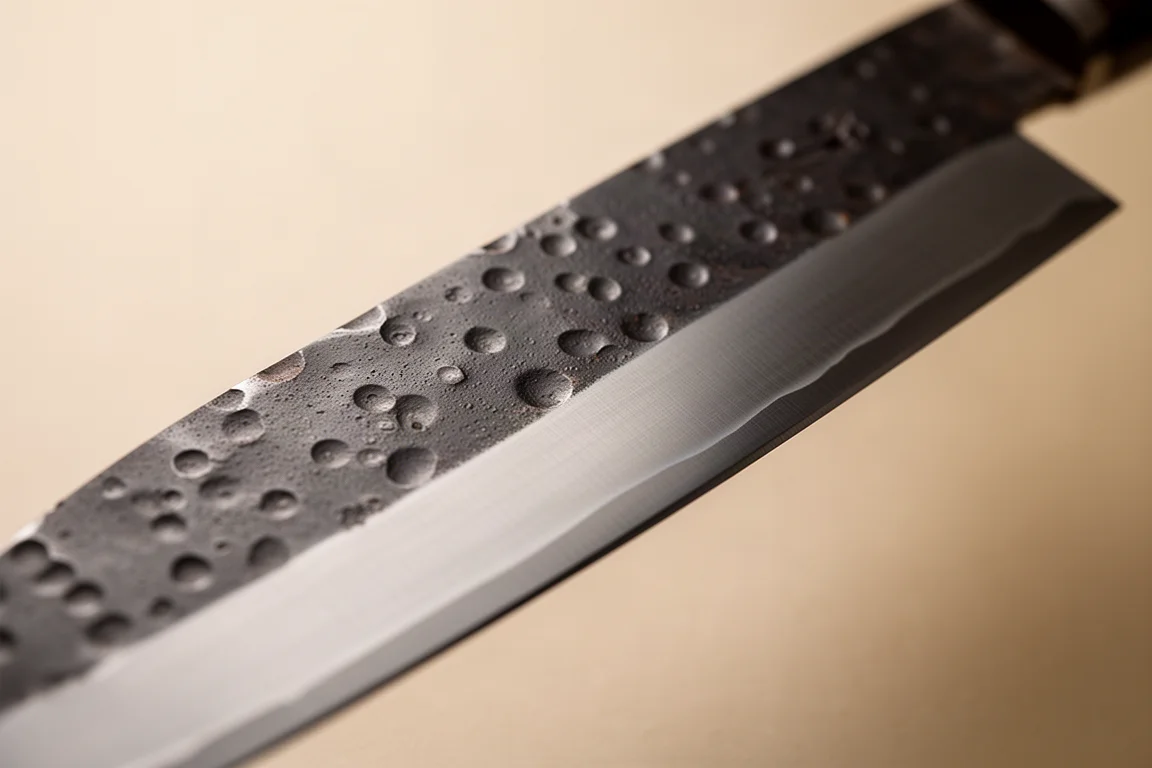
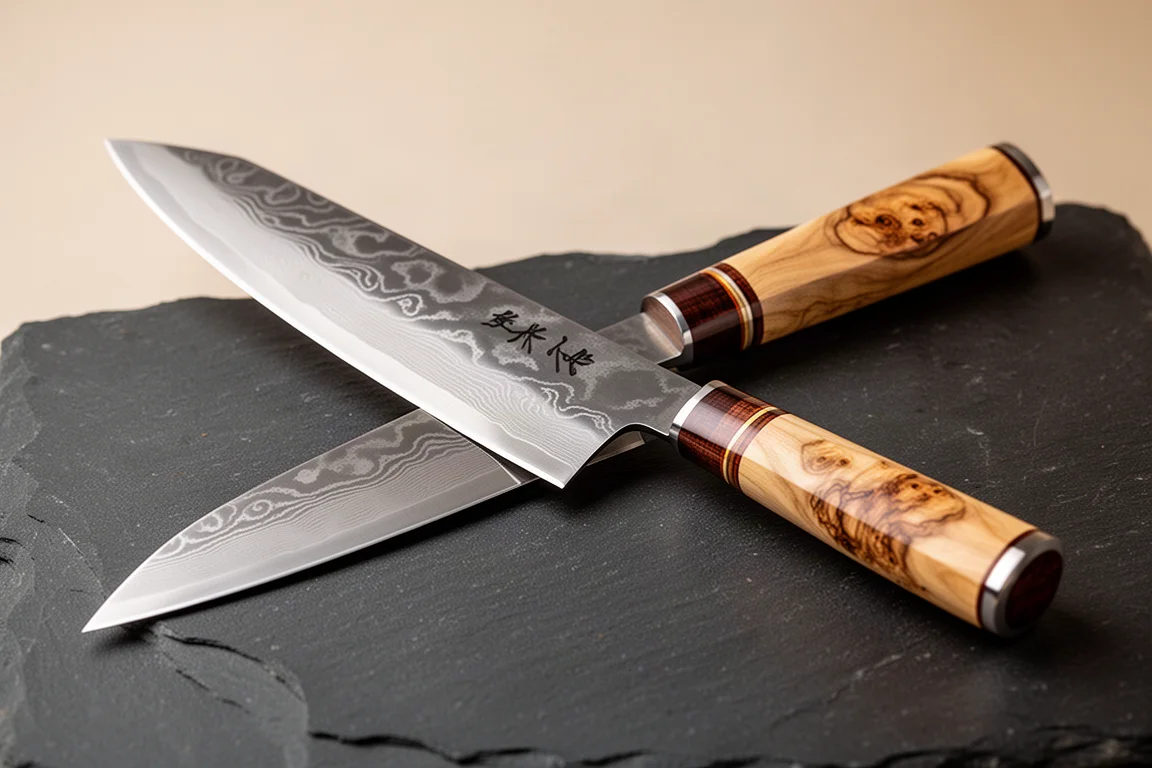
Made from Aogami Super steel, this petty knife pairs a beautiful kurouchi finish with subtle sume dimples, both of which require extra time and labor to produce. The stabilized birch wa handle adds to the cost, as these handles generally command a higher price than simpler options.
Shinkiro 170mm Nakiri
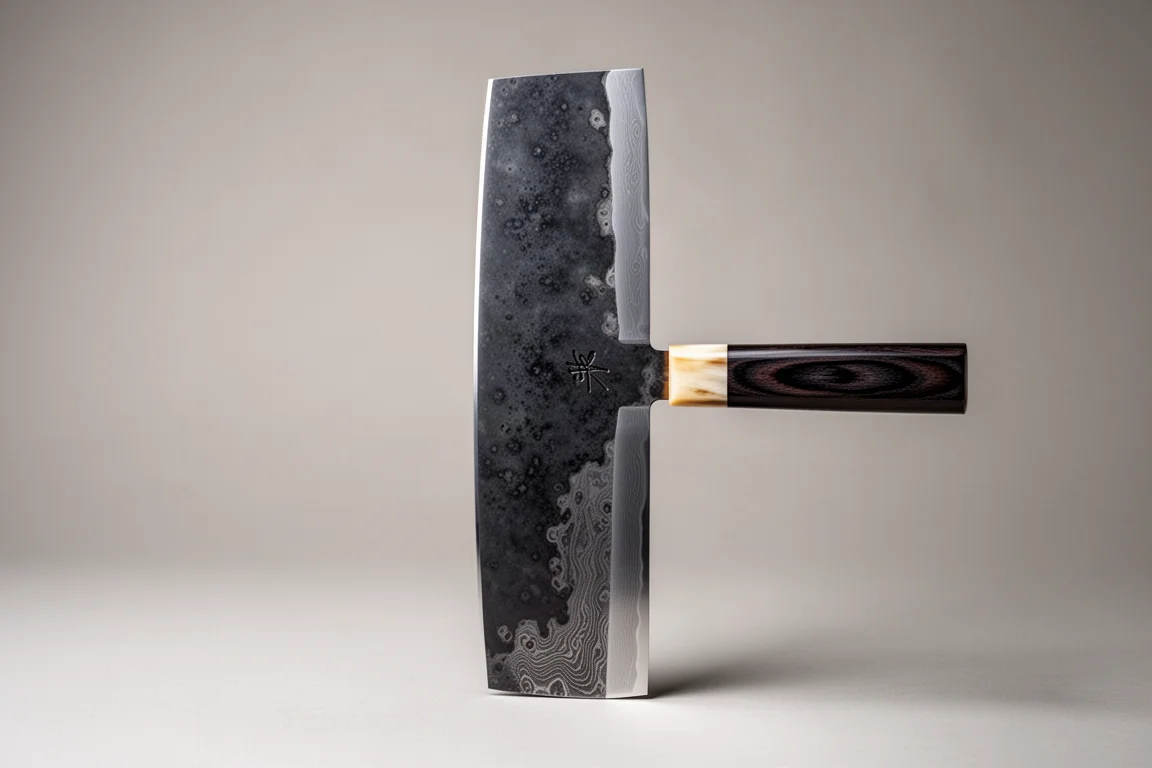
This nakiri is also made from Aogami Super, with an ebony handle and a buffalo horn ferrule. The kurouchi finish has a consistent matte character, and the Damascus pattern appears likely to be forged in house rather than bought as pre-laminated billets, which takes considerably more skill and effort. The spine is thick enough to give a hefty, confident feel in hand, yet the blade is remarkably thin behind the edge, delivering an outstanding cutting feel.
Okaku Ryu 240mm Gyuto (Ryusen Honmamon)
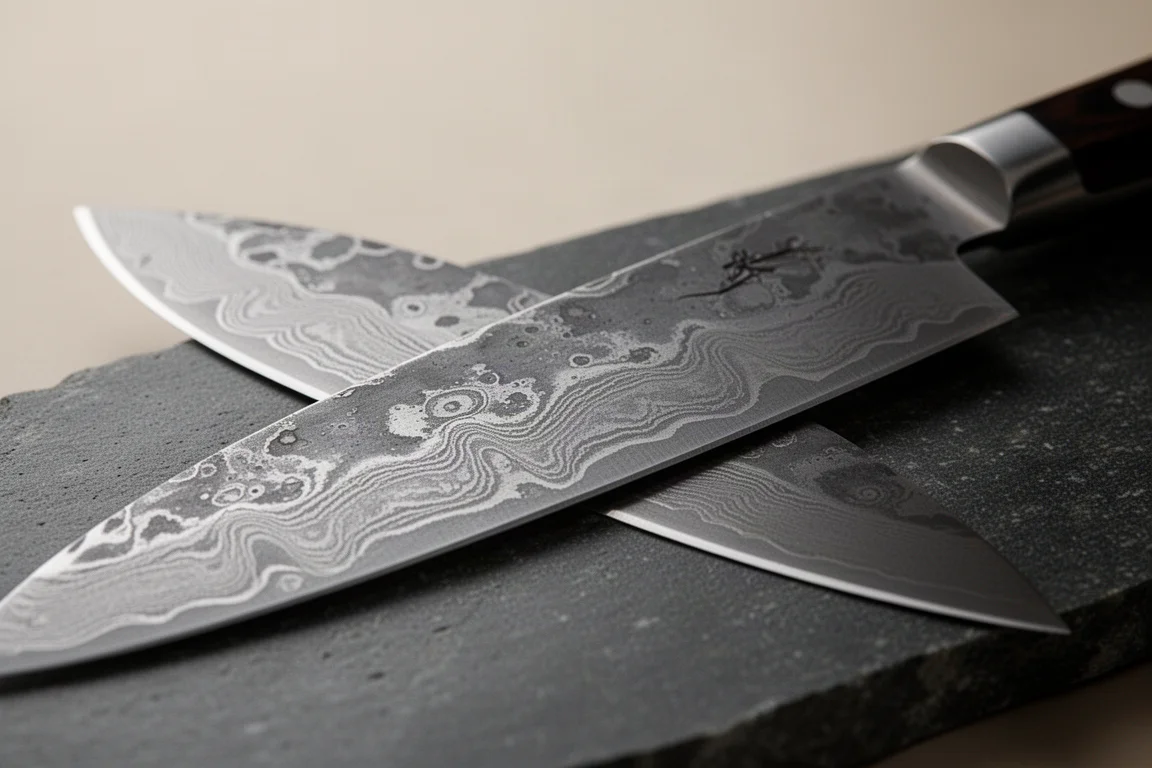
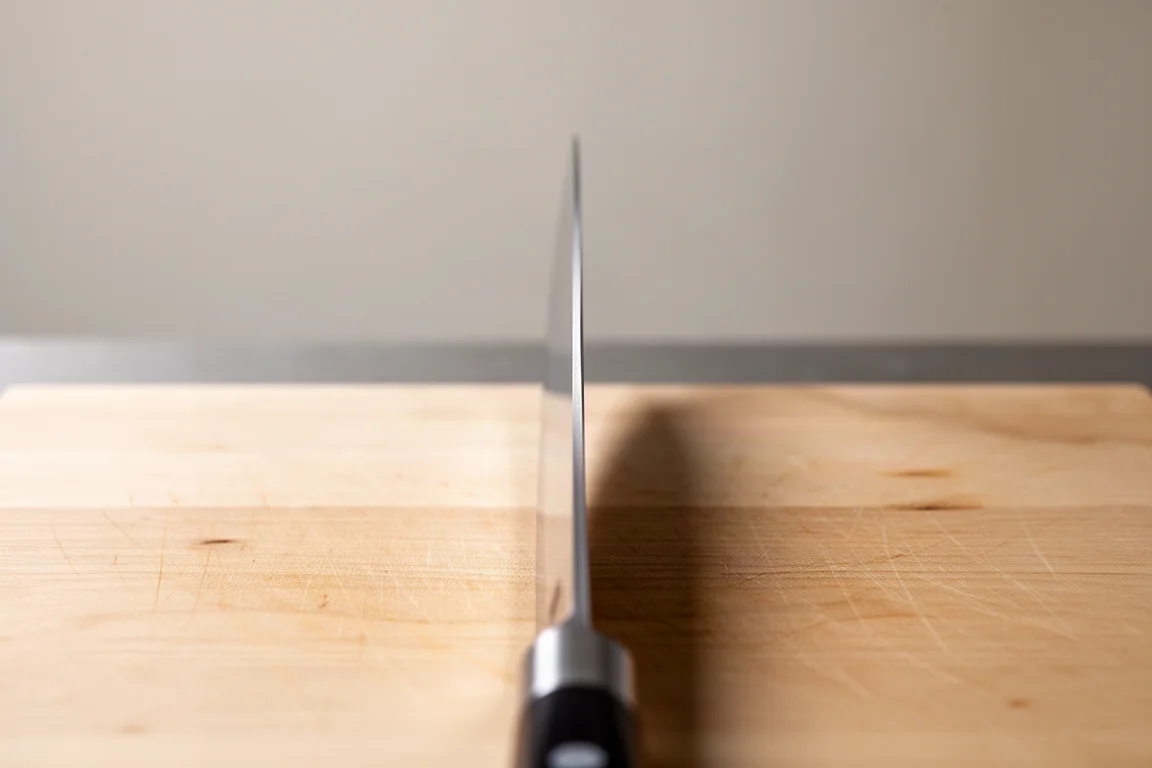
This gyuto from the Okaku Ryu series is arguably the standout for craftsmanship. It uses R2 steel, considered among the best available for knife making, and a stabilized poplar handle with end caps, ferrules, liners, and spacers in an intricate flame-patterned design. Even the packaging is exceptional; few makers produce a nicer box. Small details matter here too: the spine and choil are sanded down for comfort, and the blade is so thin it almost disappears when viewed edge-on.
The More Affordable Kit
Sakon Ginga 135mm Petty
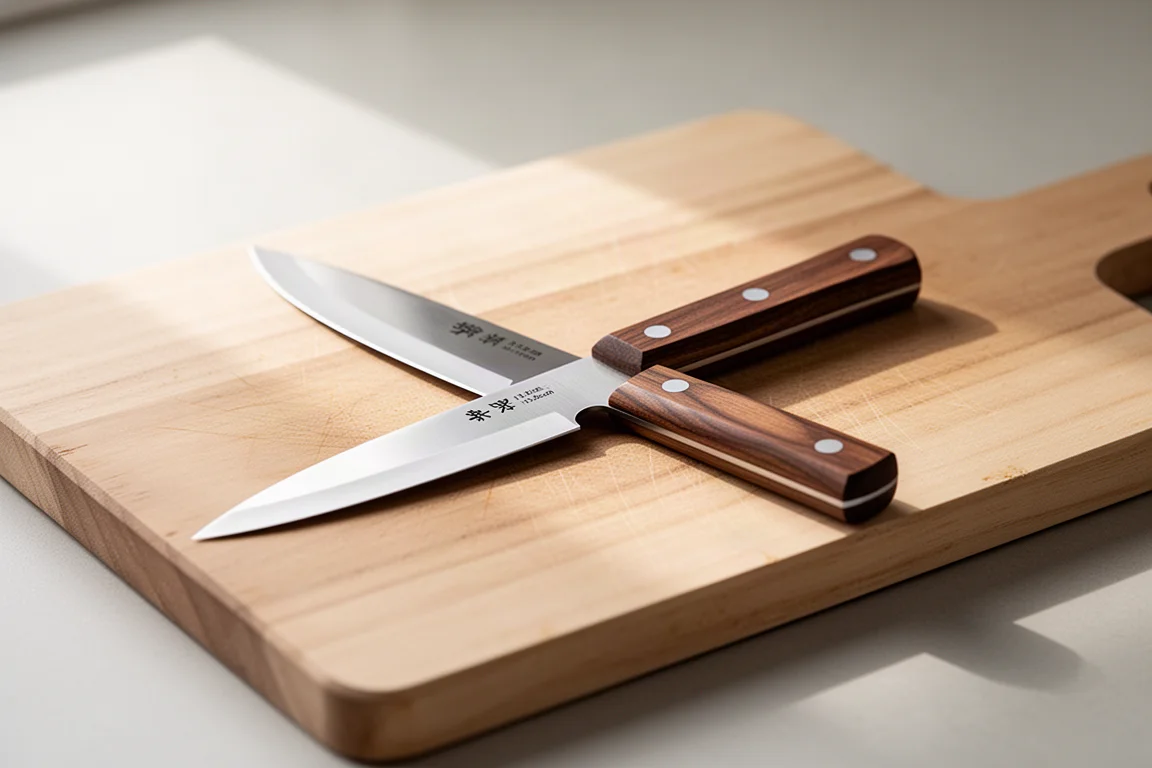
Made from Ginsan steel with a brown pakkawood handle, this petty is a genuinely capable knife, particularly for butchery-style tasks. It is a little thicker behind the edge and its blade geometry is not the strongest, so it will not excel at dense ingredients like carrots or sweet potatoes. For the small tasks a petty is actually used for, that is rarely a problem.
Kurami 165mm Santoku
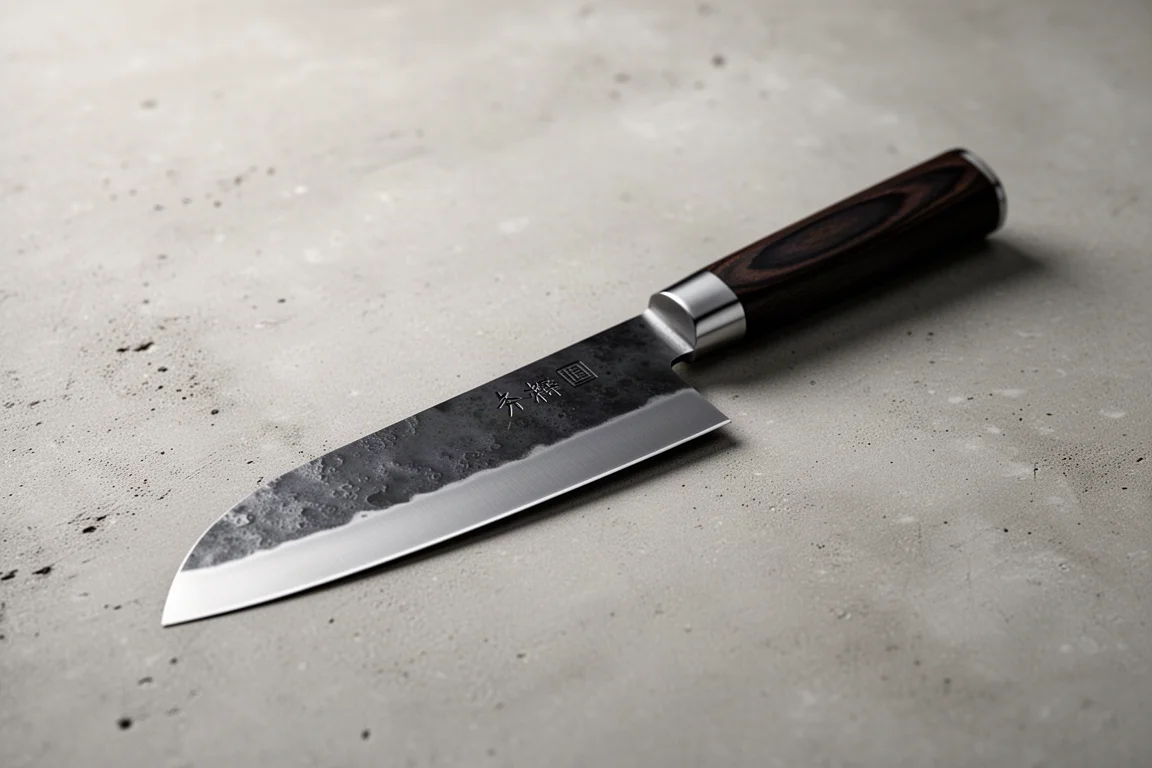
This santoku uses Blue #2 steel with a kurouchi finish and a monoblock-style ebony handle. The kurouchi here is likely applied after forging with an iron-based lacquer rather than formed naturally through the forging process, which is one way makers keep costs down without giving up much in daily use. It still looks great and performs well for a mid-priced knife.
Hatsukokoro 240mm Gyuto
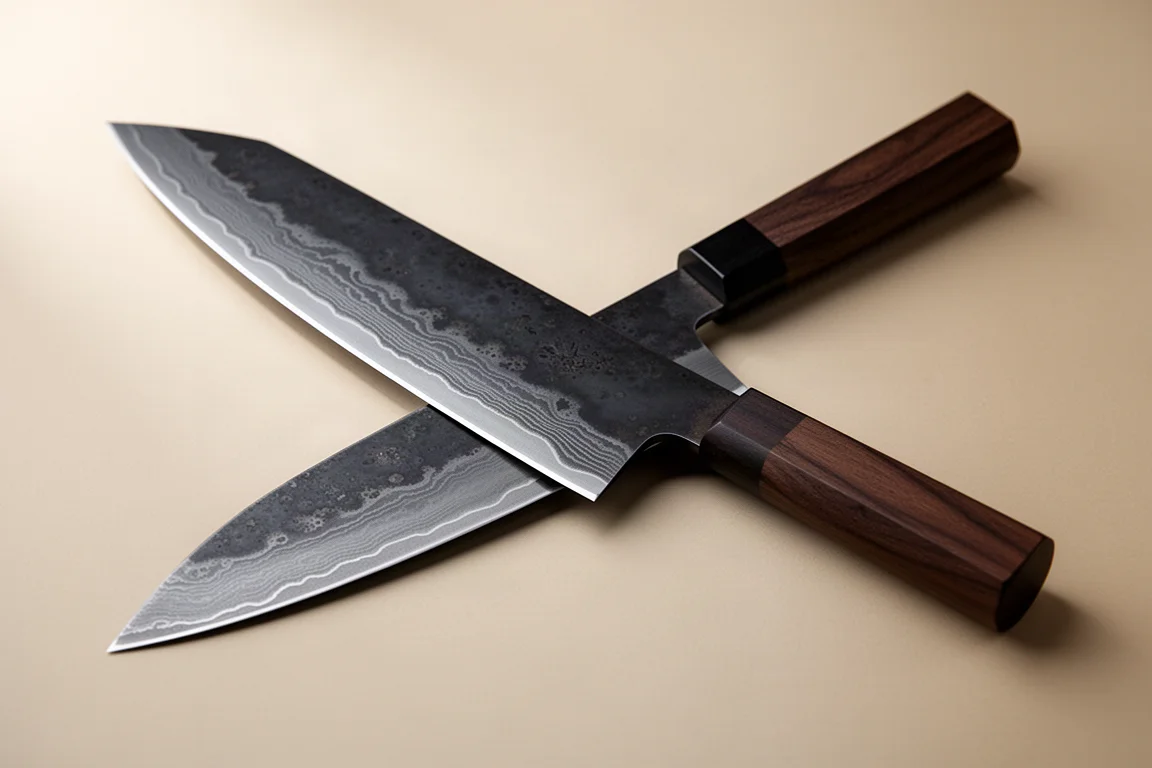
This gyuto features a kurouchi Damascus finish over Aogami #2 steel. The Damascus is likely pre-laminated steel rather than forged in house, and the kurouchi appears painted on, which keeps the price accessible. Even so, the grind on this knife is genuinely excellent, proof that affordable knives can still cut at a very high level.
Materials: The Biggest Price Driver
Steel choice is probably the single biggest factor in a knife’s price. The premium knives here use Aogami Super and R2, both widely considered some of the best steels available for knife making. In use, they perform at a very high level and hold an edge for a long time. R2 is often seen as difficult to sharpen, though many find it relatively easy depending on the specific knife.
Handle materials matter as well. Stabilized woods cost more than simpler options, and wa-style handles generally demand a higher price than Western-style ones because they take more labor. Western handles are easier to make since they do not require joining two pieces, and wa handles also suffer some wastage when the wood expands or cracks during installation. The ebony handles on the premium knives resist moisture well, while more porous options like magnolia or pakkawood react more to water and humidity. That said, a simpler handle will not make a knife uncomfortable or hurt its performance.
Finish and Polish
Finishes such as nashiji, kurouchi, and Damascus each require different levels of maintenance, skill, and time, so they command different prices. Nashiji and kurouchi are among the easiest to produce and therefore cost less. Damascus, especially laminated and forged in house, demands enormous skill and effort.
The Yu Kurosaki Senko’s kurouchi with sume dimples requires extra labor, and the Shinkiro’s polished bevel creates a striking contrast between the core steel and the Damascus cladding, all of which adds time and cost. On the affordable side, lacquered kurouchi and pre-laminated Damascus keep prices down while still looking good.
Grinds and Blade Geometry
What many buyers do not realize is that you are not just paying for the material. You are also paying for the time and abrasive work needed to remove material and shape a blade that cuts really well. Steel is hard, and grinding it into a great cutting shape takes significant skill.
The Shinkiro and Okaku Ryu illustrate this perfectly: the Shinkiro is thick at the spine for a hefty feel yet incredibly thin behind the edge, and the Okaku Ryu is so thin it is nearly invisible when viewed edge-on. The gap between “quite thin” and “super thin” requires real blacksmith and sharpener expertise, and that expertise is part of the price. Interestingly, both the Kurami and the Hatsukokoro also have fantastic grinds, which shows that affordable knives do not always follow the rule.
The Little Details
Small touches add up. The Okaku Ryu’s flame-patterned Damascus, its spacers and liners, and its spectacular packaging all take extra time and effort. Sanded spines, finished choils, and overall comfort in the hand also drive price upward. Not everyone values these details, and that is fine; knowing they exist helps you decide whether they matter to you.
Which Tier Should You Buy?
If the differences above feel like things you would genuinely notice and appreciate, the premium knives deliver real value in steel quality, cutting feel, and craftsmanship. If they do not, that is a perfectly sound conclusion, and realizing it before spending a large amount of money is the smartest outcome.
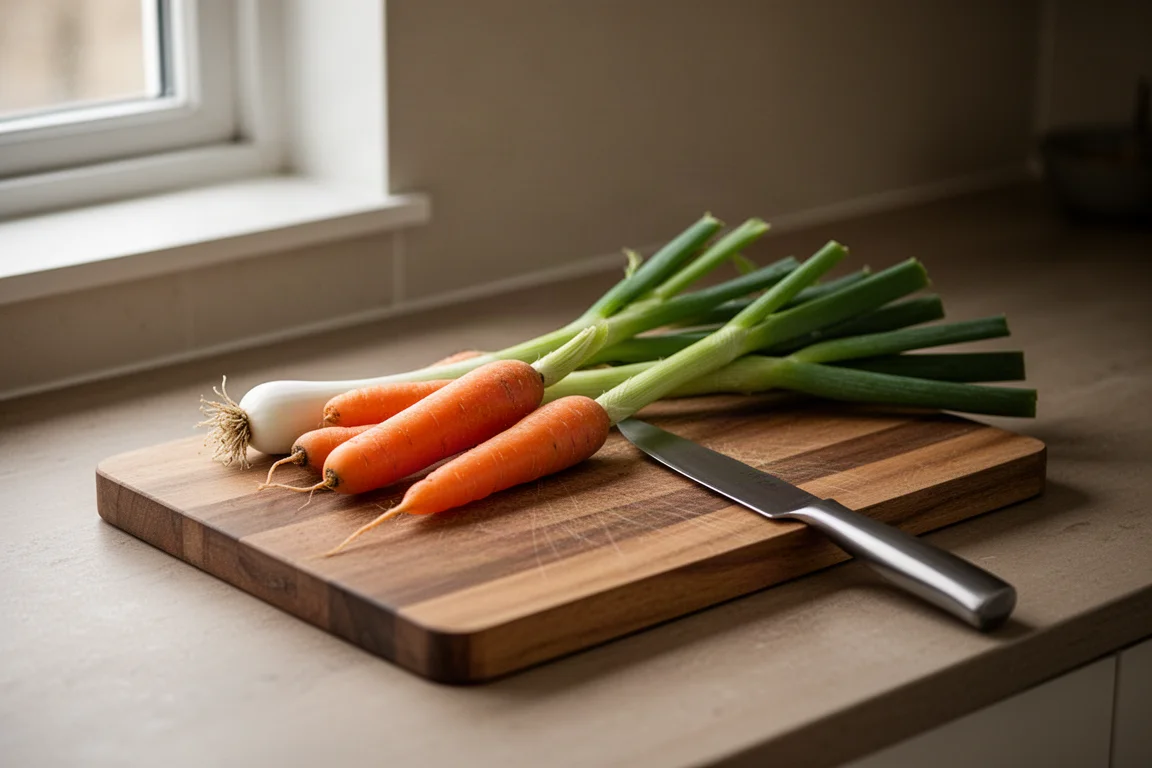
The affordable kit here proves the point: the Sakon Ginga, Kurami, and Hatsukokoro all perform at a high level for their tier, with grinds that punch well above their price. For most everyday cooks, a well-ground mid-range knife will handle nearly every task with room to spare.
Conclusion
The price of a Japanese kitchen knife reflects steel, handle construction, finish complexity, grind quality, and countless small details. Premium knives justify their cost through top-tier steels like Aogami Super and R2, hand-forged Damascus, and refined geometry. Affordable knives cut corners mostly in finish production and handle materials, not necessarily in cutting performance. Match the knife to how you cook, and you will be happy at either tier.
Further reading
Related Reviews

Kitchen Knives
Best Chef's Knives 2026: 27 Popular Options Tested and Ranked
A comprehensive review of 27 chef's knives ranging from $18 to $380, with honest assessments of handle comfort, blade balance, and real-world performance.

Kitchen Knives
Best Chef's Knives Under $75: Two Tested Recommendations
Two practical 8-inch chef's knives that balance sharpness, comfort, and durability without premium pricing.

Kitchen Knives
Best Chef's Knives 2026: 27 Options Tested and Ranked
A comprehensive review of 27 chef's knives ranging from $18 to $380, with honest assessments of handle design, balance, blade profile, and real-world performance.