Travel Backpacks
Western Rise Voyager 35 Review: A Carry-On Travel Backpack That Almost Nails It
A week of carry-on travel with the Western Rise Voyager 35, plus a look at the Voyager Pro and the brand's packing set for matching organization.
Introduction
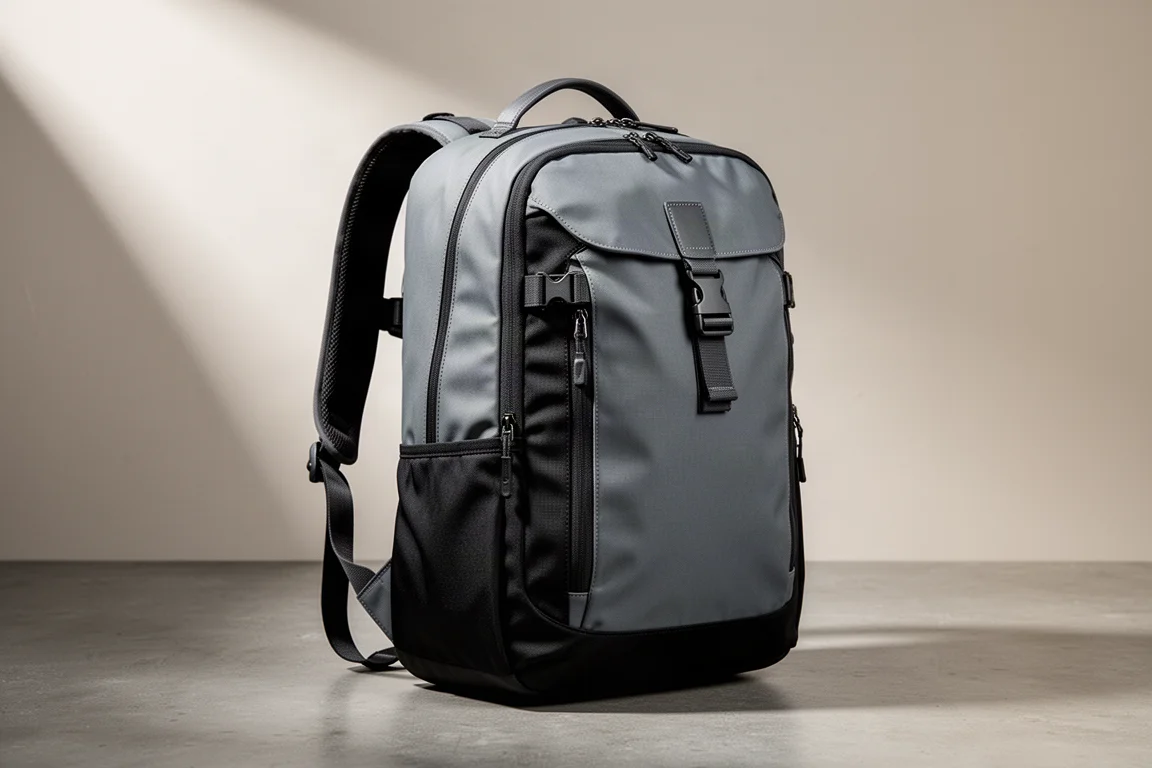
Western Rise is a company best known for travel clothing, particularly its pants, and the Voyager 35 is its move into travel bags. I spent a week with it as a carry-on on an Alaska Airlines flight to Las Vegas, packing it full with a week of clothes, toiletries, a water bottle, a thermos, charging cords, and two 15-inch Dell laptops. The short version: this is a large, easy-to-pack, genuinely comfortable travel backpack with a few design decisions worth scrutinizing before you buy.
First Impressions
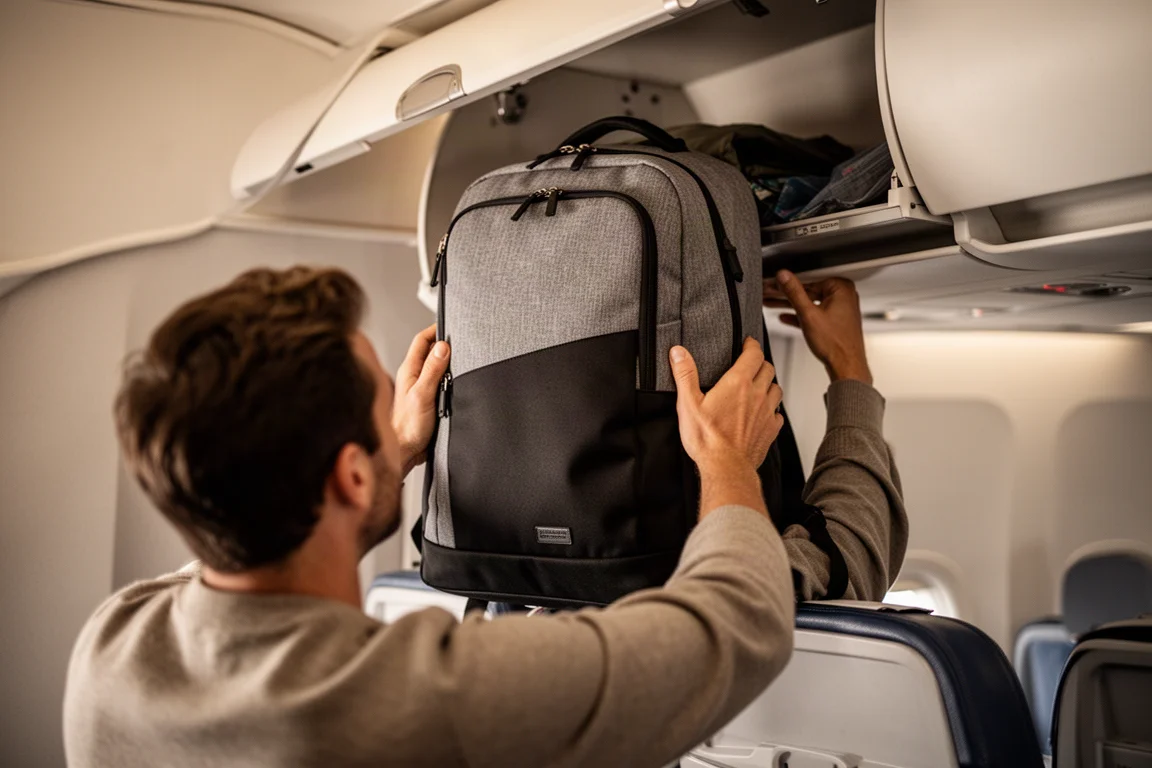
The Voyager 35’s dimensions of 22 x 14 x 9.5 inches are more commonly seen on larger 40 to 45 liter travel backpacks, which made me curious about how it would measure up in practice. In real-world testing, it fit fine in several airport sizers and slid into the overhead bin without issue. It is, however, too large to work as a personal item, so under-seat stowage is not realistic.
A packing-peanut capacity test suggested the bag actually holds a bit more than the listed 35 liters, closer to around 40 liters, and the depth feels closer to 10 inches than the listed 9.5. If Western Rise revised its published capacity upward, it would be more honest about what you are getting.
Materials and Build Quality
The fabric choices here are strong. The main body uses a 420D ballistic nylon with a smaller weave that feels very durable, backed with a DWR water-resistant coating on the front, sides, and back panel. The lower portion pairs a thicker 630D nylon with a polyurethane “carbonate” coating that improves water resistance and durability without making the fabric feel stiff.
All main exterior pockets, the main compartment, laptop compartment, and side water bottle pockets use midsize YKK AquaGuard zippers, keeping the water-resistant story consistent. Magnetic buckles appear throughout, which works brilliantly on the sternum strap: secure, easy to adjust, easy to take on and off.
External Organization
External storage includes a shoe compartment, two side pockets, and a top slash pocket, but most of the small-gear organization lives inside the main and laptop compartments. The top slash pocket is wide but skinny, sitting between the laptop sleeve and back padding, so it lacks volume but comfortably holds keys, sunglasses, a key leash, and charger cords.
Two of the most interesting pockets are hybrids: they open from inside the bag or from the top when the bag stands upright. The front panel pocket is large with its own volume, working as a packing cube from the inside or quick-access gear storage from the outside. The only friction is that you need to open two zippers to reach it.
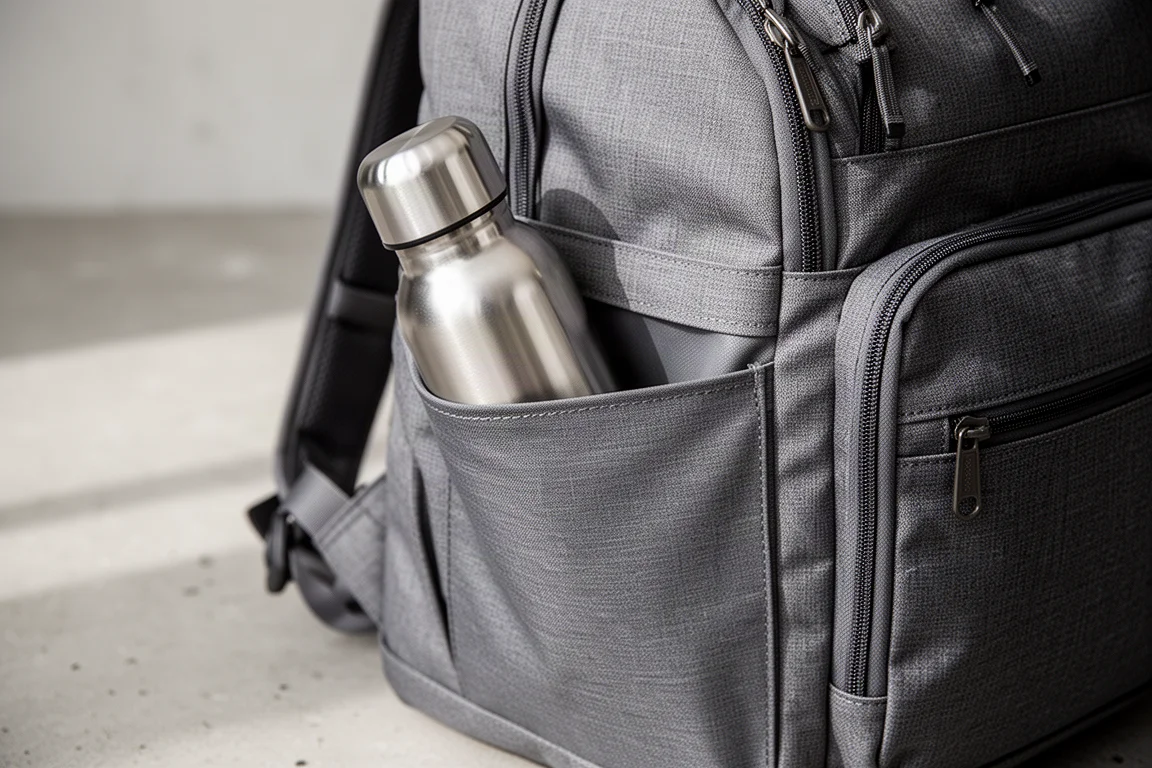
The side water bottle pocket keeps the outside of the bag flat by routing its volume into the main compartment rather than popping outward. That means it fits in sizer boxes easily and holds essentially any bottle size, but it competes with main-compartment space. The shoe compartment uses a similar philosophy with a waterproof liner and a large fabric flap: pack shoes and it bulges gently into the main compartment, or let the flap lay flat and it takes up no space if unused. The laptop compartment is the standout: a padded magnetic-flap sleeve swallowed a 15-inch Dell easily, with stretchy side expansion that can take up to an 18-inch laptop, plus a smaller padded tablet sleeve, a gear zipper pocket, and a giant, less-padded pocket that fits a second laptop all the way to the bottom. Just be careful setting the bag down, as that second pocket lacks a false bottom.
Interior Layout and Pockets
The lid opens panel-style into a large, easy-to-pack main compartment that is refreshingly empty: no dividers, no extra pockets, just a big open space. On the lid side are two medium zipper pockets, both with their own volume, usable for socks and underwear or as packing cubes for gear you want to reach from outside a fully packed bag.
How you pack depends heavily on what goes in those external pockets. Large shoes in the shoe compartment will likely mean dropping from two full-size packing cubes to one.
Packing the Main Compartment
Packing cubes are clearly the intended system here, and the geometry is predictable. Two medium 10 x 7 compression cubes fit almost perfectly in the main compartment, and if you leave the shoe compartment empty you can still squeeze a small pouch or toiletry bag on top. Swap in a thicker clean/dirty cube and you lose a bit of room, though a light jacket still fits above two larger cubes.
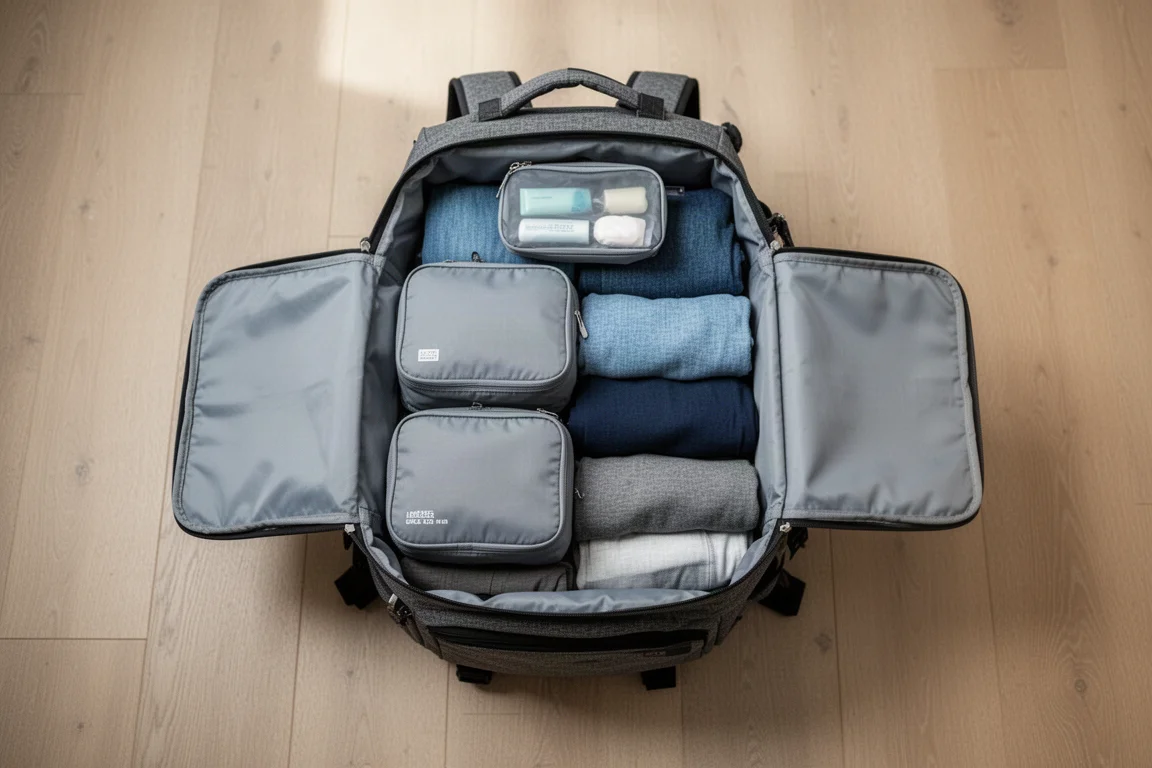
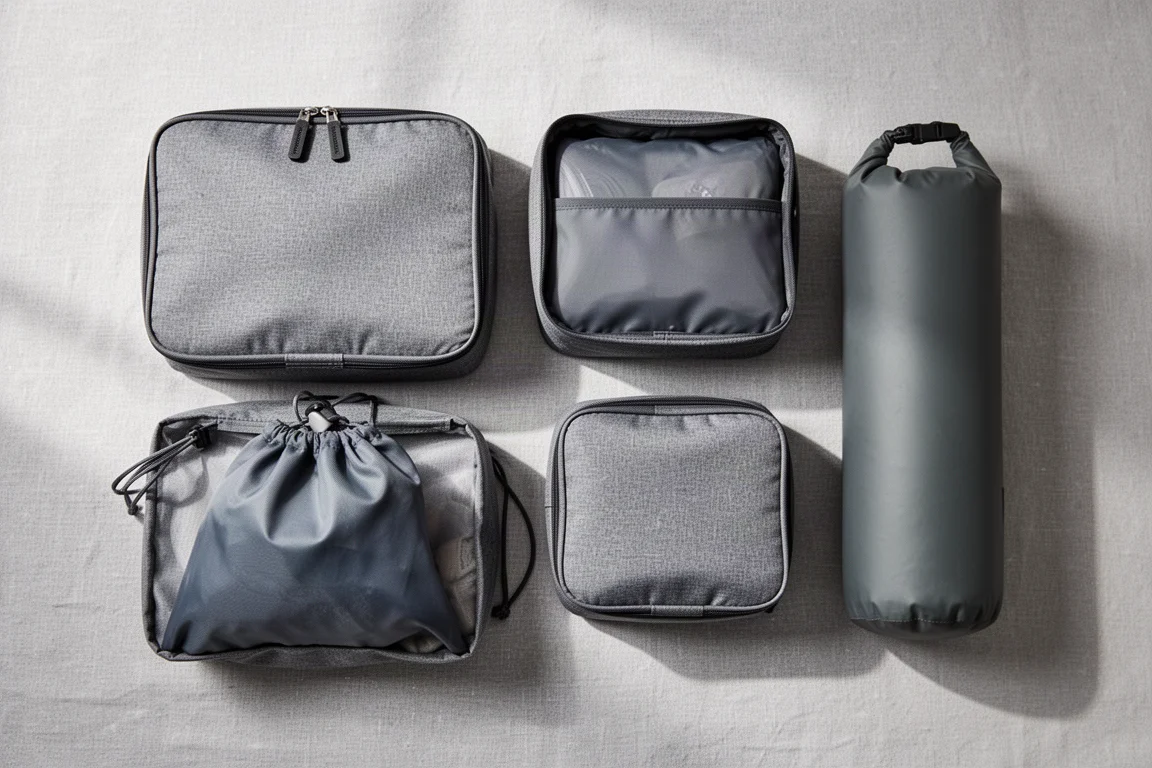
For the cleanest fit across any combination of shoe and bottle usage, the Western Rise packing set is the obvious companion. It includes four cubes in medium and small sizes, a clean/dirty cube, a shoe bag, and a dry bag, covering essentially every configuration this bag supports.
Smaller Sizes and the Voyager Pro
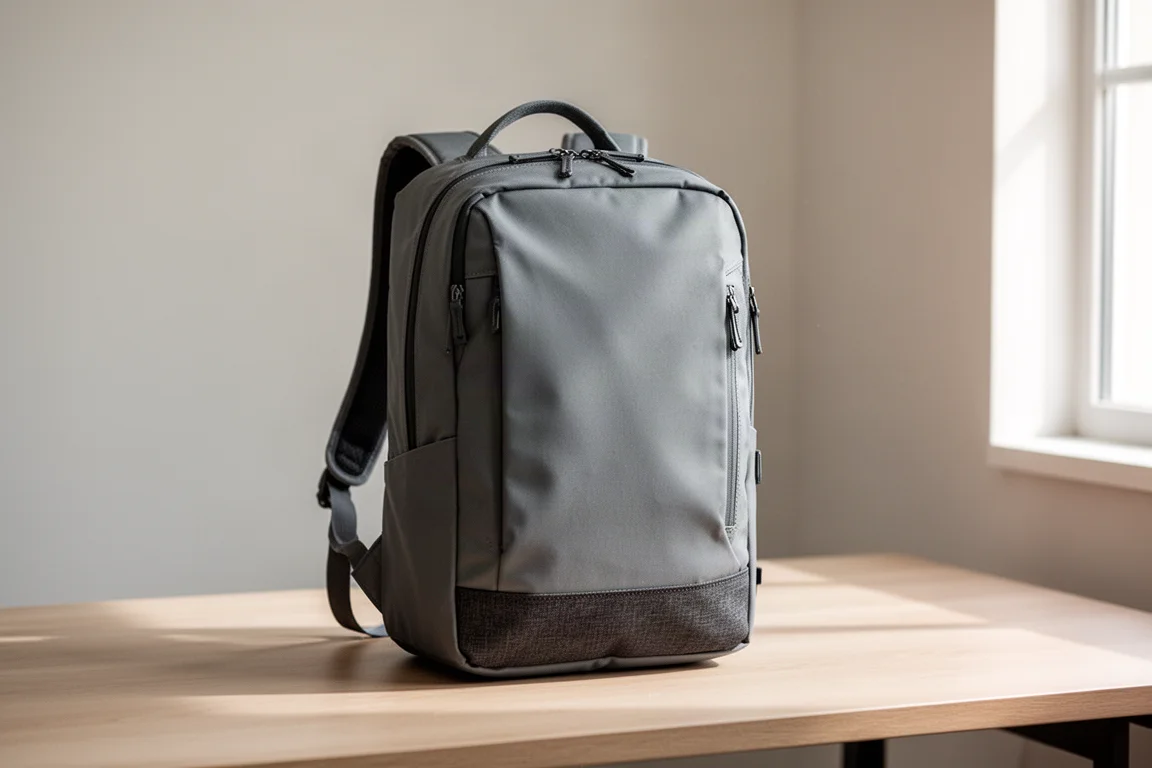
If 35 liters is more bag than you need, Western Rise makes a smaller 25-liter version called the Voyager Pro. It shares the same design language and two-tone fabric approach in a more compact footprint, aimed at lighter packers or shorter trips where the 35’s generous dimensions would be overkill.
Carry Comfort and Straps
The carry system is where the Voyager 35 quietly wins. The foam in the shoulder pads and back padding is soft but medium-firm, hugging the back well, and the bag carried surprisingly comfortably even loaded heavier than I usually carry. Ventilation channels on the back panel help, the sternum strap adjusts easily with its hidden magnetic buckle, and the included hip belt is basic but functional with magnetic clasps neatly tucked behind fabric flaps so nothing pokes you when not in use.
Other travel-friendly touches include shoulder straps that tuck behind the back padding and a luggage pass-through sleeve for rolling luggage. The thin top carry handle looked underbuilt at first, but with a fully loaded bag including two laptops it held up without any problems.
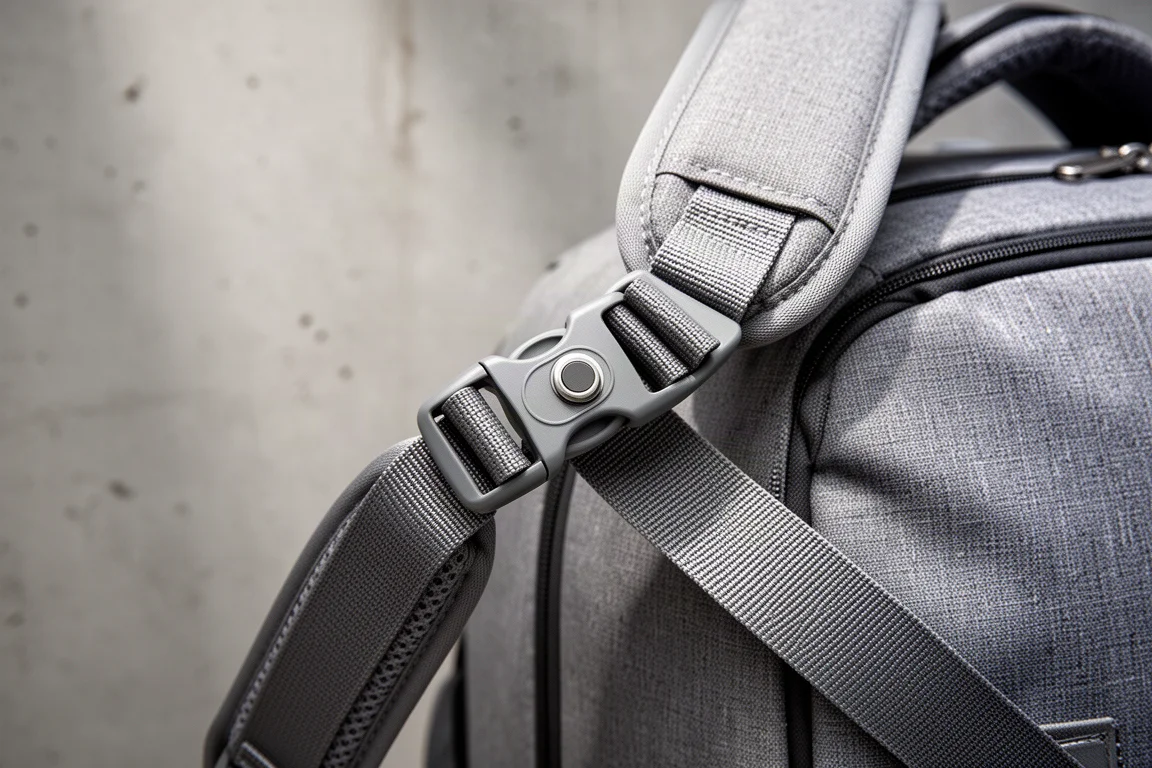
The one real flaw is the shoulder strap attachment itself. Western Rise used a small magnetic clasp buckle, the same size as the sternum strap’s, and the magnet pops open too easily. It unclasped accidentally twice, both times while pulling the bag out of the overhead bin. A critical attachment point like this deserves either a larger magnetic clasp or a sewn-in connection.
Buying Advice
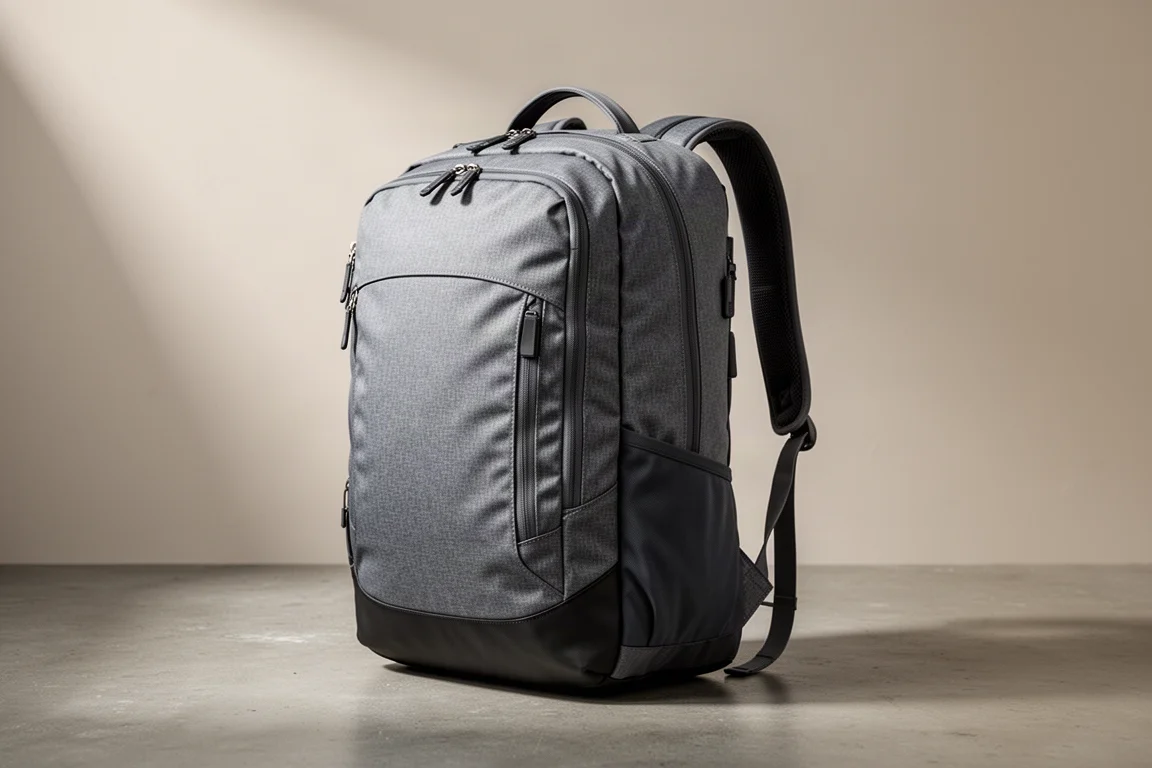
Buy the Voyager 35 if you want a maximum-sized carry-on backpack that packs like a suitcase, protects laptops exceptionally well, and carries comfortably even when heavy. The hybrid pocket design and shoe compartment add real packing flexibility that most travel packs do not offer. If you travel lighter or shorter, the Voyager Pro’s 25 liters is the better match, and either way the Western Rise packing set is worth adding for the best fit. The shoulder strap buckle is the one thing I would want addressed in a future revision before calling this design flawless.
Conclusion
The Western Rise Voyager 35 gets almost everything right: excellent materials, smart pocket flexibility, a cavernous laptop compartment, and a carry system that punches well above expectations. The overstated capacity label and the weak shoulder strap magnetic attachment are the two things standing between a good travel pack and a great one. For carry-on travelers who pack with cubes and value comfort under load, it remains an easy recommendation.
Further reading
Related Reviews
Travel Backpacks
Outdoor Vitals Dakota UL Review: One 45L Pack for Travel and Backpacking
A practical look at the Outdoor Vitals Dakota UL, a 45 liter pack that opens like luggage, carries a laptop, and converts for trail use with a removable frame and detachable hip belt.
Travel Backpacks
Outdoor Vitals Koda UL Review: One Bag From Terminal to Trail
A hybrid travel and backpacking pack with a sleek carry-on shape and a frame tuned for all-day comfort under a real multi-day load.
Travel Backpacks
Outdoor Vitals Kota UL Review: One Pack for Flights, Cars, and Backcountry Camps
A close look at the Outdoor Vitals Kota UL, a travel-first backpack designed to stay comfortable under backpacking loads and still slide into an overhead bin.