Ladder Accessories
Werner Leg Leveler Kit Review: A Practical Extension Ladder Safety Upgrade
An adjustable leg leveler for extension ladders that handles uneven ground, plus two more budget-friendly ladder upgrades worth knowing about.
Introduction
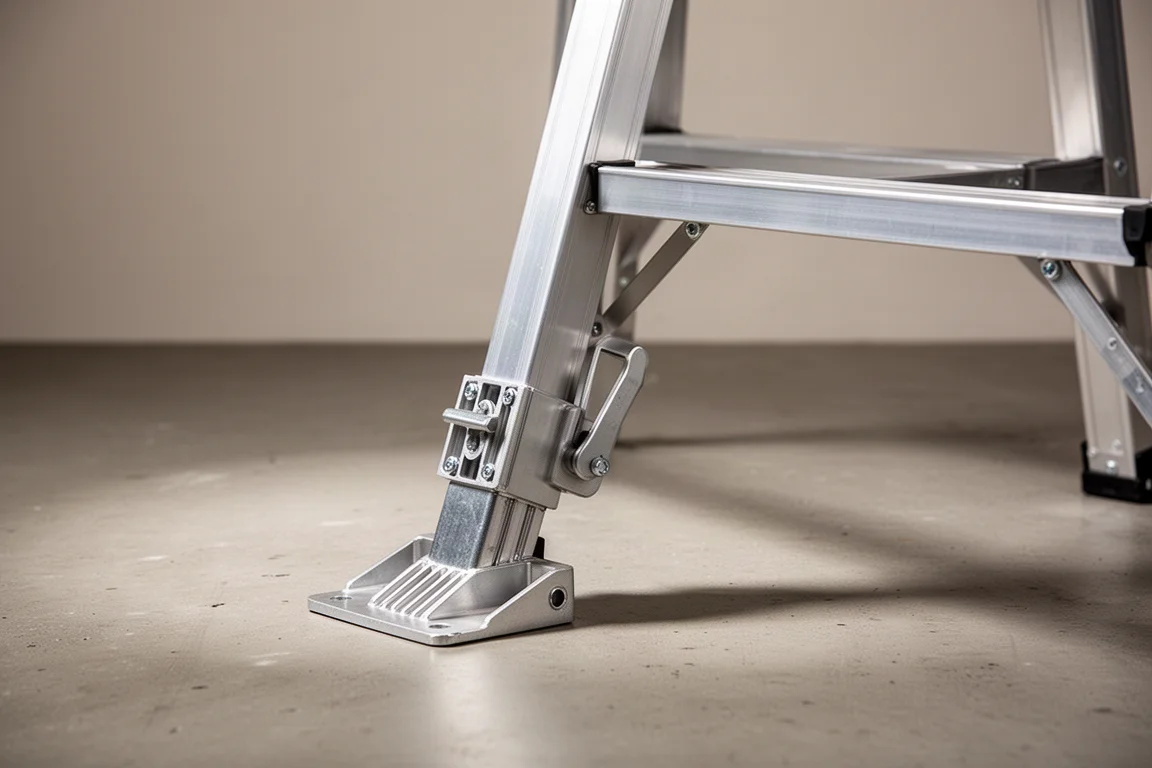
Ladders are one of the most dangerous tools on any job site or around the home, and the ground under your extension ladder is often the weak link. If the surface is not level, every setup becomes a compromise between digging holes, shimming with plywood, or simply hoping for the best. The Werner leg leveler kit is an aftermarket fix that addresses exactly that problem, and at around 54 dollars it is a modest investment against the alternative.
Why Uneven Ground Is the Real Problem
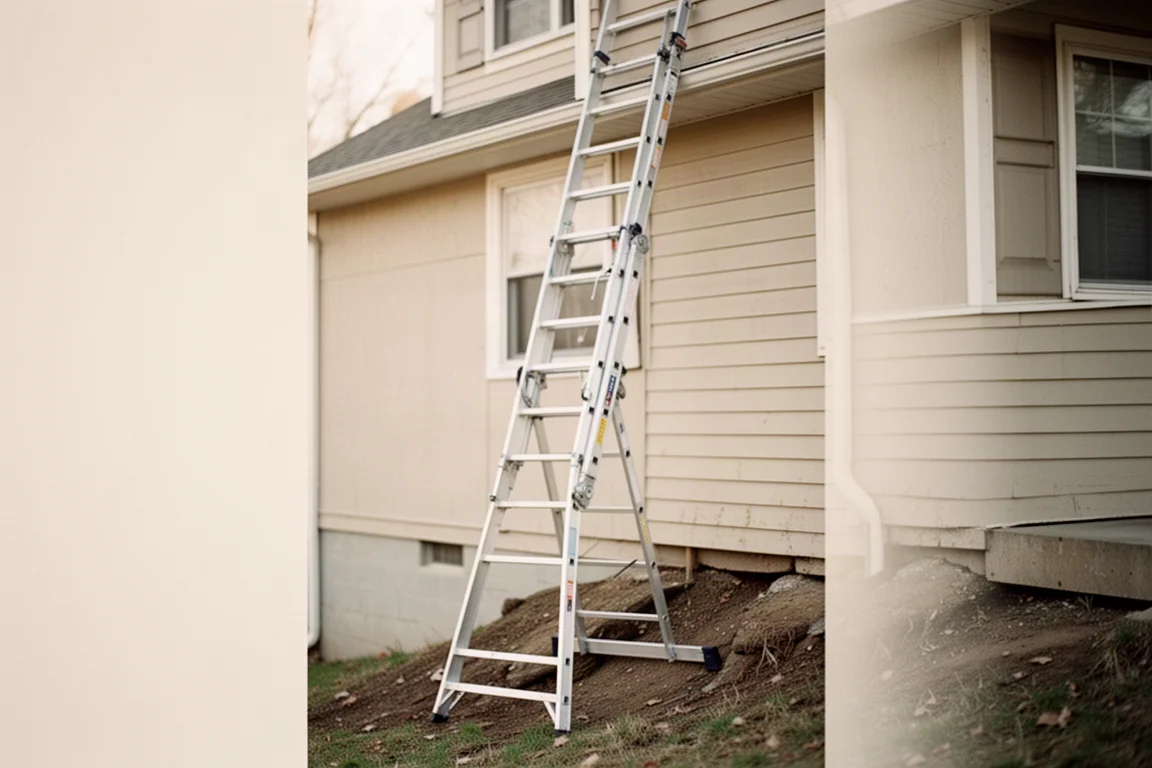
An extension ladder on sloped or uneven ground is unstable by definition, and improvising with scrap boards or dug-out soil only adds risk. The board-as-shim trick, for example, is genuinely unsafe on smooth concrete because the wood loves to slip. A proper leg leveler removes that guesswork: the ladder stands solid even when one side sits lower than the other.
Installation: Intuitive but Not Instant
The kit includes two attachment points, one for the left rail and one for the right, plus a single leveling device that can be swapped between them. That is the clever part of Werner’s approach: you do not need two full leveler units, just one that moves from side to side as needed. Assembly involves a few drops of super glue on the spacers (glued to the device, not the ladder), big square washers, a fender washer and a nut, and an included Allen wrench plus a 13mm socket that fits a drill motor.
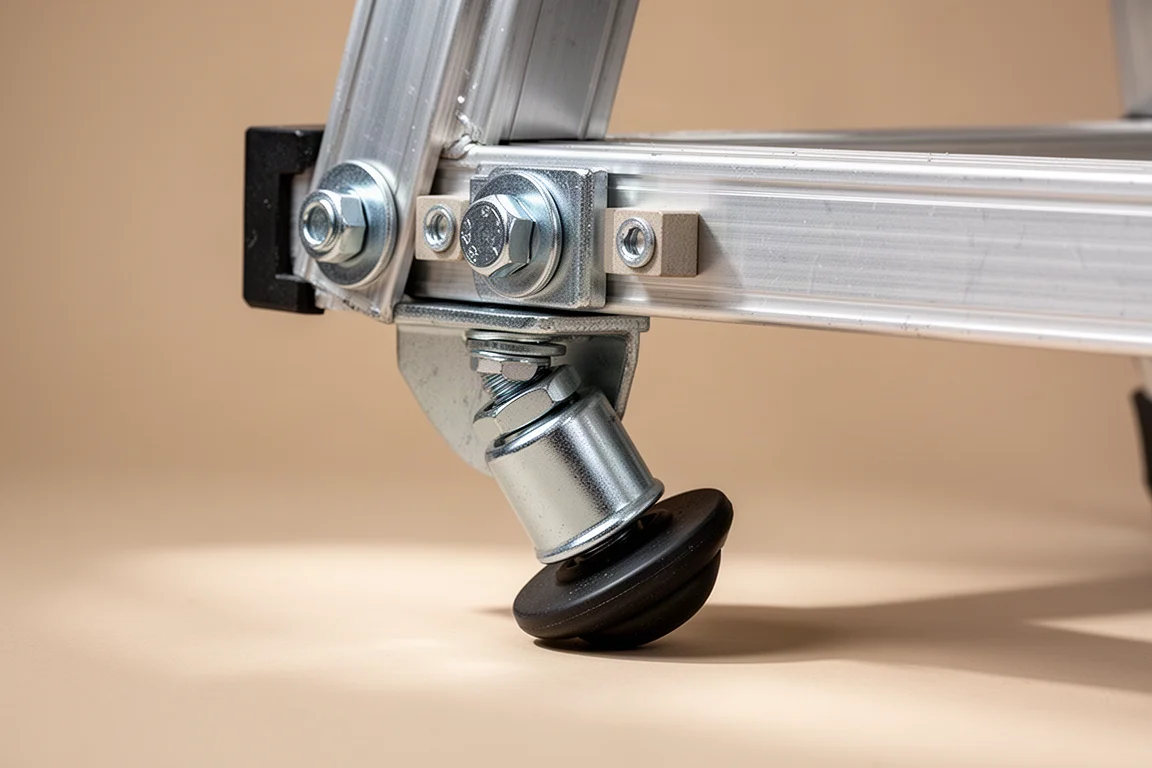
Expect some fiddling. On an extruded aluminum ladder, both spacers need to be in place so the keeper can clear the edges, and the center rib makes starting a center punch awkward. It is not rocket science, but it took longer than strictly necessary. Once installed, everything has proper clearance with the factory foot engaged, which matters because on level ground you simply do not need the leveler at all.
How It Works in Use
In practice, the leveler releases when you take the load off the ladder, which lets you manipulate it with your foot or thumb. With roughly an inch and a half of discrepancy mocked up under one side, the foot dropped into place, took the load, and locked solid. Swapping to the other side is just as simple: lift the ladder, pull the leveler out, hit the release, and it rolls around to the opposite rail.
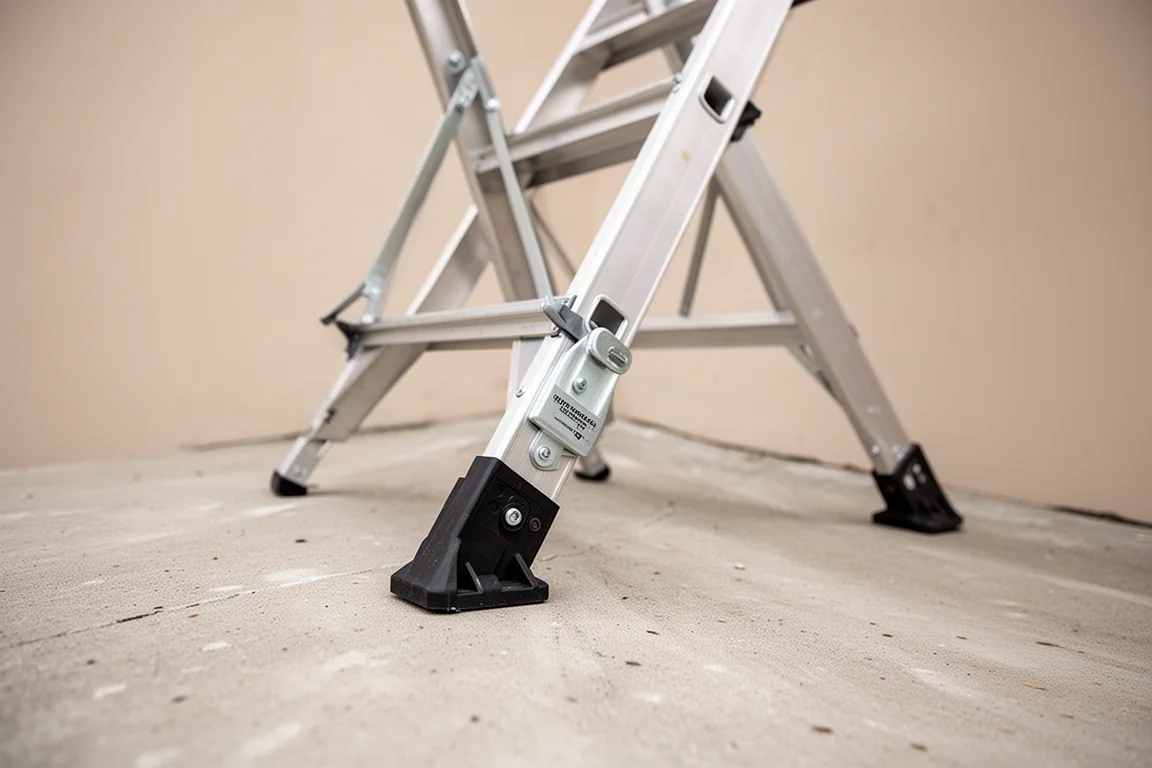
The whole unit is light enough to store in a shop or toolbox and break out only when needed. There is even a nail hole in the base if you want to anchor the bottom of the ladder, which is never the wrong thing to do. As with any ladder setup, the classic angle check still applies: stand with your toes against the rails, stick your arms out, and if that position feels comfortable, your angle is roughly safe.
Two More Ladder Upgrades Worth Considering
If you want to go further, two more inexpensive additions rounded out this ladder upgrade. A ladder stabilizer that mounts to the top of the ladder, around 78 dollars, increases the contact area, reduces tipping, adds friction, and lets you span a window to wash it or paint behind the ladder. It adds roughly two pounds up top, which you can feel but which is entirely manageable. There is an ongoing debate about grabbing rails versus rungs while climbing; the honest answer is to do what makes you feel safest.
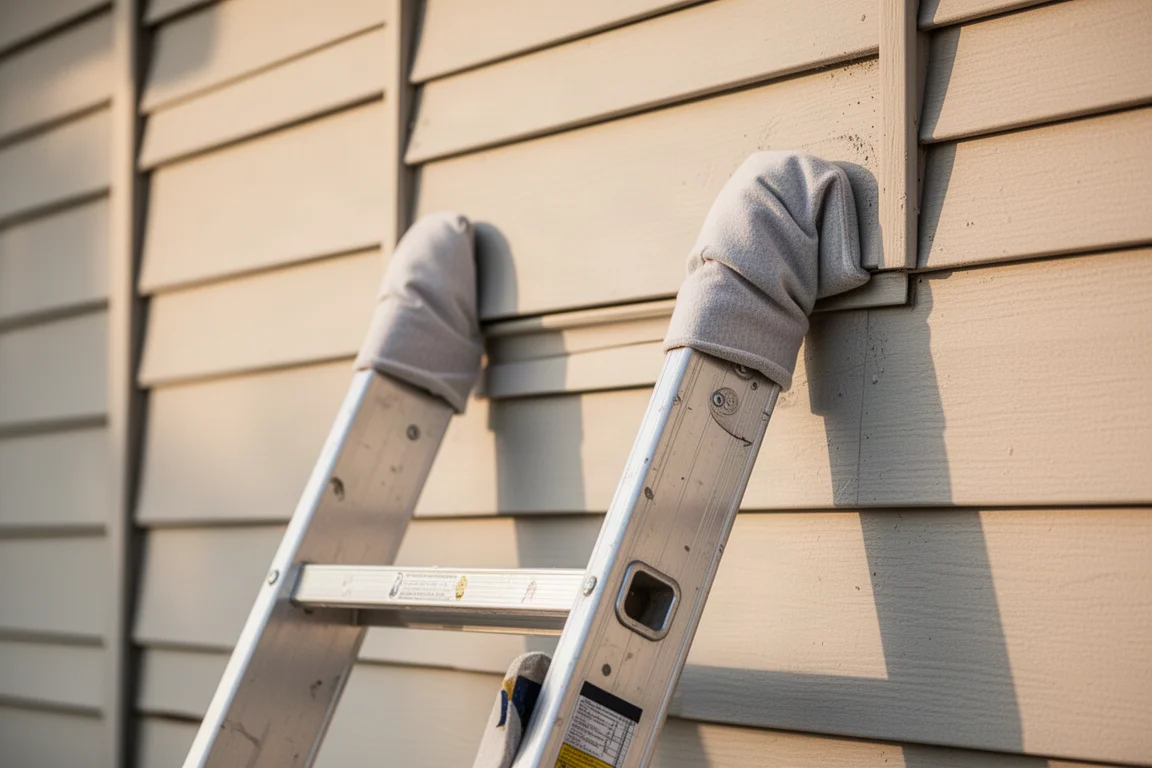
Then there are the simple rubber “mittens” for the rail ends, around eight dollars. Their biggest job is protecting your siding from scars when the ladder bumps the wall, and they also increase friction and reduce side-to-side sliding. None of this replaces a spotter or tying the ladder off, but the whole package, around 130 dollars combined, is still far cheaper than a trip to the emergency room.
Buying Advice
The Werner leg leveler kit makes sense for anyone who regularly sets up an extension ladder on uneven ground: painters, DIY homeowners, and anyone doing seasonal maintenance. Installation rewards patience, and the swap-between-sides design keeps cost and weight down. Pair it with a top stabilizer and rail covers if you work against finished siding often.
Conclusion
Ladder safety is mostly about removing the conditions that cause falls in the first place. A leg leveler, a stabilizer, and a pair of rail covers will not make a ladder foolproof, but they get you meaningfully closer to a safe setup for about the cost of a nice dinner. For around 54 dollars, the Werner leg leveler kit is an easy recommendation.
Product link
View more details for Werner Leg Leveler Kit
This product is mentioned in the review. Check the specifications, options, and compatibility before buying.
View more details for Werner Leg Leveler Kit