Hand Tools
Wera 418 A Ratcheting Bit Driver and 8506 PH2 Bit: A Compact T-Handle Combo Worth a Look
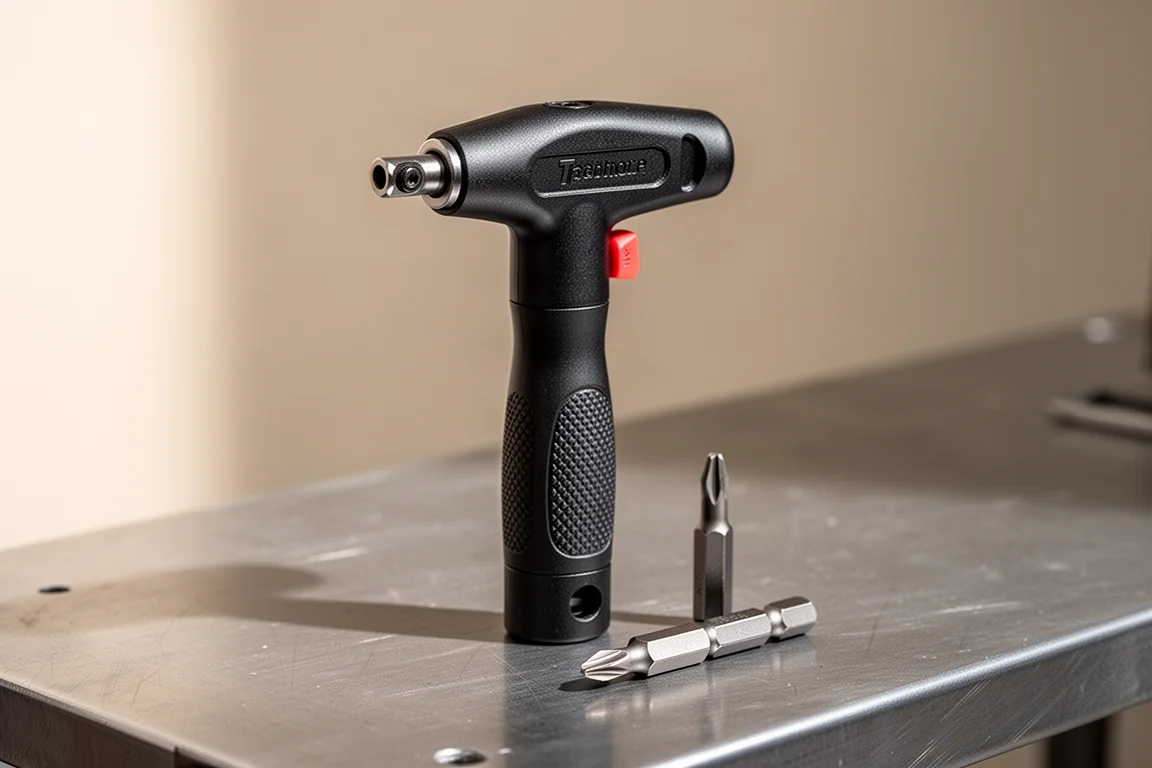
A quarter-inch ratcheting T-handle with a socket release mechanism, paired with a dedicated titanium-coated PH2 bit, makes a slim and capable everyday driver.
Introduction
Every once in a while a tool comes along that quietly fixes an everyday annoyance. The Wera 418 A is a quarter-inch ratcheting bit driver shaped as a T-handle, and it was picked up during Black Friday sales after sitting on a wishlist for a while. It pairs naturally with the Wera 8506 PH2, a dedicated titanium-coated number two Phillips bit made in Germany. Together they cover most daily driving tasks in a package slim enough to live in a tool bag or EDC kit.
Why a T-Handle Ratchet Works So Well
T-handles are known for providing tremendous leverage, and the reasoning is simple. A conventional round screwdriver handle offers almost nothing to grab onto, and it is nearly too small to develop serious purchase. A T-handle gives you a leverage plane above and below the center point, and those forces add up, making it easier to hold onto the tool while rotating it without constant hand adjustment.
The other advantage is the ratcheting mechanism itself. With a non-ratcheting T-handle, each stroke requires a complete release and reposition. With a ratchet, you can dig in with as many fingers as you like and keep working in tight strokes. The tooth count here works out to about 80 teeth, which means a swing arc of roughly four and a half degrees. In cramped spaces, that fine arc makes a real difference.
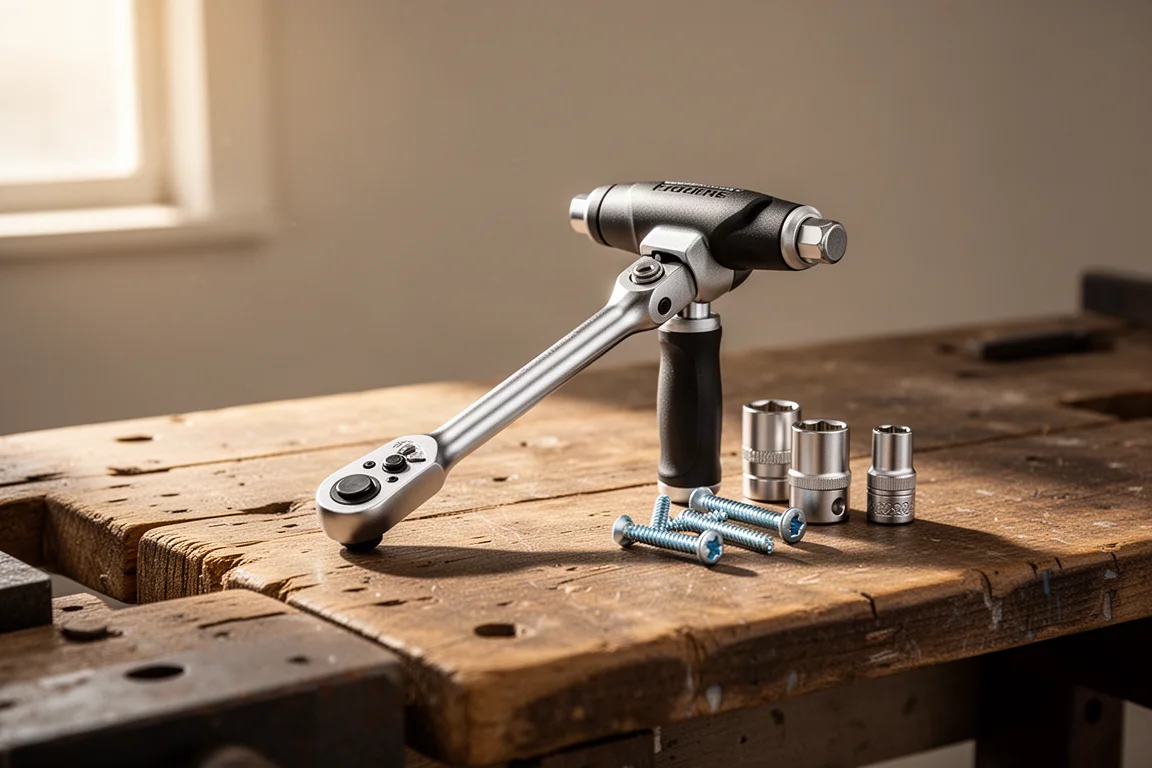
Socket Retention and the Release Button
The head includes a spring-loaded release mechanism that holds sockets on until you are ready to let them go. Press the button and the retaining ball drops, letting the socket fall off cleanly. It is a smooth, satisfying action and one of the main reasons to run sockets on a T-handle in the first place.
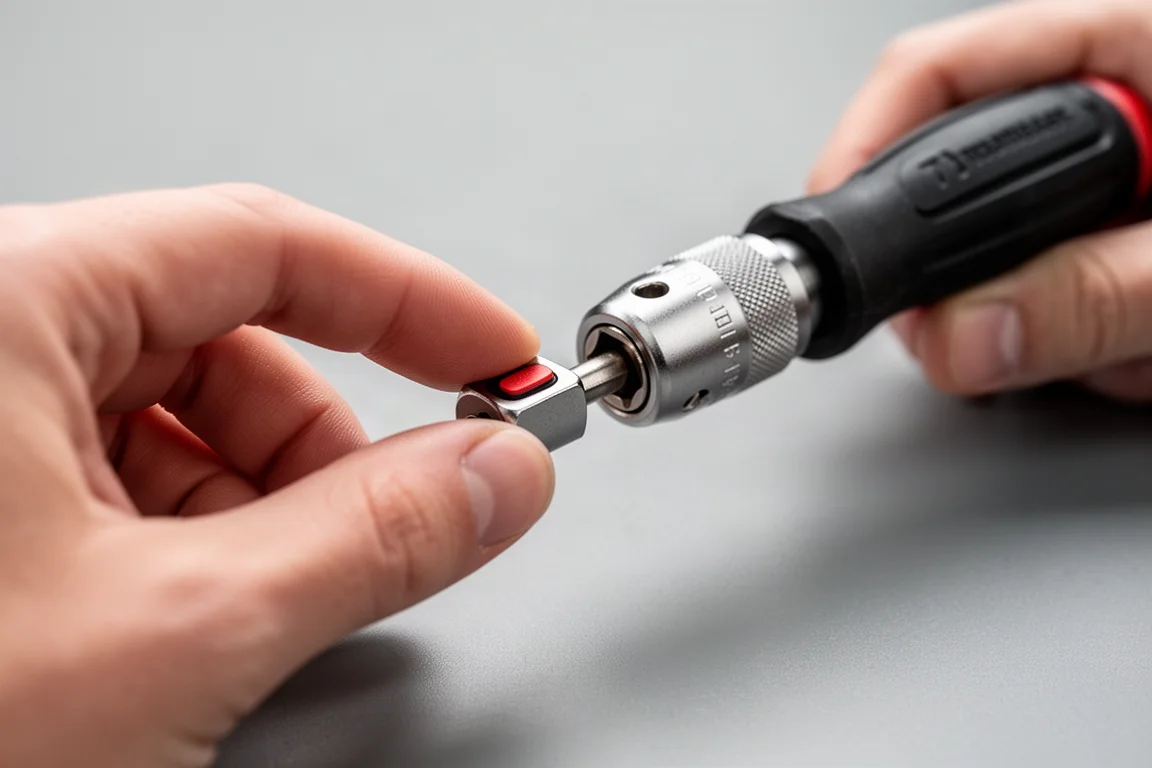
One quirk is worth knowing before buying: the button does not sit very deep. If you grip the head hard, the skin of your palm can press the button enough to pop the socket off. It is not a dealbreaker, but a slightly deeper recess would make the retention feel more secure.
Reversing Direction Without Changing Grip
The ratchet is fully reversible via a small lever on the head. Flip it from one direction to the other and you can keep the tool in the same hand position the whole time. That sounds minor until you are working around ski bindings, brackets, or any fastener run where you alternate between driving and removing. No re-gripping, no re-seating, just click the lever and keep going.
The 8506 PH2 Bit: A Dedicated Daily Driver
Wera also makes a version of the 418 A with a quarter-inch hex bit already built in, but that capability is easy to replicate when needed: drop a socket or bit adapter on and you have all the same coverage. Most of the time, the only bit actually used is a number two Phillips, which is why a dedicated bit makes more sense.
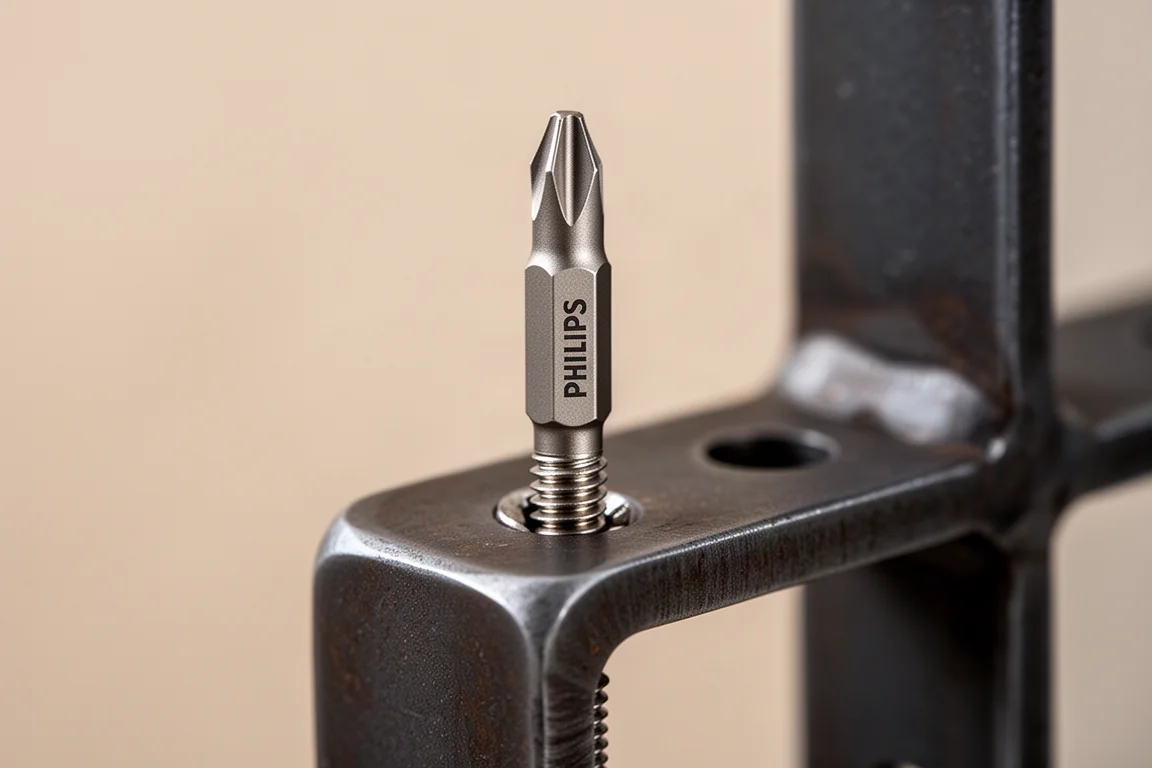
The 8506 is a titanium-coated quarter-inch square-to-PH2 bit, made in Germany, and it slots right onto the T-handle. For anyone working in the ski industry, a number three Pozidrive would be the other common case, since binding mount screws have standardized on that format, but for general use the PH2 covers the majority of everyday screwdriving.
Building an EDC Tool Kit Around It
The slim profile is a genuine selling point. The T-handle is barely wider than a conventional thick screwdriver grip, so it takes up almost the same space in a tool bag or EDC case while delivering far more leverage and ratcheting convenience. For anyone building out compact kits, this fits the brief almost perfectly.
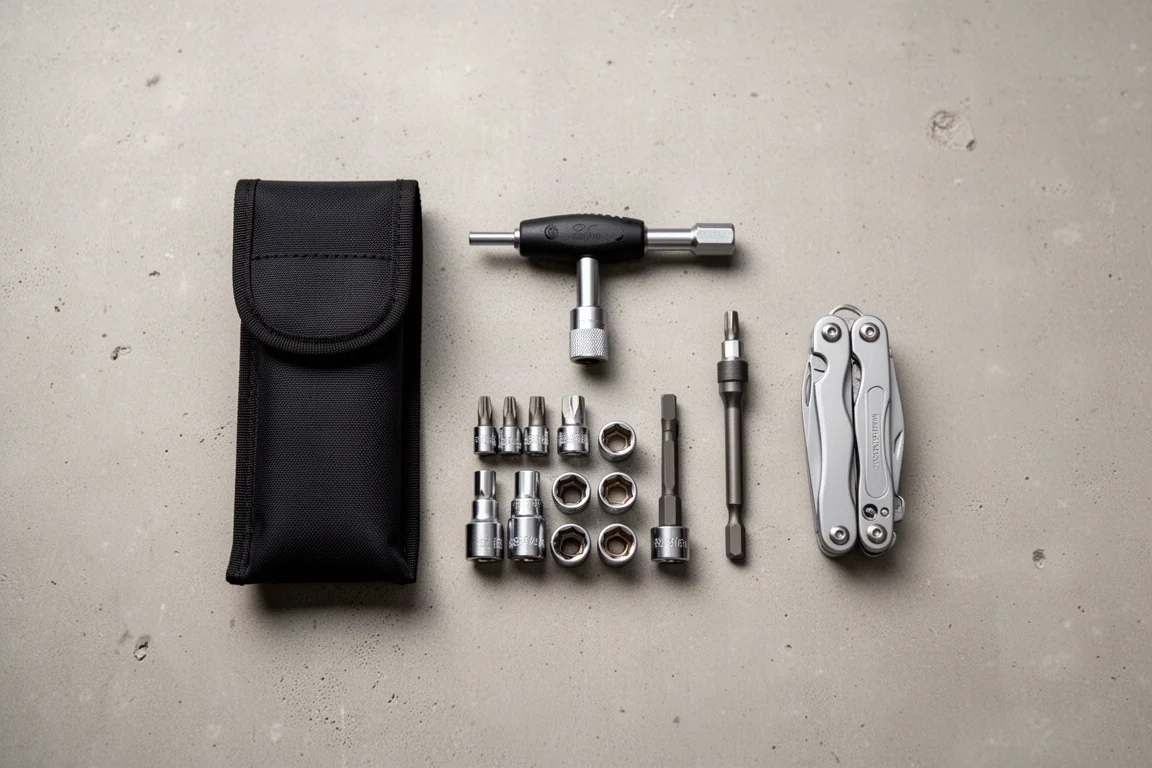
T-handles with sockets tend to get more use than T-handles with screwdriver bits, and that is exactly where this setup shines: the socket retention mechanism makes quick socket work effortless, while the dedicated PH2 bit handles the everyday screws. As a pairing, it covers the most common driving tasks without redundancy.
Conclusion
The Wera 418 A and 8506 PH2 make a smart, compact team: fine-tooth ratcheting, reversible action, socket release, and a dedicated bit for the screw you drive most often. The shallow release button is the only real quibble, and even that is minor. If you want a slim, high-leverage driver for a bag or EDC kit, this combination is easy to recommend.
Product link
View more details for Wera 418 A Ratcheting Bit Driver
This product is mentioned in the review. Check the specifications, options, and compatibility before buying.
View more details for Wera 418 A Ratcheting Bit DriverFurther reading
Related Reviews
Hand Tools
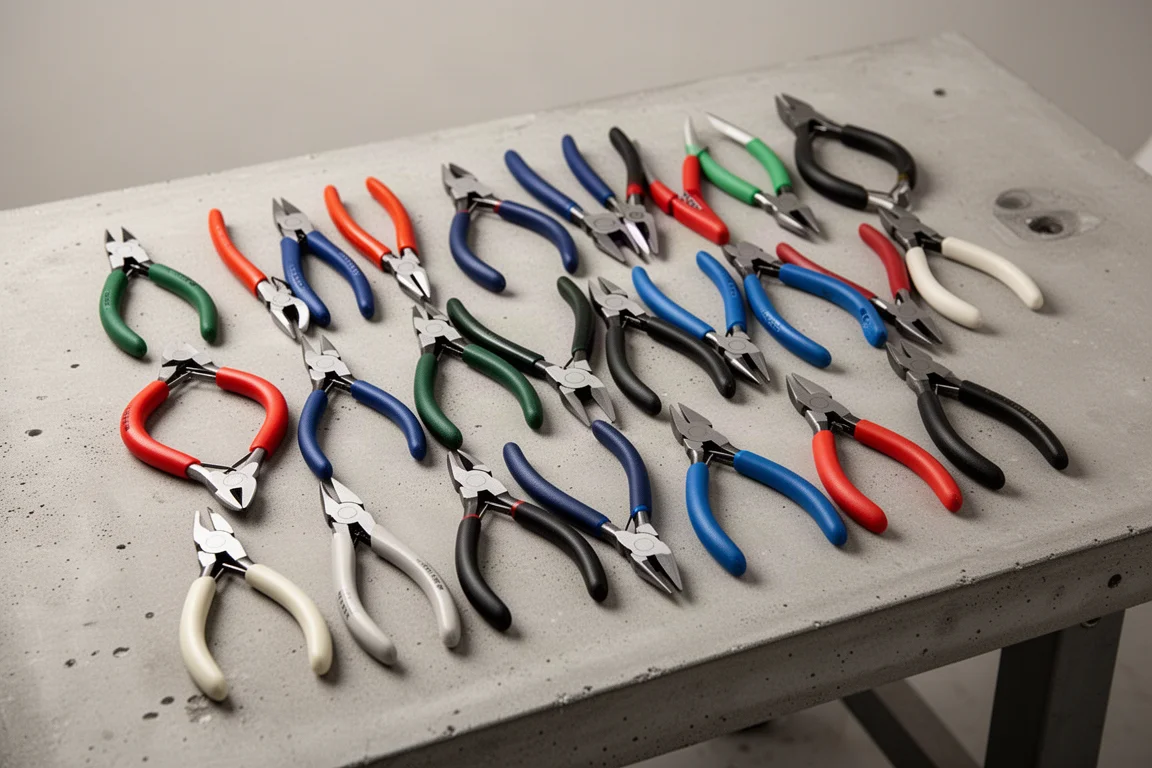
Best Diagonal Cutters 2026: 16 Pliers Tested for Cutting Power and Durability
We put 16 diagonal cutters through nail, screw, drill bit, and hex key tests to find the best value picks for your toolbox.
Hand Tools
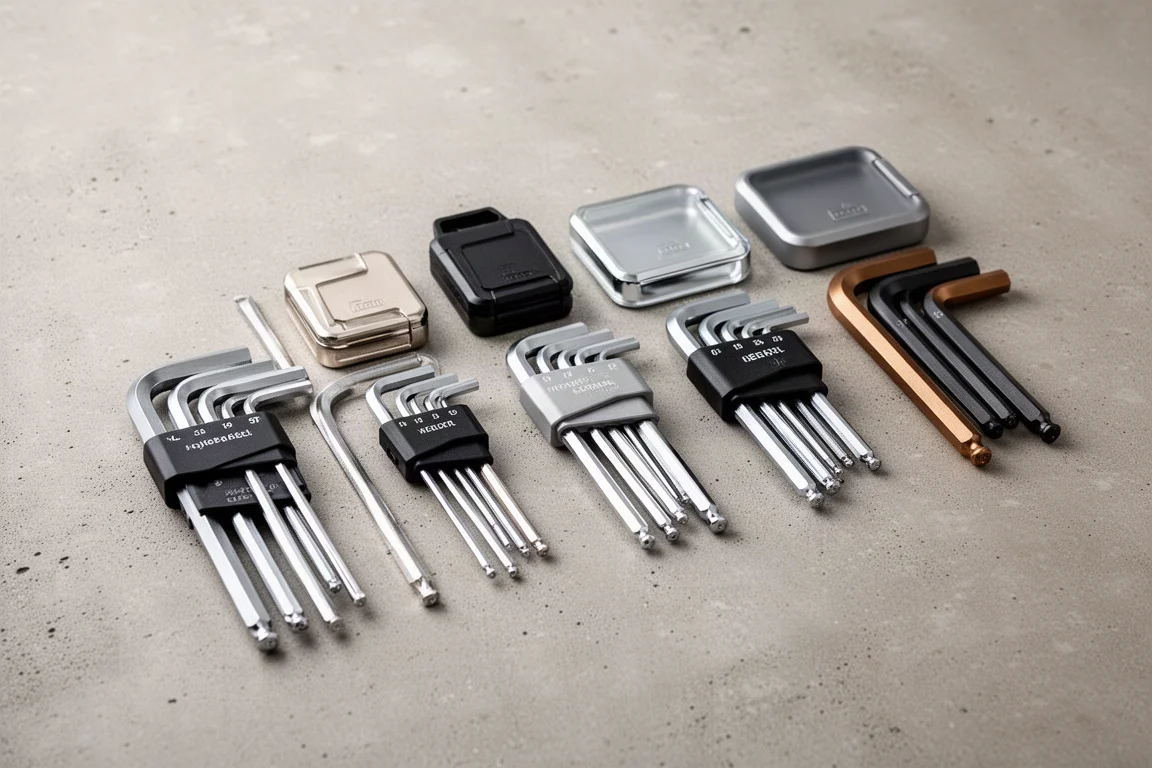
Best Hex L Key Sets 2026: Nine Sets Tested for Real-World Torque
Nine hex L key sets from budget to premium, tested for torque, fit, and durability. See which sets deliver real performance and which ones to skip.
Hand Tools
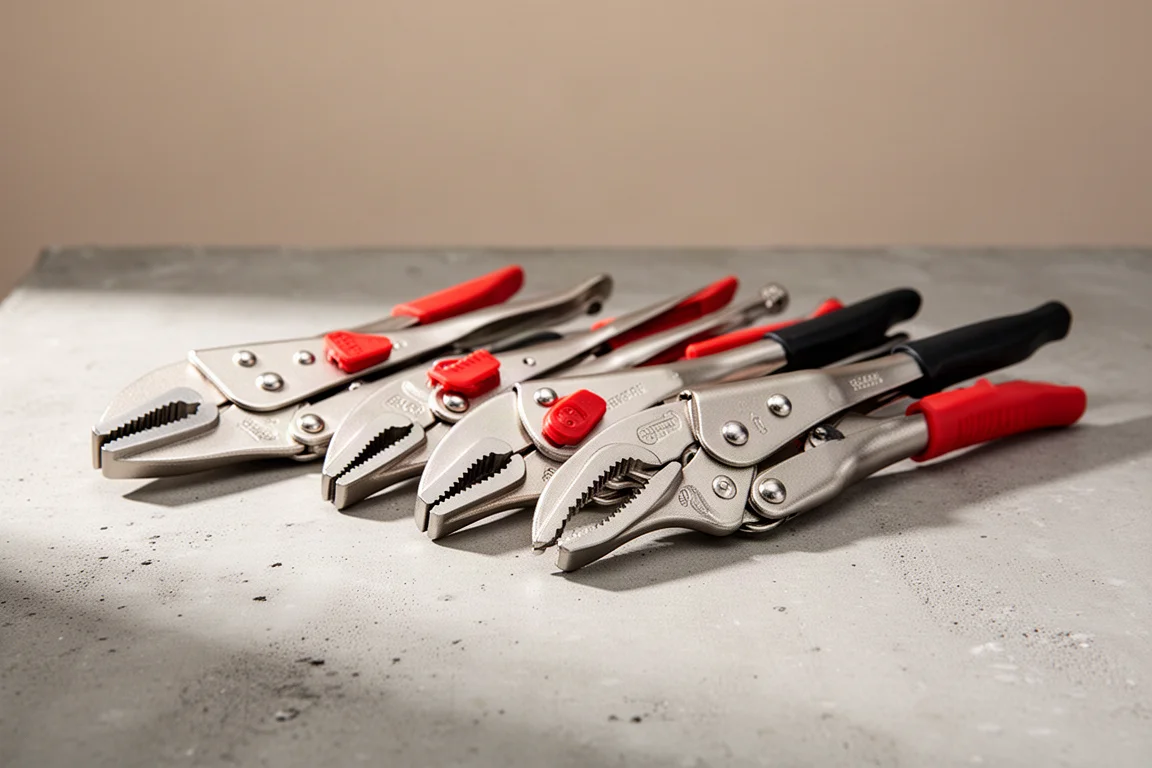
Best Locking Pliers 2026: Top Picks Tested for Grip and Durability
We tested 18 brands of 10-inch locking pliers for grip strength, jaw bite, build quality, and ease of release to find the best options for tough jobs.