Rifle Reviews
Weatherby 307 vs Mark Five: Which Rifle Fits Your Hunting Style?
A practical comparison of two Weatherby rifles with different actions, weights, and customization potential.
Introduction
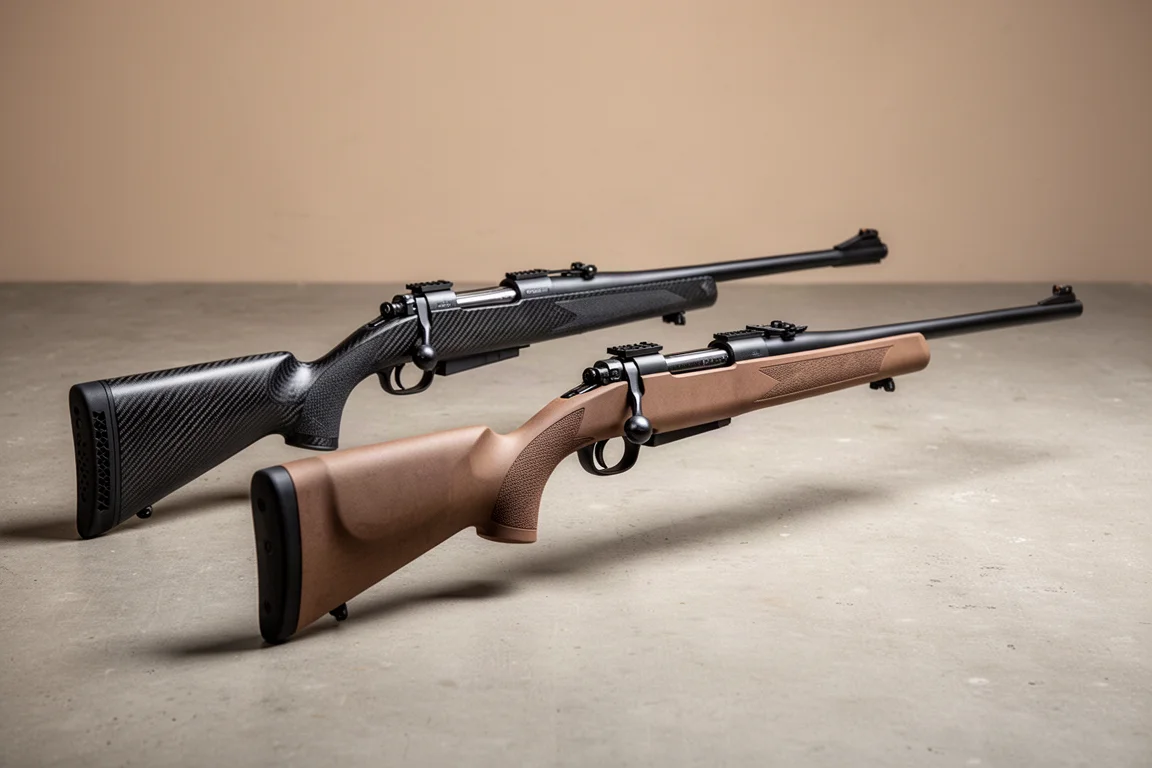
Weatherby has built its reputation on the Mark Five action, a design that has been around since the company started making rifles. But the newer Weatherby 307 takes a different approach, borrowing the familiar Remington 700 pattern to offer something more customizable. These two rifles serve different purposes, and understanding those differences is the key to choosing the right one.
The Two Rifles at a Glance
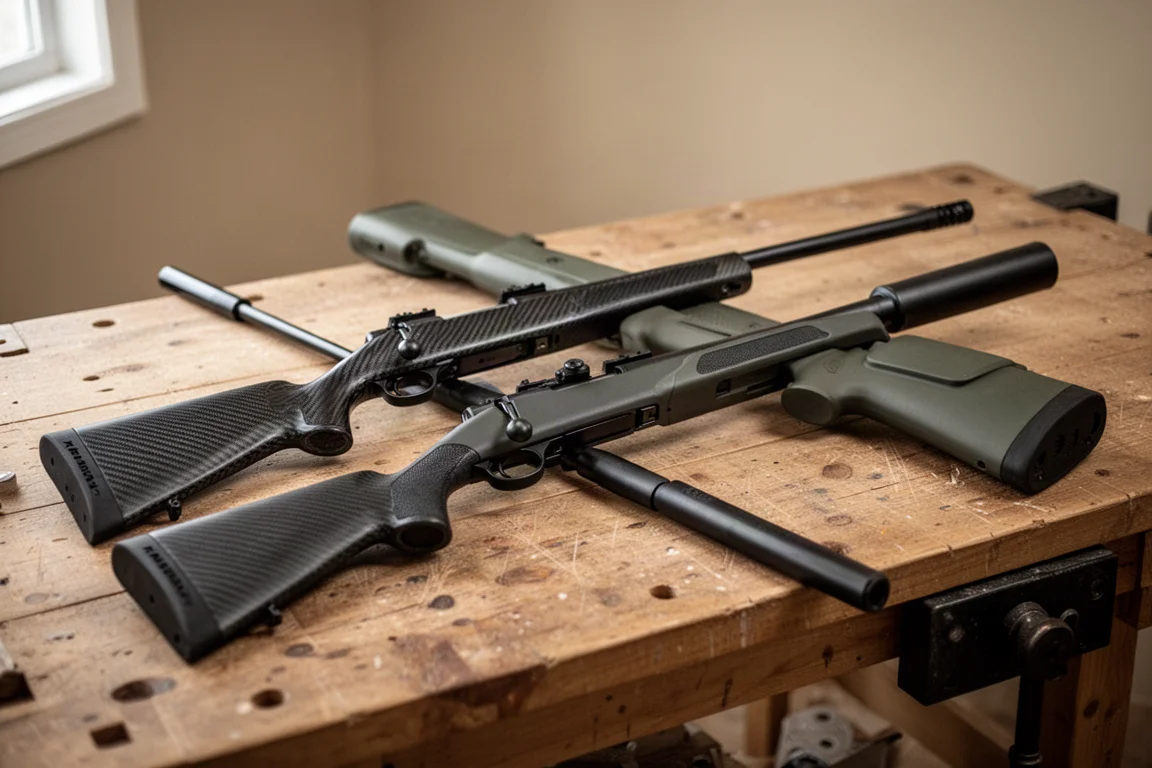
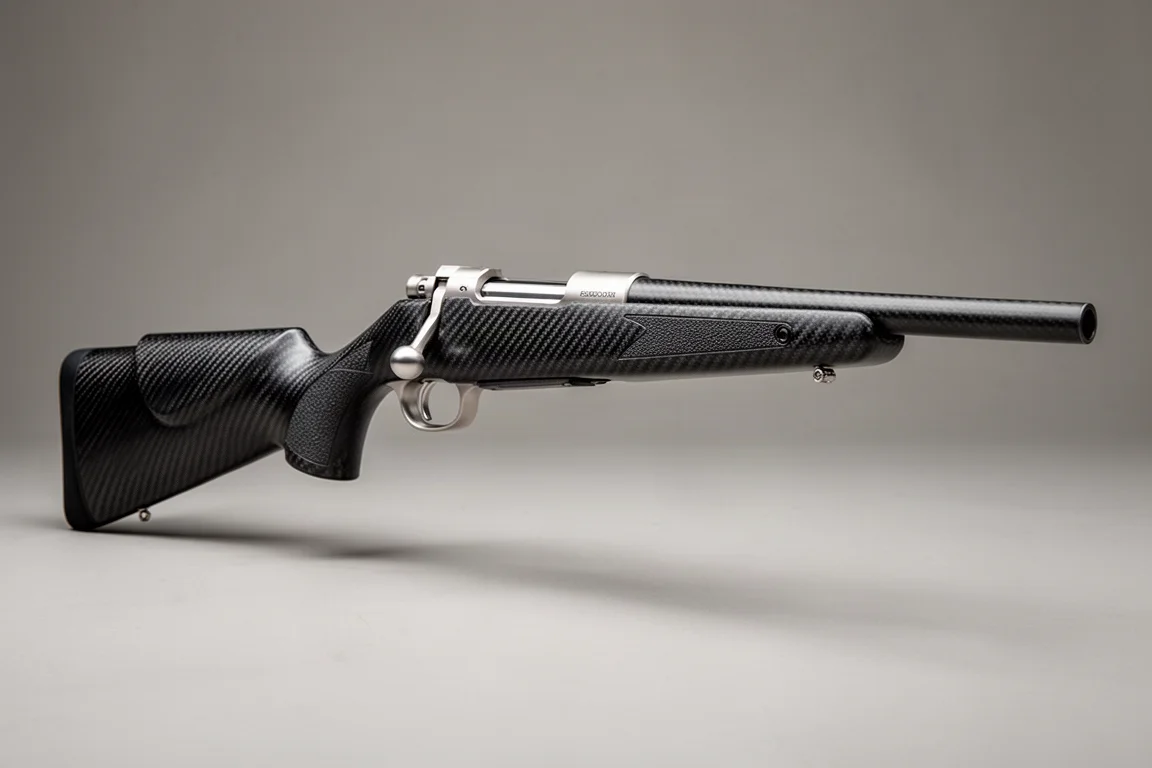
The Mark Five is the traditional Weatherby. It features the famous nine-lug action on the original magnum models, though this particular version uses a six-lug action scaled down for smaller calibers. The rifle shown here weighs just 5.3 pounds, thanks to a carbon fiber stock from Peak 44 and a carbon fiber barrel. It also uses a titanium action, which contributes to the light overall weight.
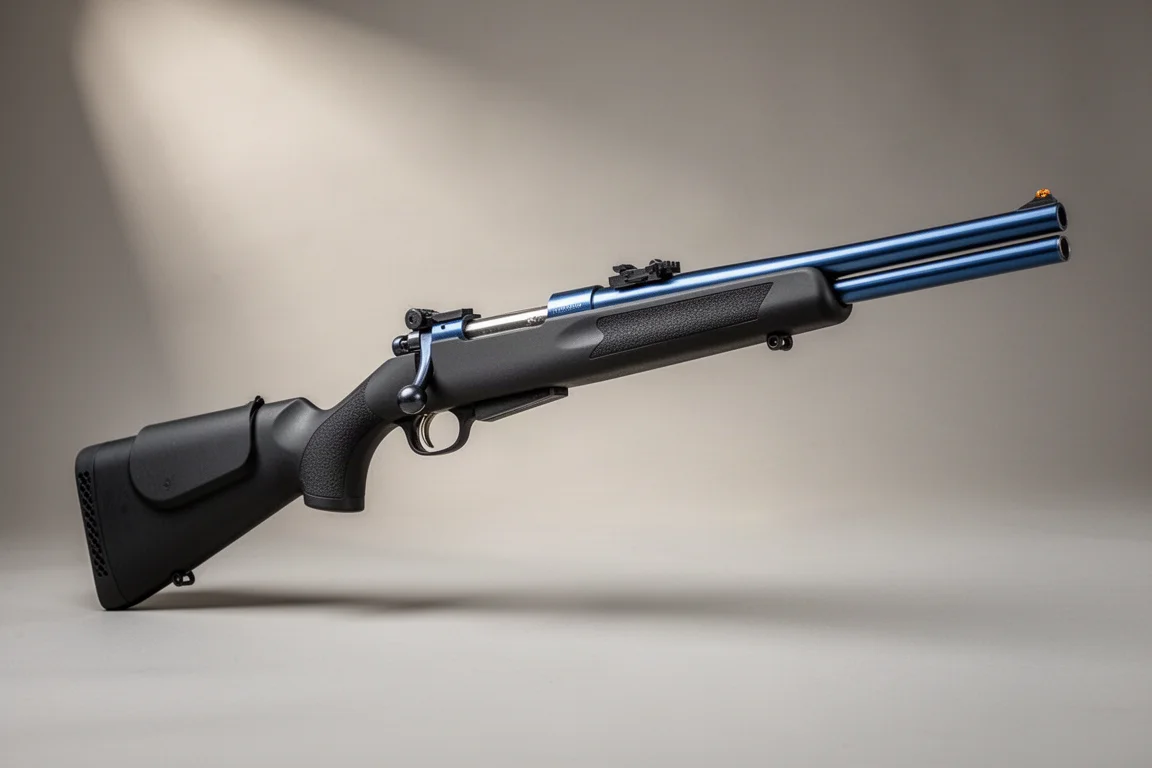
The Weatherby 307, by contrast, is built on a Remington 700-style push feed action with two lugs and a 90-degree bolt throw. It is designed to be compatible with aftermarket parts made for the Model 700, including stocks, scope rings, and triggers. This makes it a more flexible platform for shooters who like to customize their rifles.
Action Design and Bolt Throw
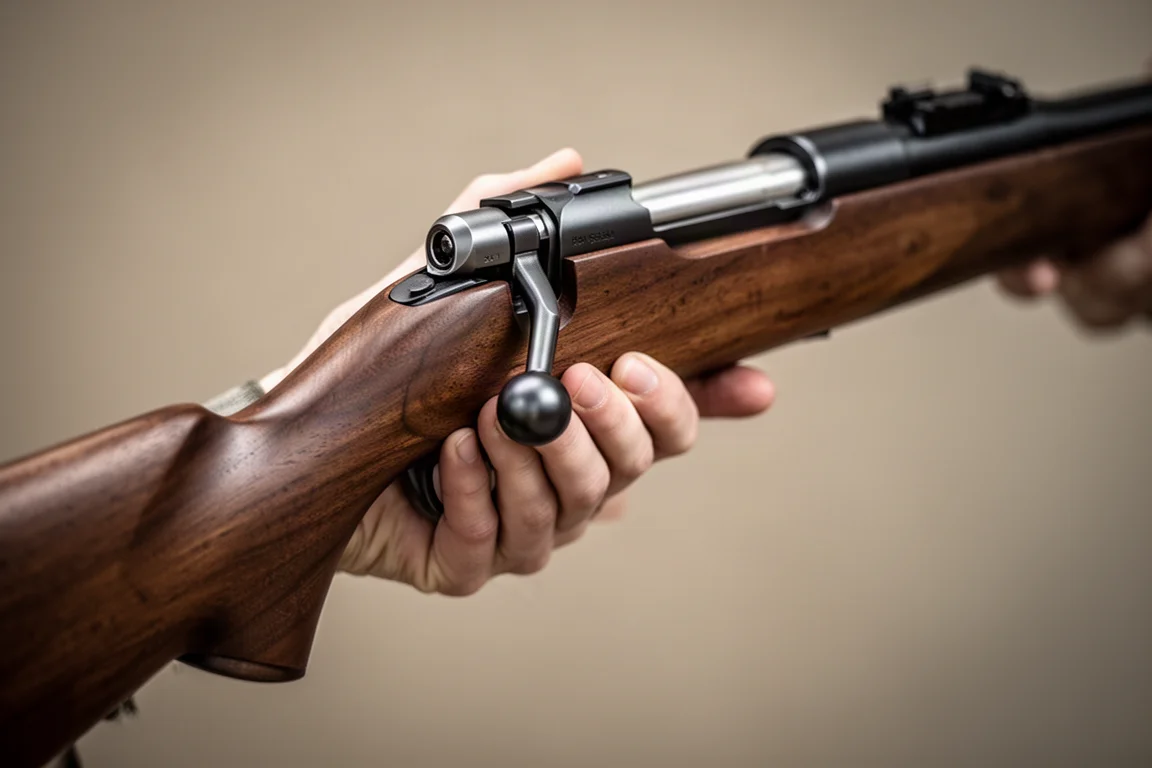
The most obvious mechanical difference is the bolt. The Mark Five uses a six-lug action with a shorter bolt lift, roughly 60 degrees. This makes cycling the bolt faster and smoother, which can matter in a hunting situation where a quick follow-up shot is needed. The action locks the bolt handle down when the safety is engaged, preventing the bolt from opening accidentally if a branch or brush catches it.
The 307 uses a more traditional two-lug push feed design with a 90-degree bolt throw. The safety is a two-position design similar to the Remington 700, but it does not lock the bolt handle down. This is a minor difference, but it is worth noting for hunters who spend time in thick brush where a stray branch could open the action.
Magazine and Bottom Metal
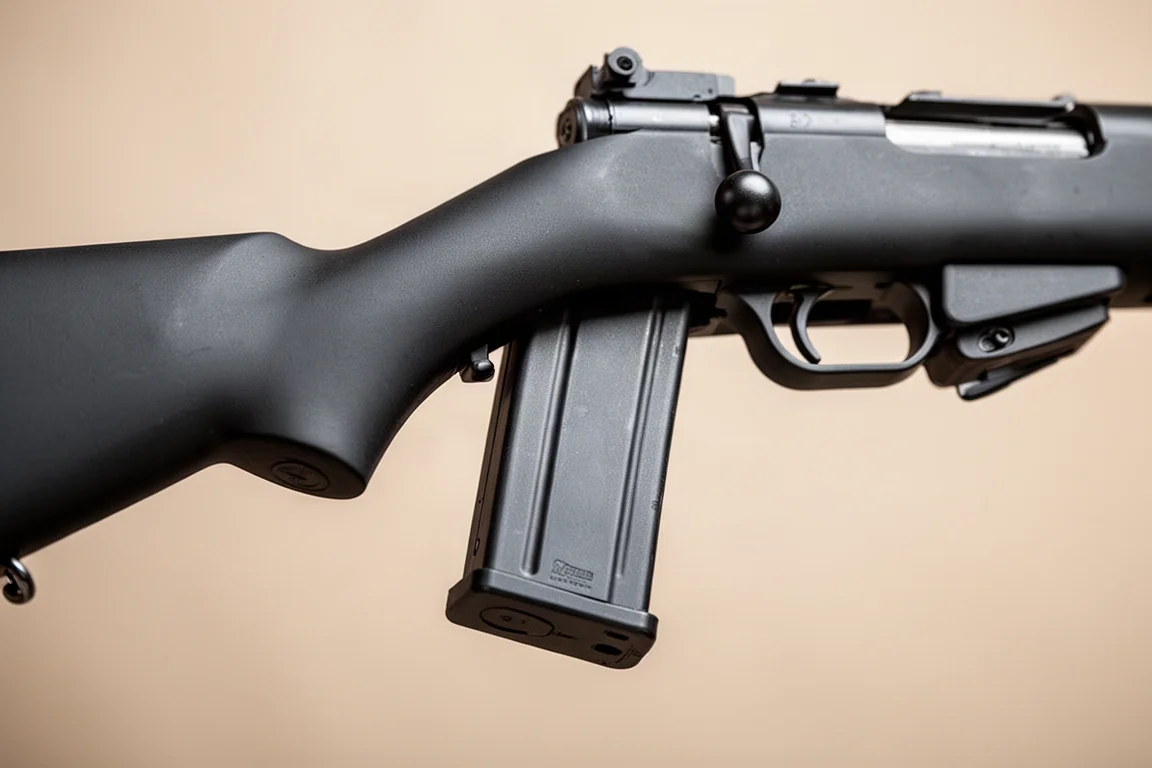
Another key difference is how each rifle feeds ammunition. Most 307 models use a detachable box magazine, with a five-round option available and a three-round version that sits more flush with the stock. The release button is positioned right at the front of the trigger guard, which can be a concern for hunters who carry the rifle with a finger across the trigger guard. A stumble or a bump could accidentally drop the magazine.
The Mark Five uses a traditional hinged floorplate with bottom metal, holding four to five rounds internally. This design is more secure for field use and avoids the risk of losing a magazine in the brush. For hunters who prefer a classic setup, the floorplate is a more reliable choice.
Stock and Ergonomics
The Mark Five shown here features a Peak 44 carbon fiber stock, which is currently the lightest carbon fiber stock on the market. It also has an adjustable comb height, allowing shooters to fine-tune cheek weld for different optics. The stock includes Spartan Precision gunsmith mounts built in, so shooting supports and bipods can be attached directly without additional hardware.
The 307 has a more traditional synthetic stock with a pistol grip style that suits prone shooting. It is a heavier rifle overall, but it is also more adaptable. Because it accepts Remington 700 pattern stocks, shooters can swap in any aftermarket stock that fits the Model 700 footprint.
Performance and Accuracy
Both rifles have demonstrated solid accuracy in testing. The 307 shot a sub-MOA group with a 117 grain Barnes LRX load, and repeated groups stayed around one MOA. The Mark Five also produced tight groups, with one test shooting a quarter-MOA group using a 127 grain Hammer Hunter load at 3,244 feet per second.
The Mark Five’s carbon fiber barrel is tensioned front and back, which helps maintain accuracy even with a suppressor attached. The 307 shoots well with or without a suppressor, though the balance point shifts forward when a can is mounted.
Which One Should You Choose?
The choice comes down to how you plan to use the rifle. If you want a lightweight rifle for mountain hunting and you are happy with it as it comes from the factory, the Mark Five is the better option. At 5.3 pounds, it is easy to carry all day, and the smooth six-lug action makes quick follow-up shots effortless.
If you like to tinker and customize, the 307 is the more flexible platform. It accepts Remington 700 pattern stocks, triggers, and scope mounts, so you can build it into exactly what you want over time. It also tends to cost significantly less, roughly a third of the price of the Mark Five.

Conclusion
Both rifles are excellent examples of what Weatherby offers today. The Mark Five carries on the traditional Weatherby legacy with a light, accurate, and reliable package. The 307 brings modern customization to the brand, making it an appealing option for shooters who want a rifle they can adapt to their preferences. Whichever you choose, you are getting a well-built rifle that is ready for the field.
Further reading
Related Reviews

Rifle Reviews
7mm Backcountry Review: A Practical Look at the Horizon Firearms Rifle
A hands-on look at the 7mm Backcountry cartridge in a 16-inch Horizon Firearms rifle, covering accuracy, velocity, and real-world hunting performance.

Rifle Reviews
Bergara Platinum Premier Stalker Review: A Classic Hunting Rifle With Modern Accuracy
A traditional hunting rifle with a stainless steel action, laminated stock, and sub-MOA accuracy potential in 308 Winchester.

Rifle Reviews
Browning SA-22 vs Cooper Model 57M Jackson: Which 22 Rifle Shoots Better?
Two very different 22 rifles face off: a classic semi-automatic with a century of history and a modern bolt-action built for pinpoint accuracy.