Fitness Equipment
Wahoo KICKR Run Review: A Treadmill That Runs at Your Pace
Wahoo's KICKR Run brings RunFree speed control, deep training app integration, and commercial-grade build quality to the home treadmill market.
Introduction
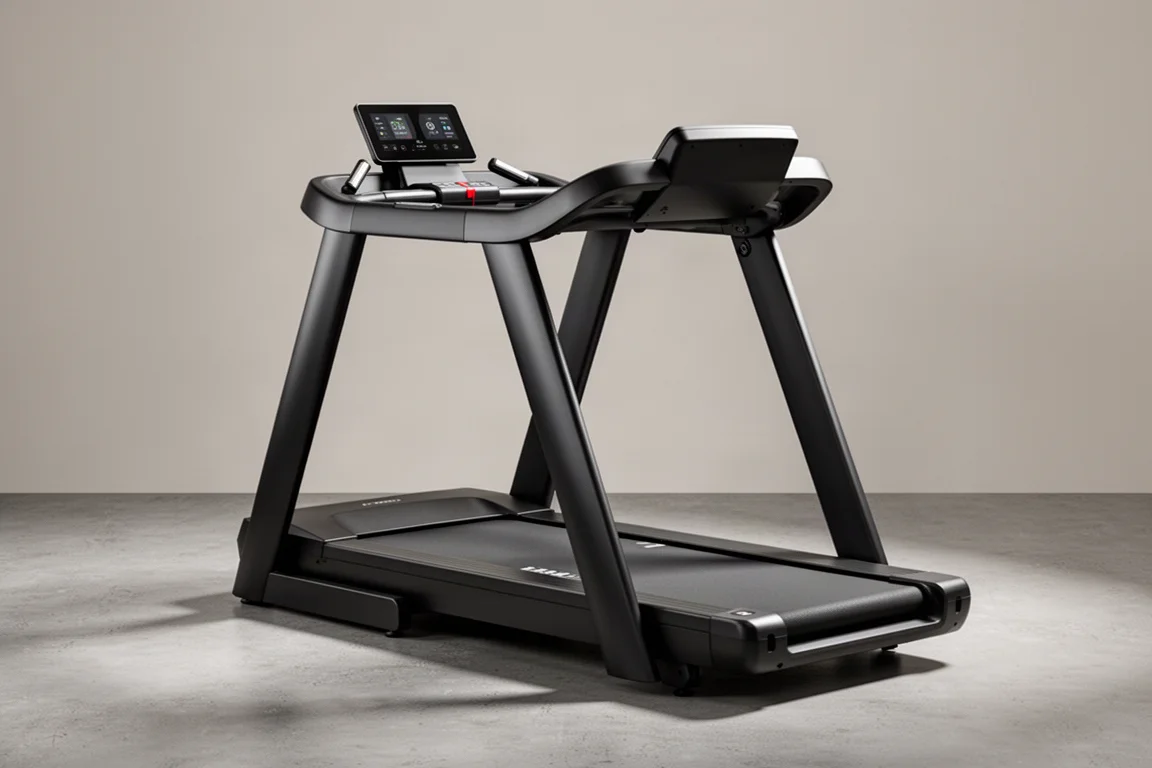
The treadmill market is crowded, and most new releases feel like variations on the same formula. Wahoo took a different route with the KICKR Run. The company carried over the interactive concepts from its smart bike trainers and applied them to running, resulting in a treadmill with a genuinely distinct feature: RunFree mode.
In RunFree, you simply run. Speed up and the belt speeds up. Ease off and it slows down. There are no buttons or levers to touch. It is one of those features that sounds like a gimmick until you try it, and then it becomes hard to imagine going back.
First Impressions
The KICKR Run is built like a commercial gym unit, and arguably feels even more solid than most. There is none of that vague wobble or sense that something might fall apart; it feels like running on the ground. The deck measures about 22 inches wide and around 69 inches long, with roughly 56 inches of flat running surface, leaving plenty of room to shift side to side or adjust where on the belt you run.
The deck feel deserves a mention too. It is firm but has a purposeful bit of give, described best as a nicely packed dirt trail: a touch softer than asphalt, but not squishy. It pairs nicely with the sheer stability of the machine.
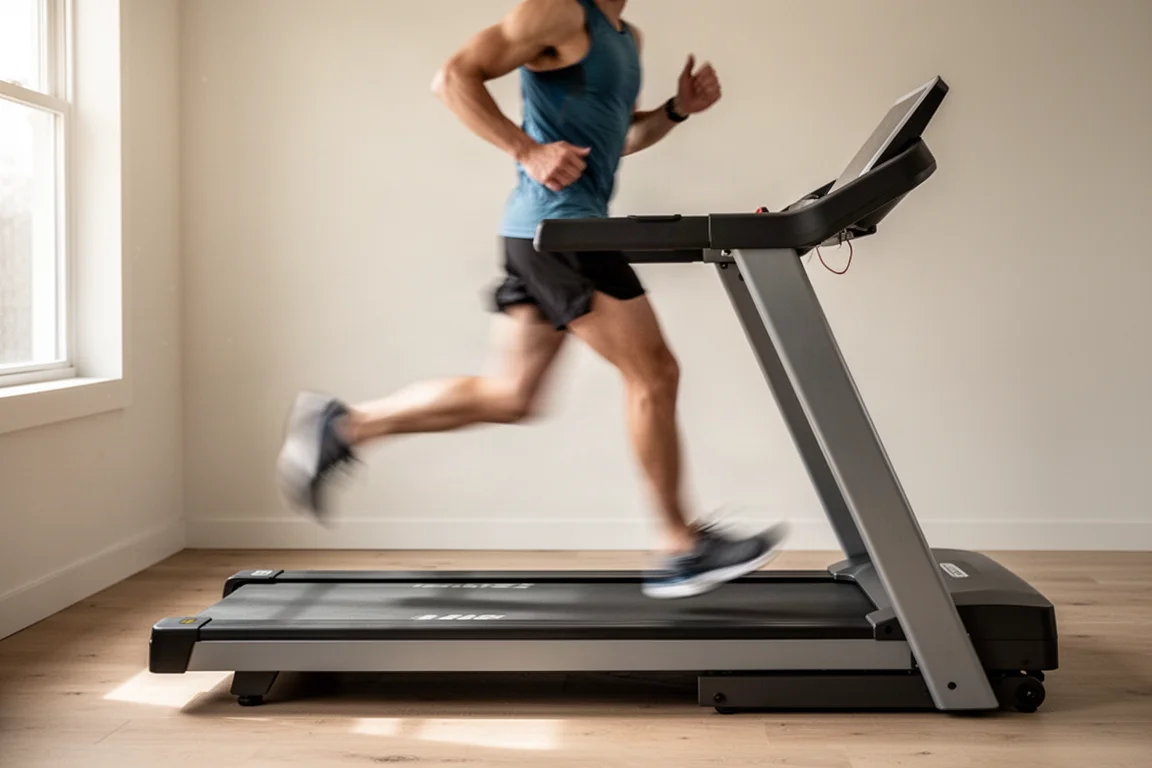
This is a treadmill aimed at serious runners putting in a lot of miles, and it has the specs to back that up.
Specs and Hardware
The KICKR Run tops out at 15 mph, equivalent to a 4-minute mile or 22.8 km/h, driven by a 3 horsepower motor. The advertised maximum runner weight is 250 lbs, though that figure is described as conservative and may change with further testing. Hills are well covered too, with a maximum incline of 15% and a decline of -3%, controllable manually or virtually through simulation apps, and usable within structured workouts.
The console follows a clean, minimal design. Two central readouts show pace and incline in either mph or km/h, with a stop button, an emergency tether, and two water bottle holders. On each side sit levers: right for speed, left for incline. Each lever responds differently to a short press, a long press, or holding it down, letting you fine-tune how quickly speed or gradient changes. Three additional buttons above the console are currently unused but reserved for future functions.
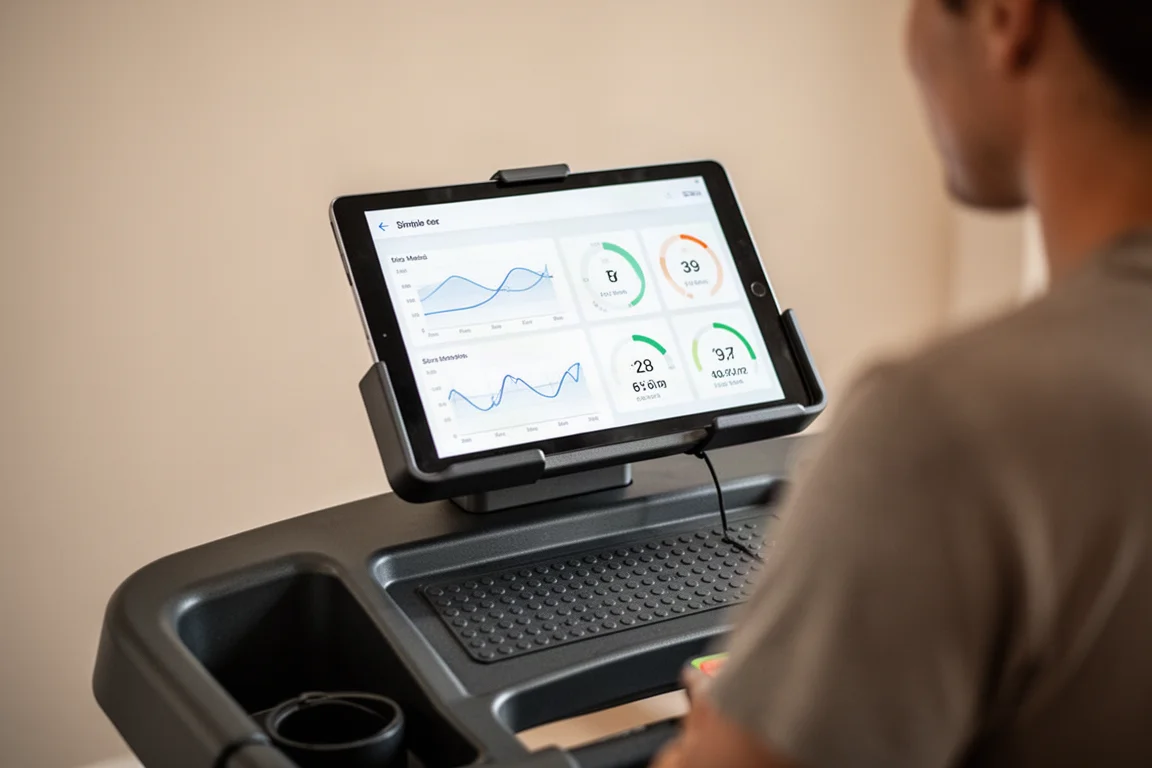
Up front there is a large, very solid platform that holds a 17-inch laptop, with a grippy surface and a safety strap. A dedicated tablet holder pops out from inside the deck, and there is a 24-watt USB-C charging port.
How RunFree Mode Works
RunFree is the headline feature, and the technology behind it is elegant. A time-of-flight sensor in the center of the console measures the distance from your waist to the treadmill 1,000 times per second. Run faster and your body moves closer to the sensor; slow down and it moves away. The belt adjusts in milliseconds, so it genuinely feels like the treadmill knows what you are doing.
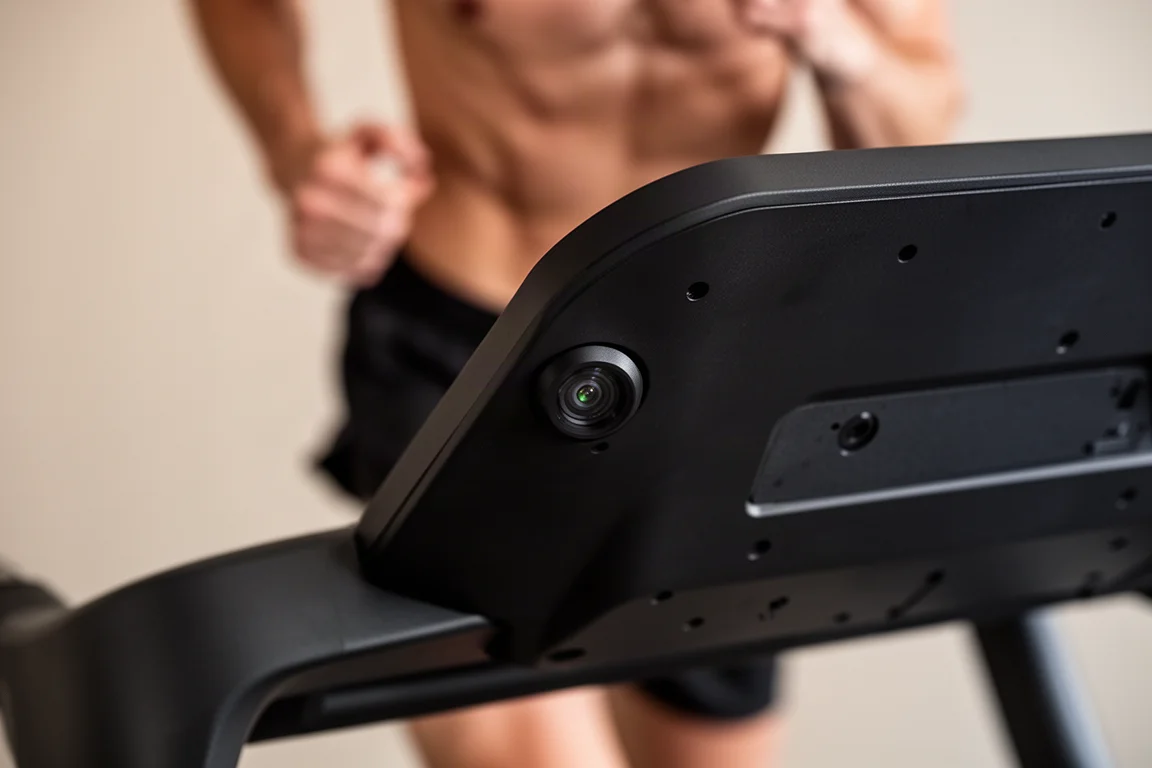
Responsiveness is impressive. Big speed changes happen in roughly two seconds at most, far quicker than traditional treadmills, where a big interval change can take five to ten seconds to reach target speed. Self-propelled treadmills are still nearly instantaneous since your legs drive the belt, but in testing an extremely abrupt change, like going from 5:30 mile pace to a dead stop instantly, produced an ever-so-slight delay that may still be tuned.
RunFree Mode With Simulation Apps
Running free works great on its own, but the real standout moment comes when it is combined with simulation apps, especially with gradient changes. Think about running rolling hills outdoors: you hold a pace on the flats, your pace drops climbing, and when you crest and descend, your legs turn over faster and your pace naturally increases.

That is exactly what the combination replicates. As the incline decreases at the top of a climb, your pace rises naturally. Then the deck tilts down to simulate the descent and you simply run faster, no buttons required. You dictate your effort, and the treadmill follows. There is even a slight side-to-side tilt, up to about 1%, that apps can use to simulate curves like a gently banked track, though the implementation for that was not fully ready at the time of testing.
Connectivity and Extras
The KICKR Run integrates with indoor training apps and supports Bluetooth, ANT+ and Bluetooth footpod pairing, so a compatible watch can collect pace, speed, and cadence directly from the treadmill rather than relying on wrist-based estimation. Wi-Fi and Ethernet are handled through a direct connect accessory. It also integrates with the Wahoo headwind fan accessory.
A connected tablet can display pace, distance, duration, laps, incline, and heart rate, plus running dynamics like ground contact time and vertical oscillation, complete with charts and averages over the course of a workout.
Noise levels are another strong point. Compared with expensive gym treadmills that are clearly audible, the KICKR Run is nearly silent: at higher speeds, the main sound is your own footsteps.
Should You Buy It
The KICKR Run launches at $5,000, which feels about right next to other commercial-grade treadmills. It is not aimed at the casual runner, though casual runners with the budget would certainly enjoy it. This is a machine for someone logging serious mileage who needs high-end specs like a 15 mph top speed.
Against self-propelled treadmills, which mostly cluster around the $3,000 range, the KICKR Run wins on interactivity, incline and decline capability, and noise. Self-propelled models remain a solid option, but they lack the simulation integration that makes the KICKR Run special.
Long-term durability is the one open question, since the product is brand new. Based on the experience itself, though, it ranks among the best treadmill experiences available, and it is easy to see a serious runner deciding it is worth owning.
Conclusion
The Wahoo KICKR Run stands out in a saturated market by doing something genuinely new. RunFree mode delivers a natural, outdoor-like running experience, the build quality is commercial-grade, and the training app integration adds real depth for structured and simulated workouts. At $5,000 it is a serious investment for serious runners, but for those who fit that profile, it may be the most compelling treadmill available today.
Product link
View more details for Wahoo KICKR Run
This product is mentioned in the review. Check the specifications, options, and compatibility before buying.
View more details for Wahoo KICKR RunFurther reading
Related Reviews
Fitness Equipment
BCAN Rebounder 30-Day Review: A Mini Trampoline That Changed My Exercise Routine
After 30 days of daily rebounding, I discovered why NASA considers it one of the most effective exercises for lymphatic health, bone density, and overall wellness.
Fitness Equipment
Best Adjustable Dumbbells 2026: Seven Categories to Find Your Perfect Match
A comprehensive guide to adjustable dumbbells across seven categories, from beginner-friendly options to premium heavy hitters, helping you choose based on your priorities.
Fitness Equipment
Best Jump Ropes 2026: Five Options for Every Fitness Level and Budget
A practical breakdown of five jump ropes, from budget-friendly entry-level models to premium speed ropes designed for serious athletes and Crossfitters.