Ski Reviews
Volkl Peregrine 82 Review: A Precise Frontside Carver for Advanced Skiers
A stiff, damp frontside ski built for firm and fast groomers, with a mid-80s waist that hints at versatility but never chases soft snow.
Introduction
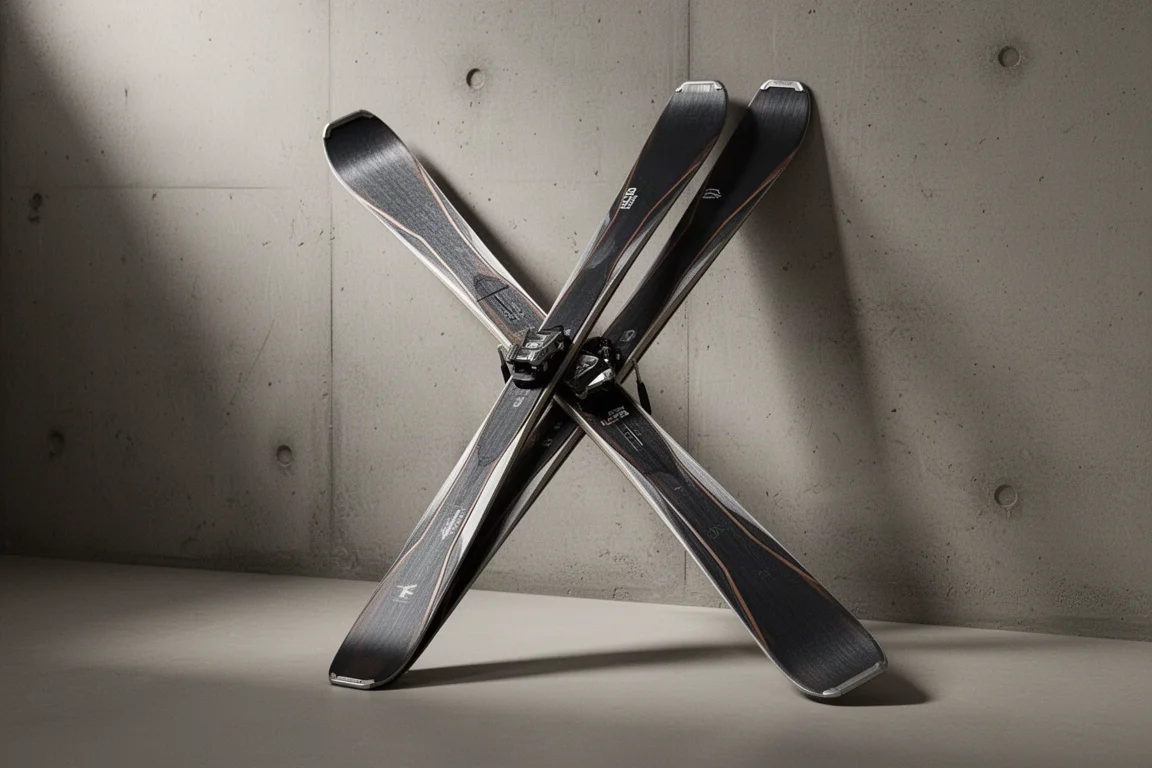
The Volkl Peregrine 82 is a high-powered frontside ski that blends real carving precision with a waist width that suggests more all-mountain range than it actually delivers. For the 2027 season it returns structurally unchanged: same build, same shape, same profile, with a new graphic on top. That continuity matters, because the ride characteristics that made this ski interesting have not moved.
On firm, fast groomed terrain the Peregrine 82 puts a lot of power into the edges. It is stiff, it is damp, and it is at its best when the snow is hard and the speeds are high. Skiers who spend their days carving will find plenty to work with here. Skiers who go looking for soft snow will not.
Who This Ski Is For
This is a ski for advanced and expert skiers who spend most of their time on-trail in a carving format. The Peregrine 82 is built around edge grip and precision, and its frontside ability is strong enough that the mid-80s waist almost stops registering. It works so well in an on-trail format that it is easy to forget the ski is wide enough to be considered more versatile than a dedicated carver.
If a typical day means laps on groomers, hardpack, and fast morning corduroy, this ski is aimed squarely at you. If a typical day means hunting fresh snow, tight tree lines, or technical terrain where turns are forced rather than chosen, it is not.
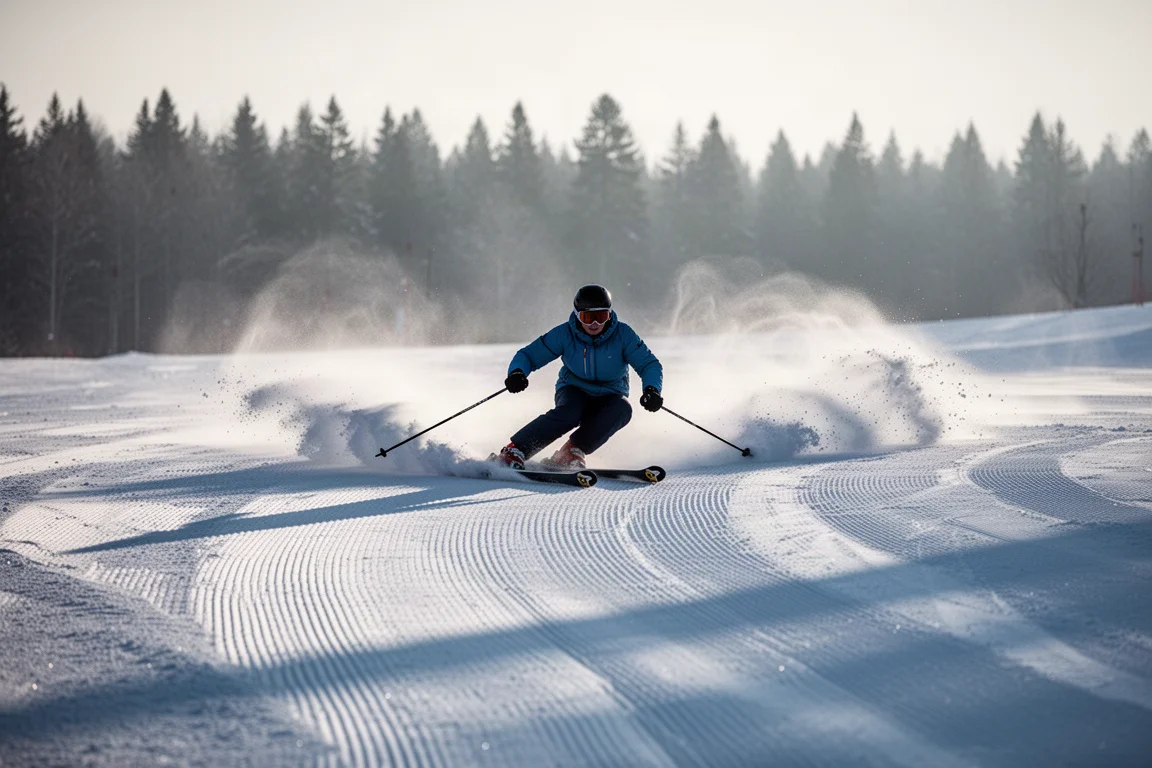
The shape does leave a little room for range. If conditions degrade through the day and the surface turns broken or variable, the Peregrine 82 can still be useful. Even so, adventure seekers are unlikely to find much here that rewards them, because the ski’s strengths sit in a different part of the mountain.
Main Strengths
The headline strength is edge power. In firm and fast conditions the Peregrine 82 delivers a lot of precision and power to the edges, and it holds that composure when you push it. Much of that comes from the construction rather than the outline.
Flex is on the stiff side. Hand flexing the ski returns a lot of energy, and on snow it feels stiff and supportive underfoot. The ski also handles broken snow, crud, and chop well when you are carving turns through that material, which stretches its usable range beyond perfect groomers. That combination of stiffness, damping, and edge hold is what makes the ski feel planted at speed rather than nervous.
Construction and Turn Shape
The build starts with a multi-layer wood core of poplar and beech. On top of that sits a tailored titanal frame: two sheets of metal, one running along the bottom of the core, with the upper sheet broken up into a frame format. Volkl also uses 3D fiberglass, laid across the ski and down over the edges. Running fiberglass in a three-dimensional format increases the stiffness and responsiveness of the material, and here it contributes to the ski’s overall backbone.
At the front, tailored carbon tips place a carbon laminate that extends stringers out toward the edges. The payoff is strong turn initiation while keeping swing weight low for a ski in this class. On the scale, the 177 cm length comes in at 3,105 g.
The profile is flatter than what is typical for a frontside-oriented ski. Instead of traditional camber underfoot with no rocker at all, the Peregrine 82 carries a meaningful amount of tip rocker. It is not dramatic, and there is very minimal splay at the top, which means more of the ski stays on the snow more of the time and the overall feel is smoother. The tail follows a similar approach, with longer rocker than most frontside skis and a flat, squared-off shape.
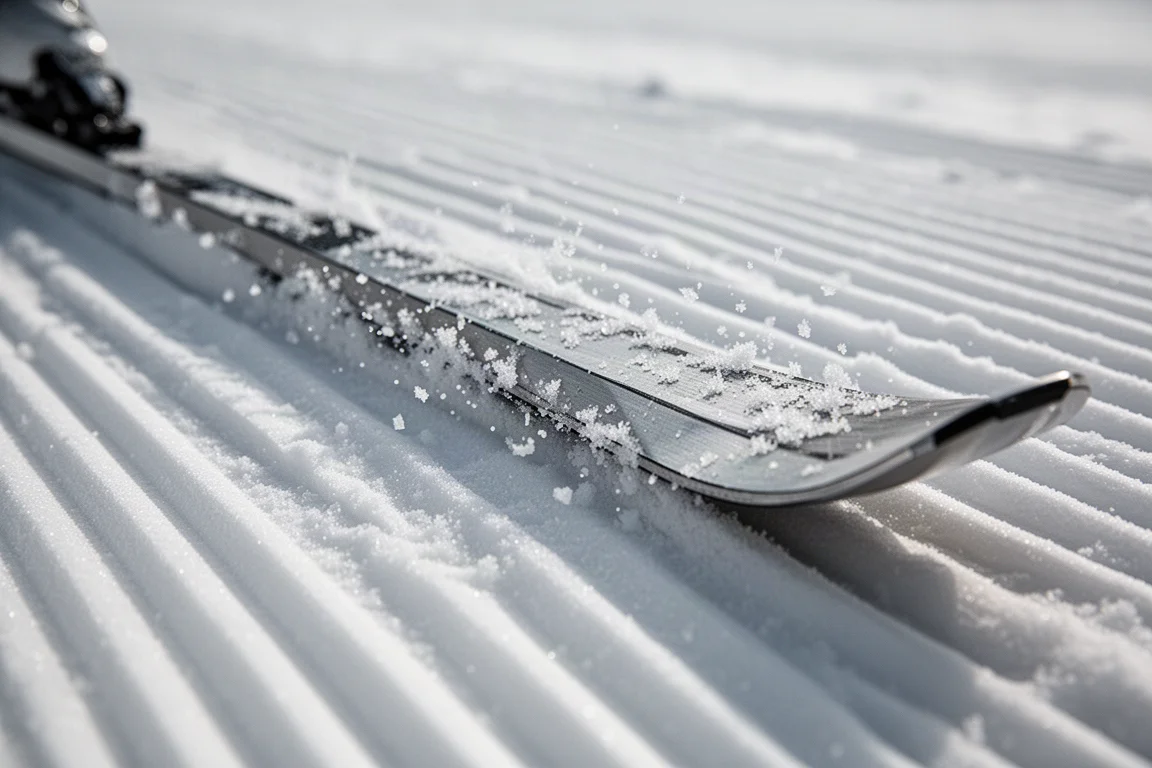
Turn shape is handled by a 3D radius sidecut: a shorter radius in the middle and longer radii in the tips and tails. At higher edge angles you feel more of that slalom-style cut and the ski wants to come across the fall line. On the longer tip and tail shapes you can ride a flatter edge angle at higher speeds without the ski pulling across the fall line on its own. The result is a ski you can shape and re-shape within a single turn by feathering pressure points, and the flat profile makes those multiple radii easier to hook into than a more traditionally cambered ski would allow.
Things to Consider Before Buying
The stiff tail is the main trade-off. It holds on to a turn hard, which is exactly what you want when carving at speed and less helpful when you need to release the ski quickly. Off-trail versatility and playfulness are where this ski meets its limit, and the tail is the reason.
Weight is the other consideration. At 3,105 g in the 177 cm length, the Peregrine 82 is about 100 g heavier than the Peregrine 80. That extra mass is not a flaw so much as a character choice, and it is worth understanding before you commit.
Soft Snow and Off-Trail Limits
There is some soft snow capability here, but this is not a ski to take searching for softer or deeper snow. The on-piste performance is strong enough that most riders will not want to compromise it.
In broken snow, crud, and chop, the Peregrine 82 still works well as long as you are carving turns through that material. The limit arrives when the snow gets deeper, or when the terrain demands more technical turns, such as trees or bumps, where you are forced to make a turn rather than choose one. That is where the tail likes to hold on tight to the end of the turn.
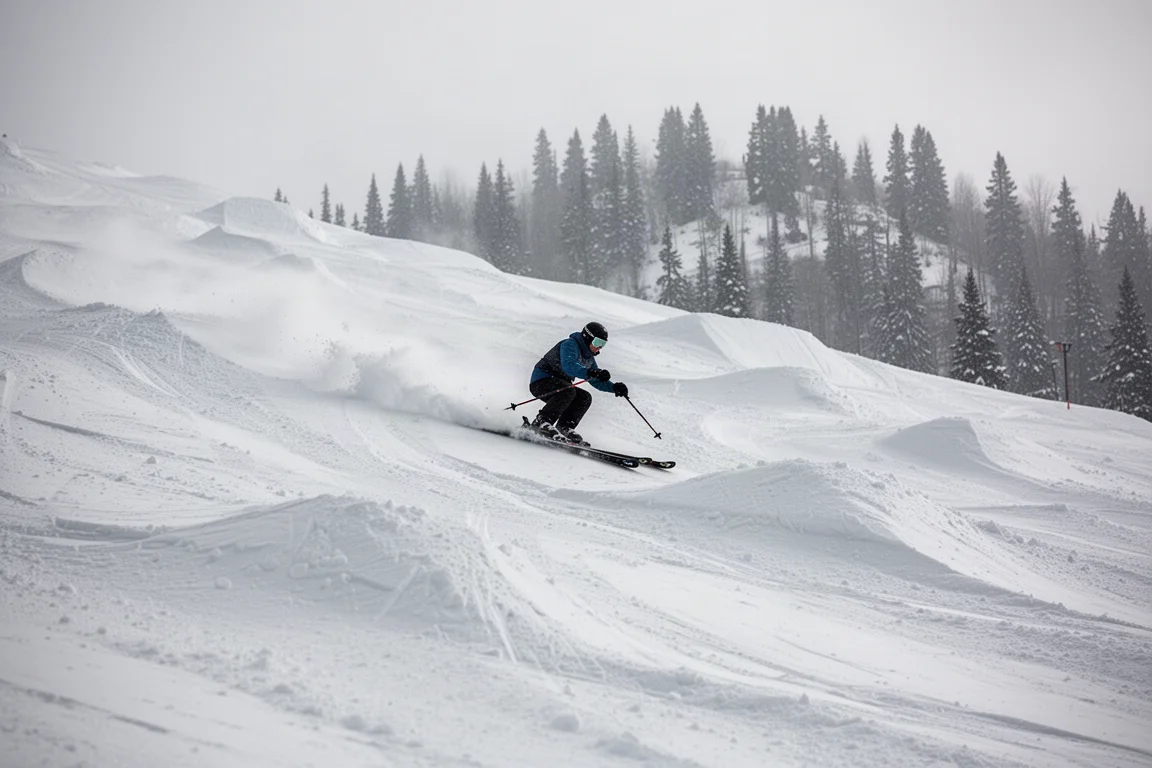
Riders who split their time between groomers and off-trail exploration should weigh that carefully. The ski rewards a specific kind of day and asks you to accept what it does not do.
How the Peregrine 82 Compares to the Peregrine 80
The two skis in this part of the range differ mainly in how much metal sits in the upper frame. The Peregrine 82 carries additional metal there, and the extra 100 g at the same 177 cm length shows up as a damper, more powerful ride.
The Peregrine 80 goes the other way, feeling snappier and more energetic. Neither approach is better in the abstract. The 80 suits a rider who wants quickness and pop, while the 82 suits a rider who wants stability and edge power in firm, fast conditions. If you are deciding between them, the honest question is which feeling you want underfoot on the days you actually ski.
Buying Advice
The Peregrine 82 makes the most sense for advanced and expert skiers who spend most of their time on-trail, carving, and who value precision and power to the edges over playfulness. It is a strong match for firm and fast conditions, and it will keep working when the surface turns broken or choppy and you are still carving through it.
Before buying, be honest about how much of your season happens off groomers. If a meaningful share of your days involve deeper snow, trees, or bumps, this ski will feel like it is holding you back in exactly those moments. If almost all of your skiing is on-trail, the trade-offs are easy to live with, because the on-piste performance is the whole point.
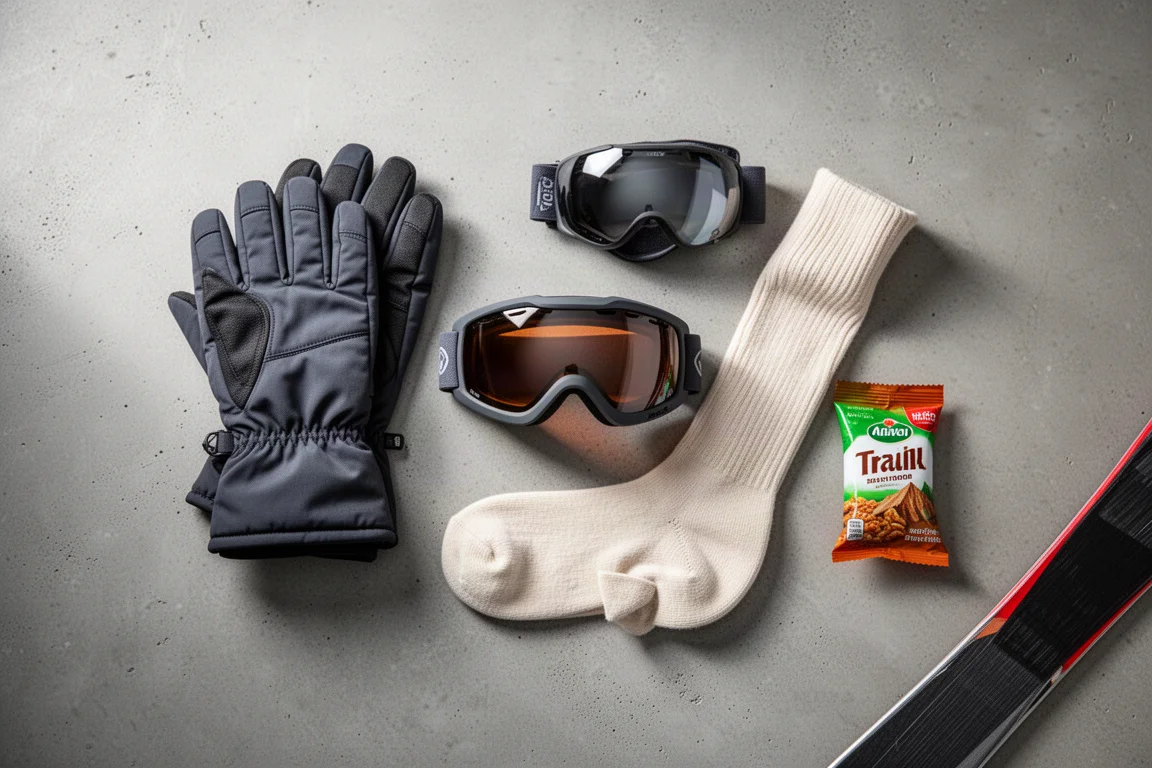
Sizing and setup deserve the same attention you would give any high-powered frontside ski. The 177 cm length is the reference point here, weighing 3,105 g, and it is a reasonable place to start for a strong skier who wants the ski to feel stable at speed. Match the length to your height, weight, and how aggressively you ski rather than to a number on a chart.
Conclusion
The Volkl Peregrine 82 is a focused tool. It is stiff, damp, and precise, and it delivers power to the edges in the firm and fast conditions it was built for. Its mid-80s waist suggests more versatility than the ride actually offers, and the stiff, squared-off tail sets a clear ceiling on off-trail playfulness.
For advanced and expert skiers whose seasons are built around on-trail carving, that focus is the appeal. For anyone drawn to soft snow, tight trees, or technical terrain, there are better-matched options in the same category. Buy it for the days you carve, and it will reward you on every one of them.
Product link
View more details for Völkl Peregrine 82
This product is mentioned in the review. Check the specifications, options, and compatibility before buying.
View more details for Völkl Peregrine 82Further reading
Related Reviews
Ski Reviews
Armada Antimatter 108 Review: A Freeride Ski Built for Speed and Deeper Snow
The Armada Antimatter 108 carries over the beloved Declivity X 108 shape with new construction that adds compliance in soft snow and composure in crud, aimed squarely at strong, aggressive skiers.
Ski Reviews
Armada Antimatter 92 vs Invictus 92: Two All-Mountain Skis Compared
A closer look at two Armada all-mountain skis, one playful and nimble, the other composed and smooth, to help you pick the right one for your skiing.
Ski Reviews
Armada Antimatter 92W Review: A Smoother Take on a Proven All-Mountain Footprint
The Antimatter 92W keeps the trusted Reliance 92Ti footprint but softens the ride with a new metal construction, making it more versatile in softer snow without losing on-trail grip.