Skis
Völkl Paragrin 78 Review: A Confident Frontside Carver for Groomer Days
A narrow, approachable all-mountain carving ski built for intermediate and early advanced skiers who spend their time on groomed runs.
Introduction
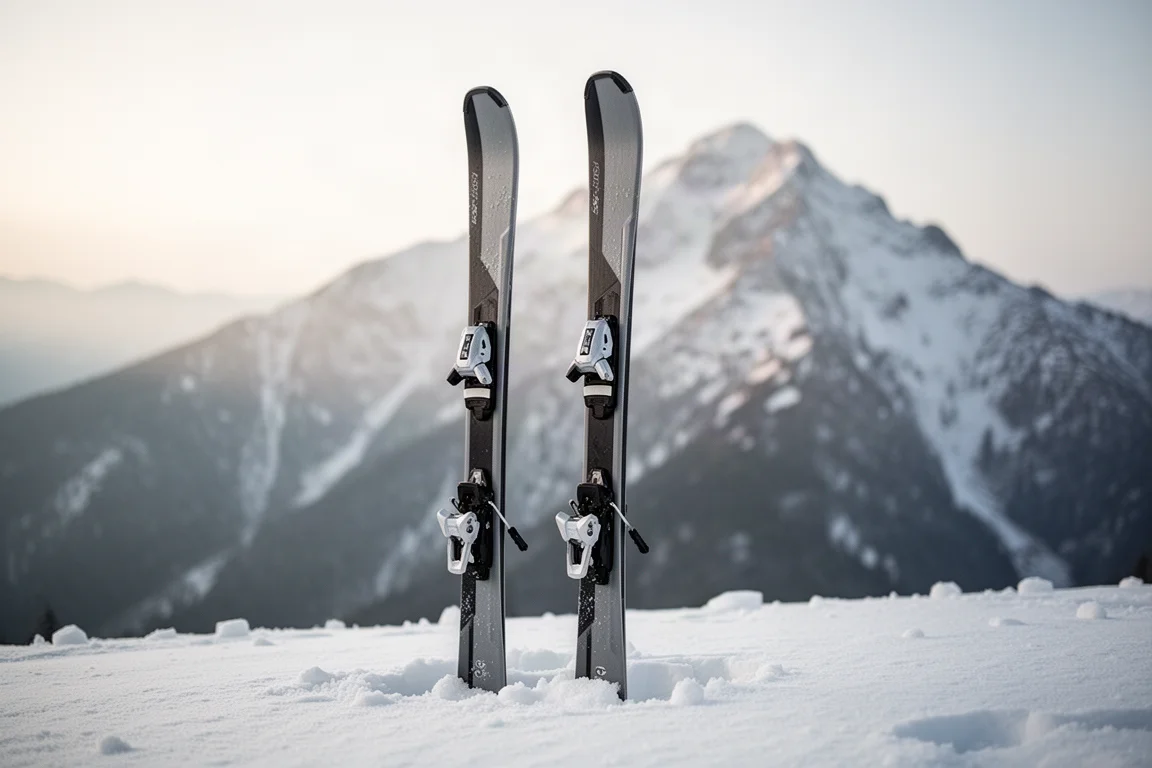
The Völkl Paragrin 78 is the narrowest member of Völkl’s Paragrin line, a family that arrived to replace the Deacon series. The line started with the 80 and 82, and the 78 extends it in a direction that will feel familiar to a lot of skiers: narrower underfoot, aimed at intermediates and early advanced riders, and built around the groomed runs that most people actually ski.
That positioning is deliberate. If you ski somewhere that does not receive enormous snowfall and you spend nearly all your time on prepared pistes, a ski that matches those conditions is simply better value than a wider all-mountain model that rarely gets used to its full potential.
Völkl describes the Paragrin 78 as an all-mountain carving ski. It has a different shape from the wider 80 and a different build from the 82, and it is at its best in short to medium radius turns at moderate speeds.
Who this product is for
The Paragrin 78 is aimed at intermediate and lower-level advanced skiers who want a ski that comes around cleanly and finishes turns without demanding much effort. Völkl has tuned the shape and the construction specifically toward that group, and the result is a ski that feels reassuring rather than demanding.
It also suits a particular kind of ski day. Riders who stay on piste, ski in short and medium arcs, and value a predictable, smooth turn over aggressive high-speed charging will get the most out of it. The narrower 78 mm waist is a practical match for resorts with limited natural snow, where groomed terrain is the main event.
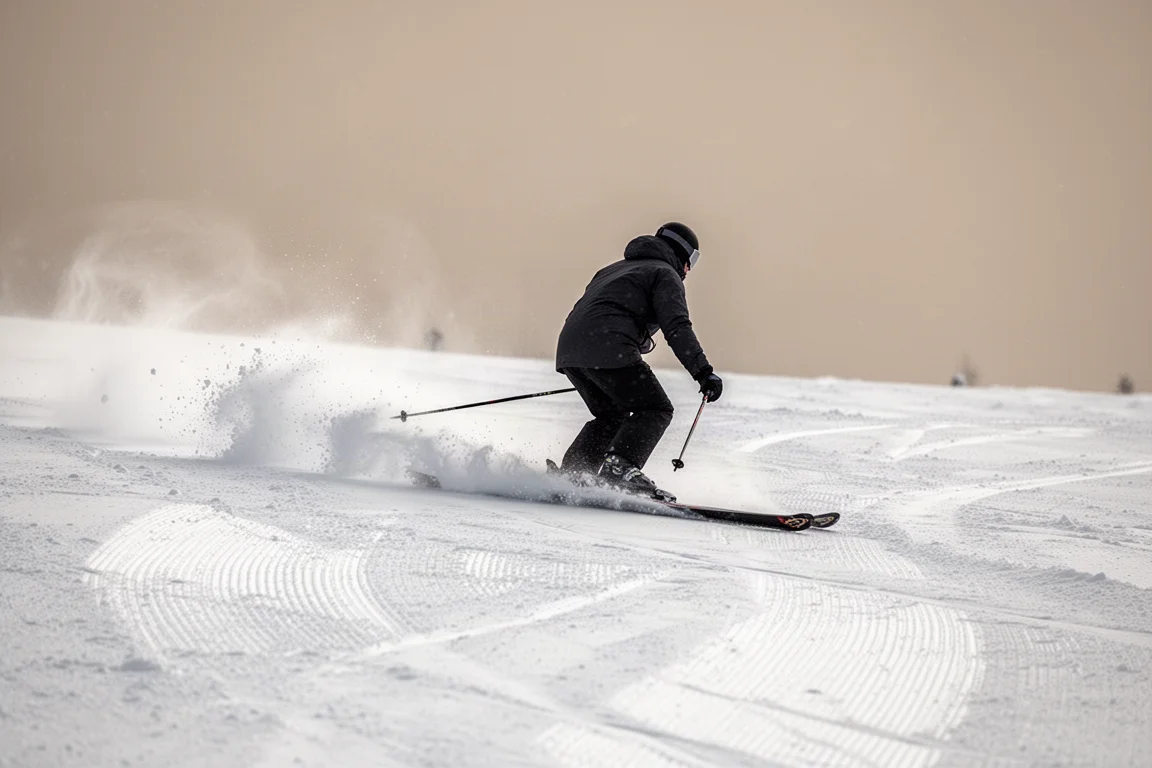
If your season regularly includes deep days, soft snow, or a lot of off-piste travel, this is not the shape to build around. It is a frontside tool, and it is honest about that.
Main strengths
The construction is where the Paragrin 78 earns its keep. A multi-layer wood core combines poplar and beech, and a steel band runs through the centre of the ski. That band does real work: it absorbs vibration and reduces chatter, which keeps the ski quieter underfoot when the snow gets firm or chopped up.
Völkl doubles down on that centre spine with a 3D ridge running along the middle of the ski. The raised section stiffens the core and reinforces the same stability goal, which matters most for skiers who do not want to feel the ski bouncing around beneath them. The 3D glass construction curves the glass over the sidewall rather than laying it flat, adding stiffness and a more consistent response.
The binding system is integrated rather than screwed on like a plate. The LowRide 11 setup is built into the ski, which creates a direct connection and very little lost energy. Movement from the boot reaches the ski almost immediately. At 163 cm, the ski plus binding weighs 2,750 grams, which lands in a sensible middle ground: manageable to move around, but with enough mass to feel planted.
Völkl also takes an unusual approach to camber. Their frontside skis carry relatively little of it, with the construction doing the work instead. That produces a flatter, smoother profile and easier turning. The 3D radius follows the same logic: a shorter radius in the tip and the middle, and a longer radius in the tail. Rather than pulling you straight into the next turn, the longer tail radius makes the release phase smoother and leaves more control over the finish of each turn. A little tip and tail rocker rounds out the package and adds to the overall ease of use.
On-snow impressions noted that the ski did not feel too short or too soft, and that the multi-radius shape is happy to cruise in longer arcs even though it can produce short turns on demand.
Things to consider before buying
The obvious trade-off is versatility. At 78 mm underfoot, the Paragrin 78 is not as adaptable as the wider models in the Paragrin line, and it sits in the middle of a broad field of frontside carving skis. That is not a flaw so much as a design decision, but it is worth being clear about before you buy.
The low-camber build and smooth profile are what make the ski easy to turn, and they also mean the energy comes from construction rather than from stored camber. Riders who like a snappy, high-energy rebound from a heavily cambered ski may find this feel softer and more relaxed.

The performance window is also worth noting. The Paragrin 78 holds up well in short to medium radius carves at moderate speeds, which is exactly the brief. Skiers chasing aggressive edge angles at high speed, or looking for a single ski to cover groomers and soft snow alike, should look at the wider Paragrin options instead.
Buying advice
The clearest way to decide is to look honestly at where you ski. If your days are mostly groomed runs, if your local hill does not get buried in snow, and if you are an intermediate or early advanced skier working on clean, controlled turns, the Paragrin 78 lines up well with all of that. The integrated binding, the vibration-damping steel band, and the smooth multi-radius sidecut all point in the same direction: confidence and consistency rather than aggression.
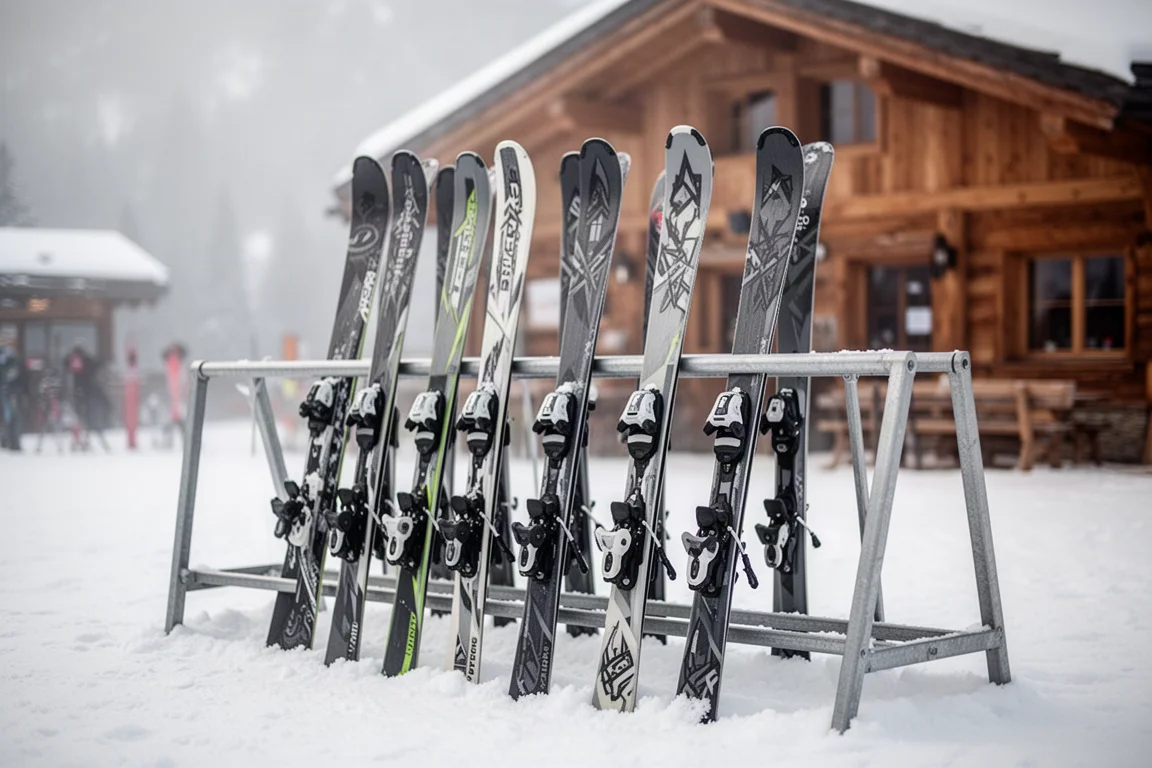
If you split your time between piste and softer terrain, or you are an expert skier who wants a stiff, energetic carver, the narrower build here will feel like a limitation rather than a benefit. Matching the ski to the snow you actually ski is the whole point of this category, and it is the reason a narrower frontside ski can deliver excellent value over several seasons.
Conclusion
The Völkl Paragrin 78 is a well-considered narrow carving ski. The wood core, steel centre band, 3D ridge, and integrated LowRide 11 binding give it a stable, quiet, direct feel, while the low-camber profile and multi-radius sidecut make turning genuinely easy. It is not the most versatile ski in the Paragrin range, and it is not trying to be. For intermediate and early advanced skiers who live on groomers, that focus is exactly what makes it worth considering.
Product link
View more details for Völkl Paragrin 78
This product is mentioned in the review. Check the specifications, options, and compatibility before buying.
View more details for Völkl Paragrin 78Further reading
Related Reviews

Skis
Armada Anti Matter 82 W Review: A Light, Approachable All-Mountain Carver
Armada's Anti Matter 82 W pairs a lightweight Karuba and carbon build with an easygoing all-mountain shape, aimed at intermediates through lighter-footed advanced skiers.

Skis
Armada Anti Matter 88W Review: A Light, Playful 88mm All-Mountain Ski Plus Two Alternatives
The Armada Anti Matter 88W returns unchanged in spirit from its Reliance 88C days, and it remains one of the most versatile 88mm skis around. We also look at the Nordica Santa Ana 87 and Anti Matter 92 W as alternatives.

Skis
Armada ARV 100 vs Atomic Bent 100: Which 100mm Freestyle Ski Should You Buy?
Two of the best all-mountain freestyle skis of the season compared: one leans playful and park-ready, the other holds up better everywhere else.