Skis
Volkl Mantra 102 Review: A Heavyweight All-Mountain Ski Made Noticeably More Agile
The updated Volkl Mantra 102 keeps its power, grip and precision while gaining easier edge release and quicker manners away from the groomers.
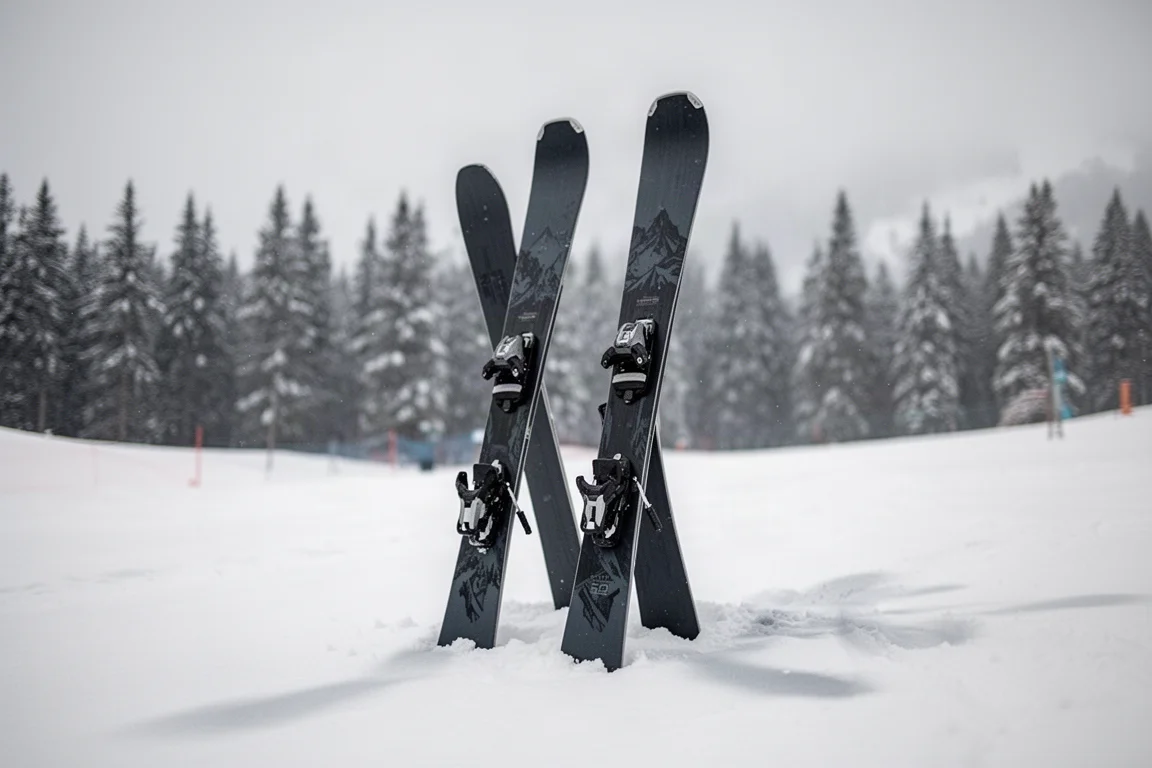
Introduction
The Volkl Mantra 102 has spent years as one of the reference points for skiers who want a wide all-mountain ski that behaves like a race-bred carver when the snow is firm. The latest version does not rewrite that idea. It keeps the multi-layer wood core, the metal construction and the stiff, planted personality, then reworks how the metal is distributed along the length of the ski.
That rework matters more than the spec sheet suggests. The result is a ski that still rewards strong, aggressive input but releases an edge more smoothly and moves through variable snow with less effort than before. If you have skied a Mantra before, the character will feel familiar. If you have found previous versions a handful once you left the groomer, this is the version worth revisiting.
Who the Volkl Mantra 102 Is For
This is an advanced to expert ski. It is not an intermediate ski, and it is not a ski that flatters lazy technique. The construction is stiff, the swing weight is real, and it asks for a skier who is comfortable standing on a ski and letting it run.
The one exception is the larger, stronger intermediate who genuinely prefers a very stable platform and is willing to accept that the first days on it may be demanding. In that case, sizing down is the sensible move rather than pretending the ski has changed category.
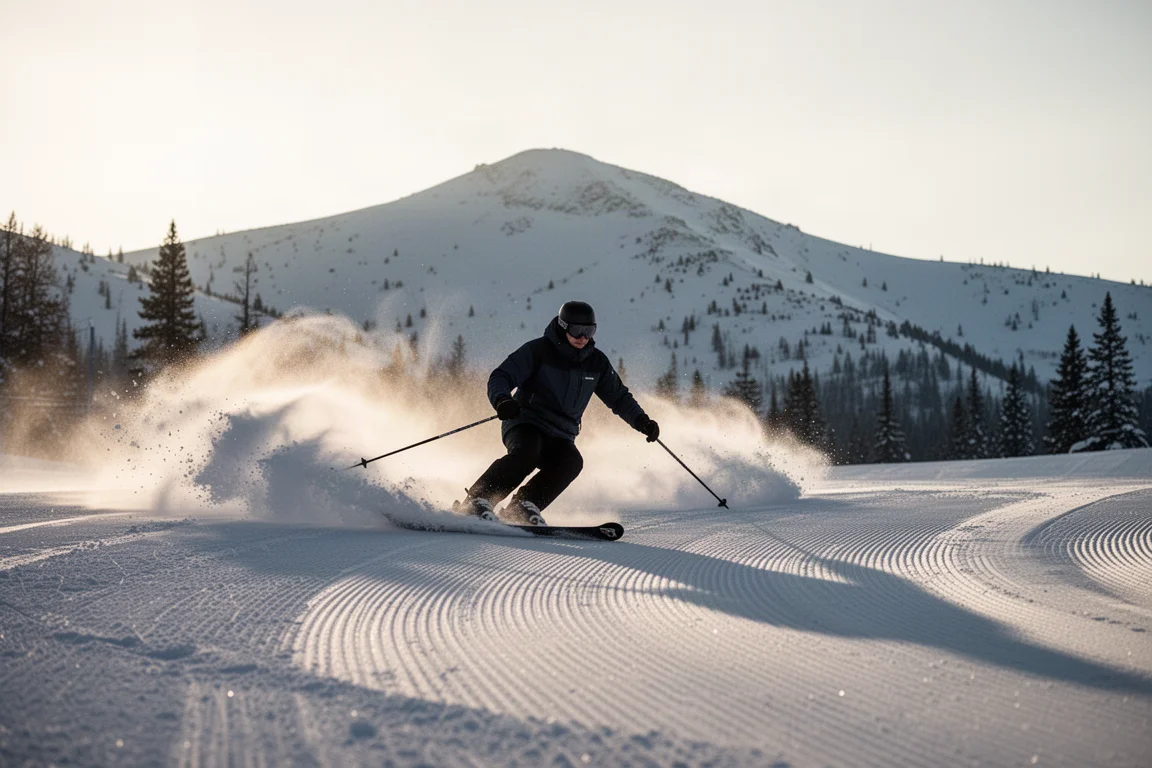
The natural home for the Mantra 102 is open terrain, long groomers and higher speeds. It gives you a wider footprint than something like a Kendo 88, which adds surface area and stability, and it is happiest when the snow is variable and the runs are long rather than tight and technical.
Main Strengths: A Precise, Powerful Ride
The headline strength is consistency. The Mantra 102 weighs in around 2,200 grams in the length tested, and that heft means it plows through whatever is in front of it. Firm groomer, wind-affected snow, heavy manky snow after a storm: the feel stays remarkably similar, and the edge grip stays knife-like throughout. It is an unflappable ski in the sense that conditions change but the ride does not.
The second strength is the revised turn behaviour. The central turn radius has dropped by roughly a meter, to an 18 meter radius underfoot at 177 cm, while the radius in the tips and tails has been extended. In practice that means the ski comes across the fall line a little more easily while running straighter out of the turn, and the edge releases more smoothly when you want to break it free.
That said, this remains a hefty ski that requires significant skier input. The update makes it more responsive and more agile, not light or forgiving. A fit, aggressive skier can get impressive energy out of it, but that level of output is not something most people will sustain all day. The most fun tends to arrive when you simply stand on the ski and let it do what it wants to do.
Construction and Shape: Subtle Changes, Real Effect
Under the topsheet, the Mantra 102 uses a multi-layer wood core with poplar and beech stringers, the same foundation that runs through the wider Mantra and Kendo family. The significant change is the tailored Titanal frame. Instead of a single uniform width of metal running the full length, the metal is adjusted per length so the widest section sits through the middle of the ski and narrows as it approaches the tip and tail.
The tips use tailored carbon in place of some of that metal. Swapping metal for carbon stringers in the front does two things: it makes the initial tip engagement a touch stiffer, more precise and more energetic, and it lowers swing weight. The metal laminate underfoot extends into the frame as a more cohesive unit, with an articulated slit at the front and rear that allows a more natural flex and gives the ski a little more playfulness.
Shape changes are subtle. The rocker and camber profile is effectively unchanged, with no difference a skier could pick out by eye. What has changed is the sidecut, now 142/102/124, with the tip and tail dimensions nudged up slightly. The ski uses a 3D radius, one of the earlier models to adopt it, which tightens the turn underfoot and runs straighter toward the extremities.
Things to Consider Before Buying
Do not buy this ski for powder. A 102 mm waist with this much metal and a relatively flat tail profile is not a floater, and plenty of skis in the same width offer more float and more surf. A ski such as the Salomon Stance 102 carries noticeably more tail rocker and feels far surfier, while the Nordica Enforcer 100 belongs in the same conversation but does not match the Mantra 102 for precision. If powder performance is a priority, this is the wrong tool.
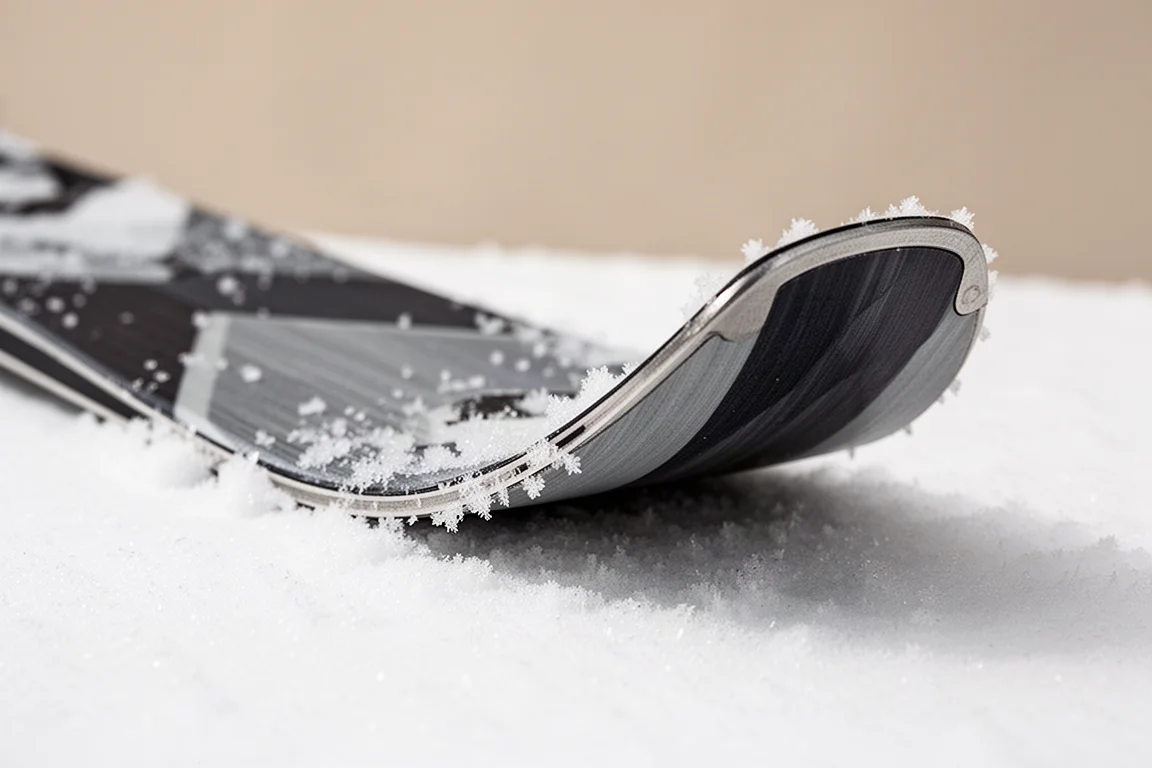
Bumps and trees are also not the design brief. The wider a ski is and the more heft it carries, the more work it takes to redirect turn after turn in tight terrain. The Mantra 102 is bought for wide open zones, higher speeds and aggressive skiing, and judged against that brief it is one of the best options over 100 mm underfoot. Judged as a playful tree ski, it will feel like a lot of ski.
Weight and stiffness are the other considerations. It is a burly, strong ski, and it stays that way. The updates made it more agile and more responsive rather than softer, so anyone hoping the new version has become an easy cruiser should look elsewhere.
Buying Advice
Size conservatively. Even a strong skier may find that a 184 cm is plenty and that the longest length in the range is more ski than the terrain or the legs require. The tail is not dramatically rockered, so the running length you choose is close to the running length you get.
Buyers who already know they like the Mantra or Kendo personality will find this version easy to predict. The overall character and feel carry across the lineup, so the transition between widths is a matter of footprint and stability rather than a change in philosophy. What the update delivers is the same strengths with the previous weaknesses addressed: better edge release, lower swing weight and easier maneuverability in soft or chopped snow, without losing the grip and precision that define the ski.
If your skiing is built around firm conditions in the morning and heavy, tracked snow by the afternoon, and you want one ski that handles both without changing its manners, this is a straightforward choice. If your season is mostly powder days or you spend your time in tight terrain, put the money toward something with more float and a looser tail.
Conclusion
The Volkl Mantra 102 remains a demanding, powerful, precise all-mountain ski, and the latest update makes it meaningfully easier to live with without diluting what makes it good. Edge release is smoother, swing weight is lower, and the ski comes across the fall line with less fight, while the grip, stability and consistency that define the model are untouched.
It is still not a ski for intermediates, and it is still not a powder ski. For advanced and expert skiers who spend their days on open terrain at speed, in whatever snow the mountain offers, it is one of the most complete options in the category.
Product link
View more details for Volkl Mantra 102
This product is mentioned in the review. Check the specifications, options, and compatibility before buying.
View more details for Volkl Mantra 102Further reading
Related Reviews

Skis
Armada Anti Matter 82 W Review: A Light, Approachable All-Mountain Carver
Armada's Anti Matter 82 W pairs a lightweight Karuba and carbon build with an easygoing all-mountain shape, aimed at intermediates through lighter-footed advanced skiers.

Skis
Armada Anti Matter 88W Review: A Light, Playful 88mm All-Mountain Ski Plus Two Alternatives
The Armada Anti Matter 88W returns unchanged in spirit from its Reliance 88C days, and it remains one of the most versatile 88mm skis around. We also look at the Nordica Santa Ana 87 and Anti Matter 92 W as alternatives.

Skis
Armada ARV 100 vs Atomic Bent 100: Which 100mm Freestyle Ski Should You Buy?
Two of the best all-mountain freestyle skis of the season compared: one leans playful and park-ready, the other holds up better everywhere else.