Skis
Volkl Katana V-Werks Review: A Fully Rockered 112 mm Ski Built Around Carbon
A closer look at the Volkl Katana V-Werks, a lightweight 112 mm freeride ski that pairs a multilayer wood core with stiff 3D Ridge carbon and a fully rockered profile.
Introduction
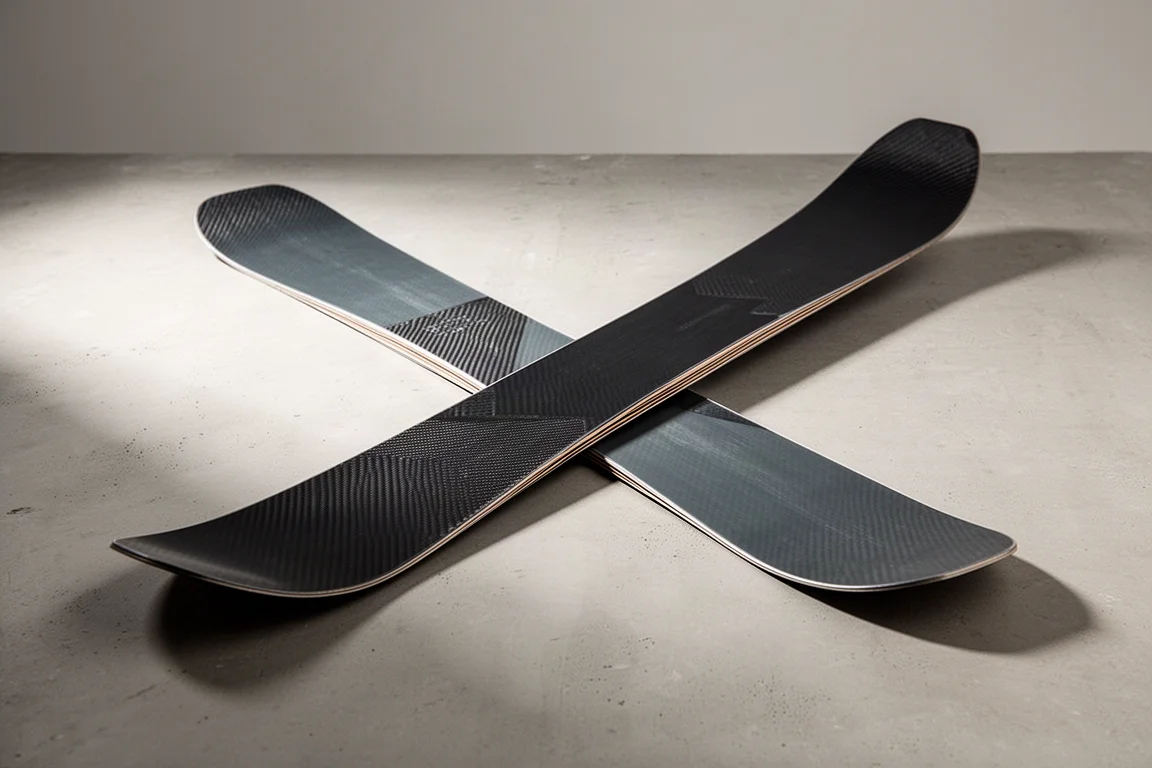
The Volkl Katana V-Werks makes more sense once you understand what it is trying to do. On paper it reads like an experiment: a lightweight multilayer wood core combined with stiff carbon laminates and a fully rockered profile. In practice it is a 112 mm freeride ski that asks a confident skier to use its stiffness rather than fight it.
At 184 cm, the ski weighs 1,948 g. For a 112 mm waist that is on the lighter side, and it opens up two very different ways of using the same ski. One is deep, untracked snow, where a fully rockered profile is the preferred shape. The other is in-bounds charging, where precision and agility matter more than float.
This review covers the construction, the shape and profile, and the ride character, then walks through what is worth weighing before you buy.
Who the Volkl Katana V-Werks Is For
This ski suits riders who want one pair that can handle deep snow and still hold up when the terrain gets demanding. The lightweight build makes it a plausible touring option, while the stiff carbon construction gives it the backbone to be pushed hard on the way down.
It also suits skiers who are curious about fully rockered designs. Skis without camber are uncommon, and the Katana V-Werks is one of the few places where that profile comes wrapped in a strong, precise package rather than a soft one.
Riders who prefer a loose, surfy feel may find the carbon character firmer than expected. Those who like a ski that responds immediately to input, and who spend most of their time in soft snow, will get more out of it.
Construction: Lightweight Wood Core and 3D Ridge Carbon
The core is a multilayer wood construction with grooves shaved out of the base to reduce weight. That keeps the ski light without abandoning wood as the structural foundation.
On top of it sits 3D Ridge carbon, a construction that runs tip to tail over a full sidewall. The ridges create a dense, strong spine down the center of the ski, while the carbon in the sidewalls is extraordinarily thin. Visually, it is almost as if the ski goes straight from base to carbon, with little wood showing through in those areas.
The practical effect is a split personality that works in the ski’s favor. The center of the ski is stiff and precise, and the sides stay more playful and versatile. You can feel the stiffness come through underfoot, and the carbon adds an energetic pop that shows up in the flex.
Shape and Profile: Full Rocker and a 112 mm Waist
The Katana V-Werks measures 112 mm underfoot and uses a fully rockered profile, with no camber anywhere along its length. The rocker in the tip is long and low, and the tail mirrors it.
That shape has a simple tell. Set the ski flat and it spins freely on its bases. Add camber and the tips and tails would catch, which is why the spin test is a quick way to see how much rocker a ski really carries.
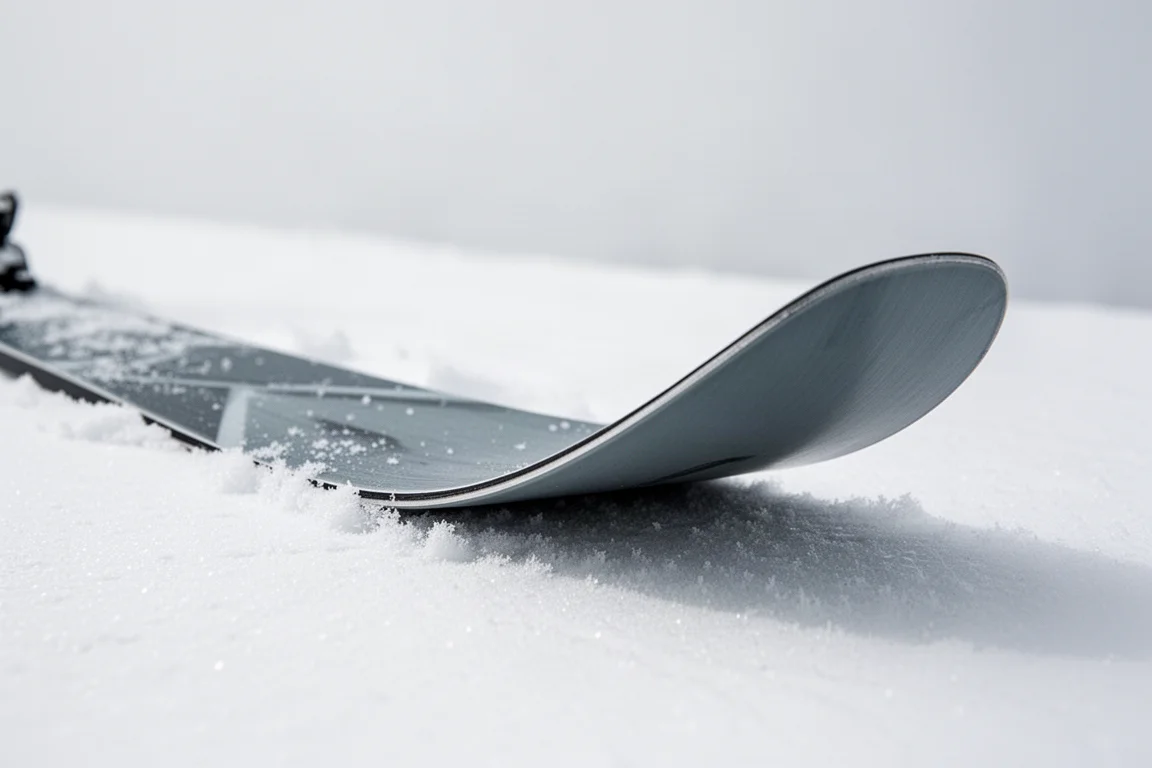
Fully rockered skis are rare in this width, and that is part of what makes this model stand out. The profile is built around soft, deep snow rather than firm groomed surfaces, and the long, low curve in both the tip and the tail keeps the contact points out of the way when the surface is forgiving.
How It Skis: Precision, Pop, and Turn Shape
Stiffness is the key to how this ski behaves. Softer fully rockered skis tend to smear and surf without ever really turning. With a stiffer construction like the one here, a fully rockered ski can turn, and that sets it apart from most of what else is available in this range.
The 23.2 m turn radius pairs with the rocker profile to give the skier more control over the shape and duration of each turn. A shorter radius tends to lock you into one turn shape, but at 23.2 m the ski opens up. Sideways, crossways, and everything in between becomes possible, and the rider decides how the turn develops.
The carbon also delivers precision. Inputs translate quickly, the edge feels direct, and the energy stored in the laminate releases out of the turn.
Touring and In-Bounds: Two Ways to Use It
The design makes sense from two directions. If you are using it as a touring ski, you are likely to be alone in deep, untracked snow, where a fully rockered profile is preferable. The strong tail gives you something to push against, and that produces the performance the shape is meant to deliver.
If you are using it in bounds, the story is precision and agility. The light build keeps it manageable on the way up and maneuverable in tight terrain, while the stiff core and carbon keep it from feeling vague when you drive it.
Either way, the ski is built around a genuine idea rather than a label. It blends a light wood core with stiff carbon and lets the rider decide what kind of day it is for.
Things to Consider Before Buying
The fully rockered profile is unusual, and that has practical consequences. Skiers who have spent years on cambered skis will need time to adjust to how the ski engages and releases through a turn.
The stiff carbon construction is also a distinct feel. It provides pop and precision, but it is not a soft, forgiving ride, and it rewards a skier who is comfortable driving a ski rather than cruising on it.
Weight is worth a closer look as well. At 1,948 g in the 184 cm length, the ski is light for a 112 mm model, but it is not a featherweight touring specialist. It sits in a middle ground that favors versatility over a single purpose.
Buying Advice
The clearest way to decide is to start with the snow you ski most often. Riders who spend their time in deep, untracked terrain will recognize the logic of the full rocker profile immediately, especially with the strong tail to push against at the end of a turn.
If you split your days between touring and in-bounds laps, the combination of a light build and a stiff carbon core is what makes this ski worth a look. Check the length and the 112 mm waist against your own terrain and style before committing, and be honest about whether you want a firm, precise feel or a softer one.
For skiers who want a fully rockered ski that actually turns, this is one of the few options that delivers it.
Conclusion
The Volkl Katana V-Werks is a rare combination: a lightweight wood core, stiff 3D Ridge carbon, and a fully rockered 112 mm shape with a 23.2 m turn radius. It works as a touring ski in deep snow and as an in-bounds charger when precision matters more than float. It is not the easiest ski to adapt to, but for the right skier it is a genuinely distinctive option.
Product link
View more details for Völkl Katana V-Werks
This product is mentioned in the review. Check the specifications, options, and compatibility before buying.
View more details for Völkl Katana V-WerksFurther reading
Related Reviews

Skis
Armada Anti Matter 82 W Review: A Light, Approachable All-Mountain Carver
Armada's Anti Matter 82 W pairs a lightweight Karuba and carbon build with an easygoing all-mountain shape, aimed at intermediates through lighter-footed advanced skiers.

Skis
Armada Anti Matter 88W Review: A Light, Playful 88mm All-Mountain Ski Plus Two Alternatives
The Armada Anti Matter 88W returns unchanged in spirit from its Reliance 88C days, and it remains one of the most versatile 88mm skis around. We also look at the Nordica Santa Ana 87 and Anti Matter 92 W as alternatives.

Skis
Armada ARV 100 vs Atomic Bent 100: Which 100mm Freestyle Ski Should You Buy?
Two of the best all-mountain freestyle skis of the season compared: one leans playful and park-ready, the other holds up better everywhere else.