Power Tools
Vivor Demolition Hammer Review: A $180 One-Job Concrete Breaker
An affordable demolition hammer that punched through test concrete with surprising ease, with a few build-quality caveats worth knowing before you buy.
Introduction
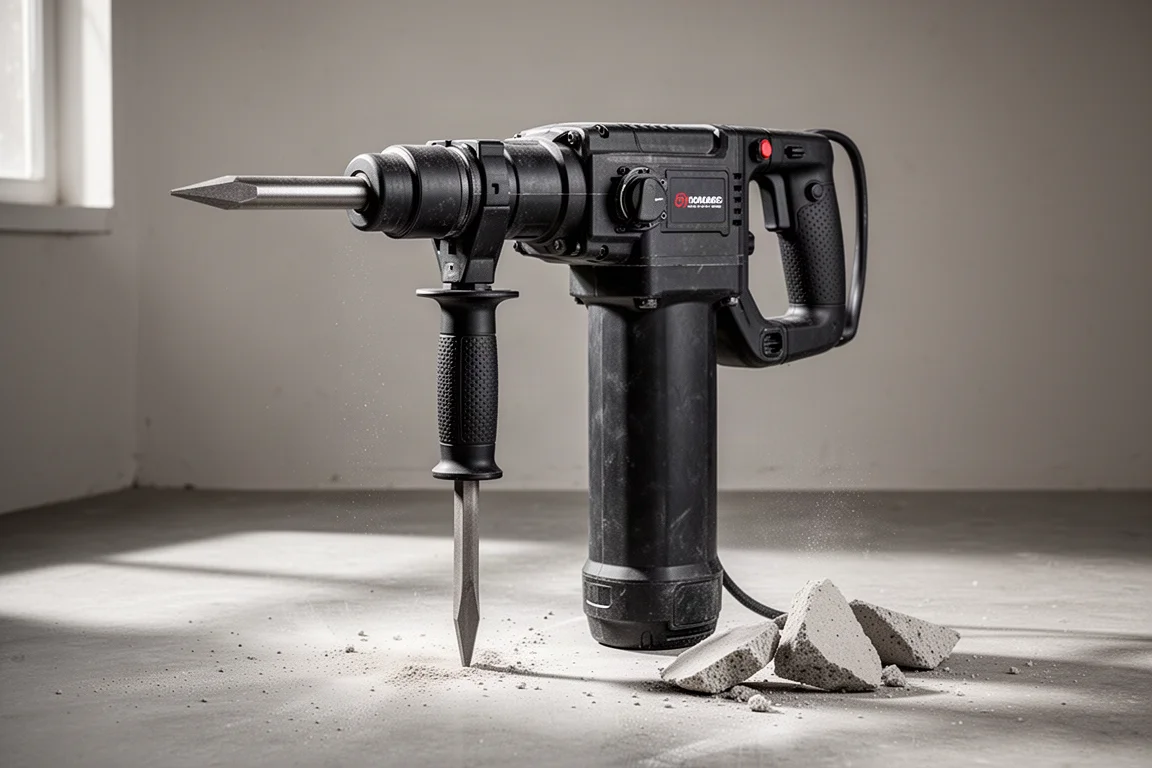
Some jobs only come around once, and buying a heavy-duty tool for a single project can feel hard to justify. That is exactly the situation that led to this Vivor demolition hammer: a concrete-encased night drop box needed to come out of a bank wall, and previous attempts with drills and a sledgehammer turned into a two-day, dust-choked ordeal. The goal this time was a smarter approach at around $180, without paying for professional demolition equipment.
After putting it through a few hands-on concrete tests, the short version is this: for a one-time or occasional job, it did far more than expected for the money.
How It Performed in Testing
Testing started easy, with a bucket of leftover, poorly mixed concrete, and the hammer tore through it without effort. The real test came on denser, properly cured concrete of the kind the actual job would involve. With the pointed bit installed, it pounded its way through, cracking the slab apart with surprisingly little drama.
The expectation going in was heavy vibration and an exhausting grip, but the tool felt controlled while it worked. Impressively for the price point, it simply broke the concrete apart.

Switching to the chisel blade showed how the tool handles tougher resistance. The chisel worked harder and progressed more slowly, which makes sense since splitting material apart demands more from the motor, but it still performed well and gave a realistic preview of the harder situations the job might throw at it.
Overall, it worked noticeably better in this role than any SDS Max drill tried in the same situation, which is the clearest sign it is the right class of tool for this kind of work.
What Comes in the Box
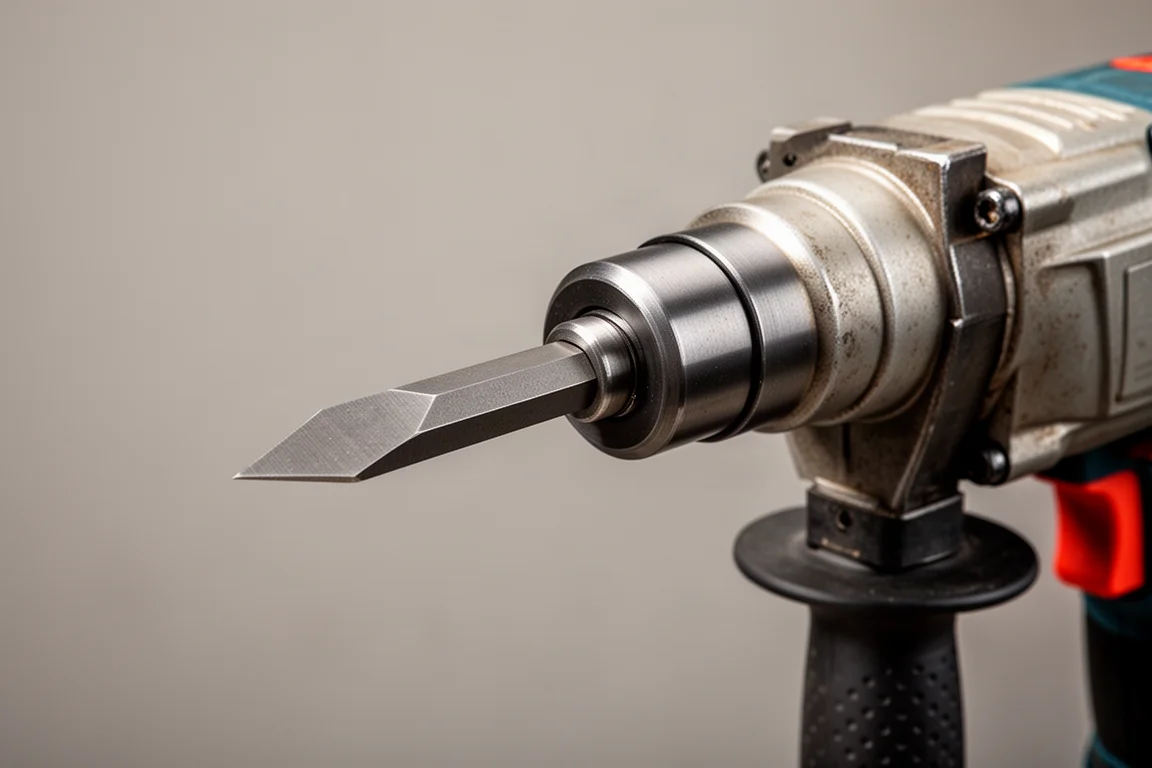
The accessory package is more complete than expected. It includes a chisel blade and a pointed tip bit, both of which swap quickly: pull back the collar, turn, and slide the bit out. The same slot accepts either accessory, so changing between them takes seconds.
Safety gear is covered too, with a pair of safety glasses and a mask included. A wrench, extra brushes, and Allen wrenches round out the hardware, and the printed manual covers general safety, maintenance, and oil procedures.
One important note on usage: this tool is not a good idea for indoor concrete work. It produces a serious amount of dust, and breathing that in is not worth it. For indoor demolition, a purpose-built dust-controlled setup is the better call.
Handling, Trigger, and Build Quality
In the hand, the tool is a little heavy but not unmanageable. The front handle rotates freely around the body, which makes it easy to find a comfortable grip angle for whatever direction you are working.
The trigger is short with no variable speed; it is simply on or off. A lock-on button lets you push the trigger back and lock it for continuous operation, and the button sits out of the way rather than being a nuisance. It is about as simple as a tool control scheme gets: pull the trigger and go.
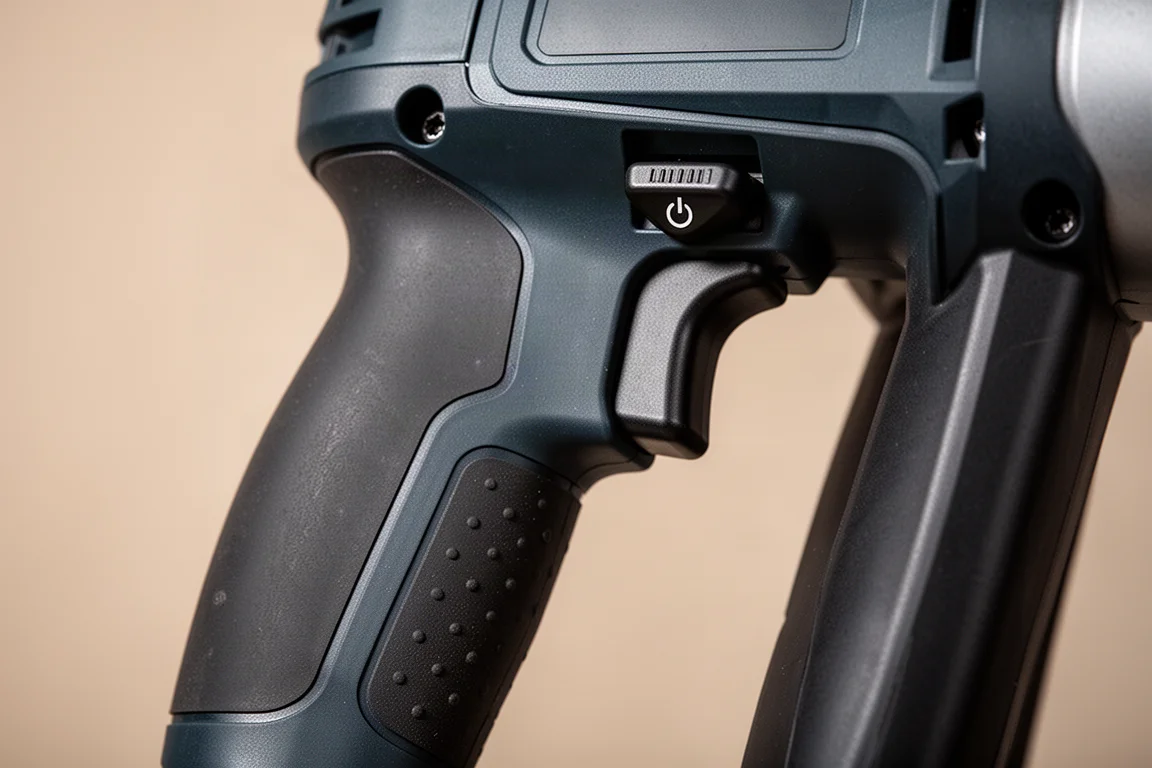
Build quality is where the budget pricing shows. The body only looks rubber coated at the rear; in reality it is plastic, with the rubber limited to the handle section. That rubber grip could loosen over time, though it may be possible to tighten the fit. The rotating front handle also cannot be tightened further at its current setting, so long-term loosening is a fair concern, even if it is an easy fix if it happens.
Maintenance and Long-Term Concerns
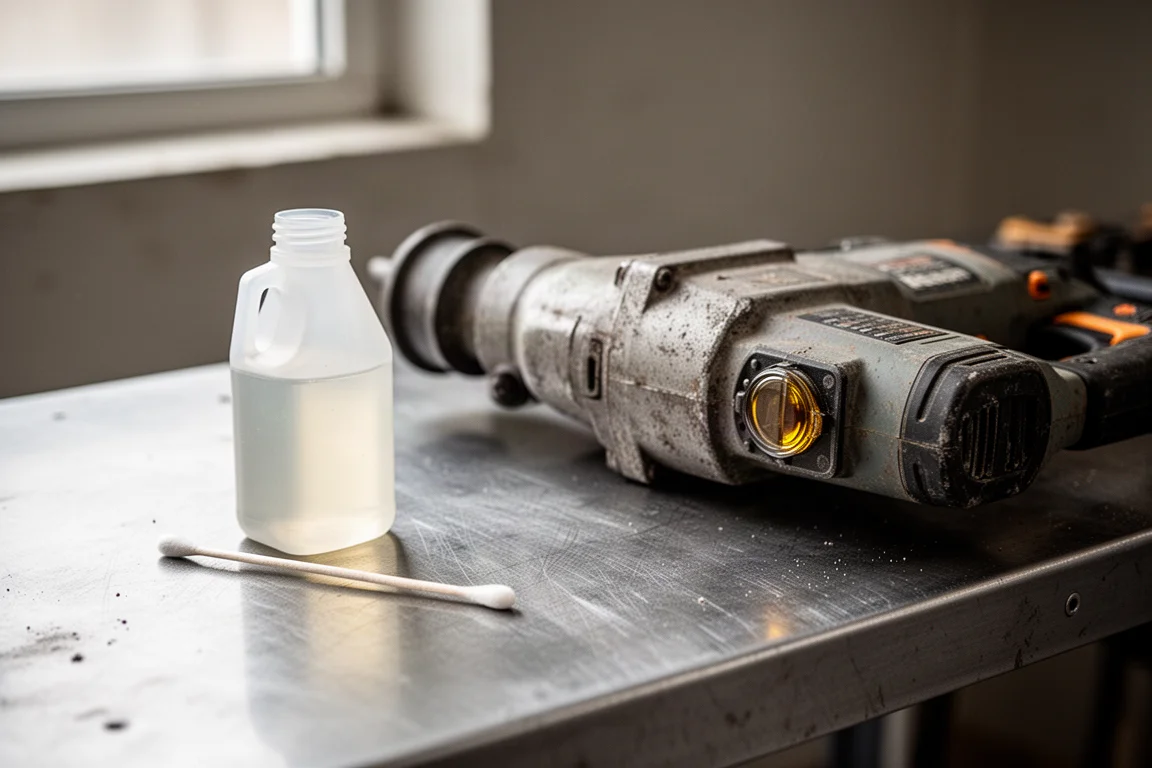
This is an oil-lubricated tool, and it takes 100 ml of hydraulic oil. Oil is not included, but a jug is provided to help measure the fill, and a sight glass at the bottom of the body lets you check the level. A cotton swab is included for cleaning up if any oil leaks.
The manual is fairly generic and covers a whole range of tools, so it reads more like a safety and maintenance primer than a detailed guide. None of this is a dealbreaker, but it reinforces the overall picture: this is a tool for getting a specific job done, not a daily driver for a contractor.
Who Should Buy It
This is not pitched as a recommendation for professional contractors; anyone using a demolition hammer every day should invest in a higher-grade tool. But for a homeowner or occasional user facing a one-time concrete job, it is a genuinely strong value. At $180, it saved hours of swinging a sledgehammer, cut through test concrete without complaint, and even if it only lasted most of one more big job, it would still have earned its price many times over.
Conclusion
The Vivor demolition hammer is the kind of budget find that makes a one-off project dramatically easier: strong concrete-breaking performance, quick bit changes, and a surprisingly complete accessory kit, balanced against plastic-heavy construction and a couple of loose-end concerns. If you need to break up concrete once and never again, it is an easy tool to recommend at this price.
Product link
View more details for Vivor Demolition Hammer
This product is mentioned in the review. Check the specifications, options, and compatibility before buying.
View more details for Vivor Demolition HammerFurther reading
Related Reviews

Power Tools
Best 1-Inch Pistol Impact Wrenches: Three Heavy-Duty Options Compared
We compare three 1-inch pistol impact wrenches, from a budget-friendly Harbor Freight model to a premium Caterpillar unit, to help you choose the right one.

Power Tools
Best 3/4-Inch Impact Wrenches 2026: Five Contenders Compared
We compare five 3/4-inch impact wrenches across price and performance, from a budget Amazon option to Snap-on's most powerful model yet.

Power Tools
Best Budget Cordless Tools 2026: Walmart Finds That Punch Above Their Price
We tested five cordless tools from Walmart, including a high-torque impact wrench that trades blows with Milwaukee and a $35 duster that outperforms its price class.