Kitchen Gadgets
Vintage Kitchen Gadgets Reviewed: Four Antique Tools Tested Today
An ice cream disher, an antique coffee grinder, a 1930s mayonnaise maker and a 1950s drumstick mold get put to work to see which vintage gadgets are still worth it.
Introduction
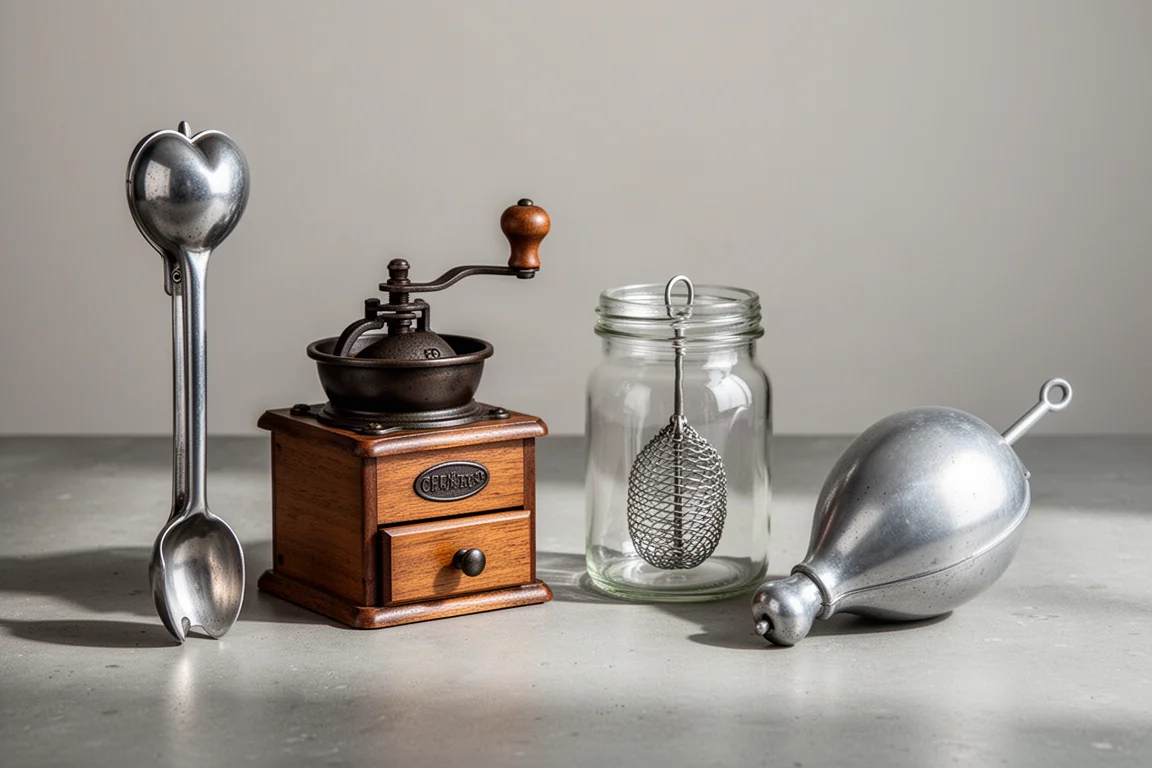
Antique kitchen gadgets have a way of looking brilliant on paper and awkward in the hand. To find out which ones actually hold up, we tested four pieces from different eras: a late 1800s ice cream disher, an 1850s coffee grinder, a 1930s mayonnaise maker, and a 1950s chicken drumstick mold. Each was used with historically appropriate ingredients, then judged on one simple question: built to last, or best left in the past?
Clewell Patent Ice Cream Disher
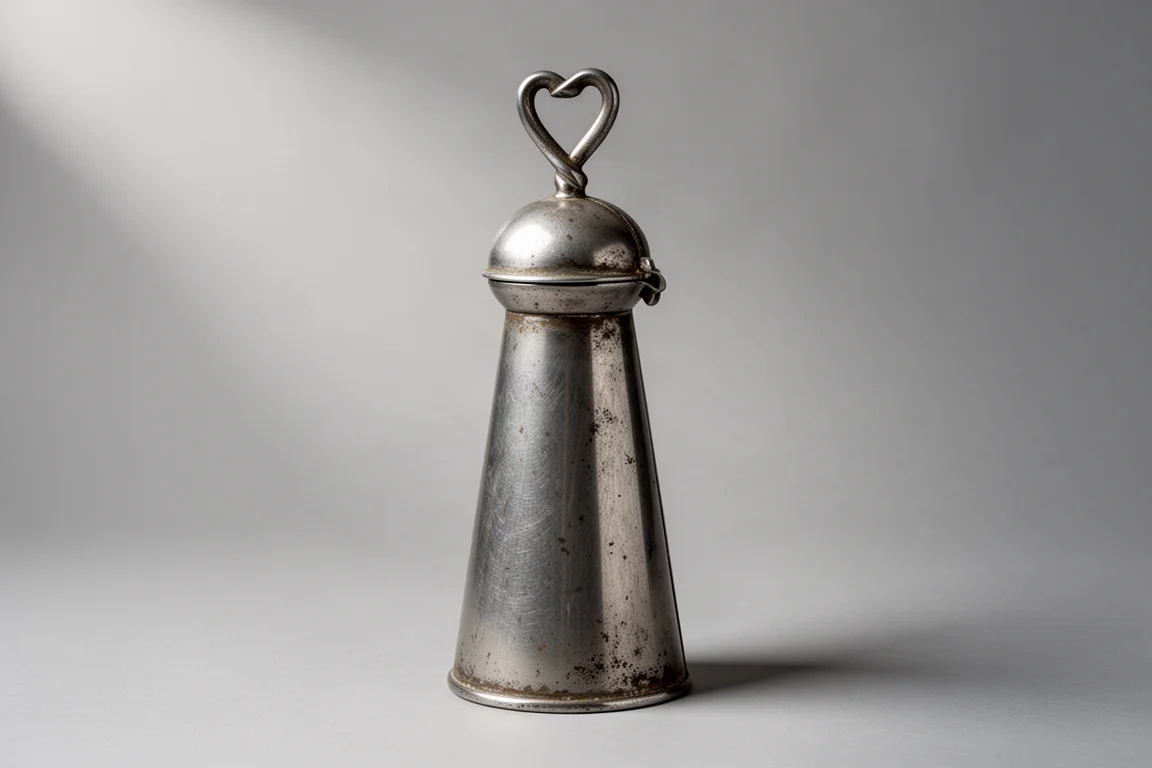
The Clewell Patent Ice Cream Disher looks, at first glance, like a giant candle snuffer. The giveaway is the heart-shaped nozzle on the dome: give it a twist and it scoops. Its original marketing bragged about two revolving knives that cut the cream loose, “thereby avoiding the adhering of the cream to the sides,” a claim aimed squarely at commercial users dishing up for saloons and festivals.
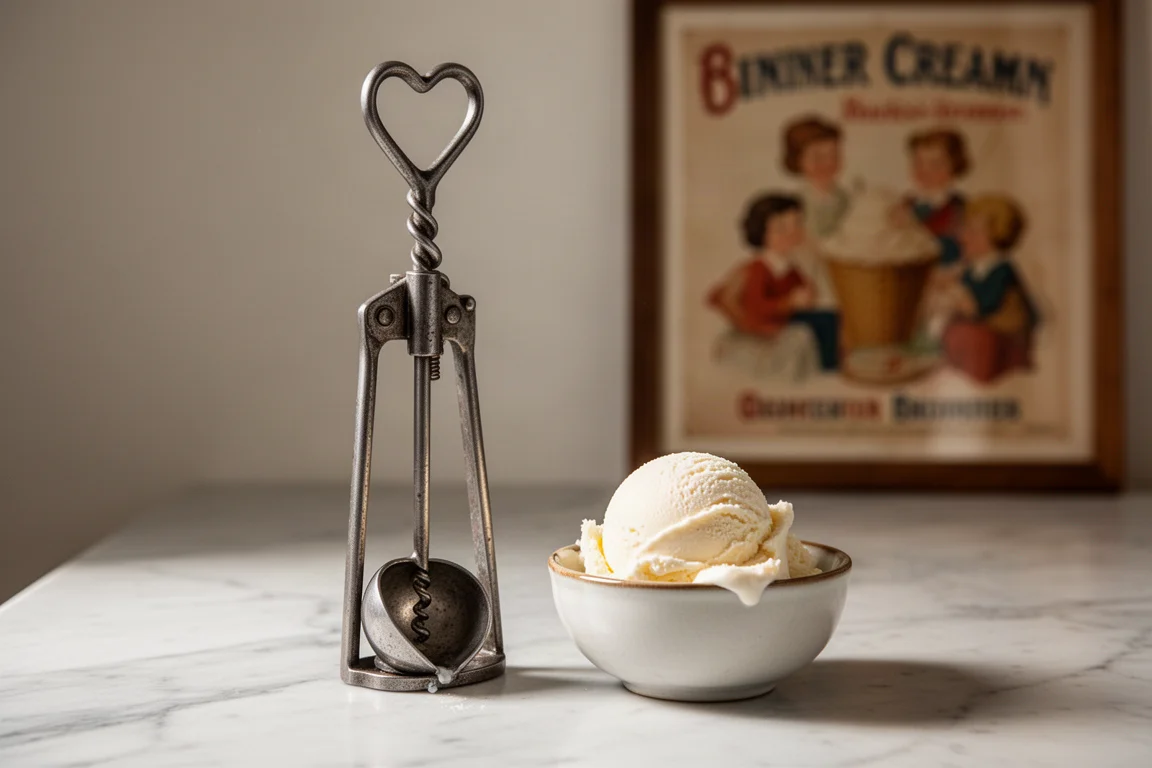
Historically, it made sense. In the late 1800s ice cream was softer and easier to scoop, and refrigeration later made it firmer, which pushed the cone-shaped disher toward the ball-scoop form we know today. It was also a portion-control tool: the original poster argued that a spoon always gives away more than necessary, “naturally to your loss.” These sold for 50 cents in the late 1800s, roughly $13.50 today, though a working antique now costs considerably more, and working examples are genuinely hard to find.
In use, it works, but it is annoying. The motion is still scooping, and the heart-shaped nozzle is the only clearly good idea on the card. It is physically built to last, and it still functions, but a modern scoop is simply better.
Kendrick and Sons Antique Coffee Grinder
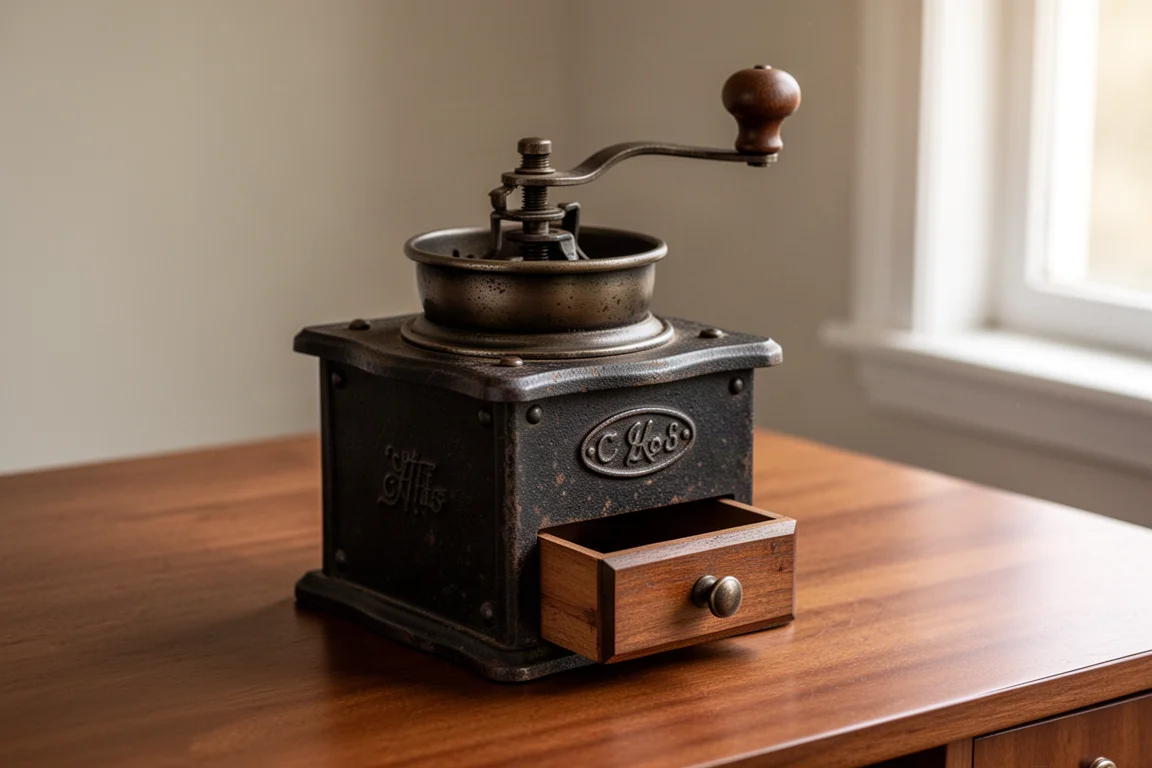
This one is a favorite among antique gadgets because it has a proper mechanism: fill the top with beans, turn the handle, and freshly ground coffee collects in the drawer below. Made by Kendrick and Sons of West Bromage in Staffordshire, this example dates to 1850, an era when coffee was typically ground by grocers and this invention let households grind their own.
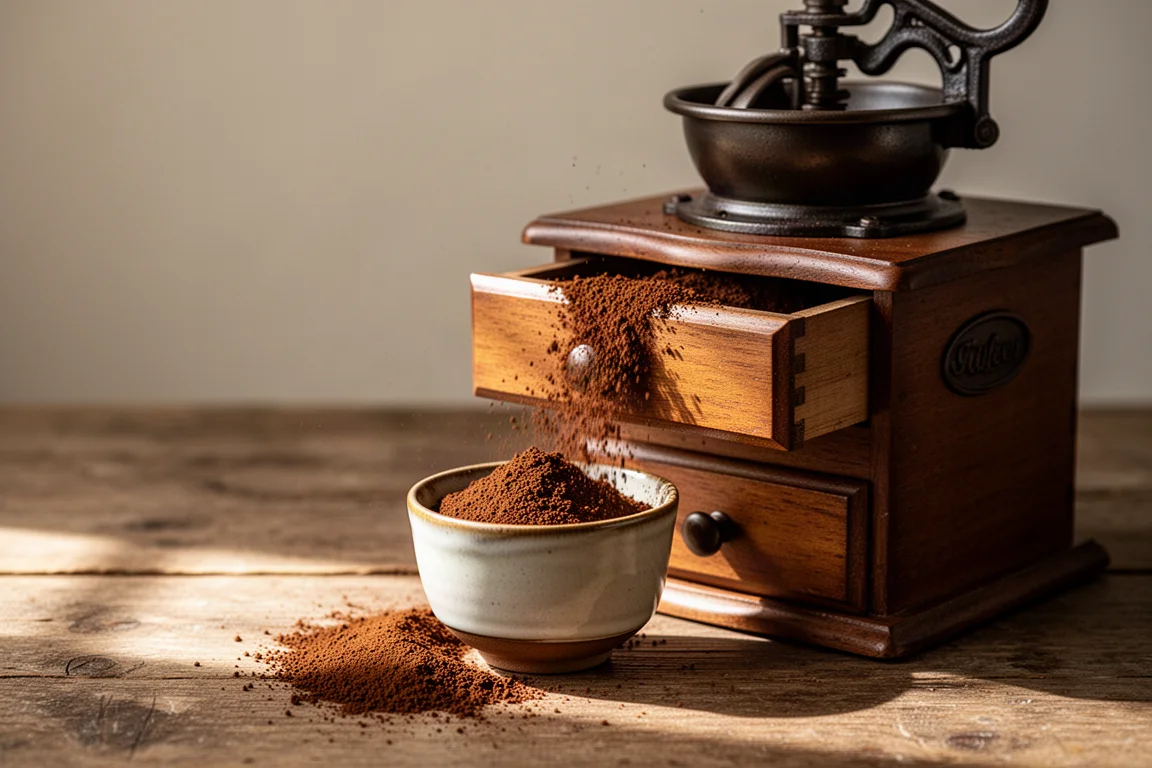
The verdict on use is blunt: tedious. The mechanism is good, the grind is fine and consistent, and nothing catches or sticks, but it is slow going. That said, it is no slower than many manual grinders sold today, and grinding fresh matters because coffee starts losing flavor as soon as it is ground.
The history around it is rich. Coffee arrived in the UK in the 17th century, with the first coffee house opening in Oxford in 1650. Coffee houses were gathering places for philosophers, doctors and scientists, and the notes shared between them became the beginnings of modern newspapers. One king even tried to shut them all down as dens of free thinkers; the ban lasted about two weeks. We paid 60 pounds for this working example in decent condition, and the verdict is built to last.
Wesson Oil Mayonnaise Maker
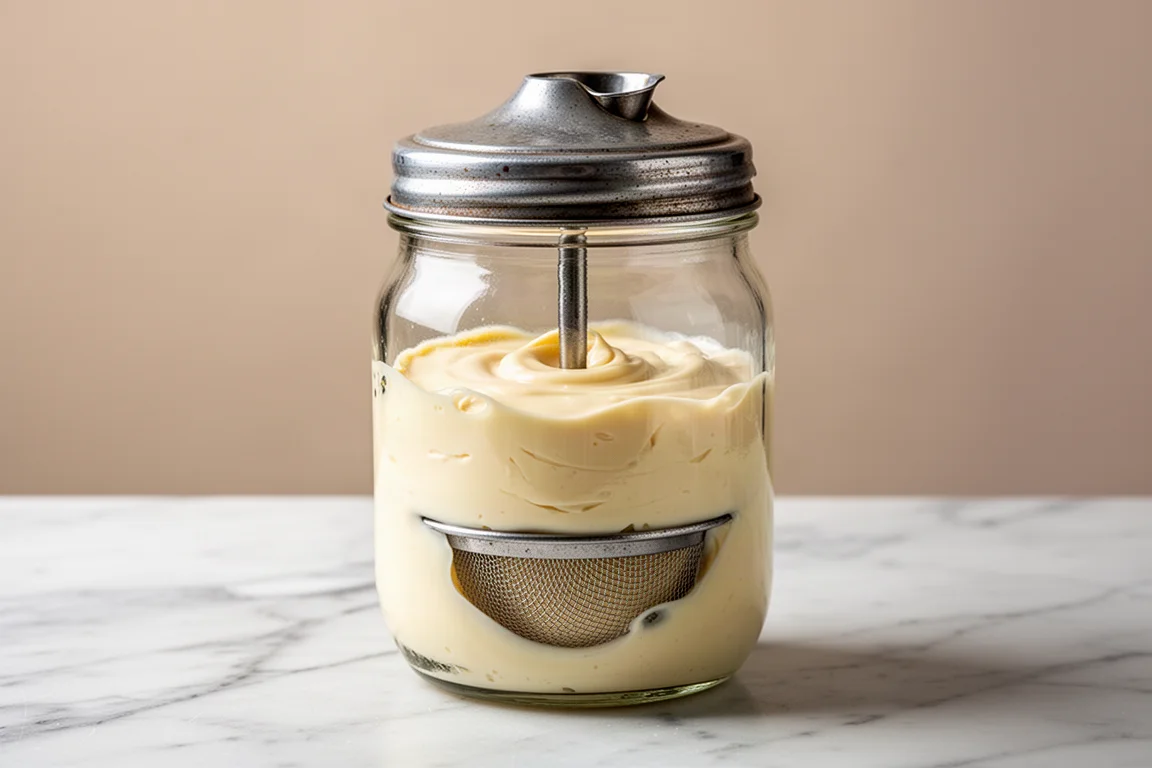
The Wesson Oil mayonnaise maker is a 1930s mail-order gadget with the pitch printed right on it: “Whip with one hand, pour with the other. Perfect mayonnaise in one and a half minutes.” The indented lid lets you pour oil in, which slowly drips down a central rod into a mesh cup at the indented bottom that agitates the mixture. Wesson Oil, originally the Southern Cotton Oil Company, printed the recipe directly on the jar because so many customers kept losing the paper manual.
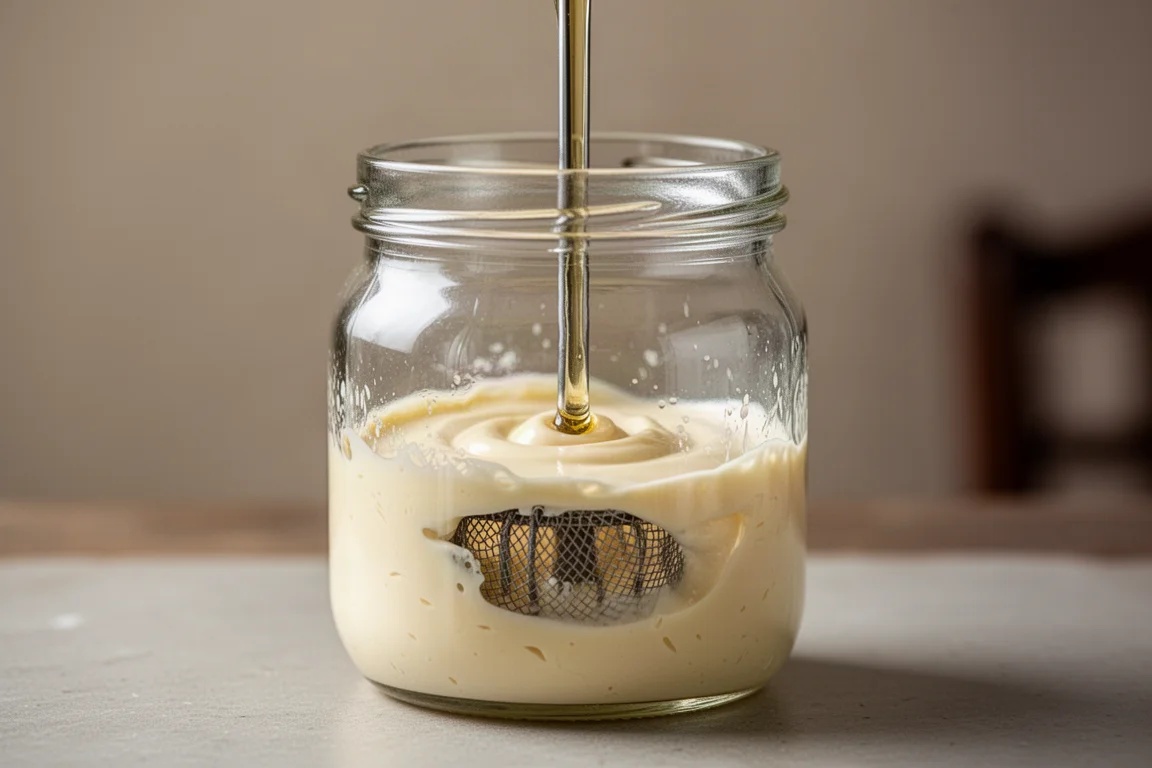
We tested it with the original recipe and an original bottle of Wesson Oil from Memphis, Tennessee, from a gadget we believe sold between 1933 and 1935. In theory one person operates it; in practice it works beautifully. The lid meters out a slow, steady stream of oil while you whip, which is exactly the hard part of making mayonnaise by hand, and the mixture thickened into genuinely nice, thick mayonnaise. The original recipe added sugar because cotton seed oil is slightly more bitter and astringent than modern vegetable oils.
At 65 cents plus 16 cents postage in 1933, roughly $12 total today, it was a good deal then and it performs well now. Verdict: built to last, and honestly, a comeback would be welcome.
1950s Chicken Drumstick Mold
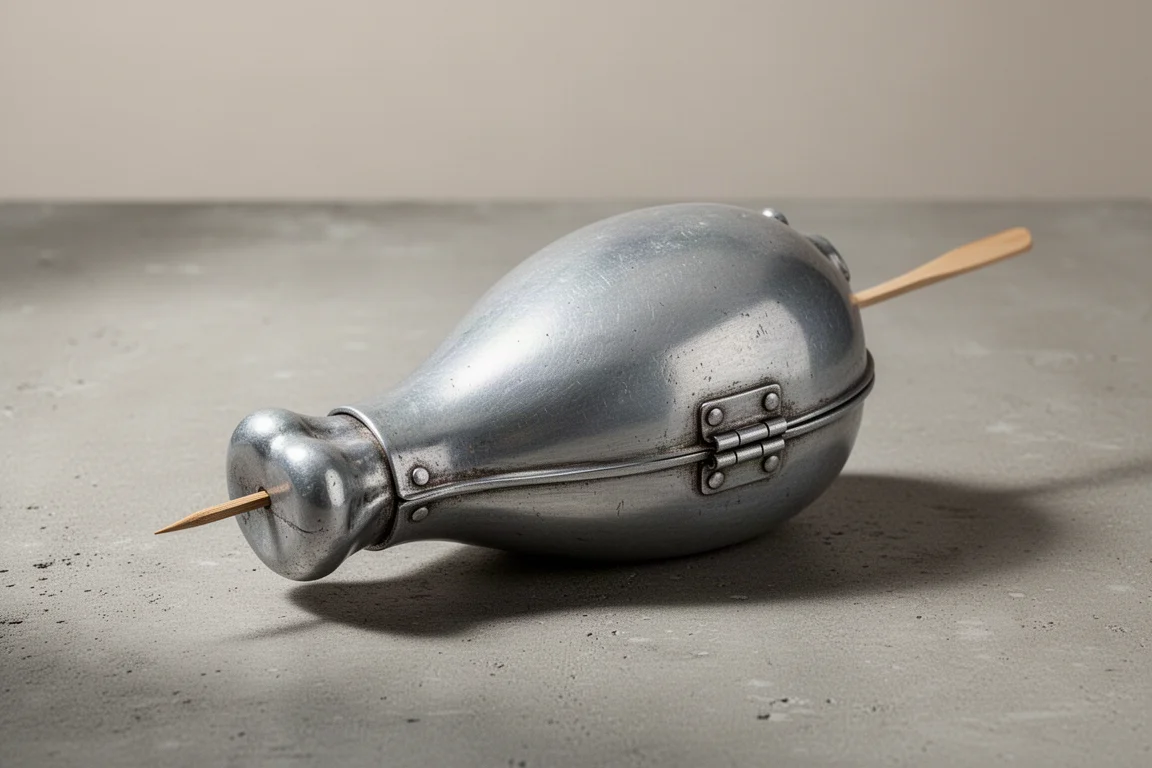
The final gadget is a proper contraption: an oval mold shaped like a chicken drumstick, with a hole at the end for a skewer. During the Great Depression, chicken was an expensive meat, so cooks took offcuts of pork and veal, molded them into drumstick shapes called city chicken, breaded and deep-fried them, and felt like they were having chicken. It is a meat alternative, but not a meat replacement.
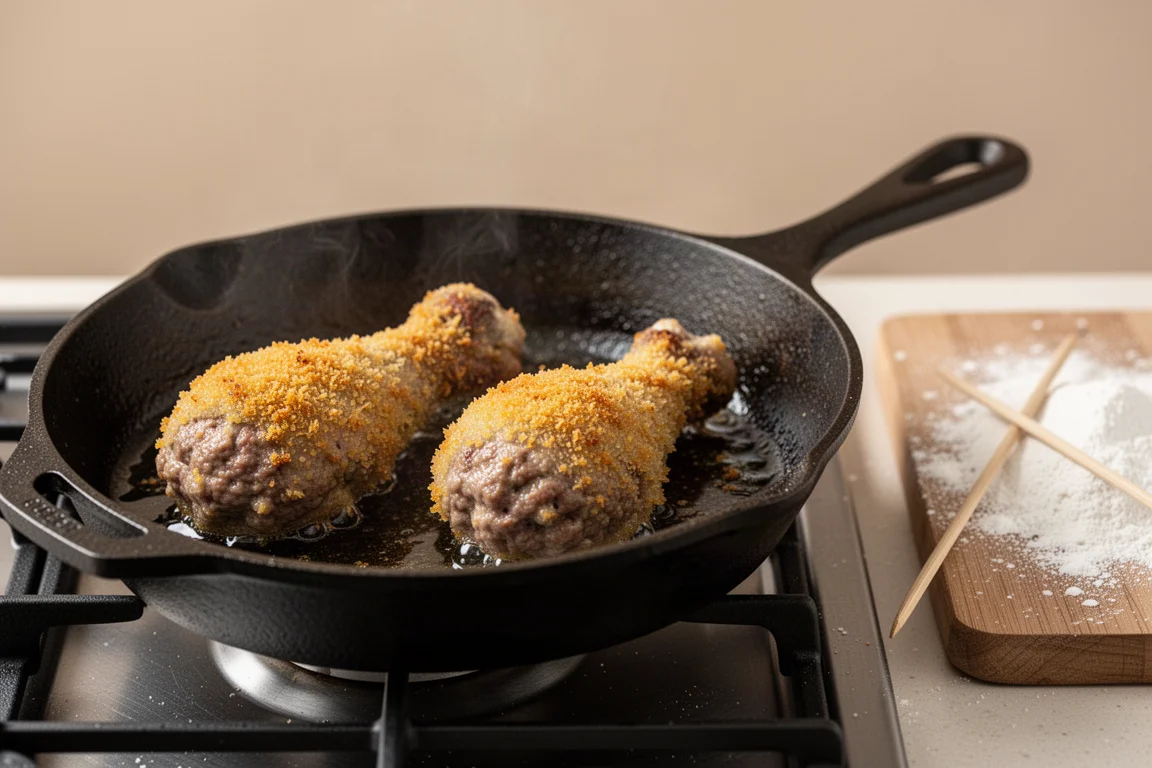
Using it is genuinely satisfying: pack in pork mince, press out a smooth, compact drumstick on a skewer, pane it with flour, egg and breadcrumbs, and cook gently until golden and cooked through. The result tastes delicious, though absolutely nothing like chicken; more like a sausage breaded in the shape of a drumstick, and with sage and onion it could pass as a chicken stuffing-style bite. We paid 70 pounds for this one. It does exactly what it claims, very well, but it is unnecessary day-to-day work, so the verdict is best left in the past.
Overall Buying Advice
If you are drawn to antique kitchen tools, the pattern here is clear. Gadgets that automate a genuinely fiddly task, like holding a steady oil stream while whisking mayonnaise, age the best. Tools that merely reshape an easier existing motion, like the ice cream disher, are charming but outclassed. And novelty molds are wonderful to own and rarely practical. Also budget realistically: working antiques in good condition cost real money, from around 60 to 70 pounds in these cases, far above their original mail-order prices.
Conclusion
Three of these four antiques still earn their keep: the coffee grinder and the mayonnaise maker are built to last, and the ice cream disher is at least mechanically immortal. The drumstick mold is a delightful piece of culinary history, but best left in the past unless you have a soft spot for city chicken.
Further reading
Related Reviews

Kitchen Gadgets
Kitchen Gadgets Tested 2026: Five Tools Worth Considering
A practical look at five kitchen gadgets, from egg shapers to peanut butter stirrers, with honest assessments of what works and what doesn't.
Kitchen Gadgets
Best Electric Wine Openers: Our Top Picks From Eight Tested Models
We tested eight electric wine openers priced from $20 to $110 on hundreds of bottles. The Secura came out on top, with a Peugeot and a Rabbit model also worth knowing about.
Kitchen Gadgets
Best Kitchen Gadgets Under $15: Eight Small Tools That Earn Their Keep
Eight kitchen tools that cost less than $15 but perform like far more expensive gear, from a razor-sharp peeler to a champagne saver that really works.